
Let me start by saying, I really enjoyed ‘Wild’ and admire the way Cheryl Strayed shared her story. It’s not exactly exciting to spend months hiking a trail, but the author writes about her journey in a way that is as gripping as any novel without being overly melodramatic. I was a little wary before starting, with the shoe falling off the cliff, wondering if she was some ill-prepared novice on a suicide mission, but that is not the case at all, the thing about the shoe probably the only time she does use an anecdote for overly dramatic effect, and to sell a book, why not – it worked.
Cheryl Strayed considers herself a bit of a stray. She changed her name in the process of finalising her divorce, gaining an apt description for how she felt at the time and profiting from the otherwise sad demise of her marriage by being able to offload a hyphenated name she held no sentimentality for.
 Born in 1968, clearly intelligent and showing she had potential from a young age, ironically – getting married at the age of 19 was something of a rebellious act. Nineteen, an age of youthful idealism, where if not wary, we risk being fooled into taking the intensity of our feelings seriously and wind up wed. Or am I being just a tad cynical?
It’s a classic coming of age theme, girl with an absent father finds a wonderful man – and Strayed’s first husband Paul is a remarkable individual, who accepts the amicable divorce which Strayed sought by instinct more than knowing, missing a part of herself that she was fast learning couldn’t be fulfilled by another.
Being near Tom and Doug at night kept me from having to say to myself I am not afraid whenever I heard a branch snap in the dark or the wind shook so fiercely it seemed something bad was going to happen. But I wasn’t out here to keep myself from having to say I am not afraid. I’d come, I realised, to stare that fear down, to stare everything down, really – all that I’d done to myself and all that had been done to me.
 The death of her mother at 45, knocked her off her straight and wedded course setting her on a side road to self-destruction, though fortunately something inside, perhaps the ever-present loving spirit of her mother (and a few of her sensible genes) mapped out an escape route from her self-destructive self by planning to hike the Pacific Crest Trail (PCT).
Despite the indulgent descent, she doesn’t come across as an addict, more a period of avoidance, indulging in destructive behaviour to avoid looking inward. This is a story of a woman heading towards a healing crisis, someone who needed to commit to a challenge in the extreme to provoke it.
The Pacific Crest Trail zigzags its way 2,650 kilometres from Mexico to Canada through California, Oregon and Washington, crossing desert country, passing forestland, mountain terrain and volcanic lakes. Strayed started her hike in Mojave, California, bypassed a section of the Sierra Nevada mountain range due to exceptional snow condition (very sensible) and ended it at The Bridge of Gods in Oregon.

Crater Lake by MBessey, Wikipedia
Strayed articulates with honest clarity all that brought her to the wilderness and the experience of being there. Writing a journal as she travelled, makes the day by day account as fresh as if it were a recent trip, subsequent years clarify her view, now a 44-year-old woman and mother herself, she recounts her 26th year with the wisdom of hindsight.
As difficult and maddening as the trail could be, there was hardly a day that didn’t offer up some form of what was called trail magic in the PCT vernacular – the unexpected and sweet happenings that stand out in stark relief to the challenges of the trail.

Bridge of the Gods by Cacophony, Wikipedia
As she walked, she was surprised at how the demands of the physical challenge and overcoming them become her sole focus, how she’d imagined dealing with her grief and loss, with days and days of free thinking time was nothing like the reality. On the trail, lapses in attention were on occasion broken by a rattle, warning her of a coiled predator on the path. It wasn’t necessary to think her way towards resolution, but to stride it out fully present allowing nature to knit together the broken bits inside.
Nature is a glorious healer and reading about it second only to getting out there in it. This book is a testament to that and the moments when the author fully embraces it and is filled with the wonder and energy of the natural environment are a pleasure to share. She epitomizes the reward of those who first conceived the idea of a nature trail in the wilderness for the public to provide “a lasting curative and civilising value” and I only hope this book, not only gets widely read, but inspires many others to get out on a nature trail themselves.
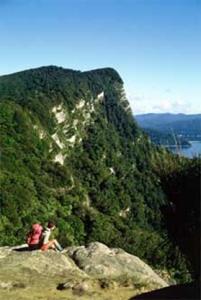
Panekiri Bluff, Lake Waikaremoana
Personally, I can recommend the hike around Lake Waikaremoana, in the North Island of New Zealand, I walked this with my family (there were 7 of us) when I was 14 years old, it is extreme wilderness and I’ll never forget the very fit Peruvian we met on the first night who asked us where the nearest shop was! He became the 8th member of our group and could shuffle a pack of cards like magic. We finished the trail in 5 days and took our new friend whom we all loved home to work as a willing farm hand, he stayed a couple of months until a letter arrived from a girl and off he went to follow her as free spirits do.
*
It was the thing that had compelled them to fight for the trail against all the odds and it was the thing that drove me and every other long-distance hiker onward on the most miserable days.
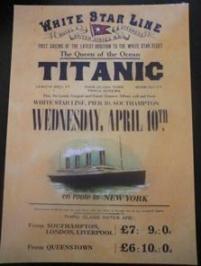 There are so many untold tales and now 100 years on from the Titanic tragedy, stories continue to be retold and others narrated for the first time, linked to the events that unfolded in the wake of the tragedy. Not only do we read accounts of those who were on the boat, but the event is used in fiction, a convenient device for eliminating a character such as the loss of the cousin and heir in Julian Fellowes Downton Abbey series, this event triggering the inheritance crisis that is at the centre of this drama. I read that if all the characters from fictional novels were indeed on the Titanic, it would more than triple the number of passengers she carried and sink it for sure.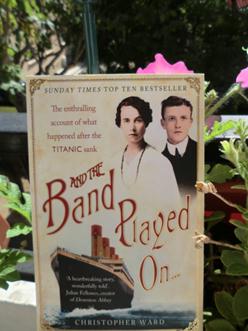
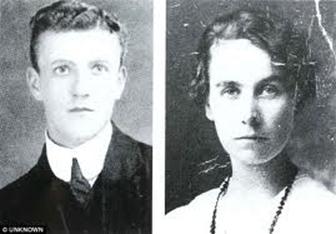
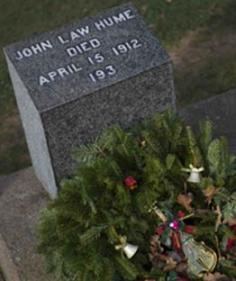 When it was no longer possible to stand, they strapped their instruments to their chests and jumped into the freezing cold waters together. None of the band members survived, however two of their bodies were recovered, Band Master Wallace Hartley (his violin case still strapped to him) and Jock Hume. Hours after the Titanic sank, White Star Line commissioned the Mackay-Bennett to recover the bodies of victims. Of the 209 bodies they brought back, 150 were laid to rest at three Halifax cemeteries. Jock Hume was buried in the Fairview cemetery, a site where visitors still pay their respects today.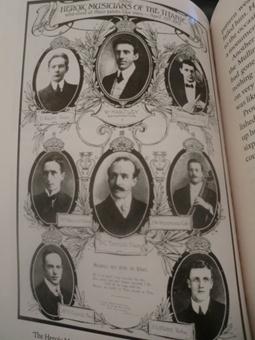


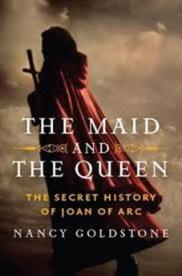
 of the female offspring of nobility to secure territorial alliances or peace between the realms. Daughters were auctioned off as young as 4 years, though depending on how power shifted and who survived into adulthood, those promises could alter.
 reinstating the dauphin as the legitimate heir to the French throne.
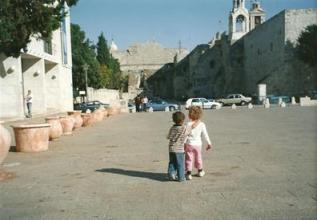
 excellent but gruelling ‘A History of Jerusalem’

 Fefa opens the book hesitantly, finds the pages blank within but wide open to her imagination, a place where she can write unobserved, in any way she wishes.
 “After my mother
 Word by Word