Reading Ireland Month 2025

March is Reading Ireland month, an initiative created by Cathy at 746 Books and it is simply a way of being in community, while reading anything written by Irish authors or that relates to Ireland, there are no fixed rules, just the intention to Read Ireland, whatever that means to you! There’s even a Spotify playlist if you’re interested in a bit of musical culture.

Getting a Jump Start

For me that means reading more Irish authors from my bookshelves. I did read two in January, in fact my first read of 2025 was Donal Ryan’s Irish Book Award 2024 winning, heart, be at peace, a novel about multiple characters in a rural town in County Tipperary facing the different issues that face them a decade or so on from his debut novel The Spinning Heart.

Then I picked up a beautiful second hand hardback Water by John Boyne on holiday, and read it on my flight home. It is the first of four novellas in his The Elements series and now I want to read the next three, Earth, Fire and the final one Air due out in May 2025. But not yet, I’m prioritising what I already have!

Reading From the Shelves

A selection of books to read during Reading Ireland month of March

So here is the pile from my bookshelves, from which I will be choosing what to read in March 2025.

There are also three titles languishing on my kindle, which doesn’t get as much attention as it should, because out of sight is out of mind when it comes to reading. So I’m jogging my memory and will try to read at least one of these e-books.

On the kindle I have Listening Still by Anne Griffin, The Quiet Whispers Never Stop by Olivia Fitzsimons and Quickly, While They Still Have Horses by Jan Carson. In physical print I have another Carson The Raptures, that I picked up at the annual Ansouis vide grenier in September 2024.

Audrey Magee’s The Colony (2022) was longlisted for the Booker Prize, shortlisted for the Orwell Prize for political fiction and the Kerry Group Irish Novel award, so it gained a lot of attention and I have been keen to read it.

When Fiction Reminds Us of Those Who’ve Passed

I really enjoyed Sebastian Barry’s Old God’s Time (2023) and want to read more of his work, so I chose his Dunne Family trio of books, Annie Dunne (2002), A Long Long Way (2005) and On Canaan’s Side (2011) to delve more into his storytelling. I am part way through reading these now.

I love that this collection of novels and the play that was the first in the series, were all inspired by characters from his own ancestral lineage. That inspired me too.

After reading A Long Long Way, I became curious, as I too have an ancestor, born in the same year as his character Willie Dunne (1896), who like Willie, went to France in World War I, was in an Irish regiment and did not return. My ancestor Edmund Costley died on 9 April 1916, in Ypres, West Flanders, Belgium at the age of 19. I’ll be writing a post about him in April.

Historical Re-Imaginings, True Crime, Women’s Lot

I have read two novels by Mary Morrissey, Mother of Pearl (1995) and Penelope Unbound (2023). Morrissey tends to take historical stories and/or characters and re-imagine their lives. Mother of Pearl was inspired by a notorious baby-snatching case in 1950’s Ireland, that she chose to fictionalise, having said that the truth would have come across to readers as unbelievable; while Penelope Unbound re-imagines the life of Nora Barnacle, if in Trieste, Italy, when James Joyce made her wait all day outside a train station for him, she decides to leave.

This year I’m going to read her imagined autobiography, The Rising of Bella Casey (2013); she was the sister of the acclaimed playwright Sean O’Casey, and it is set at the turn of the century Dublin, a social commentary on the lives of women in that era.

Then there is Maggie O’Farrell’s The Marriage Portrait (2022), another historical re-imagining, this time of the short life of Lucrezia de’ Medici, a sixteenth century member of the renowned aristocratic House of Medici in Italy. I enjoyed O’Farrell’s riveting memoir I Am, I Am, I Am – Seventeen Brushes With Death (2017), the first of her works I read, and then the multiple award-winning, Hamnet (2020) and The Hand That First Held Mine (2010), so I’m looking forward to immersing in this one.

Irish Non-Fiction

missing persons or my grandmothers secrets unmarried mothers in ireland nonfiction memoir that excavates the truth about silence

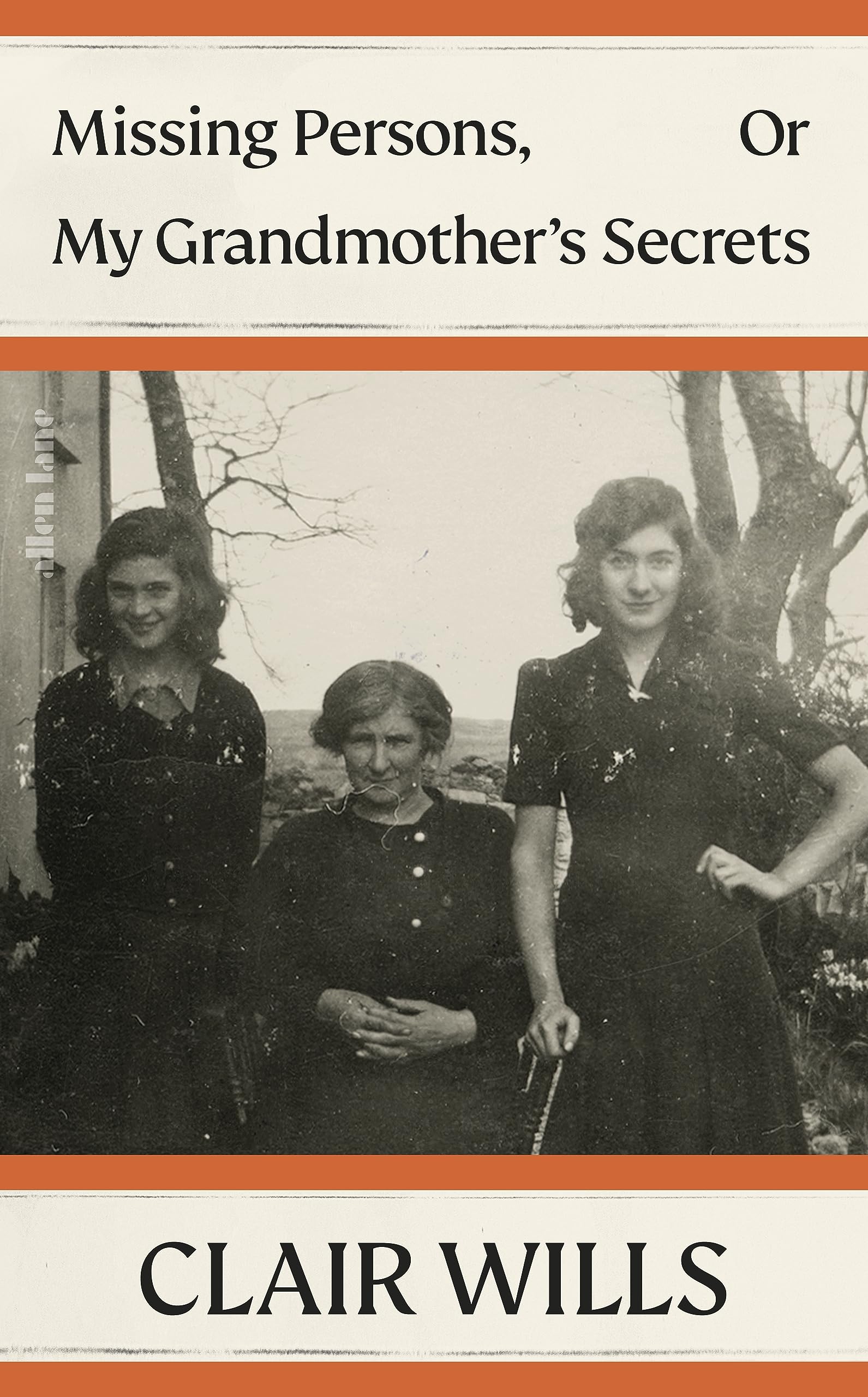
There are two non-fiction titles on my pile, Missing Persons, Or My Grandmother’s Secrets by Claire Wills, author, critic and cultural historian, winner of the Irish Book Award for non-fiction, who has written a family history that blends memoir with social history. She explores the gaps in that history, brought about by Ireland’s brutal treatment of unmarried mother’s and their babies, and a culture of not caring, not looking into or asking questions, rolling back a dark period of its history of loss and forgetting.

The second non-fiction title is the candid Fierce Appetiteslessons from my year of untamed thinking, also subtitled, Loving, Losing and Living to Excess in my Present and in the Writings of the Past by medieval historian Elizabeth Boyle.

The title is a reference to Vivian Gornick’s memoir Fierce Attachments, which is part of what intrigued me, but also the uniqueness of someone finding sense of three dramatic events in their life through medieval literature.

Every day a beloved father dies. Every day a lover departs. Every day a woman turns forty.All three happening together brings a moment of reckoning.

Boyle writes on grief, addiction, family breakdown, the complexities of motherhood, love and sex, memory, class, education, travel (and staying put), with unflinching honesty,deep compassion and occasional dark humour.

Remembering Edna O’Brien (15 December 1930 – 27 July 2024)

Edna O'Brien The Country Girls The House of Splendid Isolation

I couldn’t read Ireland without adding a title from Edna O’Brien, who died in 2024 at the age of 93. In 2023, I read The Country Girls trilogy, made up of three stories The Country Girls (1960), The Lonely Girl (1962), and Girls in Their Married Bliss (1964) released in 1986 in a convenient single volume.

Credited with breaking the silence on issues young girls faced growing up in Ireland, it was a subject she would often return to. She was punished for it, but lead the way for others to eventually follow.

O’Brien described her work in this way:

I have depicted women in lonely, desperate, and often humiliated situations, very often the butt of men and almost always searching for an emotional catharsis that does not come. This is my territory and one that I know from hard-earned experience. Edna O’Brien (Roth, 1984, p. 6)

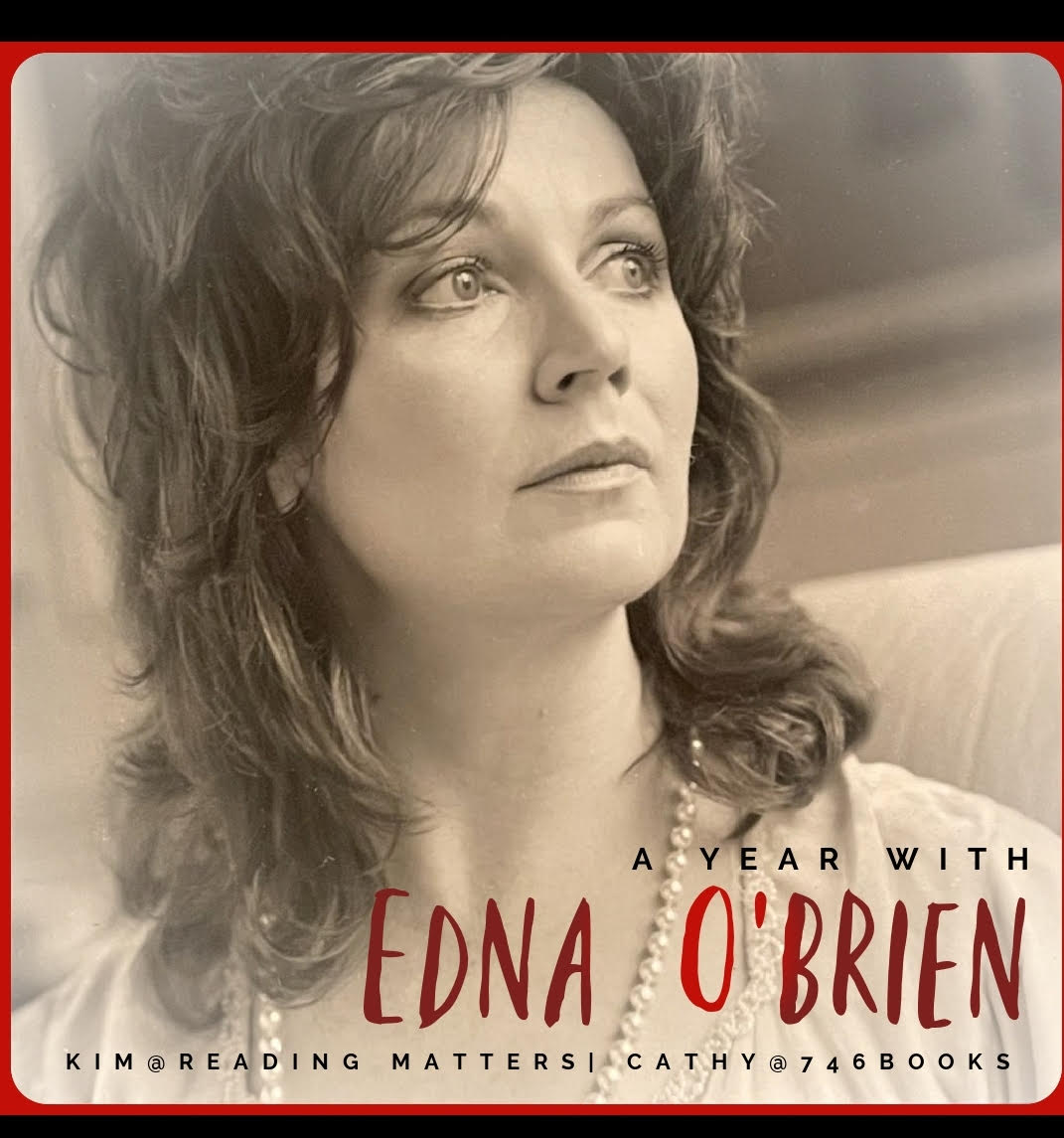
Cathy at 746 Books and Kim at Reading Matters are spending a year reading Edna O’Brien and are reading Country Girls in February, you can see their reading schedule for the year if you go to their blog.

I have decided to read one my shelf, The House of Splendid Isolation (1991), the first book in her Modern Ireland trilogy, a political novel, depicting the relations of an Irish Republican Army terrorist and his hostage, an ageing Irish widow, in a house that represents the troubled nation.

Suggestions, Recommendations?

That’s the selection I have made, no guarantees on what I’ll get through, but I’m looking forward to the immersion. Have you read and enjoyed of the titles I mention above?

Are you going to read any Irish literature in March? Let me know in the comments below.

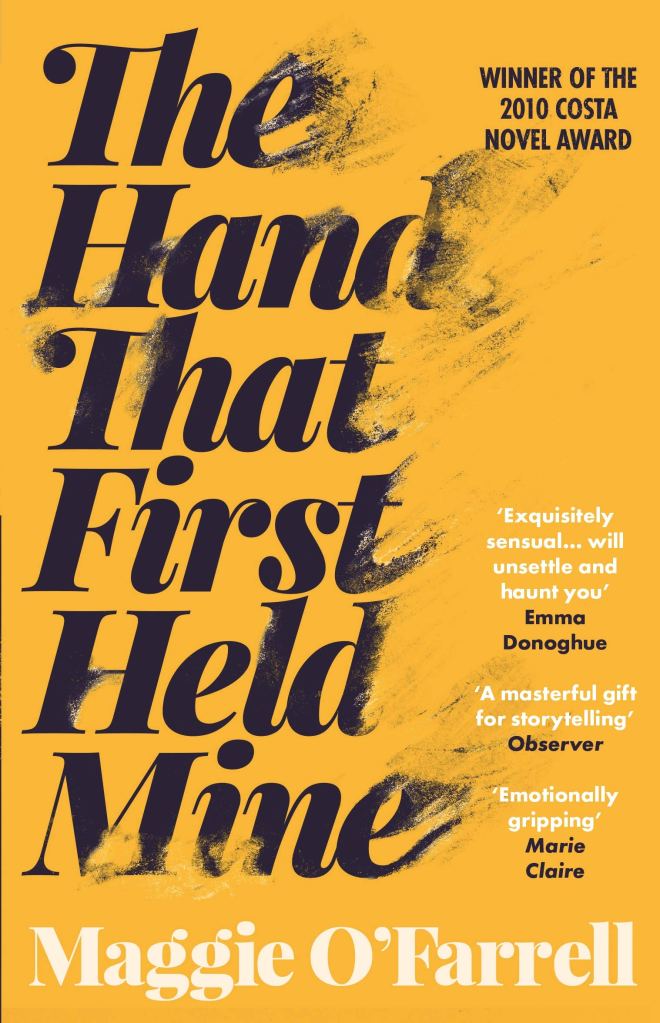
The Hand That First Held Mine (2010) by Maggie O’Farrell

And we forget because we must. Matthew Arnold

The Hand That First Held Mine by Maggie O’Farrell was the winner of the former Costa Novel Award in 2010.

I read and really enjoyed O’Farrell’s memoir I Am, I Am, I Am – Seventeen Brushes With Death, the first of her books I encountered and Hamnet, which won the Women’s Prize for Fiction (2020).

I have The Marriage Portrait still to read, however I was curious to discover more of her earlier work and decided to read this one next.

Dual Narrative, Dual Timeline

This novel is narrated as two stories of two couples, one set in 1950’s/60’s that centres around Lexie, a rebellious university graduate who has been asked to apologise for using a door for men, before receiving her degree.

At home in Devon with her parents, she is about to abandon them all, the academic institution and her family for London, after Innes, a 34 yr old sports car driving art dealer, journalist, critic and self-confessed hedonist, breaks down not far from the field where she is sulking.

Innes has been in St Ives, visiting the studio of an artist whose work he’d been hoping to buy. He had found the artist rather drunk and the work far from completion. The whole excursion had been a raging disaster. And now this.

Lexie will move to London, creating an unconventional life and career in 1950’s Soho guided by her pleasure seeking lover, but with the spiteful eye of one who wishes her harm. Inne’s past will come to haunt Lexie’s future, and she will throw herself into her career, doing what she can to maintain her independence.

His father, he tells her, was English, but his mother was a mestizo from colonial Chile. Half Chilean, half Scottish, he explains, hence his Hibernian Christian name and also his black hair.

There’s much more to Lexie’s story, but to share any more of it would spoil the discovery for new readers of this compelling mystery. It is one of those novels where you know the narrative threads are going to connect and so each revelation keeps you guessing, until it eventually becomes clear.

Present Day London, Forgetting

Photo S. Chai Pexels.com

In the present day (2010) Elina, a Finnish woman in London and her boyfriend Ted, have just had a baby boy and she recalls nothing about the birth or the 3 days spent in hospital.

She tests herself, scans her mind. Has she remembered anything? Has it come back to her while she was sleeping? The birth, the birth, the birth, she intones to herself, you must remember, you have to remember. But no. She can recall being pregnant. She can see the baby here, lying in her lap. But how it got there is a mystery.

Not only has their life been turned upside down, but Ted is having memory flashes of childhood, but the images he is seeing are not like what his parents have told him. He knows what happened to Elina, but for now he is not sharing it.

Four days ago, she’d almost died.

The thought has a physical effect on him. One of disorientation and nausea, like seasickness or looking down from a high building. He has to lean his head in his hands and breathe deeply, and he feels the earlier tears crowding into his throat.

Slowly, the two of them begin to piece together the missing elements from their stories. Ted confronts his mother and finds her unhelpful. But since the birth of his son, the flashes of scenes from the past revisit him with increasing frequency.

‘Do you remember…?’ he asks, then has to break off to think. ‘A man came to the house once. And you … you sent him away. I think. I’m sure you did.’

‘When?’

‘Years ago. When I was small. A man in a brown jacket. Sort of untidy hair. I was upstairs. You were arguing with him. You said – I remember this – you said, “No, you can’t come in, you have to leave.” Do you remember that?

When Traumatic Events Awaken the Past

Everyone is being confronted with challenges and O’Farrell deftly carries the reader through them all, and keeps us puzzling over the mysteries underpinning each of their lives.

There is a level of unease and intrigue that is present throughout the narrative, that quickens the pace of readings, as we realise that not all characters are being honest or have good intentions.

Secrets, lies, infidelities, manipulative jealousies, tragedy and the unconditional love of true motherhood. The novel has emotional depth and psychological insight, while keeping up a well thought our plot.

An absolutely riveting read with brilliant storytelling and just enough withholding to allow the slow reveal of mystery and deception.

Highly Recommended.

Further Reading

The Guardian/Observer review: The Hand That First Held Mine by Maggie O’FarrellElizabeth Day enjoys a compelling novel of memory and motherhood, 25 Apr 2010

NPR review: A Moving Look At The Bonds Of Motherhood by Jessa Crispin, 27 Apr 2010

Author, Maggie O’Farrell

Hamnet The Marriage Portrait Shakespeares Wife The Hand That First Held Mine

Maggie O’Farrell is a Northern Irish novelist, now one of Britain’s most acclaimed and popular contemporary fiction authors whose work has been translated into over 30 languages.

Her debut novel After You’d Gone won the Betty Trask Award and The Hand That First Held Mine the Costa Novel Award (2010). She is the author of Hamnet, winner of the Women’s Prize for Fiction 2020, and the memoir I AM, I AM, I AM, both Sunday Times no. 1 bestsellers.

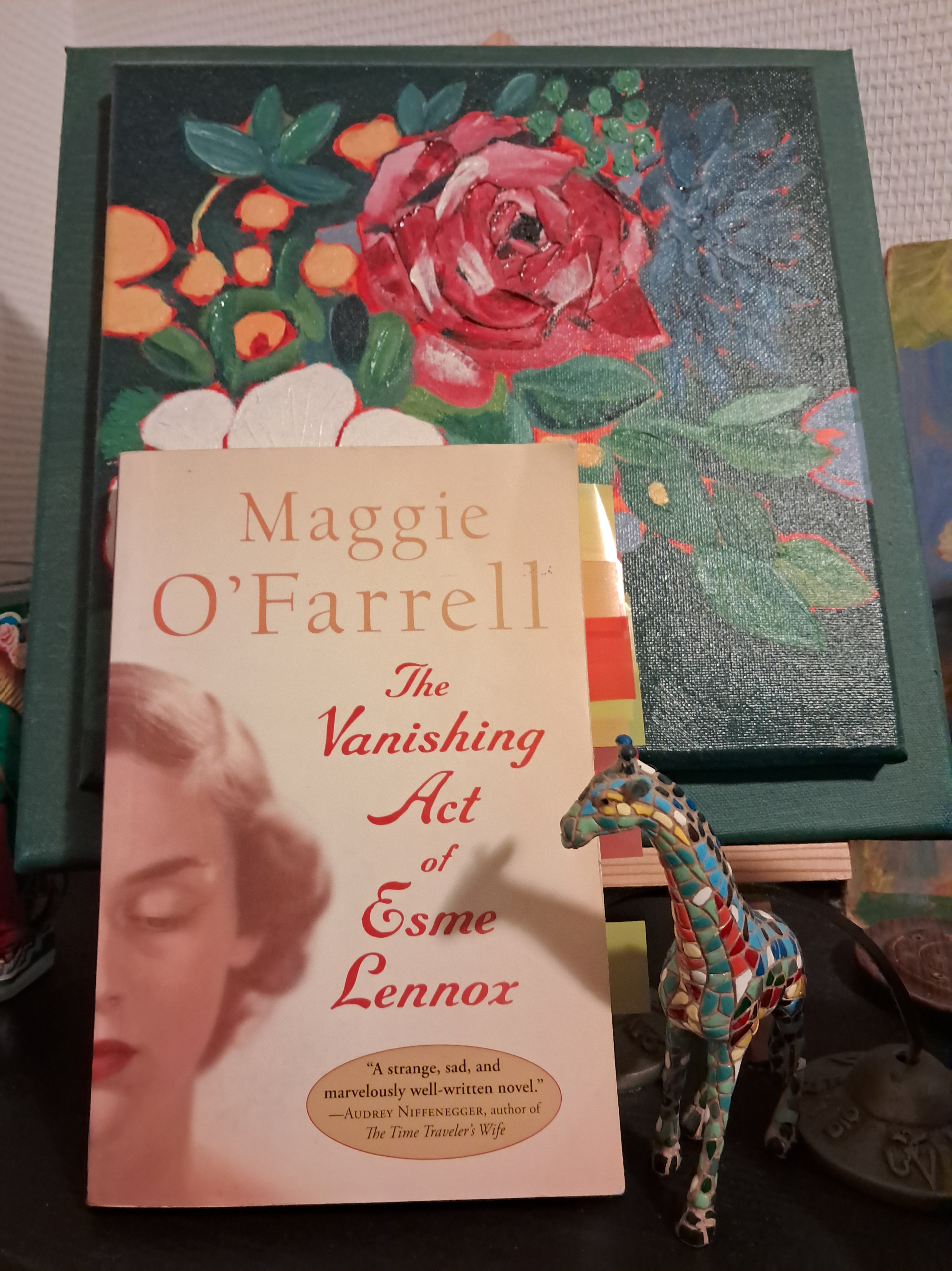
Her novels include After You’d Gone, My Lover’s Lover, The Distance Betwees US, which won a Somerset Maugham Award, The Vanishing Act of Esme Lennox, The Hand That First Held Mine, which won the 2010 Costa Novel Award, Instructions for a Heatwave, This Must Be the Place and The Marriage Portrait, shortlisted for the Women’s Prize. She lives in Edinburgh.

Hamnet by Maggie O’Farrell

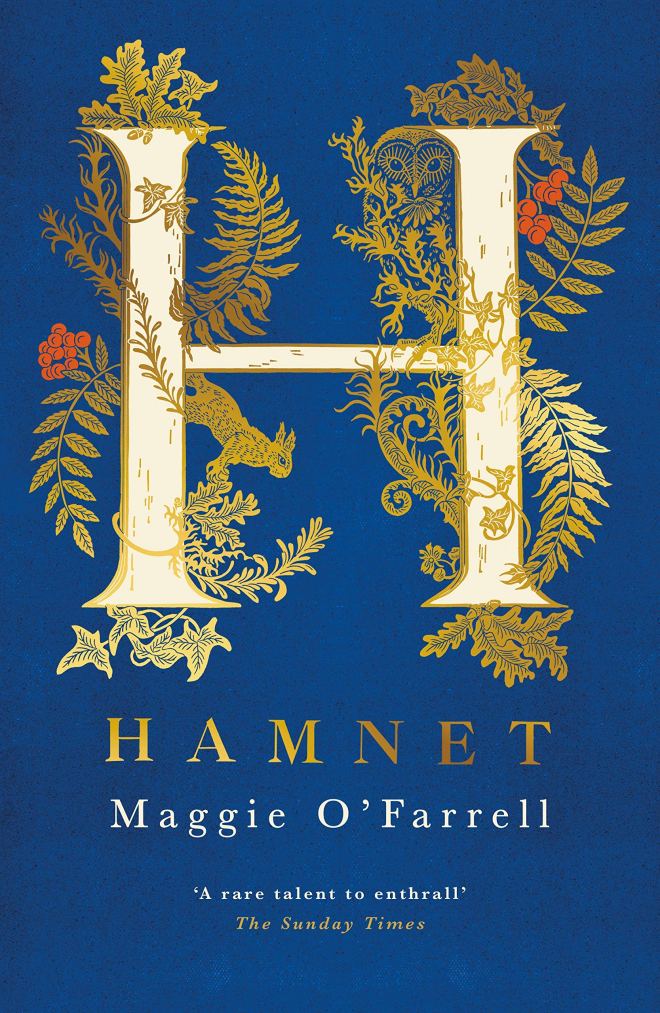
Hamnet was the winning novel of the Women’s Prize For Fiction in 2020 and won the fiction prize at the National Book Critics Circle Awards (2020). It was author Maggie O’Farrell’s eighth novel.

Behind Every Great Man…Is An Often Untold Story

Anne Hathaway Shakespeares wife HamletSet in 1580’s Stratford, Warwickshire, the novel is about the meeting of two young people, their respective families, the life they create and the effect their twin children have on it.
Though the husband will become a famous playwright and name one of his plays after the son they lose, this isn’t a story that centres around him or his work, neither is it really about the son – those names are more like the bright lights that make us curious to see what the fuss is about.

Delightfully, it’s all about Agnes.

“If you ask someone what they know about Shakespeare’s wife, you’ll probably receive one of two answers. Either: he hated her. Or: she tricked him into marriage. Historians and biographers and critics have for a long time inexplicably vilified and criticized her, creating a very misogynistic version of her. I wanted to persuade people to think again, to not rush to conclusions.

We are so accustomed to calling her ‘Anne Hathaway’ but her father’s will clearly names her as ‘Agnes’. That was an electrifying, defining moment in the writing of the book. In giving her what is presumably her birth name, I’m asking readers to discard what we think we know about her and see her anew.” Maggie O’Farrell

Twin Everything

I expected to be gripped early on, so was surprised that it took a while to get into sync with the very descriptive, present tense, third person, omniscient narrative perspective. Initially it felt like listening to someone -while looking through a camera – describe in minute detail every single detail in the frame as it was moving quickly forward. 

It’s written in a dual narrative timeline in alternate chapters; the year that the twins fall ill and the year that these young parents meet. It is divided into two parts, Part 1 takes place before the death of Hamnet and the shorter Part 2, the aftermath.

The initial scene puts us in the eyes of this boy Hamnet as he rushes through his home and that of his grandparents, looking for someone, anyone, due to the sudden onset of deathly pestilence in his twin sister Judith.

Love Always Finds A Way

As the chapters switch between Hamnet’s alarm given the pending emergency and the year his parents met, we get to know his father, a Latin tutor, son of a glove maker/tyrant and his mother Agnes, a farmer’s daughter, living with her disapproving stepmother.

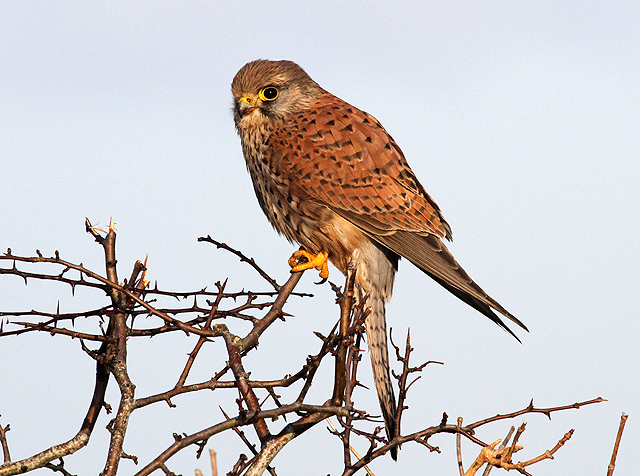
These young people become each others refuge from family situations they’d both like to escape. Agnes is highly intuitive, has an in-depth knowledge of herbalism and possesses a kestrel the local priest gave her. She is unlike other young women, self-possessed, ‘knowing’.

“Some have asked Susanna how her mother does it. They have sidled up to her in the market or out in the streets to demand how Agnes divines what a body needs or lacks or bursts with, how she can tell if a soul is restive or hankering, how she knows what a person or a heart hides.”

The novel traces their relationship, marriage and the sacrificial act that came from her ability to perceive what was best for her husband (facilitating his venturing to London to find and pursue his purpose) and what best for her three children, while highlighting the tragic demise of their son, a turning point in their relationship.

“She, like all mothers, constantly casts out her thoughts, like fishing lines, towards her children, reminding herself of where they are, what they are doing, how they fare.”

Even in the boys passing there is something mystical in the way it is rendered. The boy is a twin, but also the son of a woman in touch with nature and with a feeling for ‘the other side’. What Hamnet did to save his sister comes of both those mysteries.

How Women Shape The Lives of Others

Forget that the playwright Shakespeare is a character in this novel and read it for the unique individuals they might have been, as ordinary people in a community, coming together against the odds. I really enjoyed that this was so much more about Agnes and that she had gifts she seemed able to live with and use as a mature woman, without persecution. A result and reward of a difficult childhood, after the untimely death of her own mother.

“She grows up feeling wrong, out of place, too dark, too tall, too unruly, too opinionated, too silent, too strange. She grows up with the awareness that she is merely tolerated, an irritant, useless, that she does not deserve love, that she will need to change herself substantially, crush herself down if she is to be married. She grows up, too, with the memory of what it meant to be properly loved, for what you are, not what you ought to be.”

By deliberately not mentioning the husband’s name, we imagine this couple encountering each other, evolving together, moving apart and coming back together, for nothing can both unite and divide a couple quite like the grief of losing a child.

“What is given may be taken away at any time. Cruelty and devastation wait for you around corners, inside coffers, behind doors; they can leap out at you at any moment, like a thief or a brigand. The trick is to never let down your guard. Never think you are safe. Never take for granted that your children’s hearts beat, that they sup milk, that they draw breath, that they walk and speak and smile and argue and play. Never for a moment forget that they may be gone, snatched from you, in the blink of an eye; borne away from you like thistledown.”

A novel of an auspicious pairing of souls, of longing and grief, of sacrifice and regret, I really enjoyed it after the slow start, despite the narrative perspective at times keeping me at a distance from the characters.  O’Farrell does such a brilliant job in re-imagining this much maligned character, it makes you want to read and know much more about Agnes. About the women whose lives were rarely scribed.

Maggie O’Farrell, Author

Hamnet The Marriage Portrait Shakespeares WifeMaggie O’Farrell is a Northern Irish novelist, now one of Britain’s most acclaimed and popular contemporary fiction authors whose work has been translated into over 30 languages. Her debut novel After You’d Gone won the Betty Trask Award and The Hand That First Held Mine the Costa Novel Award (2010).

She has written 9 novels and a superb memoir, I’ve reviewed here: I Am, I Am, I Am, Seventeen Brushes With Death.

Her latest book set in Renaissance Italy, The Marriage Portrait, tells the story of a 16-year-old duchess and her fateful marriage to the Duke of Ferrara – based on the short life of Lucrezia de’ Medici.

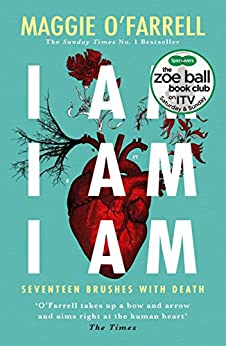
I Am, I Am, I Am: Seventeen Brushes With Death by Maggie O’Farrell

This memoir is told using the unique narrative structure of seventeen brushes with death, each chapter heading shows an anatomical sketch of an organ of the body and the year it was affronted, a pattern that isn’t chronological, more like a jigsaw puzzle, that as we read, begins to reveal more of itself as each experience is understood.

Warnings and Wake Up Calls

Maggie O'Farrell Memoir Near Death ExperiencesI thought it was brilliant and I Am as much in awe of how it’s been put together, as I Am of the insights she shares as each brush has its impact and adds to her knowledge of the body, mind and her own purpose in being here.

The first encounter is thriller-like and anyone who’s ever felt their inner warning system go off when in the presence of a would-be predator, will recognise the signs and shake their heads at the response she gets when trying to report the event to the police.

That going over the conversation afterwards thing, wondering what else she could have said for there to have been a different outcome.

How could I have articulated to this policeman that I could sense the urge for violence radiating off the man, like heat off a stone?

It occurs to me that we humans have more lives than cats, these brushes with death can occur without us even realising. It will make you pause and think back to some of those near misses you too might have had.

Others, like the first one she shares are pushed down so deep, never again mentioned, except that one time, when it was necessary to make someone understand, to accept a necessary attitude and behaviour change.

It is a story difficult to put into words, this. I never tell it, in fact, or never have before. I told no one at the time, not my friends, not my family: there seemed no way to translate what had happened into grammar and syntax.

Some stories/brushes forewarn of another that is still to come in the narrative, so that in this way, there is an invisible thread connecting them, we come to an encounter later in the text, having already been made aware of some of the underlying facts that have formed this life.

Drowning In Life, Travel An Escape

Drowning Maggie O'Farrell Memoir I Am I Am

Photo by Hernan Pauccara on Pexels.com

A near drowning at sixteen is as much about the inclinations, boredom and despondency of adolescence, as it is about the consequence of having lost a sense of direction underwater.

It is all these things and more that propel me to my feet. At sixteen you can be so restless, so frustrated, so disgusted by everything that surrounds you that you are willing to leap off what is probably a fifteen-metre drop, in the dark, into a turning tide.

A Latin class school trip to Rome and Pompeii at seventeen was a turning point O’Farrell describes as being like receiving a blood transfusion, the assault on all the senses of the sights, sounds, tastes, the contrast to what was familiar so great, it was painful to consider leaving.

It was the beginning of a love affair with travel and gave a focus to her innate restlessness, a way to satisfy it, the only thing besides writing that can meet and relieve it.

A Cure For Prejudice, Bigotry and Narrow-Mindedness

Maggie O'Farrell Feather Death Angels

Photo by Erik Mclean on Pexels.com

She quotes Mark Twain, who after travelling around the Mediterranean said that travel was ‘fatal to prejudice, bigotry and narrow-mindedness’ and tells us that neuroscientists have for years been trying to understand what it is about travel that alters us, effects mental change.

Professor Adam Galinsky, an American social psychologist who has studied the connection between creativity and international travel, says that ‘Foreign experiences increase both cognitive flexibility and depth and integrativeness of thought, the ability to make deep connections between disparate forms.

One of the most gripping chapters for me was the second to last, CEREBELLUM 1980, when a headache that becomes a significant marker on her life path, a period of hospitalisation and subsequent rehabilitation and re-education as she recovers from encephalitis, a debilitating inflammation of the brain probably caused by a virus resulting in muscular atrophy, a long period of immobility and several ongoing, invisible side-effects.

Apart from the more obvious physical issues, enduring a chronic condition also had a kind of mystical quality. The way she writes of convalescence, where weeks slide by without your participation, ironically, has some resonance with what we are experiencing with lockdowns/confinement.

Fever, pain, medicine, immobility: all these things give you both clarity and also distance, depending on which is riding in the ascendant.

A Fear Of Fearlessness

Near death experience fearless recklessness Maggie O'Farrell Memoir

Photo by Christopher Moon on Pexels.com

The insight that really stood out though, was the development of, and her living in a state, of fearlessness.

Coming so close to death as a young child, only to resurface again into your life, imbued in me for a long time a brand of recklessness, a cavalier or even crazed attitude to risk. It could, I can see, have gone the other way, and made me into a person hindered by fear, hobbled by caution. Instead, I leapt off harbour walls. I walked alone in remote mountains. I took night trains through Europe on my own, arriving in capital cities in the middle of the night with nowhere to stay.

These insights were so remarkable and familiar to me, when I reflect on the way my daughter lived her life, that they help me understand something I was so fearful of myself, her fearlessness and familiarity with death, and her artistic conversation with it.

It was not so much that I didn’t value my existence but more that I had an insatiable desire to push myself to embrace all that it could offer. Nearly losing my life at the age of eight made me sanguine – perhaps to a fault – about death. I knew it would happen, at some point, and the idea didn’t scare me; its proximity felt instead almost familiar. The knowledge that I was lucky to be alive, that it so easily could have been otherwise, skewed my thinking.

Fortunately for us Maggie O’Farrell lived far enough into her life for this thinking to change, the birth of a child is magical in so many ways, her indifference stopped the minute she became a mother. And then even greater challenges would arrive, situations that the life she had lived until then, unwittingly had been preparing her for.

If you are aware of these moments, they will alter you. You can try to forget them, to turn away from them, to shrug them off, but they will have infiltrated you, whether you like it or not.

A work of incredible merit, highly recommended.

And then there is Hamnet.