
 I’ve given away numerous copies of Martin Booth’s The Industry of Souls over the years and repurchased it for my bookshelf, just in case I wished to reread it.
But the truth is, I am not a rereader. I never go back, not even for this book which I’ve always named as my all-time favourite book. Until now. Could I continue to say this is my favourite book, when so many reading years have passed and it becomes nothing more than a nostalgic memory of being uplifted by something I can no longer quite define?
So on the first day of the New Year I decided to reread it to see. 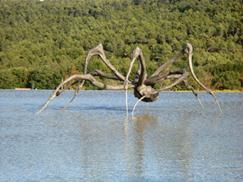 And felt all the discomfort of why that activity is not for me, glances at the bookshelf seeing all those titles I’ve neglected and not yet read, feeling the fear of this highly praised book no longer living up to my own expectations, the scepticism of being transported a second time when I knew what would pass, the memory of that paragraph about the soporific wasp, trapped in a spider’s web, snipped free by its wise eight-legged captor, a paragraph that I cut and paste and send to appreciative friends, long before the convenience of a blog, wondering if I would now view it with less than the perfection status I had granted it when first encountered.
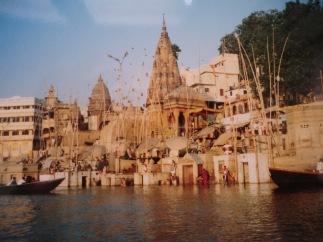 It is true, there is nothing like gazing at a splendid view, arriving in a new city, country, or place, reading a book or meeting someone for the very first time and experiencing that element of the unknown. It’s the sense of adventure, the openness to being shocked, moved, delighted, surprised, uplifted, disappointed or merely comfortable with a familiar voice telling a new story. It reminds me of a quote (now those snippets I do reread) from one of my travel journals during a three month back-packing sojourn around India, Nepal, Vietnam and Thailand, daily living in the face of the unknown.
“In the face of the unknown, man is adventurous. It is a quality of the unknown to give us a sense of hope and happiness. Man feels robust, exhilarated. Even the apprehension that it arouses is very fulfilling. The new seers saw that man is at his best in the face of the unknown.”
An extract from The Fire From Within by Carlos Castaneda
Reading is unique in that it allows us to rest in the safety of our environment, yet allows us to visit such extraordinary places and/or observe the heights, the depths and the edge of humanity. Primo Levi does it in If This is a Man: The Truce, Vaddey Ratner In the Shadow of the Banyan and Jackie Kay in Red Dust Road to name just a few.
The Industry of Souls takes place on the 80th birthday of Alexander Bayliss, a British citizen arrested for spying in the Soviet Union in the early 1950’s, who after 20 years in a Soviet labour camp, the gulag, settles in the small Russian village of Myshkino, with no inclination to return to his roots.
It was all a part of the process of rehabilitation, of making us come to appreciate that Mother Communism, that buxom, grinning, snag-toothed wench dressed in a pair of dark blue overalls, with a scarf around her head and biceps like Popeye the Sailorman, would provide for us. She was our succour and our saviour as well as our slave-mistress and superintendent.
On this day as he makes his round of the village and his friends, he remembers both his time in the village over the years and significant events of that period in the gulag, including with his friend Kirill, to whose village he returned in fulfilment of a promise. And at the end of today he will receive another visitor, a connection from that past, he long ago left behind.
For now, there is much to offer in the reading present, but having reread this favourite, I have no regrets and I hope to have encouraged a few of you to seek it out, it is well worth sinking into its depths.
It is the industry of the soul, to love and to hate;
To seek after the beautiful and to recognise the ugly,
To honour friends and wreak vengeance upon enemies;
Yet, above all, it is the work of the soul to prove
It can be steadfast in these matters…
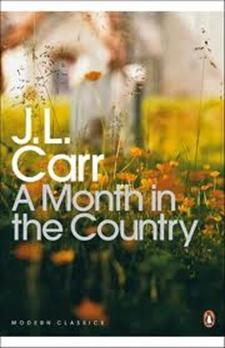 I read this book on a loose recommendation from
 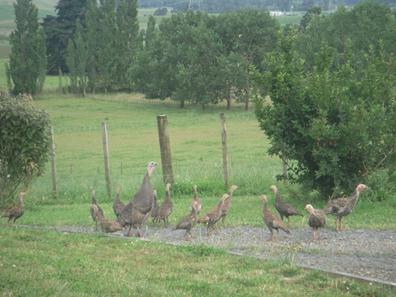 It being the festive season, I couldn’t miss an opportunity with a title like A Month in the Country, to share this delightful photo sent by my family in New Zealand a few days before Christmas, having explained to a few friends here that we are not really into eating turkey and as you can see, they feel quite safe to wander up the driveway of my father’s home and show off their brood.
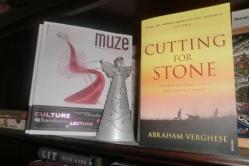

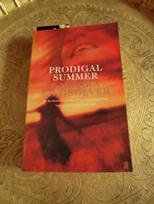


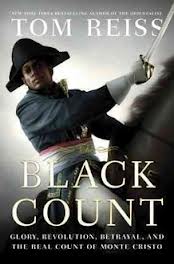


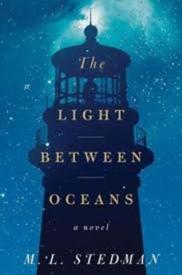 I begin reading with envy as M.L.Stedman’s playful yet adept metaphors slip off sentences, like droplets off the oars of a dinghy, each one plunging back into the ocean to collect another stream from which to compose those few extra words that create more than just mere description, revealing an image and inviting us deeper into the world she paints with words, an island hundreds of miles from civilisation, where only the two oceans, a grand light, the twinkling stars and the tall, elegant, imposing bearer of that light keep a young, newly married couple company.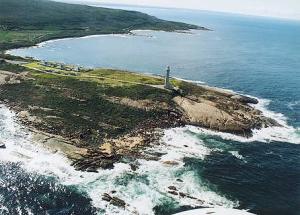

 ever faithful, if somewhat distracted guests.

 and a unique cultural insight.


 writers become future classics. Perhaps books are going to become more of an interactive experience?
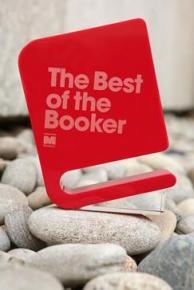 Originally known as the Booker, it used to have just one criterion – that the prize would be for ‘the best novel in the opinion of the judges’. That remains one of the criteria and we know there have been some off years, it is a unique award, not what you would call popular fiction, it is what the organisers refer to as quality fiction to attract ‘the intelligent general audience’ – sounds a little book snobbish to me, but then judging book prizes is subjective and often sparks a great debate and sometimes even bad behaviour.
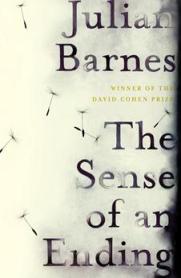 Last year’s winner was Julian Barne’s Sense of an Ending, which I admit that I have not read yet, Barnes’ being a novelist I’ve started and stopped a couple of times, but will persevere and read before too long.

 It is an interesting concept and a thrilling journey, one of the most moving and real parts for me being an encounter with an anaconda that almost had fatal consequences. However, throughout the book, I couldn’t shake off a sense of reluctance, of characters holding back; was Mr Fox being honest or was he hiding something? Why doesn’t Marina question or insist on answers? It was hard to believe that the head of a large pharmaceutical pouring significant funding into a research project would tolerate the situation without acting in a more forthright manner.
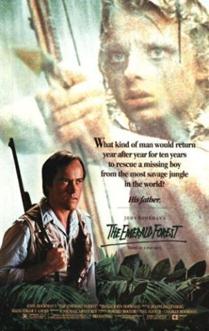 The film is based on the true story of a 7-year-old boy kidnapped by Indians, who disappear into the Amazon forest. The boy’s father, a Venezuelan engineer, spent every summer for the next 10 years searching the forests for his son and eventually found him.
 appear for the one season that is missing but I am open to suggestions, is there a title that comes to mind for Autumn, the Fall? I am sure one must exist.

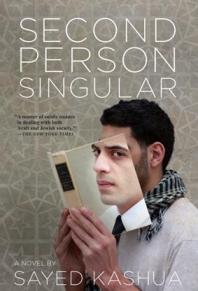 The story concerns ‘the lawyer’, an educated and ambitious man regarded as one of the most successful Arab criminal attorneys in Jerusalem. One day he picks up a second-hand copy of Tolstoy’s novella ‘The Kreutzer Sonata’, recognising it as a volume his wife has mentioned in the past with enthusiasm, only to discover what he perceives as a love letter between its pages, in his wife’s handwriting. Discovering the name Yonatan on the inside cover, between bouts of violent and paranoid thoughts regarding his wife, he sets off to hunt the culprit down.
 They are Arab-Israeli’s, non-Jewish Israeli citizens whose cultural and linguistic heritage is Arab. A matter of geography and politics, those who live in the Occupied Territories (otherwise known as the West Bank and Gaza) are of the same ethnic origin but refer to themselves as Palestinian, they of the same family as Arab-Israeli’s, they just carry a different legal status, which affects their education and employment opportunities and much more.
 Word by Word