
 A friend lent me this book and I recognised immediately that it was a Europa Editions book, but not one I had heard of Europa Editions are one of my favourite publishers, they always have something that will appeal to me in their annual catalog. Many of the books are of Italian origin, or translated from other European languages.
A Catalog of Birds however, is written by the American author Laura Harrington.
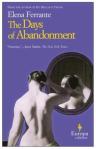
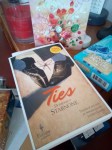
Some of the books Europa Editions have published that I’ve read and reviewed here are, that you might enjoy, are the Elena Ferrante’s Neapolitan series, starting with My Brilliant Friend and Frantumaglia, A Writer’s Journey, also by her The Days of Abandonment, the novel that is like its twin, Ties by Domenico Starnone; the World Noir title The Bastards of Pizzofalcone by Maurizio de Giovanni, Eva Sleeps by Francesca Malendri, The Man Who Snapped His Fingers by Fariba Hachtroubi, Mayumi and the Sea of Happiness by Jennifer Tseng and a new one that I have to read, which I’m really looking forward to, the French translation of Disoriental by Negar Djvadi.




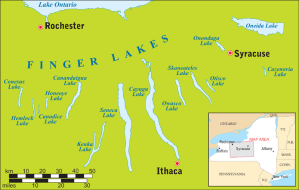
A Catalog of Birds centres around a small 1970’s community in the Finger Lakes region of New York state, an area known for its series of long, thin, deep glacial lakes, it’s high gorges and dramatic waterfalls (and today its wineries).
Despite its natural beauty, this community is affected, as every other is and has been, by the shadow of war, of young men returning from Vietnam, lost dreams, a lost innocence.
The Flynn family’s son Billy has just returned, his body covered in burns, his right arm mangled, his hearing disturbed, after surviving a helicopter crash. The day after his return, his girlfriend Megan disappears.
Megan
Megan hesitates before boarding the bus to a place she’s never been before, hesitates before accepting a ride with a stranger. Thinking of Billy, that horrible hospital, all those wrecked young men and boys. She’s in flight, in flight from it all.
Remembers Billy’s last leave. A year of training under his belt. Three days at home before shipping out to Vietnam. Both of them in the grip of something: anticipation, fear, the unknown.
Billy’s field journal
The early pages from Vietnam alternate between scenes on the base: insects, common birds, sketches of his crew; and pages where he was off the base: acres of green, rice paddies, water buffalo. There are birds Nell has never seen before, drawn as only Billy can; each of them so individual, so full of personality you expect them to sing.
Black crowned night heron
Glossy ibis
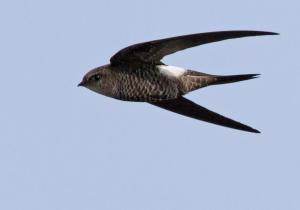
Pacific swift
There are fewer entries as the months drag on: a lone man crouched in tall burning grass, the shadow of a gunship passing over him, mountaintops ringed with clouds, ravines dark as the far side of the moon. These give way to drawings of the dead, downed helicopters, the last pages full of fire. Page after page: birds, trees, fields, burning.
Billy and his younger sister Nell have a close relationship, they know the surrounding lakes and forests like no other, they are connected to their natural environment in a way that even a highly educated academic specialising in the birds they know so well, had much to learn from.
Esme, 45 yr old ornithologist
Over the years Billy taught Esme a new way to listen, showed her how birds organise their communication, how to read body language between pairs, the meaning of their back-and-forth chat, how they check in on each other, the various warning sounds.
Nell
Billy’s journals are the thread of their childhood; his coming into his own as a naturalist, as an artist, developing his eye, his hand, his deepening identification with birds. From sketching in the field to detailed study, to painting the portraits he began to make the year before he shipped out.
 Both Billy’s father Jack and his best friend Harlow, also bear and have borne the hardship of the return from war, they cope in their own way, as has Marion, Jack’s wife, waiting out the long semi-recovery, which in the early years, tests every man who dares survive war’s dark parasitic claim to their sanity. Now they must watch Billy go through the same test.
Harlow Murphy
On good days he fell right into a rhythm of forgetting, found a girl not quite so dedicated to her antiwar stance she’d forego sleeping with a vet, and then drank enough to numb his nightmares. On bad days he was rendered speechless by fury and confusion. He grew his hair long. Learned never to talk about the war.
Jack
“Did you have nightmares Dad?”
“Still do.”
The minutes tick long.
“You can’t leave it. You just end up carrying it.” He takes another swallow of Scotch. “I don’t know how to help him,” he admits. Shamed to hear the words out loud.
“Just love him.”
He looks at his daughter again, wishes it were enough, wishes he didn’t know the limits of love and hope, how little, really, can be covered over, hidden away, made whole.
Nell is too young to remember her father’s return from war, her memories are of the good times she had with her brother and his friend, of the strange feelings that engulf her, of the terrible knowledge of things she knows about Megan, of a desperation to protect her brother, to save his drawings, to bring him back to where he was, when they would go out on the lake, sit in among the trees, listen to birdsong, recognise their warnings, to just be.
Nell
Something lifts in Nell, hearing her brother laugh like that.
She looks at Harlow’s hands. They’re square and strong, the Coke bottle almost disappears in them. Thinks of picking apples in the Alsop orchard. The boys thought ladders were for sissies. Determined to keep up with them, she tried to find a handhold and a foothold to get into the tree. Harlow reached down, grabbed her forearm, pulled her up beside him.
That sudden wash of closeness as she found her footing and her balance. The smell of his skin, touching him. The sun low in the sky, the trees heavy with fruit. Hidden from the others. Light-headed. Vibrating with a feeling she didn’t know how to describe. Twelve years old. How she had wanted to kiss him.
Still does. But it doesn’t look like that’s ever gonna happen again.
Billy
He flirts with driving so fast she’ll be scared into telling him the truth, a truth he probably already knows. Feels her fear then, takes his foot off the gas.
How stupid they were; believing nothing could touch them, catch them, destroy what they had. Willfully blind to the facts, to the birds and the bees, for godsakes. Charmed, meant to be, summer of love, ain’t nothing like the real thing, baby.
He looks at Nell, thinks of how he kept Harlow away from her, but still took what he wanted with Megan. With everything. Grabbed what he wanted with both hands. Flying. The war. Intoxicated in the air. Every time he walked across the tarmac, climbed into the bird. All he’d ever wanted. More awake, more alert, more alive than anytime before or since.
This is a thought-provoking novel about the effect of war on those who were involved in it, on those closest to them, who try to nurture them through the aftermath, about the inclination to not ever to want to speak about what happened, and how that and the changed behaviour trauma causes, affects everyone.
I hope the selection of quotes above provides something of the essence of the novel, it seemed to me that they resonate more than anything I could contribute by way of the review. It is a touching novel that captures the beauty of a shared childhood, the complicity of adolescent friendship and loyalty, the struggle of families, of how they split and come back together, of love, of loss, of the difficulty of practicing forgiveness.
Buy A Catalog of Birds Here
 Today the short list was announced for the woman’s prize for fiction. From the
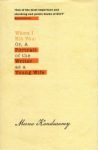 Meena Kandasamy, When I Hit You: Or, A Portrait of the Writer as a Young Wife –
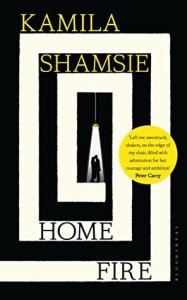
  Kamila Shamsie, Home Fire –
 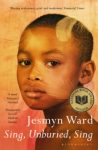 Jesmyn Ward, Sing, Unburied, Sing –
  Imogen Hermes Gowar, The Mermaid and Mrs Hancock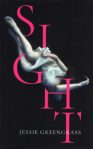

 I hesitated about whether to read Die, My Love because of what I perceived as its intensity, I thought it might be depressing. The reviewer whom I expressed this too, responded:
 In an interview by Jackie Law at


 I like to read books that come from within other cultures, so a literature prize that brings attention to authors from outside the predominant literary cultures interests me.












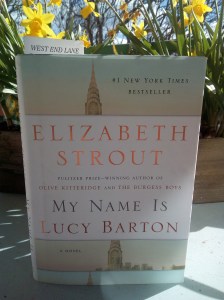 There is something so captivating about the voice of Lucy Barton, it made me wish to slow read this novel, as if it were a box of exquisite chocolates that require enormous self-discipline not to finish in one sitting.
 Absolutely loved it, hypnotic, slowly affirming a life that can grow and change and evolve out of traumatic experience, that past narratives don’t define future stories, that love is as hardy as a seed that grows out of rock, not impossible to bloom even in the harshest of circumstances.
 Reservoir 13 was long listed for the
  Sing, Unburied, Sing is set in the same Southern US community, putting us amidst a struggling mixed race family, a young black woman Leonie, who fell in love with Michael from a racist white family implicated in a tragedy that affected her family. In its telling, it traverses love, grief, terminal illness, addiction, prejudice, dysfunctional parenting, hope and survival, the effect this mix has on everyone touched by it, the painful and the poignant.
 There is a reference to her novel Salvage The Bones, as the family return from their road trip, they pass a young couple walking a dog, it is the brother and sister, Skeetah and Eschelle, from the neighbourhood, protagonists of that earlier novel. I was curious to know if the dog was related to China, an unresolved thread left hanging from her earlier novel. I was delighted to encounter them.
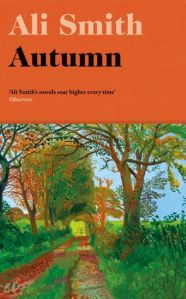 I have finally read a novel by Ali Smith and enjoyed it, though it is distracting to explain why with so many exuberant accolades and comments all over it saying how brilliant it is, I wish I could just read without the expectation this over abundance of blurbs brings. She is clearly the darling of British literary media and publishing, however all the superlatives are a little over the top in my opinion.

 All We Shall Know by Donal Ryan is a slim novella, the third book by this young Irish writer and his best in my opinion.
 Salt Creek by Lucy Treloar was published by Gallic Books new imprint Aardvark Bureau, I’ve loved all the books they’ve brought out under this imprint and Salt Creek might just be the best so far. It’s an historical novel, inspired by the events of the authors family, who immigrated to Australia from Britain, portraying one family trying to find success in farming in a harsh, unforgiving environment of South Australia.
 The Complete Claudine by Colette (translated by Antonia White) was my One Summer Chunkster for 2017, a French classic, relatively little known outside France among general readers, but an author who should be more widely read, especially by young adult readers, as it charts the young Claudine’s journey through her last year in school, then her adventures in Paris with her father, through marriage and into maturity.
 Two Old Women by Velma Wallis is a quirky fable-like book I read about and was intrigued by, recommended by a fellow reader. It is an Alaskan legend of betrayal, courage and survival, one which features, as the title suggests, two old women.
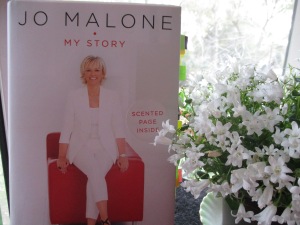 My Story by Jo Malone is one of the six memoirs I read in 2017 and the one that was the most intriguing and personal to me, not because I’m a fan of her perfumes, but because I too have a love of the aromas of plants, flowers, resins, herbs and like to create remedies from essential oils and mix them with other plant oils to use therapeutically.




 Word by Word