
Cerebral Distractions or Healing Attractions
Whereabouts indeed. I have been absent this space and reading less, as I pursued another passion, the great jigsaw puzzle of building a family tree, which started out as an exercise in tracing my female lineage looking for a particular pattern, I felt called to heal and ended up as a series of unfinished mysteries seeking to be resolved. And it is so much fun, imagining and reclaiming these lives!
Well, all of that is another story, but interesting enough to have pulled me away from my regular habit of sharing my reading here. I miss this space, and the interactions, so here we are, sharing a few recent reads.
I picked up the reading again as the temperatures here rocketed into full summer heat and my brain asked, “Can’t we just read a book today?”, instead of spending my free time working like the dedicated closet researcher I had become.
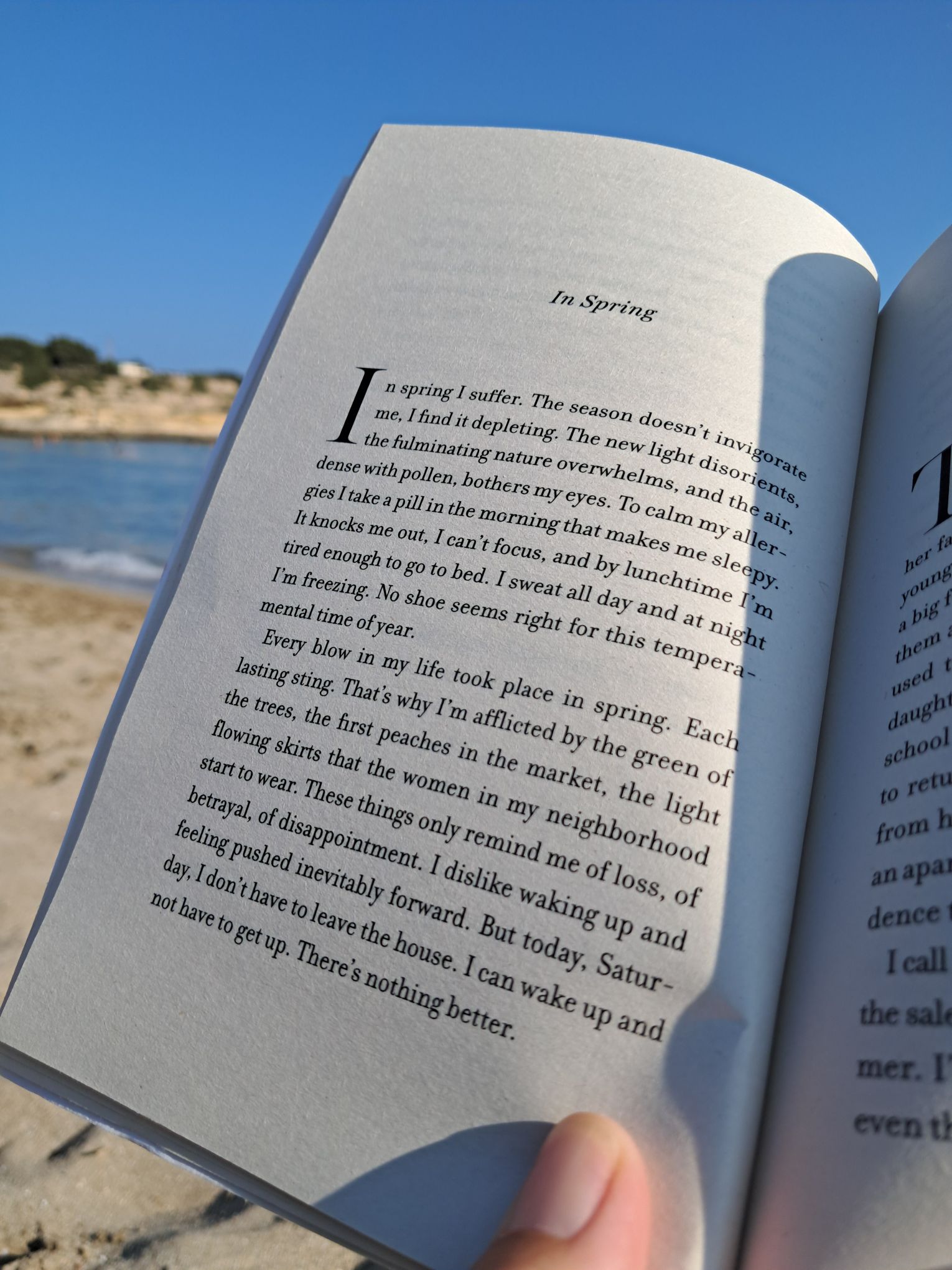
A day at the beach with a Jhumpa Lahiri novel turned the tide.
A Gifted Book Returns Unread

Whereabouts by Jhumpa Lahiri is a novel that came back to me, one I gifted a friend from abroad who has a love affair with the city of Rome. Back in Europe to visit the city again, she brought this book I gave her halfway round the world, pulled it out of the suitcase and said:
‘I haven’t read it yet. I’m going to read it in Rome. Here. You have got two weeks to read it before I go. We can talk about it when I get back from Ireland.’
Challenge accepted and quietly delighted; I really wanted to read it too.
Now I have.
I loved it.
It felt like I was reading a work of creative non-fiction. In disguise. Autofiction perhaps?
Jhumpa Lahiri is a British-American author of Bengali parents, whose earlier novels have highlighted the immigrant experience. For some years now she has lived in Italy, learned the language and her last two books were written and published in Italian before being translated into English.
Whereabouts is a collection of short vignettes of one woman’s highly observational, contentedly solitary, existence in Rome. The epigram, a quote from Italo Svevo provides a clue to what follows.
‘Every time my surroundings change I feel enormous sadness.It’s not greater when I leave a place tied to memories, grief, or happiness. It’s the change itself that unsettles me, just as liquid in a jar turns cloudy when you shake it.’
Averse to Change, Loves Movement
Disliking change, but always on the move, her days capture aspects of the surroundings she has grown attached to, taking us right there. The chapter titles nearly all begin with the prepositions: On, In or At.
On the Sidewalk, In the Street, At the Trattoria, In the Piazza, At the Bookstore, On the Couch, On the Balcony, At the Beautician, In the Sun, At my House, In Bed, On the Phone.

Near the end, as I began to notice this pattern and list of locations, I asked myself, “What is this ‘Whereabouts?’ and I flicked back to the contents page and read through the list of destinations. I then turned the page and the only chapter that doesn’t start with a preposition, Nowhere, seemed to be speaking to me, responding to my question.
It began by saying:
‘Because when all is said and done the setting doesn’t matter: the space, the walls, the light. It makes no difference whether I’m under a clear blue sky or caught in the rain or swimming in the transparent sea in summer.’
This has come just after Up Ahead, a sign of change, something our protagonist does not like and spends the entire short chapter of In Spring pondering. A chapter I sent to another friend, one who shares the protagonist’s dislike of that season.
Transition, Change and Things that Stay the Same
Now, she contemplates a transition; both of the day, and of a life, observing the peripheral characters to this solitary existence she has created, people in movement, marking the end of a day.
‘They’ll keep walking along these sidewalks. They’re permanent fixtures in my mind, knotted up in the fabric of my neighbourhood just like the buildings, the trees, the marble woman. These are the faces that have kept me company for years, and I still don’t know the people they belong to. There’s no point saying goodbye to them, or adding, we’ll meet again, even though right now I’m overflowing with affection for them.’
Overall, it’s a reflective relatively smooth paced novel in which not much happens and yet you feel as though you have visited and lived for a short time in a city apartment in one of the squares of this major European city of Rome, a part of it not populated by tourists, but where the everyday life continues to unfold week after week, year upon year, following the same rhythms, with small changes a natural part of its existence.
‘Is there any place we’re not moving through? Disoriented, lost, at sea, at odds, astray, adrift, bewildered, confused, uprooted, turned around. I’m related to these related terms. These words are my abode, my only foothold.’
Brilliantly crafted. Could not put it down, read it in a day.
Highly Recommended.
Have you read Whereabouts? Do you have a favourite by Jhumpa Lahiri? Tell us in the comments below.
 Ties is a novel about the short and long-term effect of the first grand infidelity, on a couple, on their adult children and even on the life of their cat.
 It’s an intriguing novel, with what I felt was a slightly bizarre and unexpected ending. The story invoked immediate comparisons with The Days of Abandonment, however the experience of reading this novel was like viewing these lives from the outside, like looking at things from a distance, provoking a more questioning response, whereas Ferrante’s novel succeeds in transporting the reader into the narrative, it’s more cathartic and slightly terrifying, as she brings you to the edge of sanity, making you sense the danger in letting that temporary instability be observed by the outside world, a situation that many women in past centuries were indeed committed to asylums for, provoked as they often were by the cool, insensitive abandonment of the patriarch.

 Whether we are conscious of it or not, we all grow up seeking to affirm our sense of personal and group identity, absorbing those questions of Who am I? Where do I belong? Traditionally, the family and the community reflect that notion and it is not until we step outside those comfort zones that we might question it. But for children growing up among worlds and between cultures the awareness comes much earlier.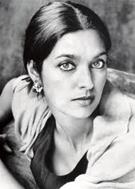
 Word by Word