The Exiles Return by Elisabeth De Waal

The First Woman Doctorate

Elisabeth De Waal was a poet, writer and the first women to gain a doctorate from the University of Vienna in 1923. Born in 1899 in Vienna, she was the eldest child of Viktor von Ephrussi and Baronness Emmy Schey von Kormola, her father and uncle sent from Odessa 30 years before, one to Paris the other to Vienna to create the family banking empire.

The Hare With the Amber Eyes Connection

030413_2049_TheHarewith1.jpgWe may not have known of her, were it not for her grandson Edmund De Waal, the ceramist, who inherited 264 Japanese netsuke, and decided to share the story of the passage of these miniature artisan objects in his excellent The Hare With Amber Eyes, which I read earlier this year and adored – a 5 star read for me.

He traced his family history through the voyages and resting places of those well-travelled netsuke, one of the more significant journey’s being his grandmother’s return visit to Vienna after the second world war, her return from exile, where she was able to reclaim the netsuke (and sadly little else) thanks to an amazing story of courage by the family’s maid.

An Old Manuscript Rescued

Hare Amber EyesHis father handed over the yellowing typescript along with school reports, essays, letters and a few diary entries, the things that had mattered to Elisabeth De Waal, that remarkably survived into the 21st century.

It was from this return journey that her inspiration came to write this novel, The Exiles Return where we enter the lives of three exiles, a Jewish laboratory professor, a Greek property developer and Resi, the daughter of a Viennese princess, who though born in America, seems ill-fitted to fulfill family ambitions, so spends a summer with her Aunt and cousins in Austria, a return to her roots.

Fifteen years after escape into exile Professor Adler returns to Vienna, Austria leaving behind a prestigious job and a reluctant, successful wife and daughter who have adapted to their New York life beyond the point of wanting to return, her financial independence empowering her with the will to resist him.

With a mix of hope and trepidation, Professor Adler fears what he might find yet desires to somehow recreate a still familiar past, to be back where he felt he belonged and re-establish a life. He looks up old friends and seeks reinstatement at the laboratory where he once worked, encountering that which looks familiar, though unavoidably changed by the past.

“They could exchange nothing but exclamations, well-worn phrases, just to express, however haltingly, feelings too deep for words.”

Exiles Return

The Exiles Return

Theophil Kanakis, descendant of a wealthy Greek family has returned to Vienna with the confidence and arrogance that plentiful money bring. He no longer desires financial success, he seeks pleasure and indulgence and the subtle manipulations inherent in ensuring he attains what he yearns for.

Once he is re-established in the manner he wishes, he begins to issue invitations to a widening circle of friends and through his friendship with the gallant pauper, Prince Bimbo Grein, a younger set begins to frequent his salons which he encourages, the setting in which all the characters in the novel are in some way connected.

In the scene where Kanakis seeks an audience with an Estate Agent and comments and his gaze alights on two dark, heavily framed pictures hanging on the wall, we obtain a glimpse into what it may have been like for Elisabeth De Waal to encounter appropriated chattels.

“They are in no way outstanding or really valuable – a minor nineteenth century artist. I just thought they furnished the room, gave it a certain cachet, within the limits of what I could afford. They did in fact belong to an acquaintance of your family, Baron E_. You might possibly have seen them at his house. Baron E_ unfortunately died abroad, in England, I believe. His heirs, after they had recovered what could be traced of his property, had it all sold at auction; having no use for this old-fashioned stuff in their modern homes, I suppose. I acquired the pictures quite openly, publicly and legally, you understand.”

Palais Ephrussi, Vienna Elisabeth's Childhood Home

Palais Ephrussi, Vienna
Elisabeth De Waal’s Childhood Home

None of the characters seem to be based directly on the experience of Elisabeth De Waal, who was shocked and saddened by what she found when she returned to Vienna, but there is little doubt that the story she has written was influenced by that return journey as she captured the experiences of her three protagonists.

I really enjoyed the book and wanted to know even more in particular of the experience of Professor Adler, perhaps the closest to how Elisabeth De Waal may have felt. It is a novel that is appreciated all the more for understanding the life of the author herself, and I enjoyed it having read Edmund De Waal’s history of the family and imagining what Elisabeth may herself have experienced. For the period in which it was written, I find it compelling and modern literature.

Not like The Hare With Amber Eyes, but an important part of that story and an excellent companion novel; what a privilege that we now have the opportunity to read her work and that she is finally receiving the recognition she so deserves as a writer.

Letters to Rainer Maria Rilke

RilkeSo now, what about that correspondence with Rainer Maria Rilke? Might there be a book in that? A sequel, Letters to a Young Female Poet perhaps?

“If your daily life seems poor, do not blame it; blame yourself, tell yourself that you are not poet enough to call forth its riches; for to the creator there is no poverty and no poor indifferent place.”

Rainer Maria Rilke, Letters to a Young Poet

Note: This book was kindly provided by the publisher, Persephone Books.

The Dervish by Frances Kazan

DervishSo what is a dervish you might ask? And why does Frances Kazan use it as her book title?

“Are the Sufis and the dervishes the same?” I asked.

“The two are like the threads on a loom. She replied. “Different colours, varying textures interwoven together to make a single carpet of immeasurable beauty.”

Perhaps it symbolises the unknown aspect, that thing just beyond our rational ideas, the reason we do certain things that can’t be explained. Not quite insanity, but on the way towards it and yet it is also that part of our nature that makes us feel most alive, that promises to make life interesting. When we choose not to indulge it, our lives, in consequence are more predictable, more balanced and much less exciting.

The protagonist of Frances Kazan’s novel Mary is an artist who lives in New York and is looking back on that period in her life just after she became a young widow, her husband was killed in France in WWI in the Battle of the Somme. Restless in New York, she responds to her sister’s invitation to join them in Istanbul where Connie’s husband works for the American consulate. In the last days of her time in Istanbul, the dervish becomes her sole subject to draw and paint, something about these mystical humanists resonating within her psyche and manifesting in her drawings.

220px-Edib_Halide

Halide Edib

The story is set in the dying days of the Ottoman Empire post World War I, the country is occupied by the British which has spawned the establishment of the Turkish Nationalist movement. While the Americans are Allies of the British, they aren’t directly involved and therefore must exercise cautious diplomacy with whom they make friends. They have tentative relations with Turkish nationalists, but political tensions in the city are high and the two sisters have been warned to stay close to the consulate.

Unlike her sister who listens to that advice, Mary refuses to stay behind the protective walls of the embassy; a new city that embraces so many languages and cultures beckons her. These daring excursions result in her becoming witness to the murder by a British officer of the young son of Turkish Nationalist and to her being wanted for questioning by the British Army.

This encounter is a turning point in her visit, after which she befriends the Turkish novelist and feminist political leader Halide Edib Adivar who supported Mustafa Kemal (later Ataturk) in the resistance against the occupation of their country by a foreign power and she will also meet and more than befriend the father of the young man who was killed.

“I was born in the harem, in the same room as my mother and her mother before her. Once upon a time we felt safe within those old walls; I fear we dwelt in illusion.”

Mary’s is with Halide and her husband Dr. Adnan, who has been appointed as Minister of Health in recent elections, when they hear there is to be a coup d’etat, which put them all in danger and forced them to flee. It also resulted in a warrant for Mary’s arrest and set her off on an overland adventure with her friends.

Mustafa Kemal Ataturk

Mustafa Kemal Ataturk

France Kazan has written this story around a subject that is clearly one of her passions in life, the history of the Ottoman Empire and many of the characters are real historical figures themselves. Not just a scholar of Turkish studies and an admirer of Halide Edib, but her late husband the film-maker Elia Kazan, was born in Istanbul. In his book and film by the same title, America America, he tells how, and why, his family left Turkey and moved to America.

It is an entertaining read, not too burdened with political and historical recounting. I found it a little difficult to believe the somewhat complicated relationship between Mary and Mustafa Pasha, and her decision to stay when her sister and husband decided to leave. Perhaps grief makes us less sensitive to risk and more inclined to reckless adventure.

And those whirling dervishes? I will leave the last words to Rumi:

Rumi, the founder of the Mevlevi Order in the 13th century said the dancing dervishes represent the solar system and the planets that revolve around the sun. At the same time that they are immersed in their own microcosmos, they create new worlds and make contact with eternity.

The fact that humans can join the choreography of the cosmos by dancing to its rhythm is an awareness that humanity has had since ancient times. One can say that all dance, in a certain way, is yielding the body to the earth’s movement. Slowly, as the body sways and the blood rhythm changes, consciousness also changes. With the revolution paralleling that of the cosmos, the mind assumes a freedom from the earthly bondage. It would be as though the mind begins to concentrate on the depth of existence on its own, while the body has been given away to the earth.

Note: This book was an Advance Reader Copy (ARC) provided kindly by the publisher via NetGalley.

Dinah, her Mothers and a woman named Ruth

Aix Yoga Center Teachers

‘The Red Tent’ was published nearly 15 years ago but only came to my attention a couple of weeks ago through one of those wonderful connections that sometimes occur out of the blue when you are least expecting it.

The hilltop village of Villeneuve

Recently I met Jaci, an Aix Yoga Centre teacher, who organised a day at her home in Villeneuve, two hours of yoga in the morning, a shared lunch and aromatherapy massage in the afternoon. The first lady who came to see me for a treatment wasn’t doing yoga, she arrived with her well-used hiking poles, out of the hills of Forcalquier, having decided that a 90 minute walk before a 90 minute massage would be a good idea.

Yoga in a Mongolian yurt in Villeneuve

And so I met Ruth, a wonderful free-spirited woman with long flowing blonde dreadlocks, originally from Tuscon, Arizona, living in a farmhouse up in the fertile hills of Provence, where she lives with her French husband and two daughters.

As I worked away, I casually mentioned my very dear friend and book buddy CKC, who also comes from Tuscon and had she by any chance read Nancy E. Turner’s excellent trilogy ‘These is My Words’, a story about the author’s grandmother Sarah Prine, pioneer woman from the same area?

Well, from there we traded book titles and discovered we loved the same books and both went away with a “you MUST read” recommendation, mine to her being Sandra Gulland’s trilogy on the life and sorrows of Josephine Bonaparte and hers to me, Anita Diamant’s ‘The Red Tent’, “My daughters and I loved that book” she said.

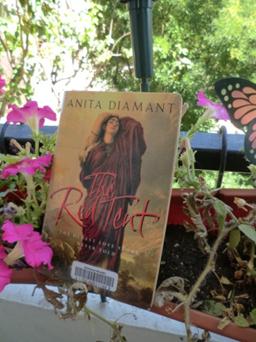
The Red Tent

Dinah is the only daughter of Jacob, who fathered 12 sons by four wives who were sisters. It is from her perspective that we are told her mother Leah’s stories, her own story in the land of her birth and her exile in Egypt.

 “If you want to understand any woman, you must first ask about her mother and then listen carefully. Stories about food show a strong connection. Wistful silences demonstrate unfinished business.”

Aromatherapy Massage in ‘The White Tent’

And in ‘The Red Tent’, that place set aside for women to inhabit during their monthly cycle, secrets of womanhood were shared and passed down the generations, the clan of Jacob.

The book is epic, taking us through the joys and sorrows of births, miscarriages, barrenness, jealousies, betrayals, the vivid and revelatory dreams of sisters seeking insight and forgiveness.

We meet Rachel, whose presence was as powerful as the moon; it was her beauty that lured Jacob into the family fold, her body emitting the scent of fresh water, filling the dusty hills where they live with the promise of life and wealth.

Leah, Dinah’s mother and herself mother to seven sons, her twin coloured eyes, generous height and fertile womb giving her unique status.

Zilpah, daughter of an Egyptian slave, a few months younger than Leah, milk-sisters and playmates since childhood, who said she remembered everything that happened to her, including her own birth.

Bilhah, last born of the sisters, another daughter of a slave who ran off when she was young – tiny, dark, the silent one.

It is the women we come to know and understand and whose stories we follow, as they navigate life, love, marriage, heartbreak, living in a caravan of tents with a father they no longer respect, now creating their own large family, trying to better themselves until one tragic episode arrives to undo it all.

And for that, if you haven’t done so already, you will just have to find a copy of this ambitious, riveting tale of the lives of these women living in ancient times.

“If you sit on the bank of a river, you see only a small part of its surface. And yet, the water before your eyes is proof of unknowable depths. My heart brims with thanks for the kindness you have shown me by sitting on the banks of this river, by visiting the echoes of my name.”

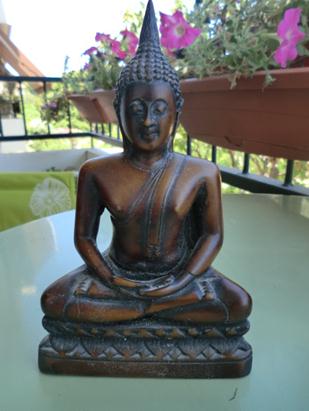
Thomas Jefferson – Lessons from a Secret Buddha

This is a delightful and simple novella that views the life and achievements of one of America’s great role models through the principles of Buddhist thought, a man who wished only to be remembered for three achievements, author of the Declaration of American Independence, of the statute of Virginia for Religious Freedom and Father of the University of Virginia. He was President from March 1801 – March 1809.

Suneel Dhand has created a Buddhist guru whom he connects to Jefferson’s mother, and who then begins to correspond with the young man when he is a discontented, overweight child. The letters introduce him to seven ancient principles of Buddhism and the Eastern way of life and we then witness Jefferson’s own lifestyle change as he becomes vegetarian, more interested in books and develops a greater awareness of how thoughts, actions and behaviours position a man.

When we take an in-depth look at all of his lifestyle practices we see that Tom practiced very Eastern ways of living, different from his fellow countrymen. In many ways he was a well-being guru, centuries ahead of his time.

Most of my knowledge of the role Thomas Jefferson played in American society comes from having seen the excellent HBO TV series ‘John Adams’ and the awe with which he was regarded by both John Adams and Benjamin Franklin as they encouraged him to pen the Declaration of American Independence.

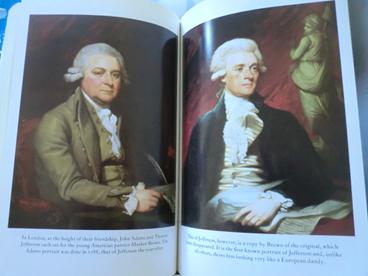
Portraits of John Adams and Thomas Jefferson by American painter Mather Brown 1788

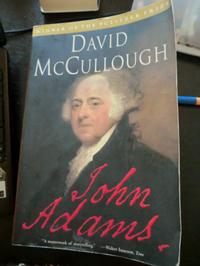
The series is based on David McCullough’s Pulitzer prize-winning biography ‘John Adams’, a volume I have on the shelf and will one day set to and read as well.

As Abigail Adams would confide to Jefferson, there had seldom been anyone in her husband’s life with whom he could associate with “such perfect freedom and unreserve” and this meant the world to her.  If you haven’t seen the series, here are some of Jefferson’s greatest moments played by the British actor Stephen Dillane.

A surprising little book, one that is full of good sense and relevant to today while reminding us of the extraordinary man Thomas Jefferson was and the major contributions he made not just to American history but also to humanity.

Today millions continue to be inspired by Thomas Jefferson, the genius who galvanized his people to freedom. A truly enlightened soul indeed – and that, without ever requiring any lessons from a Secret Buddha.

Note: This is an Advance Reader Copy (ARC) provided by the publisher via NetGalley.

Eden’s Garden (2012) by Juliet Greenwood

If you plan on taking a holiday in Cornwall or Wales in the near future I can think of no better accompaniment than Eden’s Garden.

If not, don’t hesitate to immerse yourself in this delightful, intriguing tale which unravels family secrets while celebrating women returning to the creative work they were born to do – and I refer not just to the female characters in the novel but to the author Juliet Greenwood who fulfilled a lifetime dream in writing this, her second novel, leaving the bright lights of London behind to immerse herself in gardening and writing projects in a country cottage nestled between the Isle of Angelsey and Snowdonia, Wales.

Eden’s Garden follows Carys in the present day, returning to her childhood village to attend her mother who is convalescing from a broken hip.  She has little choice being the unmarried sister, though the unplanned return stirs a long dormant memory in her, pulling her back towards the estate of Plas Eden, it’s garden, the mysterious statues, the old farm house and David Meredith, the young man she left for a career many years before.

The two become involved in researching a possible family link that takes them south to Cornwall to another garden, that leads them on a shocking search through a piece of Victorian history that will leave you grateful to be living in the 21st century (especially if you are a woman).

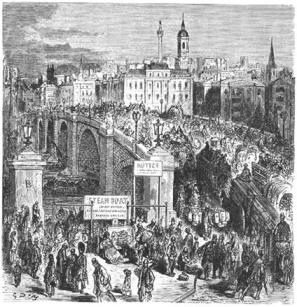
The character of Ann we meet in 1898, on a bridge overlooking the Thames at a low point in her life, seeking refuge at a Charity Hospital.
Greenwood keeps the mystery of this intriguing character just out of reach throughout the novel, we know there is a connection, she leaves a few clues to allow forward predictions, cleverly increasing the tension and desire to know both her past and her future.

Within the first few pages, we are drawn into Carys’ experience as if it were our own, that not so comfortable feeling of returning to a childhood environment as an adult, without the husband and/or children that society expects, and on the verge of heartbreak.

The suspense of a family secret soon replaces the discomfort of village gossip and Greenwood keeps up the pace and intrigue all the way through.

Driving through Wales

For me this was not only a wonderful and engaging read, but one that brought back fond memories of driving through the Welsh countryside and witnessing many of the memorable landmarks of Cornwall.

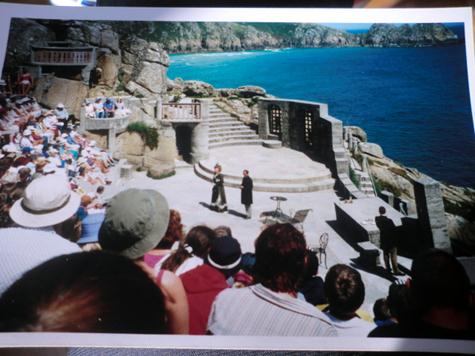
‘The Importance of Being Ernest’ at the open air Minack Theatre, Cornwall

The Book of Lost Fragrances

A family steeped in the history and tradition of fragrance and essences, the son Robbie desperate to keep the flailing ‘House of l’Etoile’ alive, though he lacks the natural olfactory talent of his sister Jac, who is busy chasing the origins of myths (though unlike her brother does not believe in them), while trying to forget her one great love, the archeologist Griffin.

“Jac wanted to help people understand that stories existed as metaphors, lessons and maps – but not as truths.”

M.J.Rose’s The Book of Lost Fragrances’, brings all three to Paris on the trail of an elusive scent that may have the power to provoke memories of past lives, a holy grail for Buddhist’s whom Robbie is determined will have the fragments of a piece of pottery that retains some remnant of the transporting blend, at a time when there is the threat of Chinese regulations mandating the registration of all reincarnates. And it just happens that the Dalai Lama is in town on a low key visit, as is Xie, the kidnapped Panchen Lama.

His Holiness the 14th Dalai Lama of Tibet

Through episodes that take us from past through to present, we begin to understand what connects the l’Etoile family with Cleopatra, a French nun named Marie-Geneviève and discover what secrets lie beneath the city, navigating the catacombs of Paris.

I can well imagine it as a film, instant travel to some stunning, majestic locations many only dream of visiting, overlaid with suspense, adventure and exotic travel back in time, however for me the book skimmed hurriedly through passages, even to the point of multiple sentences beginning with past verb tenses, as if they were to be fixed later, I found this annoying and it interrupted the flow.

“He’d been moved from the intensive care unit to a regular room. Was sleeping. Had been since she’d arrived a half hour before. She was waiting for him to wake up. Because she needed him to do something.”

All the elements are there, it just didn’t engage me as much as I had hoped it would, also due to a tendency to over explain, it is an historical account but may have worked better if the characters had informed us of some of that history rather than the narrator.

After revelling recently in the joy of Eowyn Ivey’s exquisitely constructed sentences and reading Jhumpha Lahiri’s excellent essay on Sunday entitled ‘My Life’s Sentences’ which I wholeheartedly concur with, it could just be that I had unreasonably high expectations of this exotic historical, biographical mystery. That recent foray into the realm of magical literary realism with its own excellent dose of believable suspense, did mean that next reads were likely to suffer the after effect. The snowy wilderness of Alaska, Faina, Mabel and Jack and The Snow Child’ remain indelibly marked on my reading brain.

My Magic Elixir's on Show

I did love finding out what was in the mysterious elixirs, being someone who likes to mix and make essential oil potions myself in my work, I have an intense interest in essences, aromas, their energetic, spiritual, chemical and healing properties and the synergy of a personalised blend. Just like Cleopatra!

One of my Flairesse Personal Blends

Finding the perfect blend to help an individual maintain their equilibrium is one of my specialties. Past life regressions? No one has asked me yet and if they do, I may just refer them to a hypnotherapist.

Note: This book was an Advance Reader Copy provided by the publisher via NetGalley.

Caleb’s Crossing by Geraldine Brooks

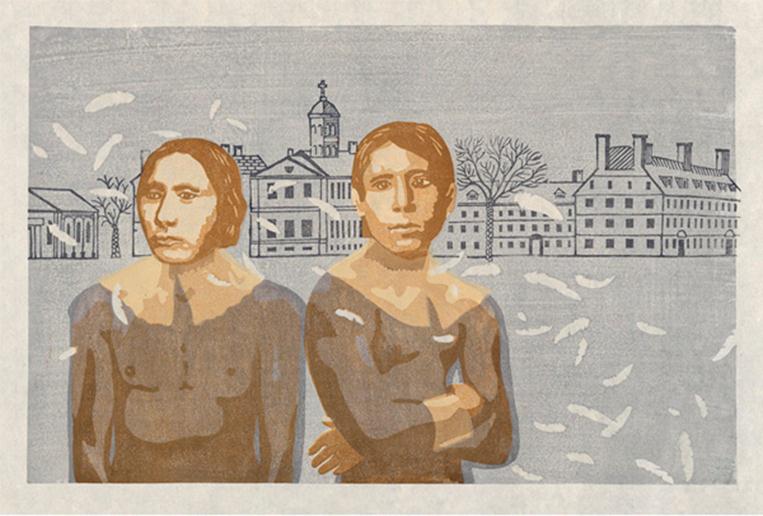
Caleb & Joel, Harvard College woodblock print by Annie Bissett

Geraldine Brooks delves into a period of history around 1665 combining fictional characters with the intriguing and real-life characters of two Wôpanâak tribe members, Caleb Cheeshahteaumauk and Joel Iacoombs, inhabitants of the 200sqkm island of Noepe, (Martha’s Vineyard) located south of Cape Cod in Massachusetts and the first Native Americans to attend Harvard College.

Thank you to Annie Bisset for allowing me to use her wonderful woodblock print of Caleb and Joel, click to learn more about these real life characters and to see Annie’s excellent artwork.

Bethia is the daughter of a Minister who has ambitions to convert the Wôpanâak people to Christianity. Though they live on the same island, it is not deemed proper that they mingle and Bethia believes she has sinned gravely when she develops a friendship with Cheeshahteaumauk, nicknamed Chuppi ‘the one who stands separate’ the young son of a Chieftain whom she names Caleb. He calls her ‘Storm Eyes’.

“to the extent that my spirit was roiled, so his seemed calm.”

Bethia and Caleb are like yin and yang, they contrast and yet complement each other, light within dark, dark within light, they attract and recoil from each other, moving through life with their separate belief systems, alien and yet understanding, their spirits connected in ways the intellect struggles to comprehend. But while he is able to suspend his beliefs to better understand the ways of the settler’s, something deemed necessary for their survival, she cannot do the same, she observes and feels something, but her fear of it convinces her it must be devil’s work. Caleb is elusive, we perceive him rather than know him, which makes him mysterious, left to the imagination to fill in the gaps. He appears not to have been corrupted and is “all seeing”, at least I imagine him as such.

The book is split into three periods in Bethia’s life, moments when she picked up the pen and looking back recorded certain events in her life, the first period when she was an adolescent on the island records her transformation from carefree girl within a stable family environment to young adult when a change in family fortune requires her to be indentured as a housemaid in a Cambridge school so her brother can continue his education.

I enjoyed this part the most, it touched both her joy and terror of discovering the new, her close relationship with nature, Caleb and the island and her desire to know more while fighting her puritan instinct to punish herself for those thoughts and stifle their continual unwelcome presence. It is the beginning of her repressed crush on the young Chieftan’s son, who appears comfortable in himself with his knowledge and harbours none of her fears of taking that knowledge to the next level.

Thus we find ourselves in the second part, in Cambridge where Bethia’s brother Makepeace and the two boys Caleb and Joel spend a preparatory year before sitting the exam that will allow them entry into Harvard. It was something of a shock in reading to suddenly be thrown into Cambridge, just as it must have been for the protagonist herself, I wasn’t ready to leave the island and wanted to dwell more on the years that were not recounted in the text, but alas, it was not I steering this ship and so reluctantly I let go of that disappointment to await Bethia’s fate. Bethia desires intellectual knowledge or at least to be in the proximity of it, so despite her lot, she is content to be within an educational institution and this attraction forms the basis of future decisions she will make.

An enjoyable read, although the cut off between the three sections always left me wondering and craving a little more for what happened next, never quite reaching fulfillment. The introduction of the characters of Caleb and Joel left this reader wanting more and I was disappointed that we don’t learn more of their experience, which I understand would have required great steps in the imagination, as little details of their time at Harvard are actually known or recorded. But ever thankful to have been enlightened on the achievements of these two young men and their place in the story of America and another great read from Geraldine Brooks.

Slaves and Siblings, Sorcery and Sadness, Strength and Salvation – Isabelle Allende’s Island Beneath the Sea

Isabel Allende.

I well remember being introduced to her debut novel ‘The House of the Spirits’ in my early twenties by a good friend and discovering this wonderful story teller. We became immersed in the lives of members of a Latin American family, following it during a time of political upheaval and personal transformation and though it was far from our own reality, it was pure joy to escape into.

Whenever I came across a new book I read it, including two of her wonderful young adult books ‘City of the Beasts’ and ‘The Kingdom of the Dragon’ and who could forget the heart-breaking but beautiful ‘Paula’. I haven’t read all her books, but I will continue to read those that cross my bookish path, just as ‘Island Beneath the Sea’ did recently, spotted on my book buddy’s shelf while feeding her son’s cat Oscar.
In this gripping novel, Allende takes us on a troubling but engaging journey to the sugar cane plantations of what was the French colony Sainte-Domingue, in one of its most historic and transformational eras during the late 1700’s and ends in New Orleans as Napolean trades terrains as if they are commodities with the Americans.

Toulouse Valmorain arrives in the colony from France where the dauphin King has just married Marie-Antoinette and few anticipate the changes to come with revolution in France or the effect that will have on this prosperous Caribbean island where slaves labour on crops that produce a third of the wealth of France and whose usefulness once they set foot on the island averages eighteen months; the fortunate dubbed the Maroons fleeing to the hills, the less fortunate en route to that place they believe all souls go, the island beneath the sea.

Knowing little of changing French laws that might change their status in the colony, many of the slaves find respite through voodoo and belief in men who escaped like the legend Macandal ‘The Black Messiah’. The Maroons will make history as they lead a slave revolt eventually resulting in the first black republic of Haiti.

Valmorain never expected to visit the family plantations but the premature death of his father and the necessity of supporting remaining family in France drive him to the colony where he must take over the family interests. Through him we meet high profile cocotte Violette Boisier, a free woman of mixed African heritage, the teenage slave Zarité, maid to Eugenia the troubled Spanish wife and her brother Sancho, Valmorain’s business partner. The story follows these characters as their fates intertwine and their lives are affected by society’s strictures and historical events.

The characters of Zarité and Violette jump off the page in a way that almost makes me wonder whether the author had her ‘favourite’ characters, we see them in situations and feel their struggles whereas I didn’t get quite the same feeling with the character of Eugenia, I found myself wondering how it really was for her as the drumbeats got inside her head and slowly drove her to madness. She wasn’t a strong character and although she suffered, we learn of it rather than experience it.

I realised towards the end that much of the novel is narrated, which also made me wonder how much longer it could have been if more of the narrative had been portrayed through the events themselves and dialogue, the characters are certainly engaging enough but at 457 pages, it is lengthy already. After being totally engaged with Josephine Bonaparte’s story beginning in another Caribbean plantation in Martinique, I could easily have been tempted by a sequel.

Allende narrates great stories and brings the reader to unforgettable settings during fascinating historic periods; she places interesting characters in this context, constructed with great clarity and insight and history comes alive as if it is the present and the reader is witness to it. For me ‘Island beneath the Sea’ was a real page turner and I was sad to finish it.

What Allende could never have anticipated while writing this book, was the major earthquake in 2010 that would disrupt this country, now known as Haiti, however it is a timely reminder of the previous chapters in the history of this trailblazing republic.

The Paris Wife by Paula McLain

Dreams, Illusion, Reality

Reading The Paris Wife I rapturously turned the pages, captivated in a cathartic way in the character of Hadley Richardson, whose story and perceptions I became absorbed with, whose life and relationships I was invested in as a reader and also as someone who has lived in France for six years. Yet at the end I was left feeling somewhat deceived.

‘The Paris Wife’ explores a brief passage in the life of 28 year old Hadley Richardson, from shortly after the death of her mother, when she meets and after a brief courtship, marries the much younger Ernest Hemingway, until their separation and subsequent divorce.

Hemingway is a 21 year old war veteran and struggling journalist with his eyes set on Rome, until the writer Sherwood Anderson, convinces them the future lies in Paris.

The young couple embark on their journey, Hadley doing her best to support her husband and not burden him with her own insecurities. Neither glamorous nor ambitious, she is honest and good and able to provide Hemingway with an emotional foundation and stability that he has not been able to garner since his return from war, or perhaps earlier, when the arrival of a baby brother shattered the illusion of a special bond he believed he had with his mother. It is a pattern that will be repeated in his life, the attempt to recreate a safe, protective feeling akin to childhood with a woman, only for it to fall apart.

Cracks Begin to Appear

It is not long before cracks appear, Hemingway’s foreign assignment to Turkey bring back feelings of despair, displacement and the nightmares of war; walking in the rain, death, sickness and desperation in the air, his esteem low, he brings himself lower by acting on it. We learn this period was preceded by his breaking the ‘exclusive’ work contract with his employers without informing them – signs of a divide within himself – and Hadley’s discomfort with his dishonesty feeds the more paranoid of her instincts.

While in Paris, Hemingway spends his days writing, initially rejecting the cafés with their posing artists, though soon overcomes his distaste and discovers the joy of café life once they develop their own circle of friends.

Sunrise or Sunset?

Hemingway’s obsession with corrida (bullfighting) result in numerous visits to Spain accompanied by friends and these sojourns become the basis of his novel ‘The Sun Also Rises’ about a group of expatriates who travel from Paris to the Festival of Fermin in Pamplona.

One of the most striking and memorable moments supports a comment by Hemingway scholar Jamie Barlowe that Hadley Richardson “was a ‘true’ woman and not a ‘new’ woman of the early 19th century” and shows both how removed she was from their group and the reverence Hemingway held for her.

Hemingway dedicated ‘The Sun Also Rises’ to Hadley and although she was there in person and recognises much of what happens in the novel, she is the one person from their circle that does not exist between its pages. She is hurt by the exclusion, though spared the humiliation. She was at a loss in the company of Lady Duff, whom Hemingway models the female character on, a honey pot of a woman who, oblivious to the neurotic attentions of the men, was present with a much ignored fiancé and drooled over by Hemingway and Harold who end up in fisticuffs over misplaced jealousies. Hadley’s recognition and special moment come in the most romantic and gory of gestures, when the much admired matador Cayetano Ordóñez makes eye contact with her from the bullring and publicly gifts her the rare token of the bull’s ear, bloody and warm from the soon to be sacrificed animal.

The deception is that the story and the author’s interest continue only as long as she is married to Hemingway, a mere six years, effectively cancelling her out as a character so soon, no longer interesting without the crutch of an infamous husband. Did her life cease to hold interest or meaning beyond those years; are we really only interested in her because she was married to Ernest Hemingway? Sadly it appears so, deceived because it is true, we are to be concerned with her only for the duration of her marriage to Hemingway, despite having come to know her sufficiently to want to know more. She has become a victim of the modern cult of the celebrity, famous only for being linked with someone famous.

I think back to another wife of a famous man I reviewed recently ‘The Many Lives and Secret Sorrows of Josephine Bonaparte‘. Josephine starts out as a modest character named Rose Tacher whom we are introduced to many years and one marriage before she meets Napoléon Bonaparte; we are fortunate that interest in her isn’t restricted to her marriage to Bonaparte, we are already hooked into her character and have completed an entire novel before Bonaparte even enters the scene.

Despite the deception, I recommend ‘The Paris Wife as an alternative, behind the scenes look at the 1920’s lives of the group Gertrude Stein called ‘the lost generation’ and also at the inspiration and experiences that influenced much of Ernest Hemingway’s work penned during this era.

But perhaps most of all because McLain introduces us to a woman we can relate to and empathise with, someone we can imagine as a friend or confidante, who aspires to the same things that so many women yearn for, because she allows us to imagine and feel what it must have been like to harbour such simple and honest ambitions while navigating a fresh marriage in a new city and foreign country and culture.

The Lacuna by Barbara Kingsolver

‘Lacuna.’

I love it when a book introduces a new word and uses it sufficiently that you know it’s not fleeting knowledge, something you know for a day and have difficulty recalling a week later.  When that new word is the title of the book, there’s a pretty good chance you will remember it.

Deep water soloA ‘lucuna’ is a space or a void, a deep underwater cave, something hidden, unknown; already we see its metaphorical potential and Barbara Kingsolver puts it to good use in this excellent novel which intertwines the fictional story of 12 year old Shepherd, through historical events of Mexico and the US in the 1930’s and 40’s, including time spent in the household of Diego Rivera and Frida Kahlo and their controversial houseguest Leon Trotsky.

A fan of the film ‘Frida’ beautifully depicted by , I’d met these characters on screen and found them good company in Kingsolver’s story of Shepherd whose socially aspiring Mexican mother ditches her emotionally cool civil servant husband to return to “Isla Pixol” an island off the coast of Mexico.

Shepherd’s skills learned in the kitchen of his island home lead him to mixing plaster for Diego Rivera’s murals “It’s like making dough for pan dulce” where he joins the household as cook and typist for Rivera, his artist wife, Frida Kahlo, and later for their guest, the exiled Communist leader Trotsky.

In this incendiary, revolutionary household, Shepherd listens and observes as egos roar and quake. Baking all day, he records the dramas of this entourage by night, along with his first novel, an epic of the Aztec empire.  In 1940, when Trotsky is assassinated, Shepherd leaves Mexico, spooked by newspaper articles denouncing his employers and friends.

The story unfolds through Shepherd’s diaries and letters as well as actual newspaper cuttings that reflect the selectively reported half-truths and lies used to justify hatred towards “them”: first the fascists, then the Reds.  And it seems anyone can become one of “them.”

Media madness and political upheaval follow,  then Violet arrives in Shepherd’s life to help record his stories.  She chances across a new gap – a long-vanished diary, Shepherd’s excuse for not finishing a memoir.

The Lacuna is multi layered, beautifully written and for me a joy to read.  Though some have struggled to get into it, I recommend you persevere and partake in this extraordinary journey through wonderfully depicted characters, and the conscious landscapes of Kingsolver’s world.