
2019 is becoming my year of reading Silko, this now is the second novel I’ve read after Ceremony and I loved it as much, in some ways perhaps more, given the journey it takes the reader on. It follows on from two other books I read, reviews linked here, her excellent memoir The Turquoise Ledge and a slim collection of letters between Silko and the Pulitzer prize winning poet James Wright, The Delicacy and Strength of Lace.
 While Ceremony was the coming of age of a young man set over a short period of time, Garden in the Dunes is more of a historical novel, set in the late 1800’s, tracing the lives of two native American sisters, Indigo and Sister Salt and at various times, their Grandmother and the newlywed white woman Hattie who provides refuge for Indigo for a period of time after she escapes the boarding school she has been imprisoned within.
Hattie and her husband Edward take Indigo with them to Europe for the summer, where she experiences differences in their way of life, but also finds something in the old world that she connects with. Archeological art in Bath, sculptures in a garden in Lucca from pre-Christian Europe create a link with American Indian symbolism through Indigo’s observations and experiences.
Along the way, as she had learned in the dunes, she collects seeds (the old ways) and flower bulbs (a new interest) for replanting when she returns home. She represents the connection to the past and also the future, learning new skills that will improve, add to their lifestyle.
Silko traces the transcultural histories and significances of sacred snakes and their feminine symbolism, unsurprising given her own close relationship to those that dwell beneath her own home in Tuscon. The final scene in the novel is fittingly given over to the return of a snake, a lasting metaphoric image of generational continuance and survival.
The novel rests in numerous locations where the girls live and must adapt, but their spiritual home and the place they always wish to return to, the place where their Sand Lizard people come from are the gardens in the dunes, inland from the river, where there is a natural spring and if enough rain, plentiful opportunity to grow what they need to survive.
Sister Salt remembers everything. The morning the soldiers and the Indian police came to arrest the Messiah, Grandma Fleet told Sister Salt to run. Run! Run get your little sister! You girls go back to the old gardens! Sister Salt was big and strong. She carried Indigo piggyback whenever her little sister got tired. Indigo doesn’t remember much about that morning except for the shouts and screams.
When the girls are with their Grandmother and return to the gardens they have a purpose, they learn when and how to plant, to prepare food, to stock it, to identify edible plants, they are natural foragers. When they are removed from their natural home, they have to find other ways to survive.
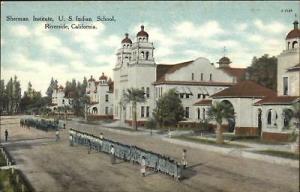
Sherman Institute, Riverside, California
At times it has been necessary to flee, when there is insufficient rain or when pursued by authorities, who effectively kidnap Indian children, separating them from their families and way of life to put them into institutions, forcing another form of education on them, removing their connection to their culture.
The authorities judged Sister Salt to be too much older than the others to be sent away to Indian boarding school. There was hope the little ones might be educated away from their blankets. But this one? Chances were she’d be a troublemaker and might urge the young ones to attempt escape. Orders were for Sister Salt to remain in custody of the Indian agency at Parker while Indigo was sent to the Sherman Institute in Riverside, California.

American Indian Girls in a state run Laundry
Sister Salt is sent to work in an Indian laundry in the vicinity of water dam projects of the Southwest; she and twin sisters she befriends decide to set up their own laundry service, living near one of the dam construction sites, becoming knowledgeable of the needs of the men working there, finding protection and collaboration with the chef Big Candy, the girls surviving together, supporting each other.
Throughout the novel, the men are involved in moneymaking projects, whether it’s Edward collecting orchid samples, his companions seeking rubber plant specimens, the men at the dam with their side interests in illegal gambling, brewing beer and the laundry.
The dam project diverted water to Los Angeles and made Indian lands less productive, initially it provided employment, but slowly the people realise what it is taking away from them, their land, their homes, their riverside livelihoods. Those with profit making motives have little or no concern for the destruction and loss caused in their wake. But they too risk falling victim to their own kind, Silko doesn’t miss the opportunity to make them suffer the consequences of their own greed.
Most native tribes did not adhere to the European view of land as property. For most Indians, land was communal, and its resources were to be protected and shared. This was in direct contradiction to European notions of land as individual property.

Ancient Minoan Snake Goddess
It’s far-reaching in its geographic span and themes, which through adept storytelling are repeated via the behaviours of characters. Women stick together, collaborate, survive and when not separated from each other, begin to thrive, though they remain wary of those from other tribes or cultures. Exploitation, greed and corruption are everywhere, interfering in the way people try to live their lives, imposing their ways, trying to keep people(s) separate or making them conform to a perceived way of being.
Indigo never loses the essence of who she is, despite being groomed and dressed like a white American to accompany Hattie and her prospector/explorer husband and being taken far away to Europe, her heart is like a magnet, she never ceases thinking of her intention to find her sister and mother.
Fortunately, Hattie is a sensitive and intelligent woman, who though the child brings out a maternal response and desire, promises to help her find them when they return. Hattie’s father was a free thinker who encouraged her higher education giving her access to libraries of friends to pursue her studies. She is sympathetic to their ways, but will also confront barriers when trying to cross over in her efforts to support them.
It’s a brilliant depiction of so many issues around origins and identity and the ways people survive and thrive, in particular women. We witness their attempts, how they are thwarted, see them compromise and discover that being with other women provides them with a force, even when they are from different tribes or cultures, sometimes that is a necessary element to their survival, to learn from other women, from other experiences, to share what they know.
Despite being a relatively long read (477 pages), it felt like it could have gone on, some threads leave the reader wondering what happened next, endings come about a little quickly. It could easily have been more than one book.
The final page and the closing sentences are beautifully given over to nature, to a demonstration that though we may grieve at what is passing, nature will always ensure that new life prevails, that something will survive from the ruin. That hope can manifest, though it may not be what we expect.
“Nearly all human cultures plant gardens, and the garden itself has ancient religious connections. For a long time, I’ve been interested in pre-Christian European beliefs, and the pagan devotions to sacred groves of trees and sacred springs. My German translator gave me a fascinating book on the archaeology of Old Europe, and in it I discovered ancient artifacts that showed that the Old European cultures once revered snakes, just as we Pueblo Indian people still do. So I decided to take all these elements – orchids, gladiolus, ancient gardens, Victorian gardens, Native American gardens, Old European figures of Snake-bird Goddesses – and write a novel about two young sisters at the turn of the century.” – Leslie Marmon Silko, Gardens in the Dunes (1999)
“I suppose at the core of my writing is the attempt to identify what it is to be a half- breed or mixed-blooded person; what it is to grow up neither white nor fully traditional Indian. It is for this reason that I hesitate to say that I am representative of Indian poets or Indian people. I am only one human being, one Laguna woman.” – Leslie Marmon Silko, Laguna Woman (1974)
 Last year my favourite read

 Guzel Yakhina’s grandmother was arrested in the 1930’s, taken by horseback to Kazan and then on a long railway journey (over 2,000 miles) to Siberia. She was exiled from the age of 7 until 17 years, returning to her native village in 1947. It was these formative childhood years that were in a large part responsible for her formidable character.


 Today the short list was announced for the woman’s prize for fiction. From the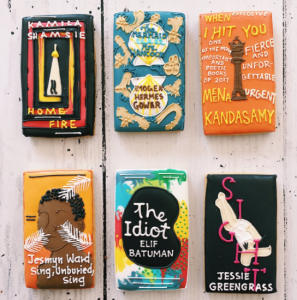
 Meena Kandasamy, When I Hit You: Or, A Portrait of the Writer as a Young Wife –
  Kamila Shamsie, Home Fire –
  Jesmyn Ward, Sing, Unburied, Sing –
  Imogen Hermes Gowar, The Mermaid and Mrs Hancock

 Described as The Turkish Raid or Tyrkjaránið, the inspiration for the novel is based on the invasion of Iceland in 1627 by pirates from Algeria and Morocco, also known as Barbary pirates (a reference to the Barbary coast, a term used by Europeans in the 16th century, referring to the coastal aspect of the collective lands of the Berber people of North Africa). They were lead by the ambitious and cunning Dutch captain Jan Janszoon van Haarlem, commonly known as Murat Reis the Younger, himself captured and “turned Turk”.
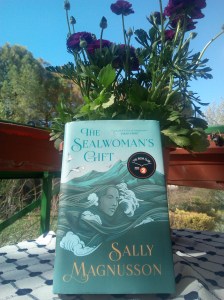 The Sealwoman’s Gift follows one family, Ólafur the local pastor, his relatively younger wife Asta and two of their children, all of whom are abducted, the mother due to give birth, which she does on the ship. Initially Ólafur is herded onto a different ship, perhaps due to his advanced age, however he manages to fight his way to his wife and children, allowed to do so while others are struck down for such defiance, when his ability to calm the captives is noted by the Captain.
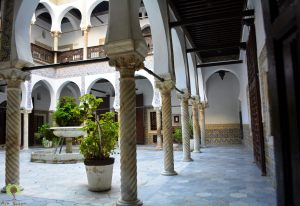 Overall, this story provides a thrilling depiction of the terror of a pirate invasion that changed the lives of 400 islanders from Iceland, their journey across seas to Algiers, the slave markets and fates of those who survived, their children and an imagining of how they may have coped as they watched their youth grow up and become part of another culture and way of life, while older Icelanders struggled with what they retained within them of their past and the changes that would envelope them in the years that followed, in a strange new land, one that despite their suffering, also offered opportunities they would never have encountered at home.
 This is what appealed to me immediately about the prospect of reading Jennifer Nansubuga Makumbi’s Kintu. It promises to do the same thing, to take the reader from where we are at today in a culture and link it back to the past, from modern day Uganda to the era of when the region was ruled as a kingdom. And it succeeds brilliantly, in a way rarely seen in literature in the UK/US published today.
 Some are haunted by ghosts of the past, thinking themselves not of sound mind, particularly when aspects of their childhood have been hidden from them, some have prophetic dreams, some have had a foreign university education and try to sever their connections to the old ways, though continue to be haunted by omens and symbols, making it difficult to ignore what they feel within themselves, that their mind wishes to reject. Some turn to God and the Awakened, looking for salvation in newly acquired religions.
 I like to read books that come from within other cultures, so a literature prize that brings attention to authors from outside the predominant literary cultures interests me.














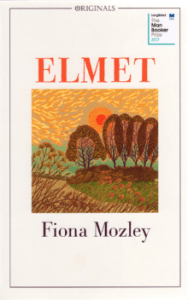





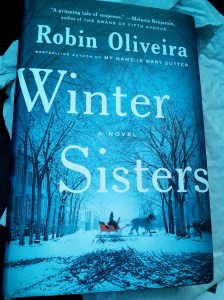 So now it is 1869 in Albany, New York, Mary Sutter is now Dr Mary Sutter Stipps, living in Albany, New York, where she practices in a local hospital, despite most of her male colleagues despising her (because she is a woman), she also runs a home practice with her husband William Stipp and a lesser known clinic, where a lantern is illuminated on Thursdays when she opens for ladies of the night, those who are refused treatment elsewhere.


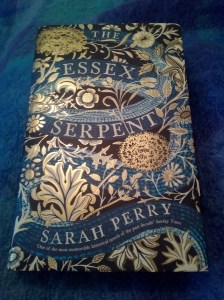 A Victorian era historical novel (London 1893) set over a single year, that follows the footsteps of the young widow Cora Seaborne, in the months following the premature of her husband, a cruel man who’d become indifferent to her, but one who’d been her companion from such a young age, he’d moulded her into what he could tolerate.

 Word by Word