Man Booker Prize Longlist

Originally known as the Booker, it used to have just one criterion – that the prize would be for ‘the best novel in the opinion of the judges’. That remains one of the criteria and we know there have been some off years, it is a unique award, not what you would call popular fiction, it is what the organisers refer to as quality fiction to attract ‘the intelligent general audience’ – sounds a little book snobbish to me, but then  judging book prizes is subjective and often sparks a great debate and sometimes even bad behaviour.

The aim of today’s prize is said to be to promote the finest in literary fiction by rewarding the best novel of the year written by a citizen of the United Kingdom, the Commonwealth or the Republic of Ireland.

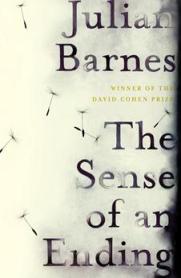
Last year’s winner was Julian Barne’s Sense of an Endingwhich I admit that I have not read yet, Barnes’ being a novelist I’ve started and stopped a couple of times, but will persevere and read before too long.

As an aside, I saw recently that the 2002 winner Yann Martel’s Life of Pi is being made into a film, directed by Ang Lee and today the film trailer has come out and it looks promising indeed.

And so, the Man Booker long list, announced by the judges today, from 147 submitted, the 12 novels are:

Nicola Barker, The Yips

Ned Beauman, The Teleportation Accident

André Brink, Philida

Tan Twan Eng, The Garden of Evening Mists

Michael Frayn, Skios

Rachel Joyce, The Unlikely Pilgrimage of Harold Fry

Deborah Levy, Swimming Home

Hilary Mantel, Bring Up the Bodies

Alison Moore, The Lighthouse

Will Self, Umbrella

Jeet Thayil, Narcopolis

Sam Thompson, Communion Town

Life of Pi

Six novels will be shortlisted and announced on 11 September and the winner on 16 October 2012.

So have you read any on the list yet, any predictions for the shortlist?

Happy Reading!

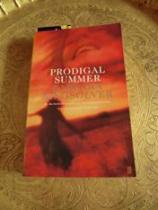
Prodigal Summer

Animal nature, human nature, bugs and insects, forest life, their dependence and interdependence, habits good and bad and how the balance is affected when death, destruction or any kind of change is introduced; how species adapt, how human beings cope – or don’t – all of this we find in the juxtaposition of creatures assembled from the thoughtful poetic pen of Barbara Kingsolver in Prodigal Summer as she weaves three stories variously referred to in three alternating chapter titles, Predators, Moth Love and Old Chestnuts.

It may be due to the sound of the cicadas screeching outside while I read, or the richness of Kingsolver’s prose, but this book exudes the heat of summer and its associated sensations. It places you deep in the forest on the mountainside, heightening all the senses and bringing attention to every sound and movement, witness to the presence of all manner of wildlife pulsing just beyond what the eye can see.

Predators – Essentially the story revolves around three female characters, Deanna, the wildlife biologist living in a forest cabin working as her kind of conservationist, destabilised by the presence of a young hunter in her territory and her preoccupation with guarding a young coyote family that have returned to the forest wilderness.

She shares her environment with a snake, another predator and a metaphor for man, the snake is natural to the habitat and will expose Deanna for what she really is – not just a qualified biologist tending nature, keeping man and his hunting instinct out – but a woman with a suppressed but natural maternal instinct, depicted by her attachment to a family of chickadees. When the fledglings fall prematurely out of the nest, she puts them back, justifying her intervention in nature’s way, trying to alter the otherwise harsh survival odds nature has given the little birds, more in their favour. She succeeds in keeping them all alive, only to discover on her return from a walk, four telling bulges in the coil of the sleeping black serpent.

When the snake finally leaves she feels something shift inside her body – relief, it felt like, enormous and settled, like a pile of stones on a steep slope suddenly shifting and tumbling slightly into the angle of repose.

Moth Love by Nusio21

Moth Love – Lusa is a bug scientist, now local farmer’s wife, though still perceived as an outsider with her mixed cultural background and continued use of her foreign sounding maiden name. She is trying to adapt to her new role and changed circumstances while staying true to her beliefs and recognising her not so traditional, but well-founded knowledge and approach to farming.

In the summer after … Lusa discovered lawn-mower therapy. The engine’s vibrations roaring through her body and its thunderous noise in her ears seemed to bully all human language from her head, chasing away the complexities of regret and recrimination. It was a blessing to ride over the grass for an hour or two as a speechless thing, floating through a universe of vibratory sensation. By accident, she had found her way to the mind-set of an insect.

Chestnuts

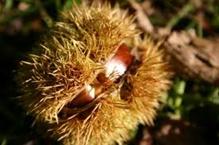
Old Chestnuts – The third character(s) are the elderly and persistent Nannie Rawley and her equally aged, cantankerous, fixed in his ideas neighbour, the widower Garnett. They trade insults and unappreciated advice across their boundaries, but can’t seem to keep away from each other despite their polar opposite views.

Halal Goat

Not that it detracted from the reading of the book, but I did ponder the similarity in conviction of the three female characters, it is not clear whether or not they know each other for much of the book, but with such similar attitudes in their various fields, in a real community I would have expected them to have discovered each other and had some kind of interaction or at least knowledge of each other from the beginning. Sometimes this is a deliberate tactic by the writer to keep the connections between people vague until the end, to shape some kind of revelation. It just seemed like a bit of a coincidence that three such characters living in a traditional farming community had such little awareness of each other.

As much a study of nature, as a story of that which passes between these characters during this one summer, Prodigal Summer is indulgence of the satisfying, learned kind; it is compelling reading and a lesson in the wonder, beauty and balance of nature and humanity.

Gogol, The Namesake

I picked up Jhumpa Lahiri’s first collection of short stories ‘Interpreter of Maladies’ from the library recently, I seem to have read her work in reverse order, starting with her most recent collection ‘Unaccustomed Earth’ a collection of stories of the experience of second generation immigrants and moving eventually to the book that won the prize.

As I mention in one of my first (and most read) blog posts ‘Why People Don’t Read Short Stories’, it is not my habit to read a short story collection straight through, I stop and start and read them at random and so it has been with both these enticing volumes.

I noticed the bookshop book club was reading ‘The Namesake’ this month and I had just read an excellent essay by Lahiri in the New York Times called ‘My Life’s Sentences’ relating to her love of certain paragraphs in books and the construction of a sentence, so I decided to read her only novel ‘The Namesake’ which had been on the shelf since seeing the Mira Nair directed film a few years ago, which I loved.

‘The Namesake’ refers to Gogol, the Bengali son of the Ganguli family who immigrate to America, a consequence of Ashoke’s (Gogol’s father) changed outlook on life following a serious train accident, a catalyst for change that impacts and shapes the lives of all his family, an event that he does not speak of to his son until he is an adult.

The train is used as a metaphor for change in the novel, many of the significant turning points in the lives of the characters take place during a train journey, which in itself transports people physically from the familiar to a less familiar location and is an environment that one usually cannot escape from.

Not speaking about things is common among these characters, aided by the distant third person narrative which skips from the present to the past, in particular the most dramatic events are seen through the prism of the past, drawing the reader into this protective shield from potentially harmful events.

Gogol, is American, but his Russian name, his Bengali family and their culture mark him as different to many in his community. His home life is different to the average neighbourhood child and he finds himself like many children of immigrants and third culture kids, living between two worlds.

Whether we are conscious of it or not, we all grow up seeking to affirm our sense of personal and group identity, absorbing those questions of Who am I? Where do I belong? Traditionally, the family and the community reflect that notion and it is not until we step outside those comfort zones that we might question it. But for children growing up among worlds and between cultures the awareness comes much earlier.

For most of his life once he becomes aware of the differences, Gogol does what he can to minimise them, seeking out the ordinary, trying to blend in. He tries to suppress his cultural links, portrayed through his choice of girlfriend and change of name.

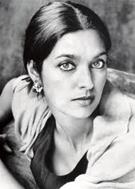
Jhumpa Lahiri

Like Lahiri’s short stories, which portray composites of life for immigrants of first or second generations from India, this book highlights one family’s experience, the dilemmas that each generation face which will mould their characters. We follow Gogol’s journey, try to understand it, imaging ourselves in the shoes of another, witness to the culture clash within this one family.

I consider briefly the clash of cultures within my own small family and understand the inclination to put it toward the back of mind. Writing is a good option for expressing the pathways of these experiences. I wonder if the presence of a large community from the parent culture assists or hinders integration. I find these stories leave many more questions than answers; there is no guide, just individual experience and the necessity to persevere, to survive.

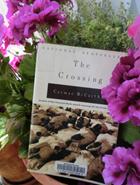
The Crossing

This is the second in the ‘The Border Trilogy’ series after ‘All The Pretty Horses’, that book being my first read of a Cormac McCarthy novel which turned me into a fan. The first book follows two young boys on their way toward Mexico to find work where they endure numerous perilous adventures including prison, first love, betrayal and death. Quite possibly the least bleak of McCarthy’s work, which may account in part for why I enjoyed it so much, but even his more downbeat work has much that I admire linguistically.

In ‘The Crossing’ we meet 16 year-old Billy who doesn’t intend to set out on an adventure, it happens almost by accident, he feels the need to put things right; three times he does so, each effort requiring him to cross the border into Mexico on a personal mission.

The first trip he attempts to return an injured, pregnant wolf he has trapped. Rather than kill her, he tries to return her to the mountains where she came from. The second journey with his brother Boyd is an attempt to retrieve stolen horses and the final crossing Billy makes alone to find his missing brother and bring him home.

To read McCarthy is to take a long, sometimes grim journey; a voyage that traverses rough terrain and encounters more evil than good ,while observing the character moulding experiences of its young male protagonist. But worthwhile for the linguistic pleasure of his descriptions and dialogue (some of it in Spanish).

What does the corrido say?

Quijada shook his head. The corrido tells all and it tells nothing. I heard the tale of the güerito years ago. Before your brother was even born.

You don’t think it tells about him?

Yes, it tells about him. It tells what it wishes to tell. It tells what makes the story run. The corrido is the poor man’s history. It does not owe its allegiance to the truths of history but to the truths of men.  It tells the tale of that solitary man who is all men. It believes that where two men meet one of two things can occur and nothing else.  In the one case a lie is born and in the other death.

McCarthy is no optimist, to take a journey into his imagination is tough and if this novel embraces anything, I think it is futility, the shadow that neutralises youthful exuberance and withers righteous intentions, that lingering threat that will keep an older, wiser man within reach of his homestead and away from the troubles that lie in wait of the restless, idealistic man on a dubious if well-intended mission.

But it is in his nature to make that attempt to set things right, not to let things be, to provoke a response and assert his rights, no matter how foolish they appear or dangerous they become.

I really enjoyed taking my time reading this novel, it is written in language I like to be immersed in and is thought-provoking along the entire journey and long after, I don’t need more than that from a good read and leave you with another favourite passage from near the end.

You look like you might have been down here a while, the man said.

I don’t know. What does that look like?

Like you need to get back.

Well. You probably right about that. This is my third trip.  It’s the only time I was ever down here that I got what I come after.  But it sure as hell wasn’t what I wanted.

A Piece of the Mosaic

Thank you to inspirational talent Kimberly Sullivan who lives in Rome and has written ‘In the Shadow of the Apennines’ set in the mountains of Abruzzo. She tagged me in the ‘Be Inspired’ blog hop hosted by ‘Page After Page’:

All of our stories come from somewhere, whether it be a dream, another book, a life event…So, I thought why not give people the chance to talk about their inspirations as well as their stories?

To participate, I should answer 10 questions about my novel and then tag 5 writer’s:

1. What is the name of your book?

‘A Piece of the Mosaic’

2. Where did the idea of your book come from?

It started with a prompt in a creative writing class at the Groucho Club in Soho; the tutor asked us to spend 5 minutes writing about a character. It was the scariest part of the class, that compulsory, time limited plunge into the unknown with others furiously scribbling away.

Paralysed, I had a vision of the back of a young man standing on a pier smoking a cigarette, gazing out to sea . He was wearing black trousers and a black leather jacket, observed by two schoolgirls giggling on a bench. After the class finished, I could not get that man out of my head.

3. In what genre would you classify your book?

I hate labels, I hope this book crosses as many genres as possible, but if I had to guess I would say it is contemporary, cross cultural fiction.

4. If you had to pick actors to play your characters in a movie rendition, who would you choose?

I don’t know any current Italian actors, so I would suggest a young man of Mediterranean origin to play Alfredo and because this question is too hard, I’m going to adapt it and say I dream of music composed by Ennio Morricone and the film directed by Giuseppe Tornatore director of Cinema Paradiso and Ba’aria. Authentic it must be.

5. Provide a brief synopsis.

Alfredo’s home village – Liguria

Angry with his father after his mother’s death, young Italian chef Alfredo, abandons the fishing village he has lived in all his life and travels to England, eventually finding a job in the seaside town on the South Coast. In return for low rent, he agrees to an unorthodox request from his spinster landlady Claudette, to help her find the sister she has not seen for 30 years since she and her husband immigrated to New Zealand.

Alfredo discovers more than a long-lost sister and the search soon becomes his own, to find Claudette’s niece Amber; the journey leading him towards everything he has tried to avoid in order to learn the truth.

6. Is your book already published/represented?

The synopsis and first three chapters have been read by 3 agents in London, with encouraging responses but declining representation and the full manuscript was requested by the fiction editor at Penguin NZ, who enjoyed it and suggested I seek representation in the UK.

 In order to establish some credibility with my writing, I decided to write a blog before I send it out again, so here I am blogging away, sharing my passion for the written word.

7. How long did it take you to write your book?

The actual writing part probably took about a year, but I wrote it in two bursts, the first half when I lived in London and on a whim travelled to Liguria to spend a week in a fishing village imagining and writing of lives other than my own.

I finished it in the first six months of arriving in France unable to speak French – the best excuse in the world not to have a proper job and to finish a first novel.

8. What other books within your genre would you compare it to? Or readers of which books would enjoy yours?

There are many books about people from the English-speaking world going to live in a non-English speaking country, both fiction and non-fiction, Alfredo isn’t leaving to see the world, he is escaping.  It is a story that questions identity and confronts issues of adoption and family.

I think it will appeal to people who like books that take them to places they dream of visiting and that introduce them to issues from different cultural perspectives, if anyone has any suggestions as to any other book this sounds like, let me know.

9. Which authors inspired you to write this book?
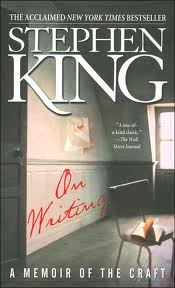
Two authors come to mind immediately, ironically Stephen King influenced this book, because I read his excellent slim masterpiece ‘On Writing’ midway through writing.  After reading it I changed a few things, I stopped writing longhand, I set a 1000 words/day word count (his is 2,000 words/day) and I stopped editing as I was writing, I just wrote it out until the end – terrified it would be crap, but discovered how to create pace.

The other author who spent some time residing in my subconscious was Italo Calvino, it took me a while to figure out what he wanted; now I know – but it’s a secret.

10. Tell us anything that might pique interest in your book?

Here are two extracts that survived that very first writing exercise, sitting in the Groucho Club in London, searching the recesses of my mind for inspiration.

Looking out over the swollen sea, Alfredo smiled knowingly at how her moods changed, one moment bright and sparkling in her refinery, phosphorescence glittering like sequins in the moonlight, the next as she was now, irascible, dark and brooding, like a young lover scorned, beauty transformed into bitterness. He watched a fish jump momentarily from her clutch, as if trying to escape her volatile and uncompromising mood, then witnessed the force of gravity, the sea’s ever-trusting accomplice, toss the cold-blooded vertebrae back into the maelstrom from which it had tried valiantly to escape.

He threw his half-finished cigarette into the sea and she hissed at him in reply. He had never been a regular smoker in Italy and wished he could kick the habit, cigarettes had become a comfort since he came to England, he liked to roll them as much as he liked to smoke them, it gave his hands something to do when his mind was restless. Thoughts extinguished, he walked down the length of the pier, eyes front, not looking at two giggling teenage girls to his right but sensing their eyes following his footsteps, over the wooden planks, where if one’s gaze was concentrated enough, you could see the pregnant swell of the waves below, as the tidal ebb carried them to and from the shore.

And now to tag 5 writers, all of whom are an inspiration to me:

  1. Brenda Moguez – Passionate Pursuits
    – Brenda is a prolific, unique and inspirational blogger with a rich family and personal history to draw on, not to mention a gigantic imagination, it’s just a matter of time before we will be reading her novel, now doing the rounds of agents.
  2. Juliet GreenwoodJulietGreenwoodAuthor – Juliet lives in a traditional Welsh cottage between the romantic Isle of Anglesey and the majestic mountains and ruined castles of Snowdonia, she is living the dream, a published writer and avid gardener; she is an inspiration.
  3. Patricia SandsEveryone Has a Story to Tell
    – Patricia has published a book about friendship, fun and the complexities of relationships among women, drawing inspiration from her own experiences. Every Friday she blogs about France and her current WIP (work in progress) is set here.
  4. Julie Christine Chalk the Sun
    – Julie is a Francophile, she is a reading writer, travels often and writes a fantastic book review. Just waiting for her to plunge right into writing that novel, a WWII star-crossed romance between a young French girl and a German POW, inspired by true events.
  5. Jen ThompsonChronicles of Jen
    – Jen is another writer who loves to read and shares her thoughts when she does, she’s a talented writer, lives in a caravan and is out there observing characters and seeking inspiration while serving hotdogs and popcorn. She may not be able to participate because her idea is so great, someone might steal it J
  6. Nelle NelleWritesI’m going to add one more, because I couldn’t have a list of writers without including Nelle, who not only is a great writer, but is a loyal follower and comments on all my reviews, even though her book budget is severely restricted.

Orange Prize Winner!

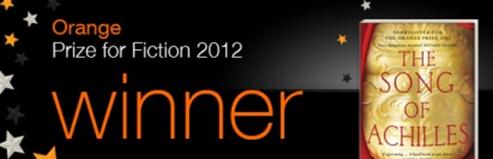
As I pack my bag for a short visit to Northern Ireland tomorrow, I hesitate about only taking the kindle, having been caught out before on a 5 hour TGV train ride and a flat battery. But with the announcement that Madeline Miller has won the 2012 Orange Prize for Fiction with her debut novel ‘The Song of Achilles’, my decision is made, it has been tempting me all day and I have picked it up a few times, willing it to share its secret. So into the bag it goes.

While the international women’s writing prize will continue to be celebrated, this will be the last year that it is sponsored by the telecommunications company Orange, so we shall wait and see what name and new look next year’s prize will emerge with.

The shortlisted novels can be viewed here and my review of Ann Patchett’s ‘State of Wonder’.

So what can we expect to find within the covers of Madeline Miller’s ‘The Song of Achilles’? According to the blurb:

Greece in the age of Heroes.

Patroclus, an awkward young prince, has been exiled to Phthia to live in the shadow of King Peleus and his strong, beautiful son, Achilles. By all rights their paths should never cross, but Achilles takes the shamed prince as his friend, and as they grow into young men skilled in the arts of war and medicine, their bond blossoms into something far deeper — despite the displeasure of Achilles’s mother Thetis, a cruel sea goddess. But then word comes that Helen of Sparta has been kidnapped. Torn between love and fear for his friend, Patroclus journeys with Achilles to Troy, little knowing that the years that follow will test everything they hold dear.

Inspiration indeed in this year of the Olympics!

State of Wonder by Ann Patchett

Ann Patchett’s novel, shortlisted for the Orange Prize for fiction has left me pondering. Wondering what it was I missed that caused others, such as Joanna Trollope to say:

Every so often – and that’s not, actually very often – I read something that makes me want to press fervently and evangelically onto everyone I meet. This has just happened with Ann Patchett’s novel State of Wonder

And Emma Donoghue who said:

The best book I have read all year. It made me laugh and weep and left me in a state of wonder

Marina Singh is a doctor working for a pharmaceutical company since switching from obstetrics to pharmacology near the end of her studies. Coincidentally, one of her female professors Dr Swenson also works for Vogel and is acting solo, outside her jurisdiction in the Amazon, observing a tribe whose unique development could have significant implications for the lives of women and humanity. This rebellious, unorthodox researcher and her unique way of working has been tolerated by the company, until a letter arrives informing the CEO Mr Fox of the death of a staff member he sent to report back. Marina is asked to follow-up and becomes drawn into the alternative universe of life in the Amazon jungle.

It is an interesting concept and a thrilling journey, one of the most moving and real parts for me being an encounter with an anaconda that almost had fatal consequences. However, throughout the book, I couldn’t shake off a sense of reluctance, of characters holding back; was Mr Fox being honest or was he hiding something? Why doesn’t Marina question or insist on answers?   It was hard to believe that the head of a large pharmaceutical pouring significant funding into a research project would tolerate the situation without acting in a more forthright manner.
Dr Swenson was definitely withholding, resisting, imbued with a sense of superiority that didn’t ring true or convince me. Ironically, as Marina begins to accept the way of life in the jungle I could very well see her becoming part of that environment which would have been interesting to pursue further, more so than the enigmatic Dr Swenson.

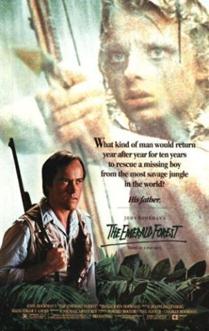
True, I was somewhat impatient to get to the Amazon itself and for that I blame an unquenchable thirst for adventurous travel and the fact that as far back as I can remember, the Amazon was the VERY first destination that my younger mind desired to visit. I remember it vividly even now, a feeling that grew after watching ‘The Emerald Forest’ (1985), a film that had a real effect on me, I fell in love with the wilderness of the Amazon and vowed that one day I would go there.

The film is based on the true story of a 7-year-old boy kidnapped by Indians, who disappear into the Amazon forest. The boy’s father, a Venezuelan engineer, spent every summer for the next 10 years searching the forests for his son and eventually found him.

It is quite likely then, that this memory may have had an effect on any impression this book could make, something that represents an unfulfilled dream for me and not one which involves pharmaceutical companies looking for a profit or scientists tampering with nature. So don’t let me stop you from finding out for yourself, it’s certainly one to discuss and as you can see from the quotes above, for some this book is a definite favourite.

Summer by Edith Wharton

If ‘Ethan Frome’ is winter, so this, its companion novel is ‘Summer’, though ironically there is less a sense of the season and its metaphoric meaning; perhaps ‘The End of the Summer’ might have been a more apt title.

Edith Wharton was worldly and wealthy, speaking four languages and entertaining future American heiresses in her Paris home, her latter years lived in France. Yet as the range of her works testify, from rural Ethan Frome’  small town New England ‘Summer’ to the more social aspiring ‘House of Mirth’ and ‘Age of Innocence’ she understood and had empathy for those whose lives were lived at the opposite end of the spectrum of her own.

Charity Royall, an eighteen year old girl from the Mountain up there beyond, has been raised by a childless couple from town; she lives with her guardian Mr Royall, now a widow. She knows little and remembers nothing of her parents or that frowned upon community no one ever mentions.

Until the bold, young Architect Lucien Harnus appears, unafraid to ask questions. The more she learns while listening to Mr Royall respond to him, the more insecurity creeps into her being, though there is little outward sign of this change.

Initially we witness her wilful attitude, with which she succeeds in claiming the post of librarian against all other eligible girls in town, despite little interest in the actual job itself. She appears intelligent, adept at identifying opportunity, her questionable ancestry all but obliterated. However, she lacks a female role model and is barely on speaking terms with My Royall after his own near lapse with regard to the carnal instinct. In matters of love and the feminine, Charity is at a disadvantage. Her first experience with a young suitor is telling.

Her heart was ravaged by life’s cruellest discovery: the first creature who had come toward her out of the wilderness had brought her anguish instead of joy. She did not cry; tears came hard to her, and the storms of her heart spent themselves inwardly.

Without giving anything away of the story, the young man wins her over and she will have her summer of joy, but naïveté and a reluctance to assert herself in matters of the heart will compromise her position in this society that values and rewards tradition over love. She considers returning to her people:

There was no sense of guilt in her now, but only a desperate desire to defend her secret from irreverent eyes, and begin life again among people to whom the harsh code of the village was unknown.

It is a tragedy, as we have the impression that this is a young woman rescued from a life of little promise who could have made something of it, who should have, if she had been warned; she is as much a victim of the era she lives in as the lack of a female role model. I couldn’t help thinking about a possible sequel, one where she defies the odds and proves everyone wrong, because that is just the kind of girl she was.

In this respect the story differs from ‘Ethan Frome’ in which we are provided a glimpse into the future regarding what happens next, here Wharton has chosen to either leave that to the reader’s imagination, or her final act will be seen as sufficient evidence to predict a conventional outcome. You decide.

‘Summer’ has recently been adapted to the stage by Julia Stubbs Hughes and the play will focus on the three central characters of the novel, exploring the discovery of love and attraction in a society that restricts both.

It will be showing at the Jack Studio Theatre in South East London from 8 – 26 May 2012 if you happen to be in London. Further details can be found at ‘The Summer Project’.

Hotel on the Corner of Bitter and Sweet

Meet 'Noisette' our mischievous cat

This book was chosen by a local book club, although I didn’t make it to the discussion, but I like to read along anyway especially as they introduce me to books that I am often not aware of; so far it is thanks to this group that I read La Seduction – how the French play the game of life, and Abraham Verghese’s wonderful Cutting for Stone’
one of my favourite reads this year. Next month it is ‘Death at Chateau Bremont’, which is going to be a rather special read as it is set here in Aix-en-Provence. The author M.L. Longworth is from Toronto but now works between Paris and Aix, how she arrived in France is also an interesting story.

Jamie Ford’s debut novel ‘Hotel on the Corner of Bitter and Sweet’ is a wonderful story of childhood friends in Seattle, second generation immigrants caught up in the brutal reality of being perceived as untrustworthy, having the skin of an enemy. The discovery of personal effects of Japanese families in the basement of an abandoned hotel, stir up memories for Henry and lead him on a search into the not quite forgotten past.

It seems there is unavoidable suffering, whether due to ethic origin or some other thing that cast children as being different from their peers. Henry is one of those stuck in the middle, not like his parents and not like his peers; he’s an in between, a third culture kid. He wears a badge his father gave him that reads ‘I am Chinese’, what it really means is ‘I am NOT Japanese’ for it is 1942 in Seattle and anyone who looks Japanese is being sent away to a special ‘camp’.

This little badge actually existed and belonged to the author’s father; inspiring him to write this story after learning his father wore it following the bombing of Pearl Harbour. Equally, The Panama Hotel still stands today, at the heart of what was once the thriving community of Nihonmachi, Seattle’s Japantown.

Jamie Ford depicts Henry’s friendship with Keiko and the jazz player Sheldon with understanding and compassion. Whether it is facing bullies at school and in the street or the emotional demands of his well-wishing parents, Henry exhibits both courage and stubbornness, leaving the reader content that he is not to become one of life’s victims, he makes choices and will find his way.

An interesting insight into what how it is be from your own country but not look like your fellow countrymen and women. A fascinating and thought-provoking read.

India My Heart

Over the long weekend I read the lengthy ‘Shantaram’ by David Gregory Roberts set in Mumbai (Bombay). I have never been to Bombay, but I did spend a month travelling in India in 1995 and the experience remains imprinted in my heart and memory, for me the country and its people have no equal. I love it. It is at the very top of my list of destinations, experiences and insights.

The first pages of this extraordinary story are reminiscent of many travellers’ journeys to India, the assault on all the senses, the welcoming committee, the brick of rupees, the taxi rides.

the glimpse of the suffering street brought a hot shame to my healthy face.”

“The street at the front of the building was crammed with people and vehicles, and the sound of voices, car horns, and commerce was like a storm of rain on wood and metal roofs.”

“there were beggars, jugglers, snake charmers, musicians, astrologers, palmists and pimps and pushers”

India is where you are introduced to your wits. Until I travelled there, it was a mere expression ‘make sure you have your wits about you’. In India, they rise up within you from some deep, slumbering place inside and become a living, breathing extra sensory force, providing a necessary equanimity and alert, their reward, insight.

Shantaram’ is the story of an Australian fugitive, posing as a New Zealand traveller who arrives in Bombay and unlike most travellers who stay only long enough to experience the city and plan their next destination, he stays.

Without exception, those who stay are escaping something and what that is, seems to have a direct relationship to how deep they become involved in the city’s underworld activities. Roberts stays out of trouble to begin with and provides a delightful insight into his blossoming friendship with Prabaker, who truly does represent India’s heart. Due to misfortune he moves to a slum where he spends his days working from his well-stocked first aid kit, providing rudimentary medical treatment to the inhabitants as he becomes part of the fabric of the slum community.

The two friends spend some months in Prabaker’s home village with his family and these are chapters are my favourite, portrayed with humour, a sensitive understanding and compassion. It is the calm before the storm and a period that I didn’t want to end.

Prabaker told me that family and his neighbours were concerned that I would be lonely, that I must be lonely, in a strange place, without my own family. They decided to sit with me on that first night, mounting a vigil in the dark until they were sure that I was peacefully deep in sleep. After all, the little guide remarked, people in my country, in my village, would do the same for him, if he went there and missed his family, wouldn’t they?”

However Robert’s luck changes when he is arrested one night and discovers he has unknown enemies with unknown motives and the experience of prison will unleash the darkest aspect of his character. When he is finally released he goes to work with the Bombay mafia, delving into the world of black market drug, currency and false document dealings all the while awaiting that future moment where he can exact revenge against his enemy.

This book draws you into a frightening and fascinating world that I am not sure whether we are better off knowing of or remaining in blissful ignorance of. I guess it is no worse than being subjected to the news media every evening with its plethora of images and reports of violence, oppression, corruption and greed, something I waver between wishing to avoid (and often do) and needing to have a balanced and informed awareness of.

What I perceive is the oft dreadful consequence of a genetic predisposition combined with early life tragic event that leads to a kind of corruption of the soul, I am reminded of Jonathan Ronson’s dip into the characteristics of a psychopath in The Psychopath Test which describes someone charming and influential who lacks empathy, and has an intense need to be liked. I don’t think the character in this story is a psychopath, but many in his circle survive precisely because they are not beleaguered by the emotional constraints of sympathy or empathy whether they were born like that or have become that.

Chilling indeed, though more than offset by that other extreme, a city of people whose smiles are in the eyes which broaden to encompass their whole face and being to cross that divide between people of different cultures and leave us with a warm, perplexed feeling. How is it that among such poverty, despair and ruthlessness exist the happiest people on earth?

And to know the answer to that one can only go there, experience it and ponder it oneself.