Fire in the Blood by Irène Némirovsky

It is interesting that I should plunge straight into this story after reading Edith Wharton’s ‘Ethan Frome’. I picked this up in the library; Irène Némirovsky novels becoming a bit of a sensation after lost manuscripts hidden and deposited with friends during WWII resurfaced recently to be published to great acclaim, including the wonderful masterpiece ‘Suite Française’ which I very much enjoyed and also recommend.

I found a similarly themed story of the consequence of forbidden love, the bind of marriage and sacrifice, only this is a Ukrainian born French woman writer, so in accordance with cultural differences, as discussed in the recently reviewed ‘La Seduction’, in this story there is less holding back, the suffering occurs on account of having indulged the emotion rather than from refraining in following it through and burying it deep.

Moulin à Eau by Madeleine Merlin

The title ‘Fire in the Blood’ could be said to be an apt theme in both novels, though Ethan’s fire was dampened somewhat in its manifestation, through societal expectations and the cooling effect of a frigid New England winter.  It is a reference to youth and daring, the thing that can incite recklessness.

We enter the lives of a family in Issy-l’Evêque, a village where young women marry to escape their circumstances, where

everyone lives in his own house, on his own land, distrusts his neighbours, harvests his wheat, counts his money and doesn’t give a thought to the rest of the world.

The narrator Silvio, is a man who observes the young and recalls his own restless and chequered youth, he is reminded how little things change yet how impossible that was to accept back then, especially when one had fire running through the veins. He watches events unfold and resists involvement as slowly the implications of his own youthful behaviour are revealed.

Irène Némirovsky’s family fled the Russian revolution in 1918 when she was a teenager and she became a bestselling novelist in France until forced to hide out with her husband and two daughters in the village at the centre of this novel during the 1940 German occupation. She was arrested and deported to Auschwitz where she died in 1942. Her daughters remained in hiding and survived and it is thanks to them and the efforts of Némirovsky’s biographers, that her previously unpublished manuscripts are now being read.

The story of Irène Némirovsky’s life and the gift of her manuscripts are as compelling as her fiction, now experiencing a deserving revival in French and in English.

Do you have a favourite French author?

Caleb’s Crossing by Geraldine Brooks

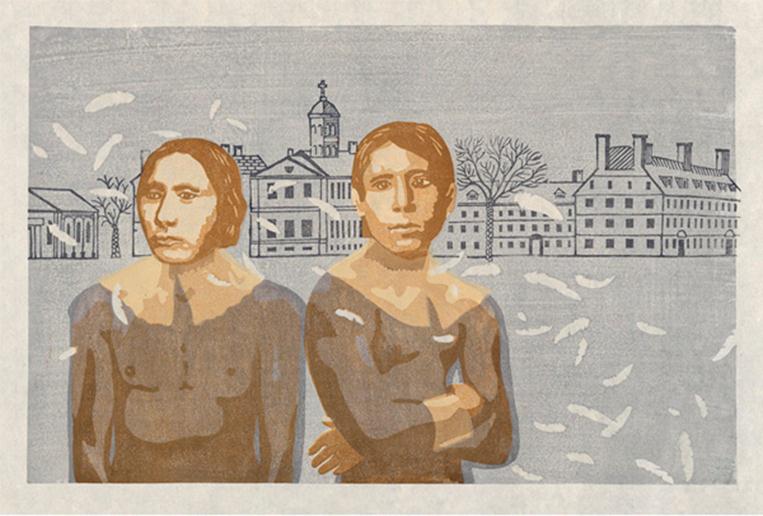
Caleb & Joel, Harvard College woodblock print by Annie Bissett

Geraldine Brooks delves into a period of history around 1665 combining fictional characters with the intriguing and real-life characters of two Wôpanâak tribe members, Caleb Cheeshahteaumauk and Joel Iacoombs, inhabitants of the 200sqkm island of Noepe, (Martha’s Vineyard) located south of Cape Cod in Massachusetts and the first Native Americans to attend Harvard College.

Thank you to Annie Bisset for allowing me to use her wonderful woodblock print of Caleb and Joel, click to learn more about these real life characters and to see Annie’s excellent artwork.

Bethia is the daughter of a Minister who has ambitions to convert the Wôpanâak people to Christianity. Though they live on the same island, it is not deemed proper that they mingle and Bethia believes she has sinned gravely when she develops a friendship with Cheeshahteaumauk, nicknamed Chuppi ‘the one who stands separate’ the young son of a Chieftain whom she names Caleb. He calls her ‘Storm Eyes’.

“to the extent that my spirit was roiled, so his seemed calm.”

Bethia and Caleb are like yin and yang, they contrast and yet complement each other, light within dark, dark within light, they attract and recoil from each other, moving through life with their separate belief systems, alien and yet understanding, their spirits connected in ways the intellect struggles to comprehend. But while he is able to suspend his beliefs to better understand the ways of the settler’s, something deemed necessary for their survival, she cannot do the same, she observes and feels something, but her fear of it convinces her it must be devil’s work. Caleb is elusive, we perceive him rather than know him, which makes him mysterious, left to the imagination to fill in the gaps. He appears not to have been corrupted and is “all seeing”, at least I imagine him as such.

The book is split into three periods in Bethia’s life, moments when she picked up the pen and looking back recorded certain events in her life, the first period when she was an adolescent on the island records her transformation from carefree girl within a stable family environment to young adult when a change in family fortune requires her to be indentured as a housemaid in a Cambridge school so her brother can continue his education.

I enjoyed this part the most, it touched both her joy and terror of discovering the new, her close relationship with nature, Caleb and the island and her desire to know more while fighting her puritan instinct to punish herself for those thoughts and stifle their continual unwelcome presence. It is the beginning of her repressed crush on the young Chieftan’s son, who appears comfortable in himself with his knowledge and harbours none of her fears of taking that knowledge to the next level.

Thus we find ourselves in the second part, in Cambridge where Bethia’s brother Makepeace and the two boys Caleb and Joel spend a preparatory year before sitting the exam that will allow them entry into Harvard. It was something of a shock in reading to suddenly be thrown into Cambridge, just as it must have been for the protagonist herself, I wasn’t ready to leave the island and wanted to dwell more on the years that were not recounted in the text, but alas, it was not I steering this ship and so reluctantly I let go of that disappointment to await Bethia’s fate. Bethia desires intellectual knowledge or at least to be in the proximity of it, so despite her lot, she is content to be within an educational institution and this attraction forms the basis of future decisions she will make.

An enjoyable read, although the cut off between the three sections always left me wondering and craving a little more for what happened next, never quite reaching fulfillment. The introduction of the characters of Caleb and Joel left this reader wanting more and I was disappointed that we don’t learn more of their experience, which I understand would have required great steps in the imagination, as little details of their time at Harvard are actually known or recorded. But ever thankful to have been enlightened on the achievements of these two young men and their place in the story of America and another great read from Geraldine Brooks.

La Seduction – how the French play the game of life

Séduire * plaire à quelqu’un et obtenir amour ou faveurs en usant de son charme * conquérir l’admiration, l’estime, la confiance * captiver, charmer *attirer de façon irrésistible en parlant d’une chose

Suggested by a local book club and interested in an outsider’s perception of life in France, I find myself in the company of Elaine Sciolino, Paris bureau chief of the New York Times between the pages of her alluring book.

Inspired by a lecture she gave at the NY public library in 2008 entitled ‘Séduction à la française’ the author explained how seduction was key to understanding France and the French, positing that one of the reasons for President Sarkozy’s low ratings in the popularity polls post-election was because he had not mastered these rules. He may not play by the rules, but he did find his counter balance when he married Carla Bruni, who Scioloni describes as:

a modern-day woman with the manners of an eighteenth-century courtesan, skilled in the art of movement and the rituals of conversation.

Intriguing indeed and what fun the author must have had flirting flitting around the micro empires of Parisian style, beauty, cuisine, politics and culture, meeting presidents, diplomats, artists, writers, chefs, businessmen, merchants, farmers, philosophers, journalists, fashion designers, perfumers and museum curators.

The book describes a world and a manner of being I know little about, despite living within its midst these past six or so years; but Paris, like many large cities is not necessarily typical of the rest and after listening to others discuss this book, opinion is indeed varied, some suggesting ‘la seduction’ old fashioned, a prerogative of certain social classes, political circles or even pure fantasy. I tend to think there are sufficient anecdotes to say oui to all of those suggestions.

What is certain is that cultural perceptions are different even when values may be similar. While a certain look ‘le regard’ from a man is welcomed as a complement in France, it might receive a verbal legal threat in America. In France, there is greater tolerance and less testing the waters of behaviour that in the US might be construed as sexual harassment.

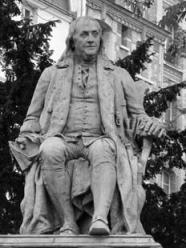
Statue of Benjamin Franklin, Paris, 16ème - Photo Lycée Condorcet

An interesting example of how long things have been so, was observed ( and well portrayed in the excellent HBO series ‘John Adams’) in the conduct and perceptions of Benjamin Franklin (first Ambassador to France) and John Adams (the second American president), Franklin understood it impolite to discuss business at dinner, immersing himself in the peculiarities of French culture while pursuing his goal; Adams however, saw Franklin’s indulgences and game playing as a complete waste of time, his disapproving manner causing the French to frown and exclude him completely. When Franklin died, France mourned him like a hero; people thought so highly of him, some believed he had been a president.

One of the paradoxes is the attitude towards privacy. Behaviours complicit in la seduction are accepted, but it is frowned upon to indulge in more than fanciful rumour; the media keep their distance from any story that verges on incriminating a person for something considered to be private or slanderous. This was highlighted recently when Sarkozy whispered an insult in the ear of President Obama about another Head of State and although the comment was overhead and reported widely by English and American media, it was not reported until a week later by the French press and even then it was kept very low profile. Not one French person I asked knew about the story. The sanctity of the right to privacy is paramount.

The chapters on gastronomy and concocting perfumes I particularly enjoyed, time spent with a connoisseur passionate about their work is pure joy and since mixing the essences of plants and flowers is one of my own passions, I was happily lost in these chapters imagining the sweet mix of aromas and the taste of Guy Savoy’s mother’s home cooking. See him work his magic here and experience his culinary art of seduction.

I recall reading ‘Sixty Million Frenchmen can’t be wrong’ by Jean-Benoit Nadeau and Julie Barlow, a Canadian attempt to understanding France and the French and their effort to explain the root of the differences. One of the analogies they made that has stayed with me was to suggest that visitors should expect a culture and a people as dissimilar to themselves as they might assume when visiting Japan or China. All are ancient civilisations and have many traits, laws, beliefs, habits, attitudes and ways of doing things that go back generations, centuries.

Our institutions originate in the decadence of ancient Rome. We are an old people. The mistresses of monarchs, from Louis XIV to Napolean III … are part of our history. – Patrick Devedjian, Paris

Rather than debate whether this is an accurate portrayal or not, I see it as another contribution to an attempted unveiling of what lies within an ancient culture and how that influences what we encounter in our modern day interactions and visitations in this intriguing country and among her patriotic people. It remains a slow opening mystery to me, so I just continue to listen, observe, interact, read and learn.

The Tiger’s Wife by Téa Obreht

Although I live in France, speak the language and love to read, I confess I don’t read nearly enough in French and admit I am holding any intent in that direction in abeyance for a while, comfortable with the certain knowledge that I will indulge the desire eventually. The last novel I bought in French was a translation of The Life of Pi’ by Yann Martel, a gift for my friend B, so she could read it in her ‘langue maternelle‘. It is serendipitous then, that she bought me ‘The Tiger’s Wife’ for Christmas, another novel with an unforgettable feline presence. We will share the experience of our respective tigers soon, the discussion sure to cross both languages.

And so to Téa Obreht’s debut novel and Orange prize winning ‘The Tiger’s Wife’.

I do enjoy traversing cultures and storytelling whose origins are unfamiliar, requiring an open mind and suspension of judgement. Obreht brings us to a land that has been split in two, where crossing a border causes suspicion and having the wrong accent or name can be dangerous.

Natalia is a young doctor who travels with her friend Zora across a hostile border to bring medicine to an orphanage. On her way she learns that her dying Grandfather has followed her and passed away in a neighbouring village. His personal effects, including his copy of ‘The Jungle Book’ that he always keeps with him are missing; Natalia takes a detour during her visit to retrieve them, enabling her family to render their funereal rituals in peace.

A  simple story, there is little depth to the living characters, we don’t spend much time with or get to know Natalia’s mother, grandmother or her travelling companion Zora. The contemporary story outline is a frame within which to retell stories and reflect on memories the grandfather shared with Natalia, presented as flashbacks.

However, this is where Obreht’s narrative really shines, when the deathless man appeared everything came into focus and I was hooked. The grandfather’s encounters and conversations with the deathless man are curious and engaging. We meet the equally legendary villagers of Galina where he grew up and in a fable-like manner, we learn how the background of these characters led to their subsequent behaviour and the role of the Tiger’s wife.

We encounter village rumour, superstition, stories and incidents where truth and the imagination make equal contribution to the version passed on or ‘dug up’ in the present day. The stories often feature a well-intended, admirable type such as Luka, the butcher’s son and Dariša the bear hunter, transformed by events which see their nature change, the humble youngster becoming a wife-beater, the caring turning brutal, the compassionate victimised.

Framing stories within another story can be distracting, particularly when we have a preference for one over the other and when the narrative voice changes; it reminds me of the Rumi scholar and novelist Elif Shafak’s book The Forty Rules of Love’ which I adored for the most part, the fable like story of the dervish Shams unfolds like an exotic journey; the contemporary story within which it was framed didn’t work so well, though I do recommend the book.

I hope more novelists succeed in crossing cultures and bringing into the light their stories, myths and family legends with creative inspiration.

Lest we forget.

Cutting for Stone by Abraham Verghese

Emerging from Abraham Verghese’s Cutting for Stone reminds me what it was like returning home after three months travelling in Asia. Home is familiar, but everything else feels strangely altered by the recent experience.

Except it is not Asia I traverse, but reading my way through Addis Ababa in central Ethiopia to a hospital in the Bronx, via the eyes, ears, heart and hands of Marion Stone.

Marion and Shiva are identical twin boys left orphaned when their mother dies during childbirth and their father, unable to cope with the revelations of that day, abandons them for good.

Raised by Hema and Ghosh, doctors in the Mission Missing Hospital, kept running by Matron’s unrelenting pursuance of international donors, they become a close-knit family, often struggling but nearly always overcoming the day to day dramas of the hospital and the equally unpredictable events of a volatile political environment.

Marion and Shiva follow their role models into the medical world and we too enter the operating room with such verisimilitude, it’s almost like watching an episode or ER (the nearest I have come to knowing what trauma surgery might be like).

Ethiopia & the Horn of Africa

Five hundred plus pages of bliss, I don’t recall when I was last so content that a book continued after 400 pages, so happy was I to enter the author’s realistically created world, taking me to those exotic but familiar to him locations, putting me through numerous experiences I will likely never encounter.  

Verghese’s words on the page bring a life-like quality; there is a richness to his prose that is metaphorically beautiful and a perceptive tension that is heart racing mad. It’s a roller coaster ride from start to finish and by page 472 tears of joy were flowing.

Gripping, enticing, compassionately delivered, eye-opening, heart racing, it is an unforgettable journey and a thrill of a read.  I finished it on the first day of 2012 and I can’t imagine reading better than this for a while, it could well become one of my best reads of 2012.

Memorable Reads in 2011

It has been a memorable 2011 both in reading and sharing, one of my aspirations this year having been to learn how to create a blog.

What joy it has brought, the creation, the writing, the reading, the sharing and the community of readers and wonderful like-minded souls who comment and share and have opened their worlds to me. I didn’t expect or foresee all the joy and wonderful interaction that would come from creating a virtual entry into my world of books and reading and that this would lead me to so many others.

So thank you to all those who follow this blog, my wish for 2012 is that the inspiration and motivation we provide each other will long continue.

To rank anything would be torturous, and even to list favourites is near impossible, so I will mention some memorable reads in no particular order and no doubt regret those I have left out later.

muze 62

1. Muze No.62    ҉   not a big consumer of magazines, in February I discovered this volume at Le Mans TGV station. The words CULTURE, ECRITURE, LECTURE jumped out at me, then Louise Bourgeois – Eugénie Grandet, Proust à l’écran, Flannery O’Connor, Argentine and Le Sacré excited me and the cover just melted my heart. It did not disappoint, I now have another favourite magazine (and a most enjoyable way to improve my French).

2. Fear and Trembling by Amélie Nothomb    ҉   Recommended by mon amie B, this was my first foray into popular French fiction. A hilarious account, said to be based on the author’s experience of a year working in Japan, you end up thinking she’s either a saint or a masochist as she fails to integrate into the work environment.

3. The Children’s Book by A.S.Byatt   ҉   having not read her work for a long time, I was pulled into this Edwardian world of potters, ceramics, the Victoria & Albert museum and the varying sensitivities of children. A mesmerising and colourful journey.

4. Seven Days to Tell You by Ruby Soames   ҉   will remain with me always as a turning point, the first book I read prior to publication, fear and delight combining to produce this review.

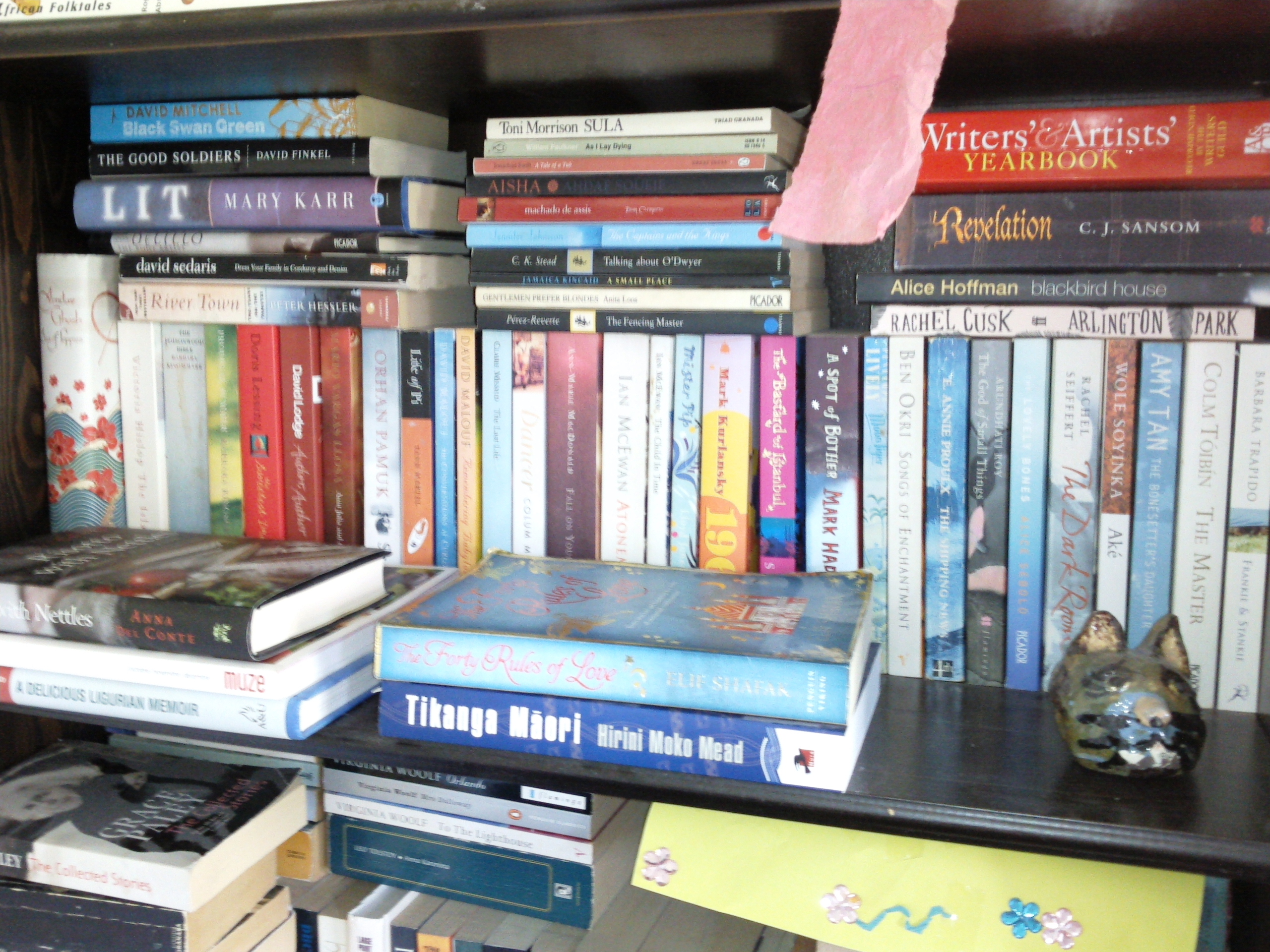
5. The Diving Pool, The Housekeeper + The Professor by Yoko Ogawa   ҉   I will remember 2011 for discovering Yoko Ogawa’s short story collection in Oxfam, introducing me to her gripping and evocative style, followed by the poignant and memorable novella ‘The Housekeeper and Professor’.

6. Gift from the Sea by Anne Morrow Lindbergh   ҉   this classic collection of ‘coming of middle age’ essays published in 1955, stays with me because it arrived the day my daughter was admitted to hospital and was one of my choices of books to accompany me during those challenging two weeks.

7. The Lacuna by Barbara Kingsolver   ҉   the ten year wait club, I recall awaiting Louis de Berniere’s ‘Bird without Wings’, one of my all-time favourite books and this year there was Jeffery Eugenide’s long awaited ‘The Marriage Plot’ and Kingsolver’s ‘The Lacuna’ which I loved and review here.

8. A Kind Man by Susan Hill   ҉   shortly after reading an author’s interview in Mslexia and a subsequent visit to Daunt Books in Marylebone, I couldn’t help but be tempted (and indulged, thank you G) by Susan Hill’s ‘A Kind Man’. I respected her attitude and perspective in the interview and instinctively savoured each page of this fable-like novella. I then read ‘The Beacon’ confirming Hill as a writer I know I will continue to read, happy there is a lengthy backlist.

9. The Many Lives & Secret Sorrows of Josephine B by Sandra Gulland    ҉    my first blog review and wonderful memories of two trilogies shared with my best book reading buddies C and M.

And finally, no memorable list could be complete without mentioning the companionship of:

10. Mslexia   ҉   the quarterly magazine for women who write and more often women who juggle at least one or more jobs, a family and numerous responsibilities but who find 2, 5, 10, or just any hours to dedicate to writing, they are all an inspiration to me and I love to read all those who succeed in becoming published through its pages. An inspiration, a writing prompt and always a great read.

Happy New Year Everyone!

Passionate & Dedicated – Aung San Suu Kyi ‘The Lady’

It seems appropriate in the year that three women won the Nobel Peace prize, that we remember ‘The Lady’, Aung San Suu Kyi, who won this prize twenty years ago in 1991, nominated by the admired leader and humanitarian, former Czech president Václav Havel, who died this month.

It is debatable whether most know Aung San Suu Kyi for her steadfast dedication in promoting the ideals of democracy and metta (a Buddhist term meaning loving kindness) to the people of Burma, or for the longevity of her term as a prisoner of conscience, held under house arrest for 15 of the 21 years from 1989 until her release in November 2010.

Winning the Noble peace prize increased her prominence and brought her cause and the plight of suffering Burmese and hill tribe people to the attention of the international community.  Just this year she was visited with open arms by Hilary Clinton, not long after announcing she would run for election in upcoming byelections.
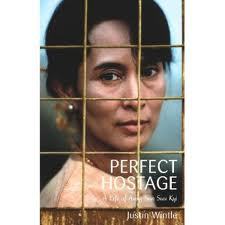
I picked up Justin Wintle’s book ‘Perfect Hostage’ Aung San Suu Kyi, Burma and the Generals, believing it a biography, mislead perhaps by the striking portrait which graces the cover and select testimonials describing it as so. In fact, I would call it a historic treatise of Burma and while of significant interest in itself, I did find it frustrating that it took close to 200 pages to encounter Aung San Suu Kyi within its covers. Though there is depth in the historical account, I found the reverse to be true in terms of the author’s evocation of Aung San Suu Kyi, in fact I found many of his comments patronising and uncomfortable:

Had SLORC not placed Suu Kyi under house arrest, it is improbable that she would have been given the Nobel Prize…‘ and on a tribute she wrote about her father ‘ This, the notion of St Aung San, may have been over-egging the cake’ and ‘When I saw that Aung San Suu Kyi had got a third class degree I let out an involuntary chuckle.

I am certain that the author interviewed many people, that is clear, but as to coming to some understanding and appreciation of Aung San Suu Kyi and her perspective or her personality, the text remains curiously detached.  Dare I say, I detected a hint of what could almost be compared to a colonial attitude, as referred to in George Orwell’s novel ‘Burmese Days’ (himself born in India with unacknowledged Burmese relatives in the family). That would be going too far I am sure, but it frustrated me enormously and made me yearn to read something actually written by Aung San Suu Kyi herself, something this book is remarkably short on.
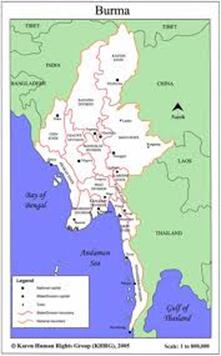
However, letting go of the expectation of an exquisite biography and seen as the historical treatise that it is, I find a thorough and detailed account of a remarkable country and ethnic melting pot of people who have long been subject to tyrannical rule. Sitting between India in the west and China in the east with borders that touch so many countries, Tibet, Laos, Thailand, Bangladesh, it is not surprising that it comprises so many ethnic groupings and hill tribes and has encountered so much conflict.  It has a unique history of rising to great prominence and descending into chaos, as each successive victor sought to impose their will.

It provides an interesting introduction to Aung San Suu Kyi’s father Aung San, his haphazard entrance into politics and the fraught relationship with Japan, set up to assist in the removal of the British, only to find they had replaced one empire seeking power with another.

‘I went to Japan to save my people who were struggling like bullocks under the British. But now we are treated like dogs. We are far from our hope of reaching the human stage, and even to get back to the bullock stage we need to struggle more.’ Aung San, at Maymyo, June 1942

With independence secured, the future looked positive in many respects. Democratic elections in April 1947 elevated Aung San to leadership, until he was betrayed and assassinated by one of his fellow countrymen. The country struggled to take advantage of its newfound independence and while the coup in 1962 was seen by many at the time as a hopeful resolution, it signalled the beginning of torturous dictatorships that have cost many lives, exiled others and kept Burma’s icon for free, democratic choice under arrest.

Aung San Suu Kyi was a reluctant hero; married with two children to the Oxford academic Michael Aris, a leading Western authority on Bhutanese, Tibetan and Himalayan culture, she returned to Burma to nurse her mother after a stroke and found herself sharing the hospital ward with many student victims of the atrocities occurring under the regime.  Astounded, she absorbed the horror of their stories and they listened to her reflections urging her to become actively involved in the struggle.

Just as Buddha gave himself up for the betterment of sentient beings, so Aung San Suu Kyi by offering herself to the people of Burma, was put in such circumstances she had little choice but to leave her family behind, a test the regime continued to dangle in front of her, in their hope she would leave and the people forget her. Her persistence in staying kept the candle of hope burning for millions and perhaps we may now see the fruit of that hope manifesting in their upcoming elections.

The Housekeeper + The Professor

Having recently discovered and read Yoko Ogawa’s

‘The Diving Pool’, I was further intrigued when I saw this novella displayed in my local bookshop and couldn’t resist another of her works with its beautiful cover and the promise of an alluring story about a woman who visits an eccentric mathematics professor each day to clean his home and cook his meals.

Reading ‘The Housekeeper and the Professor’ is a little like a meditation in mindfulness; although we might escape into the book, we are held in its present, for each day is a repeat of the previous and follows a pattern, such as we might too if our memory were constantly erased after eighty minutes, the habits we would continually follow, because we have been reduced to the very core of our nature, without the accumulation of memory from yesterday, last week or last year.

The Professor is a mathematics genius, whose memory ceased functioning after an accident some years before, so while he retains his mathematical genius and his long term memory before the accident, he has lost his short term memory.  It lasts only eighty minutes and so he has devised crude methods to remember things, such as pinning small pieces of paper to his suit to remind him of important facts, otherwise he starts every day anew.

The housekeeper arrives each morning and introduces herself as if they have never met. Slowly, she and her ten year old son, whom the Professor refers to as Root – a reference to the square root sign and his hair, are drawn into the Professor’s reduced world where numbers reign supreme and the two visitors begin to understand the magic and meaning behind what they had always thought of as ordinary numbers.
Whether you hated mathematics at school or loved it like I did, you will find yourself attracted to the arithmetic secrets the Professor unveils, which stir more than a mild curiosity in the significance of certain numbers and the challenge of elegant equations, as both the housekeeper and her son discover to their own delight.

Eternal truths are ultimately invisible , and you won’t find them in material things or natural phenomena, or even in human emotions.  Mathematics, however, can illuminate them, can give them expression – in fact, nothing can prevent it from doing so.

In essence, it is a meditation on the simplicity of life and an introduction to the complexity and significance of numbers; it is about letting go and accepting things the way they are and deriving small pleasures from the mundane.

Yoko Ogawa’s writing and storytelling flows like a sparkling river, it draws you in and carries you along; there are few surprises just gradual awakenings. There is a vulnerability to each of the main characters that we pick up on, which forewarns us, characters we become sympathetic to, whom I was sad to leave behind but will be revisiting again for sure.

Time Passes, Reality Bites – A Visit from the Goon Squad

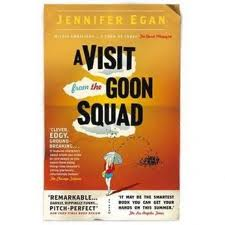
‘A Visit from the Goon Squad’ by Jennifer Egan (winner of the Pulitzer prize for fiction 2011) was recommended in a comment on my post ‘Why People don’t read short stories’ and I then had the good fortune to swap books with a book buddy and was delighted to discover that this was the treasure she was trading.

There has been much discussion already about the title; what exactly is a ‘goon’ and is this even a relevant question? I decided not to search for an answer and instead to come up with my instinctive response at the end, I prefer to hazard a wild guess although the cynic in me did wonder if it wasn’t just a gimmick.

A novel or a set of stories, each chapter is separate yet connected by the barest of threads to the previous, sufficient to surmise a pattern, although like many creations, the complete picture does not become clear until the work is finished. It reminds me of six degrees of separation, that we are all connected and that even when we are, there are gaps in history’s, we only ever know part of a person’s story.
It is a testament to Egan’s writing  and one of its strengths that her book reads like a novel because we are immediately drawn into and engaged within the world of her well cast characters, mentioned briefly in one chapter, discovered in depth in the next, it is not like starting a completely different story, more like starting an abstract jigsaw puzzle in opposite corners knowing that eventually the pieces should add up. We read and make the connections, searching for them, perhaps even creating them ourselves. I wonder, is that my imagination at work or the writer’s – or both working in unison?

We encounter this in Italo Calvino’s ‘If on a Winter Night a Traveller’ and also in Alice Hoffman’s ‘Blackbird House’, a slim thread enough to spur the reader on in the quest for enlightenment.

In Egan’s novel we meet Sacha who works for Bennie in the music industry, Bennie himself, his wife Stephanie, her ex-convict journalist brother Jules, Dolly who used to be Stephanie’s boss, Ted, Sacha’s Uncle and others whose lives have interacted at some point. We meet them at different periods in time, during particular episodes in their lives where even the young seem to have already lived numerous lives and carry a burdensome past that haunts their present. There is an underlying dissatisfaction with how things have turned out, the inevitability of time passing and taking with it something vital and essential.

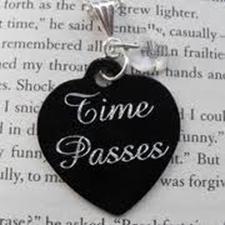
Which reminds me, the goon squad; as Bosco says on page 134 ‘Time’s a goon, right?’ and so too I believe that a visit from the goon squad is just this, time passing and the oft harshness of reality.

If on a winter’s night a traveller

If you have never read Italo Calvino this may be a misleading book to start with, it’s certainly not reminiscent of his short stories and I believe it is unlike his other novels, but it has a kind of cult status in that it is was an original and much talked about experimental work.
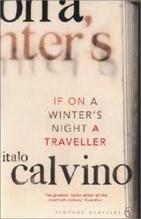
‘If on a winter’s night a traveller’ starts out as a conversation, Calvino entering and leaving the exchange within the pages of his novel in an unpredictable fashion. This is not a book to lie back and lazily escape into, it requires your attention and concentration to stay with where you are at and to understand what is going on and then just as you are spirited away by his seductive prose and enjoying the ride into the depths of one of his stories, you turn the page and Monsieur Calvino is back.

I enjoyed the diversions, although I was disappointed that he was unable to find a way to leave the sex of the reader neutral, having been almost convinced he might well be speaking to me, it becomes clear he is speaking to his male readers, political correctness not in full swing in the early 1980’s when this was published. But I readily forgive him, especially when assured by Lorna Sage, author of the memoir ‘In Bad Blood’ who wrote in the Observer:
‘devastating, wonderfully ingenious parody of all those dreary best-sellers you buy at the airport…It is a “world novel”: take it with you next time you plan to travel in an armchair’

Chapters are interspersed with stories, the titles of which are referenced in each preceding episode, the stories are the beginning of novels and you the protagonist are searching for the rest of the story while listening to Calvino expound on readers, reading, and writing. Best described in an extract from one of the stories themselves, where he writes:

I’m producing too many stories at once because what I want is for you to feel, around the story, a saturation of other stories that I could tell and maybe will tell or who knows may already have told on some other occasion…I see something like a forest that extends in all directions and is so thick that it doesn’t allow light to pass…so it is not impossible that the person who follows my story may feel himself a bit cheated, seeing that the stream is dispersed into so many trickles, and that of the essential events only the last echoes and reverberations arrive at him…’

Playful, impossible to label, is it a…, it is a question, a poem, a collection of stories, a novel and a conversation with Italo Calvino. The author imposes himself and his voice within the pages and we as the reader also become involved in the action as Calvino switches into the second person narrative. If I were an academic I would probably be littering this text with a lot of technical terms describing the literary tools Calvino plays with, literature students are likely to come across it, or at least they did in the past, as David Mitchell, author of ‘Cloud Atlas’ reminisces about here, when he rereads it for a second time.
It’s an oeuvre that defies categorisation, which plays with the reader and will entertain some while annoying others, myself I am content that it has now stopped taunting me from the bookshelf, my curiosity sated, it can now be talked about with some knowledge of its interior. That curiosity won’t rest long however, no doubt it will soon find another dusty volume to settle on, another book I haven’t read by that author I have often read about but have yet to enter their imagined world.