
We laughed as the doctor left the room and I tried to remember how to breathe.
I even slept a little throughout that long night until around 5am when we reached the moment when the baby finally arrived. A beautiful tiny baby girl, an almost pained look of relief on her face, happy to have escaped I thought, or is it the other way around, I wonder, pained by that physical confrontation of birth into our harsh world? I only held her for a short while before she was taken away to be further checked, taken to a ward on another level.
We knew that there was a problem in the intestine, the hospital had picked it up at 22 weeks after the scan revealed fluid in the intestine making it balloon slightly. Due to this effect, they had been able to observe peristalsis, the smooth muscle contraction of the intestine wall, which moves food or liquid along the intestine. Ordinarily, we should not be able to see this, but if there is some kind of blockage, it is possible to observe.
It had caused us significant anxiety, particularly because the doctor could neither guarantee nor predict an outcome. There were two options he had said. Either the baby will require an operation immediately after birth, or you will take the little one home and at some time in the near future it will be necessary to return to the hospital, because it will be a problem for him or her to keep food down. In this case, the baby will vomit continuously because the bowel will have ceased to function.
We preferred that the problem be dealt with as soon as problem, but we were not given sufficient information to feel in any way empowered to make any kind of decision. So it often is with hospitals, perhaps believing that too much information can only increase anxiety, it seems as if they withhold it. I’m not so sure it’s a good strategy, being aware of one’s ignorance and feeling powerless are more painful symptoms of anxiety than the harsh dose of reality, complete information might bring, at least in my mind.
I mean, why send a baby home and wait for something terrible like that to happen? What were the risks of the operation? Every question always ended with “It depends. We can’t know exactly until we can see inside.” There was no reassurance, we just had to wait and so I had tried not to absorb too much of the anxiety already flooding through my veins.
Now that the moment had arrived, they seemed to be acting quickly, there was no suggestion of any “wait and see” now. The baby was gone, they’d cleared her breathing passages, shoved a tube up her nose, tied off her umbilical cord, weighed her and taken her out of the room. I know I did get to hold her, but I have no memory or feeling of the bliss of holding my baby after birth; the rush and feeling of panic and anxiety obliterated all that and I only remember the helplessness of not being able to follow and wanting to make sure that someone who I knew and could trust would keep an eye on my baby girl. I hadn’t held her long enough to even remember what she looked like!
The baby is in the post natal ward they told me. I sent Susan immediately to go and find her, I was too weak to get out of bed, but I was desperate for someone to go and see my daughter, to find her and tell me that everything was okay.
“She’s okay” said Susan. “She’s downstairs in an incubator and she’s quiet, you can go and see her once you are up and showered.” I dragged myself to the shower, washed then went down to the ward to see her for myself. There was a place to insert my hands but I couldn’t actually touch her. Barriers, barriers, I sent her all the love and maternal energy my heart could generate; I sent it to her in abundance, through my mind, my heart, my hands, from every cell in my entire being. And I decided to call her Allia.
The nurse came to tell me that Allia would be transferred in a few hours to Great Ormond Street Hospital. She advised me that she would be transported in a specially equipped ambulance designed for babies.
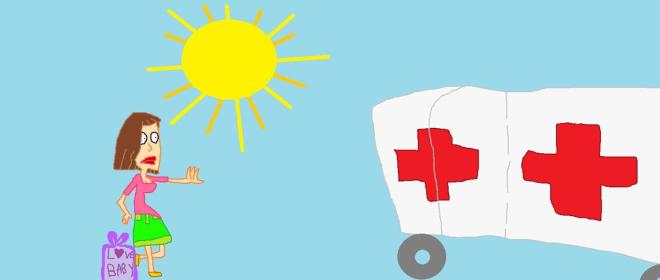
“It is not possible for you to travel with the baby” she continued. “It would be better for you to stay here for the night, you need to recover. Your baby will be okay.”
My baby would be okay she had said. I was not okay. I did not want to be there alone, I did not care about recovering, I wanted to be with her, she needed me, she was about to face something drastic and invasive and they were recommending she do that alone, without me even being in the same building.
I told Susan to go home and get some rest. Other people came to visit me and were shocked to find me there alone. I hated lying there watching the other women with their babies, feeling as if I had abandoned my own, powerless to have kept her. I remembered that my husband was due to arrive back in London that day. We had been unable to reach him.
Someone called from Great Ormond Street Hospital to ask me for parental consent to conduct surgery on our daughter.
“Ordinarily, we would get you to sign a consent form, but as you are not here, we need to get your permission over the telephone” the Doctor explained.
“When will the operation be?” I asked.
“At about eight thirty this evening” he answered. I looked at the clock; it was nearly 6pm already.
“Wait” I said, “I’m coming now.” I went back to the ward to find my husband and my Aunt waiting there for me.
“I need to get out of here” I said. “They’re going to operate on her in two hours and I’m not waiting here while that is about to happen.”
“I’ll take you in my car” said my Aunt. I grabbed my things and the three of us sped out of the Royal Free Hospital and raced towards Russell Square to Great Ormond Street Children’s Hospital.
Next Up in the mother/daughter collaborative story A Silent Education: Our Quiet Challenge in Provence
Episode 5 : GOSH – A Kind of Neverland
Previous Episodes: Introduction
Episode 1: The Benefits of Insomnia
Episode 2: We are not Living in France!


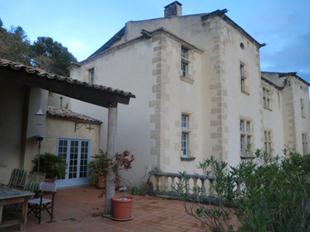 The leaves are starting to fall outside La Loubiere, the


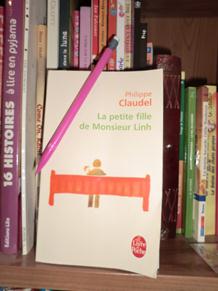 ambiguous title because it can be interpreted in two different ways, already a dilemma for the translator no doubt, because petite fille is the expression used for grand-daughter, but it can also be read as petite ‘little’ and fille ‘girl’.
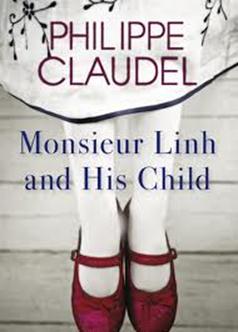 So did the English translation go with grand-daughter or little girl you might ask? Actually neither, the English title as shown is Monsieur Linh and His Child. I’m not sure why they stay with Monsieur rather than Mr, I was not under the impression that he spoke in French. It becomes clear how much of a task translating a novel must be, so many decisions to make or discard with the title alone, already certain ambiguities are lost while other insinuations are made.
 The author does not say where he came from or where he arrives at, making this part of the reading experience, in fact we all had various impressions of where the story may have taken place, my own impression very much influenced by my recent reading of Vaddey Ratner’s novel


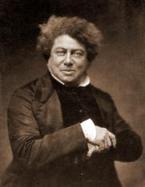
 Mention the name Alexandre Dumas and many will associate it with the classic stories as well-known now through their film adaptations, The Count of Monte Cristo, The Three Musketeers, The Black Tulip and La Reine Margot (Marguerite de Valois) as they are through the novels.
 Tom Reiss has researched the life of General Alex Dumas and takes us from the French sugar plantations of Saint-Domingue to the battlefields of the French revolution and to a dark dungeon on an island in the Mediterranean, in recapturing the spirit of this extraordinary man, living in an unforgettable era, that we are all the better off for being reminded of.



 Word by Word