Episode 10: The Move Down Under and a Shocking Diagnosis

Thinking that a move would give us more family time and offer a less stressful lifestyle, we left London behind and travelled half way around the planet to New Zealand, where most of my family still live today. I had been away for many years and hadn’t expected to return, however now that I was back, everything looked and felt familiar and it wasn’t long before we had moved into a house in the city and I had found a full-time job.

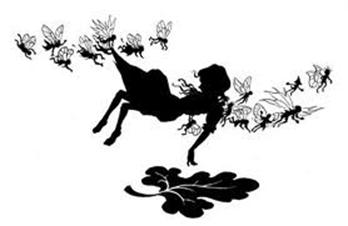
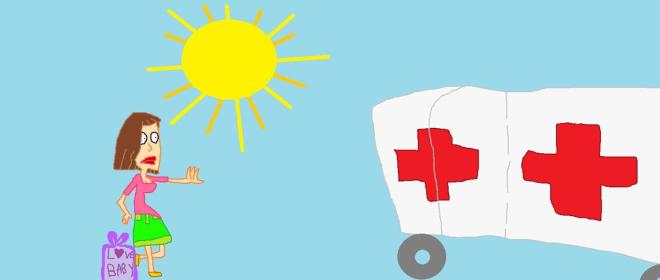
Not quite that large an island, Allia’s interpretation of somewhere very far away.
Putting New Zealand on the Map!

Initially we spent time staying at my parent’s home on the sheep farm they had lived for twenty years. It was wonderful to be there with Allia, for her to spend time around her grandparents and for them to get to know and love her.

Being a long way from the nearest town and a very windy road to get in and out, the forced isolation was a little more difficult for my husband to endure, but he was fascinated by the workings of the farm and in particular the shearing shed when it was in full working motion. Not so for me, years of spending school holidays working in that intense, stinking, hot and competitive environment (shearers get paid per sheep shorn, not by the hour) sweeping away wool, dags (sheep shit) and the occasional maggot were something I felt no nostalgia for at all.

It seemed to be good timing to have returned at this time as my mother was unwell, so I was able to go with her to her appointments and provide support. Good timing was an under-statement; she had lost a lot of weight and was having problems with her balance. She was only 59-years-old but seemed to have entered what looked like old age in an awful hurry.

Of course it wasn’t old age. By the time it was understood that it also wasn’t asthma or some diet related weight loss and she had been for a follow-up MRI scan, we found ourselves sitting in an office, opposite an oncologist who mumbled something that sounded like “three weeks”.

“Excuse me”, what did you say? I blurted out.

“The cancer is in the lungs, but it has spread to the kidneys and other organs and those lumps in the neck and brain are tumours. In the state that your mother is in now, I would say that three weeks is being optimistic.”

“But isn’t there anything we can do?”

“Yes, we can start chemotherapy to try to slow down the rapid advance of the cancer and the radiation treatment should be able to remove those tumours so you should actually start feeling better and get your balance back” he said looking at my mother.

We were both stunned. I wanted to protest and say hey that’s not fair, you can’t wait all this time knowing something isn’t quite right, you know it was more than three weeks that we have been worrying about this and we survived that, only to hand out a three-week life card as if you are prescribing community service. This is an unfair sentence being handed out for absolutely no crime!

Completely and utterly helpless, we sat and listened to what would happen in the next few days. I don’t recall much of what he said, but I remember my mother turning to me with that familiar, uncompromising look in her eye and saying, “I’m going to fight this.”

Yes, she would fight death as she had fought life; like every other great challenge that had faced her, she never gave up without a fight. But I looked at the thin frame of a woman she had become and knew that this was a fight she was not going to win. Not this time.

Next Up: in A Silent Education: Our Quiet Challenge in Provence

Episode 11: Adapting to a New Rhythm and Creating Lasting Memories

Previous Episodes

Episode 9: She Speaks the Language of Birds

Apart from mild surprise when reading my mother’s entries in the baby book she kept for me, which lists the number of words I could say at 12 months and various intervals beyond that, I never really noticed too much that Allia didn’t speak words that could be recognised. Because she talked non-stop. She communicated incessantly with much enthusiasm and wasn’t shy.

She spoke a language tongue that we referred to as bird-talk, it was long streams of dialogue that went up and down in intonation which I was just on the verge of understanding if I listened hard enough, I was sure. Like listening to Italian or Arabic, languages that incorporate much body language and expression which communicate mood, tension and excitement without the need to understand their words.  It was very much like listening to the French language on the television or the radio in my early days of living here – somewhat familiar sounds with that feeling that surely if I did listen hard enough, it was just a matter of time before something in my brain clicked and “poof” I would understand everything.

It wasn’t until her brother arrived on the scene a year later and started using recognisable words in his rambled dialogue very early on that the contrast became noticeable – I think he understood the bird-talk because they would chatter away to each other and to us without hesitation. I wondered then if something was perhaps amiss, I say perhaps, because I am against making comparisons between children, they develop at their own pace and depending on what they are working on developing, other aspects can lag behind.

When people started suggesting we video her speaking like this, I realised it really was a little out of the ordinary, it was almost as if she had her own language, something like a twin language – but no twin. Unlike today when making a piece of film footage is child’s play, I wasn’t comfortable filming her as a kind of spectacle, I was more concerned with just interacting with her and giving her the freedom to express herself, waiting for her language to become something like one of the three languages she was hearing at home.

Next Up: in A Silent Education: Our Quiet Challenge in Provence

Episode 10: The Move Down Under and a Shocking Diagnosis

Previous Episodes

Episode 8: Ten Months of Bliss and Facing a Return to Work

Once over that initial hurdle, Allia blossomed and apart from that long scar, there was nothing to indicate there had ever been a problem. She was a happy, contented baby who loved to smile and engage with those around her, especially the band of eight and nine-year-old girls who lived in our apartment building and were frequent visitors.

For the first ten months I was able to stay at home with her, working a little, practicing aromatherapy, however I knew it was going to be necessary to find another full-time job, living in London demands it, all the more so when there is an extra mouth to feed.

Until this precious little girl came into my life, I never really questioned working long hours or weekends and I had thrived on the opportunity to travel with work. Now, I couldn’t think of anything worse – to leave this child behind, absolutely not, she had extinguished my desire to seek out the unknown, I found myself dreaming of safer pastures, the more familiar.

For the first time in eight years of living in London, the city that I thought had become my second home, I thought the unthinkable – maybe it was time to return to New Zealand?

P.S. This is what Allia came up with when I said this episode was about us having 10 months of fun times hanging out together, going to the park etc, I just love this picture, although my husband says that first one isn’t true! But her imagination is brilliant. Enjoy.

Next Up: in A Silent Education: Our Quiet Challenge in Provence

Episode 9: She Speaks the Language of Birds

Previous Episodes

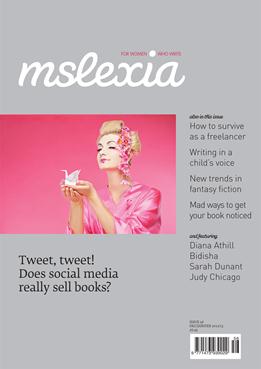
mslexia – for women who write

I’ve been subscribing to mslexia magazine for a few years now and since it is both a great stimulant to the writing process as well as an excellent source of reading recommendations and a directory of sorts, I thought I’d share a little about it.

Mostly I like it, because it doesn’t feel in any way elitist, this is a kind-hearted, generous resource, contributed to and read by ordinary women who like to write, including many who like me, don’t participate in this activity as a job, but manage to scribble away for a few hours each week – read this and you realise you are part of a large, like-minded community of women who believe in making the impossible possible.

It might be published in the United Kingdom, but it has a very international flavour and inclusive attitude, important when you live outside your country of birth and don’t write in the language of your country of residence and want to participate.

mslexia (ms = woman, lexia =words) is a quarterly publication with feature articles on some aspect of writing (and open to idea submissions), an interview with a published writer, featured short stories or poetry written to the issue theme, or winning entries from the regular competitions they run.

It was Issue 48 in Jan/Feb/Mar 2011 that introduced me to the writer Susan Hill, just as her short novel A Kind Man was being released and I’ve since read three more of her books.

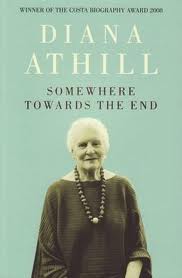
In the latest edition there is a wonderful interview with Diana Athill, what an inspiring woman she is, winning the Costa biography award at 91 with her book Somewhere Towards the End and still writing from her North London residential retirement home.  She says it how it is and cites Jean Rhys’ for teaching her this, she mines her own experiences for a story, and cautions against being cruel to others, “you can be ruthless about yourself, but not when writing about friends” – you can read an extract from the interview here.

athill“I have never understood how many writers moan and groan about how awful writing is. Absolute nonsense.” Diana Athill

Recently, they have been conducting mini-surveys of readers which are then incorporated into the lead articles and some of the smaller snippets of information found throughout the magazine. It is extremely readable, which I put down to the fact that there is a reasonable portion of bite-sized articles, such as letters, extracts from posts, emails, tweets, along with fun and short, contemporary submissions from writers under the headings of rants, raves, a week of tweets, monologue, pen portrait, how I keep going, four lines that rhyme, a poetry or book review. Something for everyone.

Each quarter there is a themed New Writing section, always an excellent writing prompt whether you are interested to submit or not, short narrative or story up to 2,200 words, prose or sometimes poetry, the successful entries appearing in a future edition. I have seen many women being published for the first time through these exercises.

There is an annual poetry and short story competition and in 2012 there was a children’s novel competition for unpublished women novelists.

In addition to all the wonderful information it lays at your fingertips, one of the things I love the most are the short bio’s of contributors, here is one from the 2009 poetry competition in which Pat Simmon’s touching poem ‘Jack discovers impermanence’ was a winner:

PAT SIMMONS, 64, was head of communications for ‘Send a Cow’, an African agricultural organisation, but has since retired. The conviction that whatever she writes will be rubbish stilts her creative progress, but an encouraging family keep her inspired and motivated. Finding writing by hand shackling, she works directly onto her laptop, a practice to which she wishes to dedicate more time. She was Blagdon’s 2005 Apple Wassail Queen – your guess is as good as ours – and on a trip to Rwanda was re-christened Munyanika: ‘As valuable as a cow.’

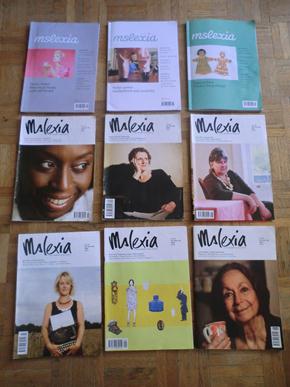
It is available online, but this is one publication that I like to have the physical magazine to read, there are so many gems and I return to back issues often. Oh and lets not forget the back page, always a delight to conclude with, ‘the bedside table‘, introduces an artist, author, intellectual or well-known personality who shares what’s currently on their nightstand, like gossip for book-lovers.

The next deadline of 18 March 2013 is for Issue 58: The Women’s Short Story Competition for stories up to 2,200 words on any topic. There are prizes for 1st, 2nd and 3rd and three other finalists will also be published in that issue of Mslexia. You don’t have to be   a subscriber to enter, just a woman.  Stories are accepted from any nationality and country.

Happy Writing!

Episode 7: The Verdict, the Recovery and Home in time for Christmas

Waking up the day after the birth and the operation was difficult but waking up without our baby there next to us was gut-wrenching. We returned to the hospital as quick as we could and it would become my resting place for the next three weeks. I was kitted out with a mobile, electric breast pump, not too different from the contraption we see in a cowshed, only this cow had to be milked every three hours. I saw how little they survive on in those first few days, poor starving babies, but I also saw the rich colour of that life-giving, nutritional start a newborn needs, colostrum. Seeing that invoked a determination to ensure I ate in the most healthy way possible.

Allia spent three days in intensive care and apart from being asked to leave when they removed the respiratory equipment, the days passed with little drama. We learned that she had an Ileal Atresia, basically an obstruction in the small bowel, which required 35cm of it to be removed, leaving 130cm. Reading the notes of the operation and procedures in the Intensive Care Unit, I completely understand why some things are best not witnessed or even read about at the time one is going through them. I recently came across the discharge summary and actually have no recollection of ever having read it before, it’s not pleasant reading and I feel thankful to have a healthy daughter who shows no sign whatsoever of this challenging start to her life except the scar across her middle.

As if making up for that initial separation, we were then gifted with something few mothers experience I am sure, three uninterrupted weeks of constant companionship, the two of us sharing a room that became our world,  three weeks in which I learned that this small being was connected to me in a way I had never imagined possible.

Apart from when the nurses struggled to find a vein when doing blood tests, Allia never cried. She slept, she awoke, she rested in my arms as we waited for that all important organ, the bowel to commence its function. That would be one of the first signs of recovery. She was given milk through a line, so it had to happen soon and if everything functioned well, I would be able to start feeding her.

I would slip downstairs to the cafeteria for my breakfast when I saw she was sleeping and she was always quiet on my return, I would then read the notes to check if anything had occurred while I was away and it was via this I learned that this blissful sleeping baby was aware of my absence. The nurse had noted that Allia had cried and next to this note, that the mother had left the room to have breakfast. That the two events were connected was something of a shock initially, but so reassuring, to come to understand and experience something of the magic of the bond between mother and child. It is something I remain in awe of.  The next time I left for breakfast, I made sure to tell her where I was going.

Once she recovered and was feeding and putting on weight, we were ready to go home. We were discharged on December 18th and re-entered a city transformed by the approach of Christmas. A festive celebration it was indeed and the perfect time to be coming home and preparing for the season of joy and hibernation.

épisode7

Next Up: in A Silent Education: Our Quiet Challenge in Provence

Episode 8: Ten Months of Bliss and Facing a Return to Work

Previous Episodes

Episode 6: Late Night Surgery, the Most Difficult Wait a New Mother will Endure

Exiting the lift, we entered the Anaethetist’s medical room and I watched as they prepared what they needed, looking confident and as if they had done this many times before, which of course they had, it was only Allia and I for whom all this was alarming and new. As they attached three new lines to Allia I noticed that each one had a small square sticky label with a different animal on it. Everything in there was so miniature, the sight of those tiny little animal figures like a kind of bait, luring one into a false sense of security momentarily. But then I saw the tiny mask and the realisation of what that mask signified gave me serious heart palpitations. My little girl had made it into this world, through all these months of waiting and had survived birth and was breathing effortlessly and now this gas mask was going to knock her out.

“Okay, I think I shoud go now” I said stumbling out of the door and into the lift and back up to the relative serenity of the nurturing Woodland Ward. I had stayed as long as I could, but I wouldn’t witness her lose consciousness, that I just couldn’t bear. We then waited in what seemed like and probably was the longest day of my life. Allia had been born on that very same day at 5.16am and we would wait there until after 11pm for the doctor to report back to us.

He returned alone. It was then I understood that Allia would not be coming back to this serene ward.

“She’s okay” the doctor said. He spoke softly and quietly. “She has been taken up to the intensive care ward and you will be able to see her tomorrow. We will try and organise a room for you here then” he said looking at me, “but for now she is being taken care of and the best thing would be for you to go home and get some rest.”

It was both a relief to know she was okay and an anti-climax because we couldn’t see her. I tried not to allow the nagging fear or was it paranoia that he was hiding something or protecting us from something engulf me. A mother in a state of distress has such fine-tuned nerves she picks up on everything. The wild animal instinct in me was sensitive to every word and gesture, trying to read behind every intention in this strange unfamiliar territory.

Everything comes as a surprise when we are so focused only on what is happening right now. With the benefit of hindsight, I see that all these small shocks and surprises are the things that create anxiety in the lead up to knowledge about out what is going to happen next. But the maternal instinct is a wonderful shock absorber and close to the survival instinct I am sure.

Which is just as well, because no one can warn you that will only hold your baby for a short while after birth, that she will be taken away and put in a different ward from you, that she will go to another hospital without you, that they will ask for your consent to perform surgery over the telephone and then tell you it’s better for you to stay where you are and rest, that you will escape the hospital to follow your child, not even knowing the address of where she is, that you will wait four hours for an operation to be performed and you won’t see your baby afterwards and that you will find yourself walking out into the dark streets of London just before midnight on the same day that you first gave birth, looking for a taxi that won’t appear in the freezing cold of a late November winter, that the taxi you eventually find will throw you around its back seat violently as it turns corners, accelerating into each street, that you will be too tired and stunned to even protest as the physical pain of what you have endured finally overpowers the drug-like effect of whatever bodily hormones have up until now been providing you with some measure of pain relief.

As we left the hospital to search for that taxi, the nurse insisted that I sit in a wheelchair.

“It’s been a long day and your body also needs to recover” she said.

Next Up: in A Silent Education: Our Quiet Challenge in Provence

Episode 7: The Verdict, The Recovery and Home Just in Time for Christmas

Previous Episodes

Introduction

Episode 1: The Benefits of Insomnia

Episode 2: We are not Living in France!

Episode 3: The Benefits of Contra-Indicated Essential Oils

Episode 4: Where’s My Baby and Why Isn’t She With Me?

Episode 5: GOSH: Where Peter Pan’s legacy resides, a kind of Neverland

Episode 5: GOSH Where Peter Pan’s legacy resides, a kind of Neverland

At Great Ormond St Hospital we were shown to the Woodland Ward, the family and children friendly ward names, a first step in reducing my overburdened anxiety levels. Allia was in a beautiful communal room decorated for children, with soft lighting, colour, patterned bed sheets with giraffes and monkeys. The quiet whispers of the nurses a stark contrast to the beige walls, formica cabinets and metal machines with cables and hoses draped everywhere of the hospital we had just left.

Arriving at GOSH Great Ormond St Hospital

It was like we had left the factory and entered Neverland. In a way we had. GOSH has the benefit of many private donors and receives royalties from the estate of J.M. Barrie, who claimed Peter Pan had been a patient in Great Ormond Street Hospital and that:

It was he who put me up to the little thing I did for the hospital.

Allia was asleep in an open incubator so we could actually touch her. She was so peaceful sleeping there. There was no naso-gastric tube in her nose, only lines in her hands and feet, things that in this environment were as ordinary and common as sheets and blankets. She was okay and she was going to be okay. She looked more comfortable now than she had before and I was just happy to be there with her.

It was a shock for my husband. Having missed the birth itself, he was now confronted with something even more difficult, seeing his daughter for the first time in a hospital wired up to machines and about to undergo surgery. If he thought he had arrived in time to avoid the drama, he was mistaken, he had arrived in the middle of it and now he and I would have to endure four hours of awaiting the outcome of a major event that neither of us had any role in.

My Aunt left and Susan’s husband stayed with us. Susan (whose name I have changed for this story) and I used to joke about our funny connections and serendipitous events, one of them being that she shared the name of my mother and I shared the name of her daughter. We laughed the day we met when we discovered this connection, never for a minute anticipating the future role she would play in our lives, at the birth of our daughter.

We had about half an hour before Allia was taken downstairs to the operating theatre. The doctor spoke with us and drew a diagram of the digestive system, from the mouth, down the oesophagus, to the stomach and the small intestine to the ileum, the point just before the small intestine connects to the large intestine.

“It is here just before the ileum that there is a blockage” he explained. “We don’t know exactly what it is, whether there is an end to the intestine so that the two pieces must be re-joined or whether there are striations or a blockage, in which case, we may need to cut a section out. Do you want to come down to the Anaesthetists’ ward?” he asked.

“Yes” I replied.

“No” said my husband simultaneously.

The lift opened, Allia was wheeled inside, I followed with the doctor and we all descended.

Next Up: Late Night Surgery, the most difficult wait a new mother will ever endure

Read Previous Episodes this mother/daughter collaboration: A Silent Education: Our Quiet Challenge in Provence

Introduction

Episode 1: The Benefits of Insomnia

Episode 2: We are not Living in France!

Episode 3: The Benefits of Contra-Indicated Essential Oils

Episode 4: Where’s My Baby and Why Isn’t She With Me?

Episode 4: Where’s My Baby and Why Isn’t She With Me?

We laughed as the doctor left the room and I tried to remember how to breathe.

I even slept a little throughout that long night until around 5am when we reached the moment when the baby finally arrived. A beautiful tiny baby girl, an almost pained look of relief on her face, happy to have escaped I thought, or is it the other way around, I wonder, pained by that physical confrontation of birth into our harsh world? I only held her for a short while before she was taken away to be further checked, taken to a ward on another level.

We knew that there was a problem in the intestine, the hospital had picked it up at 22 weeks after the scan revealed fluid in the intestine making it balloon slightly. Due to this effect, they had been able to observe peristalsis, the smooth muscle contraction of the intestine wall, which moves food or liquid along the intestine. Ordinarily, we should not be able to see this, but if there is some kind of blockage, it is possible to observe.

It had caused us significant anxiety, particularly because the doctor could neither guarantee nor predict an outcome. There were two options he had said. Either the baby will require an operation immediately after birth, or you will take the little one home and at some time in the near future it will be necessary to return to the hospital, because it will be a problem for him or her to keep food down. In this case, the baby will vomit continuously because the bowel will have ceased to function.

We preferred that the problem be dealt with as soon as problem, but we were not given sufficient information to feel in any way empowered to make any kind of decision. So it often is with hospitals, perhaps believing that too much information can only increase anxiety, it seems as if they withhold it. I’m not so sure it’s a good strategy, being aware of one’s ignorance and feeling powerless are more painful symptoms of anxiety than the harsh dose of reality, complete information might bring, at least in my mind.

I mean, why send a baby home and wait for something terrible like that to happen? What were the risks of the operation? Every question always ended with “It depends. We can’t know exactly until we can see inside.” There was no reassurance, we just had to wait and so I had tried not to absorb too much of the anxiety already flooding through my veins.

Now that the moment had arrived, they seemed to be acting quickly, there was no suggestion of any “wait and see” now. The baby was gone, they’d cleared her breathing passages, shoved a tube up her nose, tied off her umbilical cord, weighed her and taken her out of the room. I know I did get to hold her, but I have no memory or feeling of the bliss of holding my baby after birth; the rush and feeling of panic and anxiety obliterated all that and I only remember the helplessness of not being able to follow and wanting to make sure that someone who I knew and could trust would keep an eye on my baby girl. I hadn’t held her long enough to even remember what she looked like!

The baby is in the post natal ward they told me. I sent Susan immediately to go and find her, I was too weak to get out of bed, but I was desperate for someone to go and see my daughter, to find her and tell me that everything was okay.

“She’s okay” said Susan. “She’s downstairs in an incubator and she’s quiet, you can go and see her once you are up and showered.” I dragged myself to the shower, washed then went down to the ward to see her for myself. There was a place to insert my hands but I couldn’t actually touch her. Barriers, barriers, I sent her all the love and maternal energy my heart could generate; I sent it to her in abundance, through my mind, my heart, my hands, from every cell in my entire being. And I decided to call her Allia.

The nurse came to tell me that Allia would be transferred in a few hours to Great Ormond Street Hospital. She advised me that she would be transported in a specially equipped ambulance designed for babies.

“It is not possible for you to travel with the baby” she continued. “It would be better for you to stay here for the night, you need to recover. Your baby will be okay.”

My baby would be okay she had said. I was not okay. I did not want to be there alone, I did not care about recovering, I wanted to be with her, she needed me, she was about to face something drastic and invasive and they were recommending she do that alone, without me even being in the same building.

I told Susan to go home and get some rest. Other people came to visit me and were shocked to find me there alone. I hated lying there watching the other women with their babies, feeling as if I had abandoned my own, powerless to have kept her. I remembered that my husband was due to arrive back in London that day. We had been unable to reach him.

Someone called from Great Ormond Street Hospital to ask me for parental consent to conduct surgery on our daughter.

“Ordinarily, we would get you to sign a consent form, but as you are not here, we need to get your permission over the telephone” the Doctor explained.

“When will the operation be?” I asked.

“At about eight thirty this evening” he answered. I looked at the clock; it was nearly 6pm already.

“Wait” I said, “I’m coming now.” I went back to the ward to find my husband and my Aunt waiting there for me.

“I need to get out of here” I said. “They’re going to operate on her in two hours and I’m not waiting here while that is about to happen.”

“I’ll take you in my car” said my Aunt. I grabbed my things and the three of us sped out of the Royal Free Hospital and raced towards Russell Square to Great Ormond Street Children’s Hospital.

Next Up in the mother/daughter collaborative story A Silent Education: Our Quiet Challenge in Provence

Episode 5 : GOSH – A Kind of Neverland

Previous Episodes: Introduction

Episode 1: The Benefits of Insomnia

Episode 2: We are not Living in France!

Episode 3: The Benefits of Contra-Indicated Essential Oils

1Q84 The Finale

Foyles bookshop, Southbank Centre, Royal Festival Hall, London

It’s been a busy month and my reading has suffered for it, not to mention having to take a break 400 pages into a historical novel about the French revolution, but a visit to London and another wonderful bookshop, Foyles on the Southbank helped, tempting me with Book 3 of Murakami’s trilogy and promising to be even more of a page-turner than the first two books.

If you haven’t read it already, I suggest you begin with Book 1 &2, which I read in the summer and review here.

In essence Book 1 and 2 follow the lives of the two main protagonist’s Aomame and Tengo, who were in the same class at primary school, twenty years before the episode the book narrates occurs.

In these first two books, we follow the two characters into the alternative world of 1Q84, where everything appears normal, until they notice the presence of the two moons. Tengo has ghost-written what he assumes is a fantasy novel, however the presence of the two moons suggests otherwise. Aomame is a sports instructor with a penchant for carrying out untraceable acts of revenge.

By Book 3, we are just waiting for these two to meet as they seem to be on a collision course for doing so and Murakami seems to delight in teasing the reader, as this reunion almost happens on more than one occasion. He adds tension and pace by introducing Ushikawa, a private investigator searching for leads after the murder of the leader of a cult, an act that has yet to become public. He has sniffed out a connection between the two, before they have realised it, Tengo and Aomame are relying on and following an instinct, Ushikawa deals only in facts and is closing in on them both.

In times like these Ushikawa didn’t like to have a set objective. He let his thoughts run free, as if he were releasing dogs on a broad plain. He would tell them to go wherever they wanted and do whatever they liked, and then he would just let them go. He sank down into bath water up to his neck, closed his eyes, and, half listening to the music, let his mind wander.

Yet again, I am in awe of the grand imagination of Haruki Murakami in conceiving this extraordinary plot and notice once again the mirroring effect in the separate lives of two characters who have not yet met up and yet who encounter equivalent or parallel situations. I am sure I am only skimming the surface of what lies beneath this narrative, but it was a joy to find Book 3 as enticing as and perhaps even more exciting than the book preceding it.

Episode 2: We are not living in France!

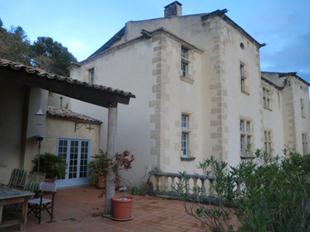
The leaves are starting to fall outside La Loubiere, the 16th century château where we are spending this last weekend of the autumn school holidays and with the kitchen door open early while everyone sleeps, I listen to the mesmerising sound of the wind in the trees and think about the change of the seasons. It does not seem so long ago that spring was here, when the bulbs that had lain dormant for the winter were poking their green stems through the surface.
Now we wait for the period of stillness and hibernation, something we know very well, because in a sense we too have been in a kind of perennial hibernation, waiting for our daughter’s voice to emerge in the classroom and speak for the first time in school.

Now our spring has come and just like the association of supportive parents Ouvrir La Voix, she has finally opened her voice after more than five years of silence. She now speaks to almost all her classmates and we have one hurdle left, level 10 in the book that has become my bible – to speak to a teacher or adult in school.

It is hard to believe it has been five years. It is hard to believe that for the first three years we didn’t know what we were dealing with, that it even had a name. Perhaps if we had lived in America or Great Britain, we may have discovered those words earlier – or maybe this condition would not have even manifested.

Here in the south of France, selective mutism is unknown and with our daughter in a French school where interventions to assist children are commonplace and often successful, we were happy to follow the advice and recommendations of the school psychologist (every school has one), an orthophoniste (speech therapist), a psychiatrist and our doctor, all of whom were willing to help and in the case of our doctor, advised and reassured us that it was just a matter of time.

Three years on, having made zero progress, it was all to change late one evening after a telephone call with my Uncle, when he mentioned that he had been speaking with a friend in Los Angeles whose daughter had the same thing as ours.

“What thing?” I said.

“You know” he said, “the not speaking in school thing.”

“It has a name?” I almost shout. “Call her back now and ask her what it is.”

He did and through his friend then passed on those two words selective mutism, or mutism selectif in French, two words that not one of those health professionals had known of or discovered to suggest to us.  We weren’t looking for a label, we were searching for a solution and we’d been looking in the wrong place.  Our programme of intervention was about to take a different path, one used successfully by parents in the know, only we would not have the same support, as to take this route was effectively to reject the existing system.

But to tell this story properly, it is necessary to go back even further, to understand events that lead up to this moment and because despite trying to change the title of this episode and make it shorter, my creative daughter who has already finished the artwork, is telling me to write this second part now and include her picture. So here’s the bit about not living in France!

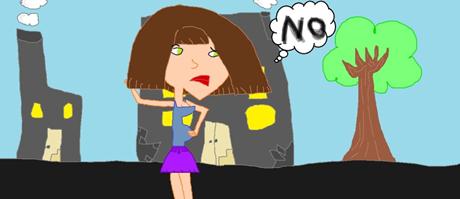
We are not living in France!

*

When I was six months pregnant we came to France for a 2 week holiday from London. We were toying with the idea of moving here, at least I was, for my husband it would be a return.

My body was changing and the world around was about to change significantly. One afternoon I returned to the hotel in Marseille to rest and as I passed the reception, I noticed all the employees looking at the television, watching what looked like the demolition of a couple of council buildings. I thought it strange that all the staff were watching TV in the middle of the afternoon, so when I got to the room I too turned on the television. I couldn’t understand the words spoken in rapid French, but I could read the subtext. It wasn’t a couple of council buildings at all; it was the twin towers of the World Trade Centre in New York.

During that holiday, we looked at a couple of apartments and houses, I sat through long-winded appointments with real estate agents, tried to understand menus and the rapid-fire French coming from that TV, all on a roller coaster of emotions and hormones, understanding little beyond Bonjour and Au Revoir, two basic expressions I thought I could pronounce, but listening carefully, I realised I’d been giving their syllables way too much emphasis, goodbye sounded more like ‘of waa’ than the expression I’d learnt to say.

I became disillusioned with the idea of living in France, I had long ago discarded that child-like submission of accepting things the way they are, being secondary to decision-making. Making decisions and understanding what leads to them is not something one gives up and neither was I interested in putting it on hold while coming to terms with a new language. I freaked out. No way was I coming to live here, a new language, a new city, a new baby, all things where I would be required to start again from the beginning. Absolutely no way I told myself.

Returning to London, the queues were horrendous, airport security was tight and there was no other subject being discussed other than the events that had occurred in New York. And they were beginning to have a trickle-down effect. I was concerned because I worked in the travel industry which was sure to be impacted and sure enough, within two weeks of our return, I was advised that my job was no longer required at a time when I knew I had no chance of finding another, not with a very obvious baby protruding from my mid-section.

Next up: Episode 3: The Benefits of Contra-Indicated Essential Oils!

Click below to read Previous Episodes of A Silent Education: Our Quiet Challenge in Provence

Introduction

Episode 1 The Benefits of Insomnia