Absolutely & Forever by Rose Tremain

A friend gave me this book to read recently and I brought it with me on holiday intending to read it on the plane, which didn’t happen. It is indeed an ideal holiday read, Rose Tremain being one of those reliable authors so adept at storytelling, at drawing you in to a character’s perspective, imagining their predicament.

When we first meet Marianne, it is the 1950’s, she is fifteen, the only child of regular middle class parents from a semi-rural district in southern England and in her prime for falling helplessly in love with the boy who is paying her attention, Simon Hurst. They are both coming to the end of their schooling years, he with great expectations, she with few.

When I was fifteen, I told my mother that I was in love with a boy called Simon Hurst and she said to me, ‘Nobody falls in love at your age, Marianne. What they get are “crushes” on people. You’ve just manufactured a little crush on Simon.’

When Simon fails to meet the expectations of him, his life plan changes and this will impact Marianne. Her parents dismiss her feelings and put it down to a schoolgirl crush, she describes it as being in the Love Asylum. Unable to let go of her ideas about a life with Simon, she flounders for a while, will eventually move on, but the pattern of unrequited love is never far away from her experience.

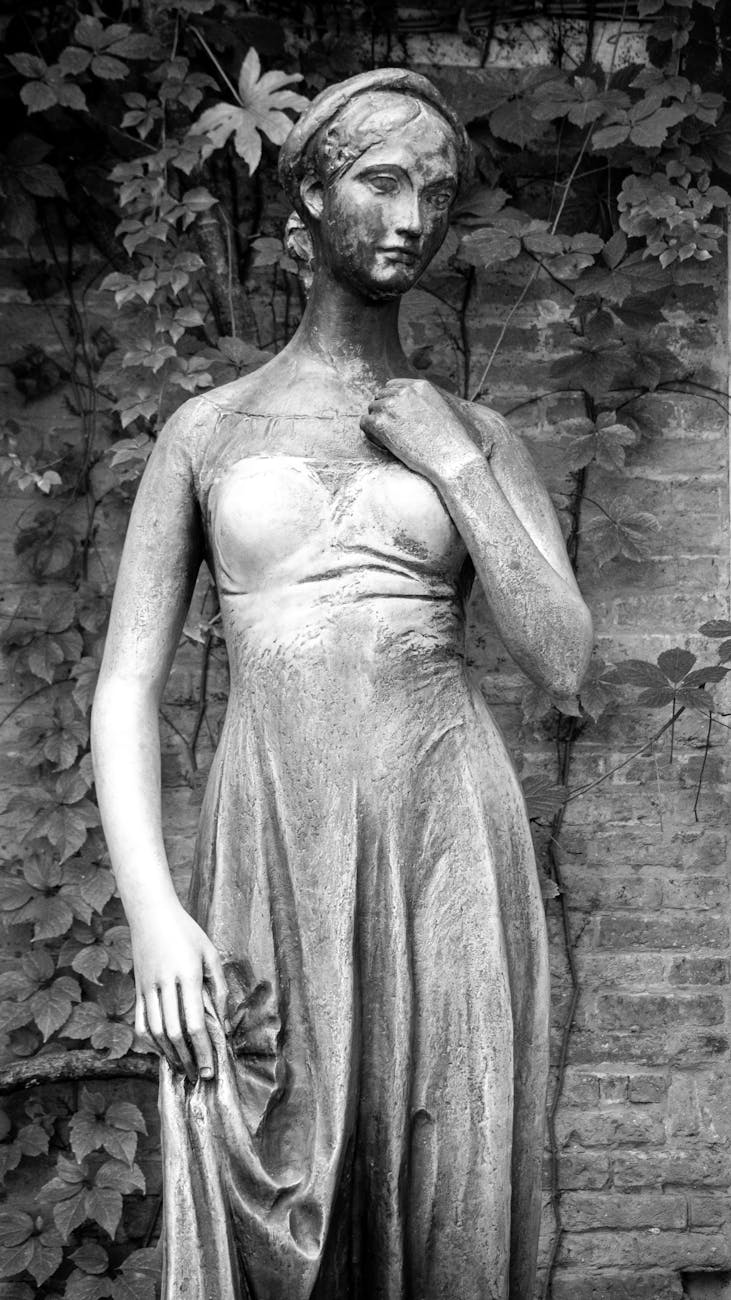
Photo by Miquel R. Calafell @ Pexels.com

At school studying Romeo and Juliet, she relates to the Juliet character and wishes for a character like Nurse in her life, one who understands what Romeo and Juliet are doing and how they feel, one kinder than her mother who could hold her and soothe her erratic emotions.

I imagined her listening attentively while I confessed to her that my head was so burdened by my obsession with Simon that I was afraid of becoming a total imbecile. And she would stroke my hair and reassure me that this was a perfectly normal state for young people to be in, that we were all inevitably headed for a stay in the Love Asylum, but that in time the spell would be overcome and normal life would resume.

It is an absorbing story of turning points in people’s lives, the different people they meet, how that can change their trajectory, including the presence of those absent and the illusions harboured of lives not lived, not meant to be lived. It is also a thought provoking depiction of the relationships between generations and the expectations of those coming-of-age in the 1960’s England.

Absolutely and Forever was shortlisted for the Walter Scott Prize for Historical Fiction 2024.

Booker Prize for Fiction Shortlist 2024

Today the Booker Prize Judges shared their shortlist of six novels, narrowed down from the 13 novels in the longlist from an original list of 156 novels.

The panel is chaired this year by artist and author Edmund de Waal, joined by award-winning novelist Sara Collins; Fiction Editor of the GuardianJustine Jordan; world-renowned writer and professor Yiyun Li; and musician, composer and producer Nitin Sawhney.  

The Shortlist of Six books below includes five women and authors from five countries including the first Dutch author to be shortlisted, the first Australian in 10 years. Below the description is a brief comment from the judges and the reason they think reader’s will love that book:

The Safekeep by Yael van der Wouden (Netherlands) – An exhilarating tale of twisted desire, histories and homes – and the legacy of one of the 20th century’s greatest tragedies.

Set in the Netherlands after the war, a quietly devastating novel of obsession and secrets, in which a relationship between two women in a perfectly ordered Dutch household becomes a story of the Holocaust.

We loved how atmospheric this book is. The austerity of these years is powerfully evoked, the particularity of where each teaspoon and coffee cup belongs is beautifully calibrated. But we adored the dynamic of the relationship between Isabel and Eva, the way they inhabit this charged space, always aware of each other and their bodies. 

Orbital by Samantha Harvey (UK) – Six astronauts rotate in the International Space Station. They are there to do vital work, but slowly they begin to wonder: what is life without Earth? What is Earth without humanity?

This brief yet miraculously expansive novel, set aboard the International Space Station is inflused with such awe and reverence that it reads like an act of worship.

This novel is superbly crafted and lyrically stunning. Sentence after sentence is charged with the kind of revelatory excitement that in a lesser book would be eked out of plot alone.   

Creation Lake by Rachel Kushner (US) – A woman is caught in the crossfire between the past and the future in this part-spy novel, part-profound treatise on human history.

A thought-provoking novel of ideas, wrapped up in a page-turning spy thriller. Kushner’s prose is juicy, her narrator jaunty, her world-building lush.

Novels that investigate what it is to be human can veer into the sentimental; this one is utterly flinty and hard-nosed. And yet, there’s mystery at its core – both the mystery of human origins and of individual identity. ‘What is it people encounter in their stark and solitary 4am self? What is inside them?’ As with the caves that play such a key part in the book, Kushner taps into something profound.

Stone Yard Devotional by Charlotte Wood (Australia) – The past comes knocking in this fearless exploration of forgiveness, grief and female friendship.

Set in a claustrophobic religious retreat in rural Australia, this is a fierce and philosophical interrogation of history, memory, nature and human existence.

Contemporary issues – climate change and a global pandemic – can sometimes appear as flat concepts or stale ideas in fiction, but Stone Yard Devotional is able to make both topics locally and vividly felt as haunting human stories.  

James by Percival Everett (US) – A profound meditation on identity, belonging and the sacrifices we make to protect the ones we love, which reimagines The Adventures of Huckleberry Finn.

A powerful, genre-defying, revisionist exploration of slavery, the indomitable resilience of the human spirit and the pursuit of freedom. It subverts all expectations.

While the book deals with the horrors of slavery, it also examines universal themes of identity, freedom and justice. Everett challenges us to question, and reflect on, the nature of morality, the corrupting influence of power and the indomitable resilience of the human spirit.  

Held by Anne Michaels (Canada) – In a narrative that spans four generations from 1917, moments of connection and consequence ignite and re-ignite as the century unfolds.

A lyrical kaleidoscope of a novel created from the scattered images and memories of four generations of a family. Few books could sustain a pitch of poetic intensity.

We loved the quietness of this book: we surrendered to it. The large themes are of the instability of the past and memory, but it works on a cellular level due to the astonishing beauty of the details. Whether it is the mistakes that are knitted into a sweater so that a drowned sailor can be identified, or the rituals of making homecoming pancakes, or what it feels like to be scrutinised as you are painted, the novel makes us pause. 

The Verdict

So I’m surprised and disappointed not to see My Friends by Hisham Matar on the list, I thought it was excellent; it is great to see Percival Everett’s masterpiece James there, I loved it. I have read Orbital and it was okay, though I felt quite detached from it and the characters, while reading.

Of the others, I’m curious enough to read an extract from Stoneyard Devotional, and Held, though the Anne Michaels might be a bit much for me if its anything like her much earlier Fugitive Pieces. I’m not sure about Creation Lake, it’s giving me Birnam Wood, Eleanor Catton vibes, so likely not for me. And now I have these two previous Booker Prize winning novels to read, thanks to a lucky book haul at the Vide Grenier in Ansouis Village yesterday.

So what do you think of the shortlist? Any recommendations? Disappointments?

Read An Extract

If you want to check out some of the first chapter of any of these books, you can read an extract here.

The Booker Winner

The announcement of the winner of the Booker Prize 2024 will take place at a ceremony and dinner held at Old Billingsgate in London on Tuesday, 12 November. 

Ansouis Village Annual Book Sale

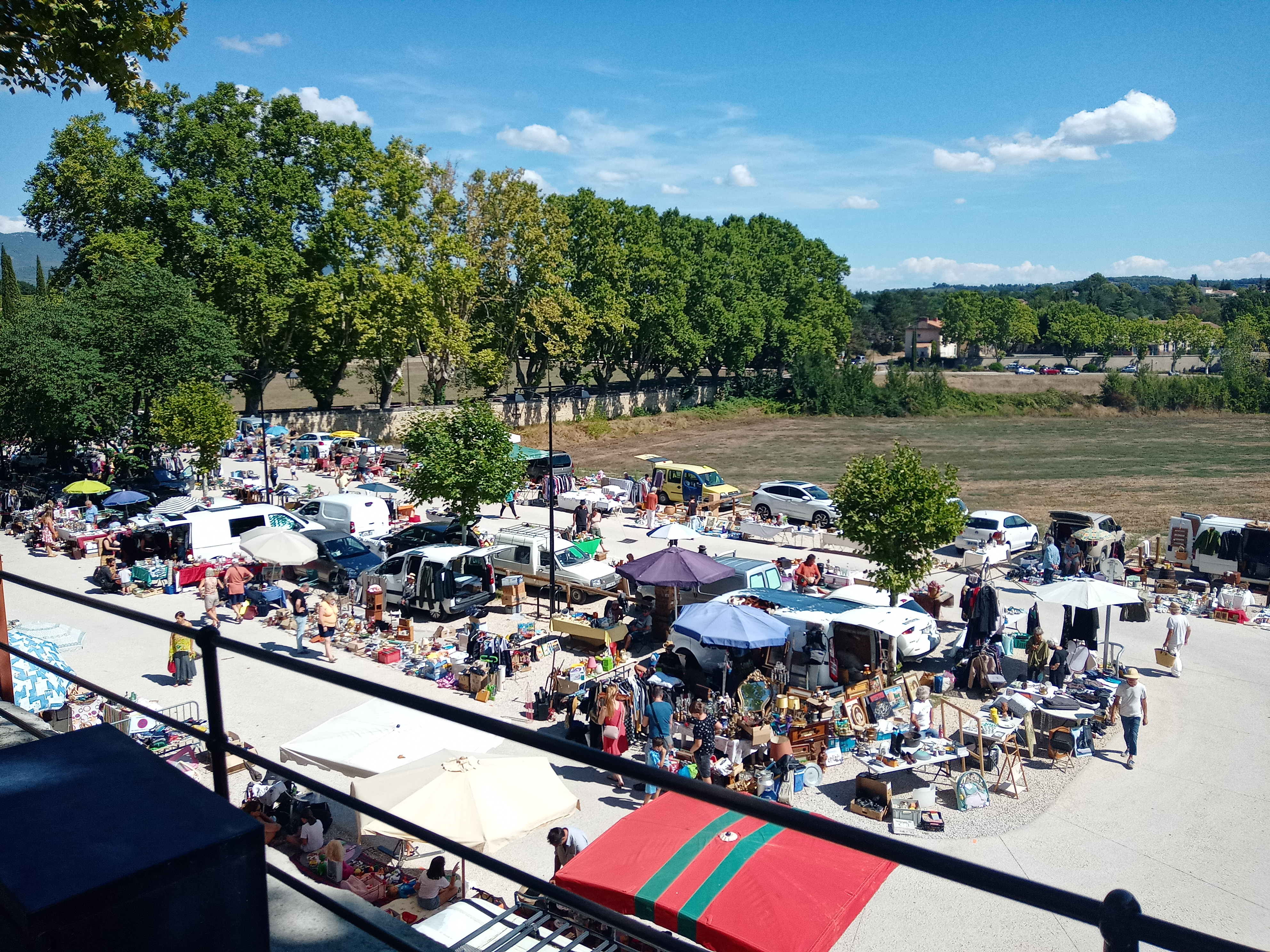
Yesterday (Sunday) was the annual ‘vide grenier‘ (garage sale) in the medieval village of Ansouis in the South Luberon area of the region Vaucluse. It’s a village I drive through at least once or twice a week for work. It’s a nice place to stop for a while.

The village has a population of around 1,000 people and is dominated by the fortress like Château d’Ansouis, sitting on a rocky perch overlooking the village and valley all around.

Every year the local French library has a few tables, where they sell second hand books, in both English and French.

It’s my favourite book sale, because it’s set up in this beautiful location, there’s easy parking and it’s always on a sunny day in mid September. If you arrive early, you are guaranteed to be rewarded.

I like to cull the bookshelves every year and donate to this market, and then try not to buy back too many. However this year I arrived just as another woman was depositing her donation and I saw those two Booker Prize winning novels that I haven’t read yet, Bernadine Evaristo’s Girl, Woman, Other and Sri Lankan author Shehan Karunatilaka’s The Seven Moons of Maali Almeida.

And then there were more…

In addition to the other impulsive purchases you can see in the image above, I found Northern Irish author Jan Carson’s The Raptures, a signed copy of Kamila Shamsie’s Best of Friends, Japanese author Mieko Kawakami’s Breasts and Eggs translated from Japanese and more. Oops. 12 books later…

Often these are books I have seen reviewed and I’m interested in, but not enough to rush out and purchase a copy, however they are the kind of books I would borrow from a library, so I guess this is like an annual library visit. Isn’t it?

I had heard about the Cazalet Chronicles Quintet by British author Elizabeth Jane Howard and couldn’t pass up the opportunity when I saw all four of them sitting in a box waiting to be claimed. Anyone keen for a buddy read?

There are lots of other things that people are selling, old china and glass, cutlery, clothes, old linens, the contents of workshops, old music albums – brocante. A treasure trove of things we don’t need, but definitely fun to look at.

The only other thing I look out for are old postcards, like these of Marseille’s Le Palais Longchamp, the Route de la Corniche and Le Parc Borely, all of which I found in Ansouis a couple of years ago. And all places I connect with and have fond memories of.

Even though they have already been used and written on (many many years ago), I like to give them a second life, sending them as bookmarks, to friends who also know and remember these places.

I didn’t find any today, well, there were some very small but beautiful old black and white photos of Berlin, but I didn’t connect with them in the same way as I do with the southern French locations.

Have you read the Cazalet Chronicles or any others from this haul that you recommend?

Tidal Waters by Velia Vidal (Colombia) tr. Annie McDermott

Women in Translation

Tidal Waters is my first August read for #WIT month. Reading Women in Translation.

What an original, good-hearted, open, vulnerable read. I’m not sure whether what I read was fictional or not, because much of what is described in the ‘letters to a close friend’ coincides with elements in the author bio inside the front cover of the book and the main character is Vel.

The Epistolary Novel

epistolary novel of letters, reading, literacy, poverty, Afro Colombian

An epistolary narrative, it is about the return to a place and finding new purpose, along with the motivation to pursue it and taking others with you – told through a correspondence that bears witness and though we don’t see the replies, we can tell that they encourage and support both the idea(s) and the woman pursuing it.

I don’t know if I mentioned this specifically, perhaps not in a letter, though maybe when we met up before I left to come and live here here for good, but part of what pushed me to make this radical life change was the need to feel that my existence had meaning, that I was spending each day doing something I cared about and could feel proud of at the end of my life. And that’s just what I found in being Seño Velia, the woman who has meetings with people about books, who tries to motivate children to love reading and books as much as she does, and who supports the teachers.

Finding Purpose and Motivation, In Community

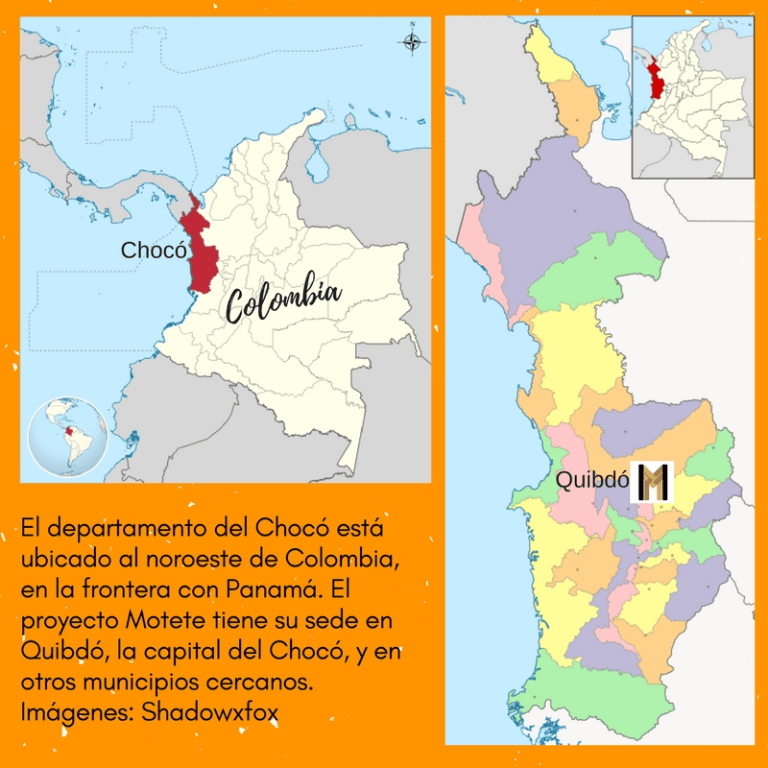
The letters span 3 years from May 2015 and they track a significant change in Vel’s life as she decides to return to Choco (to the Afro-Colombian community she was raised in) to start a new venture to bring reading, literacy and a love of books to it. The correspondence exhibits the growth and expansion of her writing, the letter becomes a safe harbour and she tests it by taking her writing to another level, stretching into a more personal yet contained arena.

Tomorrow I start a diploma in reading promotion, and with it my project, Motete. We’ve chosen three areas of Quibdo where I’ll start running the workshops.

She is taking a risk starting a new venture, but believes in it and is surrounded by extended family and connections, which facilitate her ability to reach out even further into the community and invite everyone in, to be part of or benefit from her shared love of reading.

And so this project is coming together. This basket, this Motete, is filling up. The slogan for my project is ‘Contenidos que tejen’ – contents that weave – and every day I like it more. Every day I realise that these contents are weaving fulfillment and happiness within me…

The thing is, motetes have been used to carry food for the body: plaintains, bushmeat, fish. Our is to fill them with food for the soul: art, culture, books. And just as motetes are woven by hand, I thought these new contents would also form a fabric: the fabric of society, of community, the fabric of souls.

Letter Writing

Her unnamed friend that she writes to is someone she hasn’t known long, he occupies a space between the familiar and the unfamiliar that she claims as a freedom to express herself, to be vulnerable and open, someone who has mentored and shown her how to get funding. The range of things she will write to him of, span a wide spectrum.

We never see the replies but the continuation of her own correspondence displays her life, her dealing with health problems, the double bind of her wounding and love, of being raised by doting grandparents, while having complicated relationships with a teenage mother unable to mother her and an emotionally absent father. Her later sadness and depression, helped through therapy, tears and conversations, to ways of coping and healing. Her optimism for her venture, and the community connections she creates keep her going.

I grew a lot. I learned. But most of all I tried to weave a new way of relating to my father that hurt as little as possible.

The Sea, The Sea

One of the themes is the sea, the absence of sea, the way the river meets the sea and her relationship to it. She yearns for it when it has been absent for some time, just as she yearns for the letter writer and the relief that comes in the act of writing to him.

She describes herself in her current role as being like the sea at that place where it meets the river.

I’m like the Pacific Ocean, pressing at the river with its tides to make it flow the other way, or lapping at the land when its waters rise, when it feels like gaining inches of new ground. You need strong motivation to stick to this way of life, which isn’t exactly a fight against the world, but rather the certainty of forging your own path.

An Homage to Correspondence

I loved this slender book, it’s project and generosity, its intimate sharing and platform for expanding and learning and having the courage to venture into new areas. It made me think of an exquisite title I’d forgotten about, Leslie Marmon Silko’s slim book of correspondence The Delicacy and Strength of Lace: Letters Between Leslie Marmon Silko and James Wright.

That correspondence was written when Silko was 31 years old and Wright 51. They had planned to meet in the Spring of 1980, mentioned in letters of Oct/Nov of the previous year, not knowing he would be gone before then.

They discuss her novel, his poetry, language, his travels, her adventures with animals, their speaking engagements, their mutual challenges and experiences as university professors, and soon began to share more personal feelings, as she acknowledged the tough time she was having and he shared his own experience, expressing empathy.

Velia Vidal dedicates her book:

To my recipient,
simply for being there.

and when I read about her own projects in society, her love of the sea and shared readings and efforts to help move children and young adults out of poverty, it is all the more inspirational to read these letters, understanding the difference a letter can make, to see someone take a risk and pursue something that will help others from her community, while fulfilling her own dreams and aspirations.

Highly Recommended.

Velia Vidal, Author

Velia Vidal (Bahía Solano, Colombia, 1982) is a writer who loves the sea and shared readings. In 2021 she was a fellow at Villa Josepha Ahrenshoop, in Germany.

For her book Tidal Waters she won the Afro-Colombian Authors Publication Grant awarded by Colombia’s Ministry of Culture. She is the co-author of Oír somos río (2019) and its bilingual German-Spanish edition.

She is the founder and director of the Motete Educational and Cultural Corporation and the Reading and Writing Festival (FLECHO) in Chocó, one of the most isolated, complex and neglected regions in Colombia with the highest afro-descendant population density in the country.

Vidal graduated in Afro-Latin American Studies and has a Masters in Reading Education and Children’s Literature. She is also a journalist and specialist in social management and communication. In 2022 she was included in the list of 100 most influential and inspiring women in the world by the BBC.

She writes children’s literature, fiction and non-fiction, and poetry. Her work has been translated into German, English and Portuguese.

Booker Prize for Fiction Longlist 2024

Today the longlist for the Booker Prize for Fiction 2024 was announced, 13 books, featuring three debut novels and six previously nominated writers.

It features blackly comic page-turners, multi-generational epics, meditations on the pain of exile – plus a crime caper, a spy thriller, an unflinching account of girls’ boxing and a reimagining of a 19th-century classic.

The long listed selection was chosen from 156 books published between 1 October 2023 and 30 September 2024. The Prize is open to works of long-form fiction by writers of any nationality, written in English and published in the UK and/or Ireland.

The list includes the following titles, of which I have read three (reviews linked to title):

Wild Houses by Colin Barrett (Ireland)  – A story of two outsiders striving to find themselves as their worlds collapse in chaos and violence, set in County Mayo.

Headshot by Rita Bullwinkel (US) – Funny, propulsive, obsessive and ecstatic, Headshot is equal parts subtle and intense, as it brings us to the sidelines of the boxing ring and above and beyond it.

James by Percival Everett (US) – A profound meditation on identity, belonging and the sacrifices we make to protect the ones we love, which reimagines The Adventures of Huckleberry Finn.

Orbital by Samantha Harvey (UK) – Six astronauts rotate in the International Space Station. They are there to do vital work, but slowly they begin to wonder: what is life without Earth? What is Earth without humanity?

Creation Lake by Rachel Kushner (US) – A woman is caught in the crossfire between the past and the future in this part-spy novel, part-profound treatise on human history.

My Friends by Hisham Matar (US/UK/Libya) – An intensely moving novel about three friends living in political exile and the emotional homeland that friendship can provide.

Held by Anne Michaels (Canada) – In a narrative that spans four generations from 1917, moments of connection and consequence ignite and re-ignite as the century unfolds.

This Strange Eventful History by Claire Messud (US) – charts the Franco-Algerian, Cassars’ unfolding story, in a work of breathtaking historical sweep and vivid psychological intimacy, from June 1940, as they move between Salonica and Algeria, the US, Cuba, Canada, Argentina, Australia, and France.

Wandering Stars by Tommy Orange (US) – A tender, shattering story of generations of a Native American family, struggling to find ways through displacement, addiction and pain, towards home and hope. 

Enlightenment by Sarah Perry (UK) – A story of love and astronomy told over the course of 20 years through the lives of two improbable best friends.

Playground by Richard Powers (US) – Playground explores that last wild place we have yet to colonise and interweaves profound themes of technology and the environment, and a deep exploration of our shared humanity.

The Safekeep by Yael van der Wouden (Netherlands) – An exhilarating tale of twisted desire, histories and homes – and the legacy of one of the 20th century’s greatest tragedies.

Stone Yard Devotional by Charlotte Wood (Australia) – The past comes knocking in this fearless exploration of forgiveness, grief and female friendship.

* * * * * * *

Both My Friends by Hisham Matar and James by Percival Everett were 5 star reads for me, that I highly recommend. Orbital was a unique and different read, but one that at times I felt a little disengaged from.

Plenty more to explore here, have you read any from this list that you highly recommend or are looking forward to reading?

The shortlist of six books will be announced on Monday, 16 September.

The Hypocrite (2024) by Jo Hamya

I came across The Hypocrite randomly and was intrigued firstly by the Sicilian setting and secondly by its premise of being a clash of generational perspectives.

I was also intrigued, having recently read Enter Ghost by Isabella Hammad, to discover another novel with a theatre setting. It is a thought provoking novel about the family dynamics of a daughter and her parents, played out one afternoon as she lunches with her mother, while her father watches the play downstairs. It is an awakening of sorts for them all.

A Daughter Creates

A young woman Sophia, has written a play. It is set in a summer holiday house on one of the Aeolian islands of Sicily, a place she spent a month with her father, typing his dictated novel, mostly hanging out alone, quietly observing the women he bedded nightly. That was 10 years ago.

The Father Watches

literary fiction a daughter writes a play about her fathers generation referencing a holiday in Sicily

Today, her father, the (in)famous author, attends a matinee showing of his daughter’s work for the first time. He knows nothing about the play prior to being seated in the theatre. He swiftly realises that much of the set and characters are familiar to him. This might even be about him. About that holiday. He begins to feel uncomfortable.

No stories are entirely imaginary, cherub, he’d said then. Everything is always a little bit real. Sometimes you steal things from other stories and change them until they work how you like.

He wonders if the people sitting either side of him know who he is. He begins to prepare defences in his mind. He decides to interact with the young woman who had been seated next to him.

He thinks, I have never been any good at arguing. I have only ever said what is on my mind. So he asks her, without malice, whether she dislikes him because of what they’ve both watched; does his best to keep his breathing steady in the interval between his question and her answer.

Round Glasses is blunt. She disliked him before, she says. And the play is no great shakes.

The Mother Bitches

a mother and daughter eat in a theatre restaurant
Photo by Rene Terp on Pexels.com

Upstairs in the theatre restaurant, the daughter dines with her mother. She spends most of the meal talking about her ex-husband. She has re-experienced living with him for a period during lockdown. Unaware, she begins to create a scene.

The narrative shifts between the father observing the play unfold, the daughter listening to the mother complain of him and that month long holiday in the past that inspired her to write the play.

In Sicily, Sophia had looked forward to spending the longest uninterrupted time with her father she had ever had. She did not realise that she would spend most of the time alone or in the company of Anto, the nephew of the woman who cleaned the house. Her father would be absent to her, except when dictating his chauvinistic novel. She would observe and learn things.

We Are all Products of Them and Ourselves

The novel explores the unmet expectations of each character in the family trio, their deafness to each other’s desire and the clash of generational perspectives.

The contradiction of the time had been the heightened moral obligation to consider other people as a means to keeping one’s own self-interest afloat. Showing other people care meant avoiding them.

theatre stage play audience in a theatre red curtain
Photo by Monica Silvestre on Pexels.com

The scenes pass in a kind of circumambulation, one after the other, progressing onward.

Revelation comes slowly to the father seeing himself from another’s perspective, through actor’s on a stage, where he cannot interrupt or change the narrative, he is forced to bear witness.

Held To Account, Punished and Portrayed

The mother is witnessed by both the daughter and the waiter, who forces her to account for her deteriorating behaviour. This is not the family home, no dsyfunction permitted.

The daughter equally will be challenged by a random stranger in a public place.

It is not quite a reckoning, but a challenge to each of them to see what they are not seeing, to pause from the habit of inflicting a perspective on others.

The novel puts on stage personal power, public perception and creative potential and asks it audience to consider the responsibility and ambiguity of creating art, mining lives and the sanctity or not (for art) of relationships.

So who is the hypocrite?

Everyone it seems.

Further Reading

The Guardian Review: The Hypocrite by Jo Hamya review – sharp generational shame game by Miriam Balanescu, 12 May, 2024

The Guardian Interview: Jo Hamya ‘Could I just write one massive grey area?’ by Hephzibah Anderson 20 Apr, 2024

Jo Hamya, Author

Jo Hamya was born in London. After living in Miami some years, she completed an English degree at King’s College London and a Masters in contemporary literature and culture at Oxford University. She has worked as a copyeditor for Tatler, edited manuscripts published by Edinburgh University Press and Doubleday UK.

She has written for the New York Times, Guardian and Financial Times. Currently, she works as an in-house writer and archivist for the Booker Prizes and its authors and is a PhD candidate at King’s College London.

Her debut novel was Three Rooms (2021). She lives in London.

bell hooks: The Last Interview and other conversations

The Last Interview is a series of books each entitled, The Last Interview and Other Conversations that offers a fresh look at some of the world’s leading innovative writers and edgiest cultural figures by gathering conversations from throughout an artist’s career and collecting them in one volume. There are currently 41 books in the series and the next one coming will feature Sinead O’Connor.

Having read two of the books in bell hooks Love trilogy, All About Love and Salvation (the third book Communion, I have – but yet to read), I was interested to read these interviews. They provide more background on the author and allow for the greater understanding and depth in a subject that conversation can bring. They include an exploration of her affiliation and interest in Buddhist thought.

Overall, while the interviews are interesting, I think it is great to read the work of bell hooks, as she was quite prolific on a number of topics and a very engaging writer and thinker. If you have read all her work, this will be a bonus read and if you haven’t these interviews, some of which you can find online are a great introduction.

Meet and Read bell hooks

feminist interview bell hooks on writing criticism

bell hooks (born Gloria Jean Watkins) (1952-2021) was an African-American author, feminist, and social activist. Her writing focused on education, political theory, the interconnectivity of race, class, and gender and their ability to produce and perpetuate systems of oppression and domination.

The pseudonym she used, was the name of her great-grandmother, to honour female legacies, spelling it always in lower case letters, to focus on her works and message, about ideas and not herself.

She published over thirty books and numerous scholarly and mainstream articles, appeared in several documentary films and participated in various public lectures. Primarily through a postmodern female perspective, she addressed race, class, and gender in education, art, history, sexuality, mass media and feminism.

The bell hooks theory

She is most well known for her feminist theory that recognizes that social classifications (e.g. race, gender, sexual identity, class, etc.) are interconnected, and that ignoring their intersection creates inequality and oppression towards women and changes the experience of living as a woman in society.

On Love

nonfiction essays love effect of domination patriarchy black woman perspective

In her book All About Love, bell hooks perspective is heart lead, her definition of love leaves behind conditioned perceptions of romance and desire and the traditional roles of carer, nurturer, provider – and suggests that it might be ‘the will to do for oneself or another that which enables us to grow and evolve spiritually’ love becomes a verb not a noun.

“All too often women believe it is a sign of commitment, an expression of love, to endure unkindness or cruelty, to forgive and forget. In actuality, when we love rightly we know that the healthy, loving response to cruelty and abuse is putting ourselves out of harm’s way.”

I find her work particularly interesting as it sits alongside the work of another cultural commentator, Riane Eisler’s The Chalice and the Blade and Nurturing Our Humanity in addressing those systems of domination such as class, gender and race that interfere with our ability to commune with one another.

It is also in alignment with the work of Anita Moorjani, another heart based spiritual commentator, who wrote Sensitive is the new Strong, Dying To Be Me and What If This is Heaven?.

The Interviews – No Such Thing as Bad Publicity?

One of the interviews addresses the controversy of her decision to appear on a live talk show, something she did as a way for her to reach a different, wider audience. It was a strategy that in one sense did not work that well for her, due to the hard time she was given on the show. However, despite the public take-down, her aim was still achieved, as the silent majority who watched it from their homes, will have become more aware of who she was and the message she was trying to portray, in particular to Black women.

Photo P. Apichodilok Pexels.com

In the collection of seven interviews, stretching from early in her career until her last interview, she discusses feminism, the complexity of rap music and masculinity, her relationship to Buddhism, the “politic of domination,” sexuality, and love and the importance of communication across cultural borders.

Dominator culture has tried to keep us all afraid, to make us choose safety instead of risk, sameness instead of diversity. Moving through that fear, finding out what connects us, reveling in our differences; this is the process that brings us closer, that gives us a world of shared values, of meaningful community.
– Teaching Community: A Pedagogy of Hope, 2003

Whether she was sparking controversy on campuses or facing criticism from contemporaries, hooks relentlessly challenged herself and those around her, she inserted herself into the tensions of the cultural moment, and anchored herself with love.

For me, forgiveness and compassion are always linked: how do we hold people accountable for wrongdoing and yet at the same time remain in touch with their humanity enough to believe in their capacity to be transformed?
– in conversation with Maya Angelou, 1998

On Tough Love, Loving Environments and Community

This was an interview by Abigail Bereola for Shondaland in December 2017 on self-love, discussing why we know so little about it or how to even cultivate it, and how a lack of it has played into the patriarchal culture of workplace abuse and assault.

I think that societies begin with our small units of community, which are family — whether bio or chosen. I am often amazed when I meet people that I see have been raised in loving families because they’re so different and they live in the world differently. I don’t agree that every family is dysfunctional — I think we don’t want to admit that when people are loving, it’s a different world. It’s an amazing world. It’s a world of peace. It’s not that they don’t have pain, but they know how to handle their pain in a way that’s not self-negating. And so I think insomuch as we begin to look again at the family and challenging and changing patriarchy within family systems, irrespective of what those families are, there’s hope for love.

I have enjoyed her books considerably and the interviews extend her work into the joy of what conversation can bring. Though some of her work is clearly targeted at Black women, I believe there is value in it for all, indeed, it is necessary to read outside one’s own race, gender, culture, ethnic group and language, to understand other perspectives and the issues that others face. Sometimes we find resonance, other times, we pay attention, listen, read and learn. There is plenty to learn and consider in the writings and conversations of bell hooks.

N.B. This was an ARC (Advance Reader Copy) kindly provided by the publisher via NetGalley.

Women’s Prize for Fiction Shortlist 2024

The Women’s Prize for Fiction have announced their shortlist of six novels. You can view the entire longlist here.

Identity, Resilience, Migrant Experiences, Family Relationships

Many of the books depict characters who are navigating seismic changes in their identity, undergoing a process of self-reckoning and self-acceptance, with several dealing with the inheritance of trauma and the resilience of women overcoming the weight of the past.

Half of the books in this year’s shortlist explore the migrant experience through different lenses, offering moving, distinct, explorations of race, identity and family, of the West’s false promise and the magnetism of home.

The shortlist encompasses stories that both focus on intimate family relationships, as well as those that convey a sweep of history, always with an eye on the particularity of women’s experience, whether in the home or in the context of war and political upheaval.

The Shortlist

Below are descriptions of the individual titles, along with a quote from a judge, to help you discern if they might be of interest:

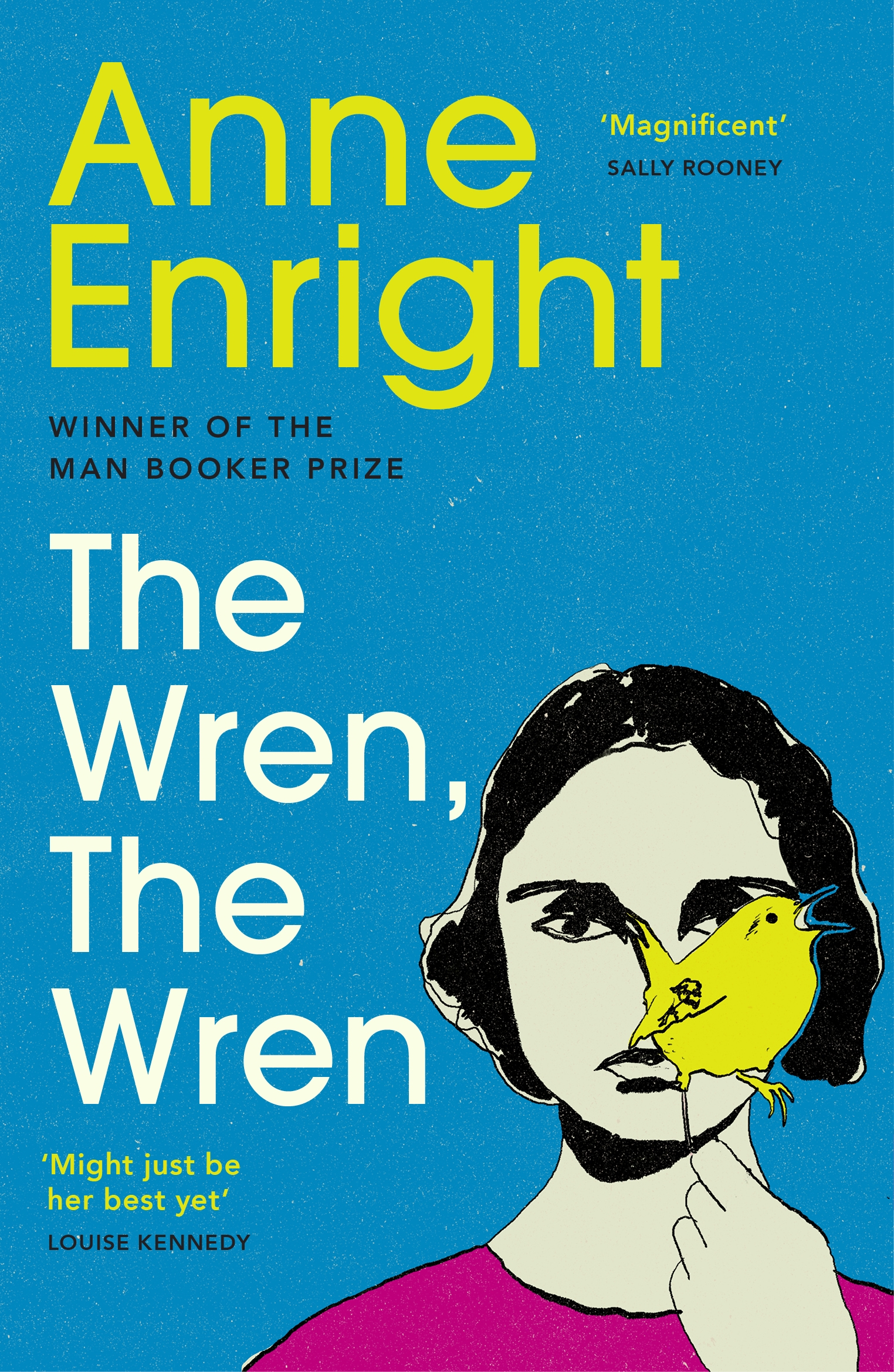
The Wren, The Wren by Anne Enright (Ireland) published by Jonathan Cape, 283 pgs

A psychologically astute examination of family dynamics and the nature of memory. Enright’s prose is gorgeous and evocative and scalpel sharp.

Nell – funny, brave and much loved – is a young woman with adventure on her mind. As she sets out into the world, she finds her family history hard to escape. For her mother, Carmel, Nell’s leaving home opens a space in her heart, where the turmoil of a lifetime begins to churn. Across the generations falls the long shadow of Carmel’s famous father, an Irish poet of beautiful words and brutal actions.

A consideration of love: spiritual, romantic, darkly sexual or genetic. A generational saga tracing the inheritance of trauma and wonder, it is a testament to the resilience of women in the face of promises, false and true. An exploration of the love between a mother and daughter – sometimes fierce, often painful, always transcendent.

Brotherless Night by V. V. Ganeshananthan (Sri Lanka), published by Viking, 348 pgs (see my review here)

Visceral, historical, emotional. It is 300 pages of must-read prose. A powerful book that has the intimacy of memoir, the range and ambition of an epic, and tells a truly unforgettable story about the Sri Lankan civil war.

Sixteen-year-old Sashi wants to become a doctor. But over the next decade, as a vicious civil war subsumes Sri Lanka, her dream takes her on a different path as she watches those around her, including her four beloved brothers and their best friend, get swept up in violent political ideologies and their consequences. She must ask herself: is it possible for anyone to move through life without doing harm?

Restless Dolly Maunder by Kate Grenville (Australia), published by Canongate Books, 256 pgs

[It] follows the life of Dolly, who really is restless. It begins in the 1880s in rural Australia, and it follows Dolly’s ambitions to live a bigger life than the one she’s been given.

Dolly Maunder is born at the end of the 19th century, when society’s long-locked doors are just starting to creak ajar for determined women. Growing up in a poor farming family in rural New South Wales, Dolly spends her life doggedly pushing at those doors. A husband and two children do not deter her from searching for love and independence.

Restless Dolly Maunder is a subversive, triumphant tale of a pioneering woman working her way through a world of limits and obstacles, who is able – despite the cost – to make a life she could call her own.

Enter Ghost by Isabella Hammad (Britain/Palestine), published by Jonathan Cape, 336 pgs (see my review here)

How can a production of Hamlet in the West Bank resonate with the residents’ existential issues? Enter Ghost is a beautiful, profound meditation on the role of art in our society and our lives.

After years away from her family’s homeland, and reeling from a disastrous love affair, actress Sonia Nasir returns to Haifa to visit her sister Haneen. While Haneen made a life here commuting to Tel Aviv to teach at the university, Sonia remained in London to focus on her acting career and now dissolute marriage. On her return, she finds her relationship to Palestine is fragile, both bone-deep and new.

When Sonia meets the charismatic, candid Mariam, a local director, she joins a production of Hamlet in the West Bank. Soon, Sonia is rehearsing Gertrude’s lines in classical Arabic with a dedicated group of men who, in spite of competing egos and priorities, all want to bring Shakespeare to that side of the wall. As opening night draws closer and the warring intensifies, it becomes clear just how many obstacles stand before the troupe. Amidst it all, the life Sonia once knew starts to give way to the daunting, exhilarating possibility of finding a new self in her ancestral home.

Timely, thoughtful, and passionate, Isabella Hammad’s highly anticipated second novel is an exquisite story of the connection to be found in family and shared resistance.

Soldier Sailor by Claire Kilroy (Ireland), published by Faber & Faber, 233 pgs (my review)

A full-bodied, remorseless, visceral deep dive into the maternal mind. It is ultimately a love story between Soldier, the mother, and Sailor, the son.

In her acclaimed new novel, Claire Kilroy creates an unforgettable heroine, whose fierce love for her young son clashes with the seismic change to her own identity.
As her marriage strains, and she struggles with questions of autonomy, creativity and the passing of time, an old friend makes a welcome return – but can he really offer her a lifeline to the woman she used to be?

River East, River West by Aube Rey Lescure (France/China), published by Duckworth, 352 pgs

Set in Shanghai in the 2000s, it’s a novel about reinvention. It’s original, it’s funny, and it’s sometimes heartbreaking as well.

A mesmerising reversal of the east–west immigrant narrative set against China’s economic boom, River East, River West is an exploration of race, identity and family, of capitalism’s false promise and private dreams.

Shanghai, 2007: feeling betrayed by her American mother’s engagement to their rich landlord Lu Fang, fourteen-year-old Alva begins plotting her escape. But the exclusive American School – a potential ticket out – is not what she imagined.

Qingdao, 1985: newlywed Lu Fang works as a lowly shipping clerk. Though he aspires to a bright future, he is one of many casualties of harsh political reforms. Then China opens up to foreigners and capital, and Lu Fang meets a woman who makes him question what he should settle for.

The 2024 Winners

The winner of both the Women’s Prize for Fiction and the inaugural Women’s Prize for Non Fiction will be announced on June 13th, 2024.

I have only read one from the list, Claire Kilroy’s excellent Soldier, Sailor. I’m most interested in reading V.V. Ganeshananthan’s Brotherless Night and Isabella Hammad’s Enter Ghost and am reminded that a friend recommended her debut The Parisian back in 2019 (but you know, 700+ pages).

Have you read any of these from the shortlist? Let us know what you thought in the comments below.

International Booker Prize shortlist 2024

The shortlist for the International Booker Prize 2024 has been decided. It features novels from six countries, (Argentina, Brazil, Germany, Netherlands, South Korea and Sweden), translated from Dutch, German, Korean, Portuguese, Spanish and Swedish.

Chair of judges Eleanor Wachtel said:

‘Our shortlist, while implicitly optimistic, engages with current realities of racism and oppression, global violence and ecological disaster’

Prize Administrator Fiammetta Rocco added:

‘The books cast a forensic eye on divided families and divided societies, revisiting pasts both recent and distant to help make sense of the present’ 

Read Around the World, Other Perspectives

The International Booker Prize introduces readers to the best novels and short story collections from around the globe that have been translated into English and published in the UK and/or Ireland. Recognising the vital work of translators, the £50,000 prize money is divided equally: £25,000 for the author and £25,000 for the translator(s).

The shortlist was chosen from a longlist of 13 titles announced in March, which was selected from 149 books published in the UK and/or Ireland between May 1, 2023 and April 30, 2024, submitted to the prize by publishers. 

I have read one from the shortlist and it was excellent; Selva Almada’s Not a River (link to my review), the second of her novella’s I have read. Not having read any others on this list, I can’t really comment, but I would love to know what you thought if you have read any of these, or intend to. Brief summaries below.

The Shortlist

Not a River by Selva Almada (Argentina) tr. by Annie McDermott

International Booker Prize longlist 2024 Argentinian literature Spanish translation

Selva Almada’s novel is the finest expression yet of her compelling style and singular vision of rural Argentina.

Three men go out fishing, returning to a favourite spot on the river despite their memories of a terrible accident there years earlier. As a long, sultry day passes, they drink and cook and talk and dance, and try to overcome the ghosts of their past. But they are outsiders, and this intimate, peculiar moment also puts them at odds with the inhabitants of this watery universe, both human and otherwise. The forest presses close, and violence seems inevitable, but can another tragedy be avoided?

Mater 2-10 by Hwang Sok-yong (Korea) tr. Sora Kim-Russell, Youngjae Josephine Bae

An epic, multi-generational tale that threads together a century of Korean history. 

Centred on three generations of a family of rail workers and a laid-off factory worker staging a high-altitude sit-in, Mater 2-10 vividly depicts the lives of ordinary working Koreans, starting from the Japanese colonial era, continuing through Liberation, and right up to the twenty-first century. 

What I’d Rather Not Think About by Jente Posthum (Netherlands) tr. Sarah Timmer Harvey

A deeply moving exploration of grief, told in brief, precise vignettes and full of gentle melancholy and surprising humour.

What if one half of a pair of twins no longer wants to live? What if the other can’t live without them? This question lies at the heart of Jente Posthuma’s deceptively simple What I’d Rather Not Think About. The narrator is a twin whose brother has recently taken his own life. She looks back on their childhood, and tells of their adult lives: how her brother tried to find happiness, but lost himself in various men and the Bhagwan movement, though never completely. 

Crooked Plow by Itamar Vieira Junior (Brazil) tr. Johnny Lorenz

A fascinating and gripping story about the lives of subsistence farmers in Brazil’s poorest region.

Deep in Brazil’s neglected Bahia hinterland, two sisters find an ancient knife beneath their grandmother’s bed and, momentarily mystified by its power, decide to taste its metal. The shuddering violence that follows marks their lives and binds them together forever.

Kairos by Jenny Erpenbeck (Germany) tr. Michael Hofmann

An intimate and devastating story of the path of two lovers through the ruins of a relationship, set against the backdrop of a seismic period in European history.

Berlin. 11 July 1986. They meet by chance on a bus. She is a young student, he is older and married. Theirs is an intense and sudden attraction, fuelled by a shared passion for music and art, and heightened by the secrecy they must maintain. But when she strays for a single night he cannot forgive her and a dangerous crack forms between them, opening up a space for cruelty, punishment and the exertion of power. And the world around them is changing too: as the GDR begins to crumble, so too do all the old certainties and the old loyalties, ushering in a new era whose great gains also involve profound loss. 

The Details by Ia Genberg (Sweden) tr. Kira Josefsson

In exhilarating, provocative prose, Ia Genberg reveals an intimate and powerful celebration of what it means to be human.

A famous broadcaster writes a forgotten love letter; a friend abruptly disappears; a lover leaves something unexpected behind; a traumatised woman is consumed by her own anxiety. In the throes of a high fever, a woman lies bedridden. Suddenly, she is struck with an urge to revisit a particular novel from her past. Inside the book is an inscription: a message from an ex-girlfriend. Pages from her past begin to flip, full of things she cannot forget and people who cannot be forgotten. Johanna, that same ex-girlfriend, now a famous TV host. Niki, the friend who disappeared all those years ago. Alejandro, who appears like a storm in precisely the right moment. And Birgitte, whose elusive qualities shield a painful secret. Who is the real subject of a portrait, the person being painted or the one holding the brush?

The Winner

The International Booker Prize 2024 ceremony will take place from 7pm BST on Tuesday, 21 May. It is being held for the first time in the Turbine Hall at London’s Tate Modern.

Highlights from the event, including the announcement of the winning book for 2024, will be livestreamed on the Booker Prizes’ channels, presented by Jack Edwards. 

Women’s Prize Nonfiction Shortlist 2024

In 2024 The Women’s Prize created a new prize to raise the profile and awareness of women authors writing nonfiction.

They began with a list of 16 titles, from gripping memoirs and polemic narratives, to groundbreaking investigative journalism and revisionist history. It featured seven debut writers, two international bestsellers, two poets and five journalists. You can see the longlist here.

From Sixteen to Six Titles

The longlist has now been whittled down to six books covering a broad range of subjects – from life writing, religion, art and history, to AI, social media and online politics. What links them is an originality of voice and an ability to turn complex ideas and personal trauma into inventive, compelling and immersive prose.

“Our magnificent shortlist is made up of six powerful, impressive books that are characterised by the brilliance and beauty of their writing and which each offer a unique, original perspective. The readers of these books will never see the world – be it through art, history, landscape, politics, religion or technology – the same again.” Suzannah Lipscomb, Chair of Judges

The six titles shortlisted are:

Thunderclap: A Memoir of Art and Life and Sudden Death by Laura Cumming (UK) (Art History & Grief)

‘We see with everything that we are’

On the morning of 12 October 1654, a gunpowder explosion devastated the Dutch city of Delft. The thunderclap was heard over seventy miles away. Among the fatalities was the painter Carel Fabritius, dead at thirty-two, leaving only his haunting masterpiece The Goldfinch and barely a dozen known paintings. The explosion that killed him also buried his reputation, along with answers to the mysteries of his life and career.

What happened to Fabritius before and after this disaster is just one of the discoveries in a book that explores the relationship between art and life, interweaving the lives of Laura Cumming, her Scottish painter father, who also died too young, and the great artists of the Dutch Golden Age.

This is a book about what a picture may come to mean: how it can enter your life and change your thinking in a thunderclap.

Doppelganger: A Trip Into the Mirror World by Naomi Klein (Canada) (Mistaken Identity)

– When Naomi Klein discovered that a woman who shared her first name, but had radically different, harmful views, was getting chronically mistaken for her, it seemed too ridiculous to take seriously. Then suddenly it wasn’t. She started to find herself grappling with a distorted sense of reality, becoming obsessed with reading the threats on social media, the endlessly scrolling insults from the followers of her doppelganger. Why had her shadowy other gone down such an extreme path? Why was identity – all we have to meet the world – so unstable?

To find out, Klein decided to follow her double into a bizarre, uncanny mirror world: one of conspiracy theories, anti-vaxxers and demagogue hucksters, where soft-focus wellness influencers make common cause with fire-breathing far right propagandists (all in the name of protecting ‘the children’). In doing so, she lifts the lid on our own culture during this surreal moment in history, as we turn ourselves into polished virtual brands, publicly shame our enemies, watch as deep fakes proliferate and whole nations flip from democracy to something far more sinister.

This is a book for our age and for all of us; a deadly serious dark comedy which invites us to view our reflections in the looking glass. It’s for anyone who has lost hours down an internet rabbit hole, who wonders why our politics has become so fatally warped, and who wants a way out of our collective vertigo and back to fighting for what really matters.

A Flat Place by Noreen Masud (Pakistan/UK) (Nature Writing Memoir)

– Noreen Masud has always loved flat landscapes – their stark beauty, their formidable calm, their refusal to cooperate with the human gaze. They reflect her inner world: the ‘flat place’ she carries inside herself, emotional numbness and memory loss as symptoms of childhood trauma. But as much as Britain’s landscapes provide solace for suffering, they are also uneasy places for a Scottish-Pakistani woman, representing both an inheritance and a dispossession.

Pursuing this paradox across the wide open plains that she loves, Noreen weaves her impressions of the natural world with the poetry, folklore and history of the land, and with recollections of her own early life, rendering a startlingly strange, vivid and intimate account of a post-traumatic, post-colonial landscape – a seemingly flat and motionless place which is nevertheless defiantly alive.

All That She Carried: The Journey of Ashley’s Sack, a Black Family Keepsake by Tiya Miles (US) (History)

– In 1850s South Carolina, Rose, an enslaved woman, faced a crisis: the imminent sale of her daughter Ashley. Thinking quickly, she packed a cotton bag with a few items. Soon after, the nine-year-old girl was separated from her mother and sold. Decades later, Ashley’s granddaughter Ruth embroidered this family history on the sack in spare, haunting language.

That, in itself, is a story. But it’s not the whole story. How does one uncover the lives of people who, in their day, were considered property? Harvard historian Tiya Miles carefully traces these women’s faint presence in archival records, and, where archives fall short, she turns to objects, art, and the environment to write a singular history of the experience of slavery, and the uncertain freedom afterward. All That She Carried gives us history as it was lived, a poignant story of resilience and love passed down against steep odds.

Code Dependent: Living in the Shadow of AI by Madhumita Murgia (India/UK) (Technology)

– What does it mean to be human in a world that is rapidly changing thanks to the development of artificial intelligence, of automated decision-making that both draws on and influences our behaviour?

Through the voices of ordinary people in places far removed from Silicon Valley, Code Dependent explores the impact of a set of powerful, flawed, and often exploitative technologies on individuals, communities, and our wider society. Madhumita Murgia, AI Editor at the FT, exposes how AI can strip away our collective and individual sense of agency – and shatter our illusion of free will.

AI is already changing what it means to be human, in ways large and small. In this compelling work, Murgia reveals what could happen if we fail to reclaim our humanity.

How to Say Babylon: A Jamaican Memoir by Safiya Sinclair (Jamaica) (Memoir)

There was more than one way to be lost, more than one way to be saved.

Born in Montego Bay, Jamaica, where luxury hotels line pristine white sand beaches, Safiya Sinclair grew up guarding herself against an ever-present threat. Her father, a volatile reggae musician and strict believer in a militant sect of Rastafari, railed against Babylon, the corrupting influence of the immoral Western world just beyond their gate. To protect the purity of the women in their family he forbade almost everything: nowhere but home and school, no friends but this family and no future but this path.

Her mother did what she could to bring joy to her children with books and poetry. But as Safiya’s imagination reached beyond its restrictive borders, her burgeoning independence brought with it ever greater clashes with her father. Soon she realised that if she was to live at all, she had to find some way to leave home. But how?

In seeking to understand the past of her family, Safiya Sinclair takes readers inside a world that is little understood by those outside it and offers an astonishing personal reckoning. How to Say Babylon is an unforgettable story of a young woman’s determination to live life on her own terms.

The Winner

The winner will be announced on the 13th of June 2024.

Have you read any of these titles? Anything here interest you? Leave a comment below letting us know if you have read or intend to read any of these titles.