Mother of Pearl by Mary Morrissy

I decided to read Mother of Pearl (1996) as a precursor to Mary Morrissy’s latest novel Penelope Unbound (2023), a re-imagined and slightly changed life of Nora Barnacle (the wife of James Joyce) which I intend to read in 2024. Having enjoyed Nuala O’Connor’s excellent novel Nora, I’ll be curious to see where Morrissy takes her.

It is only now, since the death of Joyce’s grandson Stephen in 2020, one of the most litigious heirs in history, that stories can safely be written about Nora and James Joyce – as Stephen did all he could to prevent access or usage of the family archive, including the destruction of hundreds of letters. James Joyce, a brilliant writer with an overprotective grandson

It seems that Mary Morrissy likes to take inspiration from real life characters or stories, and so it was with Mother of Pearl. A little backstory then before reviewing the novel.

Truth Stranger Than Fiction

A notorious baby-snatching case in 1950’s Ireland was the inspiration for Mary Morrissy’s Mother of Pearl. Re-imagining elements of that story, rather than retelling the facts was a decision she made because the truth would have come across to readers as unbelievable. Morrissy in an article on her website explains:
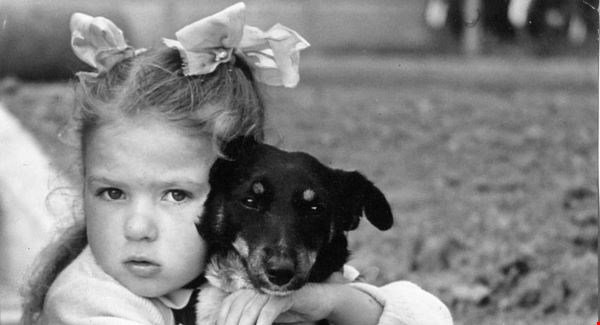
Elizabeth Browne 1950 Dublin kidnap victim

Elizabeth Browne, above, was kidnapped from a pram on Henry Street in Dublin on November 25, 1950. Her kidnapper, Mrs Barbara McGeehan, who lived in Belfast, took her north on the train and passed her off as her own child to her unsuspecting husband.

Four years later – and this is where truth is stranger than fiction – Mrs McGeehan travelled south again and stole another child, this time a boy, Patrick Berrigan, from outside Woolworths on Henry Street. As luck would have it, a fellow passenger on the Belfast train noticed Mrs McGeehan, in particular that she had no milk for her baby, and went to the dining car to get some. Afterwards when the alert was raised about the Berrigan baby kidnap, she remembered this incident and contacted the police.

Mrs McGeehan was traced to her home in the White City estate in Belfast where police found the Berrigan baby and the four-year-old Elizabeth Browne, now renamed Bernadette. In these pre-DNA days, she was identified by a distinctive birth mark, and her parents, news-vendors John and Bridget Browne, travelled to Belfast to claim her.

Identity Trauma

What interested Morrissy in particular, was the identity trauma of a four-year-old being forcibly removed from a loving home and familiar “parents” and being returned to a family, who though biologically related, were strangers to her.

Clearly this was something Elizabeth’s parents thought about or experienced the repercussions of, because there was another twist, a strange fact that once again did not go into the novel. After Mrs McGeehan served her two year jail year sentence for the kidnap, the Browne family contacted her. Following their reconciliation, every year Elizabeth would travel to Belfast to spend a holiday with the very same woman who had kidnapped her.

Though Elizabeth would marry and have her own family, sadly she died at the very young age of 38 years from cancer.

The Novel, A Dark Re-Imagining
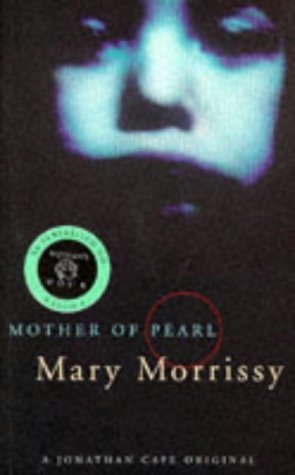
A novel in three parts, Mother of Pearl explores perspectives in three women’s lives, the first two will mother the same child, the third is that of the child grown – the consequence of a repressed childhood, of events never talked about, of the effect of those events and years and the suppression of them, on her psyche.

Part 1 – We meet Irene in Granitefield sanotorium, an institution where she spends some years due to having contracted TB. She willingly leaves her family behind and finds some kind of comfort in the hospital environment, electing to remain there as an employee long after she has recovered from her illness and might easily have left.

The operation, they told her, had saved her. But she had lost four of her ribs, cracked open by a giant pair of shears…Without her ribs Irene felt as if part of her protection against the world had been removed.

Standing vigil, she is known to recognise the imminence of death patients. One in particular will be kife changing.

Irene knew the moment she saw Stanley Godwin that he was watching someone beloved die. Healthy people keeping vigil seemed to take on the symptoms of the disease.

This son, who is with his mother, suddenly understands the implications of his mothers death, of the great loss and hole in his life, her absence will mean for him. His attention moves towards Irene.

Inwardly he was quaking. He could comprehend the impending loss; what he couldn’t imagine was his life afterwards. A middle-aged man about to be granted unwanted freedom.

Outside of the institution, longing for a child she knows will not come, brooding on her own losses, Irene succumbs to fantasies and one day indulges her desire, removing a sickly child from a hospital, a baby she names Pearl.

This was her offspring, hers alone, the child of her illness, Irene’s first loss. And she was still out there. Not dead, simply lost. In a hospital ward somewhere, unclaimed, waiting for her mother. This time Irene determined she would tell no one, not even Stanley. She would seek out the child who was rightfully hers, the fruit of Eve’s ribs.

Part 2 – We meet Rita, who becomes Mrs Mel Spain, mother of the baby she had not initially realised how much she wanted, until the day she is taken from her. And the husband Mel, son of an absent father, who feels a yearning to follow in his carefree footsteps.

It didn’t stop Mel wondering, however, how his father had managed the extraordinary trick of disappearing into thin air. He had become invisible by simply walking out of his life. Ten years after the event, as he nursed his fourth drink of the night, Mel finally understood how easy it must have been. It was not, as he had always thought, a daring but calculated move; it was a matter of impulse and extreme selfishness.

Part 3 – we meet the child, a child who remembers little of her early life, who is told stories that don’t resonate with the dream-like memories she has, who feels like an outsider in her family and can not explain to herself why.

Exploring themes of loss, abandonment, denial, Mother of Pearl takes us inside the dysfunction of family, of obsession with and rejection of a child, of the long-lasting impact on those formative years of the compromised adult that will little understand their own inclination(s), as those threads of early development and the scars of traumatic events imprint on their psyche and affect their future selves.

A compelling and thought provoking read that is all the more astounding given the events that propelled the author to recreate such a situation.

Further Reading

The Guardian: Penelope Unbound by Mary Morrissy review – masterly alternative life of Nora Barnacle by John Banville

JSTOR Interview With Mary Morrissy, Studies, An Irish Quarterly Review Vol. 87, No. 347 (Autumn, 1998)

Author, Mary Morrissy

Mary Morrissy was born in Dublin in 1957.  She has published four novels – Mother of Pearl (1995), The Pretender (2000), The Rising of Bella Casey (2013) and Penelope Unbound (2023) and a collection of short stories, A Lazy Eye (1993). 

She won a Hennessy Award for short fiction in 1984 and a prestigious US Lannan Literary Foundation Award in 1995.  Mother of Pearl was shortlisted for the Whitbread/Costa Award and longlisted for the Women’s (Orange)Prize for Fiction (1996) while The Pretender was nominated for the Dublin Impac Award and shortlisted for the Kerry Group Irish Fiction Award. The Rising of Bella Casey was nominated for the Dublin Literary Award.

A member of Aosdána, she is a journalist, a teacher of creative writing and a literary mentor. She blogs on art, fiction and history at marymorrissy.com

“I suppose I explore a female kind of darkness. My characters tend to be very restricted, restricted emotionally, I mean, by fear and guilt and an inability to move in and inhabit the centre of their own lives. And despite all our so-called modernity, I think this still holds true for thousands of women. We may have broken away from the traps of our mothers’ generation, but there is a long way to travel before women have, if I may use the phrase in this context, parity of esteem. - Interview with Mary Morrissy, Studies, An Irish Quarterly Review Vol. 87, No. 347 (Autumn, 1998)

The Wager, A Tale of Shipwreck, Mutiny and Murder by David Grann

A tale of shipwreck mutiny and murder British navy

The Wager by David Grann recently won the 2023 Goodreads Choice Award for Best History & Biography.

David Grann is the author of the #1 New York Times bestsellers Killers of the Flower Moon (recently made into a film by Martin Scorcese) and The Lost City of Z.

In this latest book he chronicles the fate of the 18th century British warship, the Wager, which had set out on a secret mission during an imperial war with Spain (with dubious reasoning behind it), with the intention of tracking down a fleet rumoured to be carrying a horde of treasure.

Not only was there a significant human cost to these excursions, it was the era of plundering natural resources, constructing a single large warship could require as many as four thousand trees, therefore a hundred acres of forest might be felled.

The conflict was the result of the endless jockeying among the European powers to expand their empires. They each vied to conquer or control ever larger swathes of the earth, so that they could exploit and monopolise other nations’ valuable natural resources and trade markets. In the process, they subjugated and destroyed innumerable indigenous peoples, justifying their ruthless self-interest – by claiming they were somehow spreading “civilisation” to the benighted realms of the earth. Spain had long been the dominant empire in Latin America, but Great Britain, which already possessed colonies along the American eastern seaboard, was now on the ascendance – and determined to break its rival’s hold.

Wrecked off the coast of Patagonia, after rounding the notoriously dangerous Cape Horn, those who survived would spend months on an island before putting together makeshift vessels from what they had salvaged, leaving the island in two groups, heading in opposite directions, with different stories to tell.

Reading Outside the Norm

It’s not my usual reading fare, however after reading a praise-worthy review, I was drawn to it, when I read that the men who laboured on these large ships were often kidnapped and forced to crew, sometimes taken from workhouses or even snatched just as they were returning from having crewed on another ship, much to the consternation of their waiting families.

After peaceful efforts to man the fleets failed, the Navy resorted to what a secretary of the Admiralty called a “more violent” strategy. Armed gangs were were dispatched to press seafaring men into service – in effect, kidnapping them. The gangs roamed cities and towns, grabbing anyone who betrayed the telltale signs of a mariner: the familiar checkered shirt and wide-kneed trousers and round hat; the fingers smeared with tar, which was used to make virtually everything on a ship more water-resistant and durable.

It took a little to get into the rhythm of the book, as the various characters and their backgrounds were introduced, just as the ship HMS Wager delayed leaving British shores due to setbacks, both human and due to adverse weather conditions. Once they set sail, on August 23, 1740 and with the help of route maps on the inside front and back flaps, the story became more captivating.

Hidden Histories in the Archives, Disrupting the Historical Narrative

It is a fascinating account that David Grann became aware of upon visiting the UK National Archive in Kew, reading an ancient logbook of one of the crew of the ship, which then lead him to other accounts of the adventures of those onboard, in particular, rival perspectives on what happened after HMS Wager was shipwrecked on May 14, 1741 off the southern coast of Patagonia, Chile.

The time survivors spent on Wager Island is reminiscent of William Golding’s Lord of the Flies. As Captain David Cheap tries to keep order and calm, as food sources they manage to salvage deplete and disagreements increase, men become desperate, divisions occur, loyalties waver.

When the Captain crosses a serious line, his authority and ability to stay in charge decline, causing a major rupture in support for the direction they plan to take.

Indigenous Intuition, Avoiding the Real Savagery

One of the more interesting parts of their land based story, given how difficult it was for them to survive and the factions that develop as the group splits loyalties, was the arrival of a group of Kawésqar indigenous people, who pretty much live in their canoes circumnavigating the coast, living off the land, sea and foreshore.

These people helped the castaways by obtaining meat and seafood for them, quickly and adeptly building dwellings and then would leave (they knew not to trust these pale faced marauders). Witnessing the insidious tensions mounting among the castaways, one morning they would awake to discover them, their canoes and dwelling all gone, never to return.

Aware of how helpless the Englishmen were, the Kawésqar would regularly venture out to sea and then magically return with nourishment for them. Byron saw one woman depart with a companion in a canoe and , once offshore, grip a basket between her teeth and leap into the freezing water. “Diving to the bottom,” Byron wrote, she “continued under water in an amazing time.” When she emerged, her basket was filled with sea urchins – a strange shellfish, Byron wrote, “from which several prickles project in all directions.”

Logbooks of Seafaring Adventures Can Be Important Navigation Tools

Eventually the castaways would rebuild from what they had been able to salvage, another sailing vessel and one group who disagreed with the Captain which route to take would depart in one direction and the rest, some months later in the opposite direction.

Cheap’s plan, meanwhile, was taking on new, hidden dimensions. Poring over charts, he began to believe that there was a way to not only preserve their lives but also fulfill their original military mission. He calculated that the nearest Spanish settlement was on the island of Chiloé, which was off the Chilean coast and some 350 miles north of their present location.

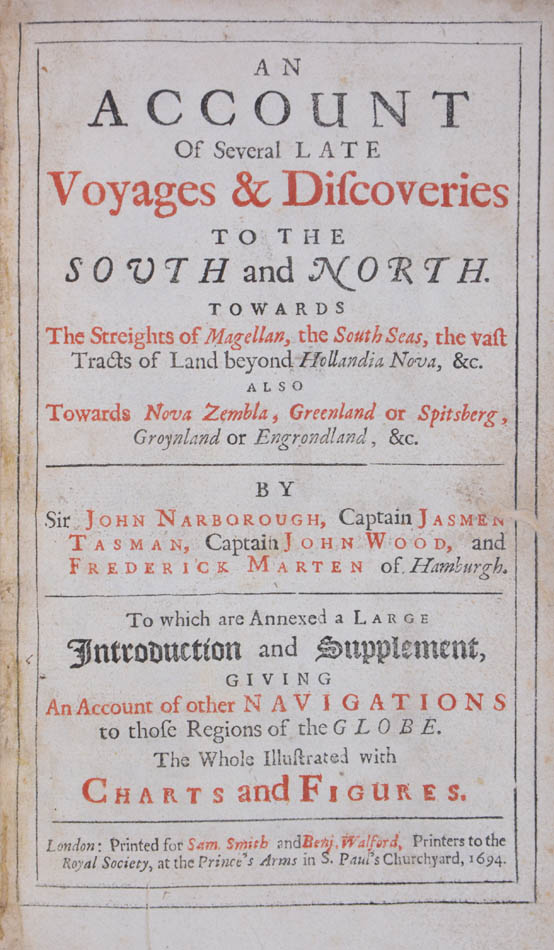
Bulkeley, on the other hand, borrowed the 16-year-old midshipman John Byron’s copy of Sir John Narborough’s chronicle of sea tales exploring the Patagonia region, believing it may contain critical clues for navigating a safe passage away from Wager Island. He would use this reference to take his group of men through the tricky Strait of Magellan, thus avoiding Cape Horn.

After a voyage, the captain of a ship turned over the requisite logbooks to the Admiralty, providing reams of information for building an empire – an encyclopedia of the sea and of unfamiliar lands.

Anson and his officers would frequently consult the journals of the few seamen who had ventured around Cape Horn.

Moreover, these “logbooks of memory”, as one historian coined them, created a record of any controversial actions or mishaps that occurred during a voyage. If need be they could be submitted as evidence at courts-martial; careers and lives might depend on them.

Who Is Actually On Trial Here, Man or An Empire?

The trip culminates in some survivors return to England and various allegations against different people, threat of imprisonment or hanging. A trial will be held.

In the meantime the stories and individual accounts captured the imagination of ‘Grub Street hacks’ and others who profited by publishing narratives of the high sea and inhospitable island adventures, in an era that ironically resembled the ‘fake news’ era of our own time. Due to the sheer number of differing accounts, perceptions of the Wager affair varied from reader to reader.

Once the broadsheet newspapers and periodicals were filled with breathless reports, book publishers competed to release first-hand accounts from the former castaways.

Though few of those narratives survived today, plenty of archive material made it possible for David Grann to put together an interesting account of an inconclusive British imperial adventure that may have lost the nation more than just men and a ship, but much credibility for the human and financial cost of their exploits, all in the name of retaining their perception as being a superior imperial power.

Author, David Grann

David Grann is an American journalist, a staff writer for The New Yorker and author of Killers of the Flower Moon, The Osage Murders and the Birth of the FBI, which was a finalist for the National Book Award and winner of an Edgar Allan Poe Award for best true crime book. He also wrote The Lost City of Z, A Tale of Deadly Obsession in the Amazon shortlisted for the Samuel Johnson Prize, also adapted into a critically acclaimed film directed by James Gray.

Grann’s investigative reporting has accumulated several honours, including a George Polk Award. He lives with his wife and two children in New York.

A Bigger Picture by Vanessa Nakate

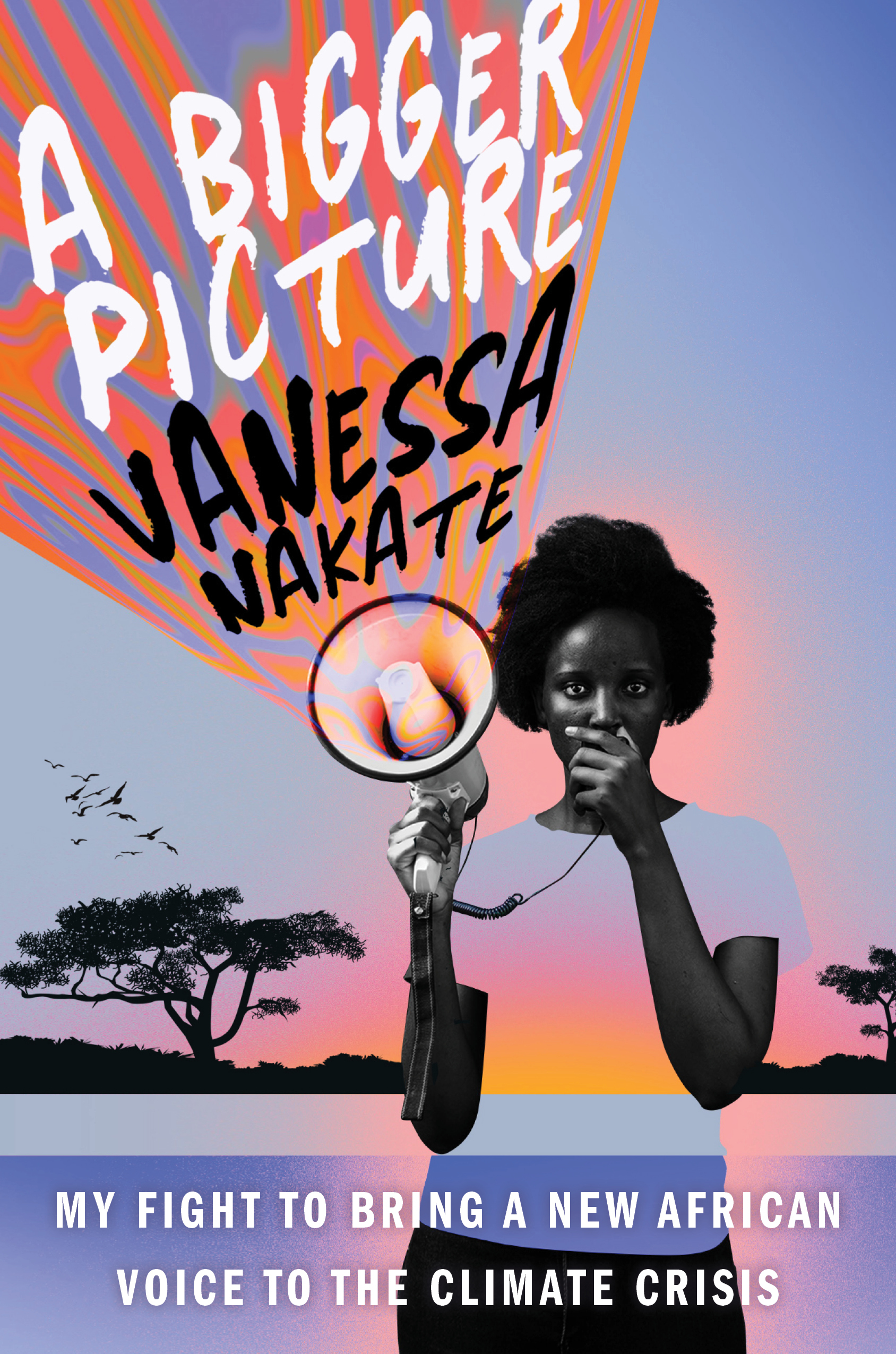
My Fight To Bring A New African Voice To The Climate Crisis

Vanessa Nakate is a young Ugandan woman who became concerned about the effect of climatic conditions and change on her country and in particular the knock on effect floods, crop destruction would have on women and girls, disproportionately affected, as explained in her book.

Alternative Learning Experiences for Children

climate change literature Kenya African Voices

She decided to organise a strike, just herself, her two younger brothers (14 & 10), two visiting cousins (11 &9) and another cousin her age. It would be the six of them, holding up a few placards they made, and they would stand in four busy locations in Kampala, moving from each place after 30 minutes when her alarm went off.

“What shall we write?” Varak, the nine-year-old asked.
I wanted us to express something positive, and to ensure that my younger family members held placards they themselves would understand. We decided to pick slogans we thought wouldn’t be too threatening, and so wrote several, in English.
Trees Are Important For Us
Nature Is Life
When You Plant A Tree, You Plant A Forest
Thanks For The Global Warming (that was our sarcastic one) and
Climate Strike Now
We also drew some trees next to the letters.

Nothing dramatic happened, no one told to stop, but it was the beginning of an interest, of a young woman finding her cause and taking an action, that would lead her to learning and discovering more, to connecting with others, to finding local solutions and developing a presence and a new voice, on an international stage.

One woman stopped and told them of some trees being cut down to make way for a school, that they should be stopped. Each time Nakate went out and had the opportunity to engage or had a response on social media, it would often lead her to the next idea, it would put her in touch with others who genuinely wanted something to be done, their voices to be heard.

How One Exclusion Can Lead to Greater Inclusion

It is an excellent read, because it follows her personal journey, as a young person with little knowledge about activism and from this small spark of quiet daring (despite her anxieties, insecurities and fear of judgement), she shares her perseverance, her growing knowledge, the first invitations to attend international conferences and events, to a tipping point, when many more (including me) would hear about her – after she was cropped out of a photograph of young climate change activists including Greta Thunberg at Davos, Switzerland during the WEF (World Economic Forum) in January 2020.

My message was, and is, straightforward: People in Uganda, in Africa, and across what’s called the Global South, are losing their homes, their harvests, their incomes, even their lives, and any hopes of a livable future right now.

The Quiet Methodical, Cooperative Approach

What makes her message and her actions all the more interesting is that she takes a quiet methodical approach to doing things in her own authentic way, in a country where she is aware of both dangers and expectations, so does nothing foolhardy, acting responsibly.

However, when there is the opportunity for advancement of her cause and for manageable solutions she can implement herself, she steps up to those and has helped make life more amenable for many families already, while continuing to pursue the wider message, especially to young people, future leaders, for whom it will be better if they encounter this knowledge through their early education, than as adults already fixed in their opinions or influenced by position or power.

Since I’m always looking for solutions that reflect reality and the need to get the message out, I decided that instead of suggesting that students walk out of classes, I’d try to take the climate strikes into schools – where they could form part of the curriculum in a way that I’d wished climate change had been when I was a young girl.

The first school she approached in this way was open to this collaboration, the teachers assembled 100 students inside the compound, Vanessa Nakate gave a short speech explaining what the strike was about, in a way that could relate to and then lead them in a chant, the teachers encouraging the children to chant even louder.

What do we want? Climate justice. When do we want it? Now.

Genuine Efforts and Action Do Get Noticed

In 2019 she received an email from the UN Secretary General’s office in New York, an invitation to attend the Youth Climate Summit. Understandably, she and her parents didn’t think it was real, but it was, she would be the first person in her family to travel outside of Uganda and that would signify a new beginning in her self-appointed role.

The first half of the book is about the development of her role, the logistics of trying to attend events and to becoming involved in meaningful solutions at home, such as the Vash Green Schools Project (supports the installation of solar panels and building clean cooking stoves in primary schools) and to realising the need for self-care due to overwhelm.

Role Models and Inspiration, Making Connections

The second half gives a bigger picture of the wider issues, sharing information from others she interviewed and has been inspired by, including the late Wangari Maathai, the inspiring Kenyan woman who created the Green Belt Movement and made much progress (often hindered by men in power) who was the first African woman to win the Nobel Peace Prize in 2004 for ‘her contribution to sustainable development, democracy and peace’. Read my review of her autobiography Unbowed here.

Coincidentally COP28 is happening right now in Dubai and Vanessa Natake is there with others trying to get their message across to world leaders who have the power to phase out fossil fuels and support equitable and safe renewable energies. Her article appearing in today’s Guardian below.

I really enjoyed reading this book and learning more about how Vanessa Natake became a voice for her country and continent and inspired so many youth and adults to both learn and do more to try and halt the destruction that is affecting them all.

Highly Recommended.

Further Reading

The Guardian Opinion: At Cop28 it feels as if humanity’s shared lifeboat is sinking by Vanessa Nakate

Author & Activist, Vanessa Nakate

Vanessa Nakate is a Ugandan climate justice activist. She grew up in Kampala and started her activism in December 2018 after becoming concerned about the unusually high temperatures in her country. Inspired by Greta Thunberg to start her own climate movement in Uganda, Vanessa Nakate began a solitary strike against inaction on the climate crisis in January 2019. She founded the Youth for Future Africa and the Africa-based Rise Up Movement and spearheaded the Save Congo Rainforest campaign.

She has addressed world leaders at multiple climate summits and appeared on the cover of TIME magazine in 2021 (featuring on the Time100 Next list in 2021). She was appointed a UNICEF Goodwill Ambassador in 2022.

Nakate and her work have been featured in the New York Times, the Guardian,Yes!,Vox, Vogue, the Huffington Post, the International Women’s Forum, and the Global Landscapes Forum, and on globalcitizen.org, greenpeace.org, CNN, the BBC, PBS, and United Nations media. She lives in Kampala, Uganda.

Redemption Ground, Essays and Adventures by Lorna Goodison

A mix of memoir, poetry, life adventure and epiphanies, I loved this collection by Jamaican writer Lorna Goodison.

Bonding With the Irish Over Tea & Poetry

essays memoir creative nonfiction Jamaican literature

The opening essay ‘The Song of the Banana Man’ and ‘The Fiddler of Dooney’ totally sets the scene for the rest of the book. It is an anecdotal story of the author and her friend, excited to be in London, overhearing two ‘bobbies’ (policemen) talk about a cafe they were just passing, in a way that lured them inside.

‘Whassis then, a new tea ‘ole?’

Their schooling in Kingston, Jamaica had been heavy on all things British and European, so entering this establishment was something related to that indirect familiarity. They encounter three boys from Ireland, who ask if they are from the West Indies and they begin to banter, drinking toasts to the colonial experience, singing songs and reciting poetry.

When I play on my fiddle in Dooney,
folk dance like a wave of the sea;

The poems they chose were about ordinary people, sure of themselves, of what they did, grounding words shared by these young people, whose paths have crossed, starting out on their own journeys. The exchange lasts while they’re having their tea and comes to a natural end, upon which they part ways. The author is at the beginning of her life journey, but the lines recited by them all have staying power.

And I was not sure where I belonged or what my own purpose was in life back then…. But listening to those three Irish men recite ‘The Fiddler of Dooney’ that afternoon, maybe I’d thought yes, that’s what I’d like to be, someone whose artistry makes people dance like a wave of the sea.

A Working Class Teen Dares to Do Better

In, A Taste of Honey, she recounts the experience of seeing a movie in 1963, adapted from the play created by Shelagh Delaney (who was 18 years old when she wrote it) that moves her, that is a moment of epiphany. Being one of nine children, she relished the opportunity to go and see the film one Saturday afternoon alone.

Shelagh Delaney went to a play that she found boring, pretentious and condescending, and said to herself I can do better than that, and went home and wrote A Taste of Honey.

The film would win a BAFTA award.

A Taste of Honey showed working-class women from a working-class woman’s point of view, had a gay man as a central and sympathetic figure, and a black character who was neither idealised nor a racial stereotype. – extract from The Guardian by Dennis Barker

Goodison reflects on why she was so moved by this film, how it gave her some of her life and writing purpose and inspiration.

Shelagh was pronounced ‘ineducable’, but was able to produce work that affected me so deeply that I ended up sitting alone in a cinema after everyone else had filed out, trying hard to compose myself enough to go outside and face a world where most people would not understand why a simple thing like a Saturday afternoon matinee could make me weep as if a close friend or relative had died.

The Daffodil Drama

Writing poetry from a young age, in ‘Some poems that made me’ we read more of this early education and a different take on Wordsworth’s ‘I Wandered Lonely as a Cloud’, aka ‘The Daffodils’ poem, after she researches his childhood and life and decides to give the poet a break. See my review Lucy by Jamaica Kincaid for another reference to the daffodil drama.

Over the years I have said quite a lot about this poem, as have other writers throughout the British Commonwealth who have come to regard it as the ultimate anthem to British colonial oppression.

She will encounter may poets and poems until she arrives at the one voice that cause her to stop reading everyone else and just read his poems. In the work of Derek Walcott, who would become a friend and mentor, she found poem as a source of hope and consolation; poem as a lifeboat, anchor and safe harbour.

As she begins to think of her own place in the world, she seeks out women poets, finding nourishment in the work of Gwendolyn Brooks and other African-American fiction writers, while still searching for poetry by Caribbean women, ultimately ending up writing the poems she wanted to read and finding the right language to express them.

I learnt early in my life as a writer that if I wanted to write about my people I had to learn to listen carefully to family stories then imagine, and constantly reimagine those stories…All writer’s do this, but Caribbean writers face formidable or particular challenges because of the ways in which slavery, and then colonialism, erased or distorted so much of our lives that we have to learn to writer ourselves into the story in any way we can.

Tributes to the Mothers & Imagination

We read ‘Guinea Woman’ the poem she wrote trying to imagine a woman she had never met, her great grandmother, an elegy for her mother Doris ‘After the Green Gown of My Mother Gone Down’, and another poem entitled ‘Bedspread’ inspired by news of the home of Winnie Mandela being raided by police, where they seize personal effects including a bedspread, taken because it was in the colours of the African National Congress.

The collection takes the reader to different countries and places on her journeying, sharing both fun and pivotal moments, stories of redemption, of good souls that come to set the indebted free, of her own life crisis in New York, that preceded a change in direction, acting on a promise to herself.

A Musical Accompaniment

Like my reading experience of Bernice McFadden’s excellent The Book of Harlan, whenever Lorna Goodison mentions music, like in the vignette ‘A Part for Tarquin’, I look it up and listen while reading. This one is about her friend Bernard dragging her along to a non-party that she doesn’t wish to attend, and ends with them listening into the night to the pianist Wynton Kelly playing the Miles Davis sextet Some Day My Prince Will Come.

That was the night I began to really appreciate the genius of the Jamaican-American pianist Wynton Kelly, about whom Miles himself was supposed to have said, ‘Wynton is the light for the cigarette; without him there is no smoking.’ That night I realised that if hope has a sound it would be Wynton Kelly’s piano-playing. His hope notes were like sunbeams on the morning waves coming in at Bluefields beach.

Loved it all.

Author, Poet, Essayist, Lorna Goodison

Caribbean poet Lorna Goodison was born in Kingston, Jamaica in 1947. A painter before she turned her focus to poetry, Goodison was educated at the Jamaica School of Art and the School of the Art Students League in New York. She was appointed poet laureate of Jamaica from 2017 – 2020. In 2018, she received a Windham–Campbell Literature Prize, and in 2019, she was awarded the Queen’s Gold Medal for Poetry.

Her numerous poetry collections include Collected Poems (2017), Supplying Salt and Light (2013), Goldengrove: New and Selected Poems (2006), Controlling the Silver (2005), Traveling Mercies (2001), Heartease (1988), and Tamarind Season (1980).

She is the author of the short story collections By Love Possessed (2011), Fool-fool Rose is Leaving Labour-in-Vain Savannah (2005), and Baby Mother and the King of Swords (1990), and the memoir From Harvey River: A Memoir of My Mother and Her People (2007), which won the British Columbia National Award for Canadian Non-Fiction.

In 2019, she published Redemption Ground: Essays and Adventures

Professor of English and of Afroamerican & African Studies at the University of Michigan, Goodison divides her time between Toronto and the north coast of Jamaica.

Goodison’s image-rich and socially- and historically-engaged poems often inhabit the lives and landscapes of her Jamaican homeland. “I suspect that I might always write about Jamaica,” Goodison stated in an interview with Mosaic: Literary Arts of the Diaspora. Goodison also discussed the humor in her work, noting, “Jamaicans are very comical people, and laughter is a way of coping with life’s displeasures. Also, when you make something of it [a hard situation], it says that you are in control. There are incidences when we have no control; all we can do is make some sort of a gesture. Sometimes, the world can throw things at you that are so cruel and so devastating that you are in no position to have any kind of real response but to make a gesture. And I think that sometimes laughter is a gesture saying that you have not completely annihilated me; you have not robbed me of my ability to respond as a human being.”

Noting that Goodison often “complements her careful observation of the physical world and her fine eye for detail with a tense, lean, elliptical style” in a review of Supplying Salt and Light, Jim Hannan observed, “At their best, Lorna Goodison’s poems observe the unsavory in history and society even as they guide us firmly toward sources of redemption. With compassion and empathy, Goodison writes about human failure and triumph in large and small measures.”

So Late In the Day by Claire Keegan

So Late in the Day (2023) was recently shortlisted for the Irish Book Awards Novel of the Year; it didn’t win that award however Claire Keegan won Author of the Year 2023.

The Literary Withhold

I read So Late in the Day as if it were a kind of literary mystery.

It is so short, (it’s a small square book of 4 chapters, 47 pages, around 11,000 words), that with Keegan’s combination of economy and precision with words, I found I was reading vigilantly between the lines as I went, not being able to stop myself from trying to guess the significance of every utterance and carefully constructed phrase. I mean, right from that opening line…

On Friday, July 29th, Dublin got the weather that was forecast.

…it read to me like something imbued with meaning. Did something or someone get what they deserved, I wondered?

Recalling other stories of Keegan’s, like Foster and Small Things Like These, I would suggest this is a motif of her storytelling, the slow reveal, the building up of a sense of something untold, omitted. The reader can’t help but wonder, question, try and guess as each page reveals a little more, what might be coming, the denouement.

Keegan herself suggested in a recent interview that the book requires a second reading:

So Late in the Day deploys her typically hushed technique to devastating effect; plain sentences unfurl their full implication only on rereading, the narration a veiled disclosure of the protagonist’s poisonous habits of thought.  – extract from Guardian article

Review

A young man, Cathal, is at his workplace on a Friday afternoon and seems very conscious of the time, in the first couple of pages it is mentioned twice, it passes slowly, perhaps excruciatingly. People act on guard around him, they know something we don’t.

It was almost ready (his coffee) when Cynthia, the brightly dressed woman from accounts, came in, laughing on her mobile. She paused when she saw him, and soon hung up.

Photo by R.Esquivel Pexels.com

His boss indicates he needn’t stay the rest of the day, and Cathal is aware of him closing his door softly, all of which makes the reader wonder why, what has happened to this young man that people seem to be treading carefully around him? As he leaves the office at the end of the day and waits for the lift, on hearing someone approach, he pushes open the door to the stairwell.

On the bus ride home, another clue:

He would ordinarily have taken out his mobile then, to check his messages, but found he wasn’t ready – then wondered if anyone ever was ready for what was difficult or painful.

The final clue before the end of the chapter is when a young woman gets on the bus and sits in a vacant seat opposite him. He breathes in her scent…

until it occurred to him that there must be thousands if not hundreds of thousands of women who smelled the same.

A Relationship Unravelled

He returns home, steps over wilted flowers on his doorstep and spends the evening alone, consuming a weight watchers microwave dinner and opens a bottle of champagne.

The four short chapters alternate between the past and the present. When the narrative steps back in time, we learn about his relationship with a half French, half English girl Sabine that he’d met in Toulouse. The dialogue between them reveals a disconnect that goes unnoticed by him and is ignored by her.

It is the discordant undertones within their conversation and his contemptuous observations that reveal the long, dark shadow of influence and inference.

After the reveal, when we learn what has happened to him, who he is, he recalls things about his own mother, his father, things from the past that shaped them, though he does not acknowledge that.

If a part of Cathal now wondered how he might have turned out if his father had been another type of man and had not laughed, Cathal did not let his mind dwell on it. He told himself it meant little, it was just a bad joke.

A Take on Language and Lore

It is a thought-provoking, provocative read, that subtly explores a seismic patriarchal crack in Irish society, one that infiltrates language, habits, behaviours and attitudes.

It is ironic, that the title in English is ‘So Late in the Day‘ compared to the French translated title which was translated or treated as ‘Misogynie‘. One title refers to the actions of the female character while the other refers to the behaviours of the male character. The story is told through the observations of Cathal, so the English language title belongs to his perception of reality, while the French title takes on a more overarching thematic approach.

In the article below, in The Guardian, it was revealed that the American author George Saunders was a fan of the story and recently chose it when invited to pick a favourite New Yorker story to discuss on the magazine’s podcast, but stopped short of reading it, due to one of the words used.

Keegan (who read the story herself, with riveting poise) tells me she respects his reluctance “even though he considered it to be the perfect word – as I do. It’s what Irish men often call women here. Writing the language people use is part of what a writer does to portray the lives we lead, the world we live in.”

Further Reading

The Guardian Interview: Claire Keegan: ‘I can’t explain my work. I just write stories’ by Anthony Cummins

Soldier Sailor by Claire Kilroy

Soldier Sailor is on the shortlist for the Irish Book Awards 2023.

Cathy at 746 Books praised this one, as her pick for Novel of the Year, saying it deserved the award attention, so I decided to read it to find out what that was about.

The Clash of Fierce Love versus Stolen Identity

Irish Book Awards 2023 motherhood literary fiction

So, after an eleven year gap since the publication of her last book, following the birth of her son, Claire Kilroy has overcome her writer’s block and “angry few years”, to produce a piercing, visceral account by the unnamed narrator Soldier ravaged by new motherhood, to the child, Sailor.

Here is how the author describes her book:

Soldier Sailor is a mother talking to her sleeping child explaining what was going on during those years he was too young to understand or remember the events around him. She tells him of her love, but also of how difficult, how isolating she found it when motherhood ended her old life. Nothing much happens; one of the main characters, Sailor, has no dialogue. The whole experience is a non-event from the outside, but when you are that soldier pushing the pram, my, what a psychodrama it is.

The novel as the image depicts, zooms right in to the responsibility, the bond and the practice of being mother to a small child, to how it changes EVERYTHING. From the entering into a relationship like no other that exists and the loss of what came before it; to the very different support that a mother might need, and the unlikely place(s) she might find it.

A Mother’s Instinct to Kill

It is not a reflection, it is an act, you will read it and live it, or relive aspects of it, if you have already been there.

Do you know what I would I do for you? I hope not. What would I not do, is the question. The universe careens around us and I shield your sleeping body with my arms, ready to proclaim to the heavens that I would kill for you: that I would kill others for you, that I would kill myself. I would even kill my husband if it came down to it. I swear every woman in my position feels the same. We all go bustling about, pushing shopping trolleys or whatever, acting like love of this voltage is normal; domestic, even.That we know how to handle it. But I don’t.

Using the second person “you” addressed as a monologue to her baby son, the narrative swings between the emotional peaks of a tireless love, to violent frustration and resentment; from the misleading two second Instagram snaps sent to the elsewhere husband, to her thirty second screaming telephone rages, with only the reader, witness to and understanding the riding crescendo of events that lead from one of those events to the next. A bewildered husband, observing the peaks, oblivious.

Your sleeve is in your dinner, my husband remarked. He wasn’t there but he didn’t have to be there. He was always there when things were going wrong. Yet never there to help. The luxury, the sheer luxury of sending a last-minute message saying you wouldn’t be home that evening. It would be a decade – more – before I could do the same. What does he eat? he had texted me the one time he was left in charge?

Sons and Fathers Take Note

To read this account, especially because of the culture within which it stems from, one that for many years locked up its women who expressed too loudly their discontent, or behaved in ways considered improper, is to understand a little of what was labelled hysteria – one of the natural consequences of needs not being met. Forget the narrative arc, read this and you plunge into the subject, you become it, you feel it, you remember bits of it. The son is warned, made to understand, his future depends on it.

I was firmly in my wrong mind and liable to do anything, so off I went, down the stairs, out the door, up the drive, through the gate, along the road, overcome by a wildness that I needed to convert to movement or else risk doing something stupid, and by stupid I mean destructive because words have many meanings, Sailor, and you must deploy them with care because they can inflict real hurt.

The mother like her infant child, is reborn yet will only realise she has inhabited this new being ‘the mother who birthed‘ when it is too late, when this tiny creature she loves so fiercely and will protect with her life, claims her, and in her most challenging moments, she like him, will feel the desire to scream, to run, to escape or somehow figure out, how to make ‘the other’ understand.

What struck me as the starkest contradiction of all was that, having navigated this much of life – the volatility of youth, of love and loss, the agony and the ecstasy – the closest I had come to losing my mind was during the period known as settling down.

Friendship for Hope and Healing

motherhood Soldier Sailor Claire Kilroy
Photo by Oleksandr P on Pexels.com

This text will not speak of the quiet moments, it is the intersection of all the moments lived, of the brutal awakening that is ‘becoming a mother’ and the warning to ‘the other’ that did not give birth, who is part of the journey, to prepare for this change and get ready to adapt, to support, to listen, to learn to be ‘the friend’ she is going to need.

One day she encounters an old friend, and these follow up meets mark a turning point, to being seen again, to being understood, and something dangerous shifts, quiets. Small gestures, moments of listening, the beginning of a form of solidarity.

We were better together my friend and I. Better parents. I was anyway. I was a better mother to you when I was around my friend. But a worse wife.

We arrive at the end – where she imagines moments years down the road ahead – with a kind of relief, knowing that with age and stage, the distance between those peaks will lessen, the relationships will either adapt or crumble, that true friendships will witness and endure it all.

An utterly compelling read that you won’t want to put down.

Further Reading

The Observer Review: Soldier Sailor by Claire Kilroy review – a mother’s confession after the fight of her life by Stephanie Merritt, 12 June 2023

The Irish Times Review: Soldier Sailor by Claire Kilroy: An astute, provocative, intriguing novel about motherhood – A virtuosic set-piece late on veers so far into nightmare territory, it feels as if we’re reading a thriller by Sarah Gilmartin

Eason Novel of the Year, Interview Q & A With Claire Kilroy

Claire Kilroy, Author

Claire Kilroy is the author of five novels including Soldier SailorAll SummerTenderwire, and The Devil I Know. She was awarded the Rooney Prize for Irish Literature in 2004 and has been shortlisted for many other prizes, including the Irish Novel of the Year and the Kerry Group Irish Fiction Award.

She studied at Trinity College and lives in Dublin.

What do you hope readers will take away from your narrative?

It is so easy to dismiss a mother and her work, and a father and his – one of the main characters is a stay-at-home dad. I had no idea what minding an infant involved and had regarded it as easy, unchallenging (I am mortified to admit that), so I hope I have revealed how demanding it is, but also how rewarding, never mind how important. I hope more fathers will get involved in raising children because it changes you, it remakes you, you become more compassionate. I don’t think Trump and Putin would be the awful tyrants they are had they cared for, well, anyone. It doesn’t have to be a child, just any person or creature who needs care.    

Poor, A Memoir by Katriona O’Sullivan

Grit, Courage, and the Life-Changing Value of Self-Belief

Poor is the story of a young woman as she looks back at the circumstances of her birth, childhood and younger years, through the lens of having been raised by parents who were addicts. The middle sibling of five children, she would become pregnant at 15, abandoned and homeless. And then things got even worse – until she began to find the support and mentors she needed to begin the long climb out of a destiny she desperately wished to avoid.

It is a riveting read, constructed from the hopeful perspective of having by chance – in the people she met along the way – found support and been shown how to save herself and the path to higher education.

More importantly this book is essential reading for anyone considering working with children, for parents and those in higher education who might have a tendency to favour “the good, the ideal” student, to think about how we might uplift and give hope to those who might not fit that category.

Turning Points In A Life

Irish Book Awards Biography of the Year 2023

Katriona’s story pinpoints the moments in childhood that mark a life, both the good (the teacher who taught her and facilitated her being able to manage her own cleanliness) and the bad (a man her parents left her with), from which there is no turning back, but perhaps with the right resources, there can eventually be a kind of healing.

Being able to look back and identify those moments that shifted her self-worth, while often devastating to relive, enabled her to understand their impact and address them through appropriate methods, and where they were positive shifts, to cultivate gratitude.

It also highlights the many adults that let these children down.

I know my parents let us down, significantly. The blame is with them. Of course it is. But the world around us let us down too, and in a way, that is worse. Because my parents were drug addicts and that is how it all got so bad and messed up. But the people of the world around us – the police, the teachers, the social workers – they were untrustworthy. They pushed us into a corner and frightened us. How could we have grown up to do anything else but bite them back?
My parents let me down, but so did the world. And the world was where I had to live.

She is one of the few who has managed to climb out, to break a cycle; her story is shared in the hope others who identify, might find the motivation to pull themselves towards something that might bring them out of what is almost inevitable if you’ve grown up in such an environment.

I’d take a heroin addict parent over an alcoholic one any day of the week. That may seem surprising but there is a meanness in booze and horrible unpredictability that you just don’t get with heroin addiction.

Photo by Ahmed akacha on Pexels.com

It is also for those who have never known such misery, to refrain from judgement, to be open to understanding what happens to people in these situations, how they got there, the consequences and the ineffectiveness of today’s government policies in properly identifying the cause, creating and applying appropriate, sustainable solutions.

This isn’t a tale of woe is me or blame, and neither is it a story of a one-off. It is a demonstration of the difficulty of these lives, and a desire to want to change the world in a more caring and empathetic way than it is now, to search for and find and fund solutions, so that more might learn how to follow a different path, when similar struggles are present.

My education has taught me that choice is a myth: our path is set by history and it is very rare for someone to change that path. I am one of the lucky few who escaped the destiny set for me by my parents’ addiction.

Inclusivity and Diversity, We Must Do Better

She challenges educational institutions to do more to be inclusive of struggling students, to strive for the value of greater diversity. “Diversity brings power”.

Although the ‘same’ opportunities are open to people of all backgrounds, we live in a system where those coming from stable, secure childhoods do well and there is no allowance for the struggle of those who don’t. We need equity in education, not equality. If someone can’t see straight because the world is falling in around them, we need to raise them up to clearer skies…and the truth is, we are losing some brilliant minds in the trenches of poverty.

In an interview with the Guardian she expresses her fury at the rhetoric around poverty – that if someone is poor, it is their own moral failing, and if only they worked harder, they could drag themselves out of it. It is society that loses, she points out.

“We’re missing talent, vibrancy and creativity. Because I’ve been empowered, I have been able to change my life, my children’s lives. I’m not costly any more to the state. I’m not doing all of the things that happen when you live in poverty. The people who are making decisions are clearly very educated and yet they don’t seem to have the long-term lens on what investing in reducing poverty can do.”

A brilliant and engaging memoir and an important voice in support of educating children out of poverty.

Highly Recommended.

Poor has been shortlisted for two categories in the 2023 An-Post Irish Book Awards for Biography of the Year and for the Listeners’ Choice Award (winners announced 22 November).

Further Reading/Listening

Irish Times :The Women’s Podcast – Poor by Dr Katriona O’Sullivan – in conversation with Róisín Ingle

Dr Katriona O’Sullivans New Podcast POOR discusses issues relating specifically to poor systems, supports, people and process: Episode 1 Intro, Episode 2 But I Think It’s Ok to Say Fuck!

Irish Times Review: Poor by Katriona O’Sullivan, What Will You Do To Change Society For People Like This? by Lynne Ruane

Guardian Interview: Raised by addicts, abused, neglected, broke: how Katriona O’Sullivan escaped her fate by Emine Saner

Katriona O’Sullivan, Author

Dr Katriona O’Sullivan was born in Coventry to Irish parents. In 1998, at 20, she moved from Birmingham to Dublin and subsequently enrolled in the Trinity College access programme. She went on to gain a PhD in psychology from Trinity and joined its staff.

She now works as a senior lecturer in Digital Skills in Maynooth University’s Department of Psychology. She has worked with policy-makers to develop strategies around education and inclusion, and has been an invited speaker at the UN, the World Education Forum, the European Gender Action Workshop on Women and Digitalization.

Most recently, the programme she leads to improve working class girls’ access to education in STEM subjects won the Most Impactful Initiative Award at the Women in Tech Europe Awards in Amsterdam.

She is married with three children and lives in Dublin. Poor is her first book.  

“I needed encouragement to build my life and the tools to give it structure and strength. I needed tools to understand the world and how to think.

I needed an education.” Katriona O’Sullivan

Time For Outrage, Indignez-vous! by Stéphane Hessel tr. Marion Duvert

Looking Beyond the Ordinary & Expected

On a recent visit to Paris, I accompanied friends on a day-trip to the town of Épernay in the North East of Paris, 30 kilometres south west of Reims. Like Reims, it is known for its champagne houses, vineyards and the close to 50 kilometres of underground tunnels built to store their wine, a veritable underground city.

The town sits on layers of chalk, which gives those underground tunnels their unique aspect that contributes to the uniqueness of their product and why the fierce protection over the use of the word ‘champagne‘. Champagne is only ‘champagne‘ if grown and cellared and produced in the Champagne region of France. If not, its crémant, prosecco, cava, sparkling …

The archbishops of Reims controlled the town of Épernay from the 5th-10th century, it then passed to the counts of Champagne and in 1642 to the Duke of Bouillon.

 It was badly damaged during the Hundred Years’ War, and was burned by Francis I in 1544. Having been destroyed or burned more than 20 times, the town has few ancient buildings, the mansions you can see there today are mostly from the 1800’s.

The Champagne Hillsides, Houses and Cellars are on the World Heritage list for the Protection of World Culture and Heritage for all humanity.

The town also houses some 9th century manuscripts, a wine museum and archaeological artifacts.

Stéphane Hessel encourages youth to engage!

As we wandered along the famous Avenue Champagne with its palatial 19th century mansions, some of which can be visited for wine tastings, I looked for number 31 (a favourite number) to take a photo. At about the halfway point in the long, fairly sterile avenue, it was not a champagne house, but a 2,000 + student lycée (high school), named Lycée Stéphane Hessel.

I was intrigued and delighted to see the name of this institution, certain that it must have been named recently, I knew that Stéphane Hessel had died only 10 years ago.

Indignez vous Time for Outrage

The high school was named in 2013/2014 when the lycée Godart-Roger et lycée Léon-Bourgeois merged to become the lycée Stéphane Hessel, renamed in tribute to this inspirational author of a best-selling essay, written and directed specifically towards youth.

Discovering this lycée was one of the highlights of my visit, I found it brilliantly provocative that in the middle of this world famous avenue of procuring bubbles, sat a human rights activist, member of the Resistance, a voice for peace and equality, the author of a famous essay, written in his 93rd year, 3 years before his death in 2013.

It a short half hour read that has since been translated into numerous languages and sold 4.5 million copies worldwide.

I knew about it because at the Salon de Livre in Paris in 2014, there were massive queues of young people lining up to get their booklet signed by him or to listen to him talk. Journalists were intrigued and wanted to know why these young students were so interested in the words of a very old man. The response was “because he lived it” they said, unlike most who teach us about this era, this man actually lived through everything he has written about. He is authentic, we respect that.

The Essay

Stéphane Hessel wrote his essay in his 93rd year and considered himself fortunate to be able to reflect at that age on events that laid the foundation for his lifelong commitment to politics and human rights.

Born in Germany, he became French in 1939 and in 1941 fled to London and became part of Charles de Gaulle’s group of Resistance members.

He returned to France to organise communications, was captured and sent to Buchenwald, tortured and later sentenced to execution by hanging. He and two others managed to escape execution through an act of identity exchange.

He wrote of the declaration adopted by the National Council of Resistance in March 1944, a set of values and principles created to guide the nation’s modern democracy once it was freed from occupation. He reiterated the importance of many freedoms that came with the end of the war, demanding that they continue to be protected for the good of all.

It is the duty of us all to ensure that our society remain one of which we are proud, not a society wary of immigrants and intent on their expulsion or a society that disputes the welfare state or a society in which the media are controlled by the wealthy.

Find Your Reason

The basic motive of the Resistance was indignation. He addressed his young audience, reminding them of this and implores them to find their reason for indignation, to join the great course of history, to understand the Universal Declaration of Human Rights and if encountering someone who is robbed of these rights, to have empathy and them help them reclaim them.

He wrote about the rise of fascism and his understanding of the origins of it, and how young people today will find their own reasons for expressing their outrage. His indignation was born less of emotion than a desire to engage. He was influenced by the words of Jean-Paul Sartre who said “You must engage – your humanity depends on it.”

The Worst Attitude is Indifference

There are unbearable things all around us, look for them he said:

This is what I tell young people: If you spend a little time searching, you will find your reasons to engage. The worst attitude is indifference. “There’s nothing I can do; I get by” – adopting this mindset will deprive you of one of the fundamental qualities of being human: outrage. Our capacity for protest is indispensable, as is our freedom to engage.

He highlights the challenges, of grievous injustices inflicted on people deprived of the essential requirements for a decent life, the widening gap between rich and poor and the violation of basic freedoms and fundamental rights, citing Franklin Delano Roosevelt’s “Four Freedoms” and his own participation in the creation of the UN’s Universal Declaration of Human Rights.

I will never forget the crucial role played by Eleanor Roosevelt, whose great kindness and natural authority worked wonders to help reconcile the disparate personalities that comprised the commission. She was a vibrant feminist, and it is largely due to her that, for the first time, and on a global scale, the equality of men and women was inscribed without ambiguity in an official text.

His message is one of active engagement, nonviolence and hope, against injustice.

“TO CREATE IS TO RESIST.
TO RESIST IS TO CREATE.”

It is an inspiring short work, that I encourage everyone to read, its message could not be more appropriate at this time, given all that the world is currently facing.

Stéphane Hessel, Author

Stéphane Frédéric Hessel (20 Oct 1917–26 Feb 2013) was a French diplomat, ambassador, writer, concentration camp survivor, French Resistance member. Born in Germany, he became a naturalised French citizen in 1939. He became an observer of the editing of the Universal Declaration of Human Rights of 1948.

In 2011 he was named by Foreign Policy magazine in its list of top global thinkers. In later years his activism focused on economic inequalities, the Israeli-Palestinian conflict and protection for the post-World War II social vision.

His book IndignezVous! (Time for Outrage! )sold 4.5 million copies worldwide. Hessel and his book were linked and cited as an inspiration for the Spanish Indignados, the Arab Spring, the American Occupy Wall Street movement and other political movements.


Old God’s Time by Sebastian Barry

I’ve long wished to read a novel by Sebastian Barry and somehow not got to one until now.

Old God’s Time was longlisted for the Booker Prize 2023 and shortlisted for the 2023 Irish Book Awards, Novel of the Year (winner announced 22 Nov).

literary fiction Irish
Book Toothbrush for Livia

This is a slow burn, introspective, literary read, of a man in decline, in the 9th month of his retirement from the Irish police force, now in his late 60’s. He has relocated to the annex of an old castle-like building overlooking the Irish sea and rarely has contact with anyone, though he is aware of his elderly landlord weeding the garden, a young woman with a child in the turret of the same building and a lone, trigger happy cellist.

His thoughts are of his wicker chair, his view, his peaceful existence and the joy of the privilege he has had to love his wife June, who he believed loved him in equal measure.

Over the course of the next week or so he relives memories of being with his wife and we develop a sense that this good fortune was not something either of them expected from life, given their rough beginnings, both abandoned as babies or small children.

His nostalgic meanderings are disturbed by a visit by two young policemen working a case against a priest, and looking into the cold case of another murdered 20 years ago. They want to know what he remembers from that time, as it was a case he worked on. Their arrival also coincides with the beginning of tentative relationships with his neighbours.

What a thing to bring to your old friend’s door. A new peril of cold cases that he had never foreseen. Enough time goes by and it is as if old things never happened. Things once fresh, immediate, terrible, receding away into old God’s time, like the walkers walking so far along Killiney Strand that, as you watch them, there is a moment when they are only a black speck, and then they’re gone. Maybe old God’s time longs for the time when it was only time, the stuff of the clockface and the wristwatch.

old god's time cormorant
Photo by Sindre Fs on Pexels.com

The visits disturb and awaken old memories and feelings, going all the way back to his early days in the army, a year in Palestine and then in Malaya, where he was a sniper and other dark shadows of memories long buried.

The slow revelation of his past, of his job and family, his son and daughter, his wife and their experiences as children create intrigue as he alludes to disturbing events that take time to unveil.

His often-time confused mind sometimes makes those memories feel like events happening in real-time around him; people appear to him who are no longer here. Figments of imagination or angelic attendants preparing him?

Sometimes he awakens and realises it was a dream, other times he realises it was a form of hallucination.

But he was obliged to believe it. Because in the first instance a witness should be believed. A lot of mischief and mischance had arisen from not believing witnesses. Rejecting out of hand. Poor soul standing in front of you, spilling the dreadful beans, and it not sounding likely. But oftentimes the unlikely was the truth, as you might find out, in the end, when it was too late. He felt he should believe – believe himself.

We read and we are in his mind trying to decipher what is real and what is imagined or desired. At a certain point it doesn’t really matter, except that the two young policemen may suspect he is implicated in something.

Far from being depressing or exhausting, given the burden of what he has lived through, there is a sense of gratitude for the gift of a shared love he had with June and pride he has in his children.

Behind the plot is a seething rage at the years long refusal to follow up with child abuses nor charge priests suspected of child abuse, men covering the despicable deeds of other men, of one type of power enabling another, predators against the weak and helpless and the long term psychological distress this trauma has inflicted on hundreds of thousands of children, not talked about but passed on through their own DNA, becoming a form of collective trauma of a generation(s).

The lack of redemption for victims, the theft of their freedom, of their peace of mind, the deep wounds that remain, that continue to fester, to destroy souls.

It was up to him now to know less about times and details and more about the moiling mysteries of the human heart. Things happened to people, and some people were required to life great weights that crushed you if you faltered just for a moment. It was his job not to falter. But every day he faltered. Every day he was crushed, and rose again the following morn like a cartoon figure.

Setting the novel in this man’s twilight years takes a dramatic subject and allows it to be reflected on in slow paced, methodical way that combines the experiences people go through and witness, the effects and consequences that they continue to live with and attempt to overcome or heal from, or take revenge for and the aftermath, what survives.

Brilliantly written and rendered, thought provoking, holding its threads of hope and faith in the power of genuine love. It is a book that is worth immersing in due to its dream-like reality, an ideal weekend read.

Highly Recommended. Have you read any Sebastian Barry novels? Do you have a favourite?

Sebastian Barry, Author

Sebastian Barry is an Irish novelist, playwright and poet, one of a small group of authors to have been nominated for the Booker Prize five times.

The 2018-21 Laureate for Irish Fiction, Barry had two consecutive novels shortlisted for the Booker Prize, A Long Long Way (2005) and the top ten bestseller The Secret Scripture (2008), before Old God’s Time was longlisted for the Booker Prize in 2023.

He has also won the Kerry Group Irish Fiction Prize, the Irish Book Awards Novel of the Year and the James Tait Black Memorial Prize. His novels have twice won the Costa Book of the Year award, the Independent Booksellers Award and the Walter Scott Prize.

Barry was born in Dublin in 1955, and now lives in County Wicklow.  

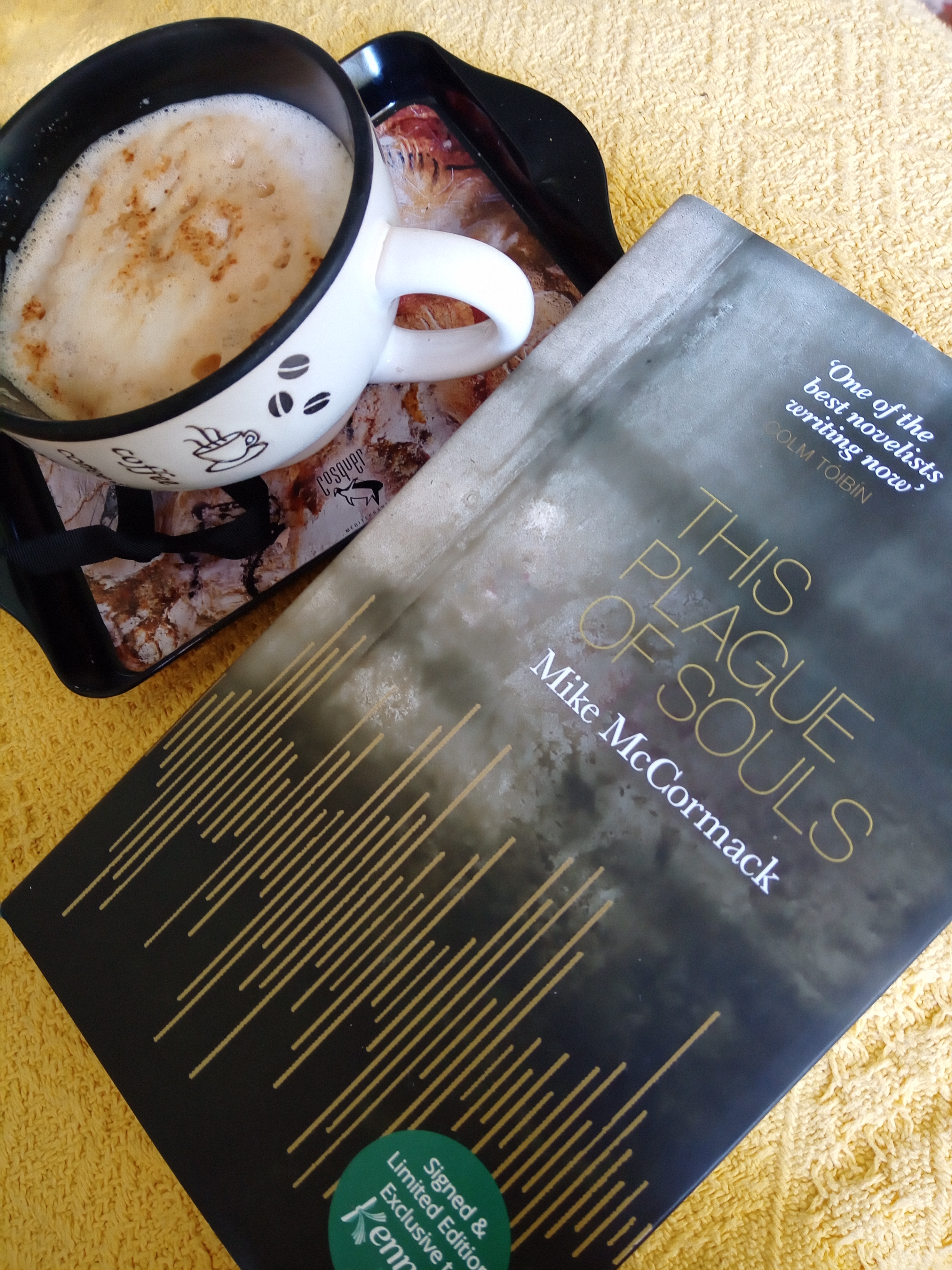
This Plague of Souls by Mike McCormack

Well, that wasn’t what I was expecting. Perhaps the first half, which felt like a different novel, one that felt familiar in an Irish rural novel kind of way, featuring a lonesome protagonist, Nealon, who has returned to the abandoned home and found it empty of his wife Olwyn and child Cuan, who hadn’t waited to hear the outcome of the charges that have kept him in prison the last 10 months.

An Old Irish Cottage of Memories

As he wanders about the house, certain objects awaken memories, of his parents, now long dead and more recently his wife Olwyn, who removed everything in the house that had belonged to them and did him a favour by cleaning and renovating it single-handedly. In protest he drags their old couch into the back lawn and just sits there.

We don’t know why he was imprisoned, what he was charged with, who his wife was, where she is.

Solar Bones Tramp Press Irish experimental fiction

The only evidence of a life or connection outside this empty cottage, is a persistent caller, who calls every day and seems to know everything about his life.

He conveniently repeats to Nealon everything he knows about him, though we don’t know if any of it is true, because the protagonist rejects everything he says, neither accepts or denies and even in the thoughts shared on the page, chooses not to think about (or the writer chooses not to share) any thoughts relating to the activities he describes.

I do not highlight one single passage until page 64 and then it is this I note, words exchanged in one of their cryptic telephone conversations:

‘I’ll tell you this: there is a great shortage of imagination out there, you couldn’t underestimate it.’
‘I wouldn’t know about that. I have noticed that there is no shortage of foolishness.’

An Alternate Reality or A Spark of Imagination?

Finally they will meet and the story becomes more surreal, at this point I thought, this is actually going to be revealed as science fiction, there is probably an alternative reality going on here – isn’t there? Because it’s starting to get kind of frustrating almost boring; but clever yes, the writing is polished, it’s relatively easy to read, but for this reader, there is nothing meaningful or all that intriguing about it, I feel the edge of disappointment ahead of me, as there are so few pages left to read. I start theorising and make up my own story about what is going on (I won’t bore you with that).

As the man says himself articulating both his conundrum and my own :

‘So I understand the architecture of the whole thing, the grandeur and ambition of the entire construct. But not the motive behind it. What is it all about? What does it hope to achieve? Is it some noble enterprise – as I hope it is – or something else entirely? Something squalid and rotten to the core.’

Scattered throughout the text are occasional sentences that hint at Nealon’s understanding, words that come from his ‘now’ wherever that is.

It took him a long time to recognise it as chaos and he wonders now how he could have mistaken it as anything else.

We have learned that in prison there was a complete lack of mind-sharpening engagement that threatened to turn in on itself and close him down, however nothing about the character thus far indicates his capability. He is a loner, just as his name indicates, Nealon – a.l.o.n.e with a capital N.

Curiosity Can Kill the Cat

Ultimately, despite his better judgement, out of curiosity or nothing better to do, or perhaps he really is interested in finding out where his wife and child are, he is lured into meeting the man, and while focusing on not really saying anything, he may have talked himself into a trap.

Photo by Jack Redgate on Pexels.com

As he travels from the West of Ireland towards the city, he becomes aware of some kind of threat looming over the country.

On the edge of insight, when it comes it may be too late. This constant feeling that he is about to realise something drives the novel forward and creates a sort of tension.

In a way, it reminded of the book I just read Margarita Garcia Robayo’s The Delivery, she uses a similar introspective technique to keep the reader from knowing exactly what is going on, however throughout the course of novel, there are many more morsels of humanity, she too is a loner, but life and love push their way in on her – you can’t escape the community.

The author who describes the novel as ‘part metaphysical thriller, part roman noir’ did ask himself the question and was aware he may alienate some readers, as he says in an interview with the Irish Times.

Would it be possible to write a book of which it would be impossible to speak, where I don’t know what happens, and how to make that artistically credible and skilful without it coming across as clueless, as an authorial failure?

Why Did I Read This?

I chose to read this book because of all the good reviews of Solar Bones, which I will still read, and also because Mike McCormack was picked up by Tramp Press, one of my favourite Irish publishers, who also publish my top two Irish authors, Sara Baume and Doireann Ni Ghriofa.

Author, Lisa McInerney’s blurb on the back cover was closest to my reading experience, when she says:

‘A darkly marvellous novel: at once intimate, domestic, and poignant, then speculative and hard-boiled and wild’

Mike McCormack, Author

Mike McCormack’s previous work includes Getting it in the Head (1995), Crowe’s Requiem (1998), Notes from a Coma (2005), which was shortlisted for the Irish Book of the Year Award, and Forensic Songs (2012).

In 1996 he was awarded the Rooney Prize for Irish Literature and in 2007 he was awarded a Civitella Ranieri Fellowship. Solar Bones (Tramp Press, 2016) won the Goldsmiths Prize, the Bord Gáis Energy Irish Book Award for Best Novel and Best Book, and the Dublin International Literary Award (previously known as the IMPAC), and was nominated for the Booker Prize.

Mike McCormack lives in Galway with his family.