Passionate & Dedicated – Aung San Suu Kyi ‘The Lady’

It seems appropriate in the year that three women won the Nobel Peace prize, that we remember ‘The Lady’, Aung San Suu Kyi, who won this prize twenty years ago in 1991, nominated by the admired leader and humanitarian, former Czech president Václav Havel, who died this month.

It is debatable whether most know Aung San Suu Kyi for her steadfast dedication in promoting the ideals of democracy and metta (a Buddhist term meaning loving kindness) to the people of Burma, or for the longevity of her term as a prisoner of conscience, held under house arrest for 15 of the 21 years from 1989 until her release in November 2010.

Winning the Noble peace prize increased her prominence and brought her cause and the plight of suffering Burmese and hill tribe people to the attention of the international community.  Just this year she was visited with open arms by Hilary Clinton, not long after announcing she would run for election in upcoming byelections.

I picked up Justin Wintle’s book ‘Perfect Hostage’ Aung San Suu Kyi, Burma and the Generals, believing it a biography, mislead perhaps by the striking portrait which graces the cover and select testimonials describing it as so. In fact, I would call it a historic treatise of Burma and while of significant interest in itself, I did find it frustrating that it took close to 200 pages to encounter Aung San Suu Kyi within its covers. Though there is depth in the historical account, I found the reverse to be true in terms of the author’s evocation of Aung San Suu Kyi, in fact I found many of his comments patronising and uncomfortable:

Had SLORC not placed Suu Kyi under house arrest, it is improbable that she would have been given the Nobel Prize…‘ and on a tribute she wrote about her father ‘ This, the notion of St Aung San, may have been over-egging the cake’ and ‘When I saw that Aung San Suu Kyi had got a third class degree I let out an involuntary chuckle.

I am certain that the author interviewed many people, that is clear, but as to coming to some understanding and appreciation of Aung San Suu Kyi and her perspective or her personality, the text remains curiously detached.  Dare I say, I detected a hint of what could almost be compared to a colonial attitude, as referred to in George Orwell’s novel ‘Burmese Days’ (himself born in India with unacknowledged Burmese relatives in the family). That would be going too far I am sure, but it frustrated me enormously and made me yearn to read something actually written by Aung San Suu Kyi herself, something this book is remarkably short on.

However, letting go of the expectation of an exquisite biography and seen as the historical treatise that it is, I find a thorough and detailed account of a remarkable country and ethnic melting pot of people who have long been subject to tyrannical rule. Sitting between India in the west and China in the east with borders that touch so many countries, Tibet, Laos, Thailand, Bangladesh, it is not surprising that it comprises so many ethnic groupings and hill tribes and has encountered so much conflict.  It has a unique history of rising to great prominence and descending into chaos, as each successive victor sought to impose their will.

It provides an interesting introduction to Aung San Suu Kyi’s father Aung San, his haphazard entrance into politics and the fraught relationship with Japan, set up to assist in the removal of the British, only to find they had replaced one empire seeking power with another.

‘I went to Japan to save my people who were struggling like bullocks under the British. But now we are treated like dogs. We are far from our hope of reaching the human stage, and even to get back to the bullock stage we need to struggle more.’ Aung San, at Maymyo, June 1942

With independence secured, the future looked positive in many respects. Democratic elections in April 1947 elevated Aung San to leadership, until he was betrayed and assassinated by one of his fellow countrymen. The country struggled to take advantage of its newfound independence and while the coup in 1962 was seen by many at the time as a hopeful resolution, it signalled the beginning of torturous dictatorships that have cost many lives, exiled others and kept Burma’s icon for free, democratic choice under arrest.

Aung San Suu Kyi was a reluctant hero; married with two children to the Oxford academic Michael Aris, a leading Western authority on Bhutanese, Tibetan and Himalayan culture, she returned to Burma to nurse her mother after a stroke and found herself sharing the hospital ward with many student victims of the atrocities occurring under the regime.  Astounded, she absorbed the horror of their stories and they listened to her reflections urging her to become actively involved in the struggle.

Just as Buddha gave himself up for the betterment of sentient beings, so Aung San Suu Kyi by offering herself to the people of Burma, was put in such circumstances she had little choice but to leave her family behind, a test the regime continued to dangle in front of her, in their hope she would leave and the people forget her. Her persistence in staying kept the candle of hope burning for millions and perhaps we may now see the fruit of that hope manifesting in their upcoming elections.

The Housekeeper + The Professor

Having recently discovered and read Yoko Ogawa’s
‘The Diving Pool’, I was further intrigued when I saw this novella displayed in my local bookshop and couldn’t resist another of her works with its beautiful cover and the promise of an alluring story about a woman who visits an eccentric mathematics professor each day to clean his home and cook his meals.

Reading ‘The Housekeeper and the Professor’ is a little like a meditation in mindfulness; although we might escape into the book, we are held in its present, for each day is a repeat of the previous and follows a pattern, such as we might too if our memory were constantly erased after eighty minutes, the habits we would continually follow, because we have been reduced to the very core of our nature, without the accumulation of memory from yesterday, last week or last year.

The Professor is a mathematics genius, whose memory ceased functioning after an accident some years before, so while he retains his mathematical genius and his long term memory before the accident, he has lost his short term memory.  It lasts only eighty minutes and so he has devised crude methods to remember things, such as pinning small pieces of paper to his suit to remind him of important facts, otherwise he starts every day anew.

The housekeeper arrives each morning and introduces herself as if they have never met. Slowly, she and her ten year old son, whom the Professor refers to as Root – a reference to the square root sign and his hair, are drawn into the Professor’s reduced world where numbers reign supreme and the two visitors begin to understand the magic and meaning behind what they had always thought of as ordinary numbers.

Whether you hated mathematics at school or loved it like I did, you will find yourself attracted to the arithmetic secrets the Professor unveils, which stir more than a mild curiosity in the significance of certain numbers and the challenge of elegant equations, as both the housekeeper and her son discover to their own delight.

Eternal truths are ultimately invisible , and you won’t find them in material things or natural phenomena, or even in human emotions.  Mathematics, however, can illuminate them, can give them expression – in fact, nothing can prevent it from doing so.

In essence, it is a meditation on the simplicity of life and an introduction to the complexity and significance of numbers; it is about letting go and accepting things the way they are and deriving small pleasures from the mundane.

Yoko Ogawa’s writing and storytelling flows like a sparkling river, it draws you in and carries you along; there are few surprises just gradual awakenings. There is a vulnerability to each of the main characters that we pick up on, which forewarns us, characters we become sympathetic to, whom I was sad to leave behind but will be revisiting again for sure.

Time Passes, Reality Bites – A Visit from the Goon Squad

‘A Visit from the Goon Squad’ by Jennifer Egan (winner of the Pulitzer prize for fiction 2011) was recommended in a comment on my post ‘Why People don’t read short stories’ and I then had the good fortune to swap books with a book buddy and was delighted to discover that this was the treasure she was trading.

There has been much discussion already about the title; what exactly is a ‘goon’ and is this even a relevant question? I decided not to search for an answer and instead to come up with my instinctive response at the end, I prefer to hazard a wild guess although the cynic in me did wonder if it wasn’t just a gimmick.

A novel or a set of stories, each chapter is separate yet connected by the barest of threads to the previous, sufficient to surmise a pattern, although like many creations, the complete picture does not become clear until the work is finished. It reminds me of six degrees of separation, that we are all connected and that even when we are, there are gaps in history’s, we only ever know part of a person’s story.
It is a testament to Egan’s writing  and one of its strengths that her book reads like a novel because we are immediately drawn into and engaged within the world of her well cast characters, mentioned briefly in one chapter, discovered in depth in the next, it is not like starting a completely different story, more like starting an abstract jigsaw puzzle in opposite corners knowing that eventually the pieces should add up. We read and make the connections, searching for them, perhaps even creating them ourselves. I wonder, is that my imagination at work or the writer’s – or both working in unison?

We encounter this in Italo Calvino’s ‘If on a Winter Night a Traveller’ and also in Alice Hoffman’s ‘Blackbird House’, a slim thread enough to spur the reader on in the quest for enlightenment.

In Egan’s novel we meet Sacha who works for Bennie in the music industry, Bennie himself, his wife Stephanie, her ex-convict journalist brother Jules, Dolly who used to be Stephanie’s boss, Ted, Sacha’s Uncle and others whose lives have interacted at some point. We meet them at different periods in time, during particular episodes in their lives where even the young seem to have already lived numerous lives and carry a burdensome past that haunts their present. There is an underlying dissatisfaction with how things have turned out, the inevitability of time passing and taking with it something vital and essential.

Which reminds me, the goon squad; as Bosco says on page 134 ‘Time’s a goon, right?’ and so too I believe that a visit from the goon squad is just this, time passing and the oft harshness of reality.

If on a winter’s night a traveller

If you have never read Italo Calvino this may be a misleading book to start with, it’s certainly not reminiscent of his short stories and I believe it is unlike his other novels, but it has a kind of cult status in that it is was an original and much talked about experimental work.
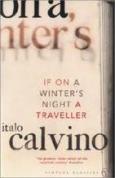
‘If on a winter’s night a traveller’ starts out as a conversation, Calvino entering and leaving the exchange within the pages of his novel in an unpredictable fashion. This is not a book to lie back and lazily escape into, it requires your attention and concentration to stay with where you are at and to understand what is going on and then just as you are spirited away by his seductive prose and enjoying the ride into the depths of one of his stories, you turn the page and Monsieur Calvino is back.

I enjoyed the diversions, although I was disappointed that he was unable to find a way to leave the sex of the reader neutral, having been almost convinced he might well be speaking to me, it becomes clear he is speaking to his male readers, political correctness not in full swing in the early 1980’s when this was published. But I readily forgive him, especially when assured by Lorna Sage, author of the memoir ‘In Bad Blood’ who wrote in the Observer:

‘devastating, wonderfully ingenious parody of all those dreary best-sellers you buy at the airport…It is a “world novel”: take it with you next time you plan to travel in an armchair’

Chapters are interspersed with stories, the titles of which are referenced in each preceding episode, the stories are the beginning of novels and you the protagonist are searching for the rest of the story while listening to Calvino expound on readers, reading, and writing. Best described in an extract from one of the stories themselves, where he writes:

I’m producing too many stories at once because what I want is for you to feel, around the story, a saturation of other stories that I could tell and maybe will tell or who knows may already have told on some other occasion…I see something like a forest that extends in all directions and is so thick that it doesn’t allow light to pass…so it is not impossible that the person who follows my story may feel himself a bit cheated, seeing that the stream is dispersed into so many trickles, and that of the essential events only the last echoes and reverberations arrive at him…’

Playful, impossible to label, is it a…, it is a question, a poem, a collection of stories, a novel and a conversation with Italo Calvino. The author imposes himself and his voice within the pages and we as the reader also become involved in the action as Calvino switches into the second person narrative. If I were an academic I would probably be littering this text with a lot of technical terms describing the literary tools Calvino plays with, literature students are likely to come across it, or at least they did in the past, as David Mitchell, author of ‘Cloud Atlas’ reminisces about here, when he rereads it for a second time.
It’s an oeuvre that defies categorisation, which plays with the reader and will entertain some while annoying others, myself I am content that it has now stopped taunting me from the bookshelf, my curiosity sated, it can now be talked about with some knowledge of its interior. That curiosity won’t rest long however, no doubt it will soon find another dusty volume to settle on, another book I haven’t read by that author I have often read about but have yet to enter their imagined world.

How to Spot a Psychopath – A journey through madness or a mad journey?

In the early 19th century, French psychiatrist Philippe Pinel coined the term ‘manie sans delusion’ referring to the one per cent of the population that appeared normal on the surface but lacked impulse controls and were prone to outbursts of violence. In 1891 it became known as ‘psychopathy‘.

I have just finished reading Jon Ronson’s riveting journey into the heart of that difficult to detect but fascinating to read about affliction, in his recently published book ‘The Psychopath Test’.  An extract from the book published in the Guardian piqued my interest as I was 1500 words into writing a short story around the theme of ‘Ego’ and I had a notion that one of the protagonists was a psychopath, or at least had psychopathic tendencies, so I was interested to know more about how to identify and make those behaviours manifest through a character. Through Ronson’s article I followed a trail and found myself eventually consulting Bob Hare’s 20 point checklist and thus had the insight I was looking for.

‘The Psychopath Test’ is no textbook and it shouldn’t be used to do what he did – random analysis of people you know; its part mystery, full of intrigue, with equal doses of curiosity and anxiety as we follow him equipped only with his journalistic tools into a world of charm, deception and manipulation where nothing is as it appears to be, or is it? He uses his tools to excellent effect to present us with investigative stories he pursued which read more like a detective novel than the work of non-fiction it is. Only it’s not a detective novel because ironically you would need more the qualities of a psychopath to be a successful detective than the anxieties and overdose of empathetic feeling the author has. Ronson is very entertaining, he admits and shares his anxieties and self-diagnoses his own mental deficiencies in a playful and identifiable way.

He presents a look into a field that has had its share of experimental and controversial programs, practices and institutions as well as its staunch adversaries such as the Scientologists, who continue their campaign to discredit the profession and individuals within it to this day.

Having tried to solve the initial mystery of uncovering who has sent a group of neurologists and academics copies of the same cryptically puzzling book, Ronson sets out to acquire basic skills in identifying potential psychopaths and arranges interviews with likely candidates, searching for and pleased by anything that seems to fit with his criteria and admitting his disappointment when their responses don’t quite fit the profile.

'How to Spot a Psychopath' by Lo Cole is available as a limited edition print from http://www.etsy.com/listing/76743583/spot-the-psychopath

Fascinating though the extremes are, it is interesting to see how many ordinary people give accounts of behaviour in pursuing high achieving goals at work, which border on psychopathic behaviour, such as detachment, the eradication of empathy and remorse. What’s more the percentage of psychopaths in the corporate sector, while low, is three times above the general population and cause for some concern, although I found myself not entirely surprised by this revelation after watching some of these executives under questioning from government officials and judges in the recent financial crisis, where a lack of empathy, failure to accept responsibility and lack of remorse or guilt seemed to be common traits.

It’s an imprecise malady with no known cure and involvement best avoided if one encounters anyone with an overabundance of the suggested characteristics, and while we might think it shouldn’t take a neurologist or a psychiatrist to point that out, to be human is not always to be logical or to follow common sense, especially while under the spell of a charming, manipulative liar.

Slaves and Siblings, Sorcery and Sadness, Strength and Salvation – Isabelle Allende’s Island Beneath the Sea

Isabel Allende.

I well remember being introduced to her debut novel ‘The House of the Spirits’ in my early twenties by a good friend and discovering this wonderful story teller. We became immersed in the lives of members of a Latin American family, following it during a time of political upheaval and personal transformation and though it was far from our own reality, it was pure joy to escape into.

Whenever I came across a new book I read it, including two of her wonderful young adult books ‘City of the Beasts’ and ‘The Kingdom of the Dragon’ and who could forget the heart-breaking but beautiful ‘Paula’. I haven’t read all her books, but I will continue to read those that cross my bookish path, just as ‘Island Beneath the Sea’ did recently, spotted on my book buddy’s shelf while feeding her son’s cat Oscar.
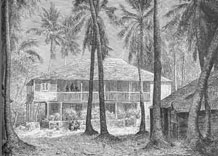
In this gripping novel, Allende takes us on a troubling but engaging journey to the sugar cane plantations of what was the French colony Sainte-Domingue, in one of its most historic and transformational eras during the late 1700’s and ends in New Orleans as Napolean trades terrains as if they are commodities with the Americans.

Toulouse Valmorain arrives in the colony from France where the dauphin King has just married Marie-Antoinette and few anticipate the changes to come with revolution in France or the effect that will have on this prosperous Caribbean island where slaves labour on crops that produce a third of the wealth of France and whose usefulness once they set foot on the island averages eighteen months; the fortunate dubbed the Maroons fleeing to the hills, the less fortunate en route to that place they believe all souls go, the island beneath the sea.

Knowing little of changing French laws that might change their status in the colony, many of the slaves find respite through voodoo and belief in men who escaped like the legend Macandal ‘The Black Messiah’. The Maroons will make history as they lead a slave revolt eventually resulting in the first black republic of Haiti.

Valmorain never expected to visit the family plantations but the premature death of his father and the necessity of supporting remaining family in France drive him to the colony where he must take over the family interests. Through him we meet high profile cocotte Violette Boisier, a free woman of mixed African heritage, the teenage slave Zarité, maid to Eugenia the troubled Spanish wife and her brother Sancho, Valmorain’s business partner. The story follows these characters as their fates intertwine and their lives are affected by society’s strictures and historical events.

The characters of Zarité and Violette jump off the page in a way that almost makes me wonder whether the author had her ‘favourite’ characters, we see them in situations and feel their struggles whereas I didn’t get quite the same feeling with the character of Eugenia, I found myself wondering how it really was for her as the drumbeats got inside her head and slowly drove her to madness. She wasn’t a strong character and although she suffered, we learn of it rather than experience it.

I realised towards the end that much of the novel is narrated, which also made me wonder how much longer it could have been if more of the narrative had been portrayed through the events themselves and dialogue, the characters are certainly engaging enough but at 457 pages, it is lengthy already. After being totally engaged with Josephine Bonaparte’s story beginning in another Caribbean plantation in Martinique, I could easily have been tempted by a sequel.

Allende narrates great stories and brings the reader to unforgettable settings during fascinating historic periods; she places interesting characters in this context, constructed with great clarity and insight and history comes alive as if it is the present and the reader is witness to it. For me ‘Island beneath the Sea’ was a real page turner and I was sad to finish it.

What Allende could never have anticipated while writing this book, was the major earthquake in 2010 that would disrupt this country, now known as Haiti, however it is a timely reminder of the previous chapters in the history of this trailblazing republic.

The Forest for the Trees – An Editor’s Advice

Reading books on writing is a little like panning for gold. Most of what we read washes away, some of it is interesting to consider but doesn’t necessarily gel and then occasionally we find a gem.
Unlike gold, one woman’s gem doesn’t necessarily guarantee universal approval and when I recall the books I thought were fantastic ten years ago, I realise now how far I have moved on, now those same inspirational pages from yesteryear elicit nothing more than nostalgic fondness, no longer capturing the thinking place I am at today.

I remember with absolute clarity coming across Dorothea Brande’s 1934 classic ‘Becoming a Writer’ during the period I enrolled in my first creative writing class with writers Maggie Hamand and Henrietta Soames at the Groucho Club in London and how it seemed to speak to me and contain all the questions and doubts I had at the time. There is definitely gold in this book for someone starting out on the writing path, though I have given my volume wings and allowed its pages an airing by passing it on rather than let it languish on the shelf unread.

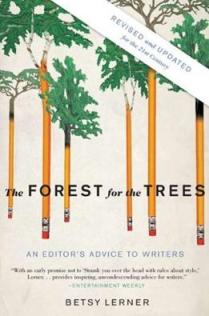
‘The Forest for the Trees’ was recommended on writer Sandra Gulland’s blog and I’d just finished reading the Josephine Bonaparte trilogy, so I jumped in and bought it on impulse. Divided into two sections Writing and Publishing, is a little misleading, the first half reading more like a psychological analysis of writer behaviours, who are the ambivalent, the natural, the wicked child, the self-promoter, the neurotic or touching fire, along with numerous anecdotes to validate these suppositions. Whilst I have no doubt, the author has come across each of these stereotypes, I found the labelling patronising and found myself wondering about the hidden majority who don’t fit so clearly into these headings – or do I just need to get out more to meet these people? Tell me writers, do you identify with one of these labels?
The frequent references to Truman Capote created a distance that was difficult to bridge and too many of the examples seemed like exceptions; I admit I was searching for the paragraph that I could identify with, an example of someone who seemed like an ordinary person, the kind that might convince the reader that to write successfully and be published is possible. It’s the cult of the celebrity factor again, with hindsight one can look back and select anecdotes about writers who were the exception rather than the rule. Disillusioned, I blame my market research background where the anecdote has little credibility and witnessing the propensity of politicians and tabloids to use them in the place of verifiable evidence.

The main message in the second half was: be respectful and patient with your editor and publicist, they’re all juggling multiple balls, you don’t really understand what goes on behind the scenes, if you did, you’d leave us to get on with the job. This debate is likely to continue with the advent of electronic publishing and the industry having to redefine its role and prove its value, however I found this section more insightful and it did highlight many of the strengths and weaknesses of the publishing process.

If you are looking for a tongue in cheek attempt at writer’s psychological profiles, interesting and funny anecdotes and an inside look at one editor’s career path, then this will entertain. We can also learn much about the industry by keeping up with writer’s blogs and online communities, which without a doubt reflect the situation of writers today, whether persevering towards it or already succeeding to be published.

Eerie, Evocative, Engrossing – The Diving Pool

I picked up this slim volume of three enticing novellas during one of my scouts of the excellent Oxfam bookshops in London recently. I was intrigued by the cover and the discovery of an international author I had not read before whose credentials intrigue but I was sold by the quote on the cover by Nobel Prize-winning author Kenzaburō Ōe.

“Yoko Ogawa is able to give expression to the most subtle workings of human psychology in prose that is gentle yet penetrating.”

Yoko Ogawa for those like me who have not come across her before, has published more than twenty works of fiction and nonfiction, she has won every major Japanese literary award and her fiction has also appeared in The New Yorker, A Public Space
and Zoetrope.

From unknown to me until the last couple of months, I wander into my local bookshop this week and see Ogawa’s more recently published novella ‘The Housekeeper and the Professor’ sitting on a small table next to Murakami’s big fat ‘1Q84’ and Jonathan Franzen’s sizeable ‘Freedom’, names that need no introduction. So in anticipation of reading a second of her lovely slim books, I will tell you about the first.

‘The Diving Pool’ is both the title of this collection and the first of three novellas contained within; it introduces us to Aya, an introverted teenage girl with foster orphan siblings who feels distant from her family, yet finds a closeness being in the proximity of and observing her foster brother without his knowledge – she sits in the bleachers and studies his form, watching him with obsessive infatuation as he executes each flawless dive with his smooth, sculpted body. The depths of her infatuation rarely break the surface and spill over into engagement or physical contact though she desires it; she does not provoke, she wills it.

Ogawa depicts the girl’s keen observations and cruel impulse with the precision of a surgeon’s knife, slicing into the mind of a daughter with a disturbing transparency that entices the reader to continue to see just how far she will go.

It is a story that is worth rereading a second time from a writing perspective, not just the carefully crafted words, but what it is that the author does to create that effect of getting under your skin when reading it. I’ll definitely be adding her next book to my collection, her evocative style is addictive indeed.

The Paris Wife by Paula McLain

Dreams, Illusion, Reality

Reading The Paris Wife I rapturously turned the pages, captivated in a cathartic way in the character of Hadley Richardson, whose story and perceptions I became absorbed with, whose life and relationships I was invested in as a reader and also as someone who has lived in France for six years. Yet at the end I was left feeling somewhat deceived.

‘The Paris Wife’ explores a brief passage in the life of 28 year old Hadley Richardson, from shortly after the death of her mother, when she meets and after a brief courtship, marries the much younger Ernest Hemingway, until their separation and subsequent divorce.

Hemingway is a 21 year old war veteran and struggling journalist with his eyes set on Rome, until the writer Sherwood Anderson, convinces them the future lies in Paris.

The young couple embark on their journey, Hadley doing her best to support her husband and not burden him with her own insecurities. Neither glamorous nor ambitious, she is honest and good and able to provide Hemingway with an emotional foundation and stability that he has not been able to garner since his return from war, or perhaps earlier, when the arrival of a baby brother shattered the illusion of a special bond he believed he had with his mother. It is a pattern that will be repeated in his life, the attempt to recreate a safe, protective feeling akin to childhood with a woman, only for it to fall apart.

Cracks Begin to Appear

It is not long before cracks appear, Hemingway’s foreign assignment to Turkey bring back feelings of despair, displacement and the nightmares of war; walking in the rain, death, sickness and desperation in the air, his esteem low, he brings himself lower by acting on it. We learn this period was preceded by his breaking the ‘exclusive’ work contract with his employers without informing them – signs of a divide within himself – and Hadley’s discomfort with his dishonesty feeds the more paranoid of her instincts.

While in Paris, Hemingway spends his days writing, initially rejecting the cafés with their posing artists, though soon overcomes his distaste and discovers the joy of café life once they develop their own circle of friends.

Sunrise or Sunset?

Hemingway’s obsession with corrida (bullfighting) result in numerous visits to Spain accompanied by friends and these sojourns become the basis of his novel ‘The Sun Also Rises’ about a group of expatriates who travel from Paris to the Festival of Fermin in Pamplona.

One of the most striking and memorable moments supports a comment by Hemingway scholar Jamie Barlowe that Hadley Richardson “was a ‘true’ woman and not a ‘new’ woman of the early 19th century” and shows both how removed she was from their group and the reverence Hemingway held for her.

Hemingway dedicated ‘The Sun Also Rises’ to Hadley and although she was there in person and recognises much of what happens in the novel, she is the one person from their circle that does not exist between its pages. She is hurt by the exclusion, though spared the humiliation. She was at a loss in the company of Lady Duff, whom Hemingway models the female character on, a honey pot of a woman who, oblivious to the neurotic attentions of the men, was present with a much ignored fiancé and drooled over by Hemingway and Harold who end up in fisticuffs over misplaced jealousies. Hadley’s recognition and special moment come in the most romantic and gory of gestures, when the much admired matador Cayetano Ordóñez makes eye contact with her from the bullring and publicly gifts her the rare token of the bull’s ear, bloody and warm from the soon to be sacrificed animal.

The deception is that the story and the author’s interest continue only as long as she is married to Hemingway, a mere six years, effectively cancelling her out as a character so soon, no longer interesting without the crutch of an infamous husband. Did her life cease to hold interest or meaning beyond those years; are we really only interested in her because she was married to Ernest Hemingway? Sadly it appears so, deceived because it is true, we are to be concerned with her only for the duration of her marriage to Hemingway, despite having come to know her sufficiently to want to know more. She has become a victim of the modern cult of the celebrity, famous only for being linked with someone famous.

I think back to another wife of a famous man I reviewed recently ‘The Many Lives and Secret Sorrows of Josephine Bonaparte‘. Josephine starts out as a modest character named Rose Tacher whom we are introduced to many years and one marriage before she meets Napoléon Bonaparte; we are fortunate that interest in her isn’t restricted to her marriage to Bonaparte, we are already hooked into her character and have completed an entire novel before Bonaparte even enters the scene.

Despite the deception, I recommend ‘The Paris Wife as an alternative, behind the scenes look at the 1920’s lives of the group Gertrude Stein called ‘the lost generation’ and also at the inspiration and experiences that influenced much of Ernest Hemingway’s work penned during this era.

But perhaps most of all because McLain introduces us to a woman we can relate to and empathise with, someone we can imagine as a friend or confidante, who aspires to the same things that so many women yearn for, because she allows us to imagine and feel what it must have been like to harbour such simple and honest ambitions while navigating a fresh marriage in a new city and foreign country and culture.

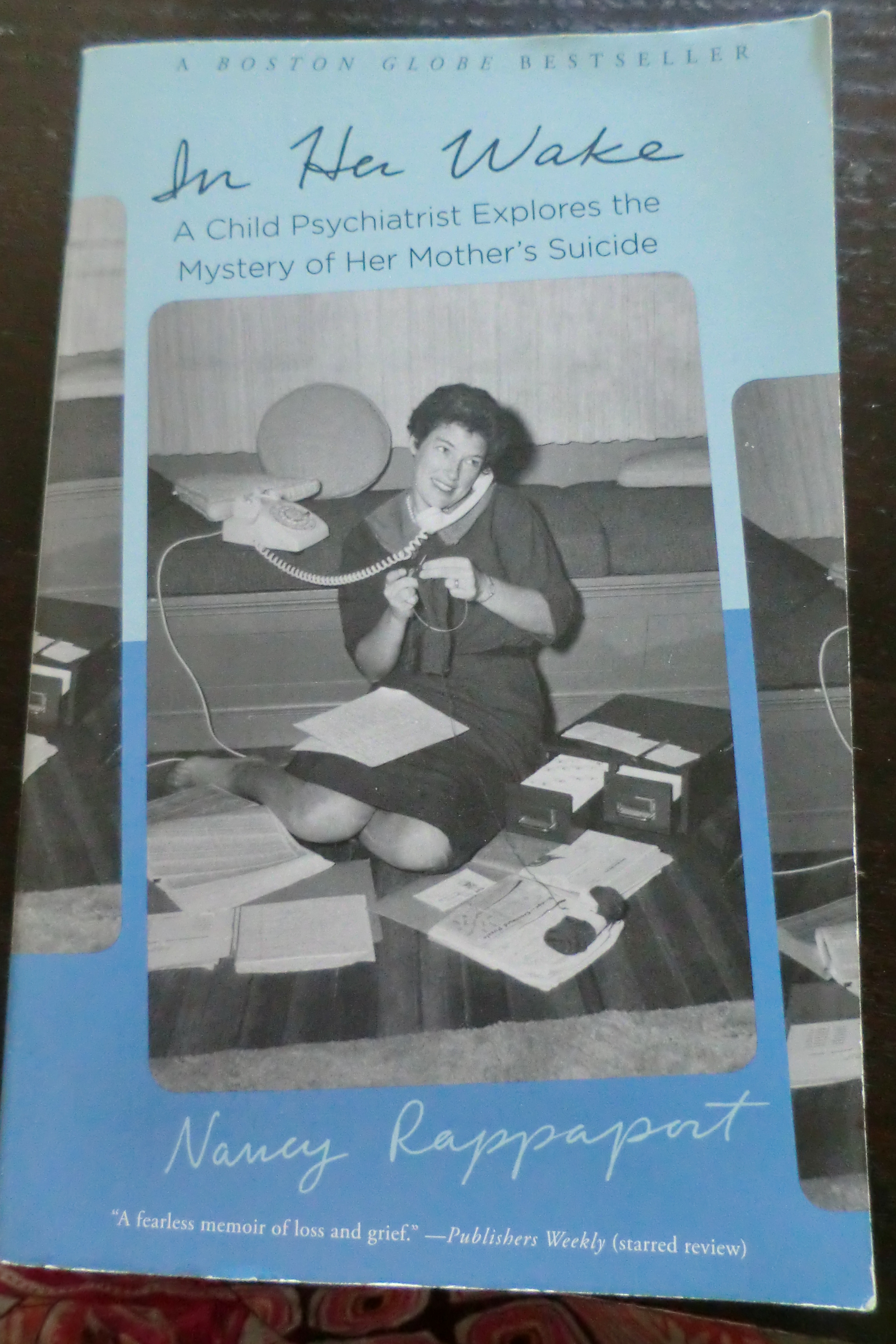
In Her Wake, Nancy Rappaport – exploring the mystery of a mother’s suicide #memoir

In 1963, Nancy Rappaport was 4 years old and the youngest of six children when her mother, an ambitious woman who balanced raising a large family, organising regular society events and political campaigning, committed suicide in the wake of a heart-wrenching custody battle.

Nancy now has three grown children of her own and has written this book both as a daughter needing to find answers and as a professional child psychiatrist, bringing together her education, experience, the wisdom of years and a compassionate perspective to narrate this compelling memoir of an extraordinary life whose end was sad and tragic.

From a childhood in which the nurturing love of a mother was ruptured so abruptly, through adolescence and early adulthood where the subject of her mother appears to have been taboo, it is extraordinary and something of a blessed gift that Nancy comes across a trunk of belongings that has virtually been in hiding or at best forgotten all these years. It is a credit to her father and stepmother that it wasn’t destroyed and so Nancy in her quest to know her mother better, gains access to lists, notes, notebooks, a journal and astonishingly, the manuscript of a complete novel. At last, she begins to gain a first-hand insight into who her mother really was, aside from all that had been written publicly and most importantly she begins to piece together how her mother was thinking in the time leading up to her death.

Rappaport follows leads like a master sleuth hesitating to question herself only briefly in pursuing her mother’s former lover, an estranged best friend and a former confidante of her grandmother, to unearth as much information surrounding the events of that period during her parents’ marriage and subsequent divorce. Little by little, she draws back the carefully drawn veil of secrecy, though not entirely without getting her fingers burnt.

It’s tempting to search for the villain and it could be said that each of the main characters in this true story are tried out and tested in that role, but none endure. Such is the faculty of being human, perhaps we all have the potential if pushed sufficiently but here we find few heroes or villains, just victims, bystanders and those trying to do their best under the circumstances.

It is a bold move to publish a family story when so many are touched by past events and family ties remain tenuous. Nancy suffers the expected consequences to a certain extent though she tries to navigate her way with compassion and empathy as much as she can. It’s a difficult and interesting topic, to write a version of the truth that recalls the faded memories of real life characters, while respecting those who wish to remain silent.

In my reading of this courageous memoir, some of the lessons come not from digging in the past or even from the professional perspective, but from Nancy’s own children, who are a constant reminder of the present that we live in and the role and responsibility of a mother to her children, doing her best, learning as she goes, loving them above all so that they have the best chance to be loving, caring and successful people themselves and that no matter what anyone says or does or whatever the circumstances, a mother will maintain that role whether she is fulltime, part time, at a distance or just a faded memory.