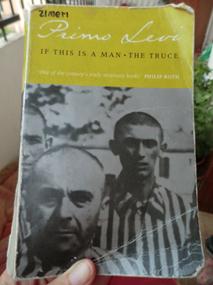
If This is a Man: The Truce by Primo Levi

I only had to read the first sentence of a Scotsman in Exile’s blog post of this book to put aside what I was reading and start this almost immediately; his review entitled And Over Our Heads The Hollow Seas Closed Up… continues its first line:

…These are words from the canto of Ulysses from Dante’s Inferno and they were quoted in the most moving book I’ve ever read, ‘If This Is a Man’ by Primo Levi.
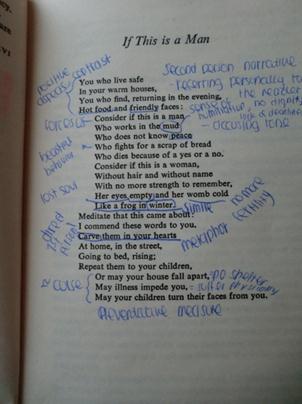
I found a copy on the second-hand shelf of our local bookshop the very next day, a copy I now own that would have to be the most annotated, scribbled in, colour highlighted, dog-eared, pored over volume that I possess (thanks to the previous owner ZIMERI). When I was a student, we studied ‘The Diary of Anne Frank’; how fortunate that today’s students are reading and studying this equally important work.

I’m not sure if I so much as read the book as followed closely in the footsteps of Primo Levi as he recounted the events that unfolded during his journey and time in the concentration camp, due to the way he chooses to express himself, which can best be summarised in his own words:

I believe in reason and in discussion as supreme instruments of progress, and therefore I repress hatred even within myself: I prefer justice. Precisely for this reason, when describing the tragic world of Auschwitz, I have deliberately assumed the calm, sober language of the witness, neither the lamenting tones of the victim nor the irate voice of someone who seeks revenge. I thought that my account would be all the more credible and useful the more it appeared objective and the less it sounded overly emotional; only in this way does a witness in matters of justice perform his task, which is that of preparing the ground for the judge. The judges are my readers.

Thus we absorb only that which he personally experienced and perceive not just the daily routine, the trivial yet so essential implements of his survival, the relentless toil and the near brokenness, but we view also the different strata of man in that direst of circumstances, a kind of perverse hierarchy.

Primo Levi was a young man of 24 years, a chemist and part of a partisan band hoping to join the Resistance movement when captured by the Fascist militia and sent to a detention camp at Fossoli. A few weeks later, all Jews in the camp were told they would be leaving for an unknown destination, revealed to be the camps of Monowitz-Buna and Birkenau, part of Auschwitz.

650 people made the journey that day; on arrival, the majority were ‘swallowed by the night’ and 125 sent to the camps. Of those, only three made the return journey to Italy after liberation, Primo Levi being one of them.

He was fortunate to return and discover his family intact; we in turn are fortunate that he returned and wrote these two books to be read together, one the descent into darkness, the other the journey back towards an altered but real luminosity.

All I can really say is that if you haven’t read it, add it to your list and find the time one day to slow-read it, Primo Levi was an important chronicler of a difficult period in history and a man who was interested in and able to put into words his observations of humanity in all its capacity, something we all the better for knowing.
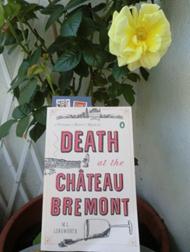
Death at the Château Bremont

There is a shelf in our local bookstore dedicated to books crossing numerous genres that have a connection with France, you will find nonfiction travelogues such as Sarah Turnbull’s ‘Almost French’ or David Sedaris’ vignettes in ‘Me Talk Pretty One Day’, funny, true, yet never denigrating the country that has become like a second home to him. You will also find English translations of popular French authors like Jean Giono and Michel Houellebecq and novels set in France.
Death at the Château Bremont fits into latter, not only set in France, but here in Aix-en-Provence. I first became aware of the title thanks to a review by Lynne at Aixcentric, an excellent and informative blog I read regularly to know what’s happening in and around the area where I live.

Just yesterday I read that tonight is the annual Nuit des Musées when the town’s museums are free and open from 8pm until 1am. We love this annual late night out.

Not long after that mention, the book-club that I read along with nominated it as their May read and the author M.L.Longworth who lives here in Aix-en-Provence, was invited to join us. So, a fascinating insight into the gestation of this, first in the ‘Verlaque and Bonnet Mystery’ series, which follows the lives, dramas and intrigues of Judge Antoine Verlaque and Professor Marine Bonnet, his sometime amoureuse.

It’s a mystery and in order to keep the mystery alive, I will only reveal that Étienne de Bremont falls to his death from a Château window, an investigation is requested and after some drama involving clandestine affairs, jealous siblings, polo players, Russian millionaires and a New York suicide, all will slowly be revealed.

What makes Longworth’s mystery unique is the journey. It is far from dark and gory, realms she has no apparent appetite for, however she will take you on a gastronomic excursion through the towns, vineyards and countryside of the region, visiting suspects while piecing together the connections and clues to the lives of those involved in this conspiracy. So not just a book for aficionados of mystery’s, but one for food and wine lovers and anyone who has ever dreamed of living and working in a city of culture and gastronomy in the South of France.

M.L.Longworth with Claire McAlpine

No tourist visit, this literary journey is the real thing and so agreed the group of eight women who were present to discuss the book, all sharing their favourite parts, confirming the locations the book visits and even suggesting others for the third book, which the author is working on, all suggestions were gratefully received and noted.

M.L. Longworth’s second book in the series, ‘Murder in the Rue Dumas’ will be published on 25 September 2012.

A Letter to her Sister

Hyde Park by Stella Leivadi @treknature.com

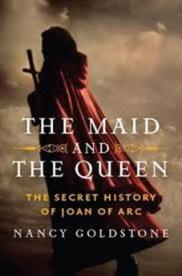
After the slow meander through Nancy Goldstone’s ‘The Maid and the Queen’, I reached for this library book because I was sure it would have pace and I am long overdue reading it, considering I gave it to my sister for Christmas two years ago.

Rosamund’s Lupton’s ‘Sister’ is set in London, from Notting Hill to Hyde Park, in a police station and St Anne’s Hospital.

It is Beatrice’s book long letter to her missing sister Tess, in which she narrates everything that took place from the moment she heard of her sister’s disappearance until now, when she will recount the entire episode as a kind of tribute to her sister. Telling a story in this way, as Ruby Soames does in her excellentSeven Days to Tell You’ makes the reading of it more intimate, there’s less use of the I and they and more than usual of the you and your. It’s almost a conversation, only the narrator speaks and you listen.

Beatrice has been living in New York and the disappearance of her sister brings her back to London and provides some distance and perspective on her own life, which will change forever as she attempts to uncover what really happened to her sister, refusing to accept the conclusions of the police and the easy acceptance of their verdict by her mother and fiancé.

As I put down the phone I saw Todd looking at me. ‘What exactly are you hoping to achieve here?’  And in the words ‘exactly’ and ‘here’ I heard the pettiness of our relationship.  We had been united by superficial tendrils of the small and the mundane, but the enormous fact of your death was ripping each fragile connection.

It being something of a mystery, I do try to second guess not just the culprit but also the twist, there always is one isn’t there? I often look for the character that is barely mentioned and I was aware that this particular narrative perspective can be the perfect conduit for the unreliable narrator. However, in this case, I neither predicted the culprit nor saw the twist right until it occurred, leaving me in admiration of Lupton’s ability to outwit and pleasantly surprise her readers.

I look forward to reading her second novel ‘Afterwards’.

Wild Horses and Flash Fiction

Its National Flash Fiction Day today in the United Kingdom, celebrating the short, short form of fiction, the art of telling a story in less than 1,000 words and more often only 150 words.

David Gaffney shares his experience of writing and being published in the form and offers these tips:

  1. Start in the middle
  2. Don’t use too many characters
  3. Make sure the ending isn’t at the end
  4. Sweat your title
  5. Make your last line ring like a bell
  6. Write long, then go short

He goes on to explain each tip, click here to reveal his words of wisdom.

And here is my attempt to tell a story in 150 words, word by word.

*

The Muster

*

I ride bareback with just a halter and lead into the midst of the herd, gently coaxing them out from under the trees. My mount quivers beneath me; fear pervades the damp atmosphere and I exhale deeply to expel it.

The sound of a gunshot spooks the stallion and the horses move. Bright sunlight extinguishes shadows as they bolt, branches cracking beneath the drum of hooves.

My father is in position. The herd veers to the right. At the river bank there is a two metre drop into the water and we do not hesitate. I grip hard with my knees and feel muscle ripple beneath me bracing itself for the jump. Something knocks my shoulder and I cry out as we plunge head first into the torrent.

“Wake up son, we’re mustering that herd of wild horses today” my father says as I open my eyes.

The Secret History of Joan of Arc

Such a seductive title ‘The Maid and the Queen’ – The Secret History of Joan of Arc and it is indeed an intriguing story, wrapped in faith, hope, superstition, manipulation, cruelty and ultimately the exoneration and beatification of a heroine (Joan of Arc was canonised in 1920).

 Joan of Arc is testimony to the transcendence of the human spirit….She remains an inspiration, not only to the citizens of France, but to oppressed people everywhere.

Ironically, it is due to the inquisition of Joan of Arc that much of the history of the era was documented and preserved, her testimony and the numerous depositions from the many eyewitnesses who knew her and who were in some way involved in the events of the Hundred Years war, that period of conflict between the Kingdoms of England and France and various other alliances from 1337 to 1453, as each sought to claim control of the French throne.

One of the insights that astounded me was the prolific negotiation of the female offspring of nobility to secure territorial alliances or peace between the realms. Daughters were auctioned off as young as 4 years, though depending on how power shifted and who survived into adulthood, those promises could alter.

Nancy Goldstone’s thoroughly researched oeuvre, takes a step back to look at the events, beliefs and susceptibilities of characters leading up the prominence of Joan of Arc, none more so than Charles VII, Yolande of Aragon’s (Queen of Sicily) son-in-law and the man who as a sensitive 11-year-old boy, she had taken into her home, nurturing and caring for him as her own, at a time when he was not destined for the throne (he had two older brothers). His propulsion into the role of King while the English were making inroads into the territory, King Henry having proclaimed himself King of England and France, and his reluctance to engage in battle, were significant risks to the Kingdom of France that required intervention.

Drawing inspiration from ‘The Story of Melusine’, commissioned in 1393 and written by Jean d’Arras (when Yolande was 12-years-old) a propaganda devised to address the political controversy surrounding the Duke of Berry’s appropriation of an ancient and imposing castle belonging to the aristocrat Lusignan family, Yolande of Aragon was able to usher Joan into an audience with the young King.

To Yolande of Aragon, the parallels to the story line of Melusine were obvious… there was just one element missing to turn this fiction into reality. The Queen of Sicily actively sought a Melusine as part of her strategy for reinstating the dauphin as the legitimate heir to the French throne.
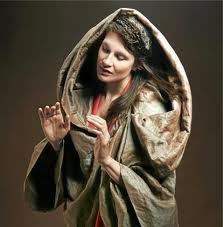
That Joan was effectively recruited, is reinforced by a French historian who reported that in 1428 alone, twenty people, mostly women, claimed to have been chosen by God to deliver a message to the King. None of them were given the opportunity unique to Joan, whose faith and convictions aligned with what Yolande wanted to hear and would result in her leading an army to relinquish the city of Orleans. By speaking passionately to Charles inner most fears, in particular an obsession with his possible illegitimacy and by her knowledge of ‘his secret prayer’ to God which he cried out in his sleep, Joan materialised as a sign and a saviour.

Gentle dauphin, I am Joan the Maid, and the King of Heaven commands that through me you be anointed and crowned in the city of Reims as a lieutenant of the King of Heaven, who is King of France.

Having succeeded in turning the English back, Joan was eventually captured and no longer considered useful by her King or sponsor, was sold to the English who sought vengeance, and submitted her to a long inquisition hoping to rid themselves of her and the fervent following she inspired among the people. Though their interrogations were inconclusive, and their hopes to condemn her destroyed by a signed recantation, she was tricked into heresy and sentenced to be executed.

I found the book full of interesting facts and connected events surrounding Joan herself, but I admit it was not an easy read and slow going at times –perhaps by necessity– to comprehend all the characters, families, alliances and influences. I did find myself wishing at times that the author might have used more creative tools to inhabit the emotional life of some of the characters, something that makes reading well-researched historical fiction a real pleasure and certainly adds pace.

But for a factual account of how The Maid came to represent a significant turning point in France’s history, I can think of none better.

If it is accepted, as it is often said, that without Joan of Arc there would be no France, it is also true that without Yolande of Aragon, there would have been no Joan.

Note: This book was an Advanced Reader Copy (ARC), provided by the publisher via NetGalley.


A Love of Words and Music

I have been struggling a little to finish ‘The Maid and the Queen’, what with school holidays, the French presidential elections (which I voted in for the first time), working on promoting my Aromatherapy business and socialising more than usual, including attending an excellent concert of the cult singer/artist ‘Camille’ at Le Silo in Marseille on Friday.

Camille

No one song can possibly represent what a performance by this artist represents, she sings, uses her voice and body as an instrument, dances barefoot in her sacking dress and easily extracted volunteers from the audience to participate.  She is total inspiration, if you would like listen, here is a sample ‘Mars is no Fun’.

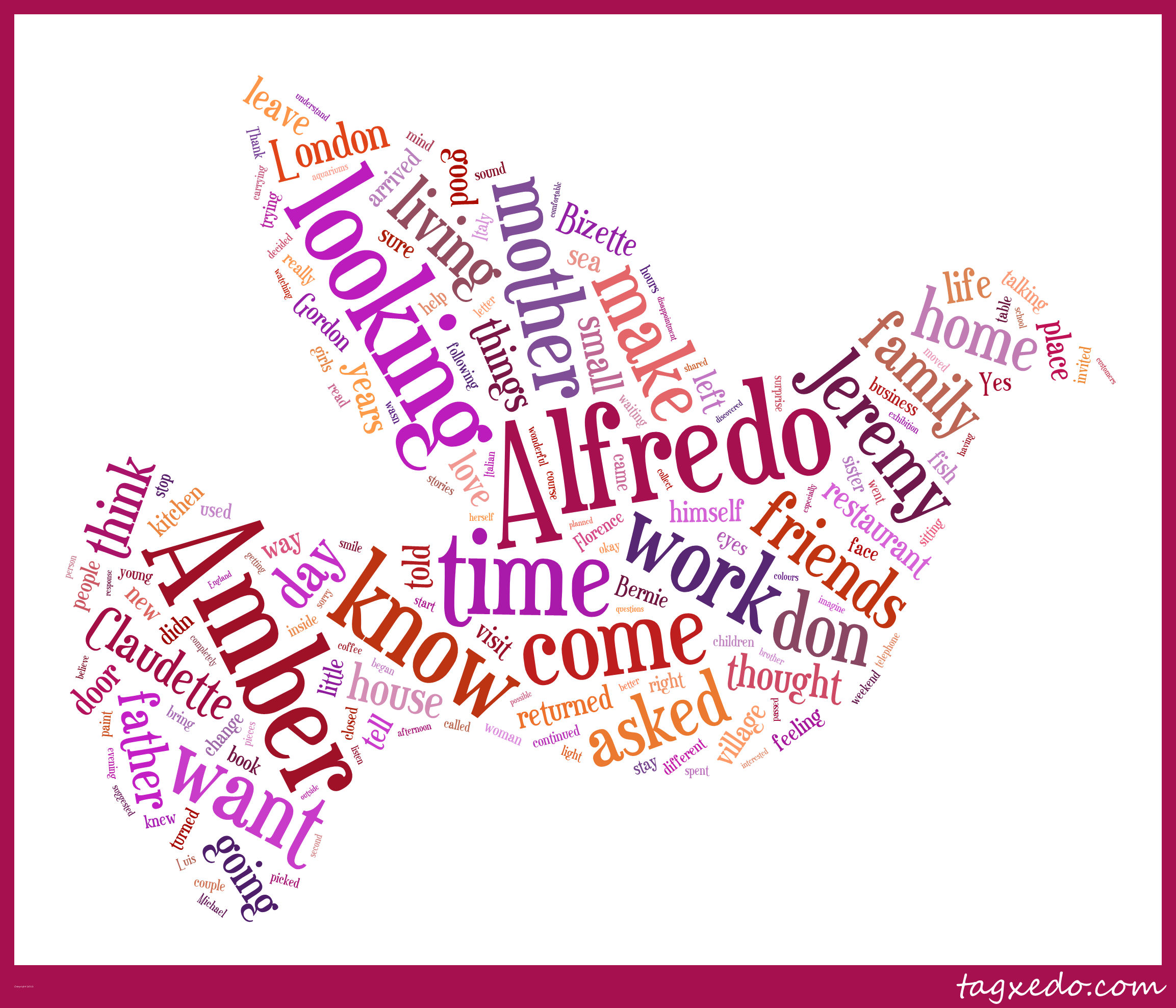
So no book chat today, instead I will share a fun word cloud tool that I discovered thanks to Elodie at  ‘Commuting Girl’ called Tagxedo into which you can copy any text or enter your blog or website name and the tool will analyse the content and show you which are the most popular words and how often they are used.

So Voila! For this blog ‘Word by Word’, here is an image of the most common words used and I am delighted that the word ‘Word’ is indeed such a dominant feature.

Intrigued, I decided to put the text of my ‘sitting on the shelf’ novel as I have always wondered which words I might be over using.  So I am not going to say anything more about the novel, except that it is called ‘A Piece of the Mosaic’ and here is a clue to what lies within.

So what does your blog, novel, poem,story look like?

Le Muguet – Becoming French

Au mois de mai, fais ce qu’il te plait.

In the month of May do what your heart fancies.

 Provencal proverb

So today I feel like sharing a little bit of French culture with you, the 1st of May is a public holiday in France for the Fête du Travail and the day you will find people offering Le Muguet (Lily of the Valley) to their friends, neighbours and acquaintances, a tradition that began during the Renaissance in 1561, when Charles IX offered them to his subjects as a symbol of porte-bonheur or good luck.

Now associated with the Fête du Travail on 1 May, anyone can sell the flower on the street without requiring a licence or permission. Today I walked into the centre-ville and came across many people who are spending their day, sharing the magic of Le Muguet with the public.

The first year I came to live in France, I learned of the tradition when my next door neighbour knocked on the door and presented me with this delightful flower, explaining its significance.

Six months into adapting to this life, language and culture, it was a welcome gesture and reminded me how important it is to reach out to others, even if they appear to be coping, we can all do with a little ‘porte-bonheur’ from time to time.

And in the spirit of acknowledgement and small celebrations, congratulations to Juliet Greenwood whose book Eden’s Garden’ has been named ‘Welsh Book of the Month’ for May 2012, a sprig of ‘Lily of the Valley’ for you Juliet. To celebrate she is giving away a free signed copy of her book, click here to enter.

Finally, with Spring emanating everywhere, I thought I’d share my recent discovery and purchase of a book of 12 stamps (un carnet de timbres), with its theme ‘the language of flowers’, I hope you can guess the English equivalent:

Le Langage des fleurs

Pensée / Affection

Coquelicot / Joie

Arum / Ardeur

Muguet / Bonheur

Tulipe / Amour

Violette / Modestie

Iris / Tendresse

Œillet / Fidélité

Rose / Passion

Pivione / Générosité

Marguerite / Attirance

Dahlia / Admiration

Bonne fête à tous!

State of Wonder by Ann Patchett

Ann Patchett’s novel, shortlisted for the Orange Prize for fiction has left me pondering. Wondering what it was I missed that caused others, such as Joanna Trollope to say:

Every so often – and that’s not, actually very often – I read something that makes me want to press fervently and evangelically onto everyone I meet. This has just happened with Ann Patchett’s novel State of Wonder

And Emma Donoghue who said:

The best book I have read all year. It made me laugh and weep and left me in a state of wonder

Marina Singh is a doctor working for a pharmaceutical company since switching from obstetrics to pharmacology near the end of her studies. Coincidentally, one of her female professors Dr Swenson also works for Vogel and is acting solo, outside her jurisdiction in the Amazon, observing a tribe whose unique development could have significant implications for the lives of women and humanity. This rebellious, unorthodox researcher and her unique way of working has been tolerated by the company, until a letter arrives informing the CEO Mr Fox of the death of a staff member he sent to report back. Marina is asked to follow-up and becomes drawn into the alternative universe of life in the Amazon jungle.

It is an interesting concept and a thrilling journey, one of the most moving and real parts for me being an encounter with an anaconda that almost had fatal consequences. However, throughout the book, I couldn’t shake off a sense of reluctance, of characters holding back; was Mr Fox being honest or was he hiding something? Why doesn’t Marina question or insist on answers?   It was hard to believe that the head of a large pharmaceutical pouring significant funding into a research project would tolerate the situation without acting in a more forthright manner.
Dr Swenson was definitely withholding, resisting, imbued with a sense of superiority that didn’t ring true or convince me. Ironically, as Marina begins to accept the way of life in the jungle I could very well see her becoming part of that environment which would have been interesting to pursue further, more so than the enigmatic Dr Swenson.

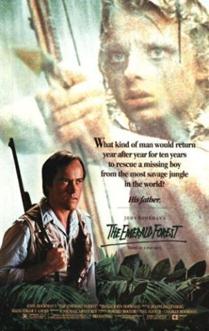
True, I was somewhat impatient to get to the Amazon itself and for that I blame an unquenchable thirst for adventurous travel and the fact that as far back as I can remember, the Amazon was the VERY first destination that my younger mind desired to visit. I remember it vividly even now, a feeling that grew after watching ‘The Emerald Forest’ (1985), a film that had a real effect on me, I fell in love with the wilderness of the Amazon and vowed that one day I would go there.

The film is based on the true story of a 7-year-old boy kidnapped by Indians, who disappear into the Amazon forest. The boy’s father, a Venezuelan engineer, spent every summer for the next 10 years searching the forests for his son and eventually found him.

It is quite likely then, that this memory may have had an effect on any impression this book could make, something that represents an unfulfilled dream for me and not one which involves pharmaceutical companies looking for a profit or scientists tampering with nature. So don’t let me stop you from finding out for yourself, it’s certainly one to discuss and as you can see from the quotes above, for some this book is a definite favourite.

In the Springtime of the Year

I seem to have been reading through the seasons this year, starting with Edith Wharton’s winter read ‘Ethan Frome’ then Susan Hill’s ‘In the Springtime of the Year’ and finally Wharton’s ‘Summer’. I don’t know yet what will appear for the one season that is missing but I am open to suggestions, is there a title that comes to mind for Autumn, the Fall? I am sure one must exist.


‘In the Springtime of the Year’ is a metaphor for existence, growth and renewal; after one dreamy year of marriage in which no one else but her husband seems to exist for the young bride, 19-year-old Ruth has become a widow, after Ben is killed in a freak accident. The pages carry us through Ruth’s grief, the calm, dormant stillness where she is frozen in her grief, unable to cry or speak, or be comforted by anyone. She doesn’t understand why they don’t understand this. While her husband’s family pour out their grief vociferously, they judge her silence as showing no feeling. Slowly her awareness returns and rises to the surface, she begins to see beyond her own immovable pain, to appreciate anew all that is around her, she is able to revisit the scene without suffering.

Susan Hill deftly captures each nuance of the young girl’s slow changing movement through her phases of grief, until like the branches of the tree that must eventually bud no matter how harsh the winter, she transforms and begins to emit a different vibe. She is witness to what she was and sees it anew; she develops an understanding for how others may have perceived her. She is able to make amends.

Rambling along in its quiet way, poetic line by line, Ruth’s perceptions change so subtly that when there is an actual event, it seems all the more dramatic for its contrast with the inner world we have been languishing within.

I first read of Susan Hill in a profile interview in Mslexia Magazine in January 2011, she had just published ‘A Kind Man’ and while visiting Daunt Books in London that same month, I spotted the slim hardback, which thanks to the lovely G and an approaching birthday came home with me along with Jenny Erpenbeck’sVisitation’. Since ‘A Kind Man’ I have equally enjoyed ‘The Beacon’ and ‘The Woman in Black’ and recognise that it is her style of writing that appeals so much.  This book was originally published in 1974 and has been rereleased in this Vintage edition.

All the books are situated similarly, in a small, poor village in rural England where not much happens except that we become witness to the inner transformation of characters after an event.  I would not suggest you read this however, if you’re looking for action, pace or plot, this is an inner journey. And it’s perfect as it is.

Summer by Edith Wharton

If ‘Ethan Frome’ is winter, so this, its companion novel is ‘Summer’, though ironically there is less a sense of the season and its metaphoric meaning; perhaps ‘The End of the Summer’ might have been a more apt title.

Edith Wharton was worldly and wealthy, speaking four languages and entertaining future American heiresses in her Paris home, her latter years lived in France. Yet as the range of her works testify, from rural Ethan Frome’  small town New England ‘Summer’ to the more social aspiring ‘House of Mirth’ and ‘Age of Innocence’ she understood and had empathy for those whose lives were lived at the opposite end of the spectrum of her own.

Charity Royall, an eighteen year old girl from the Mountain up there beyond, has been raised by a childless couple from town; she lives with her guardian Mr Royall, now a widow. She knows little and remembers nothing of her parents or that frowned upon community no one ever mentions.

Until the bold, young Architect Lucien Harnus appears, unafraid to ask questions. The more she learns while listening to Mr Royall respond to him, the more insecurity creeps into her being, though there is little outward sign of this change.

Initially we witness her wilful attitude, with which she succeeds in claiming the post of librarian against all other eligible girls in town, despite little interest in the actual job itself. She appears intelligent, adept at identifying opportunity, her questionable ancestry all but obliterated. However, she lacks a female role model and is barely on speaking terms with My Royall after his own near lapse with regard to the carnal instinct. In matters of love and the feminine, Charity is at a disadvantage. Her first experience with a young suitor is telling.

Her heart was ravaged by life’s cruellest discovery: the first creature who had come toward her out of the wilderness had brought her anguish instead of joy. She did not cry; tears came hard to her, and the storms of her heart spent themselves inwardly.

Without giving anything away of the story, the young man wins her over and she will have her summer of joy, but naïveté and a reluctance to assert herself in matters of the heart will compromise her position in this society that values and rewards tradition over love. She considers returning to her people:

There was no sense of guilt in her now, but only a desperate desire to defend her secret from irreverent eyes, and begin life again among people to whom the harsh code of the village was unknown.

It is a tragedy, as we have the impression that this is a young woman rescued from a life of little promise who could have made something of it, who should have, if she had been warned; she is as much a victim of the era she lives in as the lack of a female role model. I couldn’t help thinking about a possible sequel, one where she defies the odds and proves everyone wrong, because that is just the kind of girl she was.

In this respect the story differs from ‘Ethan Frome’ in which we are provided a glimpse into the future regarding what happens next, here Wharton has chosen to either leave that to the reader’s imagination, or her final act will be seen as sufficient evidence to predict a conventional outcome. You decide.

‘Summer’ has recently been adapted to the stage by Julia Stubbs Hughes and the play will focus on the three central characters of the novel, exploring the discovery of love and attraction in a society that restricts both.

It will be showing at the Jack Studio Theatre in South East London from 8 – 26 May 2012 if you happen to be in London. Further details can be found at ‘The Summer Project’.