
Destiny caresses the few, but molests the many.
Turkish Proverb
Greek and Turkish histories go back a long way, and I profess to knowing little about them, however it’s clear that whichever people you belong to there is likely to be a bias towards their stories, and it as likely that these populations are more mixed than they would like to believe, that there have been generations of cheerful intermingling, despite the differences that keep their identities separate.
 The Gold Letter is a story of Greek families living in what was then known as Constantinople (later renamed as Istanbul, one of many name changes – The city was founded in 667 BC and named Byzantium by the Greeks ), and how the same twist of fate affects three generations of the same two families, where a young woman and a young man fall in love, only to have the union thwarted by their parents – in each generation it is for a different reason, beginning with them not being of the same wealth and social status, where marriage was more of a contract between families decided by the father’s.
He had married her not, of course, because he loved her, but because that was what her father had decided…Nobody thought of asking Kleoniki if she wanted to marry the grim Anargyros, with his rough hands and even rougher personality. Besides it was thought to be a very good marriage, since the groom was prosperous and an orphan.
“A big thing, that, my dear!” the matchmaker informed the girl. “Neither a mother-in-law in your face nor a father-in-law to boss you round. Lady and mistress of your own house!”
And in case they thought about falling into the temptations of forbidden love, there were frequent reminders of the sins of those who’d done so and had to flee, “discussed with horror and scorn in hushed voices at evening gatherings and tea parties”.
Even if some woman, deep down inside, understood the girl, she didn’t dare say so. Many romantic souls sighed secretly, calculating what a great love the girl must have felt to run off with her beloved, overlooking the fact that he was a Turk.
Though the son’s obey their fathers and the families are estranged, fate’s determined magnetism continues to bring subsequent generations together.
He couldn’t shame his father; they hadn’t raised him that way. And the blood of the revolution didn’t run in his veins. He would have to bury his heart.
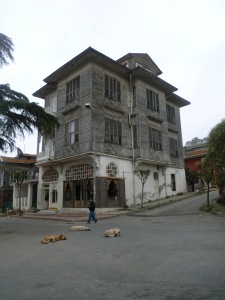
An abandoned house in Turkey
The story and family history are narrated in the present day as a middle age woman Fenia, arrives from Germany having been summoned by a family lawyer in Athens and told she has inherited a house from a grandfather she never met.
She decides to stay and do up the house and various knocks at the door lead her to meet two relatives, one bearing good wishes, the other hostility and through them she will fill in the gaps in their shared history.
And what is this Gold Letter – a beautiful gift imagined and designed by one son, that becomes an heirloom that will find its way into Fenia’s hands and connect the stories together.
I was a little skeptical when I began reading due to the clear prejudices of the characters, whether it was Greeks against Turks or the attitude of the men towards women and certainly the women in all these generations suffer greatly, those in the present day perhaps most of all. They were indicative of their time and sadly of reality in some lands where country borders have moved and changed over the years when not everyone can flee, yet they remember the violence and deaths of members of their families in the past, which continues to keep them separate and untrusting for generations.
“My girl, sometimes you meet your fate on the road you took to avoid it.”
 I was reminded of the wonderful novel about a friendship between two children in the same village, one of Greek and one of Turkish origin by Louis de Bernieres, Birds Without Wings, also a tragic love story, but one that combines the story of ordinary people’s lives in the 1930’s with a biography of the leader that will shift the balance of power in Turkey. One of my all time favourite books, exceptional.
I enjoyed reading The Gold Letter, covering three generations means there are many characters and connections to juggle so not much time is spent with some. That said, it’s clear the author is a gifted storyteller invested in her characters, whom I enjoyed following.
At times I felt almost like I was watching this on film, it’s an entertaining, episodic family drama of the old tradition, of couples trying to keep up family and cultural traditions as life modernises and social, political circumstances force change.
Lena Manta was born in Istanbul, Turkey, to Greek parents and moved to Greece at a very young age. She lives in Athens, has written 13 books and this is her second to be translated into English.
Buy a copy of The Gold Letter via Book Depository
N.B. This book was an ARC (Advance Reader Copy) kindly provided by the publisher via NetGalley.
 A Memoir of Finding Home Across the World
 Eventually she finds a way to navigate the two selves by turning the focus outward, towards helping others, addressing the ache of having had to suppress her true self for so long.
 Immediately removed from everything familiar, home, school, church and community, she is sent in disgrace to her father’s new household and ordered to never go outside or if there was company, to remain in silence upstairs.
 Maria in the Moon intrigued from the moment I looked at its beautiful cover and read the title, wondering what the significance of it was. This tender novel hooked me from its opening pages and never let go until I heard that chant ‘maria in the moon’ and understood.
 The story is set in Hull 2007, after their wettest summer on record, when 8,000 homes and 1,300 businesses were flooded.
 Maria in the Moon is one of those books you want to get back to every chance you can, it was gripping until the end, and even the quiet and mundane parts I found riveting. I loved going to work with Catherine and listening to her handling calls, the characters were well formed and contributed to a deeper understanding of the dynamics surrounding her, but also raised questions.
 A fascinating read, an insight into a unique way of life by women known as ‘haenyeo‘ on the coastal, volcanic island of Jeju, in South Korea and a well-researched, thought-provoking work of historical fiction.
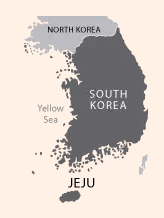 Though the islanders live a simple life, they suffer the consequence of being a resting place for occupying forces, initially when the story opens, it is the Japanese military who occupy the island and create a bad feeling.
 This mid-section of the novel is subsumed by the changing political situation and the dire effect on the local population, nearly all of whom lose members of their family. Young-Sook’s family suffer severe tragedy, creating a deep resentment, causing her to abandon her friendship with Mi-ja.
 French Literature
 Monsieur Pierre Chauveau (Julien’s great grandfather) gave a witness statement on 16 September 1954, describing what he had seen. His unusual testimony was classified by the police as follows:
 The four of them have various interesting encounters, Hubert with a long lost relative whose charred diary he finds in the apartment he left empty for 24 years, Julien meets the original Harry MacElhone, founder of the bar he works in and Magalie seeks out her now thirty-one-year old grandmother Odette.
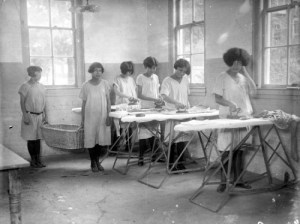
 While Ceremony was the coming of age of a young man set over a short period of time, Garden in the Dunes is more of a historical novel, set in the late 1800’s, tracing the lives of two native American sisters, Indigo and Sister Salt and at various times, their Grandmother and the newlywed white woman Hattie who provides refuge for Indigo for a period of time after she escapes the boarding school she has been imprisoned within.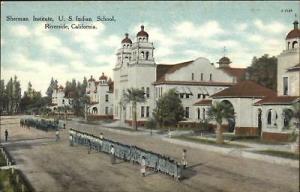

 “Nearly all human cultures plant gardens, and the garden itself has ancient religious connections. For a long time, I’ve been interested in pre-Christian European beliefs, and the pagan devotions to sacred groves of trees and sacred springs. My German translator gave me a fascinating book on the archaeology of Old Europe, and in it I discovered ancient artifacts that showed that the Old European cultures once revered snakes, just as we Pueblo Indian people still do. So I decided to take all these elements – orchids, gladiolus, ancient gardens, Victorian gardens, Native American gardens, Old European figures of Snake-bird Goddesses – and write a novel about two young sisters at the turn of the century.” – Leslie Marmon Silko, Gardens in the Dunes (1999)
 The Women’s Prize for Fiction 2019 winner was announced on June 5 and the prize this year went to American author Tayari Jones for her novel An American Marriage, published by One World, who brought us my favourite book of 2018
  Tayari Jones is the author of four novels, including Silver Sparrow, The Untelling, and Leaving Atlanta. The book was named as a favourite by both Oprah Winfrey and Barack Obama; Oprah is in talks to make it into a film.
 This novel La Tresse by Laetitia Colombani was a birthday gift from a friend, at the time I was given it, it wasn’t available in English, however it has since been translated and published in 2019, available under the title The Braid.
 I hesitated to read this for some time, just because it was in French, but I was pleasantly surprised by how easy it was to read and how little I had to look up new vocabulary. I enjoyed it when I did as I discovered new words and scribbled them in pencil in the margins. And then how I come across those words in the external world, resulting in me thinking I really would enjoy to read more of these works that are available in French but not yet in English.
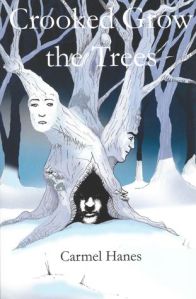 Crooked Grow the Trees is an engaging, insightful and well-informed read that I remain in awe of since I finished reading it. I bought it not long after an online group conversation on Goodreads with Carmel Hanes about Bernice L. McFadden’s

 It’s a captivating read, enriched by experience that succeeds in presenting multiple moral viewpoints, forcing the reader to indulge and reflect on all perspectives and attitudes in the various conflicts. The conversations with each of the boys and the situations they respond to are brilliantly depicted, the dilemma feels real, the reader desperately wants them to succeed in being transformed.
 Word by Word