
Booker Prize Longlist 2019 Announced

The longlist, or ‘Booker Dozen’, for the 2019 Booker Prize was announced on Tuesday 23 July.

The list of 13 books was selected by a panel of five judges: founder and director of Hay Festival Peter Florence (Chair); former fiction publisher and editor Liz Calder; novelist, essayist and filmmaker Xiaolu Guo; writer, broadcaster and former barrister Afua Hirsch; and concert pianist, conductor and composer Joanna MacGregor.

“If you only read one book this year, make a leap. Read all 13 of these. There are Nobel candidates and debutants on this list. There are no favourites; they are all credible winners. They imagine our world, familiar from news cycle disaster and grievance, with wild humour, deep insight and a keen humanity. These writers offer joy and hope. They celebrate the rich complexity of English as a global language. They are exacting, enlightening and entertaining. Really – read all of them.” Peter Florence

Featuring 8 women and 5 men with authors from the UK, Canada, Ireland, Nigeria, the United States, Mexico, Italy, India,  South Africa and Turkey, the nominated titles are:
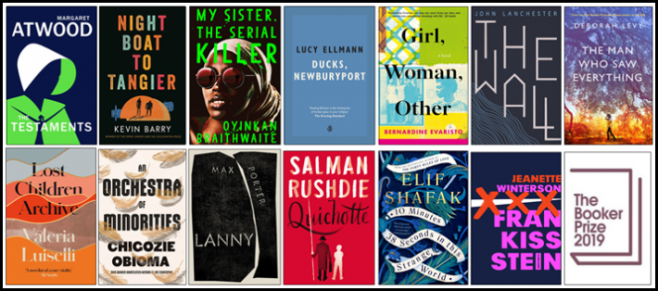
Margaret Atwood (Canada), The Testaments (Vintage, Chatto & Windus)

– the sequel to The Handmaid’s Tale, fifteen years later, as told by three female characters.

Kevin Barry (Ireland), Night Boat to Tangier (Canongate Books)

– sex, death, narcotics, sudden violence and old magic in a Spanish port town

Oyinkan Braithwaite (UK/Nigeria), My Sister, The Serial Killer (Atlantic Books)

– a blackly comic novel about how blood is thicker – and more difficult to get out of the carpet – than water.

Lucy Ellmann (USA/UK), Ducks, Newburyport (Galley Beggar Press)

– A scorching indictment of America’s barbarity, past and present, a lament for the way we are sleepwalking into environmental disaster.

Bernardine Evaristo (UK), Girl, Woman, Other (Hamish Hamilton)

– Generations of women, the people they have loved and unloved – the complexities of race, sex, gender, politics, friendship, love, fear and regret.

John Lanchester (UK), The Wall (Faber & Faber)

– a chilling fable, dystopian novel that blends the most compelling issues of our time—rising waters, rising fear, rising political division—into a suspenseful story of love, trust, and survival.

Deborah Levy (SouthAfrica/UK), The Man Who Saw Everything (Hamish Hamilton)

–  the difficulty of seeing ourselves and others clearly. Specters that come back to haunt old and new love, previous and current incarnations of Europe, conscious and unconscious transgressions, and real and imagined betrayals, while investigating the cyclic nature of history and its reinvention by people in power. And a man crossing Abbey Road.

Valeria Luiselli (Mexico/Italy), Lost Children Archive (4th Estate)

– inspired by the experiences of desperate children crossing the desert border between Mexico, New Mexico and Arizona, and the Apache warriors who made their last stand in the desert, told as a family sets off on a road trip.

Chigozie Obioma (Nigeria), An Orchestra of Minorities (Little Brown)

– contemporary twist on the Odyssey, narrated by the chi, or spirit of a young poultry farmer, a heart-wrenching epic about destiny and determination.

Max Porter (UK), Lanny (Faber & Faber)

– an experimental fantasy set in an English village where a child goes missing, highlighting societal issues, history and the environment.

Salman Rushdie (UK/India), Quichotte (Jonathan Cape)

– a tour-de-force that is both an homage to an immortal work of literature and a modern masterpiece about the quest for love and family, a dazzling Don Quixote for the modern age.

Elif Shafak (UK/Turkey), 10 Minutes 38 Seconds in This Strange World (Viking)

– After death, a woman’s brain remains active for 10 minutes 38 seconds, during which her memories recall significant moments of her life and stories of 5 close friends she met at key stages in her life.

Jeanette Winterson (UK), Frankissstein (Jonathan Cape)

– a young transgender doctor called Ry is falling in love – against their better judgement – with a celebrated professor leading the public debate around AI.  Alternating with chapters narrated by 19 year old Mary Shelley, who is writing a story about creating a non-biological life-form.

The list was chosen from 151 novels published in the UK or Ireland between 1 October 2018 and 30 September 2019. The shortlist will be announced Tuesday 3 September.

I like that it’s such an international list, with voices from a variety of different countries and cultures, bringing more depth and diversity to the prize.

I haven’t read any of these titles, but I’m interested in Chigozie Obioma’s An Orchestra of Minorities novel, Valeria Luiselli’s Lost Children Archive and Deborah Levy’s and Bernadine Evaristo’s novelsThat said, I’m only reading #WIT Women in Translation during August, so I’ll be watching and reading the reviews of these longlisted titles to see which really tempt me.

And you? Have you read any of these? Interested in any?

Further Reading

The Guardian article: Not Read Them Yet? A cheat’s guide

The Chalice and the Blade by Riane Eisler

Our History, Our Future

This is a book I’ve been fascinated by and slow reading over the past couple of months. Today, somewhat reluctantly, as it’s a large and in-depth work that can’t really be summarised, I decided I needed to write about it, especially as the sequel is due out and I’ve pre-ordered it, so I wanted to share my thoughts on this first. And because it’s brilliant and deserves a much wider readership.

Riane Eisler was born in Vienna, Austria. When she was a child she and her parents fled for their lives from the Nazis, first to Cuba and finally to the United States, thus she experienced three different cultures, each with their own version of truth and reality.

Very early in my life I saw that what people in different cultures consider given – just the way things are – is not the same everywhere. I also very early developed a passionate concern about the human situation.

She began to ask herself many questions:

Why do we hunt and persecute each other? Why is our world so full of man’s infamous inhumanity to man – and woman? How can humans be so brutal to their own kind? What is it that chronically tilts us toward cruelty rather than kindness, toward war rather than peace, toward destruction rather than actualization?

These and other questions lead her to re-examine the past, present and future, captured here in The Chalice and the Blade, looking at human history and pre-history and at both male and female aspects of humanity and in particular, those societies where the feminine aspect was revered.
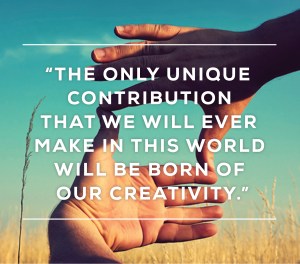
This work gave rise to what she termed:
– the dominator model (popularly referred to as patriarchy or matriarchy) – the ranking of one half of humanity over another and
– the partnership model  – based on the principle of linking, affiliation and cooperation

Her work further suggested that:

the original direction in the mainstream of our cultural evolution was toward partnership but that, following a period of chaos and almost total cultural disruption, there occurred a fundamental shift.

Hence the title The Chalice (the life-generating and nurturing powers of the universe – in our time symbolized by the ancient chalice or grail) and the Blade the power to take rather than give life that is the ultimate power to establish and enforce domination.

She reevaluates the past and present, sharing insights from research that has often been ignored or misinterpreted.

The chapters tell a story that begins thousands of years before our recorded (or written history). Of how the original partnership direction of Western culture veered off into a bloody 5,000 year dominator detour.

showing that our mounting global problems are in large part the logical consequences of a dominator model of social organisation and that there is another course which, as co-creators of our own future experience, is still ours to choose.

Both the mythical and archaeological evidence indicate that perhaps the most notable quality of the pre-dominator mind was its recognition of our oneness with all of nature,which lies at the heart of both Neolithic and the Cretan worship of the Goddess. Increasingly, the work of modern ecologists indicates that this earlier quality of mind, in our time often associated with some types of Eastern spirituality, was far advanced beyond today’s environmentally destructive ideology.

From the paleolithic, the neolithic, Old Europe, Goddess worship and the unique long lasting civilization of Crete to the invaders, the colonizers, warfare, slavery and sacrifice, we see the world and our reality through a different lens and yet once you’ve seen it, you recognize it, without realizing how it acts on us, in our homes, our workplaces, ours schools, institutions, governments.

It is so interesting to read this, originally written in 1987, over 30 years ago, in the context of our reality today. It provides a unique perspective on our history and analyzes it rigorously and yet in an easily understandable and accessible way, synthesizing information from a varieties of sources and disciplines to give us this helpful view of the influences that have been directing our progress (or lack of) suggesting the greater role that a more feminine (yin) collaborative, partnership approach might bring.

It is a seminal work in understanding the impact of repressing the positive characteristics of the feminine and demonstrating that a more partnership oriented model can reap rewards that benefit not just the individual, but the community. Despite the fact that our media is full of much doom and gloom, it is possible to look a little closer to home and see examples of people working in partnership and collaboration, of people leaving behind corporations and institutions and choosing ways of living and working that allow for greater creative expression.

She continues to ask questions, and these two that she mentions, seem fitting to what will follow:

Is a shift from a system leading to chronic wars,  social injustice, and ecological imbalance to one of peace, social justice and ecological balance a realistic possibility? Most important, what changes in social structure would make such a transformation possible?

Though this was written 30 years ago, there is a sequel due to be published in August 2019, in collaboration with peace anthropologist Douglas P. Fry Nurturing Our Humanity: How Domination and Partnership Shape Our Brains, Lives, and Future exploring how behaviors, values, and socio-economic institutions develop differently in these two environments, revealing connections between disturbing trends like climate change denial and regressions to strongman rule. It combines Eisler’s partnership-domination social scale with extensive evidence from neuroscience and other fields.
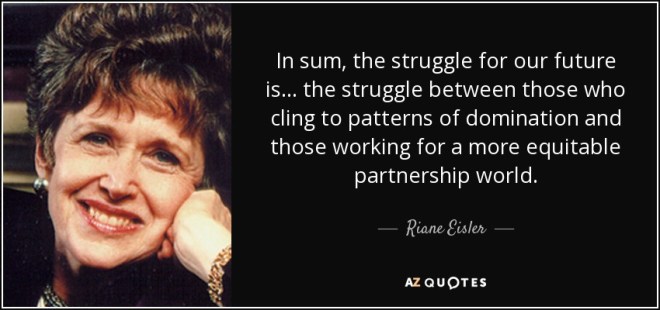
It shows that, contrary to popular beliefs about “selfish genes” driving human behavior, how people think and feel is heavily influenced by whether they grow up in partnership or domination oriented environments. It also documents that in reality humans in the course of evolution developed a propensity for empathy, caring, and creativity, which is, however, inhibited in domination systems. It further points to interventions that can accelerate the contemporary movement toward partnership and prevent further regressions to domination.

About the Author
Riane Eisler, JD, PhD (hon), is President of the Center for Partnership Studies, Editor-in-Chief of the Interdisciplinary Journal of Partnership Studies, internationally known as a systems scientist, cultural historian, pioneering attorney working for women’s and children’s human rights, and recipient of many awards. Her groundbreaking books include The Chalice and the Blade, Tomorrow’s Children, and The Real Wealth of Nations. She lectures worldwide, keynoting conferences, addressing the U.N. General Assembly, U.S. State Department, corporations, and universities. Her website is https://rianeeisler.com/.

The Gold Letter by Lena Manta (Greece) tr. Gail Holst-Warhaft

Destiny caresses the few, but molests the many.

Turkish Proverb

Greek and Turkish histories go back a long way, and I profess to knowing little about them, however it’s clear that whichever people you belong to there is likely to be a bias towards their stories, and it as likely that these populations are more mixed than they would like to believe, that there have been generations of cheerful intermingling, despite the differences that keep their identities separate.

The Gold Letter is a story of Greek families living in what was then known as Constantinople (later renamed as Istanbul, one of many name changes – The city was founded in 667 BC and named Byzantium by the Greeks ), and how the same twist of fate affects three generations of the same two families, where a young woman and a young man fall in love, only to have the union thwarted by their parents – in each generation it is for a different reason, beginning with them not being of the same wealth and social status, where marriage was more of a contract between families decided by the father’s.
He had married her not, of course, because he loved her, but because that was what her father had decided…Nobody thought of asking Kleoniki if she wanted to marry the grim Anargyros, with his rough hands and even rougher personality. Besides it was thought to be a very good marriage, since the groom was prosperous and an orphan.
“A big thing, that, my dear!” the matchmaker informed the girl. “Neither a mother-in-law in your face nor a father-in-law to boss you round. Lady and mistress of your own house!”

And in case they thought about falling into the temptations of forbidden love, there were frequent reminders of the sins of those who’d done so and had to flee, “discussed with horror and scorn in hushed voices at evening gatherings and tea parties”.

Even if some woman, deep down inside, understood the girl, she didn’t dare say so. Many romantic souls sighed secretly, calculating what a great love the girl must have felt to run off with her beloved, overlooking the fact that he was a Turk.

Though the son’s obey their fathers and the families are estranged, fate’s determined magnetism continues to bring  subsequent generations together.

He couldn’t shame his father; they hadn’t raised him that way. And the blood of the revolution didn’t run in his veins. He would have to bury his heart.

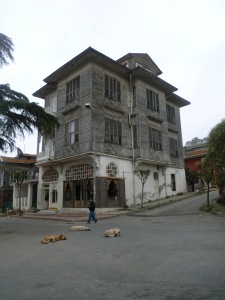
An abandoned house in Turkey

The story and family history are narrated in the present day as a middle age woman Fenia, arrives from Germany having been summoned by a family lawyer in Athens and told she has inherited a house from a grandfather she never met.

She decides to stay and do up the house and various knocks at the door lead her to meet two relatives, one bearing good wishes, the other hostility and through them she will fill in the gaps in their shared history.

And what is this Gold Letter – a beautiful gift imagined and designed by one son, that becomes an heirloom that will find its way into Fenia’s hands and connect the stories together.

I was a little skeptical when I began reading due to the clear prejudices of the characters, whether it was Greeks against Turks or the attitude of the men towards women and certainly the women in all these generations suffer greatly, those in the present day perhaps most of all. They were indicative of their time and sadly of  reality in some lands where country borders have moved and changed over the years when not everyone can flee, yet they remember the violence and deaths of members of their families in the past, which continues to keep them separate and untrusting for generations.

“My girl, sometimes you meet your fate on the road you took to avoid it.”

I was reminded of the wonderful novel about a friendship between two children in the same village, one of Greek and one of Turkish origin by Louis de Bernieres, Birds Without Wings, also a tragic love story, but one that combines the story of ordinary people’s lives in the 1930’s with a biography of the leader that will shift the balance of power in Turkey. One of my all time favourite books, exceptional.

I enjoyed reading The Gold Letter, covering three generations means there are many characters and connections to juggle so not much time is spent with some. That said, it’s clear the author is a gifted storyteller invested in her characters, whom I enjoyed following.

At times I felt almost like I was watching this on film, it’s an entertaining, episodic family drama of the old tradition, of couples trying to keep up family and cultural traditions as life modernises and social, political circumstances force change.

Lena Manta was born in Istanbul, Turkey, to Greek parents and moved to Greece at a very young age. She lives in Athens, has written 13 books and this is her second to be translated into English.

Buy a copy of The Gold Letter via Book Depository

N.B. This book was an ARC (Advance Reader Copy) kindly provided by the publisher via NetGalley.

Never Stop Walking by Christina Rickardsson tr. Tara F. Chace

A Memoir of Finding Home Across the World

Living in Sweden and remembering nothing of her native language Portugese that she spoke until she was adopted at the age of eight, Christina Rickardsson, now 32-years-old is about to embark on her first trip back to the country of her birth to reconnect with elements of that initial period in her life, vividly recalled.

Recurring nightmares of her childhood awaken something in her sub-conscious, creating an emotional/ spiritual crisis that she addresses by revisiting .

I watched my eyes fill with tears as I realized that the little girl who had run for her life had just kept on running. I needed to stop running and once and for all, for my own sake, process what had happened.

A dual narrative flips between the present as she returns to Sao Paulo with her friend Rivia, who will act as her translator and the past where she shares the vivid memories and equally strong emotions of her early childhood years.

She reviews the adoption papers that have been locked in a safe for the past 24 years.

I’ve never felt the need to find out who I am, where I come from, or why I was abandoned. I know who I am, where I come from; most of all I know that I wasn’t abandoned. Kidnapping might be too strong a word to use for how our adoption transpired, but sometimes that’s what it felt like.

Some of the things she reads disturb her because they don’t ring true, she retains strong and tender feelings of love towards her biological mother and recalls the trauma of their separation but has never understood why. Her story is written in a desire to restore her mother’s name and tell their truth as she remembers it, to fill in the gaps in her knowledge and find out if her mother is still alive.

She recalls details of living in a forest cave in the Brazilian wilderness with her mother, of surviving on the streets of Sao Paulo and her time in an orphanage before she and her almost 2-year-old brother are adopted by a Swedish couple and begin a new life there.

Map from traditional symbols of culture and the nature of Brazil

She recalls her friendships with other children when they live in the streets, special moments, terrifying incidents and the strong emotions they evoke are equally remembered, her instinct for self-preservation is strong and her reactions to things spill over into her new life in Sweden, where they are often deemed inappropriate.

On some level, I began to understand that people, especially grown-ups, weren’t interested in the truth but rather in a truth that suited them. They only wanted to know about things that made stuff easier for them. It didn’t matter that I was walling off part of myself, that I was turning into someone else.

The relationship she remembers with her mother from childhood is tender, the bond strong, she defends it, and holds tight to the memories. There is a respectful appreciation for her Swedish family and clearly a difference between her feelings and those of her brother, who recalls little of his life in Brazil before their adoption.

There’s an undercurrent of sadness in this accomplished memoir, of a woman who is neither one thing nor the other, who can never let got of who she is, but must continue to live as that whom she has become.

She repeats often a kind of mantra, that life for her is not about finding herself, but about creating herself. And yet the two go hand in hand, as her story so adeptly shows, though she was separated from her mother, her country and culture, she lived in it long enough for something of it to have sunk deep into her psyche, which is not the case for children adopted at birth, or as toddlers. Many search to find out what she already knew, before they can freely go on to ‘create’ themselves anew, or to realise that they can be who they are, because they can make peace with the mystery of their unknown heritage.

I felt so much rage growing up that it frightened me. It filled me and destroyed me. I felt it, but I didn’t know how to handle it, so I smiled and laughed even more and did well in school…I had walled off my true self.

Eventually she finds a way to navigate the two selves by turning the focus outward, towards helping others, addressing the ache of having had to suppress her true self for so long.

She shares one of the more troubling stories of her childhood in a 15 minute TED Talk below and the inspiration behind the words in the title, Never Stop Walking.

Further Reading/Listening

Christina’s TEDTalk : The Lottery of Life

Article, 25 Oct 2018 Humaniam.org : Children, the main victims of violence and crime in Brazil

Buy a Copy of Never Stop Stop Walking via Book Depository

Without a Map, a Memoir by Meredith Hall

In 1965, in a New Hampshire town, Meredy, the 16-year-old daughter of a family raised by a mother trying to keep up appearances after her self-obsessed husband abandons them, (and later berates them for not being happy at his subsequent new marriage) discovers she is pregnant.

It is a threshold era, both locally, (Hampton Beach riots) in the US, (war in Vietnam) and in her life, it is a time when everyone in her family is moving on, leaving her open and vulnerable to the events that lead to her predicament.

I feel the swelling energy, the inexplicable, restless hunger, rising in my own innocent life. I don’t care at all about the music or the drinking or the gathering together of teenagers for fun and the thrill of belonging. But my father is gone. He has a new life, a new wife and daughter, and never calls or visits. I miss him badly. My mother is inaccessible. My older brother and sister have moved on to their own lives, leaving me alone at home and on the beach while my mother works and plays with Peter.

Immediately removed from everything familiar, home, school, church and community, she is sent in disgrace to her father’s new household and ordered to never go outside or if there was company, to remain in silence upstairs.

It is true that my shunning was a message from our community to my mother. Her rejection of me was a measure of the humiliation she felt. She believed until her death that I caused her to lose her friends and her stature in the town.

Passing the long weeks of her pregnancy confined in this way, she eventually gives birth, her baby boy is removed from her, adopted out and she is sent to a boarding school for young people perceived as misfits (where she is forbidden to speak of the reason she has been sent there) to finish her education.

“We must protect the girls,” Mrs. Kroehne said. “You understand.” I do understand. I am a contaminant and must be kept silent. It has been three months since my baby was born, three months since I walked away from my baby with milk dripping from my breasts. I will not say this to any of these young people during my time among them. I will construct careful lies and memorize them to explain myself, my dark inward life, my hunger for love, my tough resistance to trust.

Meredith goes through the many stages of grief, for the loss of her baby, her adolescence and so much more, initially doing what is expected, then rejecting everyone, traumatized by the experience to the point of becoming reckless with her own life.

Mourning with no end, and a sense that I had lost everything – my child, my mother’s love and protection, my father’s love and protection, the life I had once imagined for myself – hollowed me out. I floated every day alone and disconnected, and could not find comfort or release. I understood clearly that my history had harmed me, had cut me off from the normal connections between people. Every day for five years I had been afraid of this disconnection, feeling the possibility of perfect detachment within my reach, like a river running alongside, inviting me to step into its current.

Incredibly, if not quite overcoming it, she does survive her own casting out to return and among other things pen this moving, honest, brave memoir.  It is an important story and chance to be heard, of a young mother forced to abandon her baby, like so many who are rarely given any kind of emotional support, who have been shunned, shamed and silenced.

Meredith Hall will eventually rise up out of her own misery, gift herself the development of her creative writing skills, ultimately to be able to help others write their stories and to publish this important one, her own.

This is the first time I’ve read an account of a birth mother’s story, so many of these stories never get told due to the shame they have endured and the distance they have put between their past, their attempt to live a new life which buried those experiences deep and the fear of confronting any of it.

It is courageous that Meredith Hall has pushed through that to share the reality of this traumatic experience from her perspective. There are gaps in the story, there are those who have been spared the lens of scrutiny, but there is enough here to to allow readers to feel empathy for the situation and understand the fear some have in overcoming the same, the conditions under which they must live out their entire lives, often never revealing the secret, never able to connect with the innocent child who grows up understanding nothing of the loss they too feel, until an age when they’re often told to be grateful for what they’ve been supposedly gifted.

It has just been discovered that women carry fetal cells from all the babies they have carried. Crossing the defensive boundaries of our immune system and mixing with our own cells, the fetal cells circulate in the mother’s bloodstream for decades after each birth. The body does not tolerate foreign cells, which trigger illness and rejection. But a mother’s body incorporates into her own the cells of her children as if they recognize each other, belong to each other. This fantastic melding of two selves, mother and child, is called human microchimerism. My three children are carried in my bloodstream still….

How did we not know this? How can this be a surprise?

Click here to Buy a Copy of Without a Map via Book Depository

Related Reviews

An Affair With My Mother by Catriona Palmer

A Long Way Home (Lion) by Saroo Brierley

Maria in the Moon by Louise Beech

Maria in the Moon intrigued from the moment I looked at its beautiful cover and read the title, wondering what the significance of it was. This tender novel hooked me from its opening pages and never let go until I heard that chant ‘maria in the moon’ and understood.

We meet Catherine-Maria as she is recalling her beloved Nanny Eve who chose her name and used to call her in a sing-song voice, we read about the Virgin Mary statue passed down from mother to daughter, and become aware of a memory block in childhood.

But one day she stopped singing.
She stopped calling me the long, pretty name she’d chosen when I arrived.
I try now to remember why, but I just can’t.
I think it was winter; I think the sun no longer had the strength to kiss our heads.
I know I’d accidentally smashed the Virgin Mary.

Something stopped all the singing in their house and when she tries to remember all she sees are the shattered porcelain pieces of Pure Mary spread across the floor.

The story is set in Hull 2007, after their wettest summer on record, when 8,000 homes and 1,300 businesses were flooded.

Catherine has had to move out of her home into temporary accommodation and decides to volunteer at the local Flood Crisis helpline, an occupation she already has experience in. Here she remembers her first call at a Crisis Centre.

I’d learned well on the course; I was non-judgemental, patient, gentle. My first caller was a fifty-year-old man who’d been married for thirty years, but had always been desperately in love with his friend Jim.
‘What should I do?’ he’d asked.
It wasn’t for me to tell him, only to listen, ask the right questions, and let him figure out his own feelings. I was shaking when the call ended but felt empowered.

Going to work at the Flood Crisis Centre, taking calls and getting to know others who volunteer to do this kind of work through this novel was fascinating and felt real, it reminded me of reading Eleanor Oliphant and her work environment and interactions, there is a similar feeling of closeness to the characters and an awareness of the character’s underlying solitude, as expressed in this quote from Olivia Laing’s book, The Lonely City:

“…loneliness is hallmarked by an intense desire to bring the experience to a close; something which cannot be achieved by getting out more, but only by developing intimate connections. This is far easier said than done, especially for people whose loneliness arises from a state of loss or exile or prejudice, who have reason to fear or mistrust as well as long for the society of others.”

Her first shift at the Flood Crisis Helpline runs smoothly, and she begins to develop a close connection with her mentor Christopher, however something about this new experience triggers an awakening of her childhood memories, and more disturbingly brings back a recurring dream.

Over the weeks that follow, from the Sunday lunches with her extended family, her conversations with work colleagues and her flatmate Fern, she gains clarity around her own personal mystery and in a dramatic denouement confronts her past and puts a few ghosts plaguing her mind to rest.

Maria in the Moon is one of those books you want to get back to every chance you can, it was gripping until the end, and even the quiet and mundane parts I found riveting. I loved going to work with Catherine and listening to her handling calls, the characters were well formed and contributed to a deeper understanding of the dynamics surrounding her, but also raised questions.

There came a time – and I’m not sure when it was – that I fell out of love with her. Maybe it was after Dad died. She changed. But so did I. Where she had treated me well (but a little coolly) during his lifetime, she now grew impatient, was less willing to talk. Perhaps it was during my forgotten ninth year that I stopped trying to please her and no longer wanted to copy her elegant style. Instead, I did all I could do to oppose and annoy and argue.

I wanted to know more, to ask her how she coped growing up without knowing her Mum, her attachment to Mother (stepmother); there’s an unselfish compassion within her, masking the ache of losing both parents at a young age and her response to it is to stay close to the family she’s been left with, despite the friction, claiming it as her own.

With Louise Beech, there is always depth, there are layers to unfold, there are stories beneath stories. I have my own personal story of a mystical experience while reading her debut novel How to Be Brave (review linked below) and I learned that Maria in the Moon has also inspired a story song, created by singer Carrie Martin, you can read more about its creative inspiration here at Louise Beech – Making Magic With Words.

What more can I say, I’ll read everything Louise Beech writes, she’s entertaining and an inspiring author who writes from the heart and one who’s open to the magic and the mystical.

Buy a Copy of One of Louise Beech’s novels here

Further Reading

My review of her debut novel How To Be Brave

My review of her second novel The Mountain in My Shoe

The Island of Sea Women by Lisa See

A fascinating read, an insight into a unique way of life by women known as ‘haenyeo‘ on the coastal, volcanic island of Jeju, in South Korea and a well-researched, thought-provoking work of historical fiction.
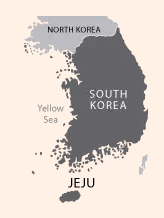
The novel is structured into chapters of time periods in four parts (Part 1 Friendship 1938, Part II Love 1944-1946, Part III Fear 1947-1949, Part IV Blame 1961), interspersed with chapters that cover four days in 2008, when a family of four from America come to Jeju Island and encounter a now aged Young-Sook, asking questions she turns away from.

The story follows the life of an elder daughter Young-sook, whose mother is the chief of their local collective of ‘haenyeo‘, women divers who harvest seafood (sea cucumber, urchins, abalone, octopus) all year round from the sea floor; they can stay underwater for sustained periods of time without breathing apparatus, wearing cotton garments that don’t protect them from the cold yet they don’t suffer hypothermia. As they rise to the surface, they emit a whistling noise ‘sumbisori’ an ancient technique to expel carbon dioxide from the lungs while also letting the other women know where they are.

The biggest risk is inattention, whether it’s abalone clamping down on a knife or a dangerous current sweeping them away (thus they always work in pairs). Before they enter the sea and when they return to land, they huddle around a fire in a seafront, stone enclosure called a ‘bulteok‘, share information, gossip, give advice and receive orders before going into the sea. Bulteok function as spaces for community life, changing of clothes by haenyeo, protection from weather, work activities such as repairs and storing their catch between dives and training.

In the 1960s, at their apex, there were 23,000 haenyeo women on Jeju, according to the island’s Haenyeo Museum. But now, only 4,300 haenyeo remain; many experts believe this generation will be the last, as young people flee to cities and pollution destroys the haenyeo’s place of work: the fragile aquatic ecosystem of the Strait. As of 2017, Jeju was home to only 67 haenyeo under the age of 50. In 2016, UNESCO awarded the divers a Cultural Heritage of Humanity designation.

A Typical Stone Bulteok Enclosure

They practice a form of Shamanism paying their respects to a Goddess, who helps them hold their breath and keeps them safe from danger. At certain times of the year, they hold ceremonies in honour of the goddess of the winds, launching mini straw boats out to sea, making sacrificial gifts of rice and other foods.

Although the Japanese had outlawed Shamanism, Shaman Kim, our spiritual leader and guide, our divine wise one, continued to perform funerals and rites for lost souls in secret. She was known to hold rituals to for grandmothers when their eyesight began to fade, mothers whose sons were in the military, and women who had bad luck, such as three pigs dying in a row. She was our conduit between the human world and the spirit world. She had the ability to go into trances to speak to the dead or missing, and then transmit their messages to friends, family, and even enemies.

Though the islanders live a simple life, they suffer the consequence of being a resting place for occupying forces, initially when the story opens, it is the Japanese military who occupy the island and create a bad feeling.

Young-sook’s best friend Mi-ja is an orphan, her mother died in childbirth and her father was believed to be a collaborator because he worked for the Japanese. She suffers from ‘guilt by association’, the villagers say she will be unlikely to find a good match in marriage despite her good looks. Young-sook’s mother teaches her to become a ‘haenyeo‘ and the two girls become firm friends.

A matrifocal society, it is the women/mothers who are the head of the household, who go to work, to sea, and the men who stay with the children and look after the home, or in some cases leave for the mainland to do factory work. When the girls are around 20 years old (in the 1940’s), they do ‘leaving-home water-work’ off the coast of Vladivostock. Apart from moving to Japan to do factory work, the only other legitimate way to leave the island was to work as haenyeo, diving from boats in other countries. The girls left for nine months at a time. They signed a contract for five years work.

During that time, the world – and not just our island – was shaken. For decades Japan had been a stable – if wholly hated – power on Jeju.

Back on their island, men and boys were being rounded up and conscripted into the Japanese army, sometimes without being given the chance to notify their families. At the end of WWII the Japanese occupying forces are replaced by American forces, and the country conducts it’s own elections, but people are preventing from voting and the incoming political party is mistrusting and treats people badly. Guilt by association leads them to kill indiscriminately, to burn villages, thus people leave in fear. The occupying forces don’t intervene.

This mid-section of the novel is subsumed by the changing political situation and the dire effect on the local population, nearly all of whom lose members of their family. Young-Sook’s family suffer severe tragedy, creating a deep resentment, causing her to abandon her friendship with Mi-ja.

We know that Mi-ja has an unhappy marriage, that she has one son, but with Young-sook’s unforgiving distance from her friend, the narrative around her life is full of gaps, we are witness only to Young-sook’s view, Mi-ja’s story is pieced together in patches until the end.

Rich in detail of the past and of the lives of Young-sook’s family, the story challenges the protagonist and the reader through the revelations of the interspersed four day narrative, when Clara, the young American great-grand-daughter of Mi-ja seeks out Young-sook. These short chapters drip feed the reader with insights into Mi-ja’s family after she left Jeju and bring the story to it’s thought-provoking conclusion.

It’s is a heart-breaking story of island women maintaining a unique tradition and way of life that has made them into unique humans, able to sustain the sea elements like no other and it is also a story of islanders at the mercy of inhumane political and military powers and policies, punished for expressing their opposition, for any form of protest and implicating everyone in their families if they do. It is a wonderful discovery and celebration of female partnership, collaboration and spiritual practice that has survived despite many setbacks, and a lesson in the necessity of forgiveness, and the sad consequence of stubbornly refusing it.

“To understand everything is to forgive.”

Highly Recommended.

 Further Information:

Haenyeo – a day in the life of a 12 year old Korean girl, learning to dive as a haenyeo on the island of Jeju.

Buy a Copy of The Island of Sea Women by Lisa See

via BookDepository

Vintage 1954 by Antoine Laurain tr. Jane Aitken, Emily Boyce

French Literature

Another satisfying light read full of laughs from Antoine Laurain. It’s so rare that a book actually makes me laugh out loud, but this one did, quite a few times.

It’s far-fetched, but knowing he writes an uplifting tale and creates such fun characters makes me want to read everything he writes.

Here, its 2017 and we meet a Parisian man named Hubert who lives in a building that has been in his family for generations, though now he owns only the apartment he lives in. His wife and daughters are away, he had just attended the management committee meeting for residents and on entering his cellar afterwards discovered a dusty 1954 Vintage Beaujolais.

Accidentally locking himself in, he is rescued by Bob from Milwaukee, who’s rented Madame Renaud’s apartment on AirBnB, an activity forbidden by the committee (say you’re the American cousin if anyone asks) so in a gesture of appreciation Hubert invites Bob and two tenants Julien (a cocktail waiter at Harry’s Bar) and Magalie (a restorer of antique ceramics) to join him to open the bottle.

1954 was a special year and the novel has already taken us to the Saint Antoine vineyards in the Beaujolais wine region, just north of Lyon where the grapes may have been infused with a touch of magic from a low flying unidentified object.

Monsieur Pierre Chauveau (Julien’s great grandfather) gave a witness statement on 16 September 1954, describing what he had seen. His unusual testimony was classified by the police as follows:

Report of an unidentified flying object by one Pierre Chauveau, a wine grower residing in Charmally-les-Vignes.

Though mocked locally, the police weren’t as surprised, by the end of 1954 more than 1,000 witness statements and over 500 reports of UFO sightings had been received by the police across the country. No explanation for this phenomenon was ever found and gradually the number of reported sightings fell back to normal levels – between fifty and one hundred a year.

One evening shortly after, he consumed a bottle of the 1954 Beaujolais, gave some to his dog (as was his habit), went out for a walk and they were never seen again.

The morning after the four in Paris drink the vintage wine, they wake up in 1954.

Hubert loosened his tie and walked rapidly back home, trying as best he could to make sense of the morning’s events. Unless it was a dream, Salvador Dalí was staying at the Hotel Meurice, all the buses were vintage, street sellers had reverted to using hand-drawn carts and the large moustachioed man surveying his building work whom he’d greeted as he left this morning was none other than Monsieur Bouvuer himself, the founder of the charcuterie of that name. The charcuterie that had opened in 1954. Hubert stopped. 1954. The same year as the wine.

As they head out into their day, we too are taken back in time and see the city and people’s habits as they were back in the 1950’s. Bob, who had never been to Paris took the longest time to realise he was no longer in 2017.

The four of them have various interesting encounters, Hubert with a long lost relative whose charred diary he finds in the apartment he left empty for 24 years, Julien meets the original Harry MacElhone, founder of the bar he works in and Magalie seeks out her now thirty-one-year old grandmother Odette.

They meet up at Harry’s to discuss their situation and to come up with a plan on how to get themselves back to their present, which will lead them on another adventure to the wine region of Beaujolais.

It’s an entertaining ride, as they journey across old Paris bringing back to life a few memorable characters and places in Paris of a bygone era.

Along the way, we encounter Jean Gabin, Edith Piaf, Salvador Dali, Robert Doisneau, Marcel Aymé, Jacques Prévert, Hubert de Givenchy, Audrey Hepburn, François Truffaut, Claude Chabrol, Jean-Luc Godard, the duke of Windsor and the infamous Scotsman of the winebar where the Bloody Mary was said to be invented, Harry MacElhone.

In a blog post Millésime 54 Antoine Laurain briefly mentions that readers will come across these characters in his book and if you click through you’ll see a collection of portraits of some of them.

Le Baiser de l’hotel de ville (The Kiss), 1950
© Robert Doisneau

These encounters reminded me of Woody Allen’s film Midnight in Paris, except here, Antoine Laurain pays tribute to more renowned French celebrity characters of Paris, and its the 1950’s not the 1920’s, inviting the reader to discover who they were and where they used to hang out.

In an interview, Laurain explained that the idea of writing a story where his characters travelled back to the 1950’s came to him long ago, before he wrote The President’s Hat. He adored the work of Doisneau and Brassaï, but he needed a way to bring them back to era. The wine became the way and that surge in UFO sightings that actually occurred in 1954, his point of departure.

Vintage 1954 is an invitation to the reader’s imagination to join Laurain’s adventure in 50’s Paris, to discover the vineyards of the Beaujolais region, and is as pleasurable, if not more than the wine itself.

A full-bodied, sweet novella, with depth, elegance, it is expressive, connected, ultimately one of finesse.

Further Reading

Interview Q&A with Antoine Laurain by Gallic Books – Wine and time travel with Antoine Laurain

The Book Trail Vintage 1954 – a few of the book locations in Paris mapped out with explanations (also links to locations in his previous books)

The President’s Hat (reviewed here)

The Red Notebook (reviewed here)

Smoking Kills (reviewed here)

Buy a Copy of Vintage 1954 via Book Depository

Gardens in the Dunes by Leslie Marmon Silko

2019 is becoming my year of reading Silko, this now is the second novel I’ve read after Ceremony and I loved it as much, in some ways perhaps more, given the journey it takes the reader on. It follows on from two other books I read, reviews linked here, her excellent memoir The Turquoise Ledge and a slim collection of letters between Silko and the Pulitzer prize winning poet James Wright, The Delicacy and Strength of Lace.

While Ceremony was the coming of age of a young man set over a short period of time, Garden in the Dunes is more of a historical novel, set in the late 1800’s, tracing the lives of two native American sisters, Indigo and Sister Salt and at various times, their Grandmother and the newlywed white woman Hattie who provides refuge for Indigo for a period of time after she escapes the boarding school she has been imprisoned within.
Hattie and her husband Edward take Indigo with them to Europe for the summer, where she experiences differences in their way of life, but also finds something in the old world that she connects with. Archeological art in Bath, sculptures in a garden in Lucca from pre-Christian Europe create a link with American Indian symbolism through Indigo’s observations and experiences.

Along the way, as she had learned in the dunes, she collects seeds (the old ways) and flower bulbs (a new interest) for replanting when she returns home. She represents the connection to the past and also the future, learning new skills that will improve, add to their lifestyle.

Silko traces the transcultural histories and significances of sacred snakes and their feminine symbolism, unsurprising given her own close relationship to those that dwell beneath her own home in Tuscon. The final scene in the novel is fittingly given over to the return of a snake, a lasting metaphoric image of generational continuance and survival.

The novel rests in numerous locations where the girls live and must adapt, but their spiritual home and the place they always wish to return to, the place where their Sand Lizard people come from are the gardens in the dunes, inland from the river, where there is a natural spring and if enough rain, plentiful opportunity to grow what they need to survive.

Sister Salt remembers everything. The morning the soldiers  and the Indian police came to arrest the Messiah, Grandma Fleet told Sister Salt to run. Run! Run get your little sister! You girls go back to the old gardens! Sister Salt was big and strong. She carried Indigo piggyback whenever her little sister got tired. Indigo doesn’t remember much about that morning except for the shouts and screams.

When the girls are with their Grandmother and return to the gardens they have a purpose, they learn when and how to plant, to prepare food, to stock it, to identify edible plants, they are natural foragers. When they are removed from their natural home, they have to find other ways to survive.

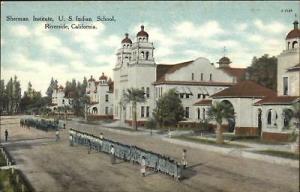
Sherman Institute, Riverside, California

At times it has been necessary to flee, when there is insufficient rain or when pursued by authorities, who effectively kidnap Indian children, separating them from their families and way of life to put them into institutions, forcing another form of education on them, removing their connection to their culture.

The authorities judged Sister Salt to be too much older than the others to be sent away to Indian boarding school. There was hope the little ones might be educated away from their blankets. But this one? Chances were she’d be a troublemaker and might urge the young ones to attempt escape. Orders were for Sister Salt to remain in custody of the Indian agency at Parker while Indigo was sent to the Sherman Institute in Riverside, California.

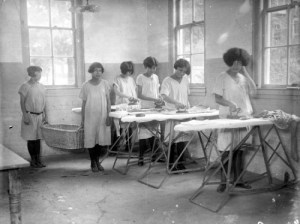
American Indian Girls in a state run Laundry

Sister Salt is sent to work in an Indian laundry in the vicinity of water dam projects of the Southwest; she and twin sisters she befriends decide to set up their own laundry service, living near one of the dam construction sites, becoming knowledgeable of the needs of the men working there, finding protection and collaboration with the chef Big Candy, the girls surviving together, supporting each other.

Throughout the novel, the men are involved in moneymaking projects, whether it’s Edward collecting orchid samples, his companions seeking rubber plant specimens, the men at the dam with their side interests in illegal gambling, brewing beer and the laundry.

The dam project diverted water to Los Angeles and made Indian lands less productive, initially it provided employment, but slowly the people realise what it is taking away from them, their land, their homes, their riverside livelihoods. Those with profit making motives have little or no concern for the destruction and loss caused in their wake. But they too risk falling victim to their own kind, Silko doesn’t miss the opportunity to make them suffer the consequences of their own greed.

Most native tribes did not adhere to the European view of land as property. For most Indians, land was communal, and its resources were to be protected and shared. This was in direct contradiction to European notions of land as individual property.

Ancient Minoan Snake Goddess

It’s far-reaching in its geographic span and themes, which through adept storytelling are repeated via the behaviours of characters. Women stick together, collaborate, survive and when not separated from each other, begin to thrive, though they remain wary of those from other tribes or cultures. Exploitation, greed and corruption are everywhere, interfering in the way people try to live their lives, imposing their ways, trying to keep people(s) separate or making them conform to a perceived way of being.

Indigo never loses the essence of who she is, despite being groomed and dressed like a white American to accompany Hattie and her prospector/explorer husband and being taken far away to Europe, her heart is like a magnet, she never ceases thinking of her intention to find her sister and mother.

Fortunately, Hattie is a sensitive and intelligent woman, who though the child brings out a maternal response and desire, promises to help her find them when they return. Hattie’s father was a free thinker who encouraged her higher education giving her access to libraries of friends to pursue her studies. She is sympathetic to their ways, but will also confront barriers when trying to cross over in her efforts to support them.

It’s a brilliant depiction of so many issues around origins and identity and the ways people survive and thrive, in particular women. We witness their attempts, how they are thwarted, see them compromise and discover that being with other women provides them with a force, even when they are from different tribes or cultures, sometimes that is a necessary element to their survival, to learn from other women, from other experiences, to share what they know.

Despite being a relatively long read (477 pages), it felt like it could have gone on, some threads leave the reader wondering what happened next, endings come about a little quickly. It could easily have been more than one book.

The final page and the closing sentences are beautifully given over to nature, to a demonstration that though we may grieve at what is passing, nature will always ensure that new life prevails, that something will survive from the ruin. That hope can manifest, though it may not be what we expect.

“Nearly all human cultures plant gardens, and the garden itself has ancient religious connections. For a long time, I’ve been interested in pre-Christian European beliefs, and the pagan devotions to sacred groves of trees and sacred springs. My German translator gave me a fascinating book on the archaeology of Old Europe, and in it I discovered ancient artifacts that showed that the Old European cultures once revered snakes, just as we Pueblo Indian people still do. So I decided to take all these elements – orchids, gladiolus, ancient gardens, Victorian gardens, Native American gardens, Old European figures of Snake-bird Goddesses – and write a novel about two young sisters at the turn of the century.” – Leslie Marmon Silko, Gardens in the Dunes (1999)

“I suppose at the core of my writing is the attempt to identify what it is to be a half- breed or mixed-blooded person; what it is to grow up neither white nor fully traditional Indian. It is for this reason that I hesitate to say that I am representative of Indian poets or Indian people. I am only one human being, one Laguna woman.”  – Leslie Marmon Silko, Laguna Woman (1974)

Buy a Copy of Gardens in the Dunes via Book Depository

Women’s Prize for Fiction Winner 2019 – An American Marriage by Tayari Jones

The Women’s Prize for Fiction 2019 winner was announced on June 5 and the prize this year went to American author Tayari Jones for her novel An American Marriage, published by One World, who brought us my favourite book of 2018 Kintu by Ugandan author Jennifer Nansubuga Makumbi.  Renowned for publishing:

“emotionally engaging stories with strong narratives and distinctive voices. In addition to being beautifully written, our novels introduce the reader to a different culture or an interesting historical period/event, and deeply explore the human condition in all its vagaries. We aim to publish novels that matter, that stay with you long after the last page is turned”

Professor Kate Williams, Chair of Judges, said:

“This is an exquisitely intimate portrait of a marriage shattered by racial injustice. It is a story of love, loss and loyalty, the resilience of the human spirit painted on a big political canvas – that shines a light on today’s America. We all loved this brilliant book.”

Tayari Jones is the author of four novels, including Silver Sparrow, The Untelling, and Leaving Atlanta. The book was named as a favourite by both Oprah Winfrey and Barack Obama; Oprah is in talks to make it into a film.

An American Marriage examines a wrongfully incarcerated man and examines how he, his wife, and their families deal with the fallout. The premise made me remember reading James Baldwin’s If Beale Street Could Talk earlier this year, a novella that explores a similar situation and was also released as a film in 2019.

Asked about what inspired her to write the novel, Tayari Jones mentions overhearing a couple talking. Intrigued by the complexity and intensity of their conversation and the issues it raised, she went home and began to write what would become this award wining novel.

I was in a shopping mall, and I heard a couple arguing. They were in love and in trouble. She said, “Roy you know you wouldn’t have waited on me for seven years.”  And he shot back, “This wouldn’t have happened to you in the first place.”

While in London, Tayari Jones also shared four books that impacted her as a writer and as a reader.

  • Patricia Highsmith’s Stranger on a Train – a book that taught her that you do not have to sacrifice great writing for a great plot. Highsmith can take the murder plot, turn it on its head, break your heart, mend it again and leave you wanting more.
  • The Oddyssey by Homer – a complicated epic tale she first encountered in a children’s version, reacquainted with and brought vividly to life more recently in Emily Wilson’s new translation, a story that closely influenced her novel.
  • Things Fall Apart by Chinua Achebe – at 13 she lived in Zaria, in the north of Nigeria and studied this classic novella in her literature class, the first time she’d seen a book contextualize an entire group of people. It provided an understanding of history and of literature and its way of explaining to us who we were. The iconic characters, she has never forgotten, nor the effect they had on every person in the class.
  • Toni Morrison’s The Beloved – “the Queen of letters” this novel is simply put the greatest novel of my lifetime, this book explained the way the past influences the future. Our stories are a generational legacy, a story of how to integrate our past into a deeper understanding of who we are. I think of my life as before and after Beloved. Beloved contextualized me as a Black American. It taught me how literature can explain our modern world to ourselves.

Have you read An American Marriage or any of the books Tayari Jones is inspired by?

Buy a Copy of An American Marriage via Book Depository