
Brian Moore at 100
Lies of Silence was the January read for the Brian Moore at 100 year long read along hosted by Cathy at 746 Books, which I introduced and will link my reviews back to here. A political thriller, it was originally published in 1990 to much acclaim and shortlisted for the Booker Prize, losing to A.S. Byatt’s excellent novel Possession.
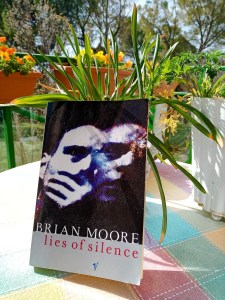 It is the story of a disenchanted man, a man who reluctantly returned to Northern Ireland from London with his wife Moira, who was keen to return. Now he is the manager of a hotel, a job he doesn’t particularly like, having left his poetry aspirations far behind him, following in the footsteps of his father, a man he feels resentment towards.
Unsurprisingly, his personal life has become entangled and just as the unspoken issues simmering below this relationship are about to boil over, he and his wife are taken hostage in their own home, he to be used as a pawn in what unfolds as a complex, thought out plan.
In the midst of the initial drama Michael sees his neighbour, a retired bank manager leave with his dog for a walk, seeing in him the average, everyman and woman who just wants to get on with life without interference from “men in woolen masks”.
Watching him go off with his dog, Dillon felt anger rise within him, anger at the lies which had made this, his and Mr Harbinger’s birthplace, sick with a terrible illness of bigotry and injustice, lies told over the years to poor Protestant working people about the Catholics, lies told to poor Catholic working people about the Protestants, lies from parliaments and pulpits, lies at rallies and funeral orations, and, above all, the lies of silence from those in Westminster who did not want to face the injustice of Ulster’s status quo. Angry, he stared across the room at the most dangerous victims of these lies, his youthful, ignorant, murderous, captors.
Under threat, as he moves towards doing what has been asked of him, he faces an excruciating moral dilemma, and a situation that spirals him into further confusion and deliberations over what the “right thing to do” is.
It’s something of a page turner, while not holding back on expressing the tensions and opinions of various characters in this complex, often not well understood political environment.
The Freedom of Self-Imposed Exile
There are also subtle hints to Moore’s own yearning for places beyond the hills of home, as seen in this passage, as he gets off the telephone from his American boss:
Cave Hill Mountain Overlooking Belfast City towards Belfast Lough
Dismissed from Keogh’s busy, money-breathing world, Dillon stood looking out at the mountain which reared up like a stage backdrop behind the city. Long ago, in school, daydreaming, he would look out of the classroom window and imagine himself in some aeroplane being lifted over that grey pig’s back of mountain to places far from here, to London, New York, Paris, great cities he had seen in films and photographs, cities far away from the dull constrictions of home.

It’s also clear that Moore was as keen on seeking revenge with his pen, as much as his characters do with whatever is at their disposal, his distance from the home country giving him a freedom and inclination to provoke, inform and stir the troubled pot, so to speak. In particular, the denouement.
Further Reading
You can read recent reviews here: Cathy at 746 Books, Ali at HeavenAli, Lizzy’s Literary Life, Kim at Reading Matters
February’s novel was Moore’s 1957 novel The Feast of Lupercal, whose pragonist is a 37 year-old teacher at a Catholic boarding school run by priests in Belfast during the 1950s. I don’t have this one, though it sounds excellent according to these enticing reviews, which you can read here: Cathy at 746 Books, HeavenAli.
In March, they will be reading Fergus (1970).
I will join in the reading in:
April with The Lonely Passion of Judith Hearne (1955)
May with The Doctor’s Wife.
I hope more of you might be able to join in this next one, which is one of his more well-known and popular titles.

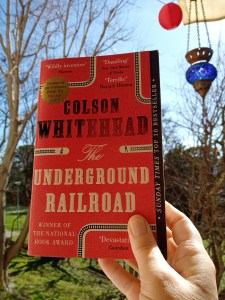 Cora is an African slave on a cotton plantation in Georgia and within the first few pages we learn of her grandmother’s death while working in the fields and not long after this, her mother Mabel’s disappearance, a runaway.
 The story reverses and we learn how it came about that Elena and her children Nando and Karina are in America, while Mauro and Talia are in Colombia. How dreamer Mauro fell in love with contented Elena, in the market, their lives being played out on a small canvas until Mauro shared his dream and Elena facilitated it.
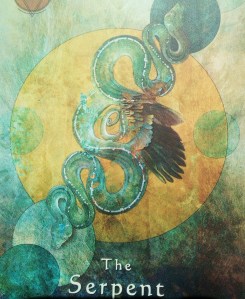 It’s an interesting blend of narrative perspectives, the switch between Talia’s adventurous journey south and the backstory of how she came to be escaping to escape, including her parents story. Through Mauro and Talia we are also exposed to their cultural stories, the Andean myths of their people, of serpent, jaguar, condor and the one story that haunts Mauro, one he wished he’d never learned, that he will never tell.
 Isabelle Allende looks back over her life from the viewpoint of her gender, as a woman and looks at how the family she was born into, and their circumstances contributed to her own growth and development and attitudes.
 Being in the later years of her life, she also reflects on that era, on the post retirement years and her attitude towards them, how she sees that she has changed, what she is and isn’t prepared to compromise on.

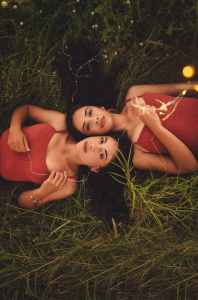
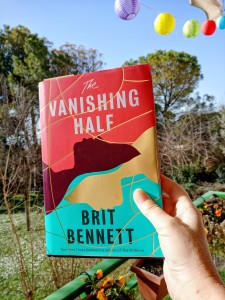 Brit Bennett’s novel features identical African American twins who leave home suddenly to make their way in the world, and looks at all the ways people survive and hide things about themselves, keep secrets and the impact that has not just on themselves but on others around them. And the many ways one can lose oneself.
 Born and raised in Southern California, Brit Bennett graduated from Stanford University and later earned her MFA in fiction at the University of Michigan. Her debut novel
  Although I was aware that this book won the popular Costa First Novel Book Award in 2019, I became intrigued to read it after listening to the author Sara Collins
 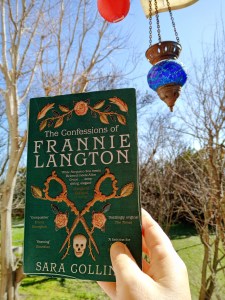 The first part of the book is set in Jamaica as Frannie narrates her story, although the opening pages are set in The Old Bailey courthouse, from where she sits accused of murder and in this short narrative, she addresses “you” the person she is telling this story, her lawyer.
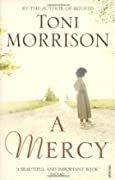 A little way into reading, I had to pause and go back to the beginning, because this story is told not in a linear way, but in a spiral and with multiple perspectives that to me didn’t relate to what the blurb says this book is about.


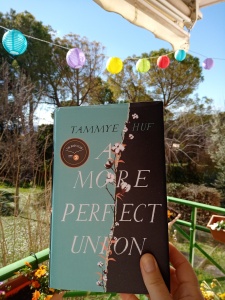 Henry is making his living as a blacksmith, after the disappointment of arriving in New York and struggling to find work due to discrimination by employers against the Irish –
  Tammye Huf is an American author now living in the UK. Her debut novel A More Perfect Union was inspired by the true story of her great-great grandparents, an exploration of identity, sacrifice, belonging, race and love. It was featured on the Jo Whiley Radio 2 Book Club.
 Word by Word