
Brilliant. I absolutely loved this novel and it will definitely feature in my Best Reads of 2021.
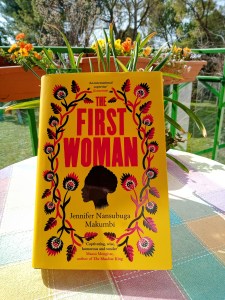 The First Woman might even have surpassed her debut novel Kintu which was fabulous and my outstanding read of 2018.
Firstly I am a huge fan of literature that takes us elsewhere, into the storytelling traditions of other cultures, seen from the inside, told in a way that doesn’t alienate a reader from outside that culture, but has both a particular and universal message. And secondly, when a novel has all the essential storytelling elements.
Jennifer Makumbi’s storytelling has all the elements – great, unforgettable characters, a ‘moving at pace’ plot, a little bit of mystery, a whole lot of feminism plus controversy, multiple perspectives, mini dramas and the wise counsel of women who’ve had enough of past injustices.
Rural, Urban – Past, Present
Then there is the contrast of the rural life and upbringing versus an urban existence, the striving for and effect of education on girls and the natural way that local Ugandan folklore and ancestral stories are interwoven throughout their way of living, learning and coming of age. They create a sense of belonging and help young people navigate their concerns, sorrows, strange feelings and unanswered questions in a thought provoking and entertaining way
In Kintu, Makumbi set part of her story in the pre-colonial 1700’s and other parts in modern times; colonial interlopers had left their imprint, but it was not their story nor a story of their influence and so too The First Woman belongs to and is born of its people, whose existence grows and evolves from their unique origins, belief systems and traditions. Their challenges come from within their culture and again Makumbi focuses on what is uniquely Ugandan.
Family Secrets and Lies
The narrative begins when Kirabo is a teenage living with her grandmother, she develops a curiosity to know who her mother is, she is awakening to a perceived deficit in her life and notices that those closest to her are unwilling to talk about it. So she seeks out Nsuutu, who some refer to as the witch, intuitively knowing she may have knowledge, visiting her in secret.
Though Nsuutu was practically blind, behind her blindness she could see. But Nsuutu was not just a witch – she was Grandmother’s foe. Their feud was Mount Kilimanjaro. Apparently, Nsuutu had stolen love from the family.
The First Woman, the Original State
Nsuutu tells Kirabo that she has “the original state” of the first woman inside her. This explanation and story is shared over various visits and sets up an extremely compelling narrative, as Kirabo learns from this wonderful, empowered but ageing feminist. However, she is warned her not to go looking for her mother, an instruction that feeds her obsession, making it all-consuming.
‘We changed when the original state was bred out of us.’ Kirabo looked at her hands as if to see the change. ‘Was it bad what we were? Is it what makes me do bad things?
‘No, it was not bad at all. In fact, it was wonderful for us. We were not squeezed inside, we were huge, strong, bold, loud, proud, brave, independent. But it was too much for the world and they got rid of it. However, occasionally that state is reborn in a girl like you. But in all cases it is suppressed. In your case the first woman flies out of your body because it does not relate to the way this society is.’
Narrative Structure
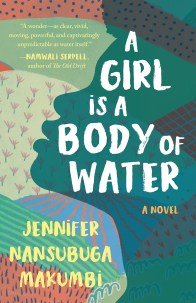 The story is divided into five sections; The Witch (Nattetta, Bugerere, Uganda 1975), The Bitch (Kampala 1977), Utopia, When The Villages Were Young (Nattetta 1934) and Why Penned Hens Peck Each Other (1983).
After Nsuutu’s wise counsel, Kirabo’s life is upended when it is announced she will go to Kampala to live with her father Tom, about whom she has never been curious. She has seen him on and off over the years as he visited the clan in the village where she lives, but now she will go and live with him in the city, where it becomes clear that much more had been hidden from her.
Nsuutu held both her hands. ‘Don’t judge the women you met too harshly.’
‘I won’t.’
‘Often, what women do is a reaction. We react like powerless people. Remember kweluma?’
‘When women bite themselves because they are powerless.’
‘Tell me that whatever happens, you will not make another woman’s life worse.’
‘I won’t, Nsuuta!’ Kirabo was miffed that Nsuutu would ask.
‘Remember, be a good person, not a good girl. Good girls suffer a lot in this life.’
‘Utopia‘ is when she is sent to St Theresa’s, a girl’s boarding school. An education, a world without men, though interrupted by war and expulsions that occur elsewhere, having the effect of changing the balance of power and perception among the girls as well, many will leave and a new influx will arrive. It is also the period where her friendship with Sio develops.
St Theresa’s was a safe space for them to develop their talents without intimidation, interference or interruption. They owed it to themselves, and to all other girls who did not have their privilege, to excel and to change the world. ‘Our job is to arm the girl child with with tools so she can live a meaningful life, for herself and for the nation.’
Historical Influence
The narrative then returns to the past, to 1934 when her grandmother Alikisa and Nsuutu were children and fills in the backstory to their friendship, a pact, their very different aspirations and the effect of the community on how their lives play out. Much of this section is told through letters they write to each other while Nsuutu is at nursing school and Alikisa is at home, having abandoned her plans to become a midwife, encouraged by her father towards teaching.
Finally, a family tragedy brings the entire clan together, and opinions are aired, grievances followed through, threads come together, some rifts are healed, others not, but there is the opportunity to break new ground, and move on from the past, without significant loss.
The First Woman is bold, empowered, authentic storytelling of the highest order, that embraces its cultural origins and exposes the reader to universal emotions, questions, conflicts, shame, friendships, love and humanity it shares.
It is both a story and an act of courage that provokes men and women to consider their roles and the effect their decisions have on others, to consider alternatives, seeking a kinder, more just way of being, rather than repeating the same patters that have existed.
Highly Recommended.
Jennifer Nansubuga Makumbi, Author
 A Ugandan fiction writer, her first novel, Kintu, won the Kwani? Manuscript Project in 2013. Her second book is a collection of short stories, titled Manchester Happened (2019) for the UK/Commonwealth publication and Let’s Tell This Story Properly (US/Canada). It was shortlisted for The Big Book prize: Harper’s Bazaar.
Her third book, titled The First Woman (2020) UK/Commonwealth and A Girl is a Body of Water (US/Canada) was the Winner of the Jhalak Prize – Book of the Year by a Writer of Colour (2021), shortlisted for The Diverse Book Awards 2021, for the Encore Prize 2021, and the James Tait Black Prize 2021 and longlisted for the Aspen Words Literary Prize 2021.
Makumbi was a recipient of the Windham-Campbell Literature Prize 2018. She won the Global Commonwealth Short Story Prize 2014 for her short story, Let’s Tell This Story Properly. She is a Cheuse International Writing Fellow (2019) and KNAW-NAIS residency (2021). She has a PhD from Lancaster University and has been a senior lecturer at several universities in Britain.
Further Reading
My review of Kintu
Guardian Review: A girl longs for her absent mother in this frank, witty tale about power and gender roles by Alex Clark
Article, Johannesburg Review of Books : A Triumph of a Novel: The First Woman Jennifer Nansubuga Makumbi’s answer to people who like to defend patriarchal power by claiming that feminism is ‘not African’, writes Itumeleng Molefi.
 2020 marked the 25th anniversary of the Women’s Prize for Fiction, a feat that was celebrated by the creation of a reading challenge to read all the winners including last year’s Hamnet by Maggie O’Farrell.

 Summer by Ali Smith (British)- In the present, Sacha knows the world’s in trouble. Her brother Robert just is trouble. Their mother and father are having trouble. Meanwhile the world’s in meltdown – and the real meltdown hasn’t even started yet. In the past, a lovely summer. A different brother and sister know they’re living on borrowed time. This is a story about people on the brink of change. They’re family, but they think they’re strangers. So: where does family begin? And what do people who think they’ve got nothing in common have in common?
 Detransition Baby by Torrey Peters (American)- Reese nearly had it all: a loving relationship with Amy, an apartment in New York, a job she didn’t hate. She’d scraped together a life previous generations of trans women could only dream of; the only thing missing was a child. Then everything fell apart and three years on Reese is still in self-destruct mode, avoiding her loneliness by sleeping with married men.
 Nothing But Blue Sky by Kathleen McMahon (Ireland) – Is there such a thing as a perfect marriage?
 Consent by Annabel Lyon (Canada) – Saskia and Jenny are twins, alike in appearance only: Saskia has a single-minded focus on her studies, while Jenny is glamorous, thrill-seeking and capricious. Still, when Jenny is severely injured in an accident, Saskia puts her life on hold for her sister. Sara and Mattie are sisters with another difficult dynamic: Mattie needs almost full-time care, while Sara loves nothing more than fine wines, perfumes and expensive clothing, and leaves home at the first opportunity. But when their mother dies, Sara must move Mattie in with her. Gradually, Sara and Saskia learn that both their sisters’ lives, and indeed their own, have been altered by the devastating actions of one man…
 No One Is Talking About This by Patricia Lockwood – (American) A woman known for her viral social media posts travels the world speaking to her adoring fans, her entire existence overwhelmed by the internet – or what she terms ‘the portal’. Are we in hell? the people of the portal ask themselves. Are we all just going to keep doing this until we die? Suddenly, two texts from her mother pierce the fray: ‘Something has gone wrong’ and ‘How soon can you get here?’
 How The One Armed Sister Sweeps Her House by Cherie Jones (Barbados) – In Baxter’s Beach, Barbados, Lala’s grandmother Wilma tells the story of the one-armed sister, a cautionary tale about what happens to girls who disobey their mothers. For Wilma, it’s the story of a wilful adventurer, who ignores the warnings of those around her, and suffers as a result.
 Unsettled Ground by Claire Fuller (British) – What if the life you have always known is taken from you in an instant? What would you do to get it back? Twins Jeanie and Julius have always been different from other people. At 51 years old, they still live with their mother, Dot, in rural isolation and poverty. Inside the walls of their old cottage they make music, and in the garden they grow (and sometimes kill) everything they need for sustenance.
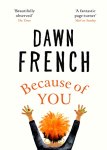 Because Of You by Dawn French (British) – Tick-tock, tick-tock, tick-tock . . . midnight.
 Small Pleasures by Clare Chambers (British) – 1957, the suburbs of South East London. Jean Swinney is a journalist on a local paper, trapped in a life of duty and disappointment from which there is no likelihood of escape.
 Piranesi by Susanna Clarke (British) – Piranesi lives in the House.
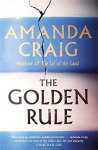 The Golden Rule by Amanda Craig (British) – Intelligent, bookish and hard-working, Hannah is part of a generation that grew up in hope and has tried to escape life in Cornwall’s ugliest coastal town through a university degree, a professional career, and marriage to the privileged Jake. However, her life has gone disastrously wrong. Jake has left her for Eve and, reduced to near penury, she is desperate enough to agree to murder the brutal husband of Jinni, the rich woman she meets in the First Class carriage of the London to Penzance train, in return for having Jake killed.
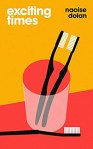 Exciting Times by Naoise Dolan (Ireland) – When you leave Ireland aged 22 to spend your parents’ money, it’s called a gap year. When Ava leaves Ireland aged 22 to make her own money, she’s not sure what to call it, but it involves:
 Burnt Sugar by Avni Doshi (American) – In her youth, Tara was wild. She abandoned her arranged marriage to join an ashram, took a hapless artist for a lover, rebelled against every social expectation of a good Indian woman – all with her young child in tow.
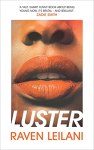 Luster by Raven Leilani (American) – Edie is just trying to survive. She’s messing up in her dead-end admin job in her all white office, is sleeping with all the wrong men, and has failed at the only thing that meant anything to her, painting. No one seems to care that she doesn’t really know what she’s doing with her life beyond looking for her next hook-up.
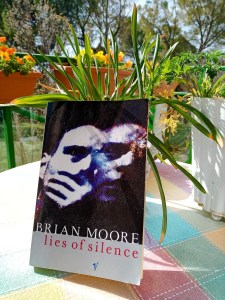 It is the story of a disenchanted man, a man who reluctantly returned to Northern Ireland from London with his wife Moira, who was keen to return. Now he is the manager of a hotel, a job he doesn’t particularly like, having left his poetry aspirations far behind him, following in the footsteps of his father, a man he feels resentment towards.

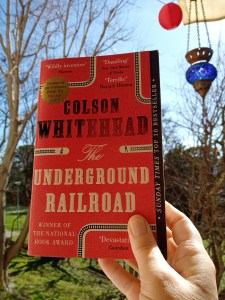 Cora is an African slave on a cotton plantation in Georgia and within the first few pages we learn of her grandmother’s death while working in the fields and not long after this, her mother Mabel’s disappearance, a runaway.
 The story reverses and we learn how it came about that Elena and her children Nando and Karina are in America, while Mauro and Talia are in Colombia. How dreamer Mauro fell in love with contented Elena, in the market, their lives being played out on a small canvas until Mauro shared his dream and Elena facilitated it.
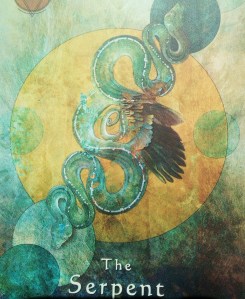 It’s an interesting blend of narrative perspectives, the switch between Talia’s adventurous journey south and the backstory of how she came to be escaping to escape, including her parents story. Through Mauro and Talia we are also exposed to their cultural stories, the Andean myths of their people, of serpent, jaguar, condor and the one story that haunts Mauro, one he wished he’d never learned, that he will never tell.
 Isabelle Allende looks back over her life from the viewpoint of her gender, as a woman and looks at how the family she was born into, and their circumstances contributed to her own growth and development and attitudes.
 Being in the later years of her life, she also reflects on that era, on the post retirement years and her attitude towards them, how she sees that she has changed, what she is and isn’t prepared to compromise on.

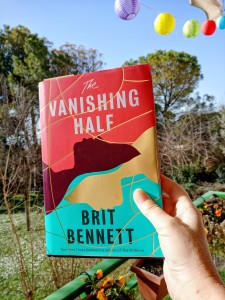 Brit Bennett’s novel features identical African American twins who leave home suddenly to make their way in the world, and looks at all the ways people survive and hide things about themselves, keep secrets and the impact that has not just on themselves but on others around them. And the many ways one can lose oneself.
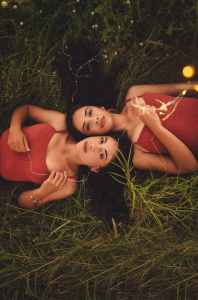
 Born and raised in Southern California, Brit Bennett graduated from Stanford University and later earned her MFA in fiction at the University of Michigan. Her debut novel
  Although I was aware that this book won the popular Costa First Novel Book Award in 2019, I became intrigued to read it after listening to the author Sara Collins
 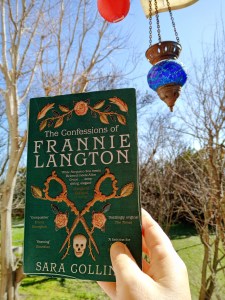 The first part of the book is set in Jamaica as Frannie narrates her story, although the opening pages are set in The Old Bailey courthouse, from where she sits accused of murder and in this short narrative, she addresses “you” the person she is telling this story, her lawyer.
 A little way into reading, I had to pause and go back to the beginning, because this story is told not in a linear way, but in a spiral and with multiple perspectives that to me didn’t relate to what the blurb says this book is about.
 Word by Word