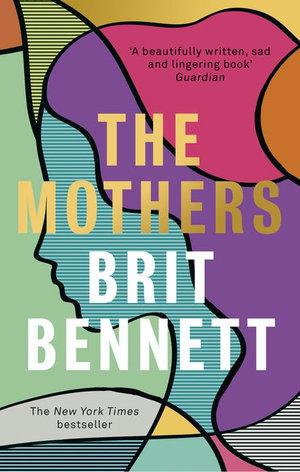
The Mothers (2016) by Brit Bennett

The Mothers by Britt Bennett author of The Vanishing Half

The third novel in my reading about mothers and motherhood is Brit Bennett’s The Mothers, the story of two young people, Nadia and Luke, who have both encountered significant turning points in their young lives, when they turn towards each other. Nadia, an only child, is mourning her mother, lost to suicide and Luke is nursing a football injury that has removed him from the limelight.

If Nadia Turner had asked, we would’ve told her to stay away from him.

Their coming together and drifting apart might have had less of an affect on their lives, had it not been for the teen pregnancy and cover-up that resulted from it, forever creating a fusion between them they have trouble negotiating, despite the years and distance they have put between them.

Her mother had died a month ago and she was drawn to anyone who wore their pain outwardly, the way she couldn’t.

Elder Knowledge and Wisdom

Luke is the son of a pastor and within that community are the older ‘Mothers‘, who provide the ‘We‘ voice to the narrative that isn’t always kind, it is the voice of those who have seen it all before.

We would’ve told her that all together, we got centuries on her. If we laid all our lives toes to heel, we were born before the Depression, the Civil War, even America itself. In all that living, we have known men,. Oh girl, we have known littlebit love. That littlebit of honey left in an empty jar that traps the sweetness in your mouth long enough to mask your hunger. We have run tongues over teeth to savor that last littlebit as long as we could, and in all our living, nothing has starved us more.

Photo by M. Kirkgoz Pexels.com

Though they don’t comment directly to Nadia or provide support to her, they are the all seeing, all knowing voice of the past, who also know that one has to live through their own experiences to learn anything, and so they enjoy their gossiping and smug knowledge of knowing how it will end before the living is done.

All good secrets have a taste before you tell them, and if we’d taken a moment to swish this one around our mouths, we might have noticed the sourness of an unripe secret, plucked too soon, stolen and passed around before its season. But we didn’t. We shared this sour secret, a secret that began when Nadia Turner got knocked up by the pastor’s son and went to the abortion clinic downtown to take care of it.

Nadia hides her secret from everyone, including her pious best friend Aubrey, the distance she puts between herself and her hometown, her foreign boyfriend and her higher education assist her in creating a new life far from unwanted memories.

Community Intentions

The Mothers meet regularly to pray. They read the prayer request cards and pray for the community who share their pain, their resentments, their anger and fears. And that too, is how they know all that is going on in their community, the clues that along with chatter create the jigsaw puzzle of lives that come and go among them.

That evening, we found a prayer card with his name on it in the wooden box outside the door. In the centre, in all lowercase, the words pray for her. We didn’t know which her he meant – his dead wife or his reckless daughter – so we prayed for both.

Youth Must Experience It

The novel follows the lives of the young people as they eventually confront the things they have tried to ignore, when they realise the impact they continue to have on them and slowly, the story behind the lost mother comes to light.

But she saw then that Nadia didn’t speak about her mother because she wanted to preserve her, keep her for herself. Aubrey didn’t speak about her mother because she wanted to forget that she’d ever had one.

The Mothers is more reflective and less intense than the previous two novels I read, which concerned the death of a child, whereas here it is the loss of a mother and the loss of becoming a mother, and others for whom their mothers, though present, provide no solace at all. And the little spoken about loss of a potential father, a failure to perform one of the primary functions, to protect his family.

Each of the three stories shows communities as both supportive and punitive and mothers as complex products of their circumstances. Love is present, but so are disappointment, misunderstanding, judgement and the fear of not being enough. Silence too, becomes both a survival strategy and a cause of generational pain, broken through often by external friendships, safe spaces where women can express openly and move through their grievances towards healing.

I found The Mothers a thoughtful exploration of complex issues that youth encounter and then must live with and navigate and grow through. It shows the numerous ways people do that, sometimes in community, other times in isolation, but always seeking to find that peaceful place within which they can exist.

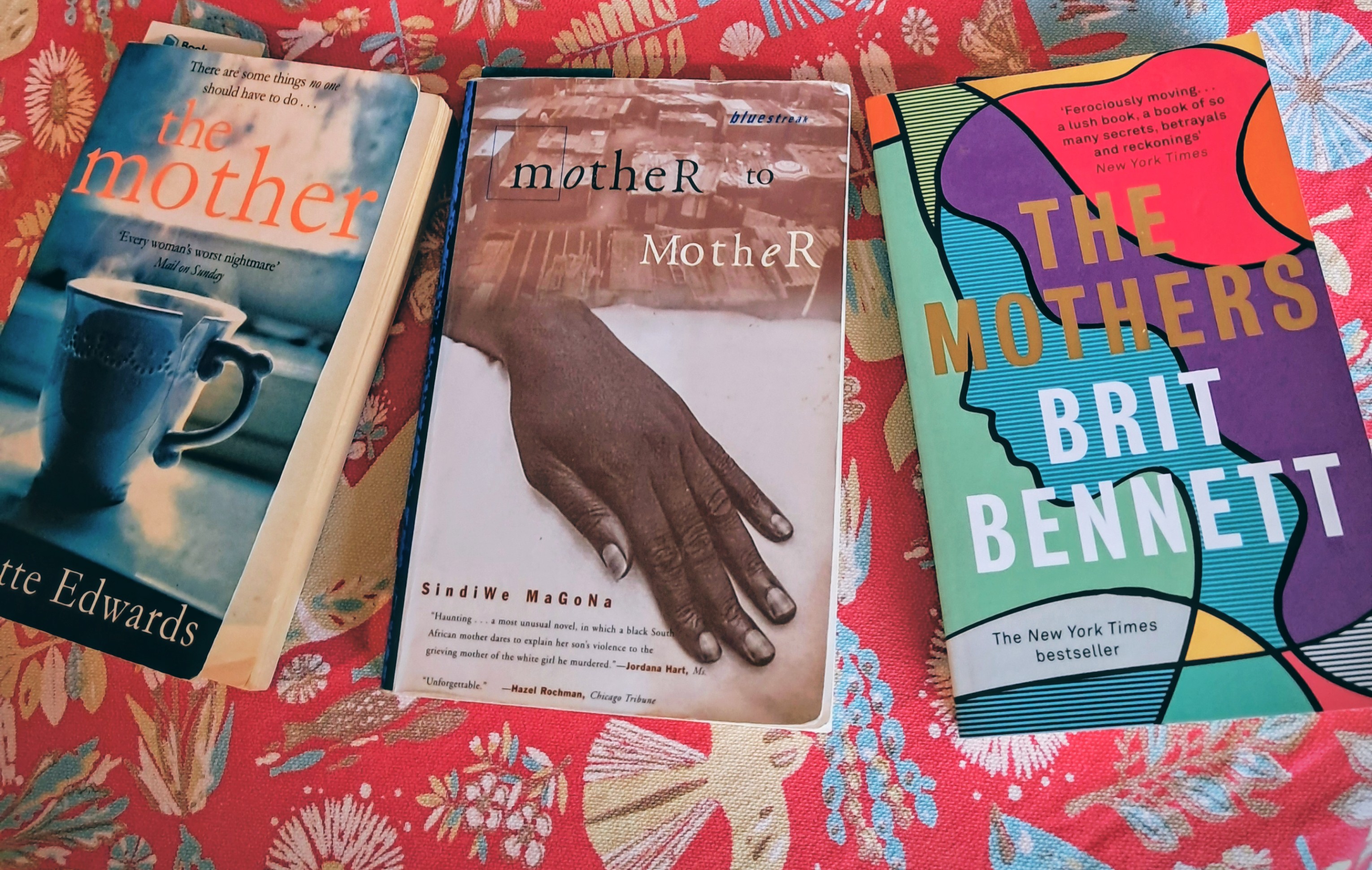
3 novels of mothers and motherhooh The Mother Yvvette Edwards Mother to Mother Sindiwe Magona The Mothers Brit Bennett

What is Brit Bennett Working On Now?

It has been a while since Brit Bennet’s second novel The Vanishing Half (2020), so I checked to see what she might be working on and learned that while there is no publication date yet, she is a ‘few drafts deep’ into a third novel, focused on R&B musicians, a girl group, about two singers who have a lifelong feud. It is said to deal with themes of rivalry, celebrity, and identity.

Author, Brit Bennett

Born and raised in Southern California, Brit Bennett earned her MFA in fiction at the University of Michigan.

Her debut novel The Mothers was a New York Times bestseller, and her second novel The Vanishing Half was an instant #1 New York Times bestseller. Her essays have been featured in The New Yorker, the New York Times Magazine, The Paris Review, and Jezebel.

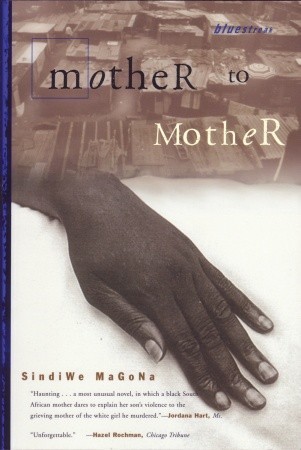
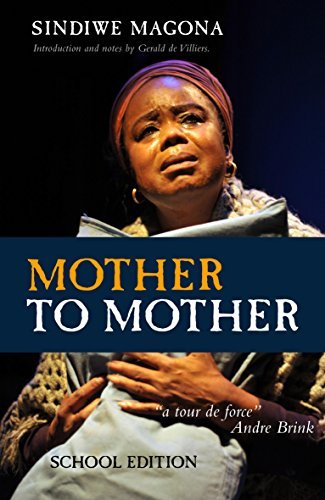
Mother to Mother by Sindiwe Magona

Mother to Mother is the second novel in my reading about the complexity of motherhood from three different perspectives, from within London’s Caribbean diaspora in The Mother by Yvvette Edwards, apartheid-era South Africa in Mother to Mother, and contemporary Black America in Brit Bennett’s The Mothers.

Making Sense of a Tragedy

 Sindiwe Magona decided to write this novel when she discovered that Fulbright Scholar Amy Biehl, who was set upon and killed by a mob of black youth in August 1993, died just a few yards away from her own permanent residence in Guguletu, Capetown.

She then learned that one of the boys held responsible for the killing was in fact her neighbor’s son. Magona began to imagine how easily it might have been her own son caught up in the wave of violence that day.

The outpouring of grief, outrage, and support for the Biehl family was unprecedented in the history of the country. Amy, a white American, had gone to South Africa to help black people prepare for the country’s first truly democratic elections. Ironically, therefore, those who killed her were precisely the people for whom, by all subsequent accounts, she held a huge compassion, understanding the deprivations they had suffered.

Mother to Mother, A Novel

When there are tragedies such as what happened here, usually and rightly, a lot is heard about the world of the victim, their family, friends, achievements and aspirations. The Biehl case was no exception.

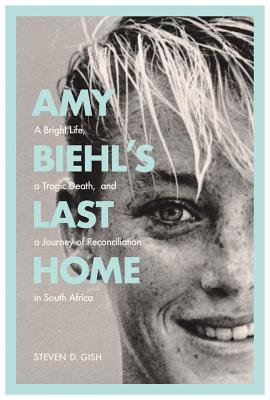
Amy Biehl’s Last Home: A Bright Life, a Tragic Death, and a Journey of Reconciliation in South Africa by Steven D. Gish

Sindiwe Magona reflects and asks; are there no lessons to be had from knowing something of that other world, the opposite environments to those that grow and nurture the likes of Amy Biehl; to grow up under the legacy of apartheid, a society where you were born a second-class citizen, a system that relegated black people to the periphery and treated them as sub-human.

What was the world of this young woman’s killers, the world of those, young as she was young, whose environment failed to nurture them to the higher ideals of humanity and who, instead, became lost creatures of malice and destruction?

In reality, there were four young men, in the novel there is just one. Through the mother’s narrative of her life raising her children in this oppressive environment, through her memories, we come to understand a number of factors that contributed to the continuing dehumanisation of a population that became more and agitated as the little they had was taken from them, destroyed, bulldozed over and opportunities few and far between and one race of privileged people responsible.

Mandisa’s Lament

Mandisa, bewildered and grief-stricken, on learning the news of her son’s involvement in this terrible tragedy, mines her memory and reflects on the life her son has lived, that brought them to this moment. In looking for answers she paints a vision of her son and his world, the world she has inhabited and done her best to navigate and lead her children through, as if in conversation with that other mother, the one who has lost a daughter, forever.

Forced Removals

What began as a rumour, that the government was going to forcibly remove all Africans from numerous settlements to a common area set aside for them all was initially laughed off, not believed. Everyone talked about it, but not with concern, it was impossible.

There were so many of us in Blouvlei, a tin-shack location where I grew up, Millions and millions. Where would the government start? Who could believe such a thing?

The sea of tin shacks lying lazily in the flats, surrounded by gentle white hills, sandy hills dotted with scrub, gave us (all of us, parents and children alike) such a fantastic feeling of security we could not conceive of its ever ceasing to exist. This, convinced of the inviolability offered by our tremendous numbers, the size of our settlement, the belief that our dwelling places, our homes, and our burial places were sacred, we laughed at the absurdity of the rumour.

Mother to Mother by Sindiwe Magona "a tour de force" Andre Brink

But the government was not laughing. When the rumour paled and was all but forgotten, one day if returned with a deafening roar, as an aeroplane dropped flyers warning them all of the impending deadline, that they would be forcibly removed. To Guguletu.

A grey, unending mass of squatting structures. Ugly. Impersonal. Cold to the eye. Most with their doors closed. Afraid.

Oppressed by all that surrounds them…by all that is stuffed into them…by the very manner of their conception. And, in turn, pressing down hard on those whom, shameless pretence stated, they were to protect and shelter.

Segregation was enforced and black people were removed from their settlements, from suburbs where only white people would now live, pushed into a place and among people they did not know, in challenging conditions and the need to find work.

On A Dark Day, Resentments Build

The narrative is written in two timelines, the day of the protest, when Mandisa is sent home early from her job as a cleaner in a white woman’s home, due to the unrest – interspersed with memories of how their lives came to arrive at this point. She waits and waits for her son to come home and becomes increasingly concerned at his lack of appearance.

10.05 PM – Wednesday 25 August 1993

…where was Mxolisi? Not for the first time, I asked myself what it was that made him so different from the other two children… What had made Mxolisi stop confiding in me? And when had that wall of silence sprung between us? I couldn’t remember. He used to tell me everything…and then, one day I woke up to find I knew almost nothing about his activities or his friends.

As the family circumstances are shared and the life of this mother is revealed, I am reminded of the two autobiographies I have read, of the similarly challenging life and raising of her own children the author in similar circumstances. Although this is fiction, there is resemblance to her own circumstances, no doubt the reason why she understands this could so easily have been any one of those mothers in their neighbourhood.

The story leads up to the actual event, to what occurred on that day, the clash, the terrible crossing of paths, of being in the wrong pace at the wrong time, the burning hatred of an oppressor, the innocent face of one who looked like them, the dark desire of a race seeking revenge, the deep resentment of decades expressing itself in rage.

My son, the blind but sharpened arrow of the wrath of his race.

Your daughter, the sacrifice of hers. Blindly chosen. Flung towards her sad fate by fortune’s cruellest slings.

It is a courageous attempt to present a community in the grip of violent rage, to allow the voice of a mother to speak and share the growth of a family, the intense pain of all touched by a tragedy, to consider a path of redemption, to learn something from it. There may not be any conclusions, but perhaps we are all, all the better for being open to listen to the mothers, to find empathy for people doing the best they can in challenging circumstances. A thought provoking, powerful read.

Restorative Justice

In a final end piece to the story of Amy Biehl, after four men were convicted and given 18 -year prison sentences, there was in July 1987, an appearance before the Truth and Reconciliation Commission’s amnesty committee to argue for their release from prison, due to the politically motivated nature of the crime.

The parents, the Biehl’s attended the trial and shook hands with the parents of all four men. They understood the context of the South African struggle better than many South Africans.

Restorative justice communities of care and reconciliation, victim reparation, offender responsibility and accountability

The men spoke and asked for forgiveness. After consideration, all four were pardoned and the Biehl family supported their release.

Linda and Peter Biehl created a humanitarian organisation, the Amy Biehl Foundation Trust to develop and empower youth in the townships, in order to discourage further violence.

Two of the men who had been convicted of her murder went on to work for the foundation as part of its programs.

Further Reading

Amy Biehl’s Last Home: A Bright Life, a Tragic Death, and a Journey of Reconciliation in South Africa by Steven D. Gish

South African Press Association: Excerpts from SAPA Coverage of Biehl Amnesty Trials

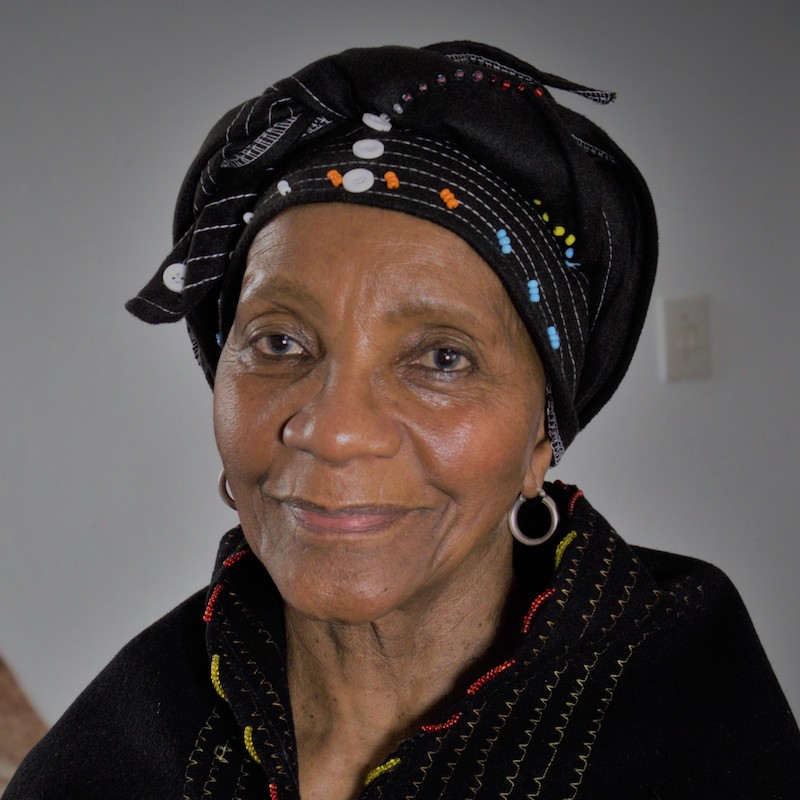
Author, Sindiwe Magona

Sindiwe Magona (born.1943) a graduate of Columbia University, is an author, poet, playwright, storyteller, actor, and inspirational speaker. Magona retired from the United Nations, where she worked in the Anti-Apartheid Radio Programmes until June 1994 and UN Film Archives till her retirement. After twenty-five years in New York, she relocated to her home country, South Africa.

Her writings include To My Children’s Children and Forced to Grow (autobiography); Living, Loving, and Lying Awake at Night and Push-Push and Other Stories (short stories).

Her novels are When the Village Sleeps, Mother to MotherBeauty’s GiftLife is a Hard but Beautiful Thing (YA) and Chasing the Tails of My Father’s Cattle! Please, take photographs! a book of poetry, Modjaji Books and Awam Ngqo,(short stories) and Twelve Books of Folktales – written in both English and Xhosa.

Magona has written over a 120 children’s books, including: The Best Meal Ever and Skin We Are In and Her awards include include Honorary Doctorates from Hartwick College, USA; Rhodes University; and Nelson Mandela University; and the Order of iKhamanga.

My writing, on the whole, is my response to current social ills, injustice, misrepresentation, deception – the whole catastrophe that is the human existence. Sindiwe Magona

Next Up, the third novel : The Mothers by Brit Bennett

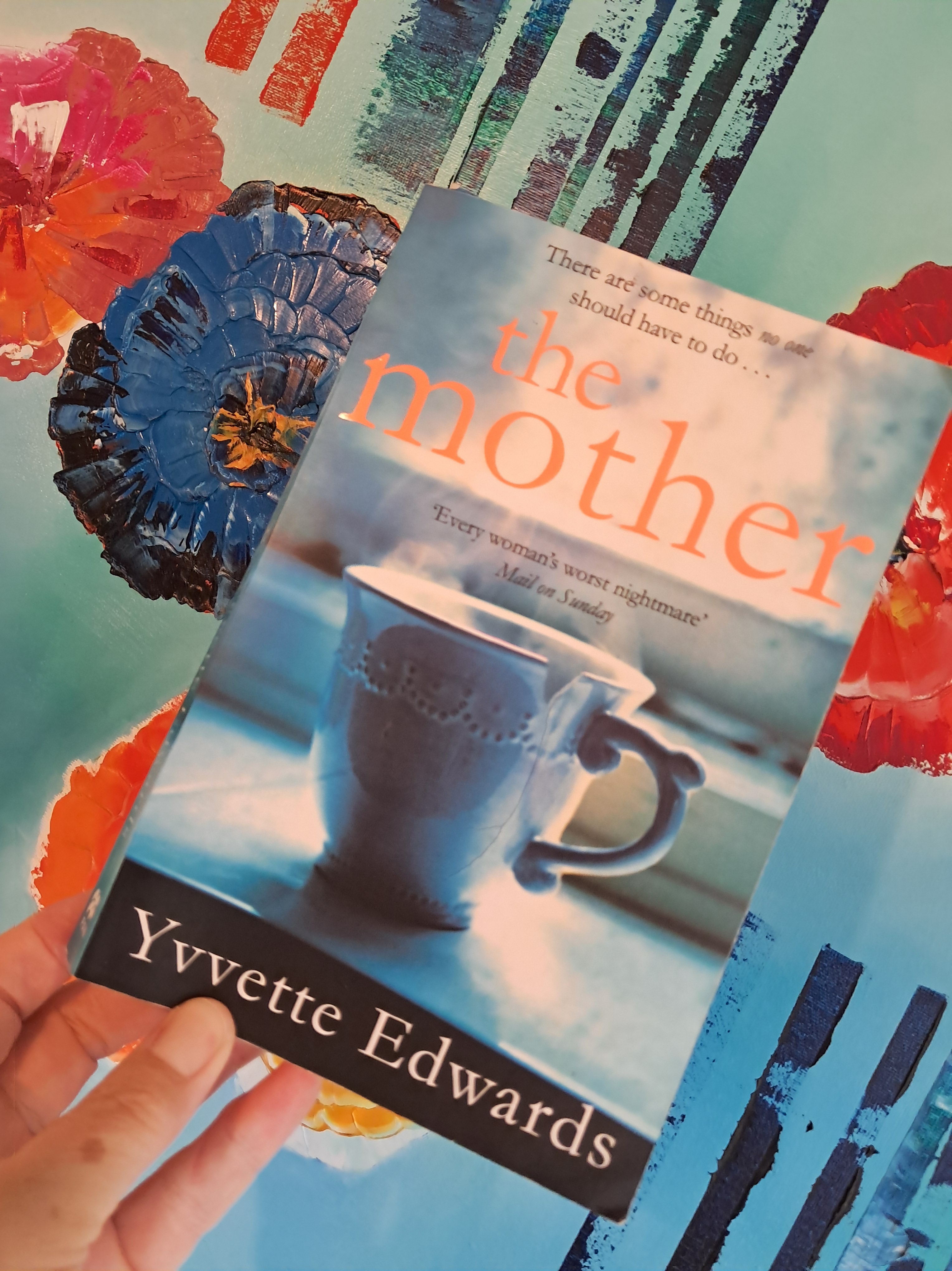
The Mother by Yvvette Edwards

Mothers in Literature

I had long wished to read Yvvette Edwards second novel, The Mother (2016) after very much enjoying her Booker longlisted A Cupboard Full of Coats (2011). I decided to read it alongside two novels on my shelf with similar themes of the bonds, burdens and breakthroughs of motherhood.

The three novels I chose are set in different countries and contexts: The Mother by Yvvette Edwards (UK) is set in London’s Caribbean community, Mother to Mother by Sindiwe Magona is set in apartheid-era South Africa, and The Mothers by Brit Bennett is set in contemporary Black America.

Sindiwe Magona has written numerous novels; however I have read and reviewed her autobiographies To My Children’s Children (1990) and Forced to Grow (1992), while Brit Bennett is well known for her novel that addresses the theme of passing, The Vanishing Half (2020).

The Complexity of Motherhood

All three novels expose motherhood as fraught with social pressure, moral judgment, and emotional complexity. Despite the different settings, they collectively form a global conversation about motherhood, resilience, and the human cost of structural and racial inequality.

3 novels of mothers and motherhooh The Mother Yvvette Edwards Mother to Mother Sindiwe Magona The Mothers Brit Bennett

In The Mother, Marcia grapples with grief and guilt after the murder of her son.

In Mother to Mother, Mandisa reflects on her life while writing to the mother of the girl her son has murdered.

And The Mothers, focuses on young women (and a collective “we” voice of church “mothers”) navigating the expectations of womanhood, including unwanted pregnancy.

The Mother by Yvvette Edwards

The Mother is the story of a mother’s struggle to come to terms with understanding her teenage son’s violent death, it is both a courtroom drama following the murder of Marcia and Lloydie’s 16-year-old son Ryan and a story of transformation and healing through grief.

I used to be good at making decisions, took it for granted completely, imagined it was one of those things that because I’d always been good at it, I would continue to be good at it, and then something like what happened to Ryan comes along and you realise some things are just temporary gifts granted for part of your life only, like the headful of hair you imagined would be yours forever that you went to sleep with one night and as usual but woke the following morning to find gone, clean gone.

Suffering Together, Drifting Apart – the Complexity of Grief

The Mother by Yvvette Edwards courtroom drama in London youth stabbing gang culture

Marcia wants to be present every day at court, her husband Lloydie does not. Increasingly emotionally estranged, she does not understand what he does all day, where he goes. Their habits are changing and they seem to be leaving each other behind, dealing with the loss in completely different ways, on their own.

Lloydie is putting my cup of tea on the side when I return to the bedroom. He looks slightly sheepish, is probably annoyed with himself for the mistiming that has meant he has found himself alone with me when we are both awake and alert. He looks at me without speaking.

‘Aren’t you going to ask how it went?’ I say.

It’s not the question I intended; too in-your-face, accusatory. I didn’t want to start the discussion here but it’s out now, I can’t take it back.

His tone is dutiful. ‘How did it go?’

‘It was hard. Listening. Seeing that boy, his mother. Very hard.’

The Need to Understand

Marci is determined to be present every day, to understand why this happened and comes to realise that there may be things about her son that she did not know.

Understanding has been my problem from the start. How is it possible that my son was doing all the right things, that as parents, Lloydie and I, we were doing all the right things, and yet still Ryan is dead?

The novel follows the case and outside the court other events begin to shed light on the situation, Marcia’s beliefs and assumptions are challenged. In her need to know, she becomes reckless.

She observes the boy who is being charged, his fixed stare and has already decided his fate.

…he stares ahead as if it is all beneath him, and as usual I find it unnerving. I have to say that single quality in him is enough to convince me that he did it, that he’s guilty because he has something in his aura of the type of person who could kill someone at six thirty, then stroll home, have dinner and a hot bath, followed by an early night of unbroken sleep.

Edwards is adept at tapping into the realms of Ryan’s peers and the insidious, threatening world of youth gang culture, which comes into full view through he character of Sweetie, the girl caught between the earnest world of Ryan and the manipulative obedience she has to Tyson Manley and his type.

It is a thought provoking story of complicated parenting and motherhood highlighting effects of judgment, truth seeking, and the social forces that shape personal and family outcomes, while reflecting on the particular role of mother. Motherhood becomes a lifelong, consuming identity, the loss of a child, in this case, destabilising her sense of self.

Author, Yvvette Edwards

Yvvette Edwards is a British East Londoner of Montserratian origin and author of two novels, A Cupboard Full of Coats (2011) nominated for The Hurston-Wright Legacy Award and longlisted for the Booker Prize, and The Mother (2016). Her short stories have been published in anthologies and broadcast on radio.

She is interested in writing that challenges the single narrative, giving voice to characters who are absent or under-represented in contemporary fiction.

An Upcoming Novel in March 2026

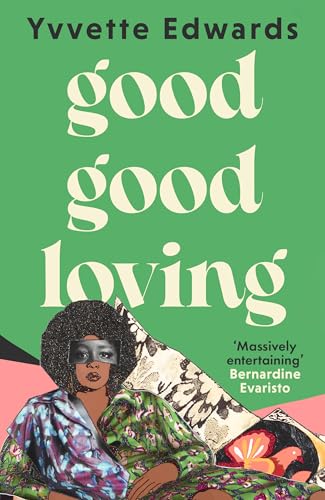
Good Good Loving, Yvvette Edwards first book in almost a decade, will be published in March 2026 by Virago. The synopsis reads:

Good Good Loving Yvvette Edwards a multi-generational British-Caribbean family across five decades

“Ellen’s big, beautiful family are gathered around her hospital bed as she prepares to slip away… her children have chosen now of all times to have a never-ending discussion about all her failings. Every single tiny thing they think she’s done wrong over the years – and the one big thing too. Even after everything, after all the sacrifices Ellen has made for every last ungrateful one of them, they still all take their father’s side. If only they knew the whole story.

“Moving backwards in time through all the decisive moments that have shaped Ellen’s life – the disasters, celebrations and surprises, the revelations, confrontations and betrayals – Good Good Loving is the vibrant story of a multi-generational British-Caribbean family across five decades.”

Next up is Sindiwe Magona’s Mother to Mother :

The Trees by Percival Everett (2021)

Having already read and enjoyed three novels by Percival Everett, So Much Blue (2017), Erasure (2001), and James (2024), when I saw The Trees at the local bookstore when I’d been in a reading rut, I picked it up, knowing it would be a guaranteed entertaining read.

The Trees Percival Everett shortlisted Booker Prize 2021

Percival Everett had already written 21 novels by the time he was shortlisted for The Booker Prize in 2022, won that year by an equally satirical novelist Sri Lankan author Shehan Karunatilaka for his The Seven Moons of Maali Almeida (my review).

Everett was more of a cult writer, well-known among regular readers, but not a mainstream name. His experimental style, genre-bending and intellectual satire made him more popular in literary and academic circles than in popular fiction. The author describes himself as “pathologically ironic“.

That began to change when The Trees was shortlisted for the Booker Prize in 2021 and his novel Erasure was adapted into the film American Fiction (2023). And then his 2024 novel James (a reimagining of Huckleberry Finn from Jim’s perspective) won the US National Book Award and the Pulitzer Prize for Fiction.

The Trees

So knowing the kind of writer Everett is, I read this without looking at the blurb. It was ironic to read about what is a murder investigation into the soul of America’s violent past, immediately after I finished Killers of the Flower Moon, the story of the targeting of the Osage people after they came into significant wealth.

The Trees is about the mysterious murders of white men in Money, Mississippi, an allegorical reckoning with centuries of racial terror inflicted upon Black communities. It is written in lean, precise and economical prose, like a script, unfolding like a crime story with mild, intriguing suspense driving the plot forward.

Copycat Crimes & Condemnation

Photo by cottonbro studio Pexels.com

Every time a man is found murdered, another body appears alongside them, a man who resembles Emmett Till, a young black boy lynched in the same town 65 years before. Locals find him the perfect scapegoat, creating fear and paranoia among the community, until the dead man reappears at the site of a second murder.

Confusion reigns, except for the team from the MBI (Mississippi Bureau of Investigation), who have been sent in to assist, though met with resistance by the local sheriff and townsfolk.

Satirical elements appear in his depiction of law enforcement and the media: their incompetence and self-interest are exaggerated to reveal systemic failings. As a spate of copycat killings spreads across the country, the investigation begins to have wider implications.

Remember Their Names

There is a great grandmother Mama Z who has been compiling files on every lynching that has happened in America since her father Julius Lynch was a victim in 1913, she is remembering their names, lest anyone forget.

When I write the names, they become real, not just statistics. When I write the names they become real again. It’s almost like they get a few more seconds here.

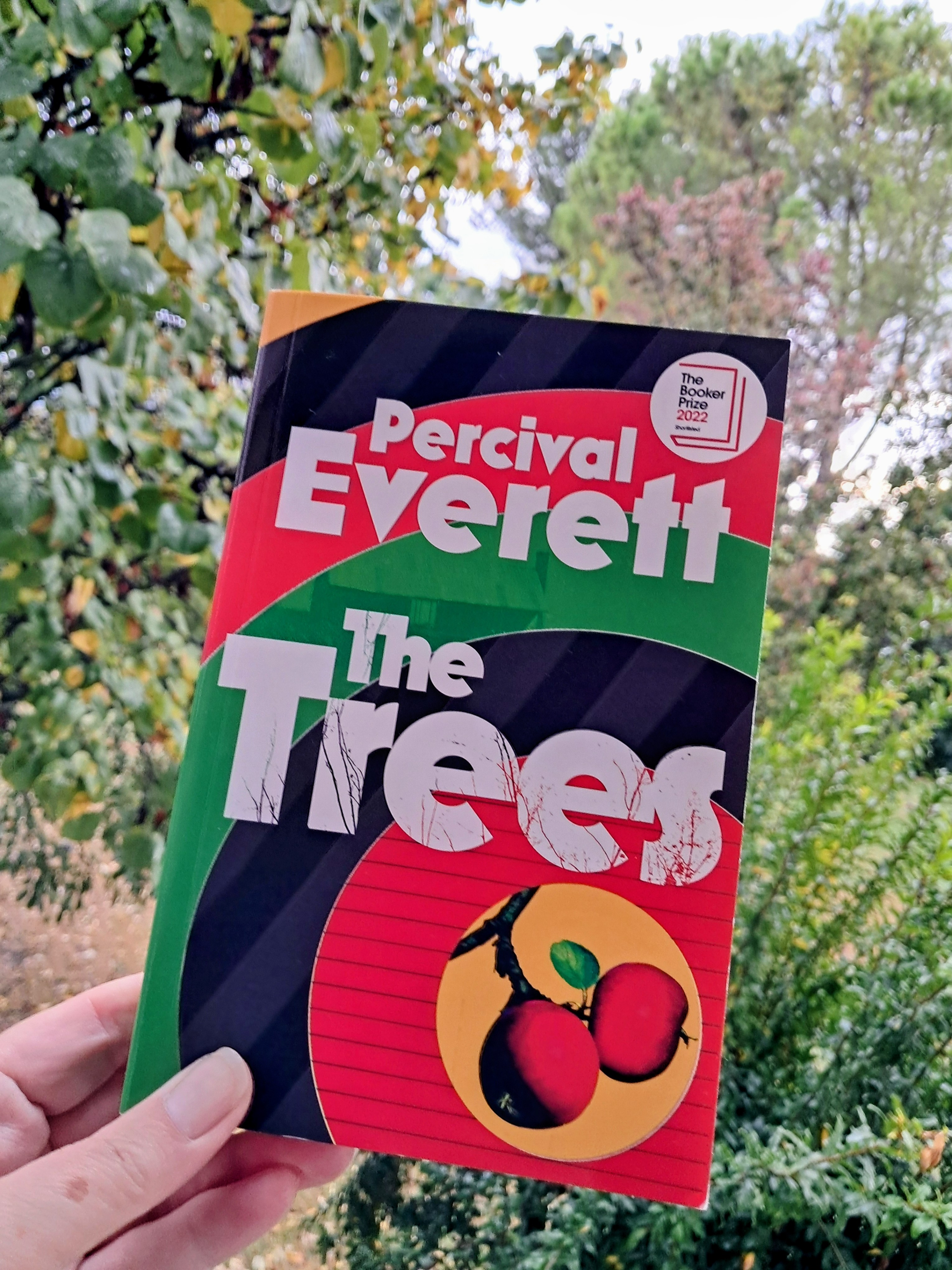
The book I read has an interesting cover, it looks like a dartboard, or a target and the circles are yellow, green, black and red, the colours of the Black Panthers, an influential militant black power organization from the 60’s whose members confronted politicians, challenged the police, and protected black citizens from brutality.

Witness and Memory

The Trees refers to the place where many were hung and I’m guessing that the fruit of those trees, represented on the book cover by twin peaches is a reference to all those who died who could not continue to reproduce. Trees represent historical memory, they are witness to the persistence of racial violence.

One thing I notice is how much easier it is to read about a violent past than it is to watch a twenty first century depiction of it. There’s no over dramatisation of the violence or needless exaggeration of the characters. While here on the page, there are an abundance of literary devices in use to deliver themes of racial violence and historical memory.

I certainly hope they don’t make this one into a film, I would not wish to see it, but I admire the ability of the author to demonstrate the effect of turning the tables and making a white population consider the trauma of having such atrocities committed against them.

Further Reading

Read an Extract from The Trees by Percival Everett

Percival Everett interview: ‘How long did it take to write The Trees? Sixty-three years’

Author, Percival Everett

Percival Everett lives in Los Angeles, where he is Distinguished Professor of English at the University of Southern California.

He has been nominated for the Booker Prize twice – he was shortlisted for The Trees in and shortlisted for James in 2024 – and is the author of over 30 books since his debut, Suder, was released in 1983. His works include I Am Not Sidney Poitier, So Much Blue, Erasure and Glyph.

A Guggenheim Fellow and Pulitzer Prize Finalist for his novel Telephone, Everett has won the PEN Oakland/Josephine Miles Literary Award, the Academy Award in Literature, the Bollinger Everyman Wodehouse Prize for Comic Fiction, and the Windham-Campbell Literature Prize for Fiction. In 2021, he received the Ivan Sandrof Lifetime Achievement Award at the National Book Critics Circle Awards and in 2024 won 4 major literary awards including the Pulitzer Prize for Fiction with James.

You’ve said in the past that reading is one of the most subversive acts we can perform. Can you elaborate? 

There’s a reason that oppressive regimes often resort to burning books. No one can control what minds do when reading; it is entirely private. We make of literature what we need to make. This is true of art. There is nothing more challenging to an oppressive government than a populace that can read, and therefore think.

A Truce That is Not Peace by Miriam Toews

Life and Death So Far, A Search for Meaning

“…we might remember the dead without being haunted by them, give to our lives a coherence that is not ‘closure,’ and learn to live with our memories, our families, and ourselves amid a truce that is not peace.” – Christian Wiman

A truce that is not peace Life and Death So Far memoir by Miriam Toews

I’ve been tempted but never read any of Miriam Toews novels, so this might not be the best place to start, this being the first time she has written about her own life in non-fiction (Swing Low: A Life she wrote about her father in 2000). Hoever, I was intrigued and it was available to read on Netgalley so I jumped in to learn more about the source(s) of her inspiration.

While her novels are not autobiographies, they address the emotional, spiritual, and political terrain of her life – her Mennonite upbringing and their lack of voice, her family’s struggles with mental illness and the burden of communal silence. 

A Truce That Is Not Peace makes those long-standing concerns fully explicit, acknowledging the reality behind those themes in her novels, exploring the writing life, family tragedies and day to day obsessions with grace, humour and bite.

Fragments of Memory, Flashes of Reality

The memoir is written in a fragmented journal entry style, one that continued to visit and revisit a number of current obsessions and memories she kept going back to, things from the past that haunted her, her father and sister’s suicides, their long periods of silence, their incessant need to write, her conversations and the questions asked by a Jungian therapist, who she reassures each visit that she is not suicidal (having read that is the greatest fear therapists have of their clients), though it is all she talks about.

It then switches into current desires, a wind museum idea, how to negotiate getting her royalties back from her ex-husband, and repeated attempts to answer the question Why Do I Write?, as the Conversación Comité who invited her to respond to that question, in anticipation of participating in a conversation in Mexico City, keeps rejecting her submissions as being not altogether what they were looking for, while attempts to rewrite it have her dreaming about her Wind Museum.

Creativity, the Messiness and Musings of Lives

Various quotes, letters, emails, dreams, nightmares; musings and memories litter the text as the author grapples with what presents itself in her life, and then the words of others arrive as if to provide validation or a way to get to that truce she seeks.

“Punishment, perhaps, or some contagion of fate, finds her here, her hair shorn, both wrists wrapped, her eyes open, pondering the parable of perfect silence.” – Christian Wiman

Photo by Mat Brown on Pexels.com

The text is interrupted by grandchildren activities, worries about biting habits, by questions she asks her mother, by the antics of family gatherings, of things falling apart in the house, the river that runs beneath it, a skunk with distemper that keeps trying to return to the now renovated back deck and falling into the window well. A close encounter with a plane in a blizzard on a highway, all while trying to find a way to navigate this life, this ‘truce that is not peace’.

It reminded me of reading Terry Tempest Williams When Women Were Birds: Fifty-four Variations on Voice, another memoir that circles a writer’s many obsessions as she struggles to find a connection. Her list of things she wrote of were: Great Salt Lake, Mother, Bear River Bird Refuge, Family, Flood, Cancer, Division of Wildlife Resources, Mormon Church, subjects that resided within her, evolving and changing shape like a murmuration.

When Miriam Toews makes her list she writes: Wind Museum, Deranged Skunk, North-west quadrant with ex, Conversacion in Mexico City, Neighbours.

I found the style confusing at first, but then because she returns to the same subjects, I started seeing the pattern. She mixes heavy subjects with the mundane of everyday life, and shares pockets of humour and tenderness amid the pain. The presence of children and noise and problems that need to be dealt with keep them all grounded and present and observant, there is inspiration everywhere, even in the most mundane.

While it may have helped had I read her other work, it is not necessary.

“When I started writing, the work was an act of rebellion. An act of subversiveness. But also a philosophical one. The humor, the writing, the taking note of absurdity. A rebelliousness against life. That’s how Camus felt too. That it is absurd. That there is no meaning. That there’s no reason to this crazy place of pain and ridiculousness. And yet, it’s what we have. So let’s be in it.” Miriam Toews

Further Reading

The Yale Review: Shakespeare & Company interview Miriam Toews on how writing resembles loss, Adam Biles

The Guardian: ‘My sister, my God. It’s a visceral pain that never goes away’: Miriam Toews on a memoir of suicide and silence by Hannah Kingsley-Ma

Author, Miriam Toews

Miriam Toews is a Canadian novelist and writer born in 1964 in Steinbach, Manitoba, a small, conservative Mennonite town that profoundly shaped her life and work.

Toews is best known for her darkly comic, deeply compassionate novels that explore themes of Mennonite culture, female autonomy, family bonds, mental illness, and the struggle for personal freedom. Her internationally acclaimed books include A Complicated Kindness (2004), All My Puny Sorrows (2014), and Women Talking (2018), the last of which was adapted into an Oscar-nominated film.

Much of Toews’s writing is informed by her own experiences, including the suicides of her father and sister, and her complicated relationship with the Mennonite community in which she was raised. Her memoir, A Truce That Is Not Peace, addresses these influences directly. She lives in Toronto.

“The book is about my attempt to find connection, to really meet my sister, in the spaces between words, in the silence. And my inability to do that, my reluctance to go there. There’s just such a huge abyss between the pain of the feelings and the articulation of that pain, whether it’s manifested in silence or whether it’s manifested in writing a story. It’s that time in between. I think that’s where I can maybe meet her in my mind.” interview with Adam Biles, Shakespeare & Company, Paris

N.B. This book was an ARC kindly provided by the publisher, 4th estate, via NetGalley.
Warwick Prize for Women in Translation shortlist 2025

Six titles have been shortlisted for the 2025 Warwick Prize, established by the University of Warwick to address the gender imbalance in translated literature.

The prize highlights outstanding writing and aims to broaden the range of international women’s voices accessible to readers in the UK and Ireland. In its ninth year, from 145 eligible entries across 34 languages, came a longlist of 14 titles and now this shortlist of six titles from five languages.

Judges Comments

The judging panel of Boyd Tonkin, Susan Bassnett and Véronique Tadjo noted that the three remarkable novels on this year’s shortlist – by Evelyne Trouillot (Haiyi), Han Kang (South Korea) and Liliana Corobca (Romania) – deal in different but equally powerful ways with the traumas of history, and their long afterlives in memory, art and narrative.

“From Haiti, South Korea and the lands of the former Soviet Union, these books make the lingering shadows of the past into fully-realised experiences that can be transformed and redeemed by their telling.

“In contrast, Maylis Besserie reinvents the genre of the “artist-novel” with wit, compassion and ingenuity. Kristina Toth’s luminous and haunting poetry tells the story of a self, in public and private. And Johanna Ekström’s and Sigrid Rausing’s commanding end-of-life memoir looks, with singular craft and courage, at how all our stories end.

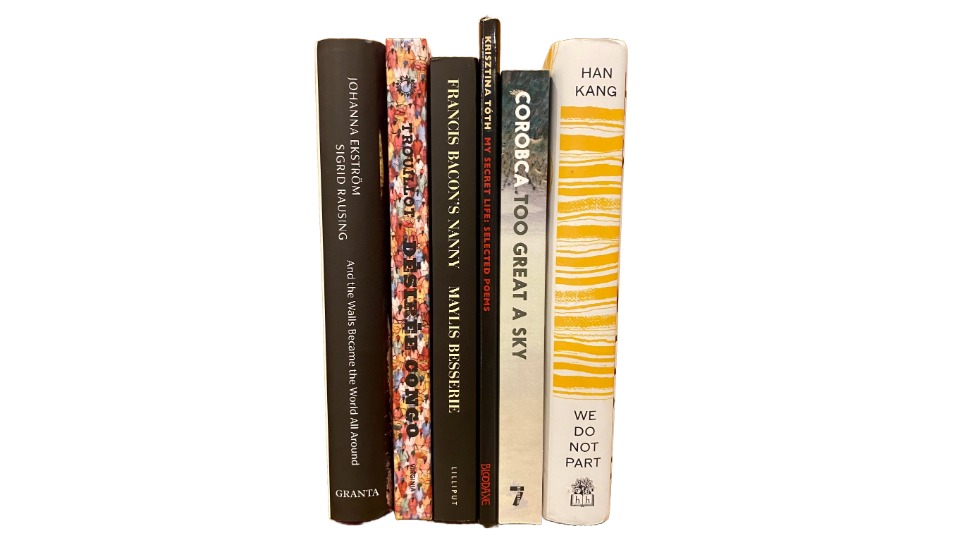
The 2025 shortlist, in alphabetical order, comprises:

Image of the shortlisted books

And the Walls Became the World All Around by Johanna Ekström and Sigrid Rausing (Sweden) (biographical memoir)

translated from Swedish by Sigrid Rausing (Granta)

And the Walls Became the World All Around Johanna Ekstrom translated by Sigrid Rausing

– Johanna Ekstrom was a Swedish artist and writer who published over a dozen books of poetry, fiction and memoir in her lifetime. In 2022, ill with cancer, she asked her closest friend, Sigrid Rausing, to edit and finish her final book. Originally a memoir on the loss of a relationship during the pandemic, the focus shifted from the loss of love to, potentially, the loss of life.

These excerpts from Ekstrom’s notebooks interwoven with Rausing’s reflections on the text and on their friendship are a testament to a voice and a life; a book made in grief over the loss of a close friendship of over thirty years.

Désirée Congo by Evelyne Trouillot (Haiti) (Historial fiction)

translated from French by M.A. Salvodon (University of Virginia Press)

Desiree Congo by Evelyne Trouillot

– Désirée Congo is a riveting, powerful, original novel set in the final years of the Haitian Revolution. In this richly textured work, Trouillot constructs an intricate web from the varied experiences of freedmen and women, maroons, enslaved African people and their Creole children, as well as French planters and white smallholders in colonial Saint-Domingue at a historical moment of upheaval.

A lyrical book whose characters enrich our understanding of the last confrontations between Haitian revolutionaries and Napoleon’s imperial forces; a conflict that resulted in the success of the largest slave revolt in recorded history and the independence of the first Black state in the western hemisphere.

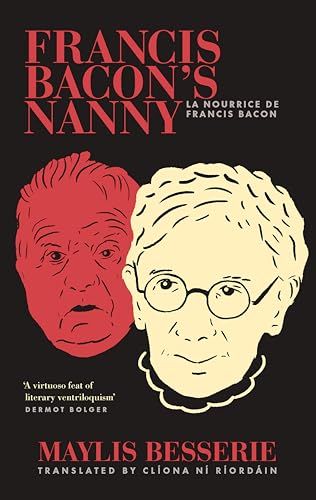
Maylis Besserie, Francis Bacon’s Nanny (France) (Historical Fiction/ 20th Century Irish Art)

translated from French by Clíona Ní Ríordáin (The Lilliput Press)

Francis Bacon's Nanny by Mayliss Besserie translated from French by Clíona Ní Ríordáin

– At the centre of the life of the great artists was an unexpected life-long influences Jessie Lightfoot shielded a young Francis Bacon from the brutish violence of his bullying father, as well as from his worst self-immolating excesses later in life. The tenderness, wit and warmth of this inimitable Nanny stands in illuminating relief to the sulphurous palette that defined Bacon’s work.

Beyond the humour and heart of an extraordinary woman confronted with the shade and guile of the art world, Maylis Besserie offers a glimpse of Ireland in the first half of the 20th Centure, a place apart from the rest of the world, whose landscapes, imagery and animals haunted the painter’s canvases.

In the final of Maylis Besserie’s trilogy, her focus on the art and lives of artists who crossed borders between France and Ireland closes as Bacon confronts boundaries between the real and the imagined.

Krisztina Tóth, My Secret Life : Selected Poems (Hungary)

translated from Hungarian by George Szirtes (Bloodaxe Books)

My Secret Life, Krisztina Tóth (Hungary)
translated from Hungarian by George Szirtes

– Krisztina Tóth is one of the leading Hungarian poets of the generation who began publishing in the late 1980s. The recipient of many awards, she is also renowned for her fiction which has been translated into many languages including English.

My Secret Life is the first book of Krisztina Tóth’s poetry in English translation. The poems were selected by her from five of her nine published collections, with the addition of some new or previously uncollected poems.  This retrospective is translated by George Szirtes, winner of The King’s Gold Medal for Poetry, 2024.

‘Her work has the nervous energy of the times but is shaped by a deep and disciplined intelligence. Her subjects are invariably human. They are concerned with love, family, friendship, loss, and a kind of existential disaffection. Tragic in one sense but ever inventive, full of life’s minute yet highly resonant particulars, they seem to extend into an almost cinematic narrative about the cruelties of factory farming, murder, ageing, the treatment of women as sex toys and death itself. She is a bravura formalist when she needs to be. Her vigour and scope are enormous.’ – George Szirtes

Liliana Corobca, Too Great A Sky (Romania) (Historical fiction)

translated from Romanian by Monica Cure (Seven Stories Press UK)

The story of the deportation of Romanians from Bukovina to the steppes of Siberia in World War Two, an exercise in historical memory and a powerful story of maintaining humanity in impossible conditions.

Ana is eleven when the Soviet soldiers send her from Bukovina, Romania, to Kazakhstan. She is just one of many forced to leave behind her home and make the three-week long journey via freight train. The trip is a harsh, humiliating one, but in spite of the cold and the closeness of death, life persists in the train wagon in the form of storytelling, riddles, and ritual.

Years later, Ana recalls her childhood for her great-granddaughter, who is considering moving her to a nursing home. Her story, told with unflinching candour, is a chronicle of a life lived during a time of great political and national change, a story of an existence defined and curtailed by lines drawn on a map.

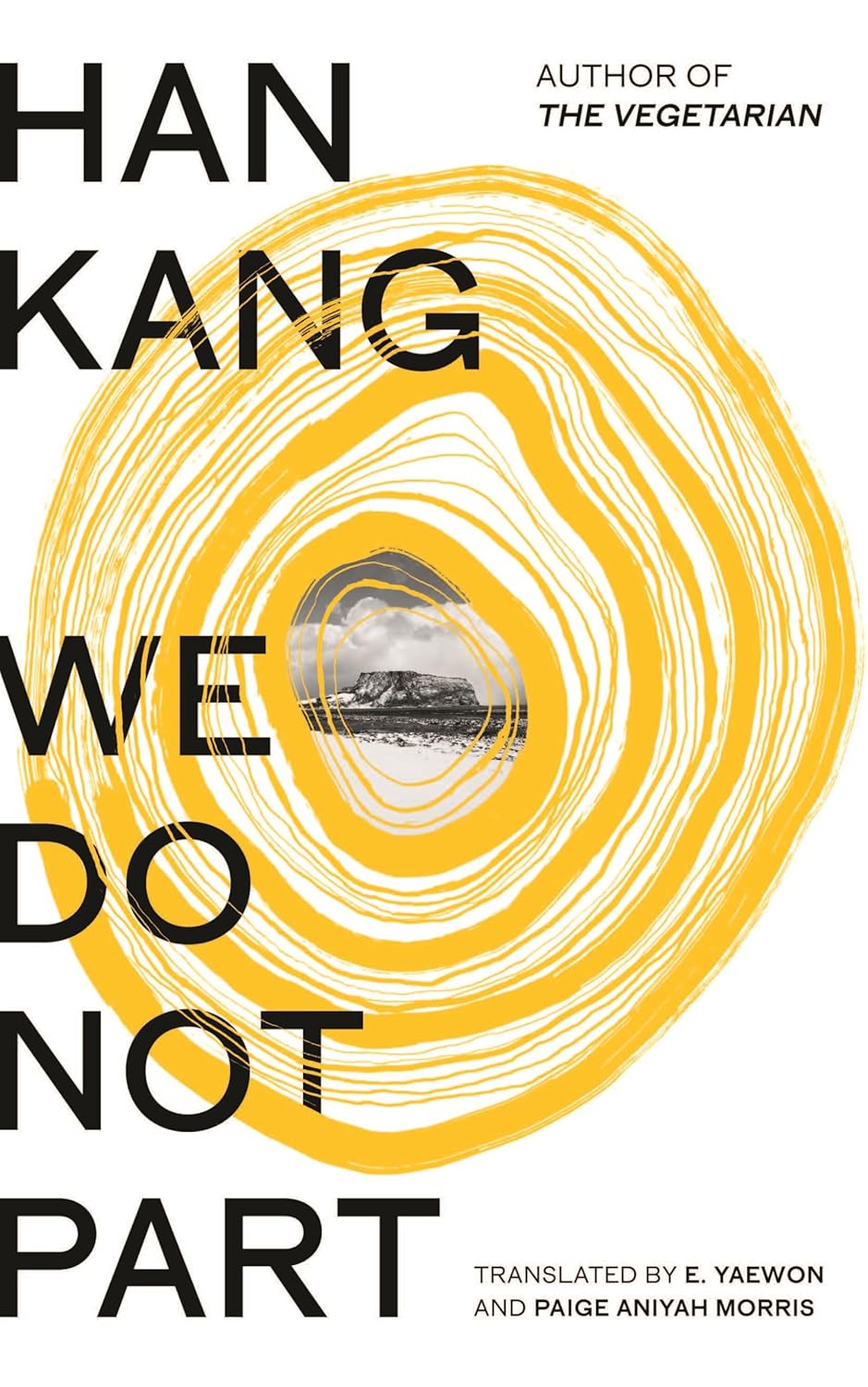
Han Kang, We Do Not Part (South Korea) (Historical fiction)

translated from Korean by e. yaewon and Paige Aniyah Morris (Hamish Hamilton, Penguin Random House UK)

We Do Not Part Han Kang shortlisted Warwick Prize for Women in Translation

– One morning in December, Kyungha is called to her friend Inseon’s hospital bedside. Airlifted to Seoul for an operation following a wood-chopping accident, Inseon is bedridden and begs Kyungha to take the first plane to her home on Jeju Island to feed her pet bird, who will quickly die unless it receives food.

As Kyungha arrives a snowstorm hits. Lost in a world of snow, she begins to wonder if she will arrive in time to save the bird – or even survive the terrible cold that envelops her with every step. She doesn’t yet suspect the darkness awaiting at her friend’s house.

There, the long-buried story of Inseon’s family surges into light, in dreams and memories passed from mother to daughter, and in a painstakingly assembled archive, documenting the terrible massacre 70 years before that saw 30,000 Jeju civilians murdered.

We Do Not Part is a hymn to friendship, a eulogy to the imagination, and above all a powerful indictment against forgetting.

* * * * * *

The winner will be announced on 27 November 2025 at a ceremony in London. 

Have you read any of the six books shortlisted? Let us know in the comments below.

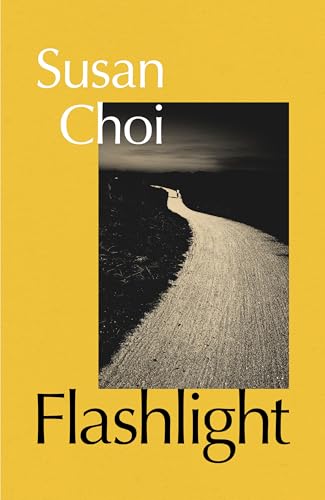
Flashlight by Susan Choi

As I mentioned in the Booker Prize shortlist post, this is one of the two shortlisted novels I’m reading before the winner announcement on Nov 10.

Cross Cultural Relationships, Identity and Belonging

Flashlight interested me because it is a portrayal of a cross-cultural marriage and family that highlights the tensions between adults with different backgrounds and expectations, coping within one culture and the way a child of that union navigates both her life and her parents, when she comes from them both.

Flashlight by Susan Choi set in Japan USA and North Korea

The novel begins with a scene plucked from the middle of the story, when ten year old Louisa and her father Serk are out for a walk in the early evening, in a coastal town in Japan.

Serk was born in Japan to Korean parents and while furthering his education in America, met Louise’s mother Anne. The family are in Japan on a one year secondment from his American university.

Hours later, Louisa is found washed up on the beach and her father is missing, presumed drowned.

Finding One’s Place Nowhere

The story then returns to the beginning, where we learn of the childhoods and upbringing of Serk in Japan and Anne in America, of his attachment to Japan and his success in school, while his family long to return to Korea (having not told him earlier where they were from) and wish their children to attend another school where they can learn about their culture and identity.

To learn it was not Japanese but Korean was so profoundly disorienting that the greater discovery, that he himself was Korean, was for the moment secondary.

As Serk matures, he comes to understand the ambiguous nature of nationality and belonging, of being caught between two nations, perceived and treated as an outsider by both of them; American thus becomes both an escape and an even greater frustration.

…disillusioned as he was, when his parents decided to abandon Japan he was dumbfounded.

Photo by Chen Te on Pexels.com

The first half of the novel, prior to his disappearance has the feel of domestic fiction as the family navigate the intimate dramas of their lives and find their way.

Both Serk and Anne have withheld parts of their lives from each other and this adds tension to their marriage, as these things are sensed but unknown, or threaten to become visible, ultimately undermining their relationship.

That fall, Serk’s college announced it would send a member of its history department as a visiting professor to Japan, starting the following April. Before the history professor was chosen, Serk was asked if he would like to be considered and said he would not.

Louisa becomes partially aware of their secrets, adding to her own confusion and struggle to find a sense of belonging.

When Louisa hated her mother, it was because the thought of her caused her so much pain.

When she hated her father, it was because she was conscious of emulating his remoteness.

Shattered Lives Separate

In the second half of the novel, the family is no longer a cohesive unit, their lives diverge and chapters are then told from each character’s separate location and perspective. The pace changes, an element of mystery appears in the timeline and there was such a feeling of a true-crime element, that I paused reading and checked the back of the book for a bibliography. Sure enough, there are 15 works of fiction and non-fiction referenced, very revealing.

What Really Happened to the Disappeared

Photo by Lara Jameson on Pexels.com

As the mystery of what happpened to Serk is revealed, other characters appear who are searching for their own disappeared and thus stories of a similar nature are discovered, told with such detail that they seemed as though true.

So while the novel continues, it also provides an insight into historical tensions between Japan and North Korea and the untold stories of a number of families whose tales of missing members of their family were ignored and disbelieved until subsequently proven to be true.

I don’t want to reveal too much more than what you can read in the blurb, because encountering the story is all the better for not knowing. Not everything that occurs is written, as each character chapter ends, we often know what is to be revealed and we fill that in ourselves, creating connections as the narrative leaps forward from one character to the next.

Perhaps no one but Anne, who had lived with him and tried for so long, could understand how impossible Serk made it to know the least thing about him. A constant wretched privacy had radiated from him, more powerful and more wretched the nearer you got.

An Illuminating Text

Flashlight was so many things, a complex story of a multi cultural family, the relinquishment of a child, four people whose lives came together then split apart, who we continue to observe, often decades later. It explores the effect on each person in the family of their culturally diverse pasts, their birth circumstance and the geographic moves they make that shift perceptions of who they are.

It exposes the cruelties of nations, abuses of humankind, the determination of those who seek the truth, the perseverance of those who want to bring justice and the importance of closure, of being present even when someone seems beyond comprehension.

What an effort to bring all that together and create a novel that traversed so many elements of the cross cultural family, the immigrant life, the (false) allure of the return, lost family members and the dangers of trying to find them. I was reminded a little of Jessica Au’s Cold Enough for Snow, but this is much less introspective and Min Jin Lee’s Pachinko, but with a different focus on aspects of history & family predicaments.

This was such an eye opening, thought provoking read that felt like reading two novels, the first half interesting but mundane and predictable, the second half mysterious, disconcerting and dangerous. For me it started a little slowly and almost methodically and then suddenly you become aware of a much greater story within which this narrative sits, and then it became completely absorbing and I didn’t want to put it down.

Highly Recommended.

Further Reading

Read an extract from Flashlight by Susan Choi

Flashlight is a sprawling novel that weaves stories of national upheavals with those of Louisa, her Korean Japanese father, Serk, and Anne, her American mother. Evolving from the uncertainties surrounding Serk’s disappearance, it is a riveting exploration of identity, hidden truths, race, and national belonging. In this ambitious book that deftly criss-crosses continents and decades, Susan Choi balances historical tensions and intimate dramas with remarkable elegance. We admired the shifts and layers of Flashlight’s narrative, which ultimately reveal a story that is intricate, surprising, and profound.’ Booker Judges

Author, Susan Choi

Born in South Bend, Indiana, Susan Choi is the author of six novels.

Her first novel, The Foreign Student, won the Asian-American Literary Award for Fiction. Her second, American Woman, was a finalist for the 2004 Pulitzer Prize. Her third, A Person of Interest, was a finalist for the 2009 PEN/Faulkner Award for Fiction. In 2010 she was named the inaugural recipient of the PEN/W.G. Sebald Award. Her fourth novel, My Education, received a 2014 Lambda Literary Award. Her fifth novel, Trust Exercise, won the 2019 National Book Award for Fiction – and was a US bestseller.  

Her sixth novel, Flashlight, began as a short story in the New Yorker in 2020, and won the Sunday Times Audible Short Story Award in 2021. She serves as a trustee of PEN America and teaches in Writing Seminars at Johns Hopkins University. 

Warwick Prize for Women in Translation longlist 2025

Fourteen titles have been longlisted for the 8th annual award of the Warwick Prize for Women in Translation. The 2025 competition received a total of 145 eligible entries from 34 languages.

The longlist covers 10 languages, with Slovenian represented for the first time in the history of the prize. 

The £1000 prize was established by the University of Warwick in 2017 to address the gender imbalance in translated literature and to increase the number of international women’s voices accessible by a British and Irish readership. 

“For this award that considers all genres on equal terms, the judges have found longlist places not only for fiction of all sorts – from fiercely contemporary short stories to the epic debut by one of the 20th century’s greatest literary voices. We have selected searing memoir too, and (this year) an especially rich haul of poetry. The poetry books stretch from luminous snapshots of everyday experience to immersive mythic narrative in verse. Like our prose selections, they demonstrate the vision and artistry both of the original authors – and of the translators who carry this precious cargo across languages and cultures. Without them, our imaginative worlds would be so much smaller, and poorer.”

The 14 longlisted titles are:

And the Walls Became the World All Around, Johanna Ekström & Sigrid Rausing (Sweden)

translated from Swedish by Sigrid Rausing (Granta) (Biography/Memoir)

– Johanna Ekstrom was a Swedish artist and writer who published over a dozen books of poetry, fiction and memoir in her lifetime. In 2022, ill with cancer, she asked her closest friend, Sigrid Rausing, to edit and finish her final book. Originally a memoir on the loss of a relationship during the pandemic, the focus shifted from the loss of love to, potentially, the loss of life.

These excerpts from Ekstrom’s notebooks interwoven with Rausing’s reflections on the text and on their friendship are a testament to a voice and a life; a book made in grief over the loss of a close friendship of over thirty years.

Désirée Congo, Evelyne Trouillot (Haitian)

translated from French by M.A. Salvodon (University of Virginia Press)

– Désirée Congo is a riveting, powerful, original novel set in the final years of the Haitian Revolution. In this richly textured work, Trouillot constructs an intricate web from the varied experiences of freedmen and women, maroons, enslaved African people and their Creole children, as well as French planters and white smallholders in colonial Saint-Domingue at a historical moment of upheaval.

A lyrical book whose characters enrich our understanding of the last confrontations between Haitian revolutionaries and Napoleon’s imperial forces – a conflict that resulted in the success of the largest slave revolt in recorded history and the independence of the first Black state in the western hemisphere.

Djinns, Fatma Aydemir (Kurdish)

translated from German by Jon Cho-Polizzi (Peirene Press)

– For thirty years, Hüseyin has worked in Germany, taking every extra shift and carefully saving, providing for his wife and their four children. Finally, he has set aside enough to buy an apartment back in Istanbul – a new centre for the family and a place for him to retire. Just as this future is in reach, Hüseyin’s tired heart gives up. His family rush to him, travelling from Germany by plane and car, each of his children conflicted as they process their relationship with their parents, and each other.

Reminiscent of Bernardine Evaristo or Zadie Smith, Djinns portrays a family at the end of the 20th century in all its complexity: full of secrets, questions, silence and love.

The Empusium, Olga Tokarczuk (Poland)

translated from Polish by Antonia Lloyd-Jones (Fitzcarraldo Editions)

– In Sept 1913, Mieczysław Wojnicz, a student suffering from TB, arrives at Wilhelm Opitz’s Guesthouse for Gentlemen, a health resort in what is now western Poland. Every day, residents gather to imbibe the hallucinogenic local liqueur, to obsess over money, status and to discuss the great issues of the day: Will there be war? Monarchy or democracy? Do devils exist? Are women inherently inferior?

Meanwhile, disturbing things begin to happen around the guesthouse. As stories of shocking events in the nearby highlands reach them, a sense of dread builds. Someone, or something seems to be watching them and attempting to infiltrate their world. Little does Mieczysław realise, as he tries to unravel truths within himself and the mystery of the sinister forces beyond, that they’ve chosen their next target.

A century after the publication of The Magic Mountain, Olga Tokarczuk revisits Thomas Mann territory and lays claim to it, blending horror story, comedy, folklore and feminist parable with brilliant storytelling.

Francis Bacon’s Nanny, Maylis Besserie (France)

translated from French by Clíona Ní Ríordáin (The Lilliput Press)

– At the centre of the life of the great artists was an unexpected life-long influences Jessie Lightfoot shielded a young Francis Bacon from the brutish violence of his bullying father, as well as from his worst self-immolating excesses later in life. The tenderness, wit and warmth of this inimitable Nanny stands in illuminating relief to the sulphurous palette that defined Bacon’s work.

Beyond the humour and heart of an extraordinary woman confronted with the shade and guile of the art world, Maylis Besserie offers a glimpse of Ireland in the first half of the 20th C, a place apart from the rest of the world, whose landscapes, imagery and animals haunted the painter’s canvases.

In the final of Maylis Besserie’s trilogy, her focus on the art and lives of artists who crossed borders between France and Ireland closes as Bacon confronts boundaries between the real and the imagined.

Hungry for What, María Bastarós (Spain)

translated from Spanish by Kevin Gerry Dunn (Daunt Books Publishing)

– Violence and desire shatter the surface of the everyday in an exceptional collection of short stories.

A game between a woman’s father and husband simmers and boils into scalding danger; a daughter creates an elaborate feast for her grieving mother; a solar eclipse burns the emotions and truths of a suppressed neighbourhood into the open.

Foregrounding voices and experiences of women and children, veering from claustrophobic, suffocating suburbia to untamed nature and its great vistas of desert and sky, hungry for what focuses on the terror of normality, prising back its veneer of respectability to reveal the hostility & menace that seethe beneath.

Lies and Sorcery, Elsa Morante (Italy

translated from Italian by Jenny McPhee (Penguin Press)

– For years Elisa has lived in an imaginary world of her own but when her guardian dies, young Elisa feels compelled to confront the truth of her family’s tortured and dramatic history by telling the story of her mother, Anna, and grandmother, Cesira. Elisa is a seductive, if less than reliable, spinner of stories, drawing the reader into a tale of intrigue, treachery and self-delusion, which is increasingly revealed to be an exploration of a legacy of political and social injustice.

First published in 1948, Elsa Morante’s novel won the Viareggio Prize & earned her the lasting admiration of writers such as Italo Calvino and Natalia Ginzburg.

My Secret Life, Krisztina Tóth (Hungary)

translated from Hungarian by George Szirtes (Bloodaxe Books)

My Secret Life is the first book in English translation by one of the leading Hungarian poets of the generation who began publishing in the late 1980s. The poems in My Secret Life were selected from three of nine published collections, with the addition of some new or previously uncollected poems. 

Phantom Pain Wings, Kim Hyesoon (South Korea)

translated from Korean by Don Mee Choi (And Other Stories)

– Winged ventriloquy – a powerful new poetry collection channelling the language of birds by one of South Korea’s innovative contemporary writers. An iconic figure in the emergence of feminist poetry in South Korea and now internationally renowned, Kim Hyesoon pushes the poetic envelope into the farthest reaches of the lyric universe. In her new collection, Kim depicts the memory of war trauma and the collective grief of parting through what she calls an “I-do-bird-sequence,” where “Bird-human is the ‘I.’”

Too Great A Sky, Liliana Corobca (Romania)

translated from Romanian by Monica Cure (Seven Stories Press UK)

– The story of the deportation of Romanians from Bukovina, an exercise in historical memory which demonstrates how to maintain humanity in impossible conditions.

Translation of the Route, Laura Wittner (Argentina)

translated from Spanish by Juana Adcock (Bloodaxe Books & Poetry Translation Centre)

– In poems that are precise, frank & finely tuned, award-winning Argentine poet Laura Wittner explores the specificities of parental and familial love, life after marriage, and the re-ignition of the self in middle age.

Un Amor, Sara Mesa (Spain)

translated from Spanish by Katie Whittemore (Peirene Press)

– Fleeing from past mistakes, Nat leaves her life in the city for the rural village of La Escapa. She rents a small house from a negligent landlord, adopts a dog and begins to work on her first literary translation. But nothing is easy: the dog is ill tempered and skittish and misunderstandings with her neighbour’s thrum below the surface. When conflict arises over repairs to her house, Nat receives an unusual offer that tests her sense of self, challenges her prejudices, and reveals her most unexpected desires. As she tries to understand her decision, the community of La Escapa comes together in search of a scapegoat.

Vanishing Points, Lucija Stupica (Slovenia)

translated from Slovenian by Andrej Peric (Arc Publications)

– Lucia Stupica’s 4th book of poetry comes after a decade of silence allowing her poetic voice to become more complex and sensitive to the cracks in time and in the world through which she observes fragments of life – imperfect, painful and real. Her expression retains its tenderness, establishing a deep dialogue with the world, the past and the present, with appearances and the things they conceal.

In an attempt at a new understanding of the world, Stupica writes of the role of women as the hidden movers of history, and the role of those, be they a man, a child or a random stranger, who see the experience of the other, and are open to it. These poems of love, loss, mystery and what lies beyond our understanding make for a haunting and memorable collection in Andrej Peric’s beautiful translation.

We Do Not Part, Han Kang (South Korea)

translated from Korean by e.yaewon & Paige Aniyah Morris (Hamish Hamilton, Penguin Random House UK)

– One morning in December, Kyungha is called to her friend Inseon’s hospital bedside. Airlifted to Seoul for an operation following a wood-chopping accident, Inseon is bedridden and begs Kyungha to take the first plane to her home on Jeju Island to feed her pet bird, who will quickly die unless it receives food.

As Kyungha arrives a snowstorm hits. Lost in a world of snow, she begins to wonder if she will arrive in time to save the bird – or even survive the terrible cold that envelops her with every step. She doesn’t yet suspect the darkness awaiting at her friend’s house.

There, the long-buried story of Inseon’s family surges into light, in dreams and memories passed from mother to daughter, and in a painstakingly assembled archive, documenting the terrible massacre 70 years before that saw 30,000 Jeju civilians murdered.

We Do Not Part is a hymn to friendship, a eulogy to the imagination, and above all a powerful indictment against forgetting.

* * * * * *

I have not read any of these titles, though I have read Han Kang’s extraordinary Human Acts, which this new novel reminds me of. Here the Novel Prize winning author asks similar questions of humanity. Another Nobel Prize winning author Olga Tokarczuk, has a new book here; I enjoyed Drive Your Plow Over the Bones of the Dead, but looking out for the less familiar, I’m interested in Kurdish author Fatma Aydemir‘s Djinns and another Italian classic author Elsa Morante looks tempting, despite the length.

Now that I’ve created the summaries, I can reread them at a leisurely pace in one location.

Any that interest you from this list?

The winner will be announced at a ceremony at The Shard in London on Thursday 27th November.

Booker Prize Shortlist 2025

The winner of the Booker Prize 2005 will be announced on Monday November 10. I only read one novel from the longlist, Love Forms by Trinidad and Tobagan author Claire Adam (my review here). Initially, I perceived on the list as being too clever with the form, even if that is a characteristic of literary fiction, but then I saw two novels that fit my own preference, written by women, about lesser known cultures.

Below is a reminder of the six books on the shortlist being considered for the prize with a quote from the author and another from the judges answering different questions about each novel. You can read more interesting facts about the shortlisted authors here.

In the coming days I’ll share my thoughts on the two that I am reading, Flashlight by Susan Choi (my review here) and The Loneliness of Sonia and Sunny by Kiran Desai (my review here).

The Booker Shortlist 2025

Penned in English, these shortlisted books are worldly in settings and universal in their themes, often featuring characters living outside their familiar communities and cultures, navigating a diverse set of eye-opening challenges, exposing aspects of history and geopolitical issues from Hungary to Japan, from Venice to New York, from India to England’s West Country.  

If you click on the title of the book, you can read an extract from the novel:

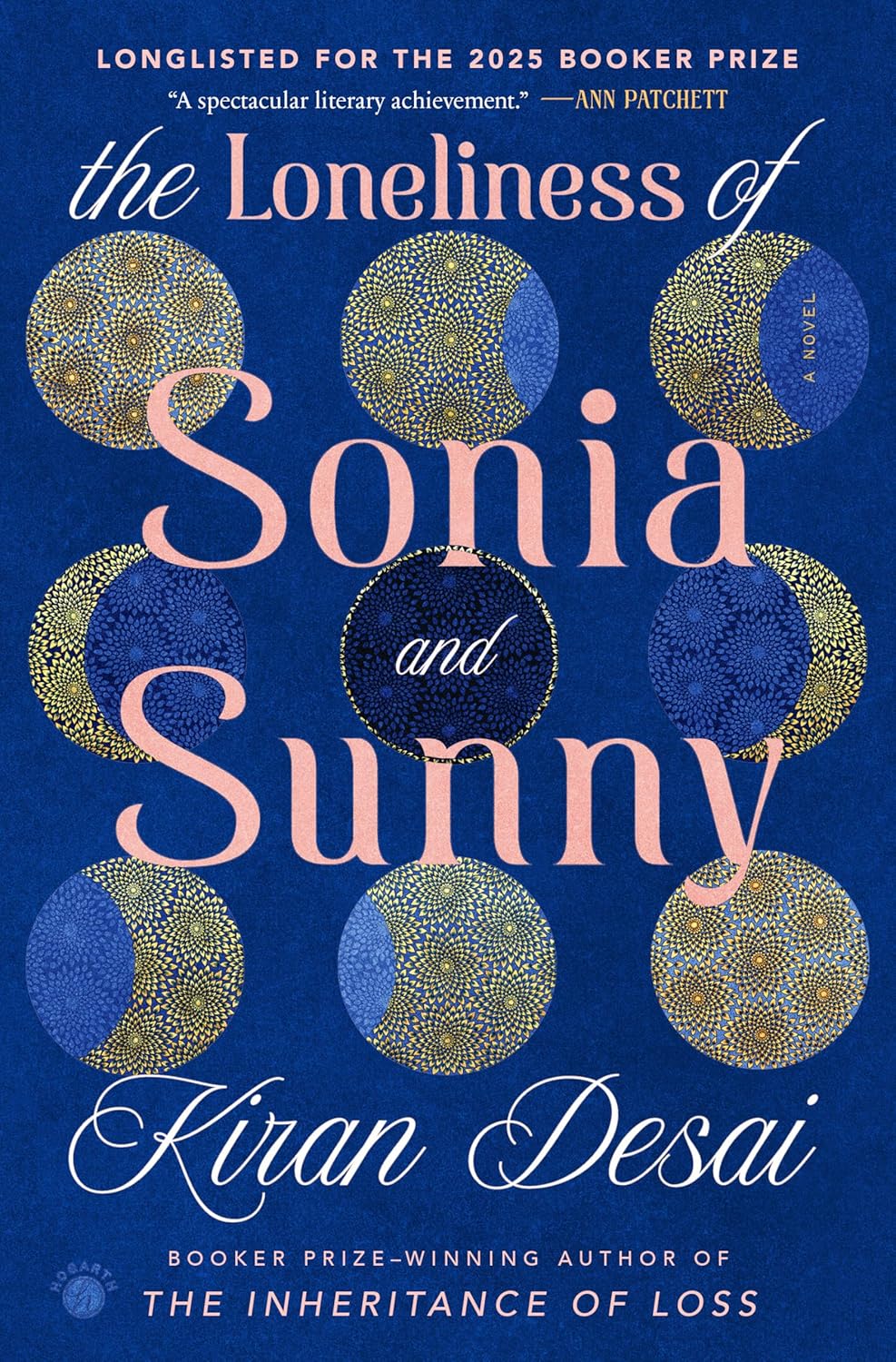
The Loneliness of Sonia and Sunny by Kiran Desai (India)

‘I wanted to write a present-day romance with an old-fashioned beauty’

The Loneliness of Sonia and Sunny is the epic tale of two young people navigating the many forces that shape their lives: country, class, race, history, and the complicated bonds that link one generation to the next. A love story, a family saga, and a rich novel of ideas, it is said to be the most ambitious and accomplished work yet by one of our greatest novelists. 

What do you think it is about this book that readers will not only admire, but really love?  

Its rich intricacies and the sheer bounty each page offers. Inter-generational family saga, sharp humour, poignant love story, state-of-the-nation novel, this book has it all. As a result, reading The Loneliness of Sonia and Sunny is an immersive, wonderful experience. 

Flashlight by Susan Choi (US)

‘Reading a great book feels like being dropped onto an alien planet’

Flashlight by Susan Choi set in Japan USA and North Korea

Flashlight moves between the post-war Korean immigrant community in Japan, to suburban America, to two children trying to forge their own identities, and an eye-opening venture into the fate of those returned to North Korea, an astonishing story of one family swept up in the tides of 20th-century history. 

What do you think it is about this book that readers will not only admire, but really love?  

The scale of it, and the life-spanning trajectories of these characters of whom we get such intimate knowledge: all their drama and pain and, very occasionally, their joy. We found Flashlight to be one of those books that completely dominates your thoughts while you’re reading it. 

Audition by Katie Kitamura (US)

‘As a culture, we’re becoming quite bad at holding a contradiction in our heads’

– An exhilarating, destabilising novel that asks whether we ever really know the people we love. In this compulsively readable, brilliantly constructed novel, two competing narratives unspool, rewriting our understanding of the roles we play every day – partner, parent, creator, muse – and the truths every performance masks, especially from those who think they know us most intimately.

Is there something unique about this book, something that you haven’t encountered in fiction before?  

Yes, the way Kitamura transitions between supposed reality – modern-day Manhattan – and something deeper and stranger, is bracing. She doesn’t hand-hold or explain, which some might see as a kind of hostility towards the reader. We saw it as a marker of trust. 

This is a very controlled performance of a book that intentionally leaves a lot open to interpretation. We think readers will love finding others who’ve read it and talking to them about what it all might mean.  

The Rest of Our Lives by Ben Markovits (US)

‘I wanted to write about a certain period of family life coming to an end’

The Rest of Our Lives by Ben Markovits

– An unforgettable road trip of a novel about a middle-aged academic whose marriage, career and body are failing him. Pitch perfect, quietly exhilarating and moving, The Rest of Our Lives is a novel about family, marriage and those moments which may come to define us.

What do you think it is about this book that readers will not only admire, but really love? 

Tom is not a literary king – he’s a dad and basketball enthusiast. We think readers will admire and enjoy high-concept analysis recounted by a ridiculously relatable narrator. 

The star of this novel is Tom’s voice: the lodestar and the ‘why now’. He is a democratic guide, he’s delightfully embarrassed, and he is as observant as he is negligent. But what’s most impressive is Markovits’ dedication to Tom as an averagely flawed human. Tom makes bad jokes, he’s a pushover, and it’s difficult to imagine being taken with him in person. 

The Land in Winter by Andrew Miller (UK)

‘I’ll write anywhere, with anything, on anything’

The Land in Winter Andrew Miller Booker Prize 2025

– A masterful, page-turning examination of the minutiae of life and a dazzling chronicle of the human heart. As the ordinary cold of an English December gives way to violent blizzards, two couples find their lives beginning to unravel.  
  
Where do you hide when you can’t leave home? And where, in a frozen world, can you run to? 

Although it’s a work of fiction, is there anything about it that’s especially relevant to issues we’re confronting in today’s world?  

The novel is set during the harsh winter of 1962-63 and, given what’s been happening to the weather since then, a harsh winter would be reassuring. But the novel is about the tensions within marriage and other relationships and those tensions are the same today as they were back then. How to live: that’s the big human issue and it forms the spine of the book. 

Flesh by David Szalay (Hungary-UK)

‘I wanted to write about what it’s like to be a living body in the world’

Flesh by David Szalay Booker Prize 2025

– A propulsive, hypnotic novel about a man who is unravelled by a series of events beyond his grasp. Fifteen-year-old István lives with his mother in a quiet apartment complex in Hungary. As the years pass, he is carried gradually upwards on the 21st century’s tides of money and power, moving from the army to the company of London’s super-rich, with his own competing impulses for love, intimacy, status and wealth winning him unimaginable riches, until they threaten to undo him completely.

What do you think it is about this book that readers will not only admire, but really love? 

Flesh is a disquisition on the art of being alive, and all the affliction that comes along with it, but it is also an absolute page-turner. It’s nearly impossible to put down. The emotional detachment of the main character, István, is sustained by the tremendous movement of the plot. The pace of this novel speaks to one of the greater themes; the detachment of our bodies from our decisions. 

* * * * * *

Have you read any of these novels from the shortlist? Do you have a favourite to win?

Somebody Is Walking on Your Grave by Mariana Enriquez tr. Megan McDowell #RIPxx

My Cemetery Journeys

Someone is Walking On Your Grave My Cemetery Journeys Mariana Enriquez

Argentinian author Mariana Enríqeuz is known for unconventional and sociopolitical stories of the macabre, amid contemporary Argentina. Her stories are populated by unruly teenagers, crooked witches, homeless ghosts and hungry women walking the troubled line between urban realism and literary horror.

Though I’ve seen her Gothic titles on the International Booker shortlist, an overactive imagination has constrained my curiosity to venture further until now.

When I saw that Granta were publishing a memoir-like collection of essays that chronicle her travels through graveyards of the world, steeped in history, legend and local culture, I was more than intrigued, I wanted to take that journey with Mariana Enriquez as my guide.

One Woman’s Obsession and Another’s

This is not fiction, it’s a journalistic travel diary, beginning with her first teenage encounter in Genoa, Italy, spanning years of visits and curating the experiences that came with them, and a potted history of characters she momentarily became obsessed with while visiting 21 cemeteries across four continents.

I admit that I have my own obsession with cemeteries, though not to visit them or to seek out historical characters; my interest is in the words left behind, the clues that help me recreate a lineage.

I discovered that it is possible to do that online through ‘Find a Grave’, another way to find ancestors and fill in the gaps in a family tree, creating one’s own virtual cemeteries populated with the memorials of those who came before.

Lest we forget or should we never have known and have a compulsion to awaken our soul remembering. I visit these virtual creations, solve some of their mysteries and see into the lives of those forgotten, as if they were there, tapping me on the shoulder inviting me to come and witness how it was.

A Goth Flaneur Coming of Age

From that very first essay about her journey as a 25-year-old to Italy with her mother I was hooked. Mariana Enriquez described herself as a ‘goth‘ from about the age of six years old and in her book, travels to cities and obscure locations around the world with the aim of visiting a place of rest, unravelling stories as she goes.

In her gripping, journalistic style, she shares why each graveyard was important to visit, whether part of an interesting historical aspect, or because of a particular personality, or a rumour about the strange things that allegedly happen there. It surprised me initially that many of these places require security, some even have ticket offices, because strange things can happen in broad daylight as well as the dead of night.

Each essay gives the country and location of the cemetery and the year she visited and sometimes there is a photo of a particularly interesting sculpture. In an NPR interview with Ayesha Rascoe, she expanded on her youthful inclinations and inspiration in seeking out these places of rest.

Reading Edgar Allen Poe – and then with the years, I learned that also cemeteries have a lot to say about life, about the history of the people. And then Argentina in the ’70s, the decade where I was born, had a dictatorship that made a lot of bodies disappear. Therefore, there’s a generation of people that were killed by the government, and they don’t have a grave.

I realized that that trauma, that is very engraved in my life, somehow made me feel that a grave, a tombstone – it’s something of comfort. It’s a final thing in a good way.

Death and the Maiden, Staglieno

So it begins with Death and the Maiden, Monumental Cemetery of Staglieno, Genoa in 1997 and this essay is literally the initial seduction into the collection, Mariana’s mother had enough money to take her first trip to Europe and invited her daughter along.

Genoa wasn’t her priority; when read of the places in Italy that were, I’m drawn down literary, art and historical rabbit holes in delight. But Staglieno at least had graves that featured on the cover Joy Division‘s single Love Will Tear Us Apart, even if she had never liked them.

In a public square in Genoa is where she meets the perfect goth boy playing violin, an Italian Englishman, like a creature out of Mary Shelley or Byron. Someone to accompany her on her pilgrimage.

Enzo was the most beautiful creature I had ever seen. At least for me, for my idea of beauty, which is shadowy and pale and pliant, black and blue, a little moribund but happy, more dusk than night.

Welsh Immigrants in Patagonia

When Enriquez travels to Trevelin Cemetery in Chubut, Agentina, 2009, I learn about the Welsh who left their homeland to settle in Patagonia in 1865. Having been exploited and discriminated against in the United Kingdom and fearing losing their language and identity, 153 Welsh men, women and children boarded the ship Mimosa and arrived in a place that was something of a disappointment, but became the most significant Welsh colony in Argentine Patagonia.

I learn about characters from this group, the little known history that explains the proliferation of Jones, Thomas and Evans, the foreign words on the gravestones, in a place where many today still speak Welsh.

The Mountains of San Sebastian to Rottnest Island

From English soldiers buried in forest graves on a Basque mountain near San Sebastian in Spain, I read of more minor historical events and wonder about the meaning of the words on the chapel, “Every hour wounds; the last one kills.” So many stories and mystery among the remains.

In 2007, she accompanies her Australian boyfriend Paul who works as a bike mechanic on Rottnest Island, half an hour from Freemantle in Western Australia. A stable, long distance relationship that is headed towards marriage and an outsider’s view of a curious part of the world where the lead singer of AC/DC came of age, went to jail and is buried. She wants to see his grave.

The place has a booming real estate market, houses with yards full of healing crystals and fairies, collectors of all kinds who exhibit their cabinets of curiosities in the streets, artists, musicians, and a sparse but continuously fluctuation itinerant population linked to the port – people who can be unhinged, unstable and on occasion violent.

Weirded out by the hotel-asylum they’re staying in, she takes the ferry to the island, once inhabited by the Noongar Aborginal people, also used as a prison and visits the burial grounds, unearthing more story of post-colonial and indigenous poeples.

Savannah to New Orleans to Cuba to Edinburgh

I don’t wish this make this overly long, because I feel like I could write paragraphs on every essay; they are so interesting, quirky, incredible and speak so much to the different cultures they inhabit, from a very different perspective than what anyone would usually encounter visiting a foreign country.

If you came from New Orleans, I guess you would know about the vibrant characters that inhabit it, both the living and the dead. I did not know that it is the site of the second most visited grave in American after Elvis, that of the 19th century midwife, herbalist and philanthropic Voodoo practitioner of French, Spanish and African origins Marie Laveau.

Then there was the controversy surrounding the Pietro Gualdi marble sculpture of a seated woman in a robe holding a bouquet of flowers that Dennis Hopper and Peter Fonda requested permission from the Italian Society to use in the tomb scene of Easy Rider. Suffice to say all requests since then have been denied. And Nicholas Cage’s pyramid? A pharaonoic tomb waiting for a body.

Frankfurt was brief, Cuba was fascinating and macabre and sad after the friend who hosted her became the first close associate whom death claimed. Savannah was touristy and disappointing, I mean how could the book cover of John Berendt’s novel Midnight in the Garden of Good and Evil have caused such havoc and chaos to a place of rest?

Edinburgh was crowded, full of folklore; people visiting the graves of random names J.K.Rowling chose as characters for her Harry Potter books. Bizarre comes in so many different forms, real, imagined and just because.

Taphophilia Syndrome and the Magnificent Seven

I learn a new word. Taphophile, people who are passionate about cemeteries, memorials, and the history they hold. And Taphophilia syndrome? An abnormal attraction for graves. Who knew there were so many?

The visit to London’s Highgate cemetery fascinated me because I lived so close to it for some years, yet never had an inclination to visit. Audrey Niffenegger’s Her Fearful Symmetry, set in the cemetery sat unread on my shelf for years. To read about it here and what the author encountered there was like stepping into another realm, as all these places are, existing in the in-between.

Highgate and London’s Magnificent Seven created from 1833-1841 just demonstrated to me how little the living can be aware of the cult of the dead right next door.

Day of the Dead 1-2 November

Mexico seems to be the only country that retains a feeling of celebration around the departed. Though she visits and writes of its traditions, Enriquez has never been there for the Day of the Dead, when souls return and are welcomed to their family home to eat with their living relatives.

Here in France 1 November is the public holiday Toussaint (All Saint’s Day) and there is a mass visitation to cemeteries all over the country, when families visit, tidy up, pay their respects and bring chrysanthemum’s to family graves.

The Mexican anthropologist Alfonso Alfaro said, “We are a people who maintain a privileged relationship with death.” And the art critic Luis Cardoza y Aragon wrote:

Death is a universal theme of human expression. Mexico’s feeling toward death, the familiarity, tenderness and simplicity in its treatment of death, its obsession, which it sees as neither tragic nor funereal, but rather nuptial and natal, imbued with an immediate everydayness, an imperious and serene visibility, characterized more by cascading laughter than lamentation – it all harbours the unlearned wisdom of a cosmic and playful conceptualization, as if in perpetual amazement, that is particular to Mexico.

Prague to Paris to Eva Peron and the Disappeared

Prague has its legends but is overrun by tourists; Mariana resists and admits maybe it’s because she’s not a fan of Kafka.

In Paris, I hear of the fascinating history and grisly dilemma of 12th century Holy Innocents Cemetery in the Les Halles quarter that lead to the creation of the Montmartre catacombs. And a visit down there.

Eventually the journey comes full circle to Buenos Aires, Argentina, to the aristocratic Recoleta Cemetery, where Eva Peron is buried. Described once as ‘Venice without the canals’ it has ostentatious vaults like palaces along narrow streets, where everything is above ground, a way of showing off grandeur.

Peron’s journey there is an enthralling tale of body snatching, written about in Santa Evita by Tomas Eloy Martinez. A macabre story, it is one that Enriquez shares with freinds visiting the cemetery, one she told her husband Paul on their first date, that turned into a second date, though not everyone reacts that well she admits.

The Appartition of Marta Angélica

Part of the reason to write these stories came from reflections when her friend’s mother’s remains were identified after being found in a mass grave, having disappeared thirty-five years previously, kidnapped, disappeared and presumed killed, by the military dictatorship in Argentina.

“for someone like me who grew up in a dictatorship that had the peculiarity of making bodies disappear,” the idea of a tomb and of a cemetery was overshadowed by the political trauma.

The idea of no burial, no grave, no funeral rite, that’s what’s traumatic for me.”

Thank you for patiently reading, if you made it this far.

I absolutely loved and was riveted by this book of essays. I read it over the course of a month or so, it was too interesting and thought provoking and worldwide encompassing to read too quickly. It surprised me how compelling it was, with the right blend of personal story, characters met on her travels, fascinating known and unknown history and the insights into different cultural rituals and treatment of the subject of death, burial and even the movement and perceived ownership of or control over bodies. It gives even more meaning to those letters RIP.

Highly Recommended.

Further Reading

Mariana Enríquez Essay: Notes on Craft – on writing dark fiction

NPR Interview : ‘Somebody Is Walking on Your Grave’ – a journey to cemeteries across 4 continents

Author, Mariana Enríquez

Mariana Enríquez is an award-winning Argentine novelist and journalist, whose work has been translated into more than twenty languages.

She is the author of Things We Lost in the Fire and The Dangers of Smoking in Bed, which was shortlisted for the 2021 International Booker Prize. Our Share of Night was awarded the prestigious Premio Herralde de Novela.

“People often ask me why I like to write dark fiction. Horror. Weird tales… There is something about horror and dark fiction that is familiar and homely, and at the same time, always audacious. It’s with this language that I can explain myself and explain what I worry about.”

N.B. This book was an ARC (Advance Reader Copy) kindly provided by the publisher via NetGalley.