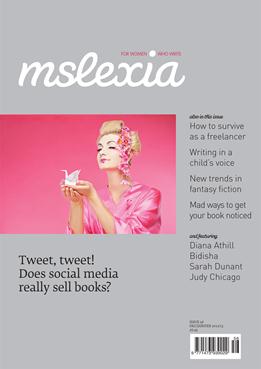
mslexia – for women who write

I’ve been subscribing to mslexia magazine for a few years now and since it is both a great stimulant to the writing process as well as an excellent source of reading recommendations and a directory of sorts, I thought I’d share a little about it.

Mostly I like it, because it doesn’t feel in any way elitist, this is a kind-hearted, generous resource, contributed to and read by ordinary women who like to write, including many who like me, don’t participate in this activity as a job, but manage to scribble away for a few hours each week – read this and you realise you are part of a large, like-minded community of women who believe in making the impossible possible.

It might be published in the United Kingdom, but it has a very international flavour and inclusive attitude, important when you live outside your country of birth and don’t write in the language of your country of residence and want to participate.

mslexia (ms = woman, lexia =words) is a quarterly publication with feature articles on some aspect of writing (and open to idea submissions), an interview with a published writer, featured short stories or poetry written to the issue theme, or winning entries from the regular competitions they run.

It was Issue 48 in Jan/Feb/Mar 2011 that introduced me to the writer Susan Hill, just as her short novel A Kind Man was being released and I’ve since read three more of her books.

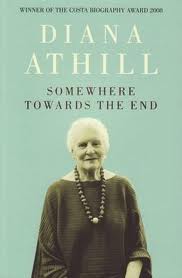
In the latest edition there is a wonderful interview with Diana Athill, what an inspiring woman she is, winning the Costa biography award at 91 with her book Somewhere Towards the End and still writing from her North London residential retirement home.  She says it how it is and cites Jean Rhys’ for teaching her this, she mines her own experiences for a story, and cautions against being cruel to others, “you can be ruthless about yourself, but not when writing about friends” – you can read an extract from the interview here.

athill“I have never understood how many writers moan and groan about how awful writing is. Absolute nonsense.” Diana Athill
Recently, they have been conducting mini-surveys of readers which are then incorporated into the lead articles and some of the smaller snippets of information found throughout the magazine. It is extremely readable, which I put down to the fact that there is a reasonable portion of bite-sized articles, such as letters, extracts from posts, emails, tweets, along with fun and short, contemporary submissions from writers under the headings of rants, raves, a week of tweets, monologue, pen portrait, how I keep going, four lines that rhyme, a poetry or book review. Something for everyone.
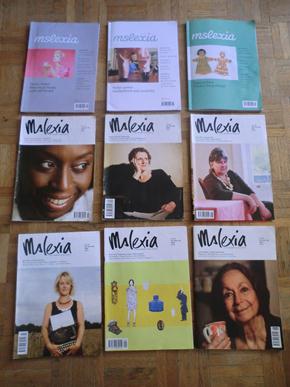
Each quarter there is a themed New Writing section, always an excellent writing prompt whether you are interested to submit or not, short narrative or story up to 2,200 words, prose or sometimes poetry, the successful entries appearing in a future edition. I have seen many women being published for the first time through these exercises.

There is an annual poetry and short story competition and in 2012 there was a children’s novel competition for unpublished women novelists.

In addition to all the wonderful information it lays at your fingertips, one of the things I love the most are the short bio’s of contributors, here is one from the 2009 poetry competition in which Pat Simmon’s touching poem ‘Jack discovers impermanence’ was a winner:

PAT SIMMONS, 64, was head of communications for ‘Send a Cow’, an African agricultural organisation, but has since retired. The conviction that whatever she writes will be rubbish stilts her creative progress, but an encouraging family keep her inspired and motivated. Finding writing by hand shackling, she works directly onto her laptop, a practice to which she wishes to dedicate more time. She was Blagdon’s 2005 Apple Wassail Queen – your guess is as good as ours – and on a trip to Rwanda was re-christened Munyanika: ‘As valuable as a cow.’

It is available online, but this is one publication that I like to have the physical magazine to read, there are so many gems and I return to back issues often. Oh and lets not forget the back page, always a delight to conclude with, ‘the bedside table‘, introduces an artist, author, intellectual or well-known personality who shares what’s currently on their nightstand, like gossip for book-lovers.

The next deadline of 18 March 2013 is for Issue 58: The Women’s Short Story Competition for stories up to 2,200 words on any topic. There are prizes for 1st, 2nd and 3rd and three other finalists will also be published in that issue of Mslexia. You don’t have to be   a subscriber to enter, just a woman.  Stories are accepted from any nationality and country.

Happy Writing!
Great Christmas Expectations

Blog in France is a lady with llamas who left Ireland to live in France and has organised a Christmas BlogHop which I am delighted to participate in, including a give-away, just leave a comment to be in the draw to win Paul Durcan’s book and do visit the fabulous blogs participating in this festive foray linked at the end of this post.

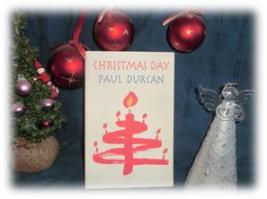
I’m sharing favourite Christmas reads and the first book that came to mind that has been my favourite since I heard the author read an extract at the Royal Festival Hall in London in 1997, is Paul Durcan’s Christmas Day.

Christmas Day is a 78 page prose poem that reminds us in a humorous way of those who won’t be sharing a traditional Christmas, whether by choice or because they find themselves far from family and friends, and of the traditions we partake in and even when we don’t, that seem to resonate within us anyway.

In cities across the world

I like sitting in churches doing nothing.

I like going to communion:

Standing in line and catching

Glimpses in night skies

Through x-rays of clouds

Of the thin white moon of the host.

The moment I took the decision

Not to go to Mass

I could feel life returning into my body,

My empty cistern filling up,

The Holy Spirit gurgling inside me.

It is a funny, subversive, somewhat melancholic conversation between two men – Paul and Frank who spend Christmas in Dublin trying to make it something, but not quite getting it right. It will have you laughing out loud, nodding your head in acknowledgement and realising the importance of reaching out to at least one person this Christmas.  Not only it is a terrific read, but I was so enamoured with his performance, I bought audio versions as gifts for family, his delightful Irish voice, much a part of the experience for me.

He is unafraid, masterful and exactly what this world needs more of: wild abandon, wild love and sheer mad genius. Alice Sebold

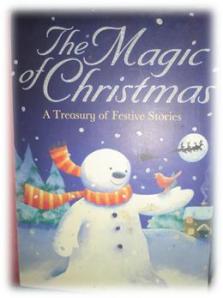
120912_2017_GreatChrist2.jpgMy children’s favourite Christmas story and one that I was asked to read to the class in English comes from The Magic of Christmas storybook. All the stories are great, but their favourite, and a word they just loved to hear repeated is Ridiculous.

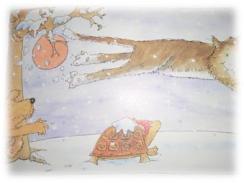
Ridiculous is a story about a young tortoise who doesn’t want to hibernate in winter, she decides to go outdoors after her parents have settled down to sleep and explore the snowy surrounds.

She meets a duck, a dog, a cat and a bird, all of whom exclaim and repeat the same thing:

“Whoever heard of a tortoise out in winter?”

Ridiculous!”

Shelley the tortoise disagrees, but discovers she can’t break the ice to get food like a duck, keep warm by running around like a dog, crawl into a nice warm house like a cat, or fly off home like a bird.
My own favourite children’s Christmas story, doesn’t require reading at all, at least it has no words.

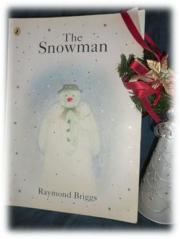
120912_2017_GreatChrist5.jpgRaymond Brigg’s delightful The Snowman, is an all-time classic picture book and celebrates the power of the imagination and the wonder of childhood, as a boy builds a snowman and then goes on a night-time adventure with him into the world to places he has never seen.

120912_2017_GreatChrist6.jpgAnd finally, to the book I will be curling up this Christmas. Have you already chosen your festive literary escape?

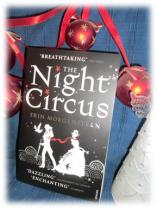
Last year, I remember losing myself in Abraham Verghese’s wonderful Cutting for Stone and I’m hoping that The Night Circus will do the same for me this year. If not, it might even be a reread of The Snow Child, which was my favourite read of 2012.

So leave a comment if you wish to be in the give-away for a copy of Paul Durcan’s Christmas Day and have fun visiting all the Christmas Bloghop participants below, many of whom are also offering give-aways.

Blog in France Bloghop

A Flamingo in Utrecht
Expat Christmas
Box53b
Word By Word
Vive Trianon
Fifty Shades of Greg
Books Are Cool
Perpignan Post
Jive Turkish
Very Bored in Catalunya
Life on La Lune
Scribbler in Seville
Blog in France Christmas
Les Fragnes Christmas
ReadEng. Didi’s Press
Steve Bichard .com
Edit My Book
Zombie Christmas
Christmas in Cordoba
The best Christmas blog ever
The Christmas Surprise.
Sci-fi Writer Jeno Marz
The best Christmas quilting blog ever
Painting in Tuscany
The Business of Life…
Funny tweets
we’ve got a new house but no stuff and it’s Christmas
Paris Cheapskate
What about your saucepans?
When I Wasn’t Home for Christmas or Celebrating
ShockWaves Launch Party
The French Village Diaries
Melanged Magic
Heads Above Water: Staying Afloat in France
Piccavey.com – An English Girl in Granada
Bordeaux Bumpkin
French immersion
Callaloo Soup
Grigory Ryzhakov
Piglet in Portugal
Beyond MÃnana
Chronicles of M Blog

Summer Reads

I’m not one for compiling lists of what I am going to read ahead of time, because I value too much the freedom and spontaneity of a vast sea of choices each time I finish a book, and often the reading experience will lead me on to the next thing.

Like reading Barbara Kingsolver’s ‘Prodigal Summer’ straight after ‘The Namesake’. How could I know that after listening to the group discussing the book I would have a conversation with a local poet about the beauty of sentences and Jhumpa Lahiri’s essay and that she would tell me I must read Kingsolver’s book.  It was sitting on the shelf unread and thus I abandoned all other reading ideas and jumped straight into it.

100 years on, Titanic Belfast Museum

But I do love looking at the lists, always feeding into the mental TBR list, noting books I might wish to read or to keep an eye out for.

I could say I have intentions for summer, like the two Titanic inspired books I bought on a recent visit to Titanic Belfast, the excellent museum opened in March this year.

‘A Night to Remember’ and ‘And the Band Played On’ also seem appropriate companions to Charlotte Rogan’s ‘The Lifeboat’ which I have on kindle.

To help you decide, I wanted to share this excellent flowchart designed by Teach.com to encourage students to find a book of their choice, there are 101 books shown, inviting readers to consider fiction versus non-fiction, classic or contemporary and many other options.  I keep coming across it and there’s something appealing about viewing images of covers rather than just a list of titles, so enjoy and I hope you find something for your own summer read!


So do you plan your reads or are you open to the spontaneous?
Summer Reading Flowchart

Via Teach.com and USC Rossier Online

Growing up with a Wild Book

courtesy of Houghton Mifflin Harcourt Publishing Coy

Fefa is dyslexic. Reading makes her feel dizzy. She has never been a great fan of words, the letters get mixed up and make her feel anxious. The doctor has diagnosed ‘word blindness’.

    “Some children can see everything except words.

    They are only blind on paper” he says.

Fefa’s mother refuses to accept his verdict.

    “Seeds of learning grow slowly” she assures me.

She presents her daughter with a book and encourages her:

    “Think of this little book as a garden, throw wild flower seeds all over each page, let the words sprout like seedlings and then relax and watch as your wild diary grows.”

Fefa opens the book hesitantly, finds the pages blank within but wide open to her imagination, a place where she can write unobserved, in any way she wishes.

Soon Fefa is nurturing the slow transforming pages of her wild book as she would a precious flower garden, turning those awkward spiky, complex letters into words of beauty and importance.

Margarita Engle’s delightful ‘The Wild Book’ is a tribute in verse inspired by stories told to her by her maternal grandmother, a young girl growing up in rural Cuba, struggling with dyslexia. It will be enjoyed by readers of all ages, both those who struggle with and those who adore words and of course, lovers of the blank page journal everywhere.  It is a book to read and reread, silently and out loud.

“No one in my family ever throws anything away, not even an old story that can be told and retold late at night, to make the deep darkness feel a little less lonely.”

It is a magical story of a little girl coping with school, homework, older brothers, being left behind as the others go off to boarding school, of facing family threats and danger; all part of daily life on the farm and in the village, aided by a loving mother and uncle who love to recite poetry.

    “After my mother

    finishes her seascape,

    my uncle recites

    a long poem about the sky,

    where sun spirits


        ride glowing chariots,

    and there is someone

    who knows how to fly

    towards the truth

    of dreams…


        I don’t understand

    the whole thrilling verse but I love the way poetry

    turns ordinary words into winged things

    that rise up

    and soar!”

Now couldn’t we all do with a wild book…

Note: This book was an Advanced Reader Copy (ARC), provided by the publisher via NetGalley.

A Rhyme for the Odes (Mu’allaqat)

No one guided me to myself. I am the guide.

Between desert and sea, I am my own guide to myself.

Born of language on the road to India between two small tribes,

adorned by the moonlight of ancient faiths and an impossible peace,

compelled to guard the periphery of a Persian neighbourhood

and the great obsession of the Byzantines,

so that the heaviness of time lightens over the Arab’s tent.

Who am I? This is a question that others ask, but has no answer.

I am my language, I am an ode, two odes, ten. This is my language.

I am my language. I am words’ writ: Be! Be my body!

And I become an embodiment of their timbre.

I am what I have spoken to the words: Be the place where

my body joins the eternity of the desert.

Be, so that I may become my words.

No land on earth bears me. Only my words bear me,

a bird born from me who builds a nest in my ruins

before me, and in the rubble of the enchanting world around me.

I stood on the wind, and my long night was without end.

This is my language, a necklace of stars around the necks

of my loved ones.

– extract from ‘A Rhyme for the Odes’

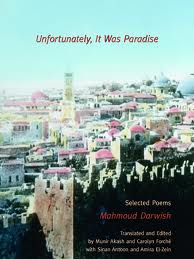
by Mahmoud Darwish, from the collection ‘Unfortunately, It Was Paradise’

(13 March 1941 – 9 August 2008)