A Respectable Occupation (2017) by Julia Kerninon tr. Ruth Diver (2020)

An Ode to Pope

How could I not love a miniature work of narrative nonfiction that the author quotes as having being in part inspired by the opening two lines of a poem from the 18th century English poet Alexander Pope.

The heroic rhyming couplets of Pope’s The Rape of the Lock (1712) were my optional choice for the fifth form School Certificate exam many moons ago, a memorable chapter of my own literary journey. Kerninon quotes from his Why did I write? what sin to me unknown.

Why did I write? what sin to me unknown
Dipp’d me in ink, my parents’, or my own?

Why and How I Write

une activitié respectable writing life nonfiction French literature

A Respectable Occupation is a short nonfiction narrative about how and why the French author Julia Kerninon became a writer and the necessity of reading.

I came across this book in a photo on author Kerri ní Dochartaigh’s Substack g l i m m e r s where she wrote about her favourite books of the year for 2023.

Dochartaigh is the q u e e n of referencing creative nonfiction and nature writing in her own writing. Her second memoir Cacophony of Bone is full of literary references to little known, enticing contemporary works of narrative nonfiction.

Julia Kerninon had a unique upbringing in many ways, not least because she lived in multiple countries, Canada, England and France, but also because it is as if she were raised to become a writer, more of an expectation than a desire, so she pursues it in the same way many others might pursue a career that has been held in high esteem by their parents. Only writing isn’t like law, medicine or business.

I had an incredibly heavy electric typewriter my mother had lent me, and she had glued little labels with lowercase letters onto the keys because I found capitals confusing, and I wrote lots of stories about talking animals with my friend Pete.

The Legend of Writers

She recalls a kind of bohemian childhood and the first six years where she was an only child and the focus of her mother who she admired, and how her world tilted when they became a family of 4 not 3.

An identical monument of books had saved her as well, thirty years earlier, from a hopeless childhood, and so she spread her secret before me, she explained what she loved most in the world, in a gesture that was also a potlatch, an immeasurably generous offering, which I might be expected to return one day with an even greater gift.

Her mother had been born in a small fishing village, the eldest of four, the only girl, she had learned Russian at ten in boarding school and read everything she could lay her hands on. She passed on all she could to her daughter, who did everything in her power to satisfy her, to repair her, to recompense her for the enormous effort it must have cost her to make all this known to her first child.

I read books non-stop, in a panicked frenzy, trying to catch up on lost time, trying to catch up with my mother who seemed to know everything.

If I lost a manuscript and went crazy with panic, she would just shrug with no compassion at all and explain that in any case I would have to throw away or lose lots of books before writing a single good one. The best thing that can happen to you is a house fire.

a respectable occupation Julia Kerninon typewriter
Photo by medium photoclub @ Pexels.com

At sixteen she had found a community of ‘old poets’ who met in an old biscuit factory in her hometown, a second education, after a house full of books.

At twenty she was reading Gertrude Stein‘s ill-conceived advice: If you don’t work hard when you are twenty, no one will love you when you are thirty.

She confronted her father and told him she wanted to take a gap year from her university studies. He agreed.

I thought that to be a writer, I had to train like an athlete, like a dancer, until it didn’t hurt anymore, until I didn’t ask myself any more questions. I wanted to possess that skill.

She takes herself off to Budapest for a year. Her life becomes a cycle of working hard, playing hard, then taking herself off somewhere for a year or six months to write.

She becomes a waitress in the summers, so she can write throughout the winter. She decides that to be poor is acceptable if she can be free instead and that she would learn to live alone, to be alone, to work alone, during those productive times of her life. That maybe these were not sacrifices at all, they were merely aspects of the life that she had created, that she loved.

Though she figures out how to live like this herself, she attributes this advice given to her by a much loved man:

the main thing is to have free time – you’ll obviously work out how to earn a crust somehow – but free time is something you’ll always have to scavenge, he told me earnestly.

It’s a wonderful little book, a digression of sorts, a reminder that the writing life comes in many shapes and forms, that the sharing of the various experiences can also provide inspiration to those who are on that path and that the pursuit of the occupation can also be a subject to write about, that people like reading about.

I write books because it’s good discipline, because I like sentences and I like putting things in order in a Word document. I like counting the words every night and I like finishing what I start.

A short introduction by Lauren Elkin is equally compelling, another writer whose book Art Monsters : Unruly Bodies in Feminist Art was in the photograph in Kerri Ni Dochartigh’s end of year essay.

I will leave you with one final quote from Julia Kerninon, one that applies as equally to reading as it does to writing.

I’ve been striding through literature like a field, where my footsteps flatten the grass for a moment, just long enough to see the path I’ve taken and the immensity of what is yet to be discovered.

Further Reading/Listening

An Interview with Julia Kerninon and Ruth Diver: A Respectable Occupation

#RivetingReviews: Jennifer Sarha reviews A Respectable Occupation by Julia Kerninon

Author, Julia Kerninon

Julia Kerninon is a French novelist from Brittany, whose first novel Buvard (2013) won the prestigious Prix Françoise Sagan in 2014.

Born in 1987, she holds a Ph.D in American Literature. She has been compared to French New Wave filmmaker Éric Rohmer for her sense of style and feeling for dialogue, and to Alain Resnais for the artful structure of her narratives. Most of all, her work stands out for its contagious joy, drive, exuberance.

Kerninon’s second novel, Le dernier amour d’Attila Kiss, won the Prix de la Closerie des Lilas in 2016, and her latest novel, My Devotion, won the 2018 Fénéon Literary Prize. She lives in Nantes.

The Not So Great Escape by Claire McAlpine

La Chasse #1

It is early morning and I hear clack, clack, clack, a wooden sound that makes me think of the quack of a duck. A body memory warns me away, reminding me of duck shooting season at Waimatai, the farm of my adolescence. That sound a lure to less intelligent prey.

There is no lake here.

I take a different path, away from that unnatural, menacing sound, two black labradors at my heels. This forested hillside of the south Luberon is a refuge to the sanglier, the wild pig.

Too late, I discover I have taken the chosen route, they begin to arrive, stirring up dust in their four wheel drive vehicles, les chasseurs, the hunters.

Militant vehicles with dark windows, at least two dogs in kennels on the back, they pass us by, one after the other, bright orange vests and woolen hats visible through the open window. There are so many of them; it takes all my strength to hold back the young labrador Winnie, who senses the excitement of the upcoming chase.

We turn around and head back to safety just as an eighth vehicle passes by with a dozen hounds yapping behind the grill.

La Chasse #2

Safe inside the stone dwelling, the dogs fed, I tell my friend about the hunters we encountered on the track.

“We won’t be walking up to the chapel this visit,” I say when I return. “We are surrounded.”

One hunter in a small white car, an older man, had stopped in front of me and I had asked him if they were hunting the sanglier. I had seen a number of traces in the soft clay beside the track, telltale footprints and the persistent interest of the two dogs, sniffing the area intensely in certain places.

“Yes, we will be up in that area on the left,” he had indicated with his arm. 

Left. The route to the hermitage, the lone chapel we had hoped to walk to later on, the area directly behind the house where we were staying for the weekend, looking after Spike and Winnie.

As we plan a different walking route, both labradors begin barking and whining. Winnie the younger dog I have been instructed to keep on a leash at all times, has her GPS tracker charging. I reach for her leash, deciding in that moment that I will keep it on her indoors, just in case. I reach for the kitchen door to secure it at the same moment that my friend is coming in from outside, carrying a jar of tapenade on a wooden board. Winnie pushes past me through the barely open door, brushing my friend aside with a force that sends the olive green tapenade flying, the glass jar smashing on the terrace. Winnie can’t be stopped, though I call and shout her name running across the lawn after her.

I watch her reach the end of the lawn and sail through the air over the top of the electric fence that has been put there to prevent the sangliers from digging up the garden beneath the oak trees. The sound of barking is close by, a frantic, feverish tone. Winnie tears up through the pines beyond the house. I continue calling, I can see the terrain she is mounting is steep and unwieldy.

I try not to think about her encountering those hounds off-leash, or the other black animal that is being hunted, of this naive young labrador moving into the line of fire, of my friends who have entrusted her into our care, of the GPS tracker still charging.

My friend walks to the end of the lawn with the lead in hand. “What are we going to do?” they ask.

“There’s nothing we can do but call her. We can’t go after her.”

“And get shot,” my friend adds.

I take a couple of steps forward to the edge of the lawn, despondent. “Winnie!” I call.

She comes bounding down through the trees towards us.

Click. Leash secure. Saved. This time.

Shame (1997) by Annie Ernaux, tr. Tanya Leslie

In her 2022 nobel prize lecture, I Will Write to Avenge My People, Annie Ernaux shares her motivation for writing in the particular way that is unique to her, telling us how it is at odds with the way she taught.

I had to break with ‘writing well’ and beautiful sentences – the very kind I taught my students to write – to root out, display and understand the rift running through me.

So it with this understanding, that I picked up Simple Passion (my review here) and now Shame, works of non-fiction that explore how certain pivotal events in her life affected her, by noticing her actions and reactions, how her own behaviour or perception changed.

The Origin of Shame

The book opens with a quote from Paul Auster‘s The Invention of Solitude:

Language is not truth.

It is the way we exist in the world.

The opening line begins with the pivotal event, shortly before her 12th birthday:

My father tried to kill my mother one Sunday in June, in the early afternoon.

and then describes everything she remembers about that day in a page of detail.

It was 15 June 1952. The first date I remember with unerring accuracy from my childhood. Before that, the days and dates inscribed on the blackboard and in my workbooks seemed just to drift by.

These words were written 45 years later, around 1997, when this book was first published in French, words that she tells the reader were impossible to write about, even in a personal diary, before then.

Silence Esteemed, The Seed of Unworthiness

I considered writing about it to be a forbidden act that would call for punishment. Not being able to write anything else afterwards for instance. (I felt a kind of relief just now when I saw that I could go on writing, that nothing terrible had happened). In fact, now that I have finally committed it to paper, I feel that it is an ordinary incident, far more common among families than I had originally thought. It may be that narrative, any kind of narrative, lends normality to people’s deeds, including the most dramatic ones.

Ernaux looks back at the origin of her experience of shame, awakened to it by certain moments, exploring the change(s) as she is made to feel them, in the many areas of her life within which it dwelt, sometimes just hidden behind a door, always at risk of being discovered by others.

From then on, that Sunday was like a veil that came between me and everything I did. I would play, I would read, I would behave normally but somehow I wasn’t there.

Beginning with that traumatic event, she observes the lingering effect it had on her, the strong presence it maintained, despite the fact that no one ever talked (to her) about it.

She revisits photos and news archives from that day, that time, trying to find something.

Writing an Ethnological Study of Self

While she rejects the idea of traditional therapy, it could be said that she has created her own form of it, by bringing her deepest shame to the page, as if in doing so, she is somehow sending it away, banishing it to readers.

I expect nothing from psychoanalysis or therapy, whose rudimentary conclusions became clear to me a long time ago – a domineering mother, a father whose submissiveness is shattered with a murderous gesture. To state it’s ‘childhood trauma’ or ‘that day the idols of childhood were knocked off their pedestal’ does nothing to explain a scene which could only be conveyed by the expression that came to me at the time: ‘gagner malheur‘, to breathe disaster. Here abstract speech fails to reach me.

Photo Pavel Danilyuk @ Pexels.com

This text she describes as carrying out an ethnological study of herself.

Like Simple Passion, written in short fragments, it is an engaging read that centres around the year 1952, living by the rules and codes of her world, which usually required unquestioning obedience, without any knowledge that there may be others.

The more I retrace this world of the past, the more terrified I am by its coherence and its strength. Yet I am sure I was perfectly happy there and could aspire to nothing better. For its laws were lost in the sweet, pervasive smells of food and wax polish floating upstairs, the distant shouts coming from the playground and the morning silence shattered by the tinkling of a piano – a girl practicing scales with her music teacher.

A brilliant depiction of a shattering of illusion and the origins of one girls perception of unworthiness.

As the book closes, and the year 1952 ends, her attention is caught by a film/book release.

In his novel, Fires on the Plain, published in 1952, the Japanese author Shōhei Ōoka writes: ‘All this may just be an illusion but all the same I cannot question the things I have experienced. Memories too belong in that category’.

Highly Recommended.

Author, Annie Ernaux

Born in 1940, Annie Ernaux (née Duchesne) was born in Lillebonne and grew up in Yvetot, Normandy, where her parents ran a café-grocery store in the spinning mill district.

She was educated at a private Catholic secondary school, encountering girls from more middle-class backgrounds, and experiencing shame of her working-class parents and milieu for the first time.

After a brief stint in Finchley, London, cleaning houses all morning and reading from the library all afternoon, she returned to France to study at the University of Rouen. Obtaining a degree in modern literature, she became a school teacher. From 1977 to 2000 she was a professor at the Centre National d’Enseignement par Correspondance.

Her books, in particular A Man’s Place (La Place) and A Woman’s Story (Une femme) have become contemporary classics in France. These books marked a break from the definitive novelistic form, she would continue teaching in order to never depend on commercial success.

One of France’s most respected authors, she has won multiple awards for her books, including the Prix Renaudot (2008) for The Years (Les Années) and the Marguerite Yourcenar prize (2017) for her entire body of work. The English translation of The Years (2019) was shortlisted for the Man Booker prize International and won the Warwick Prize for Women in Translation (2019).

The main themes threaded through her work over more than four decades are: the body and sexuality; intimate relationships; social inequality and the experience of changing class through education; time and memory; and the overarching question of how to write these life experiences.

A Horse at Night, On Writing (2022) by Amina Cain

I came across this author as she is one of the many quoted in Kerri Ni Dochartaigh’s Cacophony of Bone and it fits with that book, in that it is a kind of journal presented as short essays or fragments on writing, of thoughts that occur while reading other writers’ works.

The chapters have no headings but the book has a contents page that displays from five up to nine words of the first sentence of that fragment/chapter/essay. So the first one begins:

Without planning it, I wrote a diary of sorts…

Through a Window of Words, I See

A number of them begin with referencing the work of an author/artist whose sentences or themes or art provoke her reflections, in particular Elena Ferrante, Annie Ernaux, Marguerite Duras, Rachel Cusk, Marie NDiaye. In contemplating Ernaux’s The Possession, she wonders what it is she loved exactly, alighting on its urgency, the way the narrator is taken over by something – an aspect that is often present in Ferrante’s novels.

In The Lost Daughter, when Leda goes alone…

One she refers to often The Lost Daughter, the story of a woman whose daughters are absent for the summer, she takes a holiday, not thinking of her daughters,

Introspection, Projection, Finding Direction

This leads into Cain’s contemplation of the way humans project on to other things (like the sea) and people and how the act of writing encourages this. She asks why we project at all and delves into that occupation of mind with scalpel-like precision.

She reads the diaries of Virgina Woolf, which cause her to recall 30 years of diaries of an Aunt, one entry telling her that she ‘began to keep a diary because she saw that life had mystical qualities.’

Writing about authenticity gives rise to reflections on Jean Gent’s play, The Maids and Bong Joon-ho’s film Parasite and the effect of maintaining roles, when mixed classes live under the same roof.

To have to maintain those class roles always, especially if they are enforced with any kind of degradation, is a violation of the sacredness of one’s life, and a violence all of its own.

The Feline Interruptor

Much of it was written during the pandemic, a period that encouraged introspection and in which humans didn’t always have other humans for company, after reflecting on solitude and the need for human connection and company, other creatures gain notoriety eliciting a chapter that begins:

As I write this my cat Trout whines loudly

It makes me wonder what phrase from this book Kerri Ni Dochartaigh made it into her own; I admit I didn’t have quite the same response on finishing it.

“Astounding…I was distraught when I finished.”

I found it more of an intriguing insight into the varied way writers analyse and respond to each other’s work. I related more to Aysegül Savas‘s blurb.

“Like light from a candle in the evening; intimate, pleasurable, and full of wonder.”

Rather than look at plot, character, dialogue or conflict, these reflections she describes as paying attention to the ‘accessories’, like animals, phrases that create a feeling of relaxation, pondering friendship, or the self. Even plants.

It’s something like finding meaning in other works, that intersects with where the reader/writer is on their own journey, whether that is life or a fictional landscape they are trying to create, looking for lessons that might lie between the lines of others who have gone before, whose words have elicited a response in that reader.

And we, the reader of this book, look through the window of another reader looking through the window of a writer looking at the world.

Author, Amina Cain

Amina Memory Cain is the author of the novel Indelicacy, a New York Times Editors’ Choice and staff pick at the Paris Review, finalist for the Rathbones Folio Prize and the Centre for Fiction’s First Novel Prize and longlisted for the Joyce Carol Oates Prize.

She is also the author of two collections of short stories. Her writing has appeared in Granta, the Paris Review Daily and other places.

She lives in Los Angeles with her husband.

Top Reads of 2023 – Part 2, Top 5 Non-Fiction

In Top Reads of 2023 – Part 1 I shared my One Super Outstanding Read of the Year and my Top 7 Fiction titles. I also provide a brief look into what I read overall, the 23 countries, the mix of fiction and non-fiction of works in translation.

Top 5 Non-Fiction, An Irish Scoop

In 2023, I read 19 works of non-fiction, from 9 countries, ranging from climate change memoirs like Ugandan author Vanessa Nakate’s A Bigger Picture and Doreen Cunningham’s Soundings to fragmentary slices of life by French nobel prize winner Annie Ernaux in Simple Passion and Shame and Natalia Ginzburg’s Family Lexicon and the true crime adventures of David Grann’s The Wager.

Everything I read was good, but the standouts were:

Irish Book Awards Biography of the Year 2023

Poor, Grit, courage and the life-changing value of self-belief by Katriona O’Sullivan (2023) (Ireland) (Memoir)

Poor is the incredible story of Katriona O’Sullivan, a university Professor in Dublin, who overcame incredible odds to rise up through the education system, having been raised by heroin addicts in a chaotic household, dropping out of school and becoming pregnant at 15.

She charts the turning points in her life, the people and the opportunities that allowed her to change the trajectory of her life and become a major influencer in advocating for access to higher education for working class girls from poor backgrounds.

She won two Irish Book Awards (Best Biography + Listener’s Choice Award). Totally Inspirational.

grief nature writing memoir motherhood loss apothecary garden

All My Wild Mothers, Motherhood, Loss and an Apothecary Garden by Victoria Bennett (2023) (UK) (Memoir/Nature Writing/Grief)

– This was one of the first books I read in 2023, a beautiful memoir that shares a mother’s journey of homeschooling her son while dealing with the grief of having lost a close sibling. Much like Helen MacDonald’s H is For Hawk, the author plunges into a creative project, to help move through the emotional challenges. Here it was to create an apothecary garden in a social housing estate in rural Cumbria, built over what was an industrial site, a barren, rubble-filled, now rule-restricted, wasteland.

Each chapter began with a different plant, starting with an intriguing medieval, magical perception of it, including stunning black & white woodcut illustrations, the medicinal properties, a bit of folklore and where it might be found. The real star of the book and source of comfort though is her inquisitive son.

A quiet book that celebrates the wisdom of small children and a tribute to sisters and mothers.

creative nonfiction nature writing Irish Literature

Cacophony of Bone by Kerri ní Dochartaigh (2023) (Ireland) (Creative Nonfiction)

– This memoir is a delightful sequel to the author’s more bleak, but exceptional, memoir Thin Places. That debut memoir was a mix of memoir and a reckoning with the after effect of a fractured childhood in a Northern Irish town.

In Cacophony of Bones, she has moved to a rural cottage in the middle of Ireland and while still in the process of healing, there is more light and poetry and inspiration from a multitude of nonfiction writers here. Written in the form of a 12 month journal, it is a book of reflection, poetic expression and of noticing, of planting, growing, of collecting objects, abandoned nests, bone remnants…

I find myself searching for the words of others as a means to fill the holes that the actions of (other) others have left in me.

In my review, I mention a number of the authors she quotes from; I spent a lot of pleasurable time looking up the many references and finding new sources of creative nonfiction to read. A great book and an extremely well-read author.

My Fourth Time We Drowned by Sally Hayden (2022) (Ireland) (Political Nonfiction)

– Though it is a challenging read, this is an incredible book and tribute to the endless support, research and investigative journalism, Sally Hayden has contributed. Winner of the 2022 Orwell Prize for Political WritingIrish Book Awards Book of the Year 2022, it tells the story of how she was contacted by refugees incarcerated in Libyan migrant detention centres, who were using hidden phones to appeal for help.

Abandoned by everyone, these people were being held in terrible conditions, treated inhumanely and often being extorted for huge sums of money in order to attempt the deadliest migrant rote of all, across the Mediterranean. While the rules of her profession prevented her from assisting them, she began to share their stories and investigate the different centres and discovered the complicity of the EU, in their policies that magnified the humanitarian crisis.

An extraordinary, detailed and condemnatory read. Highly Recommended.

essays memoir creative nonfiction Jamaican literature

Redemption Ground, Essays & Adventures by Lorna Goodison (2018) (Jamaica)

– A mix of memoir, poetry, life adventure and epiphanies, I loved this collection, that stops in and visits different periods in the life of the poet/writer Jamaican author Lorna Goodison (poet laureate of Jamaica from 2017 – 2020), including first time visits to London, New York, tributes to her mother and grandmother in poetry, to her mentor, the great poet and playwright, Derek Walcott, influential theatre and film experiences and inspirational women writers and poets.

Special Mentions, The Other Two Stand Outs

These two 5 star reads are very slim volumes, featuring one essay or lecture, they are literally half hour reads, but very worthwhile and not difficult to access and read.

I Will Write to Avenge My People by Annie Ernaux (2022) (France) translated by Tanya Leslie (French) (Essay + Bio)

Annie Ernaux won the Nobel prize for literature in 2022 and this is the lecture she gave to the committee, in it she shares her motivation for writing and an explanation of how she came to write in her very particular style.

Indignez-vous! (Time For Outrage) by Stéphane Hessel (2010) (France) (Essay)

– Very well known in France, this is the essay written by 93 year old Stéphane Hessel, since translated into numerous languages and sold 4.5 million copies worldwide. He wrote it 3 years before passing away and it is a message for youth of today, inviting them to find their cause and take action. It became a huge bestseller and long lines of young people lined up to have him sign their copy, much respect did they have for a man who had lived through it all, the war, the resistance, the concentration camp and a participant in the creation of the declaration of human rights.

* * * * * * * *

That’s it for nonfiction, let me know if you have any good recommendations for 2024!
Let us know your favourite non-fiction title from 2023 in the comments below.

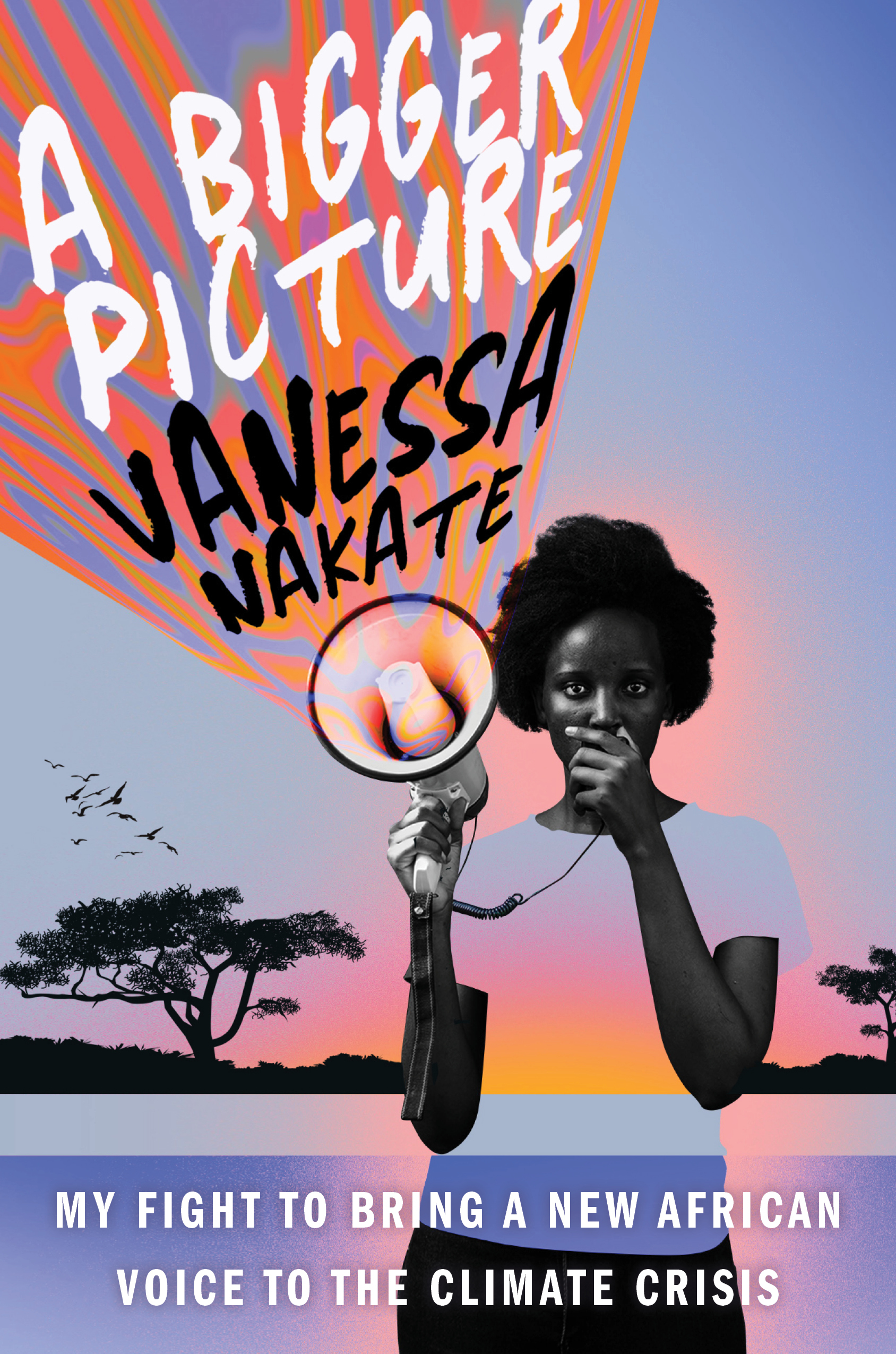
A Bigger Picture by Vanessa Nakate

My Fight To Bring A New African Voice To The Climate Crisis

Vanessa Nakate is a young Ugandan woman who became concerned about the effect of climatic conditions and change on her country and in particular the knock on effect floods, crop destruction would have on women and girls, disproportionately affected, as explained in her book.

Alternative Learning Experiences for Children

climate change literature Kenya African Voices

She decided to organise a strike, just herself, her two younger brothers (14 & 10), two visiting cousins (11 &9) and another cousin her age. It would be the six of them, holding up a few placards they made, and they would stand in four busy locations in Kampala, moving from each place after 30 minutes when her alarm went off.

“What shall we write?” Varak, the nine-year-old asked.
I wanted us to express something positive, and to ensure that my younger family members held placards they themselves would understand. We decided to pick slogans we thought wouldn’t be too threatening, and so wrote several, in English.
Trees Are Important For Us
Nature Is Life
When You Plant A Tree, You Plant A Forest
Thanks For The Global Warming (that was our sarcastic one) and
Climate Strike Now
We also drew some trees next to the letters.

Nothing dramatic happened, no one told to stop, but it was the beginning of an interest, of a young woman finding her cause and taking an action, that would lead her to learning and discovering more, to connecting with others, to finding local solutions and developing a presence and a new voice, on an international stage.

One woman stopped and told them of some trees being cut down to make way for a school, that they should be stopped. Each time Nakate went out and had the opportunity to engage or had a response on social media, it would often lead her to the next idea, it would put her in touch with others who genuinely wanted something to be done, their voices to be heard.

How One Exclusion Can Lead to Greater Inclusion

It is an excellent read, because it follows her personal journey, as a young person with little knowledge about activism and from this small spark of quiet daring (despite her anxieties, insecurities and fear of judgement), she shares her perseverance, her growing knowledge, the first invitations to attend international conferences and events, to a tipping point, when many more (including me) would hear about her – after she was cropped out of a photograph of young climate change activists including Greta Thunberg at Davos, Switzerland during the WEF (World Economic Forum) in January 2020.

My message was, and is, straightforward: People in Uganda, in Africa, and across what’s called the Global South, are losing their homes, their harvests, their incomes, even their lives, and any hopes of a livable future right now.

The Quiet Methodical, Cooperative Approach

What makes her message and her actions all the more interesting is that she takes a quiet methodical approach to doing things in her own authentic way, in a country where she is aware of both dangers and expectations, so does nothing foolhardy, acting responsibly.

However, when there is the opportunity for advancement of her cause and for manageable solutions she can implement herself, she steps up to those and has helped make life more amenable for many families already, while continuing to pursue the wider message, especially to young people, future leaders, for whom it will be better if they encounter this knowledge through their early education, than as adults already fixed in their opinions or influenced by position or power.

Since I’m always looking for solutions that reflect reality and the need to get the message out, I decided that instead of suggesting that students walk out of classes, I’d try to take the climate strikes into schools – where they could form part of the curriculum in a way that I’d wished climate change had been when I was a young girl.

The first school she approached in this way was open to this collaboration, the teachers assembled 100 students inside the compound, Vanessa Nakate gave a short speech explaining what the strike was about, in a way that could relate to and then lead them in a chant, the teachers encouraging the children to chant even louder.

What do we want? Climate justice. When do we want it? Now.

Genuine Efforts and Action Do Get Noticed

In 2019 she received an email from the UN Secretary General’s office in New York, an invitation to attend the Youth Climate Summit. Understandably, she and her parents didn’t think it was real, but it was, she would be the first person in her family to travel outside of Uganda and that would signify a new beginning in her self-appointed role.

The first half of the book is about the development of her role, the logistics of trying to attend events and to becoming involved in meaningful solutions at home, such as the Vash Green Schools Project (supports the installation of solar panels and building clean cooking stoves in primary schools) and to realising the need for self-care due to overwhelm.

Role Models and Inspiration, Making Connections

The second half gives a bigger picture of the wider issues, sharing information from others she interviewed and has been inspired by, including the late Wangari Maathai, the inspiring Kenyan woman who created the Green Belt Movement and made much progress (often hindered by men in power) who was the first African woman to win the Nobel Peace Prize in 2004 for ‘her contribution to sustainable development, democracy and peace’. Read my review of her autobiography Unbowed here.

Coincidentally COP28 is happening right now in Dubai and Vanessa Natake is there with others trying to get their message across to world leaders who have the power to phase out fossil fuels and support equitable and safe renewable energies. Her article appearing in today’s Guardian below.

I really enjoyed reading this book and learning more about how Vanessa Natake became a voice for her country and continent and inspired so many youth and adults to both learn and do more to try and halt the destruction that is affecting them all.

Highly Recommended.

Further Reading

The Guardian Opinion: At Cop28 it feels as if humanity’s shared lifeboat is sinking by Vanessa Nakate

Author & Activist, Vanessa Nakate

Vanessa Nakate is a Ugandan climate justice activist. She grew up in Kampala and started her activism in December 2018 after becoming concerned about the unusually high temperatures in her country. Inspired by Greta Thunberg to start her own climate movement in Uganda, Vanessa Nakate began a solitary strike against inaction on the climate crisis in January 2019. She founded the Youth for Future Africa and the Africa-based Rise Up Movement and spearheaded the Save Congo Rainforest campaign.

She has addressed world leaders at multiple climate summits and appeared on the cover of TIME magazine in 2021 (featuring on the Time100 Next list in 2021). She was appointed a UNICEF Goodwill Ambassador in 2022.

Nakate and her work have been featured in the New York Times, the Guardian,Yes!,Vox, Vogue, the Huffington Post, the International Women’s Forum, and the Global Landscapes Forum, and on globalcitizen.org, greenpeace.org, CNN, the BBC, PBS, and United Nations media. She lives in Kampala, Uganda.

Redemption Ground, Essays and Adventures by Lorna Goodison

A mix of memoir, poetry, life adventure and epiphanies, I loved this collection by Jamaican writer Lorna Goodison.

Bonding With the Irish Over Tea & Poetry

essays memoir creative nonfiction Jamaican literature

The opening essay ‘The Song of the Banana Man’ and ‘The Fiddler of Dooney’ totally sets the scene for the rest of the book. It is an anecdotal story of the author and her friend, excited to be in London, overhearing two ‘bobbies’ (policemen) talk about a cafe they were just passing, in a way that lured them inside.

‘Whassis then, a new tea ‘ole?’

Their schooling in Kingston, Jamaica had been heavy on all things British and European, so entering this establishment was something related to that indirect familiarity. They encounter three boys from Ireland, who ask if they are from the West Indies and they begin to banter, drinking toasts to the colonial experience, singing songs and reciting poetry.

When I play on my fiddle in Dooney,
folk dance like a wave of the sea;

The poems they chose were about ordinary people, sure of themselves, of what they did, grounding words shared by these young people, whose paths have crossed, starting out on their own journeys. The exchange lasts while they’re having their tea and comes to a natural end, upon which they part ways. The author is at the beginning of her life journey, but the lines recited by them all have staying power.

And I was not sure where I belonged or what my own purpose was in life back then…. But listening to those three Irish men recite ‘The Fiddler of Dooney’ that afternoon, maybe I’d thought yes, that’s what I’d like to be, someone whose artistry makes people dance like a wave of the sea.

A Working Class Teen Dares to Do Better

In, A Taste of Honey, she recounts the experience of seeing a movie in 1963, adapted from the play created by Shelagh Delaney (who was 18 years old when she wrote it) that moves her, that is a moment of epiphany. Being one of nine children, she relished the opportunity to go and see the film one Saturday afternoon alone.

Shelagh Delaney went to a play that she found boring, pretentious and condescending, and said to herself I can do better than that, and went home and wrote A Taste of Honey.

The film would win a BAFTA award.

A Taste of Honey showed working-class women from a working-class woman’s point of view, had a gay man as a central and sympathetic figure, and a black character who was neither idealised nor a racial stereotype. – extract from The Guardian by Dennis Barker

Goodison reflects on why she was so moved by this film, how it gave her some of her life and writing purpose and inspiration.

Shelagh was pronounced ‘ineducable’, but was able to produce work that affected me so deeply that I ended up sitting alone in a cinema after everyone else had filed out, trying hard to compose myself enough to go outside and face a world where most people would not understand why a simple thing like a Saturday afternoon matinee could make me weep as if a close friend or relative had died.

The Daffodil Drama

Writing poetry from a young age, in ‘Some poems that made me’ we read more of this early education and a different take on Wordsworth’s ‘I Wandered Lonely as a Cloud’, aka ‘The Daffodils’ poem, after she researches his childhood and life and decides to give the poet a break. See my review Lucy by Jamaica Kincaid for another reference to the daffodil drama.

Over the years I have said quite a lot about this poem, as have other writers throughout the British Commonwealth who have come to regard it as the ultimate anthem to British colonial oppression.

She will encounter may poets and poems until she arrives at the one voice that cause her to stop reading everyone else and just read his poems. In the work of Derek Walcott, who would become a friend and mentor, she found poem as a source of hope and consolation; poem as a lifeboat, anchor and safe harbour.

As she begins to think of her own place in the world, she seeks out women poets, finding nourishment in the work of Gwendolyn Brooks and other African-American fiction writers, while still searching for poetry by Caribbean women, ultimately ending up writing the poems she wanted to read and finding the right language to express them.

I learnt early in my life as a writer that if I wanted to write about my people I had to learn to listen carefully to family stories then imagine, and constantly reimagine those stories…All writer’s do this, but Caribbean writers face formidable or particular challenges because of the ways in which slavery, and then colonialism, erased or distorted so much of our lives that we have to learn to writer ourselves into the story in any way we can.

Tributes to the Mothers & Imagination

We read ‘Guinea Woman’ the poem she wrote trying to imagine a woman she had never met, her great grandmother, an elegy for her mother Doris ‘After the Green Gown of My Mother Gone Down’, and another poem entitled ‘Bedspread’ inspired by news of the home of Winnie Mandela being raided by police, where they seize personal effects including a bedspread, taken because it was in the colours of the African National Congress.

The collection takes the reader to different countries and places on her journeying, sharing both fun and pivotal moments, stories of redemption, of good souls that come to set the indebted free, of her own life crisis in New York, that preceded a change in direction, acting on a promise to herself.

A Musical Accompaniment

Like my reading experience of Bernice McFadden’s excellent The Book of Harlan, whenever Lorna Goodison mentions music, like in the vignette ‘A Part for Tarquin’, I look it up and listen while reading. This one is about her friend Bernard dragging her along to a non-party that she doesn’t wish to attend, and ends with them listening into the night to the pianist Wynton Kelly playing the Miles Davis sextet Some Day My Prince Will Come.

That was the night I began to really appreciate the genius of the Jamaican-American pianist Wynton Kelly, about whom Miles himself was supposed to have said, ‘Wynton is the light for the cigarette; without him there is no smoking.’ That night I realised that if hope has a sound it would be Wynton Kelly’s piano-playing. His hope notes were like sunbeams on the morning waves coming in at Bluefields beach.

Loved it all.

Author, Poet, Essayist, Lorna Goodison

Caribbean poet Lorna Goodison was born in Kingston, Jamaica in 1947. A painter before she turned her focus to poetry, Goodison was educated at the Jamaica School of Art and the School of the Art Students League in New York. She was appointed poet laureate of Jamaica from 2017 – 2020. In 2018, she received a Windham–Campbell Literature Prize, and in 2019, she was awarded the Queen’s Gold Medal for Poetry.

Her numerous poetry collections include Collected Poems (2017), Supplying Salt and Light (2013), Goldengrove: New and Selected Poems (2006), Controlling the Silver (2005), Traveling Mercies (2001), Heartease (1988), and Tamarind Season (1980).

She is the author of the short story collections By Love Possessed (2011), Fool-fool Rose is Leaving Labour-in-Vain Savannah (2005), and Baby Mother and the King of Swords (1990), and the memoir From Harvey River: A Memoir of My Mother and Her People (2007), which won the British Columbia National Award for Canadian Non-Fiction.

In 2019, she published Redemption Ground: Essays and Adventures

Professor of English and of Afroamerican & African Studies at the University of Michigan, Goodison divides her time between Toronto and the north coast of Jamaica.

Goodison’s image-rich and socially- and historically-engaged poems often inhabit the lives and landscapes of her Jamaican homeland. “I suspect that I might always write about Jamaica,” Goodison stated in an interview with Mosaic: Literary Arts of the Diaspora. Goodison also discussed the humor in her work, noting, “Jamaicans are very comical people, and laughter is a way of coping with life’s displeasures. Also, when you make something of it [a hard situation], it says that you are in control. There are incidences when we have no control; all we can do is make some sort of a gesture. Sometimes, the world can throw things at you that are so cruel and so devastating that you are in no position to have any kind of real response but to make a gesture. And I think that sometimes laughter is a gesture saying that you have not completely annihilated me; you have not robbed me of my ability to respond as a human being.”

Noting that Goodison often “complements her careful observation of the physical world and her fine eye for detail with a tense, lean, elliptical style” in a review of Supplying Salt and Light, Jim Hannan observed, “At their best, Lorna Goodison’s poems observe the unsavory in history and society even as they guide us firmly toward sources of redemption. With compassion and empathy, Goodison writes about human failure and triumph in large and small measures.”

Simple Passion by Annie Ernaux translated by Tanya Leslie

After reading Annie Ernaux’s Nobel Prize Lecture I Will Write to Avenge My People, I decide to read the slim titles Simple Passion (48 pages) and next I will read Shame (86 pages). I have already read A Man’s Place, and eventually I will get to her more lengthy masterpiece The Years.

Simple Passion was the #1 national bestseller in France for over three months when it was first published in 1991, and a celebrated scandal even in France’s liberal society. It was followed up ten years later by a second book Se Perdre (2001) (Getting Lost), which explores the affair through a series of diary notes.

In this book, Annie Ernaux observes herself throughout the life-cycle of an affair, the in-between moments of a conditional relationship, describing how that passion drew her in and ruled her, even when she took herself away from it.

She writes of this encounter with hindsight, as if observing something external to her, like a work of art, looking for some kind of truth or meaning behind the physical and mental experience, now that she has some distance from it. Her interest in writing is not to focus on the man (who could be any man) but on the obsession itself.

A Simple Passion Reveals a More Complex Humanity

The man, referred to as A, is from another country, he is married; the 18 months he is in her life, this ‘simple passion’ is depicted like an illness or a condition, she is able to see how it changes her. She studies it.

I am not giving the account of a liaison, I am not telling a story (half of which escapes me) based on a precise – ‘he came on 11 November’ – or an approximate chronology – ‘weeks went by’. As far as I was concerned, that notion did not enter the relationship. I could experience only absence or presence. I am merely listing the signs of a passion, wavering between ‘one day’ and ‘every day’, as if this inventory could allow me to grasp the reality of my passion.

A Life Suspended, Waiting for a Man

Photo by A.Piacquadio Pexels.com

She observes this condition, though she is virtually powerless to overcome or stop it, it will run its course and she will create an honest, transparent account of it, documenting the range of emotions, behaviours and instinct that run through her.

She observes how this desire becomes the lens through which she sees everything around her, how she spends her time endlessly waiting; waiting for him to call, waiting for him to arrive, waiting for the inevitable end of their association.

This endless wait reduces every other experience, as if they were lived by someone else, while magnifying the space in her mind given to thinking about him, of their time together – amid brief lucid moments of realising the insignificance of him, of the exaggerated importance she has temporarily given him.

I often wondered what these moments of lovemaking meant to him. Probably nothing more than just that, making love. There was no point looking for other reasons. I would only ever be certain of one thing: his desire or lack of desire. The only undeniable truth could be glimpsed by looking at his penis.

Fulfilling Life’s Purpose, Finding Meaning

The passion passes through a cycle from its beginning, middle, near-end and end, passing through excitement, anticipation, acceptance, moving on, overcoming towards finding meaning.

Yet it is that surreal, almost non-existent last visit that gives my passion its true meaning, which is precisely to be meaningless, and to have been for two years the most violent and unaccountable reality ever.

Written in short fragments, paragraphs, it is a hypnotic read. I have never read anything quite like it, an introspective interrogation of the self, she is able to set aside society’s judgments and write in a way that is as intimate as a journal, but in a short succinct way that has her own purpose, to better understand the human condition.

I discovered what people are capable of, in other words, anything: sublime or deadly desires, lack of dignity, attitudes and beliefs I had found absurd in others until I myself turned to them. Without knowing it, he brought me closer to the world.

The author presses forward towards fulfilling that promise made to her 22 year old self, as we learned of in her novel lecture, to interrogate her own actions, her own mind in the life she has created, having ventured far from humble beginnings. In writing to avenge her people, she writes to avenge all.

He had said, ‘You won’t write a book about me.’ But I haven’t written a book about him, neither have I written a book about myself. All I have done is translate into words – words he will probably never read, which are not intended for him – the way in which his existence has affected my life. An offering of a sort, bequeathed to others.

Seeing For Ourselves and Even Stranger Possibilities by Suhaiymah Manzoor-Khan

Essays, Prose and a Play on Seeing

I first came across the writer Suhaiymah Manzoor-Khan in 2021, she wrote the opening essay ‘I Am Not An Answer, I Am The Question’ in Cut From The Same Cloth?Muslim Women on Life in Britain edited by Sabeena Akhtar. Her essay was about the understanding she came to while a student at the University of Cambridge where she encountered a tool for attempting to ‘unlearn’: questioning.

I realised that most feminist and anti-racist politics I had engaged with up until that point were shallowly asking the wrong questions. Most of the questions being asked were not my questions at all. So much of my educational and consciousness-raising work had been the work of answering questions posed by others.

Her book Seeing For Ourselves and Even Stranger Possibilities is an extension to the understanding she shared in that initial essay.

It is interesting to read the opening pages where she is grappling with her purpose for writing and how to begin this book, having just finished reading Annie Ernaux’s nobel lecture, where she reaches back sixty years to a diary entry and finds her opening line (her purpose for writing), in the words ‘j’écrirai pour venger ma race’ (I will write to avenge my people).

Manzoor-Khan writes about ‘the gaze of the other’ and questions whether she has anything to add to a complex and much discussed subject and finds out she does when she turns the topic on its head.

Ernaux was writing from the perspective of a higher educated French working class woman in the closing years of a writing career, while Manzoor-Khan writes from the perspective of a higher educated British Muslim woman at the beginning of hers.

Troubled by such doubts, I started to consider why being a subject rather than an object was the furthest horizon I could dream of. What lay beyond ‘seeing with my own eyes’? What if ‘seeing for ourselves’ wasn’t actually the best way to see? What could transcend the desire to be see-er instead of seen? What if I closed my eyes and did not prioritise seeing at all?

Looking into these stranger possibilities, she contemplates the how to, and finds no easy route than to go forth and try. What results is a combination of prose, poetry and a short play interspersed throughout the text; looking at the question from different angles and so too, using different genres.

Need, Want, Seeing, Overcoming

The book is structured into seven parts:

the need - how I am found
the want - how I find myself
becoming a sight - the portal of objecthood
striving to see - seeking subjecthood is a circle
escaping the cycle - even stranger possibilities
grief is a type of ghaib - love is a type of sight
a note on endings - the impossibility of concluding

The need is about clarifying intention and the want is to bear witness to an existence. This latter section opens with a poignant vignette on hoarding nineteen white IKEA boxes in the author’s room that cause her shame. On further reflection, she discovers their ‘why’, they are evidence of a life.

I am afraid to let on about this in case it becomes obvious how afraid I am to go unseen. In case it becomes obvious how powerful it is to destroy a people’s history. How catastrophic it is to leave them believing they are suspended. To eliminate their past, present and knowledge.

The Writer and The Book in Conversation

Photo by Monica Silvestre on Pexels.com

Throughout the text are acts, scenes from a short play. It is how the book opens, Act 1, a conversation between the writer and the book.

the writer: You’re not what I expected you to be.

the book: What did you expect?

the writer: You were supposed to be about seeing and being seen
About the different gazes upon us
And how to see ourselves without them

the book looks smirkingly at the writer, knowing more than her (as always).

The way these brief interludes are positioned lightens the tone of the book, giving it a different vibe, featuring characters such as the writer, the book, her head, her heart, her fear, her eyes, her soul.

Because of their brevity, the voices of those characters speak more loudly and succinctly than the more existential meanderings of the author on changing her perspective of the gaze, from ‘others’ on her to (even stranger possibilities) just the ‘one’. The many different forms that address her subject, allow the reader to consider, reflect and attempt to understand the perspective being shared.

It is a philosophical read, of short easy-reading vignettes,some that challenge more than others, of poetry and the interspersed acts and scenes of the play featuring the writer, the book, her eyes, her fear, her head, her soul. In another scene, a group of onlookers struggle with the question of being seen, of invisibility, of too much visibility, of how we are perceived by others, by ourselves, by the Divine Presence…

It is a companionable read, though not easy to review, as the author reminds us, this is a book of questions, and it is also a journey, it is not a conclusion or a set of answers, it is observations, reflections, it invites participation, it does not exist in isolation.

It puts into word the frustrations and injustice of invisibility and challenges that which is seen (the blind scrutiny) in its place.

Perhaps rather than the head, the intellect, the eyes, the judgments, we ought to perceive with the soul, if so, what might that look like?

Rather than striving to be seen, approved or understood by gazes that shrink me, all I have to do is that which brings me closer to my Maker, who sees the full context of me. Everything else is either a means to this or a diversion from it.

The book is available from its UK publisher Hajar Press, and as an ebook here.

Further Reading

The Skinny: ReviewSuhaiymah Manzoor-Khan’s cross-disciplinary book is a beautiful consideration of devotion to faith, family and politics by Paula Lacey

Suhaiymah Manzoor-Khan, Author

Suhaiymah Manzoor-Khan is a poet and writer whose work disrupts assumptions about history, race, violence and knowledge.

She is the author of Tangled in Terror and the poetry collection Postcolonial Banter; a co-author of A FLY Girl’s Guide to University; and a contributor to the anthologies Cut from the Same Cloth? and I Refuse to Condemn.

Her writing has also featured in The Guardian and Al Jazeera, and her poetry has been viewed millions of times online. She is a co-founder of the Nejma Collective, a group of Muslims working in solidarity with people in prison. She is based in Leeds and is currently writing for theatre.

I Will Write To Avenge My People, The Nobel Lecture by Annie Ernaux tr. Alison Strayer & Sophie Lewis

Winner of the Nobel Prize in Literature 2022

In October 2022 the French author Annie Ernaux became the first French woman (the seventeenth woman) to win the Nobel Prize in Literature.

Read together, the reflections of the Nobel women reveal a diversity of ideas about what literature can do and a sense of a practitioner’s responsibility to these ideas. While the lectures vary widely in content—from Lessing’s and Gordimer’s concrete political lessons to Szymborska’s larger abstract musings to fables personal (Müller) and universal (Morrison)—each contains observations that are at once totally complex and completely true. – extract from LitHub article by Jessi Haley

The Agony and Experience of Class

The Nobel Committee recognised that ‘in her writing, Annie Ernaux consistently and from different angles, examines a life marked by strong disparities regarding gender, language and class

They awarded her the prize:

“for the courage and clinical acuity with which she uncovers the roots, estrangements and collective restraints of personal memory”

In this slim volume is the acceptance speech given by Annie Ernaux on 7 December, 2022 in Stockholm, Sweden, alongside a short biography (both translated by Alison L.Strayer). There is a brief banquet speech included, translated by Sophie Lewis.

It is a brilliant introduction to the motivation of the lifetime of work and writing by Annie Ernaux, opening with a reference to the title – alluding to the challenge of a search for the perfect opening line to her upcoming Nobel Prize lecture:

Finding the sentence that will give me the freedom and the firmness to speak without trembling in this place to which you have invited me this evening.

She doesn’t have to look far, she says, although the line she refers to – the title of her talk – is one she wrote in a diary sixty years ago.

j’écrirai pour venger ma race

It was written when she was 22 years old, the daughter of working class parents, studying literature in a faculty of sons and daughters of the local bourgeoise; an echo of Arthur Rimbaud’s cry in Une saison en enfer (A Season in Hell):

‘I am of an inferior race for all eternity.’

A young woman, the first of her family to be university educated, her youthful idealism was projected into those words.

I proudly and naively believed that writing books, becoming a writer, as the last in a line of land-less labourers, factory workers and shop keepers, people despised for their manners, their accent, their lack of education, would be enough to redress the social injustice linked to social class at birth.

Turning Away From Convention

Her first attempt at the novel was rejected by multiple publishers, but it was not this that subdued her desire and pride, to eventually seek a new form of expression.

It was life situations in which the weight of difference between a woman’s existence and that of a man was keenly felt in a society where roles were defined by gender, where contraception was prohibited and termination of pregnancy a crime.

These situations and circumstances instilled in her a pressing need to move away from the “illusory ‘writing about nothing’ of my twenties, to shine light on how her people lived, and to understand the reasons that had caused such distance from her origins.

Like an immigrant now speaking a language not their own, a class-defector, she too had to find her own language, however, it was not to found in the pages of the esteemed writers she had been studying and was teaching:

I had to break with ‘writing well’ and beautiful sentences – the very kind I taught my students to write – to root out, display and understand the rift running through me. What came to me spontaneously was the clamour of a language which conveyed anger and derision, even crudeness; a language of excess, insurgent, often used by the humiliated and offended as their only response to the memory of others’ contempt, of shame and shame at feeling shame.

Recognising that when a reader was culturally privileged they would maintain the same imposing and condescending outlook on a character in a book, as they would in real life, she sought to elude that kind of gaze and thus her trademark style evolved:

I adopted a neutral, objective kind of writing, ‘flat’ in the sense that it contained neither metaphors nor signs of emotion. The violence was no longer displayed; it came from the facts themselves and not the writing. Finding the words that contain both reality and the sensation provided by reality would become, and remain to this day, my ongoing concern in writing, no matter what the subject.

It’s an enrapturing lecture and an excellent introduction and insight into Ernaux’s particular and individual style, and wonderful that her volume of work has been recognised and celebrated at this esteemed level. You can read the lecture using the link below.

I have read one book by Ernaux, A Man’s Place and I am planning to read Shame, A Simple Passion and her masterpiece The Years.

Shame Simple Passion The Years Annie Ernaux Nobel Prize Winner 2022

Have you read any books by Annie Ernaux? Are you planning to read any?

Further Reading

The Nobel Prize Website: Annie Ernaux Nobel Lecture (Read the lecture here)

LitHub Article: A Brief History of All the Women Who Have Won the Nobel Prize in Literature by Jessi Haley

Annie Ernaux, French Author

Born in 1940, Annie Ernaux (née Duchesne) was born in Lillebonne and grew up in Yvetot, Normandy, where her parents ran a café-grocery store in the spinning mill district.

They had lost a little girl of seven before I was born. My first memories are inseparable from the war, the bombings that devastated Normandy in 1944.

She was educated at a private Catholic secondary school, encountering girls from more middle-class backgrounds, and experiencing shame of her working-class parents and milieu for the first time.

After abrief stint in Finchley, London, cleaning houses all morning and reading from the library all afternoon, she returned to France to study at the University of Rouen. Obtaining a degree in modern literature, she became a school teacher. From 1977 to 2000 she was a professor at the Centre National d’Enseignement par Correspondance.

Her books, in particular A Man’s Place (La Place) and A Woman’s Story (Une femme) have become contemporary classics in France. These books marked a break from the definitive novelistic form, she would continue teaching in order to never depend on commercial success.

One of France’s most respected authors, she has won multiple awards for her books, including the Prix Renaudot (2008) for The Years (Les Années) and the Marguerite Yourcenar prize (2017) for her entire body of work. The English translation of The Years (2019) was shortlisted for the Man Booker prize International and won the Warwick Prize for Women in Translation (2019).

The main themes threaded through her work over more than four decades are: the body and sexuality; intimate relationships; social inequality and the experience of changing class through education; time and memory; and the overarching question of how to write these life experiences.

Fitzcarrraldo Editions have now translated and published eleven of her works into English, including this booklet.

Ernaux’s work is uncompromising and written in plain language, scraped clean. And when she with great courage and clinical acuity reveals the agony of the experience of class, describing shame, humiliation, jealousy or inability to see who you are, she has achieved something admirable and enduring. – Nobel Prize Committee