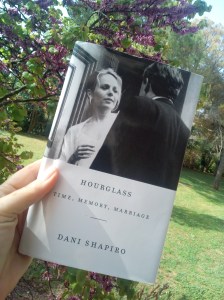
Hourglass – Time, Memory, Marriage by Dani Shapiro

I’ve not read any of Dani Shapiro’s previous works, this short book was passed to me by a friend and read in an afternoon. I enjoyed reading it, though I couldn’t say I related to it. It’s a very personal observation of a marriage, of the passage of time, a woman observing herself change, reflecting on her inclinations and trying to understand herself, her husband and their evolving relationship. As the title indicates, it’s a reflection on time passing, on memory and on marriage. It’s full of nostalgia for moments passed, brought back to life as she picks up journals from girlhood and her earlier life and quotes from them, in particular, from her honeymoon spent in France. She wonders about the woman she was then. She worries about the lack of a plan, despite being in her fifties and her husband almost sixty. She shares these anxious moments, as she begins to lose a little faith in the words her husband has uttered in the past, words that gave her reassurance “I’ll take care of it”. Anyone who has lived with that kind of comfort will likely relate, but inherent within it lies a deep vulnerability, a fissure, a unassuageable fear of loss. It is here her words pierce the fabric of living, when they illuminate the cracks in the facade, opening a small window into that anxiety-inducing perception of reality that sees itself as separate. It is that undercurrent of misplaced fear that disconcerts me, for there is no hint of resolution, little evidence of a desire to go within and face the abyss, to heal it. She remains focused on that which is external and therein perhaps lies the problem. Maybe that is a memoir still to come, when she will embark on the inner journey and learn to listen to her own guidance, to the whispers of her soul that are capable of reassuring her more than anyone or anything on the outside. Something that marriage appears to protect us from, at least until menopause, a subject she doesn’t mention but one that can also unravel our perceptions of the life structures we’ve created in our minds.

Photo by Tom Fisk on Pexels.com

It is a work of quietly observed transformation, the writer is trying to observe herself from both without and within, she has a long experience of observing from a distance and now she feels the pull to go within, yet it’s as if she has only just begun to put her toe in the river. She is aware of the pull of the river and quotes from Virginia Woolf:
The past only comes back when the present runs so smoothly that it is like the sliding surface of a deep river. Then one sees through the surface to the depths…But to feel the present sliding over the depths of the past, peace is necessary. The present must be smooth, habitual. For this reason – that it destroys the fullness of life – any break… causes me great distress; it breaks; it shallows; it turns the depths into hard splinters. As I say to L[eonard]: “What’s there real about this? Shall we ever live a real life again?
She recalls that she used to tell her students that to write good memoir, the kind that would be of interest to the disinterested reader, the writer had to have some distance from the material, not to write from feelings but from the wisdom and insight of retrospect.
But like every fixed idea, this one has lost its hold on me as years have passed and the onrushing present – the only place from which the writer can tell the story – continues to shift along with the sands of time. Our recollections alter as we attempt to gather  them. Even retrospect is mutable. Perspective, a momentary fragment of consciousness. Memoir freezes a moment like an insect trapped in amber. Me now, me then. This woman, that girl. It all keeps changing. And so: If retrospect is an illusion, why not attempt to tell the story as I’m inside of it?  Which is to say: before the story has become a story?

Photo by Jordan Benton on Pexels.com

And so as her reflections come to an end, they indicate that she may be at another beginning.
Somewhere, a clock ticks. Sand pours through the hourglass.  I am no longer interested in the stories but rather, what is underneath the stories: the soft, pulsing thing that is true. Why now?  What is this insistence?  All of me – the whole crowd – wants to know.
I am left intrigued to know what she will write next, where her inner journey will take her, when she lets go of looking through the lens of marriage, time and memory and observes life through a newly expanded awareness.

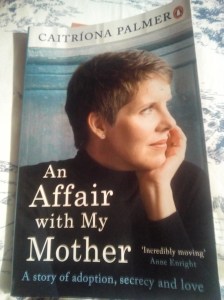
An Affair with My Mother by Caitriona Palmer

It seems a strange title for a book, until we understand it is a memoir of adoption, of secrecy, of a love denied, forbidden. And the woman writing it, comes to realise, how very similar the continued secrecy surrounding spending time with her birth mother is, to conducting an illicit affair. So she calls it that. It’s like an unwritten 13th commandment: Thou shalt not have any relation whatsoever with thy illegitimate child.
It’s set in Ireland, a country reluctant to let go of old ways, still in throe to a traditional family culture that shamed, blamed and punished young women for being the life-bearers they are – insisting they follow a code of moral behaviour documented by a system of domination, upheld by the church, supported by the state – a system that bore no consequence on men – young or old – who were equally responsible for the predicament of women.

“If there is anger in this book it is anger at the profound and despicable sexual double standard in Ireland. Men walked away without ever having to confront their role in these relationships.”

Eventually women in Ireland were given access to a means of preventing unwanted pregnancy, though not until Feb 20, 1985 when the Irish government defied the powerful Catholic Church, seen until this day as lacking compassion, in approving the sale of contraception, and more recently in a 2018 referendum, repealing its abortion ban (outlawed in 1861 with possible life imprisonment), acknowledged as a dramatic reversal of the Catholic church’s domination of Irish society.

For years, Ireland created and implemented what is referred to as an architecture of containment, institutions such as the Magdalen laundries (also referred to as asylums) removed morally questionable women from their homes (young women who became pregnant outside of marriage, or whose male family members complained about their behavior). They removed their children if they were pregnant then put them to work, washing ‘the nation’s dirty laundry’, thanks to lucrative state contracts provided to the institutions to fulfill. The last Magdalene laundries closed in Dublin in 1996 and the truth of what happened to those unmarried mothers continues to be investigated through the CLANN project.

Book Review

Caitriona Palmer was born in Dublin, raised in a caring family with two children of their own, the parents adopting after a miscarriage and recommendation Mary (the mother) should have a hysterectomy. If they wanted another child, adoption would be the only path.

She had a happy childhood and grew up in a very happy home, defiantly happy in fact, she would tell people early on she was adopted, almost proud of it she said, in her mind it had had no impact on her life, it didn’t change her or make her who she was, however she was constantly shadowed by a consistent ache, something she refused to confront or admit had anything to do with being separated from her biological mother at birth.

The book opens as Caitriona is about to meet her birth mother Sarah (not her real name) for the first time, a highly anticipated event, and yet as it unfolds, and she hears someone walk up the steps, about to fulfill a desire she has initiated, she becomes filled with dread and as the woman rushes towards her, repeating her name:

I said nothing. I felt nothing.

‘I’ll leave you both to it then,’ I heard Catherine say.

‘Don’t go’, I wanted to scream at her. ‘Please don’t go. Stay. Stay here with me, please. Don’t leave me alone with this woman.’

It is the beginning of the many conflicted feelings she will encounter within herself as that aspect of herself she was born into awakens as an emotional itch deep inside her she can neither locate or explain, at a time in her life when outwardly, living life as the person she was raised to be, she couldn’t have been happier. She was 26 years old, working in a dream job for Physicians for Human Rights in the US, in love and happy.  She put her anxiety down to problems with her expiring student visa, though when her employer found a solution by transferring her to Bosnia, it didn’t heal the anxiety, if anything it made it worse.

There, a small team of forensic scientists was overseeing the exhumation of hundreds of mass graves left after the war and attempting to determine the fate of over 7,500 missing men and boys from the UN safe haven of Srebrenica, which had been overrun by Serb forces four years earlier.

After a day when she and a small team broke into an abandoned hospital in search of records, the source of her own anxiety presented itself to her.

In that moment, filling our arms with the dusty paperwork, I felt a sliver of illumination. Driving back to Tuzla later that afternoon, our pilfered medical dossiers on our laps, the mood in the car jovial, I returned again to that moment, massaging the memory, trying to knead to the surface the revelation lurking beneath. What was I doing helping to search for the files of dead strangers when it was plainly obvious that I needed to search for own?

Though there could be no comparison between her loss and that of these families, it was this extreme situation that revealed her own source of anxiety and set her on a path to do something she had denied she would ever do.

She embarks on her search and despite the difficulties many encounter in Ireland, where Irish adoptees have no automatic right to access their adoption files, birth certificate, health, heritage or history information she manages to access information about her birth relatively easily. The agency traces her birth mother and facilitates that first and many subsequent meetings.

Despite the initial shock, they develop a close relationship, but with one significant and ultimately destructive condition, that she remain a secret, for her birth mother continued to harbour great shame and was terrified of the impact this knowledge might have on her current life.

By the close of that year, I had come to detest the power imbalance in our relationship, seeing myself as the cause of Sarah’s shame and paranoia, her sadness and regret. I hated being invisible to her husband, evidently a good man who adored her, and to her three children, half-siblings that I longed to meet.

Palmer digs deep into the history of adoption in Ireland, armed with journalistic skills (now a freelance journalist in Washington DC) she researches archives and interviews her parents and birth mother as if subjects of a news story, to get to the heart of this institution that wrenched families apart and caused such fear and trauma in young Irish women, leaving emotional scars many of them would have all their lives.

Feminism might have been on the march, but the women in Sarah’s world … had conspired to punish her for stepping out of line. ‘If you want to get people to behave, show what happens to those who don’t,’ an Irish historian once said to me about Ireland’s culture of female surveillance and the institutionalization of unmarried mothers. ‘Make them feel part of that punishment.’ Her Aunt’s verdict – “Nobody will ever look at you again. You’re finished.” – echoed constantly in Sarah’s mind.

One couple she researched, were married with more children, but didn’t want to know the child they had parented and given away before marriage.

“What is that? How can this legacy of shame even prevent a couple from accepting their own biological child? Why can they not open the door?

“This book was meant to answer that. But I don’t know why Ireland has let so many people down. I was meant to grow up and be grateful and never want to look at my past. Because things worked out well; I was given a wonderful family and have done well; that’s meant to be enough.”

For an adoptee or a birth mother, it’s both insightful and an extremely painful read, especially given the author’s own awakening from that happy dreamy childhood and early adult life that held no place for her unknown genetic history, or for any other familial bond or connection. She couldn’t recognise what she hadn’t known or experienced and because her adoption was something known, it seemed as if this life could be lived without consequence. In a recent interview post publication, Palmer describes this:

What I didn’t understand was that that primary loss impacted me, it did change me, I’m still grieving her. Despite my wonderful happy life, amazing husband and children… I’m internally grieving, this woman, this ghost, that’s a love that I’ll never regain in a way, memoir is an attempt to grasp at that.

I wanted people to know you can grow up happily adopted and still have this hole, I always feel like there is a hole deep down inside of me that I can’t quite fill, in spite of the abundance of love that surrounds me, this primary loss is profound.

It’s a story that doesn’t end on the last page, and will leave readers like me, curious to know what impact this book had on the relationship. The podcast below, brings us up to date with where things are at since the book was published, including mention of the hundreds of letters that Caitriona has received, the many people who have had similar experiences, heartened to learn that their experience brought solace to some, in their ability to share with her their stories.

Asked, given what has transpired, would she still do what she did, she responds:

I would have done the same, as it was approached ethically and with love – but I wouldn’t allow it to remain a secret so long, the weight of a secret… every human being wants this sense of belonging and yet we are expected to express gratitude and get along, we are a part of each of those things and that’s a beautiful thing…

The big gap in all this, and for this entire process, is the lack of facility for healing, for giving adoptive parents, birth parents and the children affected by adoption, resources to help them understand what they might go through and if they do, how to manage that, how to heal from that, live with that, recognise the characteristics that come with having lived though such trauma.

The world we live in today is a long way from being accomplished at providing that, and some countries are no doubt better than others, hopefully it is coming, it doesn’t take too much digging if one can find tools of well-being that might bring about individual change and healing.

Further Reading/Listening

Caitríona – I’m Still Grieving Her – Podcast – on building a relationship with her birth mother, the heartbreak of being kept a secret and the high cost she’s paid for sharing her story

The State has a duty to tell adoptees the truth Caitríona Palmer: Shadowy adoption system is the last obstacle to a modern Ireland – June 2018

CLANN: IRELAND’S UNMARRIED MOTHERS AND THEIR CHILDREN – establishing the truth of what happened to unmarried mothers and their children in 20th century Ireland, providing free legal assistance

Refuge by Terry Tempest Williams

An Unnatural History of Family and Place

Terry Tempest Williams is a writer with a deep and active interest in environmental education and conservation, Refuge is both a memoir of a period in her life when she accompanied her mother through the illness that would claim her life, and shortly after her grandmother, leaving her the matriarch of the family at the age of thirty-four.

Although this is the book she is most well-known for, I first read and reviewed her writing and encountered her mother in a more recent, and equally extraordinary book, When Women Were Birds, Fifty-Four Variations on Voice, which was written twenty years later (when the author was 54) in 2012. It was also the age her mother was, when she succumbed to the illness written about in Refuge.  I recommend it equally, they are a unique pair, in their insights, their confusion, their ultimate compassion and understanding.

Throughout the memoir, she spends time with her mother, and equally has concerns for the Great Salt Lake, which sits on their doorstep, it is the place she grew up in, a landscape and wildlife she is obsessed with, one I knew nothing about, but became increasingly intrigued by, this enormous, terminal lake with no outlet to the sea.

Great Salt Lake: wilderness adjacent to a city; a shifting shoreline that plays havoc with highways; islands too stark, too remote to inhabit; water in the desert that no one can drink. It is the liquid lie of the West.

Natives of the area speak of the lake in the shorthand of lake levels, it’s not deep, but it is vast, so it doesn’t take much precipitation for significant rises to occur. In the mid 80’s when she was writing this book (it was first published in 1991) talk on the streets of Salt Lake City was of the lake’s rapid rising, everyone had concerns, the airport, the farms, the railroad, survival.

My interest lay at 4206′, the level which, according to my topographical map, meant the flooding of the Bear River Migratory Bird Refuge.

She writes about her family history, her genealogy with its deep roots in the American West her Mormon culture has preserved and their connection to the natural world, infused with spiritual values.

The birds and I share a natural history. It is a matter of rootedness, of living inside a place for so long that the mind and imagination fuse.

As the author shares the drama unfolding within her family of which she is the eldest child and only daughter, there is always the metaphor of the lake, the simultaneous restlessness of its birds, as if they too sense change coming; she wonders if they are better adapted to it than humans.

The thirty-six short chapters each carry the name of one of the bird species that inhabits the lake environment, they may only be mentioned in one sentence, but they are all listed, noted, observed over time, throughout the pages, they represent the life cycle of species, moving on, migrating, adapting to change, dying, making way for the young.

William’s both observes beauty and dissects suffering as she observes her mother’s and her own and tries to make sense of it, through nature and her current philosophical understanding.

Tonight I watched the sun sink behind the lake; The clouds looked like rainbow trout swimming in a lapis sky. I can honour its beauty or resent the smog in this valley which makes it possible. Either way, I am deceiving myself.

Birds are entwined with local folklore, the Californian gull rescuing the Mormons in 1848 from losing their crops to crickets. They still gather to tell this story.

How the white angels ate as many crickets as their bellies would hold, flew to the shore of Great Salt Lake and regurgitated them, then returned to the field for more. We honour them as Utah’s state bird.

It’s a book where you could highlight a passage on each page, one you can open on a random page and find some meaningful, reflective passage on life, an interesting bird fact or a brief history lesson.

The writing is at times poetic, sometimes scientific, passionate and honest. There’s a perfect balance between the personal and the environment that makes it a compelling read, but also one that you’ll want to savour.

The mother and daughter get their astrology charts done and read each other’s.

“I liked the part about Terry being neat and meticulous,” teased Mother. “I remember standing in the middle of your bedroom when you were about thirteen years old. Everything in your closet was on the floor, art and school papers were piled high on your desk. I remember thinking, I have two choices here – I can harp on her every day of her life, making certain her room is straight – or I can close the door and preserve our relationship.”

As the Great Salt Lake continues to rise, a deep sadness washes over her that all has been lost.

I am not adjusting. I keep dreaming the Refuge back to what I have known: rich, green bulrushes that border the wetlands, herons hiding behind cattails, concentric circles of ducks on ponds. I blow on these images like the last burning embers on a winter’s night.

There is no one to blame, nothing to fight…Only a simple natural phenomenon: the rise of the great Salt Lake.

There is also refuge in poetry, in other writers and the book is interspersed with memorable quotes from those whose words soothe her during this period of grief, as her mother goes into decline. And so I leave this sharing of thoughts on the book here with her reading her Mother a poem one afternoon by Wendell Berry:

T H E   P E A C E  O F   W  I L D   T H I N G S

When despair for the world grows in me

and I wake in the night at the least sound

in fear of what my life and my children’s lives may be,

I go and lie down where the wood drake

rests in his beauty on the water, and the great heron

feeds.

I come into the peace of the wild things

who do not tax their lives with forethought

of grief. I come into the presence of still water.

And I feel above me the day-blind stars

waiting with their light. For a time

I rest in the grace of the world, and am free.

Highly Recommended.

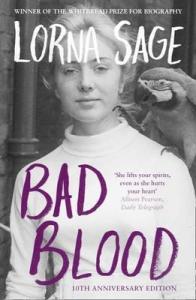
Bad Blood by Lorna Sage, Reflections on Creative Nonfiction

I have had this memoir on my bookshelf for a long time and recall first becoming aware of it when I wrote an article for our a newsletter about a genre in literature I wasn’t familiar with called Creative Nonfiction, sometimes referred to as Literary Nonfiction and here in France as essais or belles-lettres.
It had emerged as an evolving and respected genre, encouraged in the US by Lee Gutkind who founded the creative nonfiction MFA at the University of Pittsburgh in 1973, slower to develop in the UK, the first Masters programme in Creative Non-Fiction offered in 2005 at Imperial College London.

In some ways, creative nonfiction is like jazz—it’s a rich mix of flavors, ideas, and techniques, some of which are newly invented and others as old as writing itself. Creative nonfiction can be an essay, a journal article, a research paper, a memoir, or a poem; it can be personal or not, or it can be all of these. Lee Gutkind

It is distinguished from ‘nonfiction’ by its use of language to impart more than just information or facts, it presents observations, history, stories in ways that are compelling, sustaining the attention of the reader. It’s not by accident that a work becomes one of creative nonfiction, it is an art, achieved with practice.

The words “creative” and “nonfiction” describe the form. The word “creative” refers to the use of literary craft, the techniques fiction writers, playwrights, and poets employ to present nonfiction—factually accurate prose about real people and events—in a compelling, vivid, dramatic manner. The goal is to make nonfiction stories read like fiction so that your readers are as enthralled by fact as they are by fantasy. Lee Gutkind

Lorna Sage’s memoir, published in 2001, is an excellent example of literary nonfiction, by the time she wrote it, she had been practicing her ‘creative literary art’ for some time as a literary critic, reviewer, and essay writer, publishing widely on women writers and their work. She wrote books on Angela Carter, Doris Lessing, twelve 20th century women writers, Edwardian writers Violet Trefusis & Alice Keppel and a collection of her journalistic pieces Good As Her Word was compiled posthumously.

Though she went into academe, was a lecturer, professor of English literature and Dean of the School of English and American Studies at the University of East Anglia, she resisted its embrace as a writer,

“I always wanted to write like a writer, not an academic,” she said, “to show there’s someone behind the words, someone from a specific place.”

Bad Blood centers around her childhood years in Wales. Her first memories are of living in the vicarage with her grandparents, Part 1 is the story of their marriage, creating the environment that she grew up in, one where her grandmother rarely left the house.

So it is meandering along the church yard path, tugging at her grandfather’s skirt flapping in the wind that forms the opening line and a clue to her influences; followed by further proof of the loveless union he was escaping.

“The church was at least safe. My grandmother never went near it – except feet first in her coffin, but that was years later, when she was buried in the same grave with him. Rotting together for eternity, one flesh at the last after a lifetime’s mutual loathing.”

She barely recalls the presence of her mother during those years, she was there, but the daughter’s recollection of her own mother was of,

“a shy, slender wraith kneeling on the stairs with a brush and dustpan, or washing things in the scullery. They’d made her into a domestic drudge after her marriage – my father was away in the army and she had no separate life.”

She sums up her grandmother’s sufferance in marriage with the observation:

“What made their marriage more than a run-of the-mill case of domestic estrangement was her refusal to accept her lot. She stayed furious all the days of her life – so sure of her ground, so successfully spoiled, that she was impervious to the social pressures and propaganda that made most women settle down to play the part of good wife.”

She gains even greater insight into their marriage and family life thanks to the confiscated diaries of her grandfather that have fallen into her father’s possession and help her reconstruct events of the time and life in the family household. She comes to the conclusion that the family was falling apart because nobody wanted to play the part of parent.

“There is no doubt that Grandma preserved Grandpa’s diaries for 1933 and 1934 as evidence against him. Indeed, the 1933 diary has a couple of scathing marginal comments in her hand – Here the fun begins (Friday, 25 August) and Love begins (fool) exactly a week later.”

Life becomes quieter after the death of her grandfather and they move to a new council house, taking recently evicted Grandma with them. Lorna develops an interest in the neighbouring farm and spends much of her free time helping out, watching nature in her various forms.

“I’d turned into a tomboy travesty of my mother’s little shepherdess, orphaned and anonymous, and utterly absorbed in the world outside. The repetition of farm days made them seem a backwater of time where the future was safely accounted for.”

Though her grandfather had died when she was nine, his presence was not forgotten, his bad influence often mentioned, though in Lorna ‘s memory he hadn’t let her down like he had the other women in his life, he continued on in her mind as a kind of flawed mentor who had ‘vanished into the dark with his mystique intact.’

“When, in my teens, I quarrelled with my mother, she would say in despair and disgust, “You’re just like your grandfather,” meaning that I was promiscuous, sex-obsessed, that the bad blood was coming out. My bookishness was part of that inheritance too, and though she and my father approved in theory of my love of reading, and my coming top in exams, we all knew that books had a sinister, Grandpa side to them. You could always tell which were his books because he had had the bright idea of inking out their titles and authors’ names in case visitors to his study asked to borrow a Dickens or a Marie Corelli.” Lorna Sage

Though childhood takes up much of the book, her teenage years are intriguing, for here the family rises above convention and supports Lorna at a time of great need, in an era when many young women in her position would have been shamed and treated in an inhuman manner, giving rise to more problems and heartache. That she gets through this challenging period in her life, supported by her family and goes on to complete a university education virtually without hindrance, is astounding.
Indeed, marriage, and its changing nature over the years, became one of the book’s themes, and so did secrets and lies. He represents for me now the glamour of the past, and its sinister pull, like the force of gravity inside your life. He refuses to die. When Grandma was packing up to move out of the vicarage I called by on my way from school and she told me that she had met him on the stairs.

Lorna Sage

Further evidence of what can come about when families support each other through a crisis can be observed in the reflections of her daughter, shared on the tenth anniversary of Lorna Sage’s death, at a time when she could better acknowledge and celebrate her mother’s literary success and the choices she made, which sadly wasn’t the case when this memoir won a literary award.

Lorna Sage Source : Wikipedia

I expected it to be more of a ‘misery memoir’ than it was, and hadn’t realised it would be quite as comical as it was, for although the family inflict wounds upon each other, she observes them with a wry wit, that doesn’t make the reader suffer as can be the case with some childhood memoirs.

While she makes family life transparent and shares certain parts in detail, there remains a sense of something preserved  and held back, she tends to put others centre stage rather than focus too much of the narrative on herself, and never allows any of the family characters to be portrayed as the victim.

As another reader commented, it’s a pity that she wasn’t able to write a sequel, as her life after the events of this book, as a working woman and mother,

would have been equally interesting, though even in her professional life, she seemed to prefer to analyse the lives and writings of other women than turn the literary gaze onto her own experience.

Bad Blood won the Whitbread Book Award (now Costa Book Awards) for Biography just seven days before she died from emphysema, two days before her 58th birthday.

Have you read Bad Blood? Do you have a favourite book in the Creative Nonfiction genre?

Buy a Copy of Bad Blood via Book Depository

Further Reading

Lorna Sage – Brilliant teacher and critic who expanded the horizons of English literature and women’s writing

Past Imperfect – Lorna Sage writing about her grandfather, Guardian

Sharon Sage – talks about her brilliant ‘lioness’ of a mother, 10 years on – Guardian

On Creative NonFiction

Lee Gutkind – What is Creative Nonfiction?

Tim Bascom – Picturing the Personal Essay: A Visual Guide

Book Riot – Kim Ukura – 50 Great Narrative Nonfiction Books  that highlight strong research/reporting along with narrative voice

Maria Popova – Brainpickings – Essays – ideas of a timeless nature – one woman’s search for meaning across literature, science, art, philosophy, and the various other tentacles of human thought

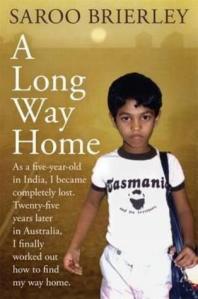
A Long Way Home (Lion) by Saroo Brierley, Larry Buttrose (ghostwriter)

I saw the film when it was on at the cinema about a year ago and like everyone who has seen it, I thought it was extremely moving. If you don’t know the story, it’s about a 5-year-old boy who is out with his teenage brother, who has told him to wait for him at a quiet train station near their home, and feeling tired, he climbs into an empty carriage, falls asleep and when he awakes, it is moving, the carriage locked and he will be transported, far, far from his home, which he won’t see for another 25 years.
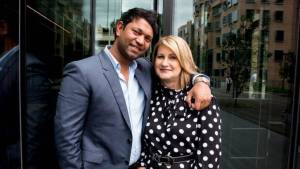
The book only confirms how incredible and moving his story is, on top of the emotion it provokes, was the amazement at how many situations 5-year-old Saroo got into that he was miraculously saved from, often by his own well-honed instinct, other times sheer luck, and occasionally, surely, divine intervention.

Like befriending the teenage boy he trusted and went home with, who would be the first person to make an intervention on his behalf that would lead him to 25 years of safety, before he could find his way back home and be reunited with his family again. In the meantime he would spend those 25 years in a middle class Australian family in Hobart, Tasmania – far from his culture and birth family, learning another language, getting an education and developing a way of life that would benefit them all by the time his story comes full circle.

It’s a bittersweet story with a thrilling beginning as he falls asleep in the wrong place at the wrong time and his life is hurtled, like a rocket capsule, into another hemisphere, with a few obstacles to overcome on the way.

It’s sad because he was a boy who became lost from his family in a large country, he had difficulty pronouncing the name of the town he came from (and even his own name) and in the city he arrived in Calcutta (Kolkata), he spent weeks riding trains hoping one of them might take him back. Nighttime brought an element of danger, and even in the day while having fun with other children in the river, danger was never far away, he would be rescued a couple of times that might have been life-threatening, had not well intended strangers come to his aid.

Saroo with his adoptive mother

The childless (through their own choice) couple that adopted him, were open and inclusive regarding his culture, furnishing his bedroom with a large map of India and items reminiscent of his country of birth, they joined an association connecting Indian families to their culture. However, unwanted memories could arrive unbidden, sometimes reconnecting with stories from India awakened his childhood trauma. He describes seeing the Hindi film Salaam Bombay:

Its images of the little boy trying to survive alone in a sprawling city, in the hope of returning to his mother, brought back disturbing memories so sharply that I wept in the dark cinema, my well-meaning parents unaware of the cause. Even sad music could set off emotional memories. Seeing or hearing babies cry also affected me strongly, but somehow the most emotional thing was seeing other families with lots of children. I suppose that even in my good fortune, they reminded me of what I had lost.

A few years later, his parents adopted another boy from India, who became his brother, the book doesn’t delve too deep into this relationship, however the film did bring out the contrast in their characters and the difficulty his parents, particularly his mother, who was a relatively quiet and calm woman, had in parenting him.

Mantosh and I were very different, partly because of the natural differences between our people, but also because of our different experiences in India. It’s one of the things that makes people who adopt children, especially from abroad, so brave: often the kids they’re taking in come with troubled backgrounds, having suffered in ways that make adjusting to their new life difficult, and which can be hard to understand and even harder to help. I was reticent and reserved; Mantosh, at least at first, was loud and disobedient. I wanted to please; he rebelled.

According to an interview, Mantosh was unhinged by the film, his protracted adoption wasn’t able to be finalised within the two month grace period the children’s home were given, so he was sent back to the large orphanage where lost or abandoned children would encounter all manner of youth, including bullies, criminals and abusers, the time he was obliged to spend there awaiting the administrative outcome scarred him physically and mentally. He didn’t have the good fortune of his brother, whose story is all the more remarkable for him having avoided abuse, though he was certainly close to encountering it, as his story shows.

“[His grandmother] couldn’t keep Mantosh in her care anymore, while he was waiting to come to Australia, once we’d accepted him. So he had to go back to [the orphanage] where he was burnt, raped, beaten, you name it. And I’m very bitter about that.” – Sue Brierley

There is most certainly a very different and equally important story to be told, if one follows Mantosh’s experience; it was interesting to listen to his mother speak on that in an interview recorded here. At least, she says, it did result in him beginning to open up more about his experiences and they were able to seek help for him, he represents the other side of adoption; the adoptive mother admitted they weren’t prepared for what it would mean to raise a child who’d been through such trauma, she didn’t have the support needed and experienced discrimination in the medical community when she did try to seek help.

When Saroo really becomes intent on tracking down his family, (another element that is much more vividly portrayed in the film) no one except his girlfriend knows how obsessed he has become, he has had periods of searching in the past, spurred on by meeting other students who grew up in India, who’d make guesses as to where he might come from based on his memories, but when, with the help of Google maps and tracing railway lines out of Calcutta, he began to spend hours every night doing his research, he kept it to himself, in ways and for reasons many adoptees will recognise.
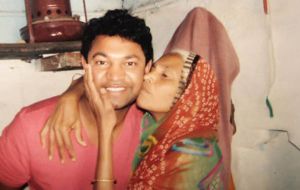
I didn’t tell many people what I was doing, not even my parents. I was worried they might misunderstand my intentions: they might think that the intensity of my search revealed an unhappiness with the life they’d given me, or the way they’d raised me. I also didn’t want them to think that I was wasting time. So even as it took up more and more of my life, I kept it to myself.

He was fortunate to have such a supportive girlfriend, he felt she would have been within her rights to feel alone in their still-new relationship, he was treading a fine line and would catch her looking at him sometimes as though she thought he was crazy. He was driven, determined and you knew he wouldn’t give up until he’d found something he recognised, the memories and maps in his head so well preserved over the years, surely he would find them if he kept going.

Perhaps to some extent sharing something so fundamental to me strengthened our connection – and that came through when we talked about what it all meant to me. It wasn’t always easy to articulate, especially as I was trying to keep a lid on my expectations, trying to convince myself it was a fascinating exercise, not a deeply meaningful personal quest.

In the book, Saroo spends a lot of time rationalising and expressing his gratitude, it’s clear he doesn’t wish to hurt anyone in his portrayal of the story, he understands he treads the line between two families in a topic that is almost a cause, that attracts fierce activism especially on the part of those who are pro-adoption, however he also acknowledges what many adoptees need to hear, the aspect that was healed in him in taking this journey, by his perseverance.

Rightly so in his case, as he wasn’t abandoned or given up in the first place. The trauma his mother must have gone through in finally accepting that he had disappeared, and what strength and love, to have believed for so long he may return, so strongly she believed it that she refused to leave the town they lived in, to join her other children and be nearer them and their families.

After being lost, I’d been lucky enough to adopted by a loving family, and not only lived somewhere else, but had become someone else from the person I might have been had I stayed in India. I didn’t just live in Australia, I thought of myself as an Australian. I had a family home with the Brierleys and had made my own home in Hobart with my girlfriend Lisa. I knew I belonged and was loved, in those places.
But finding Khandwa and my Indian family also felt like coming home. Something about being in the place just felt right. I was loved here too, and belonged, in a way I’d not thought much about beforehand and found hard to explain. This was where I’d spent my first years, where my blood was. When it was time for me to return to Hobart – a time that came around far too quickly – I felt the wrench of leaving deeply.

Buy a copy of the book via Book Depository

Excellent Books About Unforgettable Women #WomensHistoryMonth on #WorldBookDay

Today I saw the twitter hashtags #WorldBookDay and #WomensHistoryMonth prompting some interesting references to notable women, so I decided to look back at books I have read and reviewed here at Word by Word and show you a selection that highlight a few important women in our recent history, some you may not have heard of, all of whom have made significant contributions to our world. Click on the headings to read the reviews and share your recommendations.

Unbowed, One Woman’s Story, Wangari Maathai

The first woman who came to mind and whose book I want to recommend is Wangari Maathai’s Unbowed, One Woman’s Story. Kenyan and one of a group of young African’s selected to be part of the ‘Kennedy Airlift’ , she and others were given the opportunity to gain higher education in the US and to use their education to contribute to progress in their home countries. Maathai was a scientist, an academic and an activist, passionate about sustainable development; she started the The Greenbelt Movement, a tree planting initiative, which not only helped save the land, but empowered local women to take charge of creating nurseries in their villages, thereby taking care of their own and their family’s well-being.

“We worried about  their access to clean water,  and firewood,  how they would feed their children,  pay their school fees,  and afford clothing, and we wondered what we could do to ease their burdens. We had a choice: we could either sit in an ivory tower wondering how so many people could be so poor and not be working to change their situation, or we could  try to help them escape the vicious cycle they found themselves in. This was not a remote problem for us. The rural areas were where our mothers and sisters still lived. We owed it to them to do all we could.”

She won the Nobel Peace Prize in 2004, which motivated this story to be written thanks to others who pushed her to share it, thankfully, for she was an extraordinary and inspirational woman, who sadly passed away from ovarian cancer in 2011.

The Immortal Life of Henrietta Lacks, Rebecca Skloot

Henrietta Lacks is perhaps one of the most famous women we’d never heard of, a woman who never knew or benefited from her incredible contribution to science and humanity. A young mother in her 30’s, she was diagnosed with an aggressive form of cancer and despite being eligible for and receiving medical care at the John Hopkins hospital in Baltimore, a medical facility funded and founded to ensure equal access no matter their race, status, income or other discriminatory reason, she died soon after.
Before treatment, samples of her healthy and cancerous cells were taken, part of a research initiative in search of ‘immortal cells’ that could be continuously replicated. It had never been done before, until now – the newly named HeLa cells would become one of medicine’s significant advances.

Rebecca Skloot heard about the HeLa cells in biology class in 1988, became fascinated by them, she focused her research on finding out about the woman behind this important advance in medical science. This book tells her story and rightly attributes her a place in history.

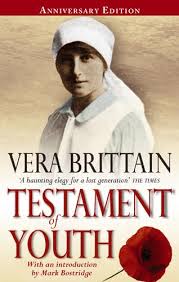
Testament of Youth, Vera Brittain

Vera Brittain was a university student at Oxford when World War 1 began to decimate the lives of youth, family and friends around her. It suspended her education and resulted in her volunteering as a VAD (Voluntary Aid Detachment) nurse. Initially based in a military hospital in London, events would propel her to volunteer for a foreign assignment, taking her to Malta and then close to the front line in France for the remaining years of the war.

Her memoir is created from fragments of her diaries, sharing the angst and idealism of youth, and later looking back from the wisdom of middle age, for she was 40 years old before her tome was published.

War changed her, she could no longer tolerate the classrooms of Oxford and the contempt of a new youth.

‘I could not throw off the War, nor the pride and the grief of it; rooted and immersed in memory, I had appeared self-absorbed, contemptuous and ‘stand-offish’ to my ruthless and critical juniors.’

She changed her focus from literature to history, in an effort to understand and participate in any action that might prevent humanity from making the same terrible mistakes that had caused the loss of so many lives. She became an international speaker for the League of Nations.

The book was made into a dramatic film of the same name in 2014.

Mom & Me & Mom, Maya Angelou

Maya Angelou is best known for her incredible series of seven autobiographies, beginning with I Know Why the Caged Bird Sings (1969), narrating her life up to the age of 17. She became a writer after a number of varied occupations in her youth.

This book was her last memoir, not one in the series, but one that could only be written from afar, from the wisdom of 80 years, when she could look back at a torturous youth, at a neglectful mother and see her with love, compassion and forgiveness.

‘Love heals. Heals and liberates. I use the word love, not meaning sentimentality, but a condition so strong that it may be that which holds the stars in their heavenly positions and that which causes the blood to flow orderly in our veins.’

Stet, An Editors Life, Diana Athill

Diana Athill OBE (born 21 Dec 1917) is someone I think of as the ordinary made extraordinary. She was a fiction editor for most of her working life, forced into earning a living due to circumstance, for while her great-grandparents generation had made or married into money, her father’s generation lost it. She clearly remembers her father telling her ‘You will have to earn your living’ and that it was something almost unnatural at the time.

War removed her chance at marriage and she appeared to reject it after that, revelling in her freedom and independence, though others suggest she was scarred by the intensity and pain of her first relationship. While the first part of the book focuses on her life, the second half recalls some of the relationships she developed with writers over the years, Mordecai Richler, Brian Moore, Jean Rhys, Alfred Chester, V.S.Naipul and Molly Keane.

The more extraordinary era of her life was still to come, for in her 80’s she began to write memoir, and achieve notable success, her book Somewhere Towards The End won the Costa Prize for Biography in 2008. Now 100 years old, she hasn’t stopped writing yet.

Further Reading:

The Guardian: Diana Athill: ‘Enjoy yourself as much as you can without doing any damage to other people’
The former editor on regrets, the advantages of old age and why she’s still writing at 100

***

Have you read any good books about notable women we might remember for #WomensHistoryMonth?

Buy a copy of one of these books via BookDepository

Granta 141: Canada – Mangilaluk’s Highway by Nadim Roberts

Granta 141 Canada

The first Granta journal of 2018, issue number 141 is focused on Canadian literature, whether it’s fiction, memoir, reportage, poetry or photography, each issue combines something of each of those categories, with new writing/work by known and little-known talent, around a common theme.

As guest editor and author of Do Not Say We Have Nothing, Madeleine Thien shares in the opening introduction, (and fellow guest-editor Catherine Leroux, writing in French), their only parameter for submissions was ‘What is being imagined here, now?’

Canada being a land with sixty unique Indigenous language dialects and more than two hundred languages reported as a mother tongue or home language, it was a wide-ranging brief.

Language becomes its own landscape in this issue of Granta. Language falls apart, twists, reformulates, shatters and revives itself. Animal and self, unfinished history, land and waterways, colonisation and dispossession, settlement and refuge – all these nouns are part of the truth of this place.

Apart from Leroux’s introduction, all the work is either in English or has been translated from English, however all work in translation is available to read on Granta.com in the original French.

It features writers such as Margaret Atwood, Lisa Moore (her novel February reviewed here), Alexander McLeod, Krista Foss, Naomi Fontaine, Kim Fu, Anosh Irani, Paul Seesequasis, Anakana SchofieldJohanna Skibsrud,  and many more…

I’m reviewing here the first story and may share other’s with you as I select randomly from the journal over the coming months.

Mangilaluk’s Highway

The opening story is a mix of reportage and a retelling of the story of Mangilaluk Bernard Andreason, who when he was 11 years old, slipped out of the Inuvik residential boarding school he’d been sent to, along with two friends Jack and Dennis, to avoid being punished for stealing a pack of cigarettes, and spotting newly hung power lines, decided to follow them home to Tuktoyaktuk.

Nadim Roberts writes about Bernard’s journey in the present, interspersed with narrative reports on his own visit to Tuk in June 2017, forty-five years after Dennis, Jack and Bernard began walking that 140 kilometre stretch home. Robert’s by contrast, completes the journey from Inuvik to Tuk in thirty minutes by plane.

He tells of successive attempts by the government to build a road across the Arctic Circle, to facilitate oil and gas exploration and a stretch of highway that would connect Inuvik to Tuk.

 From the plane I could see occasional glimpses of a new, near-finished road. This was the long awaited Inuvik-Tul all-season highway that would open in a few months.

Chief Mangilaluk

We learn that Tuk was a town founded by survivors from Kitigaaryuit, an Inuit settlement, that in 1902, after contact with whalers was cursed with a measles epidemic which drastically decimated their population. One young man, Mangilaluk, departed and went looking for a new place to live. His choice, a site on the edge of a harbour, would become what is now known as Tuk. He became chief and is still talked of today. Some believed he was a shaman who could shape shift into a polar bear.

In July 1961, two decades after he died, Mangilaluk’s granddaughter Alice Felix, was eight months pregnant. While home alone one evening, she heard a knock on the door. She wasn’t sure if she was awake or dreaming when the door swung open. A three-metre-tall polar bear stood in the doorway. It walked up to her, put its snowshoe-sized paw on her pregnant belly, and began to speak: ‘If it’s a boy, you name it after me.’

The story reminded me immediately of Doris Pilkington Garimara’s Rabbit Proof Fence, a tale of indigenous Aboriginal children removed from their parents (following an Australian government edict in 1931, black aboriginal children and children of mixed marriages were gathered up by whites and taken to settlements to be assimilated) and put in  a boarding school. The three girls in this true story followed a fence built to keep rabbits out of farming land, knowing that it passed close to their home.

Before 1955, fewer than 15 per cent of school-aged Inuit were enrolled in residential schools. Most children still lived on the land with their families, learning traditional skills and knowledge.

By 1964, more than 75 per cent of Inuit children attended residential schools. Their values, language and customs were supplanted overnight by a culture that saw itself as benevolent and superior, and saw the Inuit as primitive beings in need of sophistication.

Nadim Roberts interweaves Bernard’s story, his grandfather’s story and the current issues facing indigenous and local people in the region, in an evocative portrayal of one boy/man’s courage against the odds to make something better of his chance at survival.

Nadim Roberts Source: Author Provided

It’s an excellent piece of writing and combination of narrative and reportage, bringing attention to this one man’s story and the plight of both his people and the environment in which they live.

You can read Nadim’s story for free at Granta, just click on the link below:

Mangilaluk’s Highway by Nadim Roberts

Nadim Roberts is a journalist from Vancouver whose work has been published in Walrus, Maisonneuve and the Globe and Mail.

Further examples of his work can be viewed on his website NadimRoberts.com

Have you read any recommended works by any of the authors mentioned or others featured in Granta 141?

The Spiral Staircase, A Memoir by Karen Armstrong

Before I went to visit and spend two months in Bethlehem, Palestine some years ago, I wanted to read something about the history of the area, not a religious book, but something historical that went beyond the recent familiar history since the British abandoned those residing in these lands to their fate. I wanted to understand the wider context of how people came to be living here and what they’d had to endure to survive.
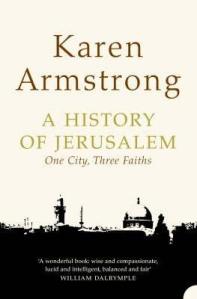
I chose to read Karen Armstrong’s A History of Jerusalem: One City, Three Faiths and read it while in situ. It was a history of multitudes of power shifts and massacres and when I finished it, I said to my husband (born in Bethlehem), somewhat in awe, “Congratulations, you survived,” and I wondered who these people really were, who had survived such a long, brutal history and come to be living in these towns of Jerusalem and Bethlehem today. One thing was for sure, they were survivors and most likely had traces of every people who had ever passed along the pilgrim trail within them.

Recently I was recommended a couple more Karen Armstrong books A History of God: The 4,000-Year Quest of Judaism, Christianity, and Islam and The Great Transformation as background to the conditioning that underpins much of humanity’s belief system of the past millenia, however I decided to add to this collection by first reading her memoir The Spiral Staircase, about her life after leaving the convent, where she spent seven years leading up to her becoming the well renowned author she is today.

I wasn’t interested in her life as a nun, or the details of her leaving the convent, I was interested in how she had used what she learned in rejecting her faith to inspire her towards immersing herself in the history and identifying that catalyst of humanity’s desire to embrace organised religion.

This memoir thus starts as she is trying to finish her university education and doctoral thesis, then her foray into becoming the partial carer of an autistic child, her teaching, her involvement with Channel 4 and the BBC in producing a series of programs on St Paul and then the crusades, and finally launching herself into a writing career when it appeared all other options were closed to her.

Every venture she went into, except the writing career, followed a similar trajectory, where she did the thing she’d convinced herself was what she should be doing, only to eventually lose hope, which became the turning point, or the spiral in the staircase, where she changed direction, it always seemed dramatic and quite often was, however my perspective on those turning points is that they were a course correction, she went along a path for as long at it had something to teach her and then she’d be literally thrown out of it – this kind of thing usually happens when we know we need to change a circumstance but we do nothing, and seven years in the convent had conditioned her to ignore any kind of inner guidance or intuition, making these changes when they did occur seem more dramatic than they might have been, had she transitioned earlier.

Boarding School

I loved reading about her journey and couldn’t help but remember the nuns from my secondary school education, apart from a couple who taught they were elusive figures on the periphery of our lives, we lived on the same premises, for us a boarding school, for them in a separate wing, it was more like a retirement home, they were very, very old and the only time we saw them was in the chapel on Sundays.

They were shadows of whoever they had been and we had no real interaction with them, except the ancient, tough 90 something Sister Conway who still worked in the scullery plunging her gnarled, arthritic hands into boiling hot water as if it were tepid, while we waited for the cutlery to cool before lifting it to dry.

Karen Armstrong took years to undo the conditioning of seven years in the convent and even then likely will never do so completely. An intellectual unsuited to academia, she eventually finds her place studying the great religious and spiritual practices looking for common threads, she’s less interested in differences than in commonalities.

As she researches and learns how to use empathy and compassion to inhabit the minds of those she seeks to understands, she comes closer to a spiritual experience than anything she experienced as a Christian. She has let go of God as objective fact and of belief as being a necessity, discovering instead ‘practice’ and compassion to be the one significant practice of all the faiths that succeeds in managing the ego sufficiently to create peace and harmony.

I enjoyed her honest, though often self deprecating account of this period in her life and particularly loved what she experienced when she visited Jerusalem, the cross cultural encounters and being told to drop the small talk and niceties:

“Karen! You are not in England now. There is no need to be a polite English lady here in Israel. We are not formal people. There is no point to speak if there is nothing to say.”

It becomes even more humorous when she is invited to do the same:

“Do not be a polite English lady. If you think I am unreasonable, tell me to get lost, to shut up- whatever you like!”

at which she surprises herself in doing after a particularly charged day when tensions were high and Joel had snapped at her rudely. His response is excellent, he is proud of her!

The other amusing experience in reading my second hand copy of this book, was the presence of the previous reader in the margins, who not happy to have merely marked up the pages, shared her thoughts more vociferously, clearly not nearly as impressed as I was with the work, deciding to rant and share snippets of her own experiences, which were mostly entertaining, often annoying, and ultimately unwelcome! Here are some of them, since no one else will have had this reading experience!

page 123 After speaking about how her years as a nun had broken something in her, and affected her eating habits, Karen Armstrong writes:

“And I did not want to nourish myself. What was the point of feeding my body, when my mind and heart had been irreparably broken?”

And my interlocutor writes:

“as I was after the divorce”

Armstrong mentions that she isn’t going to write about her failed love relationships, seeing no reason to dwell on episodes that didn’t develop into anything significant and writes:

“Just as I was prevented from becoming an academic, so too I have never been able to achieve a normal domestic existence, and this, like my epilepsy, had also ensured that I remained an outsider in a society in which coupledom is the norm”

to which my interlocutor responds:

“oh do stop feeling sorry for yourself!”

and even adds later on

“perhaps you are just unloveable”

which is a mild example of the kind of comportment (at different levels of societal power clearly) that nevertheless can lead to disharmony, conflict, war even, for if there is a conclusion to what Karen Armstrong has learned, it is a lesson she gifts to her readers, known as Hillel’s Golden Rule that all great leaders have taught, Confucius proclaimed it 500 years before him, Buddha and Jesus taught it, it is the bedrock of the Koran:
“Do not do to others as you would not have done unto you”

As one of her advisors Hyam Maccoby said

“It takes more discipline to refrain from doing/saying harm to others than to be a do-gooder and project your needs and desires onto other people.”

The Outermost House by Henry Beston #NatureWriting

A Year of Life on the Great Beach of Cape Cod

outermost

Reading Beston on Plage de Notre Dame, Porquerolles Island, France

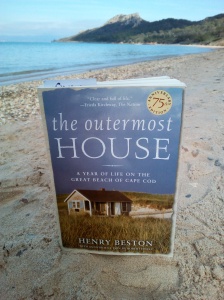
Originally published in 1928, and still in print today, this is perhaps one of the early examples of literary nature writing, an account of a year spent living among the sand dunes of the great peninsula of Cape Cod, living closer to the ‘rough sea nature’ in all her aspects than most humans do and observing all that passes through and by, using all the senses.

Having planned to stay two weeks in his newly built house on the sand dunes, Henry Beston’s fascination with the changes of the dunes, the tides, the sky, the migration of birds and butterflies keep him captivated; thus he keeps extending his stay, observing the minutiae of life and nature, writing it into this book.

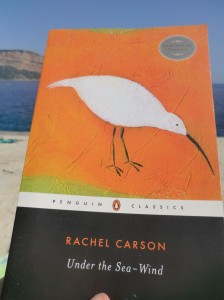
I first came across the title while reading one of my favourite nature writing books by Rachel Carson, Under the Sea-Wind, in which she mentions this volume as one of her inspirations.

Under Sea Wind2And though I enjoyed Henry Beston’s book considerably, Carson’s book for me left a greater impression, for who could not forget being made to see life through the eyes of the very creatures Henry Beston observes. Carson chose to narrate the three parts of her book from the point of view of a sanderling (bird), a mackerel, and a migrating eel. If you haven’t read it and loved this book, I am sure you will enjoy and appreciate Rachel Carson’s personal favourite of all the books she wrote, it is the perfect companion to The Outermost House.
I got the impression Henry Beston may have been something of an insomniac, or perhaps it was because during winter he abandoned the cold bedroom and slept in his front room, where there was the warmth and then cooling of the fire and the changing light of the seven windows he’d included in his simple design. Often throughout the book, he wakes in the night and so making the most of it, seeing these awakenings as an unwitting opportunity, he dresses and goes out to see what’s up. And though we might think that one night must surely be just like another, he always finds something new to observe, reflect on and write about.

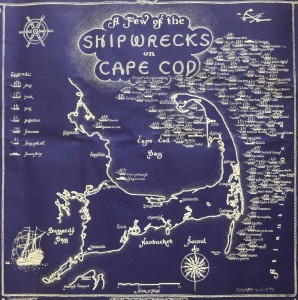
He was often visited by the “surfmen” who patrolled the coastline, making sure he’d survived the latest storm, men he said knew the conditions of that coast like no other, not as sailors, but like those who are land based who watch and develop their knowledge and instinct as he learned to, observing how quickly the elements could change and become violent, showing little compassion for floating man-made vessels that attempted to navigate its peripheries.

shipwrecksIt was the late 1920’s and no doubt a year like any other, with its share of wrecks, disasters. The pragmatic attitudes of the locals, as likely to come to the rescue and do anything to help, as they are to salvage what is left, not always understood by the families of victims of the many shipwrecks.
“a wreck was treasure trove, a free gift of the sea; even to-day, the usable parts of a wreck are liable to melt away in a curious manner.”

To get a feel for the prose, I’m sharing a few more of the passages I highlighted as I read, they best portray a sense of his experience and lyrical turn of phrase.

He develops a compassion and understanding for birds and animals and insects that he finds at odds with what an education (or perhaps religion) has taught him, he questions the self-perceived superiority of man and wonders that we ought not perhaps rethink this arrogance.

“We need another and a wiser and perhaps a more mystical concept of animals. Remote from universal nature, and living by complicated artifice, man in civilisation surveys the creature through the glass of his knowledge and sees thereby a feather magnified and the whole image in distortion. We patronise them for their incompleteness, for their tragic fate of having taken a form so far below ourselves. And therein we err, and greatly err. For the animal shall not be measured by man. In a world older and more complete than ours they move finished and complete, gifted with extensions of the senses we have lost or never attained, living by voices we shall never hear. They are not brethren, they are not underlings; they are other nations, caught with ourselves in the net of life and time, fellow prisoners of the splendour and travail of earth.”

He attempts to put into words, his great awe and the magnificence of the ocean, implying that of nature’s three great elemental sounds in nature (the rain, the wind and the sound of outer ocean on a beach) the ocean is the most awesome, beautiful and varied.

“For it is a mistake to talk of the monotone of ocean or of the monotonous nature of its sound. The sea has many voices. Listen to the surf, really lend it your ears, and you will hear in it a world of sounds: hollow boomings and heavy roarings, great watery tumblings and tramplings, long hissing seethes, sharp, rifle-shot reports, splashes, whispers, the grinding undertone of stones, and sometimes vocal sounds that might be the half-heard talk of people in the sea. And not only is the great sound varied in the manner of its making, it is also constantly changing its tempo, its pitch, its accent, and its rhythm, being now loud and thundering, now almost placid, now furious, now grave and solemn-slow, now a simple measure, now a rhythm monstrous with a sense of purpose and elemental will.”

He is prone to talk of the sounds of natures as if they were a symphony of his making.

“As I muse here, it occurs to me that we are not sufficiently grateful for the great symphony of natural sound which insects add to the natural scene; indeed, we take it so much as a matter of course that it does not stir our fully conscious attention. But all those little fiddles in the grass, all those cricket pipes, those delicate flutes, are they not lovely beyond words when heard in midsummer on a moonlight night.”

Cape Cod Birdlife by Janet DiMatta

Cape Cod Birdlife by Janet DiMatta

A delightful read that I enjoyed even though I have never visited the area, it does make you wish to see it for yourself, a unique ecosystem and landing point between here and there for so many species, one that Henry Beston has succeeded in depicting so well, it has ensured his book has become a classic, continued to be read, reread and appreciated by multiple generations of readers.

To see some pictures of the house, you can visit the website Outermost House.

Click here to buy a copy of

The Outermost House or Under the Sea-Wind

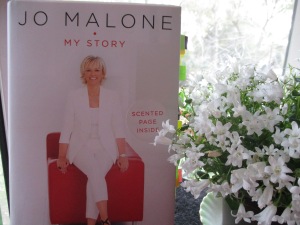
Jo Malone, My Story #JoLoves

Although I lived in London through much of the period when the Jo Malone brand was being created and built, I can’t say I was really aware of it in its early days, not until it hit its tipping point and her trademark bags and candles started to become the beautiful gifts others in the know would offer those who didn’t shop in the more exclusive shopping areas of Chelsea and Belgravia where you often find luxury hip and boutique brands.

my-storyBut Jo Malone the girl, wasn’t born into luxury. She was an ordinary girl raised in a family that struggled a bit on the good days, and a lot on the bad days, which were often brought on by her doting father’s gambling inclinations, her mother’s over-spending habit and the pressure to work long hours to keep the family afloat.

Her mother returned to the workforce as a manicurist until she was lured away by the eccentric Madame Lubatti, who would become an influential figure in Jo’s early life, an Empress of scent, whose origins we never really discover, just that she spent time in Hong Kong gathering her knowledge.

She would introduce her protegé (mother and daughter) to her laboratory of elixirs and magic ingredients and taught Jo to develop her nose and instinct allowing her to experiment and discover how to create  face mask and cream blends, until they were just right – texture, aroma, perfection – inspiring confidence in her while she was young enough not to doubt her ability to make fragrant, creamy magic.

Madame Lubatti coaxed out my love of fragrance and essentially trained my instincts…She would bring over three unlabelled bottles of different rose oils, remove the stoppers, place each one under my nose and ask:

‘What do you think that smells of?’

I’d close my eyes and sniff; ‘Tea-rose?’

It impressed her that I could tell the difference between the woody muskiness of a garden rose, the clean apple-green notes of a tea rose, and the rich, regal scent of a Bulgarian rose.

She would learn other secrets of scent, of the importance of the whiteness of the room, and allowed her access to the biggest secret of her unrivalled success, a precious, well-thumbed, black leather ledger, filled with four decades if recipes. The elderly Madame Lubatti not only exposed to the secrets of her clinic and laboratory, she also took her on her visits to the homeopathic chemist for pills, powders and oils, the herbalist for herbs, waxes and dried flowers and to Marylebone High Street for chocolate marzipan at the Viennese coffee shop. She imparted to Jo her high standards, stressing ‘If you can’t do something perfectly, don’t do it at all. You must do it brilliantly!’

While she was competent in the home and at the salon where her mother worked and even accompanied her father to sell his paintings in the market during a prolonged period of unemployment, school was not any kind of refuge for Jo. Her undiagnosed dyslexia contributed to her difficulty and she would leave school without any qualifications, but quickly found one job after another through her mother’s contacts, until eventually joining up to work with her mother giving facials to clients and making home-made product to sell to them.

She would go on to attract her own clients and after a series of falling outs with her mother, would go it alone, working from a room in their small apartment, making product from her kitchen. By this time she had married Gary, a young man she met in a period when she joined a bible study class. He was the grounding stability she needed, the strategic businessman to her creative inspiration. From this point on, she rarely mentions her family, though one incident reveals something of the bitterness that existed among those who were close to them. Malone’s response to the incident is to share a little of her life philosophy:

…human nature is divided between those who thrive on, and get easily distracted by, gossip and they tend to go nowhere; and those people who know their purpose, know what they want, and won’t give weight to the chirpings of misinformed tittle-tattle because they know that such things are a waste of focus and energy.

lime-basilWhen she really began to play around with fragrance, demand began to rise more than she could cope with, and Gary suggested they embrace the business, move it to its own premise and open a shop. Her business was beginning to overwhelm their living condition, he recognised the potential and offered to commit himself wholeheartedly it. That would be the beginning of Jo Malone, her signature brand.
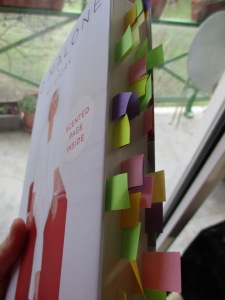
post-itFrom there, a whirlwind of events follow and she will partner up with a perfume house in Paris, turning her instinct into a viable, enduring product. She tried to put into words her creative process and it is fascinating when she does, for it is something that can’t be copied or cloned, it is an insight into the pure magic of creativity, of how she uses image, colour and experience to create a scent.
Those descriptions of her creative process are some of the most exciting and inspirational passages in the book; when she begins to flourish her creativity sings and reading her descriptions of being in the creative zone, of creating a scent, playing with the notes of fragrance my post-it notes were flying. I had to refrain from dog-earring pages and scribbling in the margins as the book was lent to me.

Having become interested in and immersed in the study of aromas and the energetic and therapeutic qualities of essential oils 20 years ago, I too am someone who creates aromatic oils and creams and loves nothing more than to experiment with and create a personalised magic blend for a client or friend, so I totally relate to the bliss Jo Malone felt when she’s doing her thing in a creative sense. (Me with some of my magic potions below).

Though she had her share of fears and trepidation at entering into the unknown, her life has been scattered with signs and synchronicities that propelled her forward, to meet those who would show her the way, encourage her to take the next step, work through the challenges, admit the mistakes, learn from them and move on where possible.

pomeloI absolutely loved this book, from it’s at times heartbreaking accounts of struggle in childhood, to the discovery of her passion, the development of her creativity and the strong work ethic that carried her forward, to finding the perfect mate and the journey they would go on together.

And though she is no longer part of Jo Malone, she is where she ought to be, doing what she loves and still thinking outside the box, creating new scents and new experiences. This one, her new signature fragrance and brand was included in the front of the book, it smells divine!

P A S S I O N  * R E S I L I E N C E   * C R E A T I V I T Y

Highly Recommended!