Unearthing (2023) by Kyo Maclear

A Story of Tangled Love and Family Secrets

“But what is the point of writing if not to unearth things… Annie Ernaux

I chose to read Unearthing because it was the overall favourite read of 2023 of Shagafta who I follow on Substack and because it ties in to a theme I have been researching, exploring separation, kinship and the discovery of one’s identity.

Of Changing Seasons and Evolving Stories

Unearthing is a memoir of twenty four sekki (節気) or “small seasons” that offers a different way of thinking about the ever changing ground of our personal stories.

Three months after Kyo Maclear’s father dies, looking to know him at a deeper level and curious about his mother’s side of the family, she takes a DNA test.

When my father died and I was his grieving and wondering daughter, I thought of a word. The word, yugen, or what the Japanese call a state of “dim” or “deep” mystery, evokes the unsettled feeling I had at various points growing up as an only child. Our family was a tiny unit with strange ways. My parents acted like criminals on the lam – loading up moving vans, changing house every few years. I was four years old when we left England, shedding backstory and friends overnight. What made a family behave this way, like people drawn to erasure? Why were we always leaving like this, unceremoniously? I did not know. Growing up, I assumed that everyone was shaped and suffused by what they could not perceive clearly, the invisible and voiceless things imparted atmospherically within families.

Ask Your Father

Shocked, when she receives the results she learns that she is not biologically related to her father and that her mother refuses to speak on the subject.

She repeated it three times. Talk to your Dad. As if his death had been a hoax; her voice no longer blurry but brisk with fear.

Though her mother does not wish to talk about it, her daughter perseveres. She will weather this storm, waiting for it to calm, listening between the lines of conversation, picking up on the cues.

When one person leaves, the old order collapses. That’s why we were speaking to each other carefully. We were a shapeshifting family, in the midst of recomposing ourselves. What is grief, if not the act of persisting and reconstituting oneself? What is its difficulty, if not the pressure to appear, once more, fully formed?

Solving the Mystery of Your Life

Photo K. Kaboompics Pexels.com

Becoming a detective in her own life, Kyo assembles the story of her lineage, tied to the seasons and the making of a garden.

Digging was my way out. An impulse born of stubbornness and bred in me by a culture that loves stories of people discovering the truth of their paternity; that champions the idea that concealment is destructive and truth is freeing.

The way the Kyo Maclear takes her time unveiling the truth of her story, the various paths she follows, the thoroughness of her pursuit to know, makes this a thrilling read.

There is something about the long, slow seasons and the process of tending the soil, not trying to rush the end result that resonates in her writing, yet never slows the narrative.

Her observations of her mother, the nuanced noticing, are so well depicted, you can feel the resolution of the mystery getting warmer and warmer, as she regains her mother’s trust and nurtures her into revealing more.

Something

It was all being pulled from some shadowy room. The details she remembered. The broken chain of events. What she spoke arrived in fragments. But there was something else, a hitch and hesitance, that made me alert.

I did not yet understand the need to hold on to an invented story, even a falsified past, at all costs. I did not recognize her dissembling. Usually impervious, I thought she seemed out of sorts. Maybe a little distraught.

She does not want to tell me something, I thought.

Along the way larger questions arise: What exactly is kinship? What does it mean to be family? What gets planted and nurtured? What gets buried and forgotten? Can tending a garden heal anything?

I thought this memoir was brilliant, I highlighted so many thoughtful and thought provoking passages. I admired the way the revelations came slowly and the characters of her family were explored, her search for herself made her realise how little she knew of her own parents. They too, were a mystery to unravel and motivations to explore, before even embarking on the second exploration, the unknown aspect that her DNA revealed.

It also celebrates those that helped, guided and accepted her along the way, new relationships and a deeper understanding of aspects of the self, while never losing her essence.

Highly Recommended.

Kyo Maclear, Author

Kyo Maclear was born in London, England, and moved to Toronto at the age of four. She holds a doctorate from York University in Environmental Humanities.

Her most recent book, the hybrid memoir, Birds Art Life, was published in seven territories and became a Canadian #1 bestseller. It was a finalist for the Hilary Weston Writers’ Trust Prize for Nonfiction and winner of the Trillium Book Award.

Unearthing was an instant bestseller in Canada and winner of the Governor General’s Literary Award for Nonfiction. Her short fiction, essays, and art criticism have been published in Orion MagazineAsia Art PacificLitHubBrickThe MillionsThe GuardianLion’s Roar, The Globe and Mail (Toronto) and elsewhere. She has been a national arts reviewer for Canadian Art and a monthly arts columnist for Toronto Life. She is also a children’s author, editor, and teacher.

She lives in Tkaronto/Toronto, on the traditional territories of the Mississaugas of the New Credit, the Haudenosaunee, Métis, and the Huron-Wendat.

bell hooks: The Last Interview and other conversations

The Last Interview is a series of books each entitled, The Last Interview and Other Conversations that offers a fresh look at some of the world’s leading innovative writers and edgiest cultural figures by gathering conversations from throughout an artist’s career and collecting them in one volume. There are currently 41 books in the series and the next one coming will feature Sinead O’Connor.

Having read two of the books in bell hooks Love trilogy, All About Love and Salvation (the third book Communion, I have – but yet to read), I was interested to read these interviews. They provide more background on the author and allow for the greater understanding and depth in a subject that conversation can bring. They include an exploration of her affiliation and interest in Buddhist thought.

Overall, while the interviews are interesting, I think it is great to read the work of bell hooks, as she was quite prolific on a number of topics and a very engaging writer and thinker. If you have read all her work, this will be a bonus read and if you haven’t these interviews, some of which you can find online are a great introduction.

Meet and Read bell hooks

feminist interview bell hooks on writing criticism

bell hooks (born Gloria Jean Watkins) (1952-2021) was an African-American author, feminist, and social activist. Her writing focused on education, political theory, the interconnectivity of race, class, and gender and their ability to produce and perpetuate systems of oppression and domination.

The pseudonym she used, was the name of her great-grandmother, to honour female legacies, spelling it always in lower case letters, to focus on her works and message, about ideas and not herself.

She published over thirty books and numerous scholarly and mainstream articles, appeared in several documentary films and participated in various public lectures. Primarily through a postmodern female perspective, she addressed race, class, and gender in education, art, history, sexuality, mass media and feminism.

The bell hooks theory

She is most well known for her feminist theory that recognizes that social classifications (e.g. race, gender, sexual identity, class, etc.) are interconnected, and that ignoring their intersection creates inequality and oppression towards women and changes the experience of living as a woman in society.

On Love

nonfiction essays love effect of domination patriarchy black woman perspective

In her book All About Love, bell hooks perspective is heart lead, her definition of love leaves behind conditioned perceptions of romance and desire and the traditional roles of carer, nurturer, provider – and suggests that it might be ‘the will to do for oneself or another that which enables us to grow and evolve spiritually’ love becomes a verb not a noun.

“All too often women believe it is a sign of commitment, an expression of love, to endure unkindness or cruelty, to forgive and forget. In actuality, when we love rightly we know that the healthy, loving response to cruelty and abuse is putting ourselves out of harm’s way.”

I find her work particularly interesting as it sits alongside the work of another cultural commentator, Riane Eisler’s The Chalice and the Blade and Nurturing Our Humanity in addressing those systems of domination such as class, gender and race that interfere with our ability to commune with one another.

It is also in alignment with the work of Anita Moorjani, another heart based spiritual commentator, who wrote Sensitive is the new Strong, Dying To Be Me and What If This is Heaven?.

The Interviews – No Such Thing as Bad Publicity?

One of the interviews addresses the controversy of her decision to appear on a live talk show, something she did as a way for her to reach a different, wider audience. It was a strategy that in one sense did not work that well for her, due to the hard time she was given on the show. However, despite the public take-down, her aim was still achieved, as the silent majority who watched it from their homes, will have become more aware of who she was and the message she was trying to portray, in particular to Black women.

Photo P. Apichodilok Pexels.com

In the collection of seven interviews, stretching from early in her career until her last interview, she discusses feminism, the complexity of rap music and masculinity, her relationship to Buddhism, the “politic of domination,” sexuality, and love and the importance of communication across cultural borders.

Dominator culture has tried to keep us all afraid, to make us choose safety instead of risk, sameness instead of diversity. Moving through that fear, finding out what connects us, reveling in our differences; this is the process that brings us closer, that gives us a world of shared values, of meaningful community.
– Teaching Community: A Pedagogy of Hope, 2003

Whether she was sparking controversy on campuses or facing criticism from contemporaries, hooks relentlessly challenged herself and those around her, she inserted herself into the tensions of the cultural moment, and anchored herself with love.

For me, forgiveness and compassion are always linked: how do we hold people accountable for wrongdoing and yet at the same time remain in touch with their humanity enough to believe in their capacity to be transformed?
– in conversation with Maya Angelou, 1998

On Tough Love, Loving Environments and Community

This was an interview by Abigail Bereola for Shondaland in December 2017 on self-love, discussing why we know so little about it or how to even cultivate it, and how a lack of it has played into the patriarchal culture of workplace abuse and assault.

I think that societies begin with our small units of community, which are family — whether bio or chosen. I am often amazed when I meet people that I see have been raised in loving families because they’re so different and they live in the world differently. I don’t agree that every family is dysfunctional — I think we don’t want to admit that when people are loving, it’s a different world. It’s an amazing world. It’s a world of peace. It’s not that they don’t have pain, but they know how to handle their pain in a way that’s not self-negating. And so I think insomuch as we begin to look again at the family and challenging and changing patriarchy within family systems, irrespective of what those families are, there’s hope for love.

I have enjoyed her books considerably and the interviews extend her work into the joy of what conversation can bring. Though some of her work is clearly targeted at Black women, I believe there is value in it for all, indeed, it is necessary to read outside one’s own race, gender, culture, ethnic group and language, to understand other perspectives and the issues that others face. Sometimes we find resonance, other times, we pay attention, listen, read and learn. There is plenty to learn and consider in the writings and conversations of bell hooks.

N.B. This was an ARC (Advance Reader Copy) kindly provided by the publisher via NetGalley.

The Not So Great Escape by Claire McAlpine

La Chasse #1

It is early morning and I hear clack, clack, clack, a wooden sound that makes me think of the quack of a duck. A body memory warns me away, reminding me of duck shooting season at Waimatai, the farm of my adolescence. That sound a lure to less intelligent prey.

There is no lake here.

I take a different path, away from that unnatural, menacing sound, two black labradors at my heels. This forested hillside of the south Luberon is a refuge to the sanglier, the wild pig.

Too late, I discover I have taken the chosen route, they begin to arrive, stirring up dust in their four wheel drive vehicles, les chasseurs, the hunters.

Militant vehicles with dark windows, at least two dogs in kennels on the back, they pass us by, one after the other, bright orange vests and woolen hats visible through the open window. There are so many of them; it takes all my strength to hold back the young labrador Winnie, who senses the excitement of the upcoming chase.

We turn around and head back to safety just as an eighth vehicle passes by with a dozen hounds yapping behind the grill.

La Chasse #2

Safe inside the stone dwelling, the dogs fed, I tell my friend about the hunters we encountered on the track.

“We won’t be walking up to the chapel this visit,” I say when I return. “We are surrounded.”

One hunter in a small white car, an older man, had stopped in front of me and I had asked him if they were hunting the sanglier. I had seen a number of traces in the soft clay beside the track, telltale footprints and the persistent interest of the two dogs, sniffing the area intensely in certain places.

“Yes, we will be up in that area on the left,” he had indicated with his arm. 

Left. The route to the hermitage, the lone chapel we had hoped to walk to later on, the area directly behind the house where we were staying for the weekend, looking after Spike and Winnie.

As we plan a different walking route, both labradors begin barking and whining. Winnie the younger dog I have been instructed to keep on a leash at all times, has her GPS tracker charging. I reach for her leash, deciding in that moment that I will keep it on her indoors, just in case. I reach for the kitchen door to secure it at the same moment that my friend is coming in from outside, carrying a jar of tapenade on a wooden board. Winnie pushes past me through the barely open door, brushing my friend aside with a force that sends the olive green tapenade flying, the glass jar smashing on the terrace. Winnie can’t be stopped, though I call and shout her name running across the lawn after her.

I watch her reach the end of the lawn and sail through the air over the top of the electric fence that has been put there to prevent the sangliers from digging up the garden beneath the oak trees. The sound of barking is close by, a frantic, feverish tone. Winnie tears up through the pines beyond the house. I continue calling, I can see the terrain she is mounting is steep and unwieldy.

I try not to think about her encountering those hounds off-leash, or the other black animal that is being hunted, of this naive young labrador moving into the line of fire, of my friends who have entrusted her into our care, of the GPS tracker still charging.

My friend walks to the end of the lawn with the lead in hand. “What are we going to do?” they ask.

“There’s nothing we can do but call her. We can’t go after her.”

“And get shot,” my friend adds.

I take a couple of steps forward to the edge of the lawn, despondent. “Winnie!” I call.

She comes bounding down through the trees towards us.

Click. Leash secure. Saved. This time.

Simple Passion by Annie Ernaux translated by Tanya Leslie

After reading Annie Ernaux’s Nobel Prize Lecture I Will Write to Avenge My People, I decide to read the slim titles Simple Passion (48 pages) and next I will read Shame (86 pages). I have already read A Man’s Place, and eventually I will get to her more lengthy masterpiece The Years.

Simple Passion was the #1 national bestseller in France for over three months when it was first published in 1991, and a celebrated scandal even in France’s liberal society. It was followed up ten years later by a second book Se Perdre (2001) (Getting Lost), which explores the affair through a series of diary notes.

In this book, Annie Ernaux observes herself throughout the life-cycle of an affair, the in-between moments of a conditional relationship, describing how that passion drew her in and ruled her, even when she took herself away from it.

She writes of this encounter with hindsight, as if observing something external to her, like a work of art, looking for some kind of truth or meaning behind the physical and mental experience, now that she has some distance from it. Her interest in writing is not to focus on the man (who could be any man) but on the obsession itself.

A Simple Passion Reveals a More Complex Humanity

The man, referred to as A, is from another country, he is married; the 18 months he is in her life, this ‘simple passion’ is depicted like an illness or a condition, she is able to see how it changes her. She studies it.

I am not giving the account of a liaison, I am not telling a story (half of which escapes me) based on a precise – ‘he came on 11 November’ – or an approximate chronology – ‘weeks went by’. As far as I was concerned, that notion did not enter the relationship. I could experience only absence or presence. I am merely listing the signs of a passion, wavering between ‘one day’ and ‘every day’, as if this inventory could allow me to grasp the reality of my passion.

A Life Suspended, Waiting for a Man

Photo by A.Piacquadio Pexels.com

She observes this condition, though she is virtually powerless to overcome or stop it, it will run its course and she will create an honest, transparent account of it, documenting the range of emotions, behaviours and instinct that run through her.

She observes how this desire becomes the lens through which she sees everything around her, how she spends her time endlessly waiting; waiting for him to call, waiting for him to arrive, waiting for the inevitable end of their association.

This endless wait reduces every other experience, as if they were lived by someone else, while magnifying the space in her mind given to thinking about him, of their time together – amid brief lucid moments of realising the insignificance of him, of the exaggerated importance she has temporarily given him.

I often wondered what these moments of lovemaking meant to him. Probably nothing more than just that, making love. There was no point looking for other reasons. I would only ever be certain of one thing: his desire or lack of desire. The only undeniable truth could be glimpsed by looking at his penis.

Fulfilling Life’s Purpose, Finding Meaning

The passion passes through a cycle from its beginning, middle, near-end and end, passing through excitement, anticipation, acceptance, moving on, overcoming towards finding meaning.

Yet it is that surreal, almost non-existent last visit that gives my passion its true meaning, which is precisely to be meaningless, and to have been for two years the most violent and unaccountable reality ever.

Written in short fragments, paragraphs, it is a hypnotic read. I have never read anything quite like it, an introspective interrogation of the self, she is able to set aside society’s judgments and write in a way that is as intimate as a journal, but in a short succinct way that has her own purpose, to better understand the human condition.

I discovered what people are capable of, in other words, anything: sublime or deadly desires, lack of dignity, attitudes and beliefs I had found absurd in others until I myself turned to them. Without knowing it, he brought me closer to the world.

The author presses forward towards fulfilling that promise made to her 22 year old self, as we learned of in her novel lecture, to interrogate her own actions, her own mind in the life she has created, having ventured far from humble beginnings. In writing to avenge her people, she writes to avenge all.

He had said, ‘You won’t write a book about me.’ But I haven’t written a book about him, neither have I written a book about myself. All I have done is translate into words – words he will probably never read, which are not intended for him – the way in which his existence has affected my life. An offering of a sort, bequeathed to others.

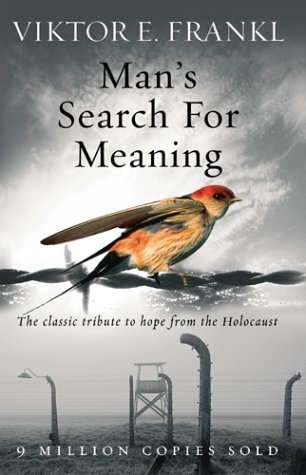
Man’s Search for Meaning by Viktor E. Frankl

This long time classic, came up in conversation last week; a friend and I were talking about the inclination for one to want to ask, know or understand the ‘why’ when something bad happens.

For me, looking back at something challenging, I have a sense that when we cease to ask or need to know the ‘why’, that is a sign we have moved past or overcome it. How we get there is another subject altogether.

classic tribute to hope from Holocaust LogotherapyMy friend then mentioned Viktor Frankl and interestingly, I learned he held a similar premise, but in the opposite direction. In terms of looking forward in life, we are likely to be more at peace and less prone to suffering if we have a ‘why’ in terms of our life’s meaning. So having our own ‘why’ is what we can focus on, looking forward, not back, at ourselves and not ‘the other’.

I decided it was time to dust off the book and retrieve it from my shelf.

In the first 100 pages Frankl shares some of his experiences and observations from being in Auschwitz and other Nazi concentration camps, with a focus on answering for himself the question of why some of them, like him, survived.

He identifies different turning points, observing the moment when some lost meaning and how those that did survive often had found a way to create it, despite the horrific circumstances.

His experience in Auschwitz, terrible as it was, reinforced what was already one of his key ideas. Life is not primarily a quest for pleasure, as Sigmund Freud believed, or a quest for power, as Alfred Adler taught, but a quest for meaning.

Frankl’s most enduring insight, one that resonates deeply:

forces beyond your control can take away everything you possess except one thing, your freedom to choose how you will respond to the situation. You cannot control what happens to you in life, but you can always control what you will feel and do about what happens to you.

meaning of life goal why purpose

Photo by Nina Uhlikova @ Pexels.com

The prisoner who lost faith in the future was doomed. Any attempt to restore a man’s inner strength had first to succeed in showing him some future goal.

Nietzsche’s words, “He who has a why to live for can bear with almost any how,” could be the guiding motto for all psychotherapeutic and psychohygienic efforts regarding prisoners. Whenever there was an opportunity for it, one had to give them a why – an aim – for their lives, in order to strengthen them to bear the terrible how of their existence.

Following this account of survival, in a short essay Frankl describes and discusses the therapy he was renowned for, one still practiced today:

Logotherapy in a Nutshell

Logotherapy focuses on the future, on the meanings to be fulfilled by a patient, a reorientation of sorts towards the meaning of a life.

Logotherapy tries to make the patient fully aware of his own responsibleness; therefore, it must leave to him the option for what, to what or to whom, he understands himself to be responsible. That is why a logotherapist is the least tempted of all psychotherapists to impose value judgments on his patients, for he will never permit the patient to pass to the doctor the responsibility of judging.

He writes of some of the methods used, citing examples as well as discussing the meaning of love and suffering.

“When we are no longer able to change a situation, we are challenged to change ourselves.”

It is a poignant read from a man who would embody his philosophy literally, leaving us with this enduring work and a therapy that is indeed a legacy and leaves us in no doubt as to the meaning and puspose of Viktor Frankl’s life.

Viktor Frankl

Man's Search for Meaning Psychology logotherapyViktor Emil Frankl, psychiatrist, was born March 26, 1905 and died September 2, 1997, in Vienna, Austria. He was influenced during his early life by Sigmund Freud and Alfred Adler, and earned a medical degree from the University of Vienna Medical School in 1930.

He founded the school of existential analysis, or logotherapy, which Wolfgang Soucek of the University of Innsbruck named “the third Viennese school of psychotherapy,” the other two being Sigmund Freud’s psychoanalysis and Alfred Adler’s individual psychology. Logotherapy was designed to help people find meaning in life.

By the time of his death, his book, Man’s Search for Meaning, had been published in 24 languages.

Further Reading

Logotherapy: How to Find More Meaning in Your Life by  Emily Waters, PsychCentral

What is Logotherapy and Existential Analysis? by Alexander Batthyány, Viktor Frankl Institute


The Soul of a Woman by Isabelle Allende

This was a short read and as the author herself says, it’s more of “an informal chat” than any other label one might put against it.

A Conversation With Isabelle Allende

The Soul of A Woman memoir feminism reviewIsabelle Allende looks back over her life from the viewpoint of her gender, as a woman and looks at how the family she was born into, and their circumstances contributed to her own growth and development and attitudes.

Her mother Panchita was abandoned by her husband in Peru with two toddlers and newborn (Isabel), forcing her to return to her family in Chile. It is this circumstance she ascribes her rebellion against male authority to.

A fear and darkness in childhood, a pre-verbal trauma and conscious frustration as she aged, that ensured she would do everything in her power not to inhabit that vulnerable space women so easily fall into.

An Epiphany in India

An Epiphany in India Isabel Allende Foundation

Photo by Artem Beliaikin on Pexels.com

Thwarted by her own passion(s) she marries a number of times, becomes obsessed with justice, develops a visceral reaction to male chauvinism and is so shocked by an experience she had in India, a random roadside breakdown event, that she creates a foundation for vulnerable girls, today run by her daughter in law.

At times the commentary seemed superficial, almost as if written too quickly, there were gaps, assertions without the facts, anecdotes, generalisations etc about women, men, feminism, the patriarchy, but then there were the silver linings, the moments of truth when she’d strike a chord that vibrated and made one pause.

On Ageing, Life in Later Years

Isabel Allende The Soul of A Woman MemoirBeing in the later years of her life, she also reflects on that era, on the post retirement years and her attitude towards them, how she sees that she has changed, what she is and isn’t prepared to compromise on.

It’s provocative, insightful and an invitation to join the conversation and the action, to continue the work towards empowerment of women on their own terms and not as defined by the other. An optimist who drives a hard bargain, she also is one who says yes to life, prepared to take risks and then manage the consequences.

Though it was a galley e-book and I shouldn’t quote from it, I end with thoughts inspired by her reading of Jampolsky on forgiveness, which she appears to follow as guidance in her own life to satisfy the soul of a woman.

More energy is needed to sustain ill feelings than to forgive. The key to contentment is forgiveness of others and ourselves.

After which she asks “What kind of world do we want?”

Further Reading

Geographic Expeditions: An Epiphany In India, February 8, 2013 by Isabel Allende

I Am, I Am, I Am: Seventeen Brushes With Death by Maggie O’Farrell

This memoir is told using the unique narrative structure of seventeen brushes with death, each chapter heading shows an anatomical sketch of an organ of the body and the year it was affronted, a pattern that isn’t chronological, more like a jigsaw puzzle, that as we read, begins to reveal more of itself as each experience is understood.

Warnings and Wake Up Calls

Maggie O'Farrell Memoir Near Death ExperiencesI thought it was brilliant and I Am as much in awe of how it’s been put together, as I Am of the insights she shares as each brush has its impact and adds to her knowledge of the body, mind and her own purpose in being here.

The first encounter is thriller-like and anyone who’s ever felt their inner warning system go off when in the presence of a would-be predator, will recognise the signs and shake their heads at the response she gets when trying to report the event to the police.

That going over the conversation afterwards thing, wondering what else she could have said for there to have been a different outcome.

How could I have articulated to this policeman that I could sense the urge for violence radiating off the man, like heat off a stone?

It occurs to me that we humans have more lives than cats, these brushes with death can occur without us even realising. It will make you pause and think back to some of those near misses you too might have had.

Others, like the first one she shares are pushed down so deep, never again mentioned, except that one time, when it was necessary to make someone understand, to accept a necessary attitude and behaviour change.

It is a story difficult to put into words, this. I never tell it, in fact, or never have before. I told no one at the time, not my friends, not my family: there seemed no way to translate what had happened into grammar and syntax.

Some stories/brushes forewarn of another that is still to come in the narrative, so that in this way, there is an invisible thread connecting them, we come to an encounter later in the text, having already been made aware of some of the underlying facts that have formed this life.

Drowning In Life, Travel An Escape

Drowning Maggie O'Farrell Memoir I Am I Am

Photo by Hernan Pauccara on Pexels.com

A near drowning at sixteen is as much about the inclinations, boredom and despondency of adolescence, as it is about the consequence of having lost a sense of direction underwater.

It is all these things and more that propel me to my feet. At sixteen you can be so restless, so frustrated, so disgusted by everything that surrounds you that you are willing to leap off what is probably a fifteen-metre drop, in the dark, into a turning tide.

A Latin class school trip to Rome and Pompeii at seventeen was a turning point O’Farrell describes as being like receiving a blood transfusion, the assault on all the senses of the sights, sounds, tastes, the contrast to what was familiar so great, it was painful to consider leaving.

It was the beginning of a love affair with travel and gave a focus to her innate restlessness, a way to satisfy it, the only thing besides writing that can meet and relieve it.

A Cure For Prejudice, Bigotry and Narrow-Mindedness

Maggie O'Farrell Feather Death Angels

Photo by Erik Mclean on Pexels.com

She quotes Mark Twain, who after travelling around the Mediterranean said that travel was ‘fatal to prejudice, bigotry and narrow-mindedness’ and tells us that neuroscientists have for years been trying to understand what it is about travel that alters us, effects mental change.

Professor Adam Galinsky, an American social psychologist who has studied the connection between creativity and international travel, says that ‘Foreign experiences increase both cognitive flexibility and depth and integrativeness of thought, the ability to make deep connections between disparate forms.

One of the most gripping chapters for me was the second to last, CEREBELLUM 1980, when a headache that becomes a significant marker on her life path, a period of hospitalisation and subsequent rehabilitation and re-education as she recovers from encephalitis, a debilitating inflammation of the brain probably caused by a virus resulting in muscular atrophy, a long period of immobility and several ongoing, invisible side-effects.

Apart from the more obvious physical issues, enduring a chronic condition also had a kind of mystical quality. The way she writes of convalescence, where weeks slide by without your participation, ironically, has some resonance with what we are experiencing with lockdowns/confinement.

Fever, pain, medicine, immobility: all these things give you both clarity and also distance, depending on which is riding in the ascendant.

A Fear Of Fearlessness

Near death experience fearless recklessness Maggie O'Farrell Memoir

Photo by Christopher Moon on Pexels.com

The insight that really stood out though, was the development of, and her living in a state, of fearlessness.

Coming so close to death as a young child, only to resurface again into your life, imbued in me for a long time a brand of recklessness, a cavalier or even crazed attitude to risk. It could, I can see, have gone the other way, and made me into a person hindered by fear, hobbled by caution. Instead, I leapt off harbour walls. I walked alone in remote mountains. I took night trains through Europe on my own, arriving in capital cities in the middle of the night with nowhere to stay.

These insights were so remarkable and familiar to me, when I reflect on the way my daughter lived her life, that they help me understand something I was so fearful of myself, her fearlessness and familiarity with death, and her artistic conversation with it.

It was not so much that I didn’t value my existence but more that I had an insatiable desire to push myself to embrace all that it could offer. Nearly losing my life at the age of eight made me sanguine – perhaps to a fault – about death. I knew it would happen, at some point, and the idea didn’t scare me; its proximity felt instead almost familiar. The knowledge that I was lucky to be alive, that it so easily could have been otherwise, skewed my thinking.

Fortunately for us Maggie O’Farrell lived far enough into her life for this thinking to change, the birth of a child is magical in so many ways, her indifference stopped the minute she became a mother. And then even greater challenges would arrive, situations that the life she had lived until then, unwittingly had been preparing her for.

If you are aware of these moments, they will alter you. You can try to forget them, to turn away from them, to shrug them off, but they will have infiltrated you, whether you like it or not.

A work of incredible merit, highly recommended.

And then there is Hamnet.


Intimations: Six Essays by Zadie Smith

2020 Perspective Zadie SmithShort vignettes as Zadie Smith observes this particular moment in history passing, as she prepares to become one of those who returns, fleeing, always listening and observing others, sometimes in accordance with their uttered thoughts, at other times thinking she was, only to encounter her own subconscious bias.

Meditations by a Stoic

They open with the foreword in which she reveals she has been reading Marcus Aurelius’s Meditations for practical assistance and admits that she is no more a Stoic for having read it. Rather, she leaves that experience with two valuable intimations:

Talking to yourself can be useful.
And writing means being overheard.

I was intrigued to see what Smith had been talking to herself about and what she wished others to overhear, she is a mistress of eavesdropping and she is a Londoner and rider of the No.98, living/now leaving a country that turns many towards needing the benefits of meditation, though I can’t help but wonder if she would have gained more by listening to 21st century meditators such as Deepak Chopra, David Ji and Sharon Salzburg than Aurelius.

Writer’s and Their Reality

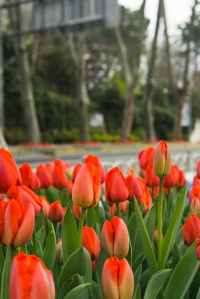
In Peonies, she dismisses writing as being creative, alleging that planting tulips is creative; inferring writing is control.

Peonies by Zadie Smith Tulips Intimations

Photo by Burak K on Pexels.com

Experience – mystifying, overwhelming, conscious, subconscious – rolls over everybody. We try to adapt, to learn, to accommodate, sometimes resisting, other times submitting to, whatever confronts us. But writers go further: they take this largely shapeless bewilderment and pour it into a mould of their own devising. Writing is all resistance. Which can be a handsome and even a useful, activity – on the page. But, in my experience, turns out to be a pretty hopeless practice for real life. In real life, submission and resistance have no real shape.

It was observing tulips that brought about this reflection, a few days before the global humbling began, providing a preview into the now common feeling of everyday, one she describes as a ‘complex and ambivalent nature of submission‘.

She saw tulips and imposed peonies, like the fiction writer she is.

Thoughts On Flowers and Self Care

As ever, Zadie Smith creates a space for the reader to think and affirm their own views, even if she does fill it with her own words and worries.

I was a little concerned by her reading habit in A Man With Strong Hands, though an avid reader myself, there are some times and places when it might be better to put the book down and allow the mind to rest, for this self-care activity she indulges, is one the few that allows one’s existential angst to cease, if only momentarily, for that weekly half hour she regularly gifts herself.
I am reminded that we have as much to learn, if not more in the act of mindful contemplation of flowers as we do in observing that less well understood creature of Nature, humanity.

Further Reading

New York Times: Zadie Smith Applies Her Even Temper to Tumultuous Times

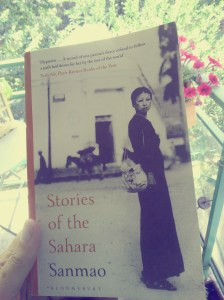
Stories of the Sahara by Sanmao

translated (from Chinese) by Mike Fu.

Literature Worthy of Translation

荷西 Sanmao Stories of the Sahara Echo ChenUsually when I come across a new book that sounds like my kind of read, meaning it is of cross-cultural interest, where a character (or person) from one culture (preferably not one I’m familiar with) encounters another, I’ll find others who’ve read it to discern whether it’s for me or not.
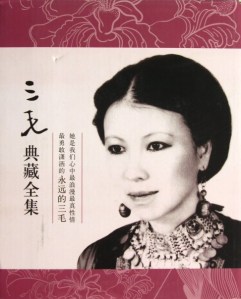
As soon as I saw the cover of Stories From the Sahara, I was intrigued. A fascinating and popular Taiwanese woman author of many books and essays, living in the Sahara with her Spanish lover; why has only one person I follow read this and why are we only hearing about this mysterious travel writer in 2020?

I don’t know the answer to my question (I suspect publisher’s had their radar tuned elsewhere in the past and perhaps the Anglosphere/Sinosphere head butting that takes place in the political arena affected their vision); but August is WIT (Women in Translation) month, a movement that’s gaining traction and interest, the genre and languages of books translated/published is widening and thanks to Eleanor at The Monthly Booking I bought this engaging and unforgettable read.

Thanks Mike Fu, who read the book as a young man and has translated it into English, he is now translating her next book, of their adventures in the Canary Islands.

Who is Sanmao? Echo Chen? Chen Ping?

Sanmao 荷西 Stories of the Sahara

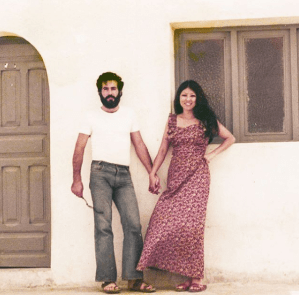
Sanmao & José, Al Aaiun, Sahara

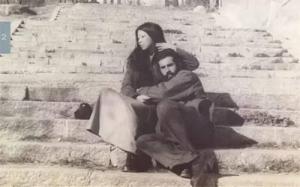
In 1973, an independent young Chinese woman, born Chen Ping on 26 March 1943 left her family home in Taiwan, after a family tragedy, to travel to the Spanish Sahara with her friend José. They married in 1974. She had first lived in Spain in 1967 attending university in Madrid.

While in the Sahara she was inspired to write vignettes of her life there, they were published in Taiwan and China to great acclaim. The first volume debuted in May 1976.

Sanmao published more than twenty books, mostly semi-autobiographical essays, selling over fifteen million copies.

In a beautiful, moving essay, commemorating what would have been Sanmao’s 77th year, her niece Jessica Chen, remembers her Auntie, sharing something of the unique soul she was and the words of her grandparents, speaking of their tender, beloved daughter who, “had simply gotten off the train of life sooner than we expected”.

Grandpa and Grandma always said she was a special child with a gift from God, and the richness of her interior life was off-limits to others—unless she chose to let you in herself. Writing was the window she opened to the outside world. The people who understood this would naturally discover a path to her heart; those who didn’t could only stand at the window and gaze in from afar.

What was Sanmao doing in the Sahara?

Spanish Sahara Stories of the Sahara Sanmao

Photo by Taryn Elliott on Pexels.com

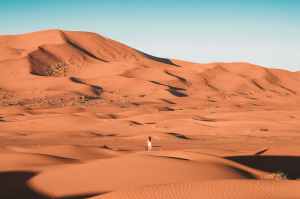
One day Sanmao was absent-mindedly flipping through the pages of National Geographic when she came across a feature on the Sahara. It was from that moment that she developed an obsession not just to visit, but to live there.

I only read it through once. I couldn’t understand the feeling of homesickness that I had, inexplicable and yet so decisive, towards that vast and unfamiliar land, as if echoing from a past life.

Arriving in Spain, she learned that 280,000 square metres of the Sahara at the time were designated Spanish territory. Her desire to go there deepened, torturing her with longing.

José went ahead of her, securing a job at a phosphate mine, found them a home, allowing her to fulfill that soul-whispered desire.

Book Review – Stories of the Sahara

Stories of the Sahara Sanmao Portrait I absolutely loved Stories of the Sahara, in its entirety and it will likely be my favourite nonfiction title of the year. It is so refreshing to read a travelogue by a woman from another culture and discover a writer beloved of Chinese and Taiwanese readers for decades.
I almost couldn’t get over how tough it was during that initial period and thought often about heading back to Europe. Amid that endless stretch of sand, it was so hot during the day that water could scald your hands, while night was so cold that you had to wear a heavy coat. Many times I asked myself why I insisted on staying here. Why had I wanted to come to this long-forgotten corner of the world all by myself? As there were no answers to these questions, I continued to settle in, one day at a time.

I hadn’t expected it to be so funny, so many of her observations and the things requested of her made me laugh out loud. It’s unlike any other travel memoir I’ve read; here is a sensitive, empathetic woman, bringing a completely fresh set of eyes, to a place few of us will ever have dreamed of living.

At her first glimpse of the periphery of Al Aaiún, as they walk from the airport towards her new home, she is in awe seeing tents, bungalows, camels and herds of goats in the sand.

It was like walking into a fantasy, a whole new world.

The wind carried aloft the laughter of little girls playing a game. An indescribable vitality and joy can be found wherever humans exist. Even this barren and impoverished  backwater was teeming with life, not a struggle for survival. For the residents of the desert, their births and deaths and everything in between were all part of a natural order. Looking out at the smoke ascending to the sky from their homes, I felt that these people were almost elegant in their serenity. Living carefree, in my understanding, is what a civilised spirit is all about.

The combination of her naivete, determination and feminism – her refusal to be stopped from doing what she wants – create some of the most hilarious and alarming moments. Her kindness and frankness gain her entry inside the culture and landscape, providing insights few are capable of accessing. People trusted her – yes they often took advantage of her – but she was a willing participant. They provided rich literary material, clearly!
This is one of those books I don’t wish to share much of what is inside, I prefer to say, “Read this, it’s so good!”

I was intrigued by the obsession she had to go and live in the Sahara, I was delighted that she lived at the wrong end of the street in among the permanent locals, I loved her sense of adventure, how she overcame boredom in searing heat, getting in the car and driving for hours in the desert. But it is her frankness, her empathy and sense of humour that  make it an unforgettable read.

Reading Women in Translation

I picked this up to read for #WITMonth and it’s one of the best, that combination of travel to a new place, meeting local people through the perception of someone from a culture other than our own, priceless.

“Travel with an open heart, then bring back home the feelings that you find.” Sanmao

Further Reading

Colombia University: Interview with translator: Mike Fu

Words Without Borders, Essay by Jessica Chen (niece) March 2020: Sanmao’s Footprints: Remembering the Writer on Her 77th Birthday

New York Times Obituary: Overlooked No More: Sanmao, ‘Wandering Writer’ Who Found Her Voice in the Desert

Happy Mother’s Day

Happy Mother’s Day to you all and especially if you live in one of the country’s where it was celebrated today. Here in France it is not La Fête des Mères yet.  It is usually the last Sunday in May but it is moved to the first Sunday in June if that day falls on Whit Sunday/Pentecost, which it does this year. So it is on Sunday 7 June this year and will revert back to the 31st of May in 2021.

A few other countries celebrate Mother’s Day on the second Sunday in May, today Sunday 10 May, including New Zealand, Australia, Canada, the US, Denmark, Finland, Italy, Switzerland, Turkey, Belgium, India, China, Japan, the Philippines, Kenya and South Africa. In some countries such as Argentina and Ethiopia it is celebrated in autumn.

Confinement In France

I received a few messages from friends and family in New Zealand wishing me a Happy Mother’s Day, which was lovely and unexpected.
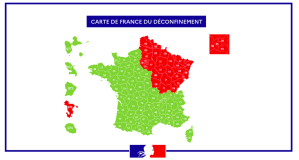
We have had a lovely light rainy day here in Aix-en-Provence today, though thunderstorms are forecast, I now love the rain, it being such a rarity here, and it is the eve of #DeConfinement. We are in the green zone so must follow guidelines accordingly. Sadly Paris is still in the red zone.

Tomorrow we are allowed to go out without the printed attestation (certificate) that declared our name, date and place of birth, address, signature, the time and reason for leaving home, which for the last 6 weeks for me had been limited to supermarket shopping (I’ve been twice) and walking up to 1 kilometre from said address. I take my hour every day, a small liberty for which I have immense gratitude. I haven’t been able to work for 6 weeks, tomorrow that changes.

I think I will write a whole post about my daily walk with images as it has been an interesting experience, almost like a little short story, so perhaps I will create that before things change too much.

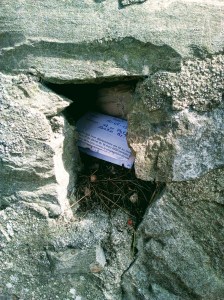
I’ll begin by sharing this one image, which is a hole in a wall on my walk, where there is something hidden inside, a little mystery that I partially solved and have a theory on, but I will save that for another day and leave you with just this clue.

Making Simple Graphics

Something I have recently discovered and will share in case anyone else is interested is how to create simple free graphics using Canva. They make it simple to use and you can use your own photos or their templates and backgrounds. I created this image below today and shared it on twitter with a quote from the book I am reading, just for fun and to acknowledge the serendipitous event of reading it on Mother’s Day.

On Chapel Sands

On Chapel Sands is written by Laura Cumming the art critic for the Observer (an excellent Sunday newspaper in the UK). I haven’t finished the book yet, it’s a memoir and it’s brilliant, unlike anything you will have ever read, as she brings her art historian talent for interpretation of the visual image into her investigation of her mother’s life.

It’s brilliantly done, especially if you appreciate having art works explained to you by a knowledgeable guide or expert.  And she keeps some of the mystery back, making it a slow revelation of the past and finding out what really happened when her mother went missing from the Lincolnshire beach when she was three years old.

Today is about appreciating and remembering mother’s, so I leave you with a quote from Laura’s book about her mother Elizabeth and her grandmother Vera, in remembrance of all mother’s.

“To commemorate Veda’s life, Elizabeth planted thousands of daffodil bulbs in the grounds of Chapel school for the pupils to pick on Mother’s Day each year, so that no future mother would ever be forgotten.” Laura Cumming, On Chapel Sands