
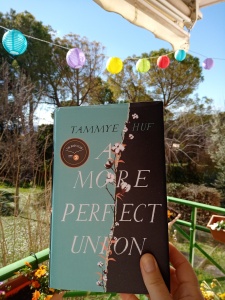
One of the best works of historical fiction I have read in a while and all the better because its based on the author’s great-great grandparents own story, a reassuring factor while reading, because so many obstacles get in the way of the two main protagonists coming together, the young Irish immigrant Henry O’Toole and Sarah, the black slave he first encounters on the road in a storm, who treats his injured hand.
1840’s Virginia
The story is mostly set in 1840’s Virginia on Jubilee plantation. In the front of the book is a sketch of the property, showing the house, the slave huts, the cotton fields, the whipping tree, the kitchen gardens and kitchen house. There is also a map of the region inside the cover, showing where various important locations to the story are, giving it a strong sense of reality, a reminder that these are real locations, that continue to exist today.
“I remind myself that I’m Henry Taylor now. The further south I go, the less likely they’ll know me for Irish. With fewer immigrants down this way, our accents don’t count so much as Irish, Scottish or Swedish. We’re just foreign, which suits me fine. But I keep the Taylor. O’Toole is asking for trouble.”
 Henry is making his living as a blacksmith, after the disappointment of arriving in New York and struggling to find work due to discrimination by employers against the Irish – Irish Need Not Apply.
His story begins in the fields of Ireland around the time of the potato famine and it is the memory of the cruelty of the English landlords that contributes to his sympathy towards the plight of the slaves, though blind to his own privilege. As he arrives on the plantation where Sarah works as a house slave, his ignorance of the South and their ways threatens to put her and those around her in danger.
The other main character is Maple, also a slave, but sister to the Master’s wife, they have the same father, but she became separated from her mother, husband and daughter when her sister married, forced to move with her. Maple is full of anger and desperate for news of her family. She resents the presence of the blacksmith and would like nothing better than to wipe the smile off Sarah’s face.
“I want to tell him to leave her alone. Leave all of us alone. Just ’cause that girl don’t know how to hold herself more precious don’t mean he ought to take advantage, dipping in and out like drinking at the well. He ain’t no different to the rest of them.”
Short Chapters, Three Characters, Fast Paced
The novel is written in short chapters, reminiscent of the style of Bernice McFadden and the issues raised by a mixed race couple reminded me also of Octavia Butler’s excellent novel Kindred.
There is a subtle rhythm in the narrative, where hopes are raised and dashed simultaneously, for Henry, Sarah and Maple. Henry wants to be close to Sarah while Maple wants to rescue her daughter, who lives on another plantation. Their actions in pursuit of their sole desire make it all the more difficult to achieve. It’s like a universal force that acts on them all at the same time, as their objectives and the means they use to attain them intersect, hinder and/or help them.
“There’s two ways to keep a child when you’re held a slave. You can hold her precious, right close to your heart, pouring all your love into her because you know you could lose her any day. Or you can hold her loose, not loving too deep or caring too much or getting too close, knowing that you could lose her any day. Two sides of the same fear.”
It’s a compelling read, with great characters and you really are left wanting to know more, wishing to know more about the lives of these three characters and those whom they are connected to. It’s a book that evokes a very visual response, I felt at times as if I were watching the scenes unfold and can imagine how much more tense it would have been to see this on screen.
Read Soul Lit
I read this along with Didi from Brown Girl Reading in the Read Soul Lit Feb Read Along Group, which is one of her initiatives for Black History Month in the US. I will reading a few more novels this month to acknowledge that as well, reviews to come of a Toni Morrison novel and Colson Whitehead.
About the Author
 Tammye Huf is an American author now living in the UK. Her debut novel A More Perfect Union was inspired by the true story of her great-great grandparents, an exploration of identity, sacrifice, belonging, race and love. It was featured on the Jo Whiley Radio 2 Book Club.
Her short stories have been published in several literary magazines and she was named third-place winner of the London Magazine Short Story Prize in 2018 for ‘Prisoner’.
Further Reading
Kindred by Octavia Butler
The Book of Harlan by Bernice McFadden
The Long Song by Andrea Levy
Black History Month – 26 Black Americans You Don’t Know But Should
 I’ve been aware of The Balkan Trilogy for a while and curious to discover it because of its international setting (Romania in the months leading up to the 2nd World War) though equally wary of English ex-pat protagonists living a life of privilege cosseted alongside a population suffering economic hardship and the imminent threat of being positioned between two untrustworthy powers (Russia and Germany).
 The novel becomes even more interesting and ironic when Guy decides to produce an amateur production of the Shakespearean play Troilus and Cressida, deliberately diverting the attention of his fans and followers, young and old, at a time when war is creeping ever closer and everyone else not involved in his amateur dramatics is frantic with worry. The play is the tragic story of lovers set against the backdrop of war.
 The witch trials of Salem began in March 1692 with the arrests of Sarah Good, Sarah Osborne and the black slave, Tituba, based on forced confessions. The trials were started after people had been accused of witchcraft, primarily by teenage girls, though traced to adult concerns and adult grievances. Quarrels and disputes with neighbors often incited witchcraft allegations.
 I had read nothing about the witch trials before, though I’d heard of them, but I’m glad that this was my introduction, to see this little segment of American history, through the eyes of the innocent black slave, Tituba and her husband John.

 I was completely drawn into the dual narrative story and loved both parts of it, modern day Scotland and mid 1800’s Russia and the Caucasus.


 But the novel isn’t about politics, it concerns a few players and characters, who we are given glimpses of, in a style that is like a series of snapshots, a narrative that therefore has gaps and not the fluidity of a traditional story, nor enables us to really get to know too well the characters, limited as we are by this kaleidoscopic technique.
 One evening they listen to the radio and hear the (now) famous words of Empress Menen of Ethiopia disclosing the aggression to the World Women’s League, appealing to all world nations:
 Though she uses her imagination, it is historical fiction after all, this is not a fantasy or adventure, and the role these women took on and the sacrifices and risks they took in doing so, meant they were heroines not in the traditional masculine sense, but that they showed solidarity towards keeping these invaders away and presented an image of provocation and strength, one that no European army, likely had ever seen.
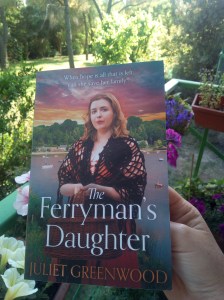 Hester is the ferryman’s daughter, it is Autumn 1908 and she lives in a Cornish seaside village with her family, whose lives are soon to be forever changed when her mother dies.

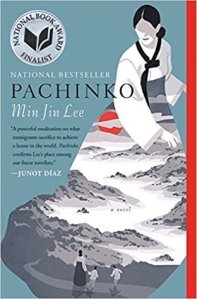 A New York Times Bestseller, Pachinko is a work of historical fiction set in Korea and Japan that follows the lives of one family and how their circumstances and choices continue to reverberate through the generations.


 It is not until page 142 that we come across ‘pachinko’, the Japanese name for pinball, a huge industry in Japan at the entry into the workforce of Sunja’s son Mozasu.
 I absolutely loved this book, it was such an immersive experience, I could feel myself slowing it right down not wanting it to end.
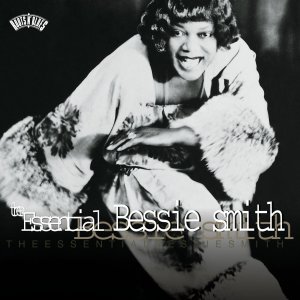 When Sam comes home and finds his wife in tears, we learn it is September 1937 and Bessie Smith (43), Empress of the Blues, has sung her last lament.
 Eugène Jacques Bullard left America for France at a young age, inspired by the words of his father (from Martinique, enslaved in Haiti, he took refuge with and married a Native American of the Creek tribe) who said to his son « un homme y était jugé par son mérite et non pas par la couleur de sa peau » that a man was judged there by his merit and not by the colour of his skin.
 Bernice L. McFadden’s ancestors are named at the back of the book as are some of the musicians, dancers and singers who make an appearance. By the end, I just wanted Harlan to be safe and it was with some relief that I read the closing chapters and wondered if that was the true version of events or the life-saving imagination of Ms McFadden.
 What a perfect way to navigate through 500 years of history of a country, without ever getting bogged down in the detail, to follow the lives of daughters, a matrilineal lineage, whose patterns are affected if not dictated by the context of the era within which they’ve lived.
 I absolutely loved it, I read this because I seek out works by women in translation to read in August for #WITMonth and finding a book like this is such a joy, for it gives so much in its reading, great storytelling, a potted history of Brazil, a unique multiple women’s perspective and an introduction to an award winning author, the writer of ten novels, this her first translated into English.
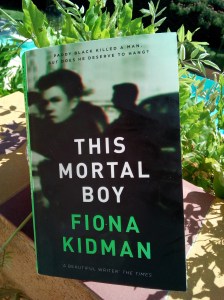 This Mortal Boy is a fictionalised account of a true crime story. A sensitively written account of the life of Albert Black a young man from Belfast, Northern Ireland who arrived in NZ in the 1950’s on a £10 one-way ticket, guaranteed work for 2 years, who never quite fit in and discovered it was a whole lot more expensive to return, if you decided you didn’t want to stay.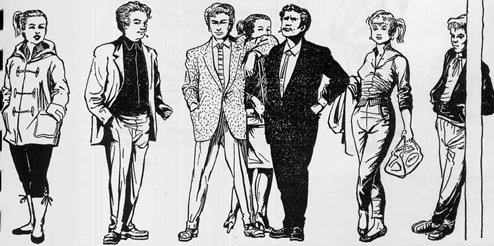

 Word by Word