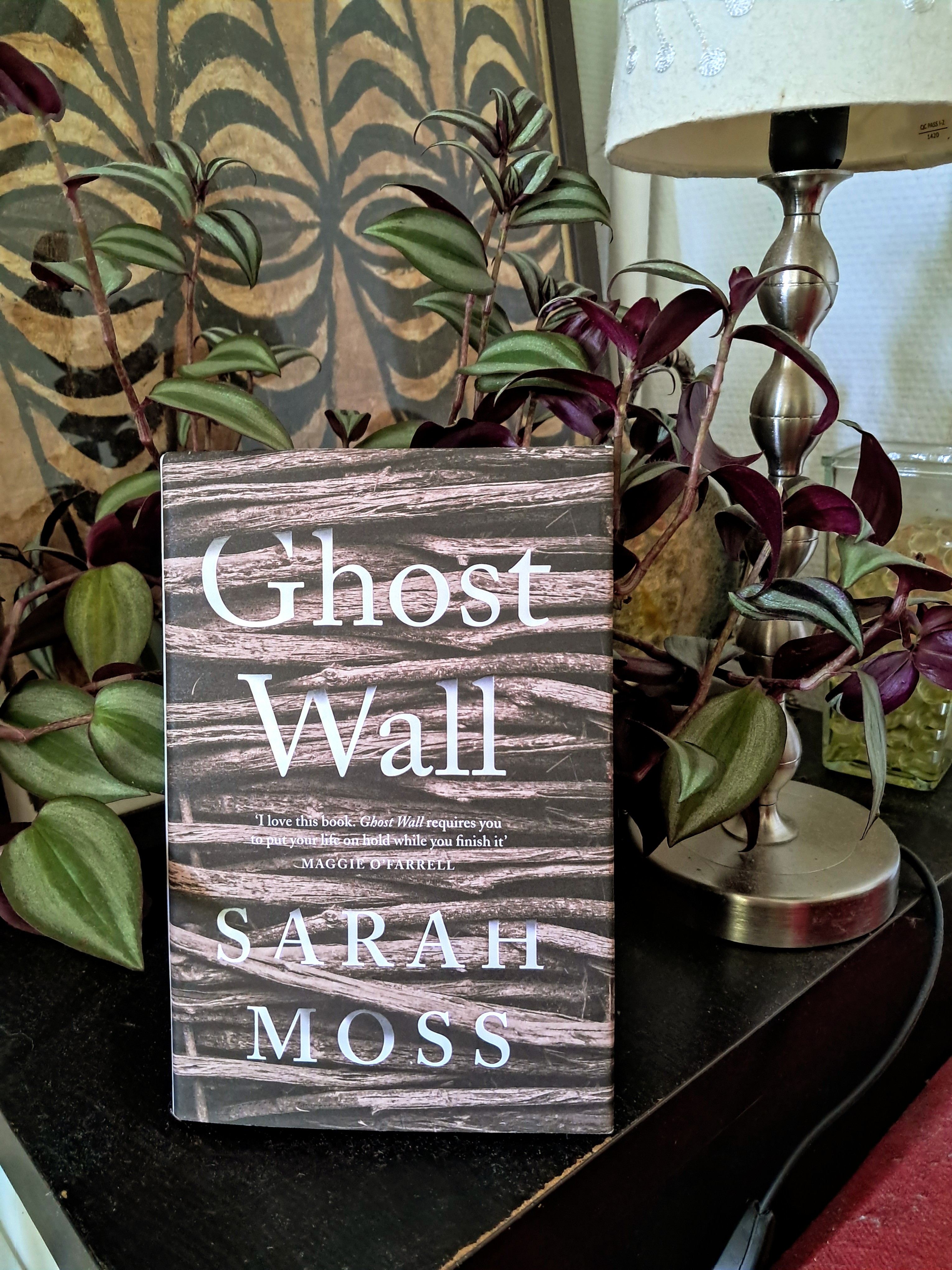
Whereabouts by Jhumpa Lahiri

Cerebral Distractions or Healing Attractions

Whereabouts indeed. I have been absent this space and reading less, as I pursued another passion, the great jigsaw puzzle of building a family tree, which started out as an exercise in tracing my female lineage looking for a particular pattern, I felt called to heal and ended up as a series of unfinished mysteries seeking to be resolved. And it is so much fun, imagining and reclaiming these lives!

Well, all of that is another story, but interesting enough to have pulled me away from my regular habit of sharing my reading here. I miss this space, and the interactions, so here we are, sharing a few recent reads.

I picked up the reading again as the temperatures here rocketed into full summer heat and my brain asked, “Can’t we just read a book today?”, instead of spending my free time working like the dedicated closet researcher I had become.

A day at the beach with a Jhumpa Lahiri novel turned the tide.

A Gifted Book Returns Unread

Whereabouts by Jhumpa Lahiri translated from Italian by the author

Whereabouts by Jhumpa Lahiri is a novel that came back to me, one I gifted a friend from abroad who has a love affair with the city of Rome. Back in Europe to visit the city again, she brought this book I gave her halfway round the world, pulled it out of the suitcase and said:

‘I haven’t read it yet. I’m going to read it in Rome. Here. You have got two weeks to read it before I go. We can talk about it when I get back from Ireland.’

Challenge accepted and quietly delighted; I really wanted to read it too.

Now I have.

I loved it.

It felt like I was reading a work of creative non-fiction. In disguise. Autofiction perhaps?

Jhumpa Lahiri is a British-American author of Bengali parents, whose earlier novels have highlighted the immigrant experience. For some years now she has lived in Italy, learned the language and her last two books were written and published in Italian before being translated into English.

Whereabouts is a collection of short vignettes of one woman’s highly observational, contentedly solitary, existence in Rome. The epigram, a quote from Italo Svevo provides a clue to what follows.

‘Every time my surroundings change I feel enormous sadness.It’s not greater when I leave a place tied to memories, grief, or happiness. It’s the change itself that unsettles me, just as liquid in a jar turns cloudy when you shake it.’

Averse to Change, Loves Movement

Disliking change, but always on the move, her days capture aspects of the surroundings she has grown attached to, taking us right there. The chapter titles nearly all begin with the prepositions: On, In or At.

On the Sidewalk, In the Street, At the Trattoria, In the Piazza, At the Bookstore, On the Couch, On the Balcony, At the Beautician, In the Sun, At my House, In Bed, On the Phone.

Jhumpa Lahiri autofiction Whereabouts set in Rome Italy

Near the end, as I began to notice this pattern and list of locations, I asked myself, “What is this ‘Whereabouts?’ and I flicked back to the contents page and read through the list of destinations. I then turned the page and the only chapter that doesn’t start with a preposition, Nowhere, seemed to be speaking to me, responding to my question.

It began by saying:

‘Because when all is said and done the setting doesn’t matter: the space, the walls, the light. It makes no difference whether I’m under a clear blue sky or caught in the rain or swimming in the transparent sea in summer.’

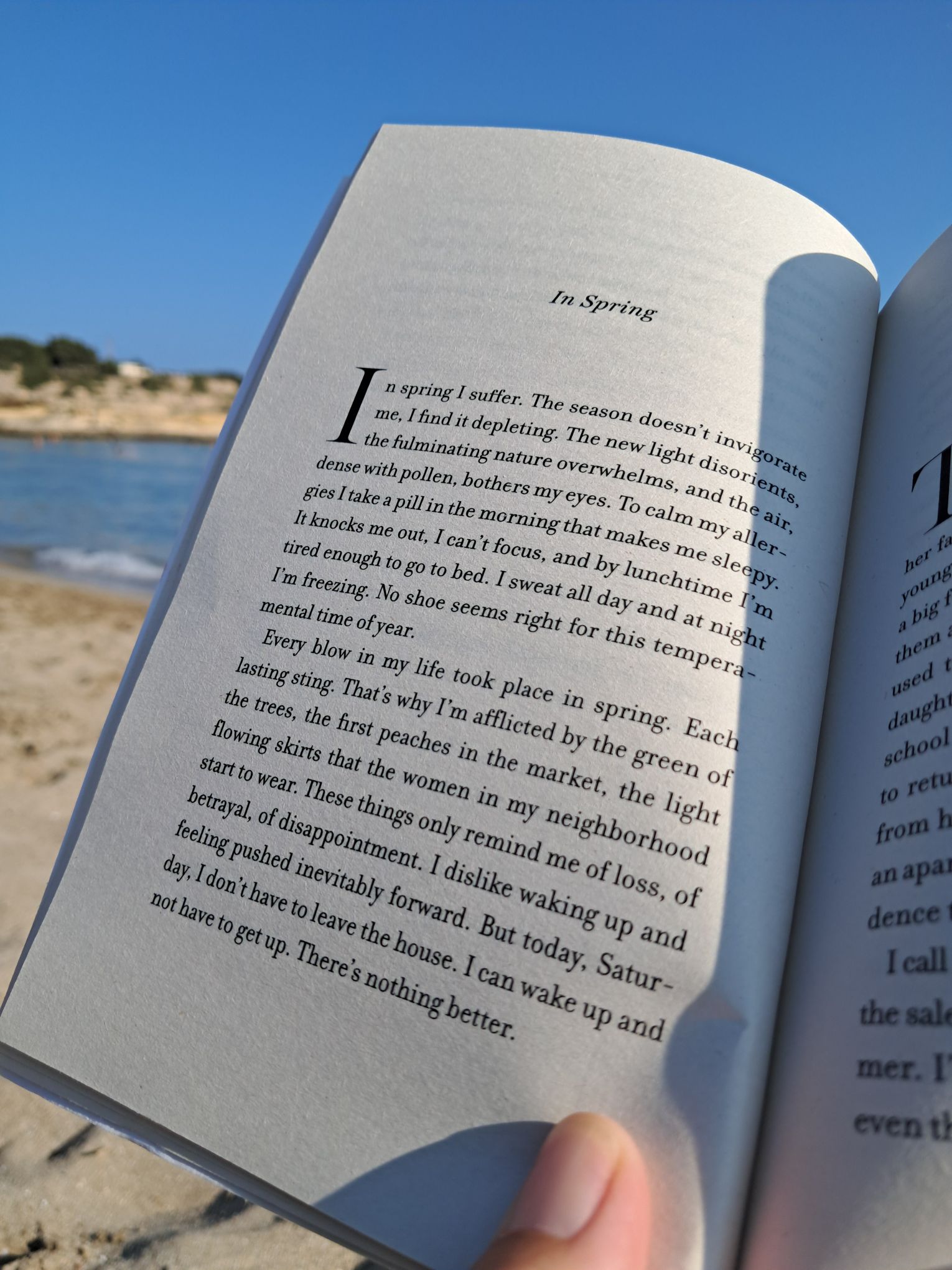
This has come just after Up Ahead, a sign of change, something our protagonist does not like and spends the entire short chapter of In Spring pondering. A chapter I sent to another friend, one who shares the protagonist’s dislike of that season.

Transition, Change and Things that Stay the Same

In Spring, a chapter from Jhumpa Lahiri's novel of vignettes Whereabouts

Now, she contemplates a transition; both of the day, and of a life, observing the peripheral characters to this solitary existence she has created, people in movement, marking the end of a day.

‘They’ll keep walking along these sidewalks. They’re permanent fixtures in my mind, knotted up in the fabric of my neighbourhood just like the buildings, the trees, the marble woman. These are the faces that have kept me company for years, and I still don’t know the people they belong to. There’s no point saying goodbye to them, or adding, we’ll meet again, even though right now I’m overflowing with affection for them.’

Overall, it’s a reflective relatively smooth paced novel in which not much happens and yet you feel as though you have visited and lived for a short time in a city apartment in one of the squares of this major European city of Rome, a part of it not populated by tourists, but where the everyday life continues to unfold week after week, year upon year, following the same rhythms, with small changes a natural part of its existence.

‘Is there any place we’re not moving through? Disoriented, lost, at sea, at odds, astray, adrift, bewildered, confused, uprooted, turned around. I’m related to these related terms. These words are my abode, my only foothold.’

Brilliantly crafted. Could not put it down, read it in a day.

Highly Recommended.

Have you read Whereabouts? Do you have a favourite by Jhumpa Lahiri? Tell us in the comments below.

House of Splendid Isolation by Edna O’Brien

Back to the final days of Reading Ireland Month 2025, this week I slowly read Edna O’Brien’s political novel House of Splendid Isolation, the first of the Modern Ireland Trilogy, books written in the 1990’s that depict significant events in modern Ireland. The other two novels in that series are Down By the River and Wild Decembers.

Incarceration, Idealism and Ignorance, An Irish Story

Modern Ireland trilogy Edna O'Brien a political novel of the 1990's

House of Splendid Isolation is a story of one event and incidents involving a community, over a few days as a man involved in murderous events is on the loose and actively being hunted.

It is also a book of parts and voices, a child’s voice, the past, the present, a woman Josie who returns to Ireland after a period of youth in Brooklyn, her disappointing yet predictable marriage, an impossible affair and violent retribution, an accident, people who drop by, whose good deeds lead to violent consequences, friendships that hide betrayal, communities that breathe suspicion, harbour fear and occasionally a fugitive.

I hear stories. It could be myself telling them to myself or it could be these murmurs that come out of the earth. The earth so old and haunted, so hungry and replete. It talks. Things past and things yet to be. Battles, more battles, bloodshed, soft mornings, the saunter of beasts and their young. What I want is for all the battles to have been fought and done with. That’s what I pray for when I pray. At times the grass is like a person breathing, a gentle breath, it hushes things.

A Not So Quiet Last Act

Josie is now a lone widow in a big old house that she came to inhabitant through marriage, she did not wish to die in a Home, she has returned. A nurse visits occasionally and her grocery order is delivered. Memories still haunt her.

The nurse muses why, the older they get, the madder they are for talk; their past, their present, their futures, anything, everything, afraid of death too as if she was not afraid of it herself.

Edna O'Brien The Country Girls The House of Splendid Isolation

Into her last solitary days arrives this unwelcome visitor on the run, they play cat and mouse, wary of each other, challenging each other, co-existing nevertheless, never quite knowing if one can trust the other, providing each other something they need for a brief moment, while the world outside goes mad in their paranoia, the rumour-mill running rampant, suspicions gone mad.

The grass smells good to him and after three months cooped up in a house in a town, he’s tuned to the smell of grass and the fresh smell of cow-dung, to the soft and several lisps of night. He knows his country well, McGrevvy does, but only in dark. The dark is his friend. Daylight his enemy. Who set him up. Who can he trust, not trust.

The Grass Was Never Greener

While their words and worlds would never align, there is something in the brief respite one provides the other in this house of Splendid Isolation, before they each face the inevitable that awaits them; capture or death, peace no longer an option. Here the first confrontation.

‘There’s myself and my maker,’ she says quietly. So this is how it happens, this is how a life is suborned, one’s insides turned to whey, an opening door, a man, hooded, with not a lax muscle in his being, a loaded rifle and outside crows cawing with the same eventide fussiness and no one any the wiser that her time is up.

A novel of many layers and consequences revealed of humans wronged, who know not how to seek healing or harmless resolution, whose path leads to occasional respite en route to destruction.

It brilliantly depicts two faces of a staunchly divided territory, their failed attempts to escape their destiny, a brutal confrontation and a land that continues to absorb the repercussions.

Forward, back, slow, quick, slow

The writing moves from poetic, contemplative reflection to rapid, coarse dialogue to action oriented tension as the slow hours spent in captivity contrast with the build up externally as the police net closes in on the fugitives location. At times the prose is sparse, and other times it shifts as our protagonist loses her grip on reality and shifts into past memories or present situations that confuse her.

It’s not a straight forward read, as it navigates and holds all these time frames, but it propels forward at a good pace and leaves the reader with much to reflect on.

A Year With Edna O’Brien

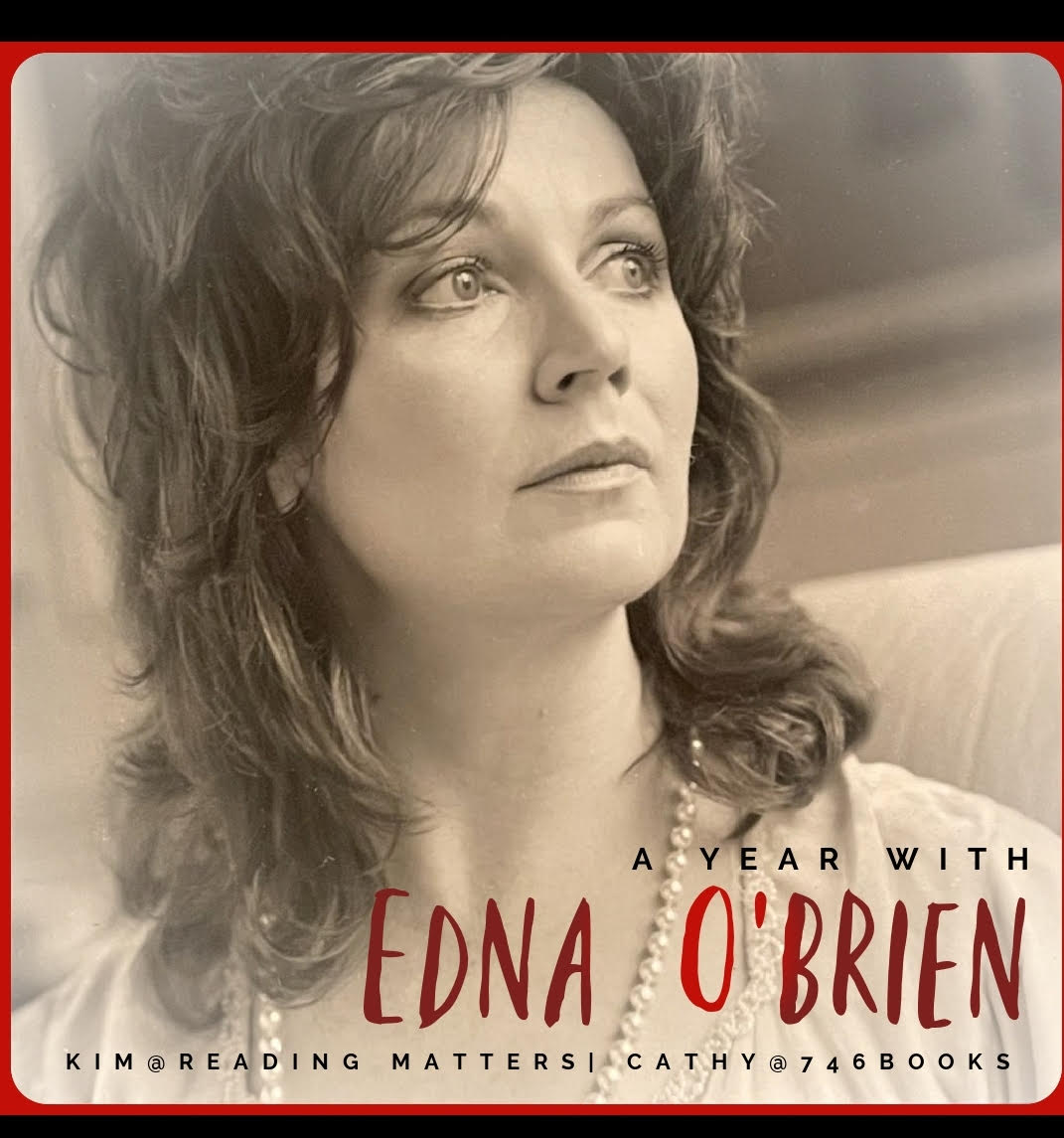
I read this for Reading Ireland Month 2025 with Cathy at 746Books and also for Cathy and Kim’s A Year With Edna O’Brien which they are doing in 2025. Kim will be reading another of the Modern Ireland trilogy novels, Wild Decembers in August.

Further Reading

My review of Edna O’Brien’s renowned Country Girls Trilogy (initially banned in Ireland due to its bold faced portrayal of a young woman’s quest for independence and awakening sexuality) consists of three novels: The Country Girls (1960), The Lonely Girl (1962), and Girls in Their Married Bliss (1964). It was re-released in 1986 in a single volume including a revised ending to Girls in Their Married Bliss and the addition of an epilogue.

Author, Edna O’Brien

Edna O’Brien was born in December 1930 in Tuamgraney, County Clare. She died in 2024, having written over 20 works of fiction, known to provoke, dissect and dig into social, cultural and religious issues deep in the fabric of Irish society.

In addition to The Country Girls trilogy, her novels include A Pagan Place (1970), the story of a girl growing up in rural Ireland, winner of the Yorkshire Post Book of the Year Award; Zee & Co (1972); Johnny I Hardly Knew You (1977), a story of love, murder and revenge; Time and Tide (1992), winner of a Writers’ Guild Award, the story of a young wife who faces a crisis when she leaves her husband and is forced to fight for the custody of her sons.

She is the author of a trilogy of novels about modern Ireland: House of Splendid Isolation (1994), she writes about Irish nationalism and sectarian violence; Down by the River (1996), based on the true story of a young Irish rape victim forced to travel to England for a legal abortion; and Wild Decembers (1999), about a farmer, Joseph Brennan, and his sister, Breege, living in an isolated rural community. In the Forest (2002), is based on the true story of a disturbed, abused young man who murdered a young mother, her infant son and a Catholic priest in the west of Ireland in the early 1990s. The Light of Evening (2006) and Byron in Love (2009), Haunted (2010), The Little Red Chairs (2016), Girl (2020), Joyce’s Women (2022).

She wrote Mother Ireland (1976), a travelogue with photographs by Fergus Bourke, and a biography of James Joyce, published in 1999. She is the author of several plays. In 2021 she was awarded the French Ordre des Arts et Des Lettres.

“I wanted to write from as far back as I can recall. Words seemed and still seem an alchemy, and story the true conductor of life, of lives.”

Reading Ireland Month 2025

Clear by Carys Davies

Scottish Island literature

Clear by Carys Davies (Granta) is one of those books that stood out for me from the moment I first saw it mentioned. I could tell it was going to be excellent. And it is.

That atmospheric painting, Moonlight on the Norwegian Coast by artist Baade Knud Kunstenr (1876), depicting a fisherman looking out to sea, reading the dark and broody skies, where through a gap, there beholds light, promise.

What will he decide?

1843 Scotland, the Great Disruption, the Clearances

Clear is an exceptional novella, set in 1843 Scotland. It is about a quiet, worrisome, rebel pastor, John Ferguson and his wife Mary, who met rather unexpectedly and dramatically during one of the Comrie earthquakes; and Ivar, the lone islander out there in the North Sea, somewhere between the Shetland Islands and the coast of Norway.

We encounter them in the months after The Great Disruption, when 474 clergy radically separated from the Church of Scotland over government interference in appointments and ‘patronage‘, the dominant influence of wealthy landowners in putting those they wished in position and removing others unwanted.

She remembered a dinner, a long time ago now, at her father’s house in Penicuik, where the talk had turned to a removal somewhere north of Cannich, and remembered her father remarking that he was surprised there was still anyone left to remove – that he thought all the big estates must by now have been thoroughly cleansed of their unwanted people.

Desperate Times, Desperate Measures

John, like other rebel ministers who signed the controversial Act of Separation and Deed of Demission, is now under financial pressure to meet all his new responsibilities, thus he accepts a paid role from a landowner’s factor, much to the consternation of his wife, to visit a remote island in the north to evict the last inhabitant, part of the final throes of the Highland Clearances.

The important thing was not to become dispirited – the important thing was to remember that this was a job, an errand: a means to a very important end.

He sets out by boat, and is left on the island, with the promise of a return berth (with his charge in tow) some weeks ahead. Things don’t go quite to plan and all that passes sets up the already complex dilemma this man faces.

Life on Scottish Islands

Photo by C. Proust on Pexels.com

Set in that mid 1800’s period on the island, felt so authentic, it reminded me of reading a Kathleen Jamie essay from Findings.

The author brings alive the damp, blustery, natural environment, the daily rhythms of Ivar and his few animals, his survival skills.

Then the precise observations of his encounter and time spent with the first man he has seen in years and the portrayal of the care he expends – just brilliant.

He’d been out very little this past spring, first because of his illness and then because of the bad weather when it had been too rough for much outdoor work, and impossible to fish off the rocks – the sea restless and unruly and wild, spindrift from the heavy breakers striking against the shore and forming a deep mist along the coast. He’d spent most of his time knitting, mainly sitting in his great chair next to the hearth but also sometimes on the stool in the byre with Pegi, occasionally talking to her but mostly just sitting in her company with a sock or cap or whatever else he was making.

As well as the natural environment, there is the language Ivar speaks, neither Scots nor English, something else altogther.

Ivar was not garrulous. He did not speak often, and when he did his sentences were short.

Woven through them were a few words John Ferguson thought he recognised – a handful that sounded like ‘fish’, ‘peat’, ‘sheep’, ‘look’, ‘me’, ‘I’, but delivered in an accent that made it impossible to be sure.

Scottish Genealogy and Family History

What made this short novel all the more interesting for me was that I have been researching my Scottish ancestors from the late 1700’s to late 1800’s in and around Dundee, people involved in the weaving and shipping industries.

Reading a novel set in this same period felt strangely but appropriately familiar; the detail on the map on the inside cover, shown here, add to that sense of time and wonder.

If you have spent any time poring over Scotland’s National Records, census indexes and records of the historic environment (archaeological sites, buildings, industry and maritime heritage), then this book is like a short, entertaining breather from that, to embark on another journey, while staying immersed in the era. Reading newspapers or stories, looking at artworks and photos really awakens the lives of those who have gone before us.

Artists Using Photography

When the Great Disruption occurred, the meeting of the First Assembly to sign the Deed was recorded via a painting depicting all 474 men. It was a culturally significant moment. The painting, by the artist David Octavius Hill was internationally important as the first work of art painted with the help of photographic images. Robert Adamson, photographer, had a Calotype studio (an early photographic process introduced in 1841) in Edinburgh and he worked in partnership with Hill, realising the potential of the new medium.

In the novel Clear, one of the significant items that John Ferguson takes with him to the island, is a framed portrait of his wife Mary, an object that is a catalyst of many different emotions in the two men on the island.

The picture of Mary Ferguson in the tooled-leather frame was a colotype by Robert Adamson.

It was made in Edinburgh a few months after the Fergusons’ marriage, and six weeks after the Revernd John Ferguson resigned his living in the city’s northern parish of Broughton and became a poor man by throwing in his lot with the Free Church of Scotland.

Certain aspects of Scottish historical importance are subtly planted like this throughout the text and while they do not distract from it (unless like me you go hunting for those references), they are a welcome authentic addition to an already scintillating text.

I absolutely loved it, my copy now has many scribbled pencil jottings all over it and this is one I would definitely read again as I feel as though there is more to unravel if I went beachcombing through it!

Highly Recommended.

I also read this during March to coincide with Karen at Booker Talk’s Reading Wales Month 2025.

Further Reading

New York Times review: In ‘Clear,’ a Planned Eviction Leads to Two Men’s Life-Changing Connection

Guardian review: Clear by Carys Davies review – in search of a shared language

Author, Carys Davies

Carys Davies‘s first novel West won the Wales Book of the Year Fiction Award, was Runner-Up for the Society of Author’s McKitterick Prize and shortlisted for the Rathbones Folio Prize. Clear has been longlisted for the Walter Scott Historical Fiction Prize 2025.

Her short stories have been widely published and broadcast on BBC Radio 4. Her second collection, The Redemption of Galen Pike, won the Frank O’Connor International Short Story Award 2015. She lives in Edinburgh.

Reading Wales Month 2025 Clear by Carys Davies

Birding by Rose Ruane

Birding by Rose Ruane is longlisted for the Women’s Prize for Fiction 2025.

The novel is about two women living in a rundown, gentrifying seaside town in Britain, arriving at their moment of realisation of how their lives have been affected by damaging events of the past and their beginning to separate from and reject the power this has had over them.

One Woman’s Trauma is Another (Wo)Man’s Drama

Lydia, in her late forties is contacted by Henry “the most assiduously avoidant human she’d ever encountered”, to inform her he will put on a play that recounts a part of their history that ought to have negated their continued contact. Lydia is stunned, haunted and full of regret.

rundown gentrifying British seaside town Birding by Rose Ruane
Photo by R.Keating on Pexels.com

Joyce, of similar age, lives with her super controlling, critical mother Betty in a small house a few blocks back from the sea, after their comedown from The Palace, the departure of Joyce’s father without a word of explanation or contact since she was a child.

Beyond the beach, streets lined with terraces and bungalows crouch behind Victorian buildings with mid-century interiors; carved up into bedsits and B&Bs, their pastel facades crumble like stale cake after a party.

The impact of absent men on both women works like an invisible thread, until a mass social movement of women sharing their experiences of abuse awakens the impact and creates an increasingly conscious ripple effect in their lives.

Like Mother Like Daughter, But No

Photo by cottonbro studio Pexels.com

Joyce has never joined adulthood, her mother keeping her in a kind of stasis, until one Saturday evening when they prepare to go to the club, Betty utters that maybe they might meet a man, both of them, mother and daughter.

Joyce knows people stare because she and her mother wear identical outfits and hairstyles, attired as if they are twins.

Birding navigates a short period of time in these two women’s lives as they live with who they have become and reflect on significant aspects of the past in the 90’s that shaped them.

A lifetime’s habit of exactitude Joyce never used to question. But it has begun to feel stuffy and constricting, as if Joyce is outgrowing all her clothes.

Fake Spice Not Nice

Lydia and her friend Pandora had been a one hit pop wonder in their youth, a promising career thwarted by bad decisions made by powerful people that had little impact on the decision maker’s, but curtailed the girls’ dreams and made them targets of scorn for a while.

Lydia has always been carried by Pan’s sheer force of will; even when unsure if she’s been bullied or beloved, Lydia’s always ridden pillion on Pan’s survival instinct.

But whereas Pan has perfected the art of utter denial, Lydia has not. It never works.

Both have a desire to step outside of their patterns and in some small way the shift begins to happen, as their current minor transgressions exhibit a healthier rebellion and acknowledgement of what inside them, needs to find expression.

It’s a novel that carries a message of hope amid the lost opportunities that stunt some lives, showing the effect one has upon the other. In an interview about her multi-disciplinary creative life, Rose Ruane shared lines from a poem by Frank Bidart that reflect a truth she has learned to live by, one perhaps shared by her characters as they come into their own.

Whether you love what you love
Or live in divided ceaseless
Revolt against it
What you love is your fate

Further Reading

Women’s Prize: In Conversation With Rose Ruane

Irish Times : Birding by Rose Ruane: Friendship, friction and moments of reckoning

Article: Rose Ruane – A Creative Life Story by Leslie Tate

Birding asks if we can ever see ourselves clearly or if we are always the unreliable narrators of our own experiences. It is a story about the difference between responsibility and obligation, unhealthy relationships and abusive ones, third acts and last chances, and two women trying to take flight on clipped wings. Women’s Prize

Author, Rose Ruane

Rose Ruane is an artist and writer living and working in Glasgow. She graduated from the Glasgow School of Art in 2007 and completed a Master of Fine Art research degree and an MLitt in creative writing at the University of Glasgow. She has made podcasts and documentaries for BBC Radio 3, BBC Radio Scotland and Radiophrenia, exhibited her art at home and abroad, and was the 2015 winner of the Off West End Adopt A Playwright award.

Rose is chair of The Adamson Collection, comprised of work created in the art therapy studio at Netherne Hospital during the mid-20th century and is about to complete a PhD exploring the lives and experiences of the individuals who were compelled to live there. Rose is an avid collector of 20th Century crafts and kitsch. Birding is her second novel.

Nesting by Roísin O’Donnell

I have added this new title to my pile of books to read for Reading Ireland Month 2025, since it came to my attention, when it was longlisted for the Women’s Prize for Fiction 2025.

On the Run, Creating Home

Nesting by Rosisin O'Donnell longlisted for Womens Prize fiction 2025 Reading Ireland Month

Nesting is a visceral observation of one worldly capable woman trying to create a safe, stable home environment for her preschool age daughters in Dublin.

At the outset, Ciara appears to be living an idyllic middle class suburban life in a leafy suburban of Dublin, until that day – after bringing in the washing, shortly before her handsome civil servant husband is due to arrive home, she bundles her 3 & 5 yr old girls into the car and leaves – the marriage.

Every memory, even the good ones, are laced with clues, with red flags, but also with the critical voice within, that constantly judges her and has kept her there until now. Her battle will not be just with survival and the actions of her husband, but the battle against a conditioned life that resides within her mind, talking constantly, undermining her.

There it is again, that voice in her head. Haven’t you got what you wanted? The thing you’ve been secretly longing for? A lovely home in Ireland. Two little girls. Pigtails curling in the salty spray, jumping around in Minnie Mouse swimsuits with frills around the bums. Ryan, a loyal, hard-working husband. The type of man who other women sneak glances at, when he’s pushing the swings or ordering lunch, or standing – as he is right now – bare chested, towel drying his hair. And yet – on this bright day with seagulls screeching – there’s a gathering weight in her chest, like the feeling before thunder.

The Need for Safety, A Refuge

As the novel opens she is about to leave home for the second time with the girls, she has little money and nowhere to stay, but the intimidating psychological abuse she is subject to from her husband, has arrived at a tipping point. Inside that home, she is unable to think herself into a solution, so she runs.

It’s a habit that started when she was pregnant with Sophie. She used to call it ‘nesting’. That thing women do when they sense their baby is arriving soon. Grouting, hoovering, taking a mad notion to paint the backyard wall Azores Blue. Only, she didn’t sense an arrival but an impending threat. Cleaning, painting, fixing every centimetre of that house felt like the only thing that was safe.

And then the mountain she must climb to establish stability for the three of them, the constant demands of small children, the intimidating messages she is bombarded with, the ticking bomb of needing to get employed quickly and the near impossible task of renting a home as a young single mother in a city going through a housing crisis, with a severe housing shortage, with overpriced rentals and family across a border, unable to do much more than provide moral support..

Battling the System, the Enablers

Full of tension, this novel speeds along thriller-like, as Ciara tries to gain traction in her life and avoid the pitfalls and obstacles, including the compulsory nightly 8pm check in at the temporary hotel housing and the shame of being told to use the back entrance. Determined to escape the lure of going back, Ciara perseveres with the challenge of choosing safety over risk, when all the odds feel stacked against her.

You feel the vulnerability, the fear, the relentless pressure and overwhelm experienced, knowing she is one of the few with the determination and willpower to not go back. She will be tested.

Ciara bites her lip. Fighting the urge to tell Ryan everything. Where they are staying. What they had for dinner. It’s hard to justify her need to keep him informed of her every move. To keep herself under surveillance.

It’s a roller coaster ride of will she, won’t she, as she struggles to not give in to what at times seems the easier, self-sacrificing route…totally gripping, emotionally charged, an uncomfortable cathartic but necessary read.

Not an easy read, but a grim reminder of the absolute importance of every person to have some means of independence and a recognition of the signs of coercive control and psychological abuse in relationships and the path out.

Chair of judges for the Women’s Prize Kit de Waal said the book was:

‘a moving story, well told about what it’s like to try and leave an abusive relationship, the hurdles, the stigma, the doubt, the ease and temptation of return. Not maudlin or depressing, there’s lots of light here but ultimately this is about a system ripe for change where getting help is nearly as hard as escape itself.’

Further Reading

Women’s Prize for Fiction 2025: In Conversation with Roisin O’Donnell – the book, idea inspiration, the writing & creative process, advice to writers, author whose work has impacted her, favorite author.

The Guardian: Nesting by Roisín O’Donnell review – a tense portrait of coercive control

Author, Roisin O’Donnell

Roisín O’Donnell is an award-winning Irish author. She won the prize for Short Story of the Year at the An Post Irish Book Awards in 2018, and was shortlisted for the same prize in 2022. She is the author of the story collection Wild Quiet, longlisted for the Edge Hill Short Story Prize and shortlisted for the Kate O’Brien Award.

Her short fiction has featured in The Stinging Fly, The Tangerine, the Irish Times and many other places. Other stories have been selected for major anthologies such as The Long Gaze Back, and have featured on RTÉ Radio. Nesting is her first novel. She lives near Dublin with her two children.

Reading Ireland Month 2025 Best Irish literature

On Canaan’s Side by Sebastian Barry

Continuing Reading Ireland Month 25 I finish the last of the three novels about the Dunne Family.

The final novel in the 4 book collection about the Dunne Family, first being the play about the Dad Thomas, the last superintendent of the Dublin Police, then his children Annie Dunne and Willie’s stories A Long Long Way and now Dolly, who we knew left Ireland for America as a young woman, but we never knew why.

Interestingly she too is based on a real ancestor, the Great Aunt of the author, whose true story only came out to him in recent years.

One Grievance Too Many

We meet her as Lily, a grieving octogenarian during the 2 weeks – each day a chapter – following the death of her grandson Bill, the boy she raised alone from 2 yrs of age, as she did her son.

I am so terrified by grief that there is solace in nothing. I carry in my skull a sort of molten sphere instead of a brain, and I am burning there, with horror, and misery.

So while in the present she is grieving and finding it difficult to find reason for still being alive, the novel is a form of her confession, an ode to herself, to all that has passed; so we are taken back to Dublin, to Wicklow, to what happened after the war, after the loss of Willie, to her meeting his young friend, the solider Tadg Bere and how their destinies become entwined.

A Fateful Meeting

‘The thing about Willie was,’ Tadg Bere was saying, ‘it wasn’t just you could be depending on him, you knew he was keeping a weather eye out for you, like you might a brother. So I was always thinking, that was a sorta compliment to his family, that they had reared him up in that frame of mind.’

Her father helps him find a job in the police force. Lily isn’t too sure about her feelings for him, their relationship has barely begun, when it reaches a significant turning point.

He was proud to be working, at something akin to soldiering, and something that would allow him to serve his country. He felt he was making a new beginning. He did not believe in any new Ireland, he devoutly loved the old one. The new force paid decently, but was otherwise poorly funded and put together in great haste. They barely had uniforms, and in the beginning wore bits and bobs of various forces, half army and half police, which is why they were dubbed the Black and Tans.

Ultimately the thing she desires, she can never truly embrace, as her life is lived always looking over her shoulder, always somewhat in fear.

Absence and Loss, Refuge in Cleveland

There are patterns in her life of men departing for war, her brother, her son, her grandson, and how it affected them all. And the departure of husbands, the losses she has borne, the perseverance, the continued service to others she has willingly offered, until the last revelation, the one that undoes her.

The title On Canaan’s Side is a reference to a bible story, to a song, about leaving a place of incertitude or danger to travel to a place of refuge. In the bible it is the “promised land”, in Irish history, it is to America they look as a place they ought to be safe and happy. It represents humbleness and receptivity, values that Lily has honoured, only to have encountered its curse, an inability to rise above her station.

Barry had this reference in mind too, after hearing it was mentioned by a newsreader in relation to the death of Martin Luther King, the tragedy of his killing, to be on Canaan’s side. There is a scene where King visits the house where Lily cooks, it seems out of place in the novel, but perhaps it is a nod to this reference.

Interestingly, Barry’s Canaan is Cleveland, Ohio, where Lily ends up; a place he developed an interest in due to the building of the Ohio Canal, a work of civil engineering designed to invigorate the northern territories up into Canada, already destroyed by the great flood in 1913.

The novel brilliantly portrays the struggle of making a new life, the lack of choices, the nostalgia of what has been left behind, the inability to prevent certain tragedies that arrive unbidden.

“I do believe writing for a writer is as natural as birdsong to a robin. I do believe you can ferry back a lost heart and soul in the small boat of a novel or a play. That plays and novels are a version of the afterlife, a more likely one maybe than that extravagant notion of heaven we were reared on. That true lives can nest in the actual syntax of language. Maybe this is daft, but it does the trick for me. I write because I can’t resist the sound of the engine of a book, the adventure of beginning, and the possible glimpses of new landscapes as one goes through. Not to mention the excitement of breaking a toe in the potholes.” Interview with Sebastian Barry, Words With Writers, 2011

Further Reading Listening

Talking About “On Canaan’s Side” with author Sebastian Barry, CBC Radio

Guardian review: On Canaan’s Side by Sebastian Barry – Sebastian Barry’s fifth novel is a lyrical evocation of trauma and exile, bearing a seemingly endless series of potent images

Author, Sebastian Barry

The 2018-21 Laureate for Irish Fiction, Barry had two consecutive novels shortlisted for the Booker PrizeA Long Long Way (2005) and the top ten bestseller The Secret Scripture (2008), before Old God’s Time was longlisted for the Booker Prize in 2023. He has also won the Kerry Group Irish Fiction Prize, the Irish Book Awards Novel of the Year and the James Tait Black Memorial Prize.

His novels have twice won the Costa Book of the Year award, the Independent Booksellers Award and the Walter Scott Prize. Barry was born in Dublin in 1955, and now lives in County Wicklow.  

Women’s Prize for Fiction Longlist 2025

This year’s longlist includes 16 genre-spanning novels, offering an expansive world that pulls readers in with rich storytelling and deeply resonating themes.

2025 marks the 30th anniversary of the Women’s Prize for Fiction and the second Women’s Prize for Non-Fiction.  Check out the longlist for the Women’s Prize for Non-Fiction here.

Here is the Women’s Prize Fiction longlist, with a judge’s comment on each title and summary:

Good Girl by Aria Aber (Germany/US/Afghanistan)

“a highly emotive psychedelic read, with writing that is poetic and incredibly moving. Set in Berlin’s artistic underground, it follows Nila, a young woman born to Afghan parents, as she come to terms with her identity.”

In Berlin’s underground, where techno rattles buildings still scarred with the violence of the last century, nineteen-year-old Nila finds her tribe. In their company she can escape the parallel city that made her, the public housing block packed with refugees and immigrants, where the bathrooms are infested with silverfish and the walls are graffitied with swastikas.

Escaping into the clubs, Nila tries to outrun the shadow of her dead mother, once a feminist revolutionary; her catatonic, defeated father; and the cab-driver uncles who seem to idle on every corner. To anyone who asks, her family is Greek, not Afghani.

And then Nila meets American writer Marlowe Woods, whose literary celebrity, though fading, opens her eyes to a world of patrons and festivals, one that imbues her dreams of life as an artist with new possibility. But as she finds herself drawn further into his orbit and ugly, barely submerged tensions begin to roil and claw beneath the city’s cosmopolitan veneer, everything she hopes for, hates, and believes about herself will be challenged.

The Ministry of Time by Kaliane Bradley (UK/Cambodia)

“This is a genre bending novel, it’s sci-fi, it’s romance, it’s a spy thriller, fantasy, and historical fiction about a civil servant who falls in love with a man from 1857. This book was addictive, propulsive and a total joy to read.”

In the near future, a disaffected civil servant is offered a lucrative job in a mysterious new government ministry gathering ‘expats’ from across history to test the limits of time-travel.

Her role is to work as a ‘bridge’: living with, assisting and monitoring the expat known as ‘1847’ – Commander Graham Gore. As far as history is concerned, Commander Gore died on Sir John Franklin’s doomed expedition to the Arctic, so he’s a little disoriented to find himself alive and surrounded by outlandish concepts such as ‘washing machine’, ‘Spotify’ and ‘the collapse of the British Empire’. With an appetite for discovery and a seven-a-day cigarette habit, he soon adjusts; and during a long, sultry summer he and his bridge move from awkwardness to genuine friendship, to something more.

But as the true shape of the project that brought them together begins to emerge, Gore and the bridge are forced to confront their past choices and imagined futures. Can love triumph over the structures and histories that have shaped them? And how do you defy history when history is living in your house?

Somewhere Else by Jenni Daiches (Scotland/US)

“This was a beautiful book about a young child who escapes Poland and is adopted by a Scottish couple. It is an epic generational story about womanhood and living in a country even though you feel that home is somewhere else.”

Rosa Roshkin is five years old when her family are murdered in a pogrom and she is forced to leave behind everything she knows with only a suitcase of clothes and her father’s violin.

An epic generational novel about womanhood and Judaeo-Scottish experience across two World Wars, the creation of Israel and the fall of the Berlin Wall. Jenni Daiches’s Somewhere Else explores today’s most difficult and urgent questions, not least of which: how to find identity in displacement.

Amma by Saraid de Silva (Sri Lanka/New Zealand)

“I didn’t want this book to end. It’s a multi-generational story about a Sri-Lankan woman, her daughter and her grand-daughter, and spans decades and countries from Sri-Lanka to New Zealand. It shows how societal judgments on women have changed over time, and there are so many powerful scenes in it, that it stayed with me long after finishing the book.”

1951, Singapore. Ten-year-old Josephina kills her abuser. This event becomes the defining moment in the lives of Josephina, her daughter Sithara, and her granddaughter Annie. The effects cascade through generations as Annie sets out across the world to discover what happened to fracture her family.

Set in Sri Lanka, Singapore, New Zealand, Australia and London, Amma is a novel about how the past lives with us forever, and wherever we are. Written in sensuous, vivid prose, Amma is a story of the rich history and unknown future of the Sri Lankan diaspora – and of one family desperately trying to find peace.

Crooked Seeds by Karen Jennings (South Africa)

“This book is set in Cape Town. It’s a sort of mystery book, but also about alcoholism. It made my skin crawl, in the best possible way.”

Deidre is a victim, of her family, her society, her history. That is how she sees herself, and so she feels free of all obligations, moral and practical. Until the police take her back to her family home… In a Cape Town where water is rationed and has to be collected from trucks each day, with the consequences of apartheid and the ending of it still evident, Deidre lives from day to day in squalor – largely created by herself – borrowing, persuading, cadging her way from the water trucks to the bar, testing the tolerance and pity of everyone she knows. Then she is contacted by the police, and taken by a respectful constable to the house where she grew up and where she lost her leg in a shattering explosion while still young. Faced with what is found there, she has to accept the truth of her past, and of her older brother, her parents’ golden boy. She must confront herself and her responsibility, and what it truly is to be a victim.

All Fours by Miranda July (US)

“This is a conversation starting book. The minute I finished it, I ordered copies for all of my friends. It feels like part manifesto, part battle cry.”

A semi-famous artist announces her plan to drive cross-country from LA to NY. Thirty minutes after leaving her husband and child at home, she spontaneously exits the freeway, beds down in a nondescript motel and immerses herself in a temporary reinvention that turns out to be the start of an entirely different journey.

Miranda July’s novel confirms the brilliance of her unique approach to fiction. With a wry voice, perfect comic timing, unabashed curiosity about human intimacy and palpable delight in pushing boundaries, All Fours tells the story of one woman’s quest for a new kind of freedom. Part absurd entertainment, part tender reinvention of the sexual, romantic and domestic life of a 45-year-old female artist, it transcends expectations while excavating our beliefs about life lived as a woman. Once again, July hijacks the familiar and turns it into something new and thrillingly, profoundly alive.

The Dream Hotel by Laila Lalami (Morocco/US)

“It’s a book that explores the consequences of a society that becomes hyper reliant on algorithms. And the world created by Laila seems scarily within reach. I’ve not stopped thinking about it.”

Sara is returning home from a conference abroad when agents from the Risk Assessment Administration pull her aside at the airport. Using data from her dreams, their algorithm has determined that she is at imminent risk of harming her husband. For his safety, she must be transferred to a retention centre, and kept under observation for twenty-one days.

But as Sara arrives to be monitored alongside other dangerous dreamers, she discovers that with every deviation from the facility’s strict and ever-shifting rules, their stays can be extended – and that getting home to her family is going to cost much more than just three weeks of good behaviour…

The Dream Hotel is a gripping speculative mystery about the seductive dangers of the technologies that are supposed to make our lives easier. As terrifying as it is inventive, it explores how well we can ever truly know those around us – even with the most invasive surveillance systems in place.

The Persians by Sanam Mahloudji (Iran/US)

“This book is full of larger than life characters, and rich in Iranian history and glamour. It’s funny, gutsy, confident writing with shifting voices and different modes of storytelling.”

Meet the women of the Valiat family. In Iran, they were somebodies. In America, they’re nobodies.

There is Elizabeth, the regal matriarch with the large nose, who remained in Tehran despite the revolution. She is kept company by Niaz, her young, Islamic-law-breaking granddaughter. In America, Elizabeth’s two daughters have built new lives for themselves. There’s Shirin, a flamboyantly high-flying event planner in Houston, who considers herself the family’s future; and Seema, a dreamy idealist turned bored housewife languishing in Los Angeles. And then there’s the other granddaughter, Bita, a disillusioned law student in New York trying to find deeper meaning by giving away her worldly belongings.

When an annual vacation in Aspen goes awry and Shirin is bailed out of jail by Bita, the family’s brittle upper class veneer is cracked open and gossip spreads like wildfire. Shirin must restore the family name to its former glory. But what does that mean in a country where the Valiats never mattered to anyone? And, will reputation be enough to make them a family again?

Spanning from 1940s Iran into a splintered 2000s The Persians is an irresistible portrait of a unique family in crisis that explores timeless questions of love, money, art and fulfilment. Here is their past, their present and a possible new future for them all.

Dream Count by Chimamanda Ngozi Adichie (Nigeria/US)

“This book explores fragile female friendships and deals with race, with class, with motherhood, with the absence of motherhood. It’s completely vivid and real, fantastic dialogue, and stories that will stay with you long after you finish reading.”

Chiamaka is a Nigerian travel writer living in America. Alone in the midst of the pandemic, she recalls past lovers and grapples with her choices and regrets. Zikora, her best friend, is a lawyer who has been successful at everything until — betrayed and brokenhearted — she turns to the person she thought she needed least. Omelogor, Chiamaka’s bold, outspoken cousin, is a financial powerhouse in Nigeria who begins to question how well she knows herself. And Kadiatou, Chiamaka’s housekeeper, is proudly raising her daughter in America – but faces an unthinkable hardship that threatens all she has worked to achieve.

In Dream Count, Adichie trains her eye on these women in a transcendent novel that takes up the nature of love itself. Is true happiness attainable or is it a fleeting state? And how honest must we be with ourselves in order to love, and to be loved? A reflection on the choices we make and those made for us, on daughters and mothers, on our interconnected world, Dream Count pulses with emotional urgency and poignant, unflinching observations on the human heart, in language that soars with beauty and power. It confirms Adichie’s status as one of the most exciting and dynamic writers on the literary landscape.

Nesting by Roisín O’Donnell (Ireland)

“This book is written about a subject we don’t see written about enough. It’s about domestic violence. Really strong narrative voice, with lots of sympathy and empathy. And yet, all the information that you need, that we really should have, about what happens when people flee a domestic violence situation.”

An extraordinary and urgent debut by a prize-winning Irish writer, NESTING introduces an unforgettable new voice in fiction.

On a bright spring afternoon in Dublin, Ciara Fay makes a split-second decision that will change everything. Grabbing an armful of clothes from the washing line, Ciara straps her two young daughters into her car and drives away. Head spinning, all she knows for certain is that home is no longer safe.

This was meant to be an escape. But with dwindling savings, no job, and her family across the sea, Ciara finds herself adrift, facing a broken housing system and the voice of her own demons. As summer passes and winter closes in, she must navigate raising her children in a hotel room, searching for a new home and dealing with her husband Ryan’s relentless campaign to get her to come back. Because leaving is one thing, but staying away is another.

What will it take for Ciara to rebuild her life? Can she ever truly break away from Ryan’s control – and what will be the cost? Tense, beautiful, and underpinned by an unassailable love, hope and resilience, this is the story of one woman’s bid to start over.

A Little Trickerie by Rosanna Pike (UK)

“It is about the wonderful Tibb Ingleby, who is a heroine of epic proportions. It is wonderful, charming brilliant, it is almost Chaucerian.”

Born a vagabond, Tibb Ingleby has never had a roof of her own. But her mother has taught her that if you’re not too bound by the Big Man’s rules, there are many ways a woman can find shelter in this world. Now her ma is dead in a trick gone wrong and young Tibb is orphaned and alone.

As she wends her way across the fields and forests of medieval England, Tibb will discover there are people who will care for her, as well as those who mean her harm. And there are a great many others who are prepared to believe just about anything.

And so, when the opportunity presents itself to escape the shackles society has placed on them, Tibb and her new friends conjure an audacious plan: her greatest trickerie yet. But before they know it, their hoax takes on a life of its own, drawing crowds – and vengeful enemies – to their door…

A Little Trickerie is blazingly original, disarmingly funny and deeply moving. Portraying a side of Tudor England rarely seen, it’s a tale of belief and superstition, kinship and courage, with a ragtag cast of characters and an unforgettable and distinctly unangelic heroine.

Birding by Rose Ruane (Scotland)

“So this book really speaks to the reality of being a woman, not just now, but also coming of age in the 90’s, and the noughties. I highlighted the whole thing on my kindle.”

In a small seaside town, autumn edges into winter, gulls ride winds over the waves, and two women pass each other on the promenade, as yet unaware of each other’s existence.

In the 90’s Lydia was a teen pop star, posed half naked on billboards with a lollipop, , letting the world happen to her. Now, three decades later, Lydia is less sure that what happened to her was okay. The news cycle runs hot with #MeToo stories, and a former lover has emerged with a self-serving apology, asking her to forgive him. Suddenly, the past is full of trapdoors she is trying not to fall through.

Joyce, in middle age, has never left home. She lives with her mother Betty. With matching dresses, identical hairdos and makeup, they are the local oddballs. Theirs is a life of unerring routine: the shops, biscuits served on bone china plates, dressing up for a gin and tonic on Saturday. One misstep from Joyce can ruin Betty’s day; so Joyce treads carefully. She has never let herself think about a different kind of life. But recently, something like anger is asserting itself, like a caged thing realising it should escape.

Amid grey skies, amusement parks and beauty parlours of a run-down seaside resort, these two women might never meet. But as they try to untangle the damaging details of their past in the hope of a better future, their lives are set on an unlikely collision course.

With mordant wit and lyrical prose, Birding asks if we can ever see ourselves clearly or if we are always the unreliable narrators of our own experiences. It is a story about the difference between responsibility and obligation, unhealthy relationships and abusive ones, third acts and last chances, and two women trying to take flight on clipped wings.

The Artist by Lucy Steeds (UK)

“Set during the First World War in Provence, it’s about a journalist who goes to interview a reclusive and eminent artist. The writing is beautiful, the description of the art is immersive. I could smell the paint, feel the fabrics, and see the light in the studio.”

PROVENCE, 1920 – Ettie moves through the remote farmhouse, silently creating the conditions that make her uncle’s artistic genius possible.

Joseph, an aspiring journalist, has been invited to the house. He believes he’ll make his name by interviewing the reclusive painter, the great Edouard Tartuffe.

But everyone has their secrets. And, under the cover of darkness, Ettie has spent years cultivating hers. Over this sweltering summer, everyone’s true colours will be revealed. Because Ettie is ready to be seen. Even if it means setting her world on fire.

Tell Me Everything by Elizabeth Strout (US)

“It’s a story about ordinary people and their stories are so wonderfully woven together here. It’s a book with a real symphonic feel, full of emotional truth, intimate conversation, and propulsive energy.”

A hopeful, healing novel about new friendships, old loves, and the very human desire to leave a mark on the world, from the Pulitzer Prize-winning, Women’s Prize longlisted author.

It’s autumn in Maine, and the town lawyer Bob Burgess has become enmeshed in an unfolding murder investigation, defending a lonely, isolated man accused of killing his mother. He has also fallen into a deep and abiding friendship with the acclaimed writer, Lucy Barton, who lives nearby in a house next to the sea. Together, Lucy and Bob talk about their lives, hopes and regrets, what might have been. Lucy befriends one of Crosby’s longest inhabitants, Olive Kitteridge, now living in a retirement community on the edge of town. They spend afternoons together, telling each other stories about people they have known – “unrecorded lives,” Olive calls them – reanimating them, and, in the process, imbuing their lives with meaning.

Brimming with empathy and pathos, TELL ME EVERYTHING is Elizabeth Strout operating at the height of her powers, illuminating the ways in which our relationships keep us afloat. As Lucy says, “Love comes in so many different forms, but it is always love.”

The Safekeep by Yael van der Wouden (The Netherlands)

“The writing is next level. It is a beautiful story about a character, who, is, to begin with at least, not likeable. And it’s a story that has not been told before, and yet something we all feel we should know. It’s great.”

An exhilarating tale of twisted desire, histories and homes, and the unexpected shape of revenge – for readers of Patricia Highsmith, Sarah Waters and Ian McEwan’s Atonement.

It is fifteen years after the Second World War, and Isabel has built herself a solitary life of discipline and strict routine in her late mother’s country home, with not a fork or a word out of place. But all is upended when her brother Louis delivers his graceless new girlfriend, Eva, at Isabel’s doorstep – as a guest, there to stay for the season…

In the sweltering heat of summer, Isabel’s desperate need for control reaches boiling point. What happens between the two women leads to a revelation which threatens to unravel all she has ever known.

Fundamentally by Nussaibah Younis (Iraq/UK)

“It’s a complex story about the bureaucracy of the UN. It opened up for me, a world I’d never ever thought about. It’s irreverent, it’s funny, it’s clever and it’s really enjoyable.”

‘By normal, you mean like you? A slag with a saviour complex?’

Nadia is an academic who’s been disowned by her puritanical mother and dumped by her lover, Rosy. She decides to make a getaway, accepting a UN job in Iraq. Tasked with rehabilitating ISIS women, Nadia becomes mired in the opaque world of international aid, surrounded by bumbling colleagues.

Sara is a precocious and sweary East Londoner who joined ISIS at just fifteen.

Nadia is struck by how similar they are: both feisty and opinionated, from a Muslim background, with a shared love of Dairy Milk and rude pick-up lines. A powerful friendship forms between the two women, until a secret confession from Sara threatens everything Nadia has been working for.

A bitingly original, wildly funny and razor-sharp exploration of love, family, religion and the decisions we make in pursuit of belonging, Fundamentally upends and explores a defining controversy of our age with heart, complexity and humour.

What Do We Think of the Longlist?

There is a lot to delve into here, lots of new authors and diversity in terms of backgrounds and influences, which is exciting.

I haven’t read any on the list, but I am definitely going to be reading Chimamanda Ngozi Adichie’s Dream World and I’m interested in Nesting, Amma, Good Girl. I know Tell Me Everything will be excellent, having already read Olive Kitteridge, My Name is Lucy Barton, Anything is Possible and The Burgess Boys.

Let me know in the comments which titles you have enjoyed or a hoping to read.

Women’s Prize for Fiction Shortlist 2025

The shortlist will be announced on April 2nd and the winner of both the non-ficton and the fiction prize will be revealed on June 12th, 2025.

Annie Dunne by Sebastian Barry

For Reading Ireland Month 25, I am reading Sebastian Barry’s three novels that are part of the Dunne Family series. Here, I introduce the four works and review the first novel Annie Dunne.

Three novels and a play

Humewood Castle Kiltegan County Wicklow Sebastian Barry The Dunne Family novels and play

Sebastian Barry wrote a series of four literary works about one strand of the fictional Dunne family (inspired in parts by his own ancestral lineage), who for seven generations were stewards of Humewood Estate, 470 acres of parkland and a castle in Kiltegan, County Wicklow.

Originally built in the 15th century, the property was sold by the last of that continuous line of family, Catherine Marie-Madeleine (Mimi) in 1992 and she would present most of the estate cottages to the sitting tenants. The castle is now owned by an American billionaire.

Barry says he did have some “inkling” that he might want to explore other family stories. “But I had absolutely no idea that 20 years later these people would still be with me. I’m in a book of quotations saying that, as our ancestors hide in our DNA, so do their stories. I don’t remember saying that, but over the years I’ve come to believe it. It’s as if these hidden people sometimes demand that their stories are told.” The Guardian

The Dunne Family Tetralogy

The play is about the first son Thomas, who did not become a steward, the next Annie Dunne (2002) is about one of his daughters Annie, then A Long Long Way (2005) is the story of his only son Willie Dunne, who joins the Dublin Fusiliers and goes to the Great War (WWI), and the final novel On Canaan’s Side (2011) is about Lily Bere (or Dolly as we know her), the youngest of the three sisters, who left Ireland for America.

Dunne Family #1 The Steward of Christendom

The play The Steward of Christendom (1995) centres around Thomas Dunne, the high-ranking, ex-chief superintendent of the Dublin Metropolitan police, looking back on his career built during the latter years of Queen Victoria’s empire, from his home in Baltinglass in Dublin in 1932.

He was Catholic, and loyally in service to both the British King, and his country (Ireland), however those twin loyalties collided in the period leading up to the Irish War of Independence (1919-1921), when he found himself on the ‘wrong’ side of history to his countrymen, culminating in a sense of failure, including the recurring memory of the handover of Dublin Castle to Michael Collins.

I haven’t read the play, but I know that he becomes a broken man, committed to an asylum, unable to reconcile what had happened, as if it were the downfall and undoing of himself, his family and lineage.

Dunne Family #2 Annie Dunne

Following the play, he wrote the novel Annie Dunne (2002), about the unmarried middle daughter of the superintendent, which takes place over one summer in her early sixties, when she is staying at her cousin Sarah’s cottage and small acreage in Kelsha, “a distant place, over the mountains from everywhere”, having found herself homeless after the premature death of her sister Maud and the downfall of her family.

Seven Generations of Caretakers, Coppicers, Caterers and a Cop

Dunne Family tetralogy 5 children hold hands playing ring a ring a rosy, a whitewash irish cottage in the background

In the opening pages of Annie Dunne, we learn a little about that family history, the prestige of the line of stewards of Humewood Estate, the different direction her father took and his demise, having to put him in an asylum. The guilt over the end of her once regular visits, his lonely death.

Compared to her childhood in Dublin Castle and that long line of important roles that sheltered her, she too is now alone in these latter years, grateful to her cousin for taking her in. Their glory days behind them, she senses eyes on her without sympathy, in that way people regard someone perceived as having been superior, then find themselves without a safety net.

Those days are gone and blasted forever, like the old oak forests of Ireland felled by greedy merchants years ago.

A New Purpose, Another Marital Threat

When her sister Maud was dying, Annie tended her and the children. Now one of those boys is going to London with his wife, while his two children, four and six will stay under Annie’s care for the summer.

Words are spoken and I sense the great respect Sarah has for their father Trevor, my fine nephew, magnificent in his Bohemian green suit, his odd, English sounding name, his big read beard and his sleeked black hair like a Parisian intellectual, good-looking with deep brown angry eyes. He is handing her some notes of money, to help us bring the children through the summer. I am proud of her regard for him and proud of him, because in the old days of my sister’s madness I reared him.

Billy Kerr, a local man who does odd jobs, arrives unexpectedly early two mornings in a row to share a tea, Annie wonders why. And how her life became like this. The attention he gives Sarah unnerves her, “it is the air of the man”, and much of the novel delves into Annie’s inner world and outer efforts to secure her place.

At the mercy of influences outside her realm of control, she struggles to remain calm, and fears what she might be capable of. She must defend what she sees as her last refuge, her last stand.

Poor Annie Dunne, they must say, if they are kind. They will find other things to say, if they are not. Well, if we were something then, I am nothing now, as if to balance such magnificence with a handful of ashes.

A Strange Innocence, New Understanding

Annie is a complex character, she worries for the children, tries to care for them, observes behaviours that disturb her, jumps to conclusions, looks for support and doesn’t find it, fears herself and her reactions most of all. Her insecurities have made her paranoid, her need to blame risks falling on the innocent. Her desire to harm frightens her.

Her words are so simple, small, and low. Whispery. I feel myself the greater criminal by far than Billy Kerr. I should have kept my own opinions to myself, and let this story take its course, as I have always allowed every story that has come to me. She is open and raw to my wounds. That is why I have wounded her.

Taking place over that summer, the first half is rather mundane, the second half more dramatic as events occur that Annie is implicated in or threatened by, in which she takes some action, some thought out and calculated, other times over-reactive and hysterical. We wonder if she is becoming unravelled like her father, nothing is ever certain in a world that is constantly changing.

The summer comes to an end and none of them will be the same again; changed by their experience, further along in their understanding of themselves and others.

Even the halves of songs I know, our way of talking, our very work and ways of work, will be forgotten. Now I understand it has always been so, a fact which seemed to heal my father’s wound, and now my own.

I enjoyed the novel, but I admit I started it some time ago and set it aside, then went back to start again. It’s more of a winter read when you set more time to pushing through when a novel isn’t quite gripping you. The second time I started it felt very different and I had no trouble continuing on, but by then I also knew I was going to read all three and get the bigger picture.

There are issues in Annie Dunne that are not fully explored, and Annie represents that past characteristic of the Irish to knowingly suppress certain issues, lest it disturb their current situation, however over the course of the summer, she has transformed.

Further Reading

Article, The Guardian: ‘As our ancestors hide in our DNA, so do their stories’ by Nicholas Wroe, 2008

Article, The Atlantic: You Should Be Reading Sebastian Barry by Adam Begley

Read reviews of Annie Dunne by Kim at Reading Matters,

Author, Sebastian Barry

Sebastian Barry was born in Dublin in 1955. The 2018-2011 Laureate for Irish fiction, his novels have twice won the Costa Book of the Year award, the Independent Booksellers award and the Walter Scott Prize.

He had two consecutive novels shortlisted for the Booker Prize, A Long Long Way and The Secret Scripture and has also won the Kerry Group Irish Fiction Prize, the Irish Book Awards Novel of the Year and the James Tait Black Memorial Prize. He lives in County Wicklow.

The Colony by Audrey Magee

Reading Ireland Month

March is Reading Ireland Month, run by Cathy over at 746books.

An island of approximately 7 million people, it has a successful and supportive literary culture, including four nobel prize winners (George Bernard Shaw, William Butler Yeats, Samuel Beckett, Seamus Heaney) and six Booker Prize winners (Iris Murdoch, John Banville, Roddy Doyle, Anne Enright, Anna Burns, Paul Lynch), plus an honorable mention for William Trevor, who never won, but was shortlisted five times.

Language and Life Intertwined

If you’re interested in a contemporary insight into Irish culture, literature and history, I highly recommend The Passenger – Ireland (reviewed here), which features long form essays, investigative journalism, literary reportage and visual narratives. It takes us beyond the familiar stereotypes to portray the country’s shifting culture and identity, public debates, sensibilities of its people, its burning issues, pleasures and pain. It was published by Europa Editions in March 2022.

One of the essays, An Ocean of Wisdom by Manchan Magnan, a man fascinated by the Irish language and its connection to fishing, tells of his travels to three Gaeltachtai (Irish speaking) areas uncovering local words and phrases that expressed aspects of the sea, weather and coastal life. He captured linguistic nuances that described a way of life fast disappearing and shared the complex reasons behind it.

More Ireland Island Literature, The Colony

My first book for reading Ireland 2025 is the excellent novel The Colony by Audrey Magee. This had rave reviews everywhere and I have long been wishing to read it. It did not disappoint, it has many thought provoking themes, yet can be read at quite a pace.

Mr Lloyd, an English man has come to an island, a rock three miles long and half a mile wide to paint the cliffs and have an authentic experience. He is trying to find inspiration and revive his career (and life).

We get to know his type immediately in the sardonic opening pages, which are illustrated on the cover of the copy I read. A man being rowed across the water to the rock where he will spend the summer, wants to recreate an authentic experience he’s seen a picture of somewhere. Reality, nothing like a still-life.

He looked down again, at his backpack, his easel, his chest of paints bound already to the journey across the sea in a handmade boat. He dropped his right leg, then his left, but clung to the ladder.
self-portrait I: falling
self-portrait II: drowning
self-portrait III: disappearing
self-portrait IV: under the water
self-portrait V:the disappeared
Let go, Mr Lloyd.
I can’t.
You’ll be grand.

The people on the island cater to his needs while fifteen-year-old James is curious about painting and drawing. He begins to learn, to practice, to observe what My Lloyd is incapable of seeing. The islanders have asked My Lloyd to respect certain privacy’s, lines he doesn’t take long to cross.

Rival outsiders on a mission

A while later, another man will arrive for the summer, Mr Jean-Pierre Masson, a Frenchman, returning for his fourth summer.

You speak the language Mr Masson?
Yes, I study Irish, or Gaelic, as you prefer to call it.
I have no preference.
Then we’ll go with Irish.
Masson drank from his cup.
I’m a linguist, Mr Lloyd, and I specialise in languages threatened with extinction.
And you’re here to save Gaelic?

The novel observes the effect these two outsiders have on the islanders, the rivalry and antagonism between them and the inability of the islanders to stop the change these two herald.

Lest We Forget

Interspersed between the chapters, single pages in short paragraphs, recount acts of terrorism, the names and details of those who are victims, targeted by different sides of the Irish divide. Thus the novel depicts the external colonising forces and the internal country conflict on the people.

Alexander Gore is a full-time member of the Ulster Defence Regiment standing outside his barracks on Belfast’s Malone Rod just after eleven on Wednesday morning, June 6th. He is twenty-three years of age, Protestant and has been married for four months. His nineteen-year-old wife is pregnant with their first child.
A truck drives down the Malone Road towards the barracks. Two IRA men in the truck open fire and kill Alexander Gore.

In addition to the islanders, there is the ghostly presence of the three fishermen who drowned, their absence keeping some endlessly waiting, anchored to that rocky outcrop, as if expecting them still to return.

Three good men lost on an autumn day. My son-in-law, my grandson and my grand-daughter’s husband. Gone. Never to come home. Not even for their own funerals. That was a hard time, JP. But as I say, you get hard times wherever you are. They have a great way of following people. Though it took a long time for the island to recover.

The Painter and the Academic, neocolonialism at work

Both visitors have backstories that reveal more about them and question their motives. They discover they can take more than what they initially came for and neither hesitates to expand their remit, because it serves them, it takes them away from looking at themselves, at their own story.

The islanders see all, some stuck in their ways, others with more freedom to slip in and out of what is expected and others have the desire to rebel or seek opportunity. As the visitors time on the island comes to an end, true colours are revealed, change is challenged by the old order and young James weighs up his options.

I very much enjoyed the reading experience and the delving into the different motivations of all the characters. The dialogue was excellent, the humour biting, the prose sometimes poetic and spaced out on the page, other times fluid like the incoming and outgoing tides, occasionally dense when it delved into the political and linguistic aspects and violent when those extracts are shared.

Highly Recommended!

Have you read The Colony? Are you reading any Irish literature this month? Let me know in the comments below.

Further Reading

Guardian review: The Colony by Audrey Magee review – island life at a distance by Jonathan Myerson

Read rave reviews of The Colony by Jacqui at JacquieWine’s Journal, Kim at Reading Matters (her favourite book of the year 2023), Susan at A Life of Books, Sue at Whispering Gums and Lisa at ANZ LitLovers.

Audrey Magee, Author

Audrey Magee was born in Ireland and lives in Wicklow. She worked for twelve years as a journalist.

Her first novel, The Undertaking, was shortlisted for the Women’s Prize for Fiction, for France’s Festival du Premier Roman and for the Irish Book Awards. It was also nominated for the Dublin Literary Award and the Water Scott Prize for Historical FictionThe Undertaking has been translated into ten languages and is being adapted for film.

Her second novel, The Colony was longlisted for the Booker Prize 2022 and shortlisted for the Orwell Prize for Political Fiction (2022).

Black Woods Blue Sky by Eowyn Ivey

A new novel by Eowyn Ivey is like no other anticipated novel for me. I still remember the effect of reading her debut The Snow Child, my One Outstanding Read of 2012 and now with Black Woods, Blue Sky, she has created that magic again.

It is extraordinary.

No Madeleine in Sight

The title is a reference to this quote from Marcel Proust:

Black Woods Blue sky by Eowyn Ivey book cover, the words a reference to Proust, the cover shows black tree trunks and a blue background, behind a tree a standing bear, his shadow is the shape of a man

Now are the woods all black
but still the sky is blue
May you always see a blue sky overhead
my young friend
and then
even when the time comes
which is coming now for me
when the woods are black
when night is falling
you will be able to console yourself
as I am doing
by looking up to the sky.

A Nature vs Nurture Conundrum

On the cover, we see the blue sky and the black woods and an image of a standing bear, whose shadow is a man.

It is the story of troubled Birdie, her six year old daughter Emaleen and a reclusive character Arthur, who Birdie is entranced by. In the opening scene Birdie awakens with a hangover, goes off into the woods with a fishing line, leaving her daughter alone sleeping, forgetting to take her rifle.

The large more fearsome grizzly bears were rarely seen, leaving only paw prints or piles of scat in the woods. But now and then, a bear would surprise you. They were too smart to be entirely predictable.

This entire scene is a foreshadowing of the novel, of the attempt of a young, single mother to do right, who doesn’t have sufficient awareness of certain red lines she should not cross, which have nothing to do with the depth of love she has for her child and the determination to do better than how she was mothered.

Though she doesn’t yet know him that well, and despite his odd way of being and other clues that might make her question going off to be with him, she and her daughter depart for the cabin in the mountains where Arthur dwells, not realising they will be living off the grid.

Arthur has some strange tendencies that Birdie tries to understand. Emaleen understands more than her mother and is both sympathetic to him and afraid of him.

The Alaskan Wilderness, Beauty and Bears

Photo by Francisco C. Castells on Pexels.com

The novel charts their relationship and brings the Akaskan landscape and botanical life alive, in all its beauty and bite.

The novel is told in three parts, each one introduced with a black and white pencil illustration of a native Alaskan plant, one that symbolically has something to say about what will pass.

It is also a study in the nature of the bear, of the similarity of some of their their instincts to humans.

A sow grizzly appeared to care for her cubs with the same tender exasperation as a human mother, and when threatened by a bear twice her size, she wouldn’t hesitate to put herself between the attacker and her offspring. She was the most formidable animal in all of the Alaska wilderness, a sow defending her cub.

In the Wilderness Pay Attention

While the initial period of their stay is encouraging, the signs of discontent are already present and like Icarus who flew too close to the sun, Birdie’s judgement is impaired.

It was impossible, what Birdie wanted. To go alone, to experience the world on her own terms. But also, to share it all with Emaleen.

Photo by Pixabay on Pexels.com

In an attempt to try and appease Birdie, he suggests she takes a day to herself, to be free as she desires. All is well until she is lured by shrubs of blueberries that lead her off course, or was it when she stepped into a ring of mushrooms igniting an age-old curse.

Don’t you dare go blundering into it. That’s what Grandma Jo would say. Witches and fairies danced in a circle here on moonlit nights, the mushrooms sprouting up where their feet touched. If you trespassed inside the circle, they would punish you. You might be forced to dance away the rest of your life in the ring, or, if you escaped, the curse would follow you back home and weave mischief and sorrow through your days.

The novel has a strong element of suspense at the same time as it explores the effect of decisions made by adults on children, on the things that might be overcome and others that are unlikely to. Every character carries something that contributes to our understanding of the story and the responses of the little girl Emaleen highlight much that demands our attention.

Autobiographical Elements

Eowyn Ivey describes Black Woods, Blue Sky as her most personal yet and the most important story she has ever told, with Emaleen being the closest to an autobiographical character she has written. It is a story the author had been trying to figure out how to write her entire life, as she wrote into ‘the darkest fears and most magical memories of childhood’, while demonstrating how people’s choices have a ripple effect through time.

“…the little girl’s fear and sense of magic, the feeling she loves about being so far out in the wilderness of Alaska, but also the thing she is afraid of, that is all directly from me”

It is a heart-stopping, captivating read, unpredictable and nerve-wracking in parts and yet we are able to bear witness, knowing we are safe in the hands of an empathetic, nature loving author, whose authenticity and understanding of human nature resonate throughout the text. Just brilliant.

If you enjoyed The Snow Child, you will love this too. If you haven’t read Eowyn Ivey yet, you’re in for a treat.

Outstanding. Best of 2025.

Author, Eowyn Ivey

Eowyn Ivey is the author of The Snow Child, an international bestseller published in thirty countries, a Richard and Judy Bookclub pick, a finalist for the Pulitzer Prize, and winner of a British Book Award.

Her second novel, To the Bright Edge of the World, was longlisted for the International Dublin Literary Award, shortlisted for the Edward Stanford Travel Writing Award, and was a Washington Post Notable Book.

A former bookseller and reporter, she was raised in and lives in Alaska.