
‘Hark, my distant, quiet friend, and feel
Your breath still enriching this emptiness.’
Rilke, Sonnets to Orpheus
Such a thought provoking novel.
Child of Fortune begins inside Koko’s dream. Dreams appear often in the narrative, as do memories, not exactly nightmares, they make her uneasy, leave her feeling unsatisfied.
The dream consisted simple of staring at the ice mountain. It had no beginning and no end. When she opened her eyes the mountain was there, and when she closed them it was gone. Cold and abrupt, it wouldn’t allow her emotions free play like any ordinary dream.
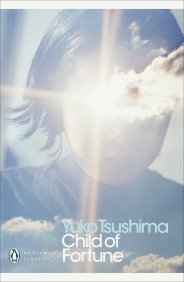 36 year old Koko raises her 11 year old daughter Kayako alone, she works part time teaching piano, though the way she is obliged to teach it pains her. Since she bought her apartment (thanks to a partial inheritance) she has also become independent of her family, something her sister Shoko constantly criticizes her for.
Shoko chose to stay living in the family home after the death of their mother, using her money to upgrade their lifestyle, the children’s schools. She is full of judgement. Undermining Koko, she lures the daughter away, to the point where Kayako only spends Saturday’s with her mother.
Koko was in fact proud of the way she and her daughter lived in their apartment – with no frills, and entirely on her own earnings – and she wanted Kayako to share that pride, but the cousins in their setting made a too-perfect picture.
Not wishing to nag and risk losing her completely (as she had done with the father and her lover), she allows her this freedom to come and go. She suspects the visit is a way of her sister keeping an eye on her. Her daughter confirms it.
That’s right. She said we can’t let your mother out of our sight or there’s no telling what she’ll get up to next.

Photo Simon Berger @ Pexels.com
Koko begins to feel unwell.
She remembers her marriage to Hatanaka and how ill-suited they were, her husband so focused on his studies, never working, all his women friends, the loss of the few of her own, because they didn’t like him.
Though she has no memory of it, her father died when she was young, she knew he had gone to live elsewhere before she was born. Her mother too had raised her children alone.
Koko suspects she may be pregnant. She ignores it.
Three people. Koko was strongly attracted by the number’s stability. Not two, not four, but three. A triangle: a full, beautiful form. There was something to be said for the square, too, but the triangle was the basis of all form. The dominant.
She remembers her affair with Doi, three years before, how attentive he had become when he became a father himself. Then in the fall, she began seeing Osada, a friend of Hatanaka, stirring up old, deep regrets.
He reminds Koko of her brother who died, a child who found happiness in making others happy. The loss of this childhood connection is deep, profound, forgotten, almost non-existent. He had been Kayako’s age.
She was sure there could be no happiness for her without her brother. For the first time, Koko knew a kind of joy that had nothing to do with the intellect. The boy’s emotions were unclouded: what pleased him meant joy, what displeased him meant anger; but he experienced his deepest joy in enduring what displeased him for the sake of those he loved. She wondered why. Though he lacked intelligence, he was endowed with love, which was another kind of wisdom.
The sister arranges an interview for Koko’s daughter at the school her cousins attend. Koko isn’t comfortable but allows it. Kayako is worried about what to say about her father, having heard a lot of people are turned down because of their home background.
Koko’s dreams are like insights into a state of mind she can’t quite grasp. She is passive, the consequences of which threaten to overwhelm her, the potential loss of her daughter, the pending arrival of a baby, the secrecy around it. She thinks of everything, except what she must do, make a decision, confront reality. She has become somewhat paralysed.
She could hear her sister’s voice now, drawing gradually closer: so you’ve finally begun to understand what a bad mother you’ve been, how little sense you’ve shown? And hear herself protest; no, that’s not it – don’t think I’ve liked choosing a different world from other people. I know I’ve been stubborn – but not about Kayako alone. All my life, though often I haven’t known which way to turn, I have managed to make choices of my own. I don’t know if they were right or wrong. I don’t think anyone can say that.
Because of the insight into her mind, her thoughts, dreams, her past, we see all aspects of Koko and we hear the damning, irresponsible voice of her sister, the judgement that wears down what little self-worth remains. There is no recognition of her pain, of her depression, neither seen within nor by others. It is never mentioned, never thought of, yet it is obvious.
One thing, though, was certain: that she had never betrayed the small child she’d once been; the child who had pined for her brother in the institution; the child who had watched her mother and sister resentfully, unable to understand what made them find fault with her grades, her manners, her languages. And she was not betraying that child now, thirty years later. This, she had always suspected, was the one thing that mattered. And although she was often tempted by a growing awareness of the ‘proper thing to do’ once Kayako was born – not only in the harsh advice she was constantly offered by others, but within her own mind – in the long run her choices had always remained true to her childhood self.
Tsushima explores this in a powerful stream of consciousness narrative that invites all kinds of reactions from readers, many sit in judgement, casting Koko as the bad mother, the unconventional mother, the selfish woman pursuing her own desires.
And yet, she is the new woman, safeguarding the home, choosing to do something she loves without it stealing all her time, so she has time for her daughter and herself. She is independent and does not aspire to that which accrued wealth can buy.
It is a reflection on the many manifestations of grief, of events, moods and emotions that arrive unbidden; often unseen, rarely unexplained, but very present; and how little patience our society can have for understanding, how punitive we can be in our insistence on conventionality, how intolerant of depression, of weakness, of prolonged grief.
Rather than stand for any one view, Tsushima presents her character Koko and shows us the effect of her struggle for freedom.
As I finished the book, which was originally published in 1978, I was struck by the relevance of a quote by the French author Constance Debré, author of Love Me Tender translated by Holly James; in the Guardian on 14 Jan, 2023:
“There’s always a price to pay for freedom. To me, that’s a happier, livelier way to see things: rather than saying there are injustices or blows raining down on you, you realise it’s all because you’re living life in the way you want, seeking out an existence … trying to give life some shape. That’s why life and literature are so connected: it’s the quest for form.”
Yuko Tsushima, Author
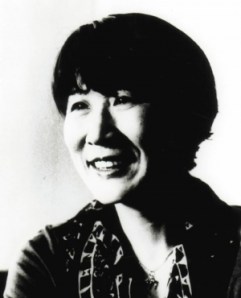 Yuko Tsushima (1947-2016) was a prolific writer, known for her stories that centre on women striving for survival and dignity outside the confines of patriarchal expectations. Groundbreaking in content and style, Tsushima authored more than 35 novels, as well as numerous essays and short stories.
Like her protagonist in Child of Fortune, Tsushima’s childhood was marked by the death of her disabled brother. Her father, Osamu Dazai was one of the most celebrated Japanese writers of the 20th century, who passed away when she was a year old.
Tsushima’s 1978 novel Child of Fortune won the 1978 Women’s Literature Prize in Japan, it was published in English in 1986 by The Women’s Press, earning the translator Geraldine Harcourt the Wheatland Foundation’s translation prize in 1990.
Further Reading
New York Times: The Overlooked Autofiction of Yuko Tsushima By Abhrajyoti Chakraborty
 The story takes place over one weekend when a young New Zealand novelist named Grace Cleave, who is living in London, takes a train to spend the weekend with Philip, a journalist, his wife and two young children. She has escaped the city for a while after accepting an invitation to visit the family following an interview about her work and ambitions.
 During the visit, many instances, objects and mutterings remind her of her own faraway home, memories of childhood intercede and brilliant metaphors come to her fully formed. It was as if she were being filled with future content and yet the contrast with how she came across to others was painful for her to witness.
 At only 76 pages, it is a brief recollection that begins in quiet, dramatic form as she recalls the day her father, at the age of 67, unexpectedly, quite suddenly dies.
 Ernaux’s father was fortunate to remain in education until the age of 12, when he was hauled out to take up the role of milking cows. He didn’t mind working as a farmhand. Weekend mass, dancing at the village fetes, seeing his friends there. His horizons broadened through the army and after this experience he left farming for the factory and eventually they would buy a cafe/grocery store, a different lifestyle.
 Born in 1940,
  I’ve been aware of The Balkan Trilogy for a while and curious to discover it because of its international setting (Romania in the months leading up to the 2nd World War) though equally wary of English ex-pat protagonists living a life of privilege cosseted alongside a population suffering economic hardship and the imminent threat of being positioned between two untrustworthy powers (Russia and Germany).
 The novel becomes even more interesting and ironic when Guy decides to produce an amateur production of the Shakespearean play Troilus and Cressida, deliberately diverting the attention of his fans and followers, young and old, at a time when war is creeping ever closer and everyone else not involved in his amateur dramatics is frantic with worry. The play is the tragic story of lovers set against the backdrop of war.
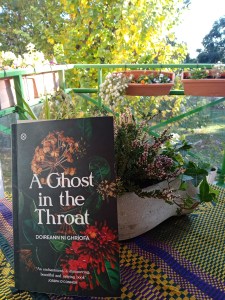 So begins a mini essay written for the Irish Times by the author Doireann Ní Ghríofa describing her almost life-long obsession with the Caoineadh Airt Uí Laoghaire, (The Keen for Art O’Leary), an epic Gaelic lament, published in 1773 by Eibhlín Dubh Ní Chonaill, upon learning of the brutal murder of her much desired husband, whose unborn child she carried.


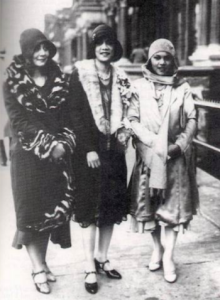 During the
  Not Without Laughter is a coming-of-age story that introduces us to Sandy Rogers who lives with his grandmother who everyone refers to as Aunt Hager and his mother Annjee, who works as a housekeeper for a rich white family, while his father Jimboy traverses the country pursuing a living as a musician.
 Nothing Holds Back the Night is the book Delphine de Vigan avoided writing until she could no longer resist its call. It is a book about her mother Lucile, who she introduces to us on the first page as she enters her apartment and discovers her sleeping, the long, cold, hard sleep of death. Her mother was 61-years-old.
 I read this book in a day, it’s one of those narratives that once you start you want to continue reading, it’s described as autofiction, a kind of autobiography and fiction, though there is little doubt it is the story of the author’s mother, as she constructs thoughts and dialogue inspired by the information provided by family members, acknowledging that for many of the events, some often have a different memory which she even shares.
 Word by Word