Somebody Is Walking on Your Grave by Mariana Enriquez tr. Megan McDowell #RIPxx

My Cemetery Journeys

Someone is Walking On Your Grave My Cemetery Journeys Mariana Enriquez

Argentinian author Mariana Enríqeuz is known for unconventional and sociopolitical stories of the macabre, amid contemporary Argentina. Her stories are populated by unruly teenagers, crooked witches, homeless ghosts and hungry women walking the troubled line between urban realism and literary horror.

Though I’ve seen her Gothic titles on the International Booker shortlist, an overactive imagination has constrained my curiosity to venture further until now.

When I saw that Granta were publishing a memoir-like collection of essays that chronicle her travels through graveyards of the world, steeped in history, legend and local culture, I was more than intrigued, I wanted to take that journey with Mariana Enriquez as my guide.

One Woman’s Obsession and Another’s

This is not fiction, it’s a journalistic travel diary, beginning with her first teenage encounter in Genoa, Italy, spanning years of visits and curating the experiences that came with them, and a potted history of characters she momentarily became obsessed with while visiting 21 cemeteries across four continents.

I admit that I have my own obsession with cemeteries, though not to visit them or to seek out historical characters; my interest is in the words left behind, the clues that help me recreate a lineage.

I discovered that it is possible to do that online through ‘Find a Grave’, another way to find ancestors and fill in the gaps in a family tree, creating one’s own virtual cemeteries populated with the memorials of those who came before.

Lest we forget or should we never have known and have a compulsion to awaken our soul remembering. I visit these virtual creations, solve some of their mysteries and see into the lives of those forgotten, as if they were there, tapping me on the shoulder inviting me to come and witness how it was.

A Goth Flaneur Coming of Age

From that very first essay about her journey as a 25-year-old to Italy with her mother I was hooked. Mariana Enriquez described herself as a ‘goth‘ from about the age of six years old and in her book, travels to cities and obscure locations around the world with the aim of visiting a place of rest, unravelling stories as she goes.

In her gripping, journalistic style, she shares why each graveyard was important to visit, whether part of an interesting historical aspect, or because of a particular personality, or a rumour about the strange things that allegedly happen there. It surprised me initially that many of these places require security, some even have ticket offices, because strange things can happen in broad daylight as well as the dead of night.

Each essay gives the country and location of the cemetery and the year she visited and sometimes there is a photo of a particularly interesting sculpture. In an NPR interview with Ayesha Rascoe, she expanded on her youthful inclinations and inspiration in seeking out these places of rest.

Reading Edgar Allen Poe – and then with the years, I learned that also cemeteries have a lot to say about life, about the history of the people. And then Argentina in the ’70s, the decade where I was born, had a dictatorship that made a lot of bodies disappear. Therefore, there’s a generation of people that were killed by the government, and they don’t have a grave.

I realized that that trauma, that is very engraved in my life, somehow made me feel that a grave, a tombstone – it’s something of comfort. It’s a final thing in a good way.

Death and the Maiden, Staglieno

So it begins with Death and the Maiden, Monumental Cemetery of Staglieno, Genoa in 1997 and this essay is literally the initial seduction into the collection, Mariana’s mother had enough money to take her first trip to Europe and invited her daughter along.

Genoa wasn’t her priority; when read of the places in Italy that were, I’m drawn down literary, art and historical rabbit holes in delight. But Staglieno at least had graves that featured on the cover Joy Division‘s single Love Will Tear Us Apart, even if she had never liked them.

In a public square in Genoa is where she meets the perfect goth boy playing violin, an Italian Englishman, like a creature out of Mary Shelley or Byron. Someone to accompany her on her pilgrimage.

Enzo was the most beautiful creature I had ever seen. At least for me, for my idea of beauty, which is shadowy and pale and pliant, black and blue, a little moribund but happy, more dusk than night.

Welsh Immigrants in Patagonia

When Enriquez travels to Trevelin Cemetery in Chubut, Agentina, 2009, I learn about the Welsh who left their homeland to settle in Patagonia in 1865. Having been exploited and discriminated against in the United Kingdom and fearing losing their language and identity, 153 Welsh men, women and children boarded the ship Mimosa and arrived in a place that was something of a disappointment, but became the most significant Welsh colony in Argentine Patagonia.

I learn about characters from this group, the little known history that explains the proliferation of Jones, Thomas and Evans, the foreign words on the gravestones, in a place where many today still speak Welsh.

The Mountains of San Sebastian to Rottnest Island

From English soldiers buried in forest graves on a Basque mountain near San Sebastian in Spain, I read of more minor historical events and wonder about the meaning of the words on the chapel, “Every hour wounds; the last one kills.” So many stories and mystery among the remains.

In 2007, she accompanies her Australian boyfriend Paul who works as a bike mechanic on Rottnest Island, half an hour from Freemantle in Western Australia. A stable, long distance relationship that is headed towards marriage and an outsider’s view of a curious part of the world where the lead singer of AC/DC came of age, went to jail and is buried. She wants to see his grave.

The place has a booming real estate market, houses with yards full of healing crystals and fairies, collectors of all kinds who exhibit their cabinets of curiosities in the streets, artists, musicians, and a sparse but continuously fluctuation itinerant population linked to the port – people who can be unhinged, unstable and on occasion violent.

Weirded out by the hotel-asylum they’re staying in, she takes the ferry to the island, once inhabited by the Noongar Aborginal people, also used as a prison and visits the burial grounds, unearthing more story of post-colonial and indigenous poeples.

Savannah to New Orleans to Cuba to Edinburgh

I don’t wish this make this overly long, because I feel like I could write paragraphs on every essay; they are so interesting, quirky, incredible and speak so much to the different cultures they inhabit, from a very different perspective than what anyone would usually encounter visiting a foreign country.

If you came from New Orleans, I guess you would know about the vibrant characters that inhabit it, both the living and the dead. I did not know that it is the site of the second most visited grave in American after Elvis, that of the 19th century midwife, herbalist and philanthropic Voodoo practitioner of French, Spanish and African origins Marie Laveau.

Then there was the controversy surrounding the Pietro Gualdi marble sculpture of a seated woman in a robe holding a bouquet of flowers that Dennis Hopper and Peter Fonda requested permission from the Italian Society to use in the tomb scene of Easy Rider. Suffice to say all requests since then have been denied. And Nicholas Cage’s pyramid? A pharaonoic tomb waiting for a body.

Frankfurt was brief, Cuba was fascinating and macabre and sad after the friend who hosted her became the first close associate whom death claimed. Savannah was touristy and disappointing, I mean how could the book cover of John Berendt’s novel Midnight in the Garden of Good and Evil have caused such havoc and chaos to a place of rest?

Edinburgh was crowded, full of folklore; people visiting the graves of random names J.K.Rowling chose as characters for her Harry Potter books. Bizarre comes in so many different forms, real, imagined and just because.

Taphophilia Syndrome and the Magnificent Seven

I learn a new word. Taphophile, people who are passionate about cemeteries, memorials, and the history they hold. And Taphophilia syndrome? An abnormal attraction for graves. Who knew there were so many?

The visit to London’s Highgate cemetery fascinated me because I lived so close to it for some years, yet never had an inclination to visit. Audrey Niffenegger’s Her Fearful Symmetry, set in the cemetery sat unread on my shelf for years. To read about it here and what the author encountered there was like stepping into another realm, as all these places are, existing in the in-between.

Highgate and London’s Magnificent Seven created from 1833-1841 just demonstrated to me how little the living can be aware of the cult of the dead right next door.

Day of the Dead 1-2 November

Mexico seems to be the only country that retains a feeling of celebration around the departed. Though she visits and writes of its traditions, Enriquez has never been there for the Day of the Dead, when souls return and are welcomed to their family home to eat with their living relatives.

Here in France 1 November is the public holiday Toussaint (All Saint’s Day) and there is a mass visitation to cemeteries all over the country, when families visit, tidy up, pay their respects and bring chrysanthemum’s to family graves.

The Mexican anthropologist Alfonso Alfaro said, “We are a people who maintain a privileged relationship with death.” And the art critic Luis Cardoza y Aragon wrote:

Death is a universal theme of human expression. Mexico’s feeling toward death, the familiarity, tenderness and simplicity in its treatment of death, its obsession, which it sees as neither tragic nor funereal, but rather nuptial and natal, imbued with an immediate everydayness, an imperious and serene visibility, characterized more by cascading laughter than lamentation – it all harbours the unlearned wisdom of a cosmic and playful conceptualization, as if in perpetual amazement, that is particular to Mexico.

Prague to Paris to Eva Peron and the Disappeared

Prague has its legends but is overrun by tourists; Mariana resists and admits maybe it’s because she’s not a fan of Kafka.

In Paris, I hear of the fascinating history and grisly dilemma of 12th century Holy Innocents Cemetery in the Les Halles quarter that lead to the creation of the Montmartre catacombs. And a visit down there.

Eventually the journey comes full circle to Buenos Aires, Argentina, to the aristocratic Recoleta Cemetery, where Eva Peron is buried. Described once as ‘Venice without the canals’ it has ostentatious vaults like palaces along narrow streets, where everything is above ground, a way of showing off grandeur.

Peron’s journey there is an enthralling tale of body snatching, written about in Santa Evita by Tomas Eloy Martinez. A macabre story, it is one that Enriquez shares with freinds visiting the cemetery, one she told her husband Paul on their first date, that turned into a second date, though not everyone reacts that well she admits.

The Appartition of Marta Angélica

Part of the reason to write these stories came from reflections when her friend’s mother’s remains were identified after being found in a mass grave, having disappeared thirty-five years previously, kidnapped, disappeared and presumed killed, by the military dictatorship in Argentina.

“for someone like me who grew up in a dictatorship that had the peculiarity of making bodies disappear,” the idea of a tomb and of a cemetery was overshadowed by the political trauma.

The idea of no burial, no grave, no funeral rite, that’s what’s traumatic for me.”

Thank you for patiently reading, if you made it this far.

I absolutely loved and was riveted by this book of essays. I read it over the course of a month or so, it was too interesting and thought provoking and worldwide encompassing to read too quickly. It surprised me how compelling it was, with the right blend of personal story, characters met on her travels, fascinating known and unknown history and the insights into different cultural rituals and treatment of the subject of death, burial and even the movement and perceived ownership of or control over bodies. It gives even more meaning to those letters RIP.

Highly Recommended.

Further Reading

Mariana Enríquez Essay: Notes on Craft – on writing dark fiction

NPR Interview : ‘Somebody Is Walking on Your Grave’ – a journey to cemeteries across 4 continents

Author, Mariana Enríquez

Mariana Enríquez is an award-winning Argentine novelist and journalist, whose work has been translated into more than twenty languages.

She is the author of Things We Lost in the Fire and The Dangers of Smoking in Bed, which was shortlisted for the 2021 International Booker Prize. Our Share of Night was awarded the prestigious Premio Herralde de Novela.

“People often ask me why I like to write dark fiction. Horror. Weird tales… There is something about horror and dark fiction that is familiar and homely, and at the same time, always audacious. It’s with this language that I can explain myself and explain what I worry about.”

N.B. This book was an ARC (Advance Reader Copy) kindly provided by the publisher via NetGalley.

Time of the Flies by Claudia Piñeiro tr. Frances Riddle

Women in Translation Month

15 years after killing her lover Ines is released from prison. A dark, intelligent mystery with a surprise collective voice

I read Claudia Piñeiro’s latest novel for #WITMonth. It is from the Charco Bundle 2024, a subscription where they send you nine titles, the best of contemporary Latin American fiction they are publishing throughout the year. It’s one of my absolute favourite things, an annual literary gift to me, surprise books that I haven’t chosen myself. And they are so good!

Also, it’s August. Women in Translation month. So I’m prioritising books in that category, another of my favourite things. World travel and storytelling through literature.

Claudia Piñeiro is fast becoming one of my favourite Latin American authors. This is her third book I have read. Elena Knows was Shortlisted for the International Booker Prize 2022; it was intriguing, but the next one, A Little Luck was even better. More engaging emotionally, full of suspense, an immersive read.

Review

Time of the Flies has it all. The more I consider it, I find it is literary brilliance.

A past crime, a slow burning mystery, a complicated mother daughter relationship, a developing friendship between women who are used to not trusting anyone, unwanted motherhood, a dilemma that might be an opportunity or a trap. A sociological commentary on the lives, loves, wrath and resentments of women and thought provoking references to other works of literature, from classic mythology to contemporary feminism.

Female Friendships, Fumigations and Investigations

Inés, the mother of Laura ( a role she is trying now to deny) has been released from prison 15 years after killing her husband’s lover. She has set up a pest fumigation and private investigation business with fellow friend and ex inmate Manca.

FFF (flies, females and fumigations) a business run by women for women. Non-toxic pest control.

The two friends and business partners work separately but they consult each other when a case requires it, although Inés knows more about autopsies, fingerprints, and criminal profiles than Manca does about cockroaches.

A new client makes Inés an offer that might be an opportunity or a trap, she considers whether to pursue the opportunity and Manca, her friend and business partner investigates the client and becomes suspicious when she finds there is a connection between this woman and someone Inés knows.

She curses her fate and whatever recommendation or flyer that landed her at Susan Bonar’s house in the first place to be confronted by a part of her past that she does not deny but prefers to forget.

The Collective Voice, And Medea

Then there is a collective voice of feminist disharmony that enters the narrative every few chapters to opinionate on what just happened, if there is an issue that women might have an opinion on.

It’s never a consensus, it illustrates the difficulty of any collective voice that doesn’t resonate together, and demonstrates the aspects being considered on a topic. Other voices are quoted that challenge:

“There are many kinds of feminism in the world, many different political stances within the social movement and different critiques of our culture.” Marta Lamas Acoso. I don’t agree. Me neither. I do.

Each of these chapters begins with an epigram from Medea by Euripides (a Greek tragedy/play from 431 BC), that sets the tone for the theme that will be discussed. Like our protagonist Inés, Medea too, took vengeance against her philandering husband Jason, by murdering his new wife and worse, her own two sons.

This quote below precedes a discussion on the issue of one woman killing another woman, whether that is femicide. Equally interesting quotes from Rebecca Solnit and Toni Morrison are also referred to in the text.

Medea by Euripides A Greek Tragedy, Time of the Flies Claudia Pineiro Collective voice of women feminist issues

Chorus:

‘Unhappy woman, 

Feu, feu [Ah, ah] unhappy for your miseries.

Where will you turn? To what host for shelter?’

Once you realise what the collective voice is doing, it provides a pause in the narrative and allows other voices to engage with the reader. In case you missed that a significant issue had just appeared in the text you’re going to be confronted with it here. It doesn’t distract from the story (well, yes it does initially), however the chapters are only a couple of pages long. It adds depth to the narrative making this more of a literary novel, it pushes the reader to consider the issues, which some readers may not appreciate, but it is likely they will remember.

What About Those Flies

Inés sees a fly. In her eye. It comes and goes, it is a part of her. The doctor has checked it out and explained it away, but for her, it is significant. She understands the brain’s suppression mechanism that will make it disappear.

If she had to define it, she’d say it’s the feeling that there’s something fluttering around her head that she can’t catch, that there’s something right in front of her eyes that she can’t see. But it’s definitely not a fly.

Flies ascend in the narrative, they have a champion in Inés and we will even come across numerous literary references to them, some that hold them more in esteem than others. They are also that niggle that she feels, something that wants attention that she is not seeing.

Even Manca made a contribution to my literary education. IN her efforts to encourage me to write, she gave me a novel (I don’t read novels Manca); Like Flies from Afar, by one Kike Ferrari. Manca doesn’t read either, not even the instructions on how to use her appliances, but she went to the bookstore and asked for ‘one about flies’, and the bookseller said: ‘The fly as a methaphor, right? I’ll bring you one of the best crime novels of the year.’

(…)
(…)
The novel has its central mystery that is slowly unravelled, while it explores the complexity of the mother daughter relationship, the effect of abandonment and absence and the promise that a new generation can bring to old wounds.
(…)
(…)
(…)

So, Those Ellipsis’s

Though it was a slow read for me, it really got me in its grip and there was so much to consider beyond the mystery, like the collective voice, which makes the reader consider issues from different points of view.

Then there are the ellipsis’s. The pause, things left out, the reader’s imagination engaged, what are they? Pause for thought indeed. Usually present when there is dialogue, they make the reader consider why they are there. Are parts of the dialogue unimportant? Are they an invitation to imagine what was said in between? Whatever the intention of the author, the effect is to awaken the reader to their presence and make you think about the why.

By the time I finished this, I absolutely loved it, for everything. For its central storytelling, its reflective invitation, the literary references, the collective voice and its ability to keep me entertained and interested and intrigued. A quirky, enticing, novel that praises flies and finds all these intriguing literary references to them. It is a cornucopia of elements amidst great storytelling.

Further Reading

Read an Extract of Time of the Flies by Claudia Piñeiro

Actualidad Literatura: The Time of the Flies <<El tiempo de las moscas>> reviewed by Juan Ortiz

Author, Claudia Piñeiro

Born in Burzaco, Buenos Aires in 1960, Claudia Piñeiro is a best-selling author, known internationally for her crime novels.

She has won numerous national and international prizes, including the Pepe Carvalho Prize, the LiBeraturpreis for Elena Knows and the prestigious Sor Juana Inés de la Cruz Prize for Las grietas de Jara (A Crack in the Wall). Many of her novels have been adapted for the big screen, including Elena Knows (Netflix).

Piñeiro is the third most translated Argentinean author after Jorge Luis Borges and Julio Cortázar. She’s also a playwright and scriptwriter (including popular Netflix series The Kingdom). Her novel Elena Knows was shortlisted for the 2022 International Booker Prize.

January by Sara Gallardo (1958) tr. Frances Riddle, Maureen Shaughnessy (2023)

January is a slim novella, considered to be a revelatory, pioneering masterpiece about a short period in the life of a 16-year-old Argentine girl living in a rural area, whose life trajectory is radically changed in a day. Now, for the first time, translated from Spanish into English.

Breaking the Silence, Exploring the Consequence

With echoes of Edith Wharton’s Summer , this radical feminist novel broke the silence around abortion to reshape the way women’s bodies and rights were perceived in 20th-century Argentina.

A radical feminist text, January was the first Argentine novel to represent rape from the survivor’s perspective and to explore the life-threatening risks pregnancy posed, in a society where abortion was both outlawed and taboo.

They talk about the harvest but they don’t know that by then there’ll be no turning back, Nefer thinks. Everyone here and everyone else will know by then, and they won’t be able to stop talking about it. Her eyes cloud with worry; she slowly lowers her head and herds a small flock of crumbs across the worn oilcloth.

A 16 year old girl in a predicament, not of her own making discovers she is pregnant, but not by the young man she dreams of. She is the daughter of peasant farm workers and has limited options, but will pursue them all the same, in order to try and avoid the inevitable, forced outcome that awaits her once her secret becomes known.

A pregnant teenager imagines death rather than forced marriage
Photo F.Capetillo Pexels.com

She is just of an age where she begins to notice and feel something for someone around her, but her virtue is stolen by another. Instead of imagining love, she imagines death, and wonders if this might be when her will finally see her.

She no longer cares about anything besides this thing that consumes her days and nights, growing inside her like a dark mushroom, and she wonders if it shows in her eyes as they remain fixed on her worn-out espadrilles, two little gray boats on the tile floor, or in her hands crossed in her lap, or in her hair burned by the perm.

The novella follows her panic, her attempt to find resolution without support, her symptoms, her desperation to seek absolution, her confession, her realisation of the terrible consequence, the life sentence, the marriage plot.

This thought floods her with a tide of anxiety as she remembers her secret. A sense of impotence rises to her throat, as if time has become something solid and she can almost hear its unstoppable current conspiring with her own body, which has betrayed her, tossing her to the mercy of the days.

She lives in rural Argentina, a conservative catholic environment, an unruly place for a young girl.

What will happen to her in this place that reveres the cloth, that judges and shames girls regardless of their innocence?

Further Reading

The New York Review of Books: Nefer’s Mission by Lily Meyer

The New Yorker: The Abortion Plot: A newly translated novel by the Argentinean writer Sara Gallardo provides a missing link in the history of abortion literature, by S. C. Cornell

Sara Gallardo: Recently rediscovered Argentine writer by Jordana Blejmar (University of Liverpool) & Joanna Page (University of Cambridge).

it is perhaps her abiding concern for the ‘Other’ – marginalized, solitary characters, women, animals, monsters, even elements of nature – that gives Gallardo’s literature its most powerful political dimension…

Author, Sara Gallardo

Sara Gallardo was born in Argentina in 1931 to an aristocratic Catholic family. She became a journalist in 1950 and was twenty-seven years old when her powerful debut January was published in 1958.

She grew up in Buenos Aires in a family of men so famous there are streets named after them all over Argentina (all key figures in the constitution of the Argentine nation): her grandfather Ángel Gallardo was a civil engineer and politician; her great-grandfather Miguel Cané was a journalist, senator, and diplomat; and her great-great-grandfather Bartolomé Mitre was president of Argentina from 1862-1868.

By the time she died in 1988 she had published more than a dozen books, including collections of short stories and essays. Gallardo has been compared to Lucia Berlin or Shirley Jackson.

January is considered required reading across Argentina.

Why Did You Come Back Every Summer by Belén López Peiró (Argentina) tr. Maureen Shaughnessy

It’s been a good couple of weeks for Charco Press, with Not a River by Selva Almada (translated by Annie McDermott) on the shortlist for the International Booker Prize 2024 and Of Cattle and Men by Ana Paula Maia (translated by Zoë Perry) winning the Republic Of Consciousness Prize 2024.

An Unforgettable Summer

social legal justice #metoo voices silenced

This week I picked up Why Did You Come Back Every Summer from the 2024 Bundle, originally published in Spanish in 2018 as Por qué volvias cada verano and published in English for the first time in April 2024.

What a book.

A young woman experiences sexual abuse by a family member when she is a teenager. Some years later she reveals what happened. And there are all kinds of responses, reactions, accusations, procedures and legal processes.

Testimony or Treason

In this lucid text, a chorus of voices speak. Often they are speaking to her, only we do not hear her voice. We hear one side of conversations. We hear what they have all said. We see what they are all doing. We understand the selfish human inclination to protect one’s own. We become witness to observing a victim in need of love and support being hung out to dry.

In between the commentaries, are the affidavits. Short, streamlined, neutral texts presented in old fashioned type that all begin and end the same way, with their two or three salient points contained within.

Photo by Suzy Hazelwood on Pexels.com

The voices that speak are presented on the right hand page, the left hand page remains blank. It gives the text momentum, the pages pass quickly. The voices say so much more, they incriminate.

The legal texts are more dense, no white space between paragraphs and they cover consecutive pages. There is no space for reflection or consideration, as we read we can hear the sound of the keys typewriter striking the ribbon.

#MeToo Movement and the Sharing of Stories

The process for pursuing justice, rather than protect or bring about resolution, too often results in making the lives of women even worse. To pursue justice threatens exposure, judgement, scorn, rift, ostracism, it brings shame. It reached a tipping point in 2017 with the #MeToo movement. Frustrated, women began to share their stories, it was the only thing left to do and when it was done as a collective, it created community and support, if not justice. Long buried trauma rose to the surface, if not for justice, to begin to heal a wound of womanhood.

Reading Why Did You Come Back Every Summer reminded me of the recent documentary You Are Not Alone: Fighting the Wolf Pack, a Spanish feature film about a young woman seeking justice after a terrifying ideal at Spain’s iconic ‘running of the bulls’. Produced in secret, the film is told through the words of the victim survivors and recounts the mass protests the case sparked on account of the injustice experienced.

More than a million women and girls took to the streets chanting “Sister, I do believe you” and broke their silence on social media with #Cuéntalo (“Tell Your Story”).

There are many ways to share a story and Belén López Peiró has created a work of art that honours an experience that changed a young girls life forever, putting it into a form that has already become a literary, social and political phenomenon in her country and beyond.

It is a justice-seeking oeuvre narrated through a cacophony of voices that gives power to the unsaid, that allows the quiet to echo resoundingly, that shines a light on yet another shadow of humanity.

Highly Recommended.

Author, Bélen López Peiró

Belén López Peiró studied journalism and communication sciences in Buenos Aires University and has recently completed an MA in Creative Writing at the Barcelona’s Pompeu Fabra University. She currently coordinates non-fiction writing workshops with a gender perspective. 

Why Did You Come Back Every Summer is her debut novel. In 2021 she published her second book Donde no hago pie (Nowhere to Stand) which narrates the legal process the author went through to bring her abuser to justice.

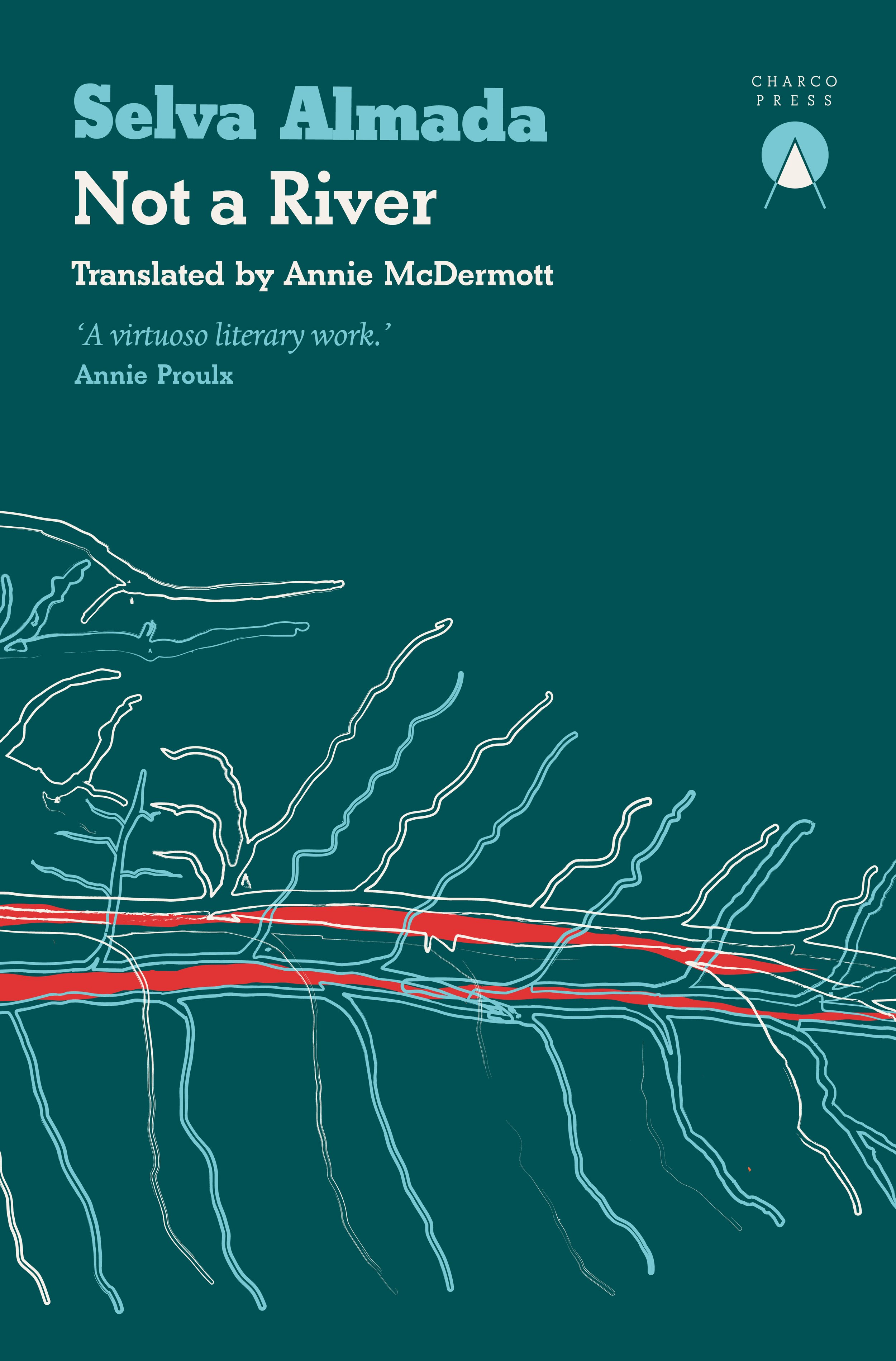
Not a River by Selva Almada (Argentina) tr. Annie McDermott

Not a River has just been shortlisted for the International Booker Prize 2024.

Opening Lines and Book Covers

International Booker Prize longlist 2024 Argentinian literature Spanish translation

I read the opening line and let it tell me as much as possible about the story I am about to read.

“Enero Ray, standing firm on the boat, stocky and beardless, swollen-bellied, legs astride, stares hard at the surface of the river and waits, revolver in hand.”

It’s a Charco Press title, so there is always a thought provoking abstract image on the cover, that never fails to contribute to the understanding of what the book has to say. This one shows twin rivers, fed by tributaries, running red.

It is clear that will be blood, death, perhaps menace and/or violence – and more than one episode. Just as the water of the smaller channels has no choice but to flow into the main river, so too the intent of a man standing firm, awaiting his prey. But who/what else will the river claim?

To Understand Any Story We Circle Back

Not a River tells a story, not in a linear way, but in a circular fashion, beginning with two men El Negro and Enero and a boy Tilo, on a fishing trip; circling back to a previous trip when Eusubio was with them, slowly revealing the memory that is acting on both men and what happened to their friend. The fishing trip is further disturbed by a visit from ‘a local’ whose questions unsettle the trio.

The second tributary/narrative follows Siomara and her two daughters Lucy and Mariela. The girls are entering womanhood, the mother is becoming more protective.

Photo V. Bagacian Pexels.com

Siomara was in one of those phases she sometimes went through, when she was grouchier than usual. Saying no to everything and dealing out punishments and bans for no reason. All because she could see how the two girls were growing, how little by little they were slipping away, how sooner or later they were going to leave her as well.

She lights fires as a way to deal with her emotions, she has done so since she was a girl. She seems to be lighting them a lot recently.

Sometimes she thinks the fire talks to her. Not like a person does, not with words. But there’s something in the crackle, the soft sound of the flames, as if she could almost hear the air burning away, yes, something, right there, that speaks to her alone…
Come on, you know you want to.
It says.

Again the story turns on itself, something has happened here too, sometimes the mother is living in the past, the present too much for her. The girls hear about a dance and plan to go.

Lucy wants to be a hairdresser. She wants to give other woman those moments of peace her mother seems to feel when she is doing her hair.

The narrative moves back and forth like the tide, people in the community are connected and affected by events that occur at the river. Paths cross, fates intertwine. It is necessary to let go of needing to know whether we are in the past or the present. If certain events happened before or after others. We accept each part of the story’s mosaic, see how they fit together, until all the pieces have been laid.

A summer like this one. Twenty years back, a summer like this one. The same island or the next one along or the one after that. In the memory it’s all just the island, with no name or exact coordinates.

The longer the men stay in the forest, the more uneasy they feel about what they have done, what has happened in the past and how unwelcome and out of place they feel. Invited to a dance, they leave their campsite for the evening.

Dreams and a Queue for the Healer

Photo by Pixabay on Pexels.com

Enero has a disturbing dream, twice.

Eusubio looked at him and thought for a moment.
We need to go see my godfather. He knows about this stuff.
He said.

Mariela also has a dream, she tells her sister Lucy about it.

And what happened in the dream?
I don’t know, like I say I just had a kind of flashback. It was weird, there were lights and sirens.

There is a sense of the repetitive cycles of the generations, girls hide from their families, they grow up to become a mother who can’t help but try and prevent their child from repeating the same mistakes. To keep them safe.

She pretends not to hear. Still just about strong enough to resist. But for how much longer.
One day, she knows she will answer the fires’s call.

In less than 100 pages, Not a River depicts disparate elements of a broken community, marginalised families, their efforts to bond, heal, escape, punish, revel and cope with the aftermath of it all.

Selva Almada’s paragraphs are like brushstrokes on a canvas, each one contributes to the story and is necessary in order to see beyond it.

The characters in my novel, men and women who live on what the river can provide, are a reflection of what the neo-liberalism of the 1990s has done to Argentina: impoverishing it, condemning a significant part of its citizens to poverty and marginalization.

Selva Almada

Highly Recommended for fans of thought provoking literary fiction.

Further Reading

Tony’s Reading list – review of Not a River

Booker Prize Website: Q & A with Author & Translator

My review of The Wind that Lays Waste

Selva Almada, Author

Selva Almada is considered one of the most powerful voices of contemporary Argentinian and Latin American literature and one of the most influential feminist intellectuals of the region.

Compared to Carson McCullers, William Faulkner, Flannery O’Connor, Sara Gallardo and Juan Carlos Onetti, Almada has published several novels, a book of short stories and a book of journalistic fiction. She has also published a film diary, written on the set of Lucrecia Martel’s film Zama, based on Antonio di Benedetto’s novel.

She has been a finalist for the Medifé Prize, the Rodolfo Walsh Award and of the Tigre Juan Award. Her work has been translated into French, Italian, Portuguese, German, Dutch, Swedish and Turkish. 

Not a River (shortlisted for the Vargas Llosa Prize for Novels) is her fourth book to appear in English after The Wind that Lays Waste (Winner of the EIBF First Book Award 2019), Dead Girls (2020), and Brickmakers (2021).

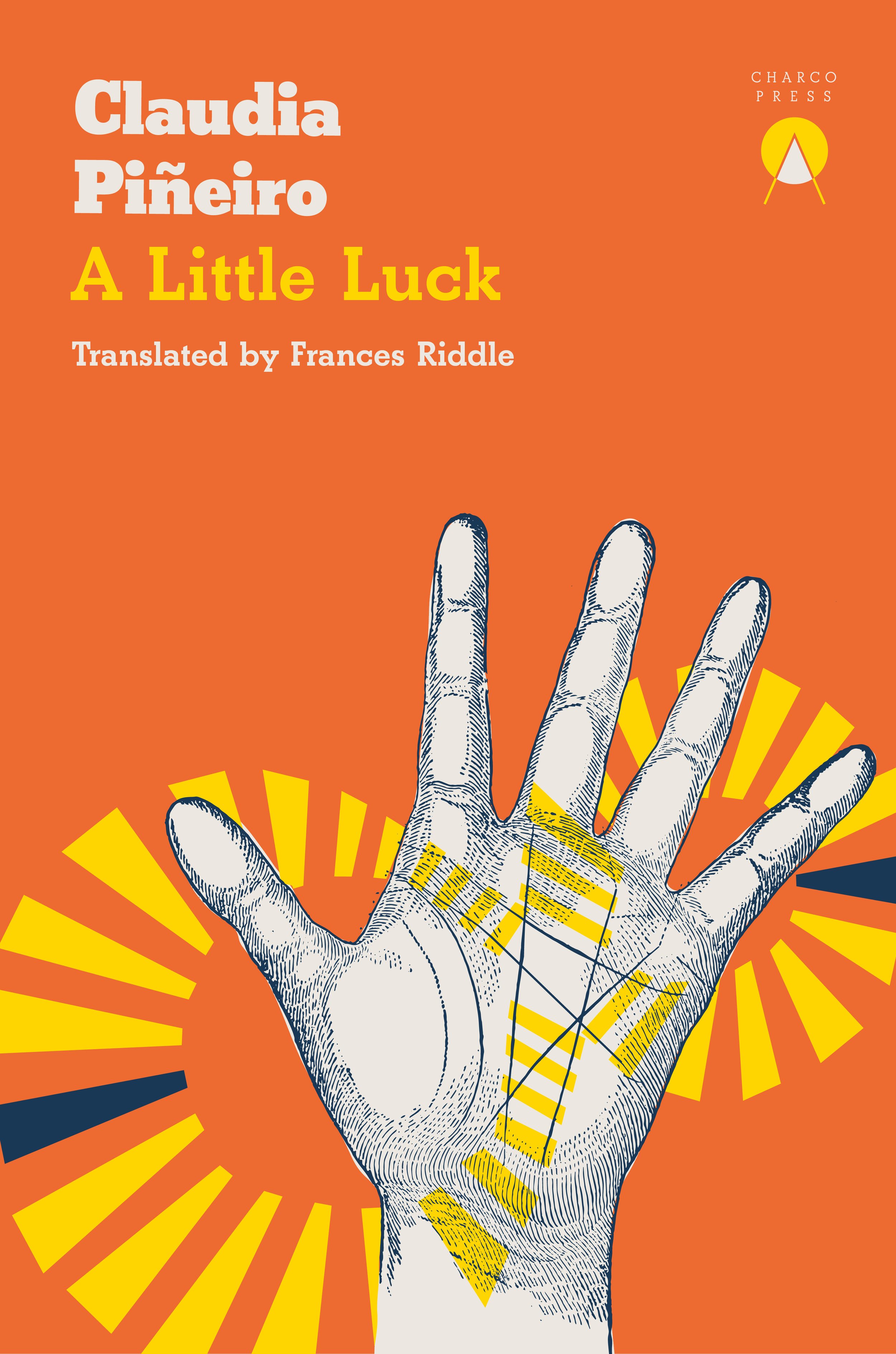
A Little Luck by Claudia Piñeiro tr. Frances Riddle

women in translation argentinian literature crime fiction literary fiction

Stunning.

This was a heart-racing, thrilling and moving read that begins mysteriously as a woman returns to her home country (Argentina) following some kind of event 20 years earlier that we don’t fully learn of until almost halfway into the novel. 

Though she lived most of her early life there, her physical appearance is so radically different, no one recognises her – yet.

We are made aware, though it takes a while to reveal, that she is anxious about the possibility of seeing someone connected to that past event, that sent her into self-imposed exile.

I should have said no, that I couldn’t go, that it would have been impossible for me to make the trip. Whatever excuse. But I didn’t say anything. Instead I made excuses to myself, over and over, as to why, even though I should’ve said no, I agreed in the end. The abyss calls to you. Sometimes you don’t even feel its pull. There are those who are drawn to it like a magnet. Who peer over the edge and feel a desire to jump. I’m one of those people. Capable of plunging headlong into the abyss to feel – finally – free. Even if it’s a useless freedom, a freedom that has no future. Free only for the brief instant that the fall lasts.

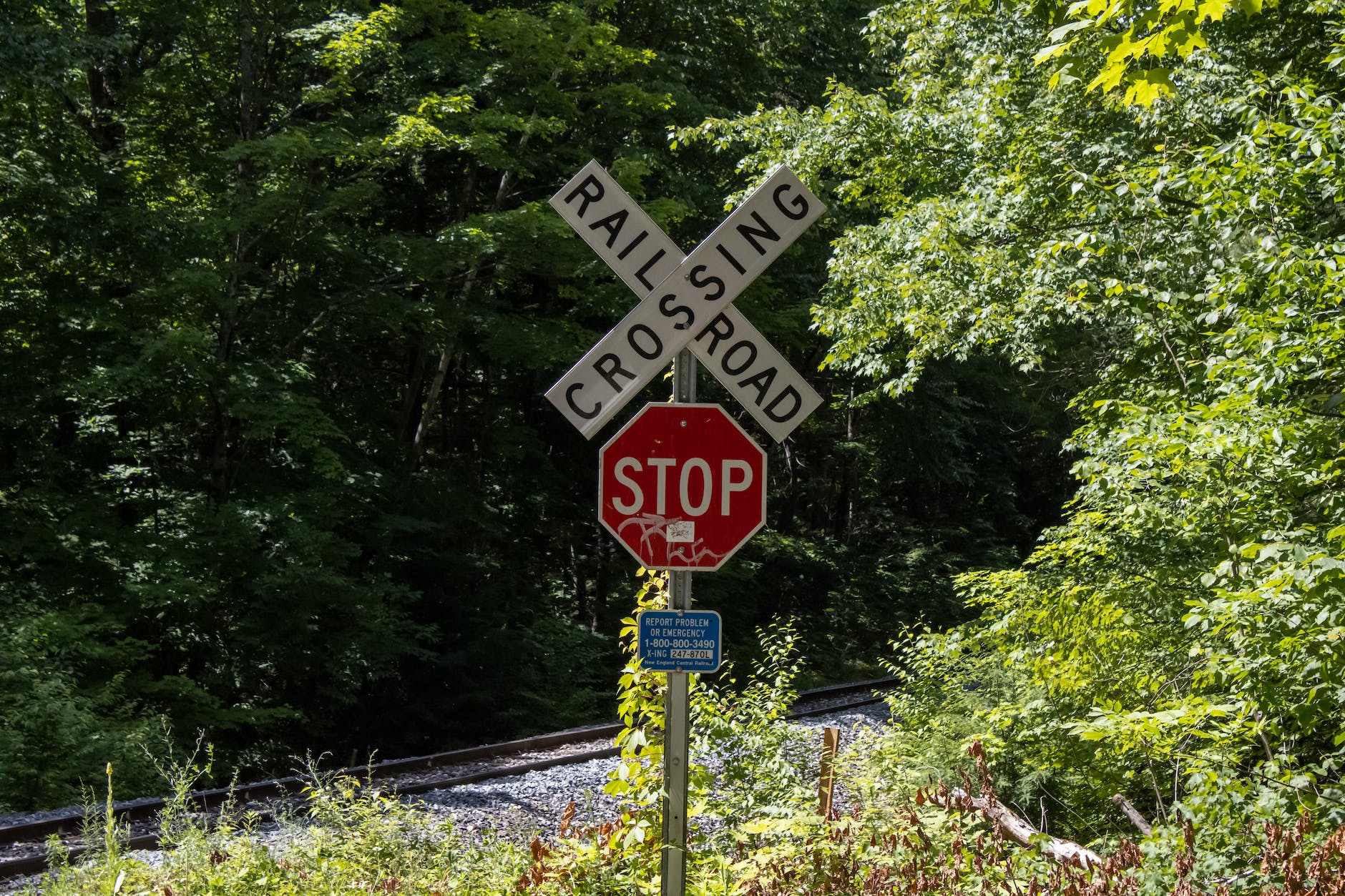
rail crossing train barrier A Little Luck
Photo Tim Dusenberry Pexels.com

As the mystery unravels, the tension mounts. Each new chapter begins with part of the backstory, then stops, this is used as a kind of repetition, as the narrator acquires the courage to reveal the full extent of the backstory.

The constant repeating of this text adds to the volume of its impact on the reader and the sense of suspense and intrigue.

The barrier arm was down. She stopped, behind two other cars. The alarm bell rang out through the afternoon silence. The red lights below the railway crossing sign blinked off and on. The lowered arm, the alarm bell, and the red lights all indicated that a train was coming.

As these events of the past some into clarity, in the present day this woman is booking into a motel, arranging to visit the school that she will consider for accreditation, we encounter the mndane reason for her visit and the extraordinary motivation behind it.

Photo by Y. Shuraev Pexels.com

Simultaneously we follow a small sub-plot drama featuring a bat. And a theme of entrapment. The story of the bat corresponds to our protagonists state of mind and how it evolves over the course of the novel. Once again she must make a life or death decision.

I’m still trapped. I must now decide whether to go out and face the task at hand or stay here and wait for the poison to kill me or the smoke to force me out.

Ultimately, it explores many themes, in a profound way, of motherhood, of domination, community judgement, condemnation and gas-lighting, of the effect of undermining a person’s self-worth, of twin aspects of abandonment, of why it might be deemed necessary and the effect it has on the one abandoned.

Do I deserve to explain why? What I mean is, do I have that right? The right to unburden myself and expect someone to listen?

Claudia Piñeiro’s Elena Knows (see my review here) I found curious; there is a similar feeling of mysteriousness as the author withholds telling all, drawing the reader in – however, in A Little Luck, she plummets the mind of the protagonist, letting us into her thoughts, showing us the events and enabling the reader to witness the reactions – allowing us to see the patterns, those all too familiar ways of subjugating a person, of the desire to blame, the withdrawal, the disappearance.

A Little Luck is also a story of healing, of kindness and finding the one person who puts the right thing in one’s way that will lead to release. In this story, a kind man finds the right stories that assist a woman to express and release suppressed emotions. And sends her on a trip.

I began to list the questions that I’d asked myself while reading Alice Munro’s story, questions posed in her words. ‘Is it true that the pain will become chronic? Is it true that it will be permanent but not constant, that I won’t die from the pain? Is it true that someday I won’t feel it every minute, even though I won’t spend many days without it?

Brilliantly conceived, after a few chapters, I absolutely could not put it down, I highlighted so many passages, and it had a surprising though satisfying, tear-jerking conclusion, definitely one of my top fiction reads of 2023. I read this in October, but found it hard to describe the intense reading experience, but I’m sharing my thoughts now, before my end of year review, where it will feature!

Highly Recommended, another fabulous title from Charco Press!

Claudia Piñeiro, Author

As an author and scriptwriter for television, Claudia Piñeiro has won numerous national and international prizes, among them the renowned German LiBeraturpreis for Elena Knows and the prestigious Sor Juana Inés de la Cruz Prize for Las grietas de Jara (A crack in the wall).

She is best known for her crime novels which are bestsellers in Argentina, Latin American and around the world. Many of her novels have been adapted for the big screen. According to the prestigious newspaper La Nación, Claudia Piñeiro is the third most translated Argentinean author, after Borges and Cortázar.

More recently, Piñeiro has become a very active figure in the fight for the legalisation of abortion in Argentina and for the legal recognition of writers as workers. Her fiction (as shown with Elena Knows) is stemmed in the detective novel but has recently turned increasingly political and ideologically committed, reflecting the active role she plays in the fight for the legalisation of abortion in Argentina and Latin America, and for the recognition of employment rights for writers..

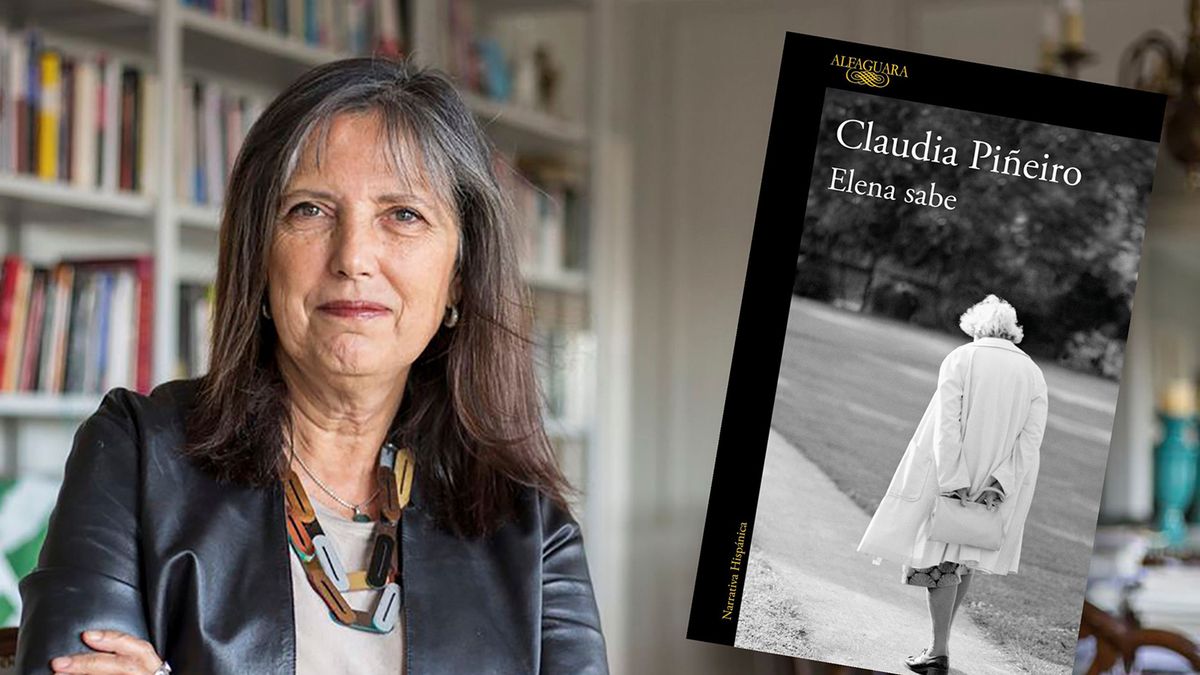
Elena Knows by Claudia Piñeiro tr. Frances Riddle

With A Little Luck now available in English, I’m catching up by reading the word of mouth sensation Elena Knows, which was shortlisted for the International Booker Prize in 2022 and won the Premio Pepe Carvalho Prize for crime fiction in 2019. According to the newspaper La Nación, Claudia Piñeiro is the third most translated Argentinean author, after Borges and Cortázar.

Claudia Piñeiro does seem like an interesting author to watch, taking the convention crime fiction genre and giving it a shake up by focusing on social issues and ethical questions, in particular related to the way women’s bodies have been and are used and abused.

Also reading this for #20booksofsummer23 and getting a head start on August’s #WITMonth, reading women in translation, because that’s my favourite corner of the reading world to be looking for literary gems!

What Does Elena Know That No One Else Seems to?

Elena has just learned her daughter Rita is dead. That it occurred on the same afternoon she booked Elena into her boyfriend’s mother’s salon for “the works”.

It was a rainy afternoon and this is the main reason Elena knows there was foul play. Because her daughter was afraid of lightning and because a mother just knows.

No one knows as much about her daughter as she does, because she’s her mother, or was her mother. Motherhood, Elena thinks, comes with certain things, a mother knows her child, a mother knows, a mother loves.That’s what they say, that’s how it is.

A Rigid Point of View

We see everything from her ‘eyes cast downward’ viewpoint, as she heads out one day to get answers from someone she hasn’t seen in 20 years.

Elena’s body is debilitated by Parkinson’s, so in between pills, she can move more easily.

Photo by RAFAEL QUATY on Pexels.com

Rita was there when he first explained the disease. Rita, who’s now dead. He told them that Parkinson’s was degradation of the cells of the nervous system. And both she and her daughter disliked that word. Degradation.And Dr Benegas must’ve noticed, because he quickly tried to explain. And he said, an illness of the central nervous system that degrades, or mutates, or changes, or modifies the nerve cells in such a way that they stop producing dopamine. And then Elena learned that when her brain orders her feet to move, for example, the order only reaches her feet if the dopamine takes it there. Like a messenger, she thought that day. So Parkinson’s is Herself and dopamine is the messenger.

The novel is told over the course of one day, in three sections: Morning (second pill), Afternoon (third pill) and Evening (fourth pill). The absence of the first pill in the narrative is a reminder as to how dependent she is on the medication and how controlling it is over her every movement, how it restricts her freedom, her vision, her ability to do anything. She is enslaved to those pills and that body.

As the pill begins to wear off, the risk of her becoming stuck increases, as her body becomes less manageable, there is no room for error or miscalculated judgement, if she is to make the journey she has planned. There are moments when she has to wait for the pill to take effect, these must be carefully timed.

Proprietary Attitudes Over Humans

She is off to get help in her attempt to investigate her daughter’s death, thinking she can use the ‘able body’ of someone she sets out on this day to meet. There is a reason why she believes that this person will help her, where no other can, and she will go to all kinds of lengths, despite the debilitating obstacles of her own body, in order to have an audience with them.

She won’t be able to do it by herself because she doesn’t have a body. Not now that the dethroned king and Herself are in charge. Even if she uses all the tricks in the book, she won’t be able to uncover the truth unless she recruits another body to help her. A different body that can act in her place. That can investigate, ask questions, walk, look directly into people’s eyes. A body that will obey Elena’s orders.

The novel explores this idea of how people impose or claim agency over another’s body and what they sentence them to, in so doing; or how they believe they “know” another just because they gave birth to or mothered them, or that God gave them some kind of right to be so knowing.

Elena’s body is in the end stages, but in her mind, she is still coming-of-age.

Claudia Piñeiro, Author

Claudia Piñeiro is best known for her crime novels, which are bestsellers in Argentina, Latin America and around the world. Four of her novels have been adapted and made into films.

As an author and scriptwriter for television, Piñeiro has already won numerous national and international prizes, among them the renowned German LiBeraturpreis for Elena Knows and the prestigious Sor Juana Inés de la Cruz Prize for Las grietas de Jara (A Crack in the Wall).

Her 8 episode series The Kingdom (2021) currently showing on Netflix, sparked controversy in 2021 for its portrayal of the Evangelical church in Argentina.

More recently, Piñeiro has become a very active figure in the fight for the legalisation of abortion in Argentina and for the legal recognition of writers as workers. Her fiction stems from the detective novel but has recently turned increasingly political, taking a broader, more critical gaze at corruption, injustice, community divisions and other dysfunctions of contemporary society. 

Further Reading

What’s On My Bookshelf: Claudia Piñeiro talks of books that inspired her career including The Little Virtues by Natalia Ginzburg, Fierce Attachments by Vivian Gornick, The Story of a Shipwrecked Sailor by Gabriel García Márquez, To the End of the Land by David Grossman, A Room of One’s Own by Virginia Woolf and The Buenos Aires Affair by Manuel Puig.

International Booker Prize Interview: Claudia Piñeiro, ‘I’ve always been very rebellious’

“I always begin writing my books with an image that acts like a trigger. I allow this image to steep in my mind, the characters then begin to speak, to reveal their conflicts. It’s like a tangled ball of wool that I unwind bit by bit. In the case of Elena Knows this image was a woman, a woman in her kitchen at home, sitting bent over in a chair waiting for the pill she’s taken to take effect so she can get up. This was the trigger image. I should also acknowledge that this diseased body of the character Elena is inspired by the body of my mother, who suffered from the same illness, Parkinson’s.  Claudia Piñeiro

Two Sherpas by Sebastián Martínez Daniell tr. Jennifer Croft

Two Sherpas is a wonderful novel where not much happens, but we see inside the minds of two men, one a young man at the beginning of his adulthood and the other who has many more years of experience from which to reflect back on.

Contemplation From Above

wp-1676027658016They stand at the edge of a crevice looking down on their client, a British climber.

Tourists… thinks the old Sherpa, who isn’t old or, properly speaking, a Sherpa. They always manage to do something, these people – these tourists, he thinks. Then says. With an ambiguous gesture he indicates the void, the ledge where the body of an Englishman lies prone and immobile, and he says:

‘These people…’

And so breaks the silence. If the deafening noise of the wind ravelling over the ridges of the Himalayas can be considered silence.

Over the course of the novel, what the to men say to each other could be written on one page, but instead, the pages contain their thoughts, their pasts, their aspirations, the current predicament.

A Little Known History

Some chapters, most of which are less than one page of text, rather than beginning with just a number, contain a title, for example between thee and five sits the following:

People From the East

Five hundred years prior, a nomadic people with a tradition of seasonal migration across the central Chinese province of Sichuan initiates a process of gradual westerly motion. In exile, they become pariahs: refugees who must seek their new station in the mountains. The locals baptise them according to their cardinal origins. People (pa) from the East (Shar): Sherpas.

These chapters inform us of various historical facts, information that creates context around the two men. We learn how these people came to be called sherpas and how that name was a convenient way to refer to men whom they could use to assist them, without having to acknowledge their humanity.

A chasm between Flavius and Marrullus

Flavius Shakespeare Julius Caesar

Photo by cottonbro studioPexels.com

The young Sherpa is in school and has plans for further study. He is taking a theatre workshop.

It should be understood that climbing licences are a common phenomenon in the Nepalese school system: the Ministry of Education periodically prints supplements so that students who earn their keep as mountain guides can keep up with their classmates.

He will soon play the role of Flavius in Shakespeare’s Julius Caesar. The omniscient narrator talks about Flavius and Marullus, co-conspirators against Caesar who are out of touch with the lives and perspectives of the common people, they don’t understand how commoners could support such a man, so they attempt to sabotage their ideas, they drive everyone away.

A Too Often Celebrated History

We also learn of the various expeditions to Mount Everest, of a western ambition to conquer, of casualties, of a hierarchy of importance, one that continues today, long after Caesar’s Roman rule. We read of the loss of lives of local people in avalanches, of suffering families.

The foreigners who reach the summit believe that they have outperformed the species and, at least for an instant, they see themselves as demigods…For them, for the tourists, we are pack animals, the older man would say. Creatures capable of doing with relative ease what for human beings constitutes a feat. They see us as mules, beings with bones structures suited to lugging great weights. They see it as perfectly logical for Sherpas to summit. They ought to think of us as Titans, deities with powers unattainable by mere mortals. But they don’t. When they reach the summit, they’re the ones who are the heroes. It is they who have achieved mountaineering glory, the – so called- miracle of besting, of overcoming themselves.

Mt EverestIn effect, the novel itself is like an ascent, a trek that stops periodically to look back, to observe both the reality of current conditions, of local lives, and the persistent effects of imperialism. And then it looks down into the crevice, taking its time to dig deeper into the subject, into the influences that might have caused this dissonance, this treatment of people, this naming of others.

It uses as a reference, European philosophical and theatrical references, plotting them side by side with facts relating to ‘people of the east’, and this present situation, where one from the west lies deep in a crevice, outside his territory, being observed by two from the east.

Silence is a theme that occurs throughout the novel, one we are reminded of, as it repeats in the text, in metaphor and in reality on the mountainside. It is this theme of silence that lead me to follow up reading this novel with Abdulrazak Gurnah’s excellent Admiring Silence (my review here), where he too uses it as a theme for dealing with the effect of prejudice of a colonial flavour.

Career Choices On the Edge

Throughout their time at the edge of the crevice, the younger man has considered and reconsidered his choice of future profession, his thoughts will take from contemplating engineering, to international relations, to playwright, to the line he must speak in the opening of the upcoming play.

“Home, you idle creatures, get you home!”

Two Sherpas is sheer brilliance, a book that had me hooked in anticipation from its opening pages.  The intelligent juxtaposition of different literary elements, enthralling peaks that form a narrative, its thought provoking references, motivate the reader to consider their perspective of past events, of language, while maintaining a level of intrigue for the present dire situation. It’s a wake up call.

Cover Art

I want to highlight the simplicity and brilliance of the cover art by Pablo Font, each time I receive one of Charco Press’s books I like to linger on the cover design, this one is an apt depiction of the story. Mesmerising.

Highly Recommended, another great choice of Latin American literature, superbly translated by Jennifer Croft, thanks to Charco Press

Sebastián Martínez Daniell, Author

Sebastián Martínez Daniell was born in Buenos Aires in 1971. He has published 3 novels, Two Sherpas (2018) is his third novel, and is published in English by Charco Press in Feb 2023.

He is one of the co-founders of the independent publisher Entropía and is a literature lecturer at the National University of the Arts in Buenos Aires.

The Wind That Lays Waste by Selva Almada tr. Chris Andrews

Evangalising Across the Argentinian Countryside

A reverend and his teenage daughter break down in the middle of nowhere on a steaming hot dry day, after he ignores her advice to get the problem checked before they left the last town (his home town). A visit that caused her to feel both sorry for  her father.

But her sympathy didn’t last. At least he could go back to places full of memories…Leni had no lost paradise to visit. Her childhood was very recent, but her memory of it was empty.  Thanks to her father, the Reverend Pearson, and his holy mission, all she could remember was the inside of his car.

Leni, now 16, hasn’t seen her mother since the Reverend dumped his wife and her suitcase on one of their road trips.

This happened almost ten years ago. The details of her mother’s face have faded from Leni’s memory, but not the shape of her body: tall, slim, elegant. When she looks at herself in the mirror, she feels that she has inherited her bearing. At first she believed it was just wishful thinking, a desire to resemble her. But since becoming a woman, she has caught her father, more than once, looking at her with a blend of fascination and contempt, the way you might look at someone who stirs up a mixture of good and bad memories.

The Lone Garagist

The Wind That Lays Waste Selva Almada

Photo by cottonbro on Pexels.com

A truckdriver tows them to ‘the gringo Brauer’s‘ garage, a man raising his teenage son Tapioca alone, the boy abandoned there by his mother when he was 8 years old.

Tapioca’s memories of his mother are vague too. After she left him, he had to get used to his new home. What interested him most was the heap of old cars. The dogs and that mechanical cemetery were a comfort in the first weeks while he was adjusting. He would spend all day among the car bodies: he played at driving them, with three or four dogs as co-pilots. The Gringo left him to it, and approached the boy gradually, as if taming a wild animal.

The father hadn’t finished school himself, his son could read, write and do sums so didn’t see why the boy needed to keep up with it. He decided Tapioca could learn by working and observing nature.

It might not be scientific, but nature and hard work would teach the kid how to be a good person.

Seeing the Light

Storm Thunder Wasteland

Photo by Johannes Plenio on Pexels.com

The Reverend sees good in the boy and sets his righteous missionary sights on him. Leni sees what’s happening but doesn’t intervene.

Leni had conflicting feelings: she admired the Reverend deeply but disapproved of almost everything her father did. As if her were two different people. Earlier, she had told him to leave Tapioca alone, but if she had joined them on the porch now, she too would have been captivated by his words.

Brauer doesn’t appreciate the Reverend putting ideas in his son’s head, the tension mounts and none of them know yet that there’s a storm coming.

It’s a slow build-up, getting to know the characters, two men set in their ways, with children who rarely question their authority. They are used to being in charge. It’s a short, tense, reflective novella of these two unorthodox families whose lives intersect and cause a disruption, just as the storm breaks a long period of dry.

Far Away and Long Ago by William H Hudson

Nature Writing, Argentina & Serendipitous Connections

Following my Top Five Nature-Inspired Reads, in the comments, Julia Hones recommended the naturalist William Henry Hudson (1841-1922). She grew up close to his childhood home in the Pampas (fertile South American lowlands), which have their own climate, wildlife and vegetation.

Julia mentioned enjoying Far Away and Long Ago, a mix of childhood escapades, keen observations of nature, wildlife and neighbours, set against a somewhat turbulent history, as various war skirmishes were waged not far away.

Curious, because of the unique Argentinian setting, I looked it up, and because it was published in 1918, over 100 years ago, I was able to download it from Project Gutenburg (a library of free ebooks).

International Booker Prize 2020

I hadn’t planned to read it straight away, but when the International Booker Prize Shortlist 2020 was announced, I had read two of the books and had a third on the shelf, The Adventures of China Iron by Argentinian author Gabriela Cabezón Cámara.

I began to read it becoming completely hooked, then part through I skipped to the translator’s note where they mentioned the epic gaucho poem Martín Fierro by José Hernández and the influence of William Henry Hudson. I read a couple of chapters of Far Away and Long Ago, to get a flavour of what that meant and immediately sensed the connection.

Review

At the opening of each chapter are a series of mini titles or references to everything that will be covered, Cámara sticks to using one of these in her chapter titles, while Hudson lists about 12 for each chapter.

Chapter 1 EARLIEST MEMORIES – Preamble – The house where I was born -The singular ombu tree – A tree without a name – The plain – The ghost of a murdered slave – Our playmate, the old sheepdog – A first riding lesson – The cattle: an evening scene, My mother – Captain Scott – The hermit and his awful penance.

Photo by Johannes Plenio on Pexels.com

William Hudson wrote this book during a period of illness and six weeks of confinement, while living in London.  His fever brought back many of his childhood memories in startling clarity, providing a clear vision of the past.

Though he is often referred to as British, his parents were American, he was born in Argentina and lived there until the age of 33 and is proudly known locally as Guillermo Enrique Hudson.

The house where he was born was named Los Viente-cinco Ombues, (the twenty-five Ombu Trees), an indigenous tree that grew in a long row near the house and was a gigantic landmark to any travellers on the great plains, there being little else of tree-vegetation natural to the area. Today his home is part of a 133-acre ecological reserve and park, with a small museum.

Being on the main route south of the capital Buenos Aires, there were often itinerant beggars, weary travellers or gauchos (cowboys) passing by, looking for rest or a meal, some of these characters making an impression on him, that he shares. A succession of teachers, who often don’t last, the family not being well enough off to send the children away to school.

He is one of six children, though he has very little to say about his siblings and even less about his parents, apart from a brief mention of his father and a beautiful lament for his mother in the final chapter.

Photo by Adriaan Greyling on Pexels.com

He has much to say about their neighbours and their devotions and passions. Most of the estancieros were cattle breeders but some had passionate side interests, of interest to a young boy. The English neighbour Mr George Royd, whom he refers to as being different to other neighbours, being an educated man who loved to meet with others of like mind, was a sheep farmer with ambitious dreams, another had a tame ostrich, or rhea that followed them around.

One of his pet notions was that cheeses made with sheep’s milk would be worth any price he liked to put on them, and he accordingly began to make them under very great difficulties, since the sheep had to be broken to it and they yielded but a  small quantity compared with the sheep of certain districts in France where they have been milked for many generations and have enlarged their udders.

There was Gandara, completely obsessed with breeding piebald horses and Don Anastacio, devoted to a wild-pig descended from a breed introduced by Spanish colonists that had adapted after three centuries of feral life. He makes excuses for one patriarch Don Evaristo, indicating he was esteemed and beloved above most other men.

It may be added that Don Evaristo, like Henry VIII, who also had six wives, was a strictly virtuous man. The only difference was that when he desired a fresh wife he did not barbarously execute or put away the one, or the others, he already possessed.

It is a unique childhood, inevitably though, despite an appreciation of nature and the wild, there is the clear presence of prejudice and assumed superiority. If it is possible to see past that fact, it provides a unique glimpse into life in another era, living in a naturalists paradise on the path of many migrating birds, a freedom that came from the remove of a strict education, an entire childhood spent outside the constraints of any kind of institutional environment or influence.

The final chapter is a beautiful lament to his mother and makes me wish he was able to write more about his family and how they came to be living out there in the first place, perhaps it was childish adoration, but they seemed unsuited to the harshness of that environment and there is no sense of actual farming in his recollections, perhaps because they employed people to do the actual work, as was often the way.

Ultimately Hudson comes across as a boy who never grows out of his love of nature and eventually develops a kind of mystical relationship to it, despite indulging in many of the cruel things young boys do growing up in rural isolation with older brothers.

An enjoyable read.

Further Reading

Smithsonian Magazine – The Naturalist Who Inspired Ernest Hemingway and Many Others to Love the Wilderness