Ghost Wall (2018) by Sarah Moss

In 2020 I read the novel Summerwater by Sarah Moss after having listened to the author speak about her work. I didn’t review it because it didn’t work that well for me, but when I saw this slim novella at a book sale I thought I’d try again. It had been longlisted for the Women’s Prize in 2019.

Family Memory or Normalising Terror
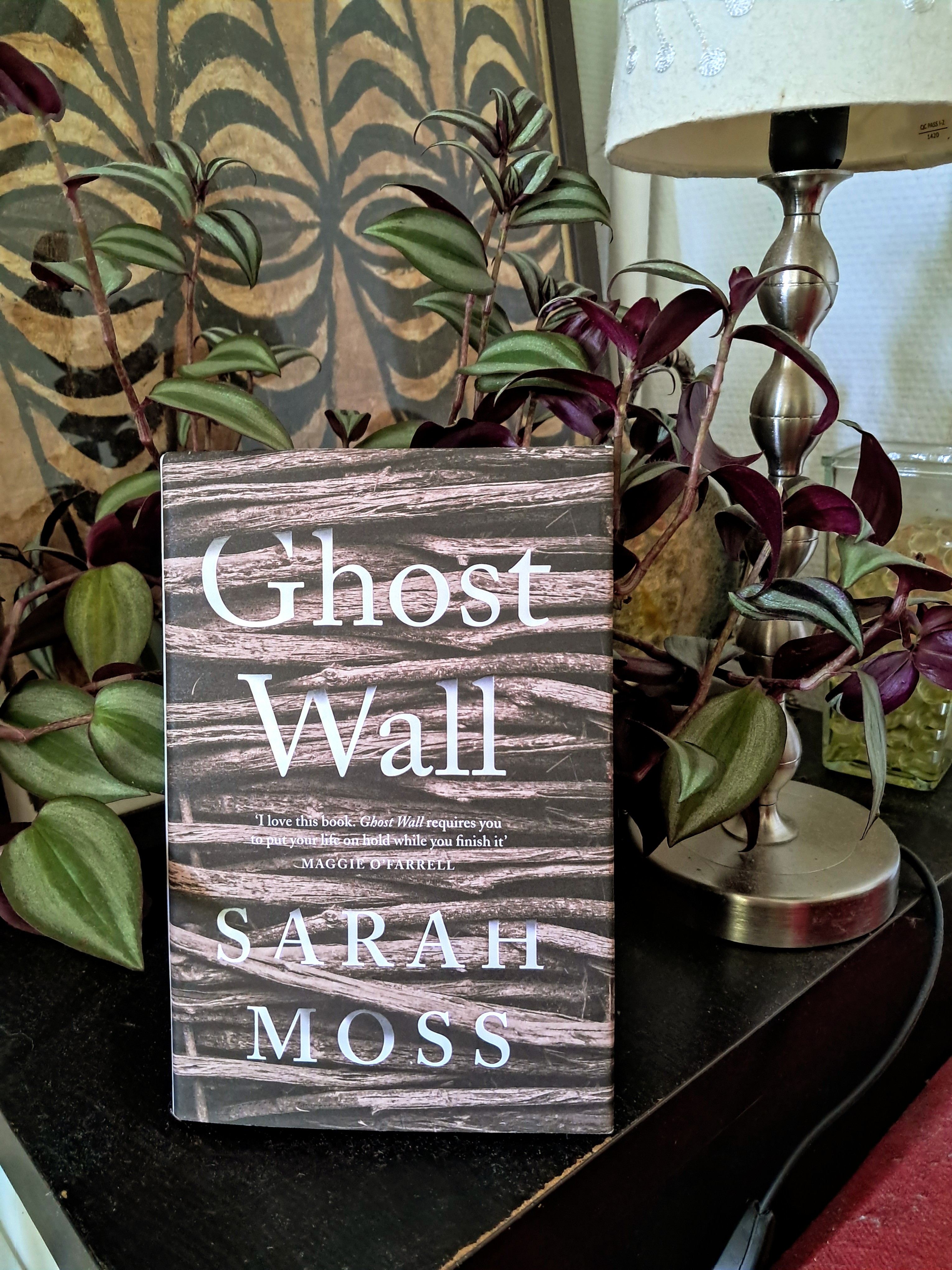
Book cover of novella Ghost Wall by Sarah Moss. The cover shows woven wood that might have been used to recreate an Iron Age hut.

Interestingly, Summerwater was an ‘on-holiday’ novel, a rain soaked 24 hours in the Scottish Highlands, of families stuck in their cabins, inspired by the author’s two week stay under similar conditions, while Ghost Wall is also a tale of a less than salubrious summer holiday.

Teenage Silevia is spending time with her family in an Iron Age re-enactment hut in Northumberland, experiencing what it might have been like to live as they did. There is a Professor and his students also present, whereas Silvie and her father are there because her father, a bus-driver is passionate to the point of obsession about the history of this period.

We were sleeping in the roundhouse, my parents and I. The students had built it earlier in the year, as part of a course on ‘experiential archaeology’, but they had been firmly resistant to my father’s view that everyone should sleep in it together.

The point of the experience was to have a flavour of Iron Age life, a period around 800 BC when people learned how to use iron, which subsequently shifted the way they lived. Still very basic, so much of the holiday is spent foraging for food and for Silvie’s mother, preparing it.

Re-enactment not Reality

Silvie befriends one of the students Molly, who isn’t taking the experience as seriously as the others, who brings a reminder that life is not like this today and challenges some of the things that they do. Silvie admires her rebellious spirit, but is too fearful of her coercive father to defy his requests, finding it impossible to say no and seeing how little it takes for her mother to be punished.

I sometimes think I can tell when two pieces from the same site were made by the same prehistoric person, because the way my hands move is the same. I shivered. Of course, that was the whole point of the re-enactment, that we ourselves became the ghosts, learning to walk the land as they walked it two thousand years ago, to tend out fire as they tended theirs and hope that some of their thoughts, their way of understanding the world, would follow the dance of muscle and bone.

Photo by E. Laperriere Pexels.com

Underlying her experience and in the opening three pages, is the experience of the bog girl who was sacrificed, a story that as we read those pages, it is not clear whether this is a foreshadowing of something that is going to occur, or something from the past that she can imagine and feel, but whatever it is, it starts to feel real, even when she says otherwise.

Silvie, she said, you’re really OK with this, the ghost wall? It’s interesting, I said, I didn’t think it would be but it is. You’re not scared she said. I shrugged. Of what, bones? Of people, she said.

Passion or Persuasion

Photo by Petra Nesti on Pexels.com

The novella is atmospheric and becomes increasingly alarming as Silvie gets swept up in the passion of her father and the history professor, who have convinced themselves that there’s nothing wrong with taking the way these people used to live further. Despite her unwillingness, Sylvie also recognises her father isn’t academic like the rest of the team and part of her wants to support him.

It’s slightly terrifying the further things goes and the ending might have been a little abrupt, but then often conclusions are dramatic when an intervention is required, rather than the ideal of thoughtfully addressing real concerns.

Interviewed for the Women’s Prize for Fiction 2019, Sarah Moss, on her inspiration for the novel shared:

I had a writing residency for the Hexham Book Festival, and became fascinated by Hadrian’s Wall and prehistoric arts and crafts. We think of Hadrian’s Wall as the boundary between England and Scotland but neither of those entities existed then; it was the boundary between the Roman empire and the barbarians. There was and is plenty of reason to be thinking about the borders between civilisation and barbarity, nature and culture, insiders and outsiders.

Further Reading

A Q & A with Sarah Moss: On Iron Age re-enactment camps, barbarity and civilisation and Brexit’s impact on writers

Guardian: Ghost Wall by Sarah Moss review – back to the iron age

Author, Sarah Moss

Sarah Moss has published eight novels, two memoirs, numerous essays, and academic work on Romanticism, travel, food and gender. Her work has been listed for prizes including the Women’s Prize for Fiction, the Royal Society of Literature Ondaatje Prize and the Wellcome Prize.

Her novels are SummerwaterCold EarthNight WakingBodies of Light, Signs for Lost Children, The Tidal Zone, Ghost Wall and Ripeness (2025). A memoir of her year living in Iceland, Names for the Sea, was shortlisted for the RSL Ondaatje Prize and another My Good Bright Wolf (2025) is about growing up in the 1970’s and how excess self-control affects her early adulthood.

Madame Sosostris & the Festival for the Broken-Hearted by Ben Okri

I haven’t read a Ben Okri novel for a long time. He is well known for his third novel, the 1991 Booker Prize winning The Famished Road, the story of Azaro, a spirit child around the time of Nigerian independence; a challenging novel to read as it slips in and out of reality, and one the writer recalls being spooked by, as those spirits he wrote about crashed into his dreams.

There were times, writing at night, when the story I was telling would spook me. Those where nights when I feared for my sanity. I couldn’t shake the feeling that when people read the novel they’d think something was wrong with me. It must have taken a species of madness to write The Famished Road. It certainly took a stronger psyche than I realised I had to work on that taboo-breaking material, and to withstand the horrors involved. Writing about the spirit world at night, for a long period, is dangerous if you come from a land that believes in them. Spirit children, born several times to the same mother, have a special mythology about them, part dread, part magic.

Booker Prize Winner 1991 for The Famished Road Ben Okri Madame Sosostris homage to T.S. Eliot The Waste Land she  can be perceived as the central consciousness of the tale

There is something alluring about Ben Okri’s work, the way he seeks to portray a cultural inner authenticity that embraces the ordinary, the mythical, the poetic and the mysterious. It can feel slightly beyond reach, and then there are moments of universal resonance. A wonderful, considered author, who embraces all literature and forms.

For some time I had known that there is no objective reality that is true for everyone. There is only the reality perceived through culture, traditions, education, consciousness. We don’t see what is there. We see what we are taught to see. Our reality is a product of culture and consciousness. 

After the challenge of The Famished Road, I remember picking up the slimmer Astonishing the Gods, a beautiful fable-like story about being invisible and having the courage to go forth anyway; a man finds himself among invisible beings who live by one principle ‘to repeat or suffer every incident until we experience it properly or fully’ – the sort of book that was ideal to read in youth, one I loved for its magical element and transformative power when I read it in my 20’s.

Madame So So Sad, Sorceress or Alter Ego

ASo where does Madame Sosostris and the Festival for the Broken-Hearted fit? More along the lines of Astonishing the Gods for sure, with a nod in homage to T.S. Eliot’s (1888-1965) character in his epic poem The Waste Land, who may be perceived as this tale’s central consciousness. She comes from the first phase of that poem ‘The Burial of the Dead’, with its themes of sorrow and disappointment, of April and the cruelty in the coming of Spring. Eliot too, is said to have been referencing a character from Aldous Huxley’s Crome Yellow.

Madame Sosostris, famous clairvoyante,

Had a bad cold, nevertheless

Is known to be the wisest woman in Europe,

With a wicked pack of cards. 

The Novel

Okri’s Madame Sosostris is a modern fable, with a touch of cynisism and humour, it is about two upper-class power couples, one of the women has the idea to create a festival for those who have suffered loss but are never acknowledged, the brokenhearted. It has been 20 years since her own major heartbreak.

A Touch of Theatre

Much of this novella length story is dialogue and I couldn’t help but feel like I was watching a play, even the voices seemed louder as if projected out to an audience more so than to each other. We get the feeling that these people don’t much like each other and have long ago left their more authentic aspects of themselves behind.

We spend our lives trying to become ourselves. Few people ever succeed.

Photo by G. PITOIS Pexels.com

The festival will be a masked, costumed event, an idea they hope will allow people to reconnect with something more authentic, since no one will know who they are. This will prove strange to Viv, a member of the House of Lords, who is not used to being encountered by people who do not who she is or the position she holds in society.

But she soon realised that the things they were saying were genuine, that they wanted nothing from her, and had no idea who she was. This was disquieting and charming in equal measure. Disquieting because she was used to people reacting to her because of her money. She was used to the influence of her position in society, the power it gave her. Being liked without that power was new to her. But it did not alter her anxiety.

A Sacred Space in Nature to Unmask

A sacred forest in the south of France, Sainte Baume

It will be for one night only, abroad, in a sacred forest in the south of France. The special invitee is Madame Sosostris, whom they have come across once in the House of Lords (where one of the women works) who will do readings for each guest.

They had come to her weighed down with the dark burdens of their unendurable agonies. They left with a streak of light in their eyes. They were people who had chewed their innards and devoured their own hearts. They were locked in the narrow space of their beings. They were imprisoned for long periods of time in the hell of their own minds, turning over their agonies till they grew and filled their world. What most of them needed was a glimpse beyond themselves, a glimpse of something real, something with the texture of dry bone, the fragrance of a dead beetle, the roughness of a cement wall.

When plans go awry, it becomes necessary to adapt and step out of comfort zones. Some will rise to the occasion, others will be destabilised by it. Ultimately, the couples all experience moments of consciousness raising and are changed in some way by their encounter.

The novel explores identity and personality and how society reinforces these constructs which move further and further away from the authentic, creating a mirage masking the true self. It demonstrates how a shift in perspective and stepping outside oneself can be beneficial to the psyche.

It’s an entertaining read, that plays around with what is real, what is seen and unseen, thought provoking in a theatrical sense and ready for the stage in my humble opinion.

Further Reading/Listening

An Interview: Ben Okri – How The Famished Road was Written on a Magic Tide of Freedom

Listen To: Ben Okri Talking About T.S. ELiot and The Waste Land (16mins)

Guardian: Madame Sosostris & the Festival for the Broken-Hearted by Ben Okri review – a slender fable

Ben Okri, Author

Sir Ben Okri was born in Minna, Nigeria. His childhood was divided between Nigeria, where he saw first-hand the consequences of war, and London.

His writing has used magic realism to convey the social and political chaos in the country of his birth, however no two books are the same exploring themes of reality, unreality, society, storytelling, freedom, magic, consciousness, history, politics, justice.

His books include The Last Gift of the Master Artists (2022), The Freedom Artist (2019); the short story collection Prayer for the Living (2019); the prose-poetry hybrids Tales of Freedom (2009) and A Time for New Dreams (2011); the long poem Mental Fight (1999); the essay collection A Way of Being Free (1997); the poetry collection An African Elegy (1992); and the Booker Prize-winning novel The Famished Road (Anchor, 1991).

He has won many awards over the years, including the Booker Prize for Fiction and is also an acclaimed essayist, playwright, and poet. In 2019 Astonishing the Gods was named as one of the BBC’s 100 Novels That Shaped the World. In June 2023 he was awarded a knighthood in the King’s official birthday honours.

Booker Prize 2025

The longlist for the Booker Prize 2025 will be announced on Tuesday, 29 July 2025. The shortlist of six books will be announced on 23 September and the winner will be announced on 10 November.

Have you read any Ben Okri books? Let us know in the comments below?

N.B. This book was an ARC (Advance Reader Copy) kindly provided by the publisher via NetGalley.

This Is Happiness (2019) by Niall Williams

Irish literature portrait of a community Faha Kerry Novel Historical fiction

I decided to read Niall William’s This Is Happiness, when I saw that he had won the 2025 Kerry Group Irish Novel of the Year Award with his latest novel Time of the Child.

That was the novel I wanted to read, but when I learned that it was a story set in the village of Faha and that an earlier novel preceded it, I decided I would read them both. This is Happiness was longlisted for the Walter Scott Prize for Historical Fiction (2020). The prize that year was won by another Irish author Christine Dwyer Hickey for The Narrow Land, an exploration the marriage of artists Edward and Jo Hopper.

I was curious to see how it would be to read a Niall Williams novel today, remembering the utter pleasure of reading Four Letters of Love in London in 1997, the inaugural book of the first book club I ever joined.

Certain Past, Uncertain Future

I didn’t pay too much attention to this passage on page 3 when I read it, but now that I’ve finished and contemplating why I highlighted so many excellent passages and loved the storyline, somehow this didn’t grip me, I find a clue in this early revelation. When a story is told in the distant past, it brings with it for me, an element of negative nostalgia, because I know this is done, there is little possibility for transformation, it is missing the element of the great unknown, the limitless potential for things to be different.

I myself am seventy-eight years old and telling here of a time over six decades ago. I know it seems unlikely that Faha then might have been the place to learn how to live, but in my experience the likely is not in God’s lexicon.

So we meet our protagonist Noel Crowe reflecting back to when he was 17 years old and had been sent to Faha, County Clare; initially we know not what for, just that something has happened in his life and it had been seen fit for him spend time living with his grandparents.

I had come down from Dublin on the train, not exactly in disgrace – my grandparents, Doady and Ganga were too contrary and crafty for that – but certainly distant from grace, if grace is the condition of living your time at ease on the earth.

Lifting of the Clouds, Coming of the Light

Photo by T. Bernard Pexels.com

The first thing that happens is that it stopped raining. And even though it initially went unnoticed, it became a non-event of significance in that spring of 1958. The second thing was that electricity was to be installed in the area for the first time since the villagers filled in forms a few years before.

Consider this: when the electricity did finally come, it was discovered that the 100-watt bulb was too bright for Faha. The instant garishness was too shocking. Dust and cobwebs were discovered to have been thickening on every surface since the sixteenth century. Reality was appalling…

In the week following the switch-on, Tom Clohessy couldn’t keep mirrors in stock, had a run on hand-, oval-round- and even full-length as people came in from out the country and brought looking glasses of all variety, wet home, and in merciless illumination endured the chastening of all flesh when they saw what they looked like for the first time.

This brought the arrival of the second main character, 60 year old lodger Christy, whom Noel would come to know.

I thought he must be travelling man, there were many at the time, not just the whitesmiths and pot-menders but people adrift in the country generally, for all the reasons known to man unmoored from family or home and making a kind of living from wares carried in cases and opened like miniature theatres to display whatever was newest in the larger world.

Love’s Beginning, Affection’s Endurance

Accompanying world-travelled Christy, Noel was intrigued by his subtle enquiries, indicating past connections in Faha.

I chose Ganga’s method for dealing with catastrophe and pretended nothing had happened. It wasn’t so easy. The scene not only stayed with me, it grew larger for not being spoken and proved perhaps the theorem of imaginary numbers by showing that imagination is many times the size of reality.

When he learns of that history and his intentions, Noel makes a judgement and can’t help himself from interfering, trying to hasten an outcome, until he too experiences the fickleness of youthful desire, the power and impenetrability of the class system and feelings of regret.

A Portrait of A Community in Changing Times

There’s much about this novel I really enjoyed, lots of great passages and the way it tells 17 year old Noe’s perspective and experience, as he spends time with his grandparents, alongside Christy, friend and elder, bringing light to most but not all of the village of Faha, while seeking to atone for past events.

Perhaps it was the slow pace of village life, but the dwelling and description, which often I love, slowed down the narrative and had me less inclined to pick it up.

It could be that I had unrealistic expectations, but also it feels less contemporary than other Irish lit I’ve been reading like Elaine Feeney’s Let Me Go Mad In My Way, where characters are beginning to confront that repressed traditional way of being, while this novel is narrated by a now aged man looking back to that time from the perspective of a younger and older man, where if carried a feeling of foregone conclusions. And knowing that a young person, I felt exactly the opposite to this quote below: the unlived and unknown life in front of me was precisely what made life bearable.

There was every reason to feel natural joy in the world, but for the one that makes it accessible. When your spirit is uneasy, stillness can be a kind of suffering. And when you’re young, the unlived life in front of you, all that future, urgent and unreachable, can be unbearable.

Shortlist of Kerry Group Irish Novel of the Year 2025 won by Niall Williams for Time of the Child Donal Ryan Joseph O'Connor Colm Toibin Christine Dwyer Hickey
Kerry Group Irish Novel of the Year Shortlist 2025

I do recommend it and having noted the book has a significant number of 5 star reviews, I’m clearly in the minority. I will be interested to see how I find The Time of the Child, but I need a break from Faha for the moment, so my next stop is a translated novel set in Mexico City and Aix-en-Provence!

Further Reading

New York Times review: Once Upon a Time In Ireland by Elizabeth Graver

“This Is Happiness” is as full of detours and backward glances as it is of forward motion and — as befits a novel narrated by an old man who comments that “as you get toward the end, you revisit the beginning” — is centrally preoccupied with time itself. NYT

Have you read a recent novel by Niall Williams? Let us know in the comments below.

The Little Virtues by Natalia Ginzburg tr. Dick Davis

essays on parenting italian literature women in translation memoir

The Little Virtues is a collection of 11 short essays by the Italian author Natalia Ginzburg, written between 1944 and 1960, originally published in 1962 as Le Piccole Virtú.

Some of the reflections were previously published in Italian newspapers and magazines. Being spread over twenty years, they span her life post-war from her late twenties until her mid 40’s, through motherhood, widowhood and her growth as a writer.

They capture reflections on life in different places she lived and visited, like the Italian countryside where she and her husband spent time while Italy was under fascist rule, to her visits to London, which she can’t help but see through a critical cultural lens and the more accepting memories of Rome and Turin.

In a way, these essays are more revealing of the character of Ginzburg than Family Lexicon (my review) her autobiography, in which she plays a lesser role to that of the greater family, one overshadowed by an opinionated father. The youngest in the family, a quiet observer and astute note-taker, Natalia once out of the shadow of that household, finds her voice and unique style, seen changing from the bucolic monotony of an Abruzzi winter, the last season of wonder before the terrible death of her husband at the age of 34 years in Rome, to her more confident final essay on those little virtues and the education of children.

An Italian Voice of Note Rediscovered

Natalia Ginzburg Italian literature Family Lexicon

Natalia Ginzburg wrote dozens of essays, plays, short stories and novels, including Voices in the EveningAll Our Yesterdays and the autobiographical Family Lexicon, for which she was awarded the prestigious Strega Prize in 1963.

Though popular in Italy, her work was under the radar in the UK, until Daunt Books reissued this 1962 collection of essays and her autobiography, and subsequently her novels.

Her work explored family relationships, politics and philosophy during and after the Fascist years, World War II. Modest and intensely reserved, Ginzburg never shied away from the traumas of history, whether writing about the Turin of her childhood, the Abruzzi countryside or contemporary Rome—approaching those traumas indirectly, through the mundane details and catastrophes of personal life.

She was involved in political activism throughout her life and served in the Italian parliament between 1983 to 1987. Animated by a profound sense of justice, she engaged with passion in various humanitarian issues, such as the lowering of the price of bread, support for Palestinian children, legal assistance for rape victims and reform of adoption laws.

She died in Rome in 1991 at the age of seventy-five.

Notes and Quotes From A Few Essays

I read this collection back in April, as a group read, always enjoying the knowledge that others are reading the same book at the same time and sharing their feedback. I had a bit of a lull in posting reviews as I was working on another writing project, but I kept a few notes and quotes, that I’ll share here, that give a flavour of the collection.

Winter in the Abruzzi (1944) and Worn Out Shoes (1945)

Photo by Chris F Pexels.com

It’s hard not to read these essays without considering the context, that time in Abruzzi before her husband made a prisoner of war by the Nazi’s, not knowing the beauty of that exile, these essays published in the wake of his death in February 1944. That significant absence in some way replaced by her dedication to writing and her three young children.

There is a kind of uniform monotony in the fate of man. Our lives unfold according to ancient, unchangeable laws, according to an invariable and ancient rhythm. Our dreams are never realised and as soon as we see them betrayed we realise that the intensest joys of our life have nothing to do with reality. No sooner do we see them betrayed than we are consumed with regret for the time when they glowed within us. And in this succession of hopes and regrets our life slips by.

On England, Eulogy & Lament (1960, 1961)

Eulogy and Lament (1961) is an interesting observation of cultural and geographic differences seen from the author’s Italian perspective. Some are poignant, like a tree in blossom on a street that reveals a precise plan versus the memory of a surprising random tree in Italy. Others tell of a sense of melancholy, sadness, conventionality, lack of surprise, desolation. A lack of the familiar, present in Italy, that kind of impression that one often hears from anyone visiting another country for the first time, a heightened sense of difference, of what is missing.

A timid person stays timid, an unsociable person stays unsociable. And over this initial timidity and unsociableness spreads the great, English melancholy, like an endless moor in which the eyes can find no landmark.

Photo by Efrem Efre Pexels.com

La Maison Volpé (1960): An abandoned place in London that doesn’t reveal its past, so the author imagines what it might have been and remembers other places that offer temptation, yet disappoint within. Of restaurants, food, lack of inspiration.

I have a feeling that when I remember London and the time I have spent here, those syllables will echo in my ear, and all London will be summed up for me in that Parisian name.

Human Relationships

Portrait of a Friend (1957) is a beautiful, sad, reflection and honour to their friend from Turin, the poet and translator Cesare Pavese, who took his own life in 1950.

And now it occurs to us that our city resembles the friend whom we have lost and who loved it; it is, as he was, industrious, stamped with a frown of stubborn, feverish activity; and it is simultaneously listless and inclined to spend its time idly dreaming. Wherever we go in the city that resembles him we feel that our friend lives again; on every corner and at every turning it seems that we could see his tall figure in its dark half-belted coat, his face hidden by the collar, his hat pulled down over his eyes.

He and I (1962): to me this reads as a portrait of an ill-fitted relationship. A collection of characteristics of two opposite people that shows their interests and lack of, and how they manage them. She relents, he insists. He travels, she follows. He gets what he wants, she compromises. A singular memory of a conversation long ago. An ironic portrayal of a second marriage that leaves a bitter taste.

My tidiness and untidiness are full of complicated feelings of regret and sadness. His untidiness is triumphant.

On Writing

My Vocation Contemplating “writing” as the one thing she is truly good at, she recalls how it developed from childhood observations and the earliest stories. The lack inherent in being happy when it comes to writing, how suffering brand mood affect the process. A contempt for the vocation when children enter her life, then the carving out of space and place for it. Transition from wanting to write like a man, the vocation as cruel master, one that has no sympathy.

My vocation has always rejected me, it does not want to know about me. Because this vocation is never a consolation or a way of passing the time. It is not a companion.

The Little Virtues (1960)

“As far as the education of children is concerned I think they should be taught not the little virtues but the great ones. Not thrift but generosity and an indifference to money; not caution but courage and a contempt for danger; not shrewdness but frankness and a love of truth; not tact but love for one’s neighbor and self-denial; not a desire for success but a desire to be and to know.”

Photo by Pixabay Pexels.com

This is how the essay opens and in it she takes on the little virtues and the great virtues and the effect of authoritarian parenting on the next generation of parents, the relationship to money that causes scarcity consciousness, an invitation to indifference, reward and punishment, homework and daydreaming, resisting hope and embracing what is, a balance between silence and words.

“And if we ourselves have a vocation, if we have not betrayed it, if over the years we have continued to love it, to serve it passionately, we are able to keep all sense of ownership out of our love for our children. But if on the other hand we do not have a vocation, or if we have abandoned it or betrayed it out of cynicism or a fear of life, or because of mistaken parental love, or because of some little virtue that exists within us, then we cling to our children as a shipwrecked mariner clings to a tree trunk.”

Overall, it is a remarkable collection that drops in on these passages of time throughout those two decades, showing us a little of how life was, what perceptions were held and charting the growth of an extraordinary writer who thought herself most ordinary.

Further Reading

My reviews of the novels The Dry Heart (1947), Valentino (1957), Sagittarius (1957).

Jacqui’s Review of The Little Virtues

Reading Women In Translation

August is the annual Women in Translation month, and I have one more novel by Natalia Ginzburg on my shelf, All Our Yesterdays, which I hope to read then.

Do you have a favourite Natalia Ginzburg or any sitting unread on your shelf to read in August? Let us know in the comments below.

Let Me Go Mad In My Own Way (2025) by Elaine Feeney

Electra Sophles Anne Carson Annie Ernaux Shame Intergenerational inheritance Ireland

Back in 2023 Irish author Elaine Feeney’s novel How To Build a Boat (my review) was longlisted for the Booker Prize and shortlisted for the Irish Book Awards. That was a bumper year for Irish novelists with four of them on the longlist and Paul Lynch’s Prophet Song winning the prize.

How to Build a Boat was a great read with interesting, memorable characters, about an oppressive school and a free spirit whose presence disturbed the controlling order and rigidity of the institution by making a boat inside the school walls.

When I saw she had another book out with a provocative title like this, I decided to dip in and see what it was about.

French and Greek Literary References, The Female Voice

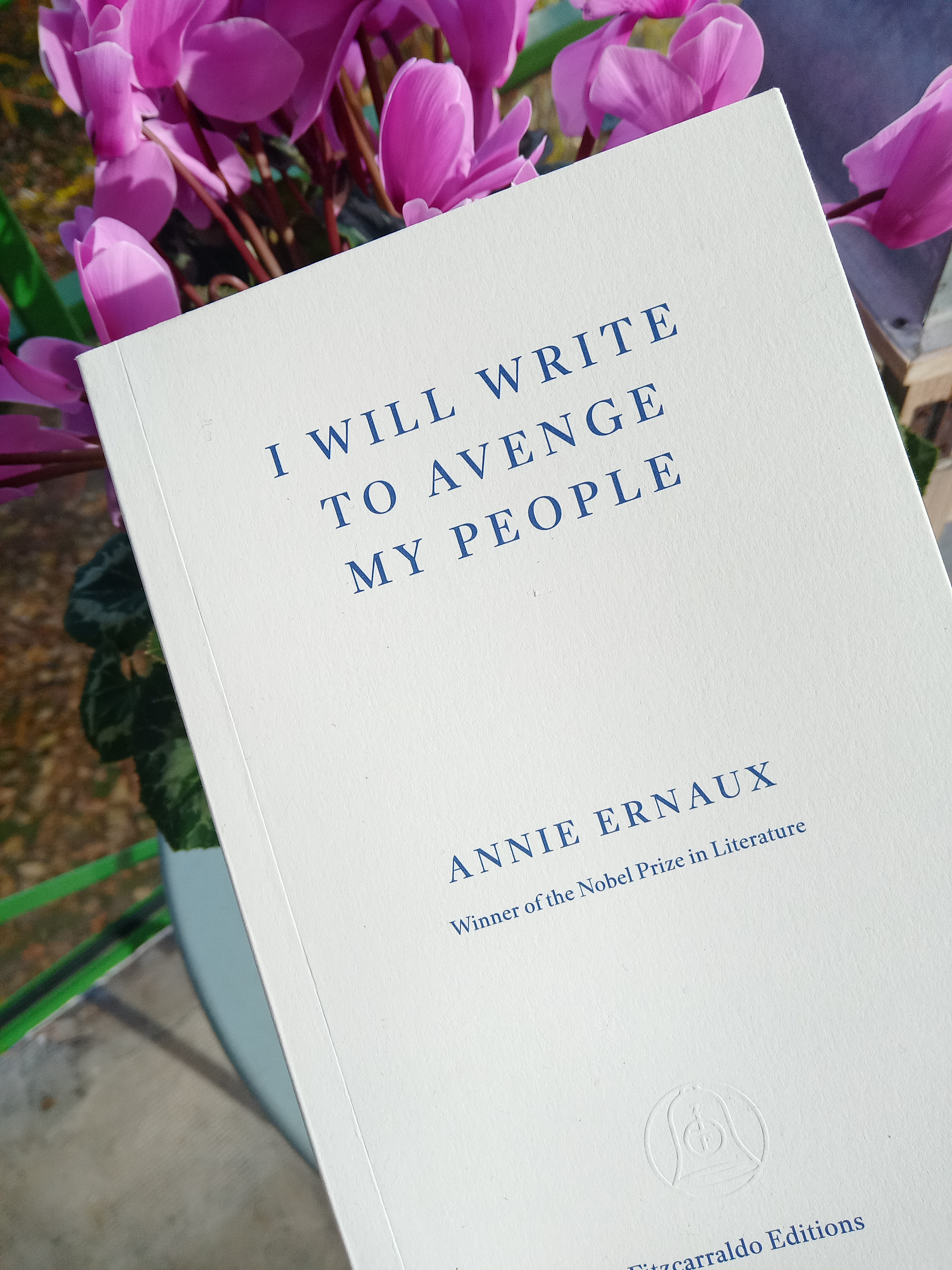
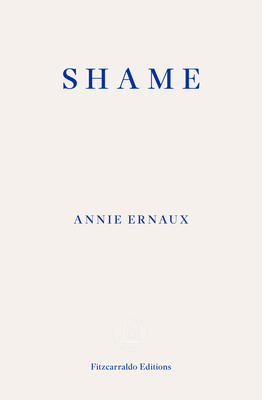
If the title isn’t a giveaway to reclaiming and redefining madness, a convenient label historically used to oppress women and have them incarcerated in the past, the epigram from Annie Ernaux’s novella Shame further reminds us of the often silenced, lived experience of women and girls, peeling back social shame, intergenerational violence and little recognised, inherited trauma that continues to reverberate and affect current behaviours and relationships.

This can be said about shame: those who experience it feel that anything can happen to them, that the shame will never cease and that it will only be followed by more shame. Annie Ernaux, Shame

A Story In a Title

The title of Feeney’s book is a powerful statement from the ancient Greek playwright Sophocles. The line appears in his play Electra, translated as: “I ask this one thing: let me go mad in my own way.” In the play, the main character, overwhelmed by grief, injustice and familial violence, demands to grieve and rage on her own terms. It is a cry for the right to express and feel one’s own emotional suffering and pain, in the way it is desired, needed.

“Don’t tell me how to feel or how to react, let me experience my madness as I must.”

Elaine Feeney said in an interview that she encountered the phrase in Anne Carson’s translation of Electra and immediately felt its resonance, both personally and within her book’s themes.

Going Mad or Getting to Grips With the Past

irish literature contemporary fiction

Her novel is about an Irish woman named Claire O’Connor who had been living in London with her boyfriend Tom Morton, unravelling after the death of her mother. Unable to cope, she breaks up with Tom and returns to the West of Ireland, initially to care for her father.

Back living in the family home awakens memories and issues for Claire and her two brothers, who are more used to avoiding and ignoring past and present bad behaviours.

The unexpected arrival of Tom and new friends Claire makes at her new university job, create a situation that brings people together that wouldn’t ordinarily meet.

Choosing to Live Differently

This new dynamic challenges some of those repressed feelings and the characters will either continue to deny or choose to grow.

‘There’s land here, isn’t there?’ He was playing with me now. ‘They’re not making any more of it – I’ll bet they don’t teach you that inside in the universities.’

I wanted to say that none of us wanted his land, full of rock, thistles and furze bushes. That it was a noose. I wanted to say the land was never mine. I knew well enough to know that.

Generational Influence

The story is told in different timelines, in the first person present, when Claire is an adult and has returned to Ireland, in 2022 and then there are chapters about the family from 1920, events around the old abandoned house at the back their property.

The O’Connor’s were good tenant farmers and had then been given this small handsel of land, a slight acreage of a holding from the Estate in the Land Commission’s Exchange for compliance. They had, until this, been generations of shepherds. Mostly, too, they were emigrants. A compliant people who believed in God being good and work being eventually rewarded for all eternity.

1920 was a period when there was unsettling violence from the Black and Tan Forces in East Galway around the Irish War of Independence, cultivating an atmosphere of fear and violence and an era where there was little escape, and few and far opportunities. Though 100 years in the past, undercurrents of that violent era continue to pump through the veins of this family.

Then there is Claire’s childhood memory of a Hunt Day in 1990, when the Queen of England was looking for a black mare for the Household Cavalry. Flashes of memory bring it all back as Claire confronts the past in order to better create any chance she might have of a better future.

Great Storytelling and Thought Provoking Depth

It is a thought provoking novel rooted in personal, collective and inherited memory, that deals with ‘the home‘ as the institution that requires dismantling, and it is the coming together of family, friends and the new relationships in Claire’s life that will facilitate the change that can redefine what home can become.

It’s also a novel that is entertaining with or without the layers of meaning that come from the references, but it is one that I have enjoyed all the more for understanding more about the motivations of the author and the literary influences she has referenced and talks about in the following interview.

And speaking of the Booker Prize, the longlist for 2025 will be announced on Tuesday 29 July 2025. This year’s Chair of Judges is an author who has never been in a book club, Roddy Doyle, who is joined by Booker Prize-longlisted novelist Ayọ̀bámi Adébáyọ̀; award-winning actor, producer and publisher Sarah Jessica Parker; writer, broadcaster and literary critic Chris Power; and New York Times bestselling and Booker Prize-longlisted author Kiley Reid.

Further Reading or Listening

An Interview by Bad Apple, Aotearoa: Ash Davida Jane interviews Elaine Feeney

Listen to Elaine Feeney read an extract from her novel Met Me Go Mad In My Own Way

Elain Feeney, Author

Elaine Feeney is an acclaimed novelist and poet from the west of Ireland. Her debut novel, As You Were, was shortlisted for the Rathbones Folio Prize and the Irish Novel of the Year Award, and won the Kate O’Brien Award, the McKitterick Prize and the Dalkey Festival Emerging Writer Award. How to Build a Boat was also shortlisted for Irish Novel of the Year, longlisted for the Booker Prize, and was a New Yorker Best Book of the Year.

Feeney has published the poetry collections Where’s Katie?The Radio Was GospelRise and All the Good Things You Deserve, and lectures at the University of Galway.

Leila Aboulela awarded PEN Pinter Prize 2025

Freedom to Write, Freedom to Read

Leila Aboulela winner of English Pen Prize 2025

Leila Aboulela, the Sudanese author who now lives in Scotland has won the English PEN Award 2025, a prize established in homage to Harold Pinter, the British playwright, screenwriter, director and actor and the 2005 Nobel Laureate for Literature:

“who in his plays uncovers the precipice under everyday prattle and forces entry into oppression’s closed rooms”

Judges praised Aboulela, the author of six novels, for her ‘nuanced and rich perspectives on themes that are vital in our contemporary world: faith, migration, and displacement’, calling her writing ‘a balm, a shelter, and an inspiration’.

The author responded:

‘I am honoured to win a prize established in memory of Harold Pinter, a great writer who continues to inspire so much loyalty and consistent high regard. For someone like me, a Muslim Sudanese immigrant who writes from a religious perspective probing the limits of secular tolerance, this recognition feels truly significant. It brings expansion and depth to the meaning of freedom of expression and whose stories get heard.’

One of the judges, novelist Nadifa Mohamed added:

Leila Aboulela is an important voice in literature, and in a career spanning more than three decades her work has had a unique place in examining the interior lives of migrants who chose to settle in Britain. In novels, short stories and radio plays she has navigated the global and local, the political with the spiritual, and the nostalgia for a past home with the concurrent curiosity and desire for survival in a new one. Aboulela’s work is marked by a commitment to make the lives and decisions of Muslim women central to her fiction, and to examine their struggles and pleasures with dignity. In a world seemingly on fire, and with immense suffering unmarked and little mourned in Sudan, Gaza, and beyond, her writing is a balm, a shelter, and an inspiration.’

The prize is awarded annually to writers resident in the UK, Ireland, the Commonwealth or the former Commonwealth. 

Former winners of the PEN Pinter Prize are Arundhati Roy (2024), Michael Rosen (2023), Malorie Blackman (2022), Tsitsi Dangarembga (2021), Linton Kwesi Johnson (2020), Lemn Sissay (2019), Chimamanda Ngozie Adichie (2018), Michael Longley (2017), Margaret Atwood (2016), James Fenton (2015), Salman Rushdie (2014), Tom Stoppard (2013), Carol Ann Duffy (2012), David Hare (2011), Hanif Kureishi (2010) and Tony Harrison (2009).

Three Novels By Leila Aboulela I Recommend

Bird Summons (2019)

Bird Summons is an excellent novel about three Muslim immigrant women living in Scotland, from different countries, who set off on a short holiday in the Scottish Highlands, to pay homage to Lady Evelyn Murray Cobbold, the first British woman convert to Islam who performed Hajj, the spiritual pilgrimage to Mecca.

Taken further outside of their comfort zones, the trip is a kind of reckoning for each of the women, a little like a road trip novel, they are stuck with each other, their forced isolation in the Highlands brings out the best and worst in each other and will leave them each transformed by the experience.

The Kindness of Enemies (2015)

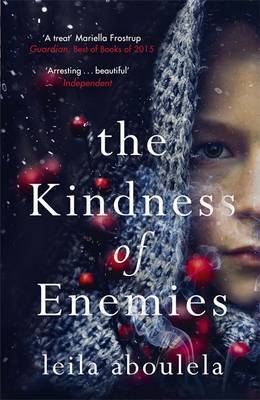
The Kindness of Enemies, is a dual narrative set in modern day Scotland and mid 1800’s Russia and the Caucasus. The contemporary character is Natasha Wilson (born to a Russian mother and Sudanese father, whose mother marries a Scot), a Scottish university lecturer whose research concerns the life of Caucasian Highlander, Shamil Imam.

The novel moves between the issues facing Natasha in her life, and the ancient conflict between Highlander mountain men lead by Shamil Imam as they resisted Tsarist Russia from expanding into their territory.

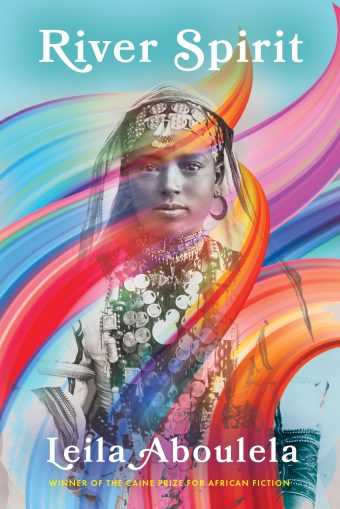
River Spirit (2023)

River Spirit is historical fiction set in 1890’s Sudan, at a turning point in the country’s history, as its population began to mount a challenge against the ruling Ottoman Empire, only the people were not united, due to the opposition leadership coming from a self-proclaimed “Mahdi” – a religious figure that many Muslims believe will appear at the end of time to spread justice and peace.

The novel tells the story of orphan siblings, Akuany and Bol, and their young merchant friend Yaseen, the friend of their father who made a promise to protect them, forever connecting them to his life. It is also a story of the Nile, of the White Nile and the Blue Nile, a symbol of twin selves, one free, one enslaved, of twin occupying forces, the Ottoman and British Empires and of the many aspects in the story where twin forces clash, mix and become something new.

Aboulela’s other novels are The Translator (1999), Minaret (2005), Lyrics Alley (2010) all three of which were longlisted for the Women’s Prize for Fiction (Orange Prize) and she has also published a short story collection Elsewhere, Home (2018).

Have you read any works by Leila Aboulela? Let us know in the comments below.

Photo by Gabriela Palai on Pexels.com

Further Reading

World Literature Today Interview: Writing as Spiritual Offering: A Conversation with Leila Aboulela by  Keija Parssinen

Guardian article: Leila Aboulela wins PEN Pinter prize for writing on migration and faith

JSTOR: Leila Aboulela and the Ideology of Muslim Immigrant Fiction by Waïl S. Hassan

Leila Aboulela, Author

Leila Aboulela grew up in Khartoum and has been living in Aberdeen since 1990. She is the author of six novels among them River SpiritThe TranslatorMinaret and Lyrics Alley, Fiction Winner of the Scottish Book Awards. Leila was the first ever winner of the Caine Prize for African Writing and her story collection, Elsewhere, Home won the Saltire Fiction Book of the Year Award.

Her books have been translated into fifteen languages, and she has also written numerous plays for BBC Radio. She is Honorary Professor of the WORD Centre at the University of Aberdeen and a Fellow of the Royal Society of Literature. 

The Seven Moons of Maali Almeida by Shehan Karunatilaka

The Seven Moons of Maali Almeida by Sri Lankan author Shehan Karunatilaka won the Booker Prize in 2022. It wasn’t on my radar, probably because it seemed to me like it was trying to be too many things, but when I saw a hardcover copy on sale at the annual Ansouis vide grenier last September, I decided to delve into it and see for myself.

Outstanding Sri Lankan Literature

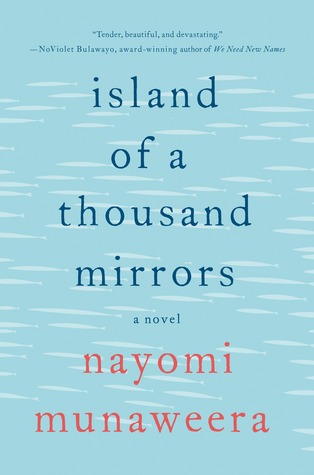
I knew that it was about the civil war era in Sri Lanka and I have read some excellent novels that are set in those difficult times, most recently the novel that won the Women’s Prize for Fiction in 2024 Brotherless Night by V.V. Ganeshananthan (see my review here), but my favourite novel set in that country is Naomi Munaweera’s Island of a Thousand Mirrors (my review here), winner of the Commonwealth Writer’s Prize in 2013.

Munaweera writes exquisitely of the island of Sri Lanka, in lyrical prose that takes the reader inside the family experiences, evoking all the senses, the aroma of the cuisine, the fear and excitement of young, forbidden love, the pain of heartbreak, the palpable tension as sisters walk to school, sometimes witnessing images that will stain their minds and revisit their dreams for years.

Mystery, Satire, Historical Fiction and Magical Realism in One

Booker Prize Winner 2022 Sri Lankan literature magic realism afterlife noir

Seven Moons is a literary mystery about the life and death of Maali Almeida, who from the opening pages, in a second person narrative, turns up dead and from the In Between, that place between life and the afterlife that he now inhabits, proceeds to uncover the mystery of his death.

Set in 1990 Colombo, Maali was a war photographer, a promiscuous gay man, sometimes gambler and seeker of the next photograph that will show the dark and gruesome elements of those in power, a witness to crimes he believes can bring down governments, stop wars.

The In Between, Down Below and The Light

When he arrives at the In Between, he and others like him are told they have seven moons, seven nights to meet the criteria to enter The Light. As they queue and ask questions about their deaths, Maali hopes he is about to wake up from a dream.

The swarm of souls presses closer, berating and badgering the woman in white. You gaze upon the pallid faces, sunken eyes in broken heads, squinted in rage and pain and confusion. The pupils are in shades of bruises and scabs. Scrambled browns, blues and greens – all of which disregard you. You have lived in refugee camps, visited street markets at noon, and fallen asleep at packed casinos. The heave of humanity has never been picturesque. This heave throngs towards you and heaves you away from the counter.

metaphysical thriller civil war Sri Lanka supernatural

Every soul has those seven moons to wander around the In Between, to recall past lives, and to forget.

While he should be completing the tasks to get to The Light, instead he shifts from The In Between back to the present, the Down Below and observes the aftermath of his death.

He tries to direct those close to him towards his most incriminating photographs in order to achieve which he was not able during life. He doesn’t understand quite how these shifts happen, and neither does the reader, making it somewhat confusing to keep up with this trippy journey.

Here’s what you remember from two nights ago: (a) visiting the Leo casino, (b) drinking at the bar, (c) eating the buffet, (d) fooling around with the bartender. here’s what you don’t remember: (a) sitting with a suddha (b) being thrown to your death.

Conversations With the Dead

As well as investigating his own murder, along the way he has conversations with a dead athiest, a dead revolutionary, lawyer, bodyguard, priest, dogs and more. He observes the number of spirits hanging on to the living whispering their ears.

You’ve always thought the voice in your head belonged to someone else. Telling you the story of your life as if it had already happened. The omniscient narrator adding a voiceover to your day. The coach telling you to stop feeling sorry and do what you’re good at. Which was winning at blackjack, seducing young peasants and photographing scary places.

Moons, Chapters and Beats

On his motivation for writing this novel, the author had this to say:

‘I began thinking about [Seven Moons] in 2009, after the end of our civil war, when there was a raging debate over how many civilians died and whose fault it was. A ghost story where the dead could offer their perspective seemed a bizarre enough idea to pursue, but I wasn’t brave enough to write about the present, so I went back 20 years, to the dark days of 1989.’

Not just an author of fiction, Shehan Karunatilaka has also written rock songs and speaks of his work in terms of beats and rhythm, infused with supernatural folklore, ghost stories and history.

It’s a long novel that for me held my interest in parts and then lost me as it shifted, but each time that began to annoy me and slow me down, the narrative would shift back to something of interest and so I persevered, however, I did find it overly long in its digressions, drifting in and out of reality. It’s an undeniably clever, erudite novel, unique in its conception that reminded me a little of the surreal experience of reading David Mitchell’s Cloud Atlas.

The Judges on A Metaphysical Thriller Winner

In addition to praising its ambitious scope and hilarious audacity of narrative techniques, the Booker judges had this to say of the metaphysical thriller:

‘Life after death in Sri Lanka: an afterlife noir, with nods to Dante and Buddha and yet unpretentious. Fizzes with energy, imagery and ideas against a broad, surreal vision of the Sri Lankan civil wars. Slyly, angrily comic.’

‘This is a metaphysical thriller, an afterlife noir that dissolves the boundaries not just of different genres, but of life and death, body and spirit, east and west. It is an entirely serious philosophical romp that takes the reader to ’the world’s dark heart’ — the murderous horrors of civil war Sri Lanka. And once there, the reader also discovers the tenderness and beauty, the love and loyalty, and the pursuit of an ideal that justify every human life.’

Have you read The Seven Moons of Maali Almeida? Share your thoughts in the comments below.

Further Information

Read an Interview With the author Shehan Karunatilka

Click here to read an extract from the first section of the novel – Read an Extract from The Seven Moons of Maali Almeida