The Ballad of the Sad Café (1951) by Carson McCullers

I stumbled across Carson McCullers in our local French library one day, it was one of the titles on the very few shelves dedicated to books written in English. Back then, I realised my reading had exposed me to very little American fiction. I was keen to try a slim classic, even though it was a title I was unfamiliar with. The book was Reflections of a Golden Eye (1941), I remember that it was a strange, uncomfortable tale, full of dread, I knew nothing of the world it inhabited and felt incurious about that environment or its people.

I am wary of authors/books esteemed as classics, to then often encounter impenetrable language, however I came across McCullers again recently at an English book sale, this slim novella with its enticing title, which made me think of the indie cult-film Baghdad Cafe (1987) and the timeless classic soundtrack, Javetta Steele’s ‘Calling You’.

Another Sad Town Enlivened by a Café

So I read this out of curiosity and perhaps a misplaced nostalgia for another sad café, but had low expectations. It was absolutely riveting and so different to the memory of what I had read previously. I loved it!

The opening paragraph describes this lonesome, isolated town where nothing much happens and the climate is harsh. The building/house upon which the story is centred is no longer lively, boarded up and leaning to the point of almost collapse. It appears to have been half painted at one time.

On the second floor there is one window that is not boarded; sometimes in the late afternoon when the heat is at its worst a hand will slowly open the shutter and a face will look down on the town.

A Thumbnail Sketch Encapsulates All

In these first two pages, it is as if McCullers has launched a tasty morsel of bait on a fishing line. Everything that is to come is somehow referenced in these first couple of pages and it leaves the reader with an intriguing curiosity to know what has come about to have left this place and these people abandoned once again, from the liveliness we are sure to soon read about. For no café starts out being sad.

The owner of the place was Miss Amelia Evans. But the person most responsible for the success and gaiety of the place was a hunchback called Cousin Lymon. One other person had a part in the story of this café – he was the former husband of Miss Amelia, a terrible character who returned to the town after a long term in the penitentiary, caused ruin, and then went on his way again.

The characters are crafted with intriguing detail, they are each a little extraordinary in their own way and they act in unpredictable ways. Just like the residents of the town who come to Miss Amelia’s trade store, which eventually becomes a café, the reader too will wonder about the attraction and connection that exists between each of the characters. We come to know the characters by their habits and behaviours, but the thing that binds two characters together in their destinies becomes the mystery of the novella.

Miss Amelia was rich. In addition to the store she operated a still three miles back in the swamp, and ran out the best liquor in the county. She was a dark, tall woman with bones and muscles like a man. Her hair was cut short and brushed back from the forehead, and there was about her sunburned face a tense, haggard quality. She might have been a handsome woman if, even then, she was not slightly cross-eyed. There were those who would have courted her, but Miss Amelia cared nothing for the love of men and was a solitary person. Her marriage had been unlike any other marriage ever contracted in this county – it was a strange and dangerous marriage, lasting only for ten days, that left the whole town wondering and shocked. Except for this queer marriage Miss Amelia had lived her life alone. Often she spent whole nights back in her shed in the swamp, dressed in overalls and gum-boots, silently guarding the low fire of the still.

Insights Into Humanity

In between sketching out her unique characters and narrating the arrival of the two men in her life, McCullers presents the town members often as a group, the “they” voice, the ‘group-think’.

Some eight or ten men had convened on the porch of Miss Amelia’s store. They were silent and were indeed just waiting about.They themselves did not know what they were waiting for, but it was this: in times of tension, when some great action is impending, men gather and wait in this way. And after a time there will come a moment when all together they will act in unison, not from thought or from the will of any one man, but as though their instincts had merged together so that the decision belongs to no single one of them, but to the group as a whole. At such a time, no individual hesitates.

No gesture is without meaning, no look is innocent, no moment recounted is without meaning. A stranger arrives and the café is born.

To Be Loved or Beloved

The author occasionally interjects into the narrative, setting the story line up in advance, providing so-called explanations for some of their behaviour, as if giving the reader clues to the underlying mystery of the interconnection of its three main characters. One of those explanations is on the difference between the lover and the beloved.

…these two come from different countries. Often the beloved is only a stimulus for all the stored-up love which has lain quiet within the lover for a long time hitherto.

…And the curt truth is that, in a deep, secret way, the state of being beloved is intolerable to many.
The story builds to its tense conclusion and is both compelling and contemplative all the way to the end.

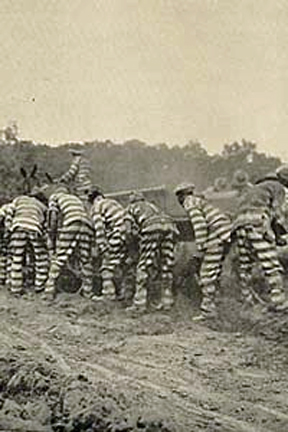
It begins and ends with the one thing that never seems to change, that signifies both life and repression, the sound of first one, rising to twelve men singing, wearing black and white prison suits, working on the distant Fork Falls highway.

The music will swell until at last it seems that the sound does not come from the twelve men on the gang, but from the earth itself, or the wide sky. It is music that causes the heart to broaden and the listener to grow cold with ecstasy and fright. Then slowly the music will sink down until at last there remains one lonely voice, then a great hoarse breath, the sun, the sound of the picks in the silence.

I loved imagining these larger than life characters, discovering the way they were interconnected and drawn to each other’s weakness, thereby exposing something about themselves. And figuring out the triangle of love, desire and revenge that existed between them, the inevitability of what will pass.

Author, Carson McCullers

Born Lula Carson Smith in Colombus, Carson McCullers (1917-1967) was an American novelist, short-story writer, playwright, essayist, and poet. Her first novel, The Heart Is a Lonely Hunter, explores the spiritual isolation of misfits and outcasts in a small town of the Southern United States. Her other novels have similar themes and most are set in the Deep South.

She wrote five novels, two plays, twenty short stories, more than two dozen nonfiction pieces, a book of children’s verse, a small number of poems, and an unfinished autobiography.

Carson McCullers is considered to be among the most significant American writers of the twentieth century. She is best known for her novels The Heart Is a Lonely Hunter (1940), The Ballad of the Sad Cafe (1951), Reflections in a Golden Eye (1941), and The Member of the Wedding (1946). At least four of her works have been made into films.
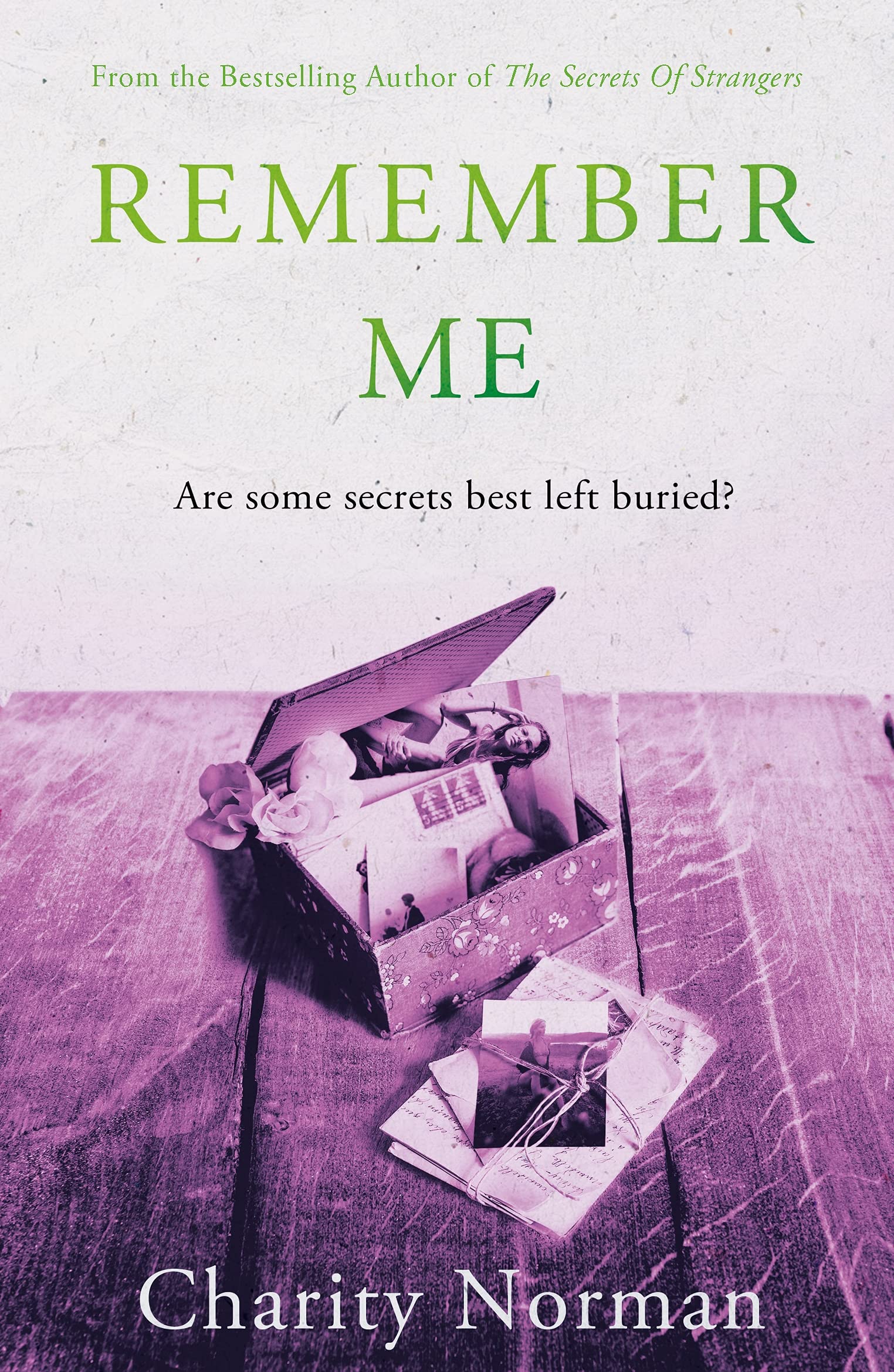
Remember Me by Charity Norman (2022)

A new author to me, I became aware of this novel when I saw that it had won Best Novel in the Ngaio Marsh Awards 2023 (an award made for the best crime, mystery, or thriller novel written by a New Zealand citizen or resident, published in New Zealand during the previous year).

Life’s Turning Point

Ngaio Marsh Award winner
crime fiction

Emily, a middle aged children’s book illustrator, living alone in London, receives a call from her father’s neighbour Raewyn in Tawanui, New Zealand to say she ought to come, that her father Felix’s memory is deteriorating, the dementia much worse than when she last visited. The neighbour has been voluntarily helping him out, her son leases land off him, their families have been close for many years.

Emily is the youngest, her brother and sister though nearer have reasons why they can’t help. Not only does her father not recognise her when she first arrives, but the house is full of notes he has written to himself, an attempt to slow down the fast encroaching disease.

Notes To Self

He held up the envelope. ‘Something for you to look after.’
‘What’s this?’
‘Keep it for me, will you? Please, please, don’t open it until the event mentioned on the front. Until then, I’d rather you didn’t let anyone know of its existence. I will undoubtedly forget I’ve give it to you. I’m afraid I’m going doolally.’

Her return coincides with the 25th anniversary since Raewyn’s daughter Leah disappeared without a trace, last seen by Emily who was working in a petrol station where Leah bought something before going into the local bush on one of her conservation research trips, trying to save an endangered snail species from predators, but making a few enemies in the process. She was never seen again.

‘I envy you,’ she says.

She doesn’t. Why would she envy me? She’s Dr Leah Parata, five years older and infinitely, effortlessly superior. Everything about the woman screams energy and competence, even the way she’s twirling that turquoise beanie around her index finger. She’s tall, light on her feet, all geared up for back-country hiking in a black jacket – or maybe navy blue, as I’ll later tell the police.

The Slow Unravelling

Though she had never been close to her father, now that his short term memory is failing and his guard is slipping, she comes to realise there is much about her father she did not know, both in the way he cared and the terrible secrets he has kept.

Emily, I’m lost in the mist, I’m sliding into an abyss. You can’t begin to imagine the terror.’

Determined not to put him into care, as her siblings prefer, Emily decides to stay, reconnecting with her own past and begins to unravel what has been covered up and must decide what to do about it.

Photo by UMUT on Pexels.com

It’s an evocative read that brings the reader deep into the east coast North Island setting of a small town in the foothills of the bush covered Ruahine Mountain Range. It creates a strong sense of its locals, both those who stay and those who leave, all of whom have a history and connections, who harbour secrets, fear judgement and maintain strong loyalties, especially when outsiders come into the community.

It’s a slow unravelling of the mystery of Leah’s disappearance and the revelation of who a father really is to his daughter, as time runs out and he begins to forget not just who she is, but who he is himself and the important final task he has set himself.

Author, Charity Norman

Charity Norman was born in Kampala, Uganda, the seventh child of missionary parents, raised in Yorkshire and Birmingham. A barrister specialising in crime, family law and mediation, in 2002 she took a break from law and moved with her family to New Zealand and began a writing career.

She has written seven novels, See You in September (2017) and The Secrets of Strangers (2020) were both shortlisted for the Ngaio Marsh Award for crime novel. The New Woman/The Secret Life of Luke Livingstone was selected for the BBC Radio 2 Book Club. Remember Me (2022) was a Ngaio Marsh Award winner.

A Respectable Occupation (2017) by Julia Kerninon tr. Ruth Diver (2020)

An Ode to Pope

How could I not love a miniature work of narrative nonfiction that the author quotes as having being in part inspired by the opening two lines of a poem from the 18th century English poet Alexander Pope.

The heroic rhyming couplets of Pope’s The Rape of the Lock (1712) were my optional choice for the fifth form School Certificate exam many moons ago, a memorable chapter of my own literary journey. Kerninon quotes from his Why did I write? what sin to me unknown.

Why did I write? what sin to me unknown
Dipp’d me in ink, my parents’, or my own?

Why and How I Write

une activitié respectable writing life nonfiction French literature

A Respectable Occupation is a short nonfiction narrative about how and why the French author Julia Kerninon became a writer and the necessity of reading.

I came across this book in a photo on author Kerri ní Dochartaigh’s Substack g l i m m e r s where she wrote about her favourite books of the year for 2023.

Dochartaigh is the q u e e n of referencing creative nonfiction and nature writing in her own writing. Her second memoir Cacophony of Bone is full of literary references to little known, enticing contemporary works of narrative nonfiction.

Julia Kerninon had a unique upbringing in many ways, not least because she lived in multiple countries, Canada, England and France, but also because it is as if she were raised to become a writer, more of an expectation than a desire, so she pursues it in the same way many others might pursue a career that has been held in high esteem by their parents. Only writing isn’t like law, medicine or business.

I had an incredibly heavy electric typewriter my mother had lent me, and she had glued little labels with lowercase letters onto the keys because I found capitals confusing, and I wrote lots of stories about talking animals with my friend Pete.

The Legend of Writers

She recalls a kind of bohemian childhood and the first six years where she was an only child and the focus of her mother who she admired, and how her world tilted when they became a family of 4 not 3.

An identical monument of books had saved her as well, thirty years earlier, from a hopeless childhood, and so she spread her secret before me, she explained what she loved most in the world, in a gesture that was also a potlatch, an immeasurably generous offering, which I might be expected to return one day with an even greater gift.

Her mother had been born in a small fishing village, the eldest of four, the only girl, she had learned Russian at ten in boarding school and read everything she could lay her hands on. She passed on all she could to her daughter, who did everything in her power to satisfy her, to repair her, to recompense her for the enormous effort it must have cost her to make all this known to her first child.

I read books non-stop, in a panicked frenzy, trying to catch up on lost time, trying to catch up with my mother who seemed to know everything.

If I lost a manuscript and went crazy with panic, she would just shrug with no compassion at all and explain that in any case I would have to throw away or lose lots of books before writing a single good one. The best thing that can happen to you is a house fire.

a respectable occupation Julia Kerninon typewriter
Photo by medium photoclub @ Pexels.com

At sixteen she had found a community of ‘old poets’ who met in an old biscuit factory in her hometown, a second education, after a house full of books.

At twenty she was reading Gertrude Stein‘s ill-conceived advice: If you don’t work hard when you are twenty, no one will love you when you are thirty.

She confronted her father and told him she wanted to take a gap year from her university studies. He agreed.

I thought that to be a writer, I had to train like an athlete, like a dancer, until it didn’t hurt anymore, until I didn’t ask myself any more questions. I wanted to possess that skill.

She takes herself off to Budapest for a year. Her life becomes a cycle of working hard, playing hard, then taking herself off somewhere for a year or six months to write.

She becomes a waitress in the summers, so she can write throughout the winter. She decides that to be poor is acceptable if she can be free instead and that she would learn to live alone, to be alone, to work alone, during those productive times of her life. That maybe these were not sacrifices at all, they were merely aspects of the life that she had created, that she loved.

Though she figures out how to live like this herself, she attributes this advice given to her by a much loved man:

the main thing is to have free time – you’ll obviously work out how to earn a crust somehow – but free time is something you’ll always have to scavenge, he told me earnestly.

It’s a wonderful little book, a digression of sorts, a reminder that the writing life comes in many shapes and forms, that the sharing of the various experiences can also provide inspiration to those who are on that path and that the pursuit of the occupation can also be a subject to write about, that people like reading about.

I write books because it’s good discipline, because I like sentences and I like putting things in order in a Word document. I like counting the words every night and I like finishing what I start.

A short introduction by Lauren Elkin is equally compelling, another writer whose book Art Monsters : Unruly Bodies in Feminist Art was in the photograph in Kerri Ni Dochartigh’s end of year essay.

I will leave you with one final quote from Julia Kerninon, one that applies as equally to reading as it does to writing.

I’ve been striding through literature like a field, where my footsteps flatten the grass for a moment, just long enough to see the path I’ve taken and the immensity of what is yet to be discovered.

Further Reading/Listening

An Interview with Julia Kerninon and Ruth Diver: A Respectable Occupation

#RivetingReviews: Jennifer Sarha reviews A Respectable Occupation by Julia Kerninon

Author, Julia Kerninon

Julia Kerninon is a French novelist from Brittany, whose first novel Buvard (2013) won the prestigious Prix Françoise Sagan in 2014.

Born in 1987, she holds a Ph.D in American Literature. She has been compared to French New Wave filmmaker Éric Rohmer for her sense of style and feeling for dialogue, and to Alain Resnais for the artful structure of her narratives. Most of all, her work stands out for its contagious joy, drive, exuberance.

Kerninon’s second novel, Le dernier amour d’Attila Kiss, won the Prix de la Closerie des Lilas in 2016, and her latest novel, My Devotion, won the 2018 Fénéon Literary Prize. She lives in Nantes.

Kusamakura (1906) by Natsume Sōseki tr. Meredith McKinney (2008)

Reading Challenge Self-Sabotage

If I’d had another Yūko Tsushima book on my shelf, I would have chosen that to read in January (for Tony’s #JanuaryInJapan + Meredith’s Japanese Literature Challenge17). I should know better than to pick just any book, especially a classic, in order to be part of the group. I don’t do that well in groups, or with literary challenges, so this was my punishment or delight. It took me two weeks to finish, not because it takes very long to read (it’s only 146 pages long) but because it brought out my disinclination to read, however it did inspire me to write and share a story.

Japanese literature translated fiction literary fiction

During the time I should have been reading it, I spent a weekend looking after two dogs, few distractions I thought, comfortable reading spaces. I sat down to read it and thought of the irony that it is a book about an artist who takes a meandering walk up a forested hillside.

I had just come back from a walk on a forested hillside. On his walk he encounters certain characters whom he observes and listens to while pondering art. My walk was over but the effect of was too present to be able to read more of the artist’s journey. I turned to the blank end pages and wrote out my walk in two parts, a story of intuitive insight, intrigue and fear.

You can read The Not So Great Escape here.

A New Month, A New Mood

A week later, I (re)turned to Kusamakura and found his walk took him in a more interesting direction, engaging him more with characters he met, a young woman confronting her past, her brother his uncertain future, their father, his latter years.

The book is by turns introspective as the artist attempts to create, he has his painting equipment with him, though it is to words and poetry he finds expression, and to understand something about beauty and form. The first night at an inn, he writes a series of short poems and in the morning discovers additions, not of his hand.

I tilt my head in puzzlement as I read, at a loss to know whether the additions are intended as imitations, corrections, elegant poetic exchanges, foolishness or mockery.

He often finds himself alone in places where he would expect there to be people. There is a sense of isolation and temporary abandonment he is disturbed by. Though he does not seek company, he seems to prefer his aloneness in the presence of others. He writes of mists and clouds and dew, of becoming the things he sees and wonders how to recreate that feeling to embody in a way that makes sense to others.

Eventually he accompanies the young woman, her brother and father on another journey, out of the hillside towards the train station, the train upon which he projects his thoughts of the changing civilisation, fast approaching modernity, the compact carriage carrying humanity stripped of their traditional freedoms, it will take this young brother towards war.

We are being dragged yet deeper into the real world, which I define as the world that
contains trains.

Context Can Elevate the Experience

For me, reading about this book afterwards, a little about the life of the author and of the context of the era, written just as Japan was opening itself to the rest of the world and the significant, irreversible change that would bring, brings another layer of understanding to the text, one that is not as easy to comprehend without that context.

In a brief piece entitled My Kusamakura, Sōseki stated that his aim had been to write a “haiku-style novel”. Previous novels, he said, were works in the manner of of the senryū, the earthier version of haiku that looks at everyday human life with a wryly humorous eye. “But it seems to me,” he wrote, “that we should also have a haiku-style novel that lives through beauty.”

The novel has been previously translated by Alan Turney with the title The Three-Cornered World, however Meredith McKinney has stayed with the Japanses title Kusamakura which literally translates as grass-pillow, a traditional literary term for travel, a kind of poetic journey.

Further Reading

Kusamakura reviewed by Tony Malone: A Grass Pillow For My Head

Article: Tony Malone on The Translations of Natsume Sōseki

Author, Natsume Sōseki (1867-1916)

Natsume Kinnosuke (Sōseki was his nom de plume) was born in 1867, the final year of the old regime, into a family of minor bureaucrats whose fortunes declined rapidly with the onset of the Meiji era. A late and unwanted child in a large family, he was adopted the following year by a childless couple, then returned nine years later, when the couple divorced, to his parents (whom he believed to be his grandparents). This loveless and lonely childhood marked him with a sense of estrangement and dislocation that haunted him through his adult years and that echoed the dislocations and questioning of identity that were hallmarks of the Meiji-era Japan.

Considered the foremost novelist of this era, he was one of Japan’s most influential modern writers. He wrote 14 novels, as wall as haiku, poems, academic papers on literary theory, essays, and autobiographical sketches. He is best known for his novels Kokoro, Botchan, I Am a Cat and his unfinished work Light and Darkness

Major themes in Sōseki’s works include ordinary people fighting against economic hardship, the conflict between duty and desire, loyalty and group mentality versus freedom and individuality, personal isolation and estrangement, the rapid industrialization of Japan and its social consequences, contempt of Japan’s aping of Western culture, and a pessimistic view of human nature. 

Ockham New Zealand Book Awards longlist 2024

The NZ Book Awards longlist comes out so early in the year, I am often late catching up with it. There are longlists for fiction, poetry, general nonfiction and illustrated nonfiction, a total of 44 titles. The complete list can be viewed here.

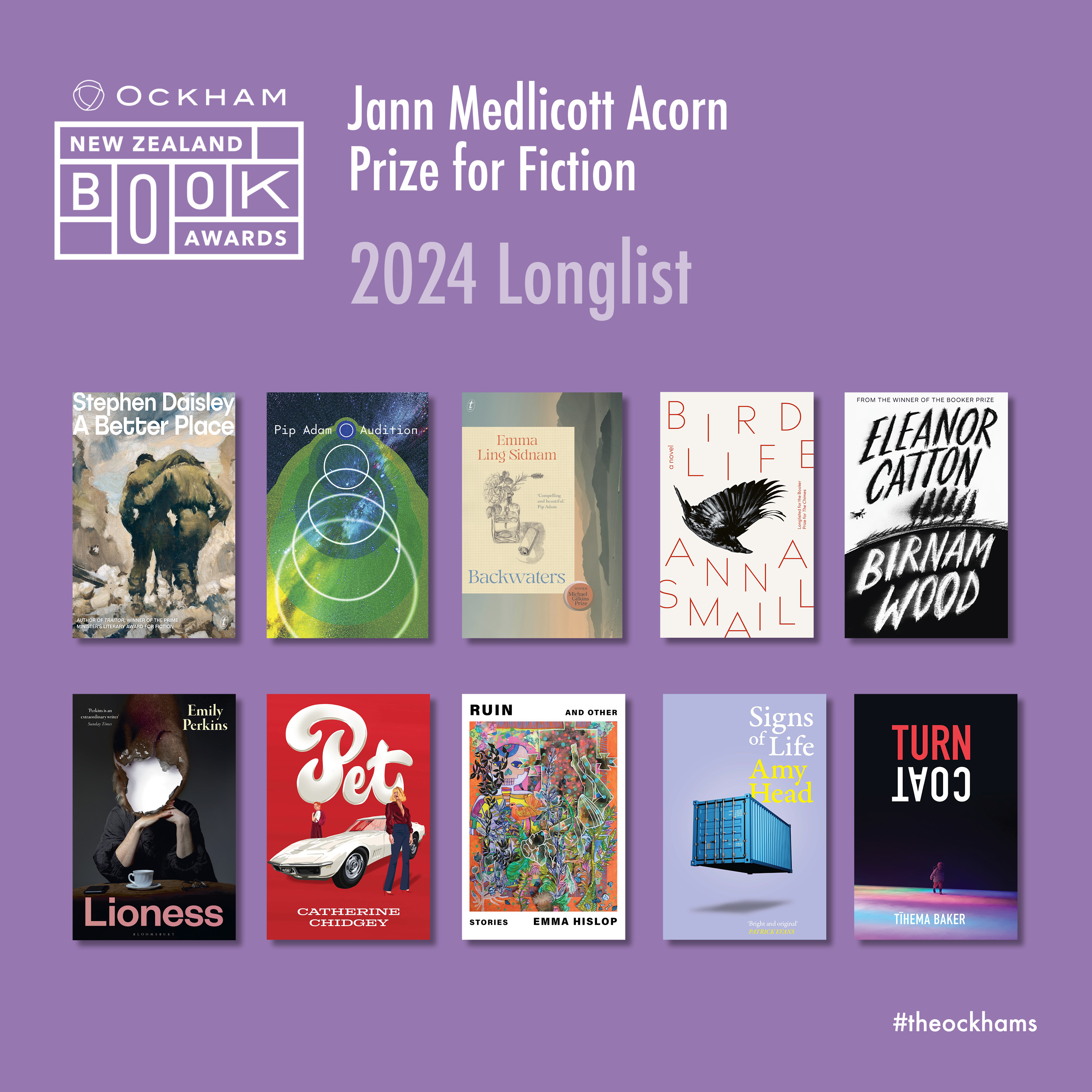
2023 was a great reading year for New Zealand fiction, and author Catherine Chidgey who won last year’s fiction award for her novel The Axeman’s Carnival, is again nominated this year for her latest Pet. Both her novels were longlisted for the Dublin Literary Award 2024, a unique position to be in. This year’s longlist features eight novels and two short story collections.

From the list below, I have read three novels, though only reviewed Birnam Wood by Eleanor Catton. I enjoyed both Lioness and Pet, and may reread them to review later, as I read them during the summer months, when books tend to be devoured and not thought too deeply about.

It’s good to see two short story collections nominated that address topical themes and the intergalactic indie hit about alienation that entertains and makes its readers consider what that feels like.

The links in the titles will take you to the Goodreads descriptions of the novels. I have created or copied short blurbs to give you an idea of what they’re each about.

The Jann Medlicott Acorn Prize for Fiction longlist

A Better Place by Stephen Daisley [WWII visceral novel] – a novel about brothers at war, empathy and the aftermath. Aged 19 in 1939, Roy and his twin brother Tony enlist in the NZ Infantry Brigade. They fight in Crete where Tony dies. Burdened by the loss of his brother, Roy continues to Africa and Europe.

Audition by Pip Adam [Science Fiction/Dystopia] – a novel, part science fiction, part social realism that asks what happens when systems of power decide someone takes up too much room – about how we imagine new forms of justice, and how we transcend the bodies and selves we are given.

Backwaters by Emma Ling Sidnam [family history/belonging] – debut novel by award-winning New Zealand poet about a 4th generation New Zealander struggling with a sense of identity and belonging.

Laura is tired of being asked where she’s really from. Her family has lived in Aotearoa New Zealand for four generations, and she’s ambivalent at best about her Chinese heritage. But when she’s asked to write about the Chinese New Zealander experience for a work project, Laura finds herself drawn to the diary of her great-great-grandfather Ken, a market gardener in the early years of the British colony.

Bird Life by Anna Smaill [literary fiction/magical realism] – A lyrical and ambitious exploration of madness and what it is like to experience the world differently. Smaill teases out the tension between our internal and external lives and asks what we lose by having to choose between them.

In Ueno Park, Tokyo, as workers and tourists gather for lunch, the pollen blows, a fountain erupts, pigeons scatter, and two women meet, changing the course of one another’s lives. Two women deal with individual traumas, form an unlikely friendship, helping each other see a different possible world.

Birnam Wood by Eleanor Catton [Eco Mystery/Thriller(y)] – an eco-thriller of sorts that considers intentions, actions, and consequences, an unflinching examination of the human impulse to ensure our own survival. Featuring green activists, politician farmer and his wife, a tech billionaire and the lone wolf investigative journalist with a past.

Lioness by Emily Perkins (Literary Fiction/Blended Family, Second Wife Drama) – a novel of a woman’s self doubt and shifting place in second families and relationships.

Trevor and Therese are a power couple living in the capital city, he is a developer and she runs a chain of fashion boutiques. That’s the exterior. At home, there is his adult family (issues) to contend with and her uncertain place in a scenario that is rapidly shifting when his deals come under scrutiny and his children make increasing demands. Increasingly, she finds refuge elsewhere, inviting another kind of risk into her precarious existence.

Pet by Catherine Chidgey [Coming of Age/School Drama/Literary Fiction] – Set in New Zealand in 1984 and 2014, traversing themes of misplaced trust, bullying, racism and misogyny, a chilling novel that explores the consequences of age old complacency and silence.

Like every other girl in her class, twelve-year-old Justine is drawn to her glamorous, charismatic new teacher, and longs to be her pet. However, when a thief begins to target the school, Justine’s sense that something isn’t quite right grows ever stronger. With each twist of the plot, this gripping story of deception and the corrosive power of guilt takes a yet darker turn. Young as she is, Justine must decide where her loyalties lie.

Ruin and Other Stories by Emma Hislop (Kāi Tahu) [Short Stories on Being A Woman/Friendship/Relationships/Power] – Moving between contemporary New Zealand and London, a debut short story collection that explores power and its contortions, powerlessness and its depravities, and the ends to which we will go to claim back agency.

Women and girls walk a perilously thin line between ruin and redemption in these stories as they try—with varying degrees of success—to outmanouver the violence that threatens to define their lives.

There’s the physical violence of men against their bodies—and sometimes the violence they exact in revenge. While doubts about a romantic partner, an abandonment by a sister, the fallout of a parent’s porgnography addiction, the betrayal of a friend, even the desire to touch a stranger’s fur-like body are subtler aggressions that pack their own kinds of punches.

Signs of Life by Amy Head [short stories/earthquake/post recovery] – A ‘lest we forget’ collection.

Christchurch, post earthquakes, the earth is still settling. Containers line the damaged streets, inhabitants waver – like their city – suspended between disaster and recovery. Tony, very much alive, is declared dead, Gerald misreads one too many situations in his community patrol, and boomer Carla tries online dating. At the epicentre of these taut, magnetic stories is 20-something Flick who, just as she is finding her feet, faces a violent disruption – this time in human form – while her mostly-ex gets set to marry. Keenly observed, deftly humorous, Signs of Life turns on the smallest of details to show how we carry on.

Turncoat by Tīhema Baker (Raukawa te Au ki te Tonga, Ātiawa ki Whakarongotai, Ngāti Toa Rangatira) (Science Fiction/Literary Political Satire/Indie smash-hit!) – a futuristic novel about an idealistic human, that explores the effect of being colonised and serves as a commentary on the experiences of Māori public servants while inviting Pākehā to imagine that experience.

Daniel is a young, idealistic Human determined to make a difference for his people. He lives in a distant future in which Earth has been colonised by aliens. His mission: infiltrate the Alien government called the Hierarch and push for it to honour the infamous Covenant of Wellington, the founding agreement between the Hierarch and Humans.

With compassion and insight, Turncoat explores the trauma of Māori public servants and the deeply conflicted role they are expected to fill within the machinery of government. From casual racism to co-governance, Treaty settlements to tino rangatiratanga, Turncoat is a timely critique of the Aotearoa zeitgeist, holding a mirror up to Pākehā New Zealanders and asking: “What if it happened to you?”

Shortlist Annoucement

The 2024 Ockham New Zealand Book Awards shortlist will be announced on 6 March, 2024.

The Jann Medlicott Acorn Prize for Fiction will be judged by reading advocate and former bookseller Juliet Blyth (convenor); writer, reviewer and literary festival curator Kiran Dass; and fiction writer Anthony Lapwood (Ngāti Ranginui, Ngāi Te Rangi, Ngāti Whakaue, Pākehā). They will be joined in deciding the ultimate winner from their shortlist of four by an international judge.

The winner of the Jann Medlicott Acorn Prize for Fiction will receive $65,000.

A Year of Reading New Zealand Literature

In 2024, Lisa at ANZLitLovers and Theresa at TheresaSmithWrites will celebrate the rich literary heritage of Antipodean writing by joining forces to spend a year discovering New Zealand fiction. 

Reading from their TBR and whatever else comes their way, they’ll be posting reviews on their blogs and sharing via social media using the hashtag #AYearofNZLit

Follow them or join in if you’re interested in reading Kiwi fiction!

Valentino (1957) by Natalia Ginzburg tr. Avril Bardoni (Italian), Intro by Alexander Chee

The more I read of the Italian author Natalia Ginzburg, the more I am hooked.

Valentino leads the reader along, thinking you are reading a straight forward story, until you arrive at the point of realising that your reactions are judgements and the book holds up a mirror to our own conditioning. And that is how it feels reading it in 2024. I can’t even imagine the storm it likely raised when published in 1957.

Little Sense or Sensibility

novella Italy parody fiction gender conditioning

Valentino is a short novella narrated by Caterina, who is training to become a teacher. She lives with her father, a retired schoolteacher, her mother, who used to give piano lessons and her brother, Valentino who does very little, but whose medicine studies and equipment cost a lot.

we had to help my sister who was married to a commercial traveller and had three children and a pitifully inadequate income, and we also had to support my student brother who my father believed was destined to become a man of consequence. There was little enough reason to believe this, but he believed it all the same and had done ever since Valentino was a small boy and perhaps found it difficult to break the habit.

Valentino spends his time playing with a kitten, making toys out of scraps of material, dressing up and admiring himself. A string of engagements to teenagers raise false hopes and always end the same way – broken. So when he announces he will be married within the month, naturally the family expect the pattern to continue.

What a Wife Can Be or Not to Be

So when he turned up with his new fiancée we were amazed to the point of speechlessness. She was quite unlike anything we had ever imagined.

We learn of all the family members reactions to this new fiancée, with the exception of the father.

he was about to launch into a long speech about what was the main consideration but my mother interrupted him. My mother always interrupted his speeches, leaving him choking on a half-finished sentence, puffing with frustration.

A Man of Consequence, The Weight of Expectation

Photo by W R on Pexels.com

Valentino is oblivious to the reactions and judgements of his family and continues to act and communicate as he always has, holding nothing back, expecting everyone to be happy for him.

Is he fearless? A truth teller who doesn’t hide things or worry about what others think of him? Is he a narcissist? He is a wonderful character because he is like the mystery at the centre of the story. Who don’t quite know who he is because he isn’t acting as everyone including the reader might expect him to.

His father lost for words, does not understand that what he is witnessing is the incarnation of his desire, his son is indeed becoming a man of consequence, just not in the way he had expected.

Valentino is captivated by his wife, by her look, her intelligence, her culture. She showers him in gifts, he has upended social convention, insulted the patriarchy and all who prop it up.

My father said he would go to have a talk with Valentino’s fiancée, but my mother was opposed to this, partly because my father had a weak heart and was supposed to avoid any excitement, partly because she thought his arguments would be completely ineffectual. My father never said anything sensible; perhaps what he meant to say was sensible enough, but he never managed to express what he meant, getting bogged down in empty words, digressions and childhood memories, stumbling and gesticulating. So at home he was never allowed to finish what he was saying because we were all too impatient, and he would hark back wistfully to his teaching days when he could talk as much as he wanted and nobody humiliated him.

Out of Place

Once they are married, it is his family that feels out of place, ill at ease. Valentino is easily able to be among his wife’s friends and family as well as his own. He does not feel undeserving or unworthy of their company or his newfound social status. Neither is he aware of the dilemmas facing his family.

It is best not to share too much of the storyline, but to discover it yourself, because every page is a wonderful discovery, of thought provoking insights into the human condition and the reaction of those around us when one defies convention and how they too can be displaced when set down inside an unfamiliar environment.

When Caterina finishes her diploma and gets a job, we observe how Maddalena’s offer to house and feed her, though on the surface seems attractive, acts to disempower her, denying her independence and supporting a selfish desire. Through the unconventional marriage, we see the ridiculousness of gender conditioning all the more clearly.

I thought it was absolutely brilliant, the way Ginzburg has created these two characters, upending societal norms and inverting typical behaviours.

Highly recommended.

Author, Natalia Ginzburg

Natalia Ginzburg (1916-1991) was born in Palermo, Sicily. She wrote dozens of essays, plays, short stories and novels, including Voices in the EveningAll Our Yesterdays and Family Lexicon, for which she was awarded the prestigious Strega Prize in 1963.

Her work explored family relationships, politics and philosophy during and after the Fascist years, World War II. Modest and intensely reserved, Ginzburg never shied away from the traumas of history, whether writing about the Turin of her childhood, the Abruzzi countryside or contemporary Rome—approaching those traumas indirectly, through the mundane details and catastrophes of personal life.

She was involved in political activism throughout her life and served in the Italian parliament between 1983 to 1987. Animated by a profound sense of justice, she engaged with passion in various humanitarian issues, such as the lowering of the price of bread, support for Palestinian children, legal assistance for rape victims and reform of adoption laws. 

She died in Rome in 1991 at the age of seventy-five.

Further Reading

My review of Ginzburg’s memoir, Family Lexicon (1963)

My review of Ginzburg’s debut novel The Dry Heart (1947)

Interview with Alexander Chee: On Natalia Ginzburg’s Valentino by Sander Pleij, 6 May 2023

The Not So Great Escape by Claire McAlpine

La Chasse #1

It is early morning and I hear clack, clack, clack, a wooden sound that makes me think of the quack of a duck. A body memory warns me away, reminding me of duck shooting season at Waimatai, the farm of my adolescence. That sound a lure to less intelligent prey.

There is no lake here.

I take a different path, away from that unnatural, menacing sound, two black labradors at my heels. This forested hillside of the south Luberon is a refuge to the sanglier, the wild pig.

Too late, I discover I have taken the chosen route, they begin to arrive, stirring up dust in their four wheel drive vehicles, les chasseurs, the hunters.

Militant vehicles with dark windows, at least two dogs in kennels on the back, they pass us by, one after the other, bright orange vests and woolen hats visible through the open window. There are so many of them; it takes all my strength to hold back the young labrador Winnie, who senses the excitement of the upcoming chase.

We turn around and head back to safety just as an eighth vehicle passes by with a dozen hounds yapping behind the grill.

La Chasse #2

Safe inside the stone dwelling, the dogs fed, I tell my friend about the hunters we encountered on the track.

“We won’t be walking up to the chapel this visit,” I say when I return. “We are surrounded.”

One hunter in a small white car, an older man, had stopped in front of me and I had asked him if they were hunting the sanglier. I had seen a number of traces in the soft clay beside the track, telltale footprints and the persistent interest of the two dogs, sniffing the area intensely in certain places.

“Yes, we will be up in that area on the left,” he had indicated with his arm. 

Left. The route to the hermitage, the lone chapel we had hoped to walk to later on, the area directly behind the house where we were staying for the weekend, looking after Spike and Winnie.

As we plan a different walking route, both labradors begin barking and whining. Winnie the younger dog I have been instructed to keep on a leash at all times, has her GPS tracker charging. I reach for her leash, deciding in that moment that I will keep it on her indoors, just in case. I reach for the kitchen door to secure it at the same moment that my friend is coming in from outside, carrying a jar of tapenade on a wooden board. Winnie pushes past me through the barely open door, brushing my friend aside with a force that sends the olive green tapenade flying, the glass jar smashing on the terrace. Winnie can’t be stopped, though I call and shout her name running across the lawn after her.

I watch her reach the end of the lawn and sail through the air over the top of the electric fence that has been put there to prevent the sangliers from digging up the garden beneath the oak trees. The sound of barking is close by, a frantic, feverish tone. Winnie tears up through the pines beyond the house. I continue calling, I can see the terrain she is mounting is steep and unwieldy.

I try not to think about her encountering those hounds off-leash, or the other black animal that is being hunted, of this naive young labrador moving into the line of fire, of my friends who have entrusted her into our care, of the GPS tracker still charging.

My friend walks to the end of the lawn with the lead in hand. “What are we going to do?” they ask.

“There’s nothing we can do but call her. We can’t go after her.”

“And get shot,” my friend adds.

I take a couple of steps forward to the edge of the lawn, despondent. “Winnie!” I call.

She comes bounding down through the trees towards us.

Click. Leash secure. Saved. This time.