The Amateur Marriage by Anne Tyler

This is the first Anne Tyler novel I ever bought and it sat on the shelf for 19 years, finally read thanks to #20booksofsummer23 where I try to shift some of these titles that have been sitting years on the TBR (to be read) shelf. It was longlisted for the Women’s Prize for Fiction 2004.

Why hadn’t I picked it up before now? Something about the cover, the title and the blurb – Tyler is a master in writing domestic fiction and perhaps it is no coincidence, that it is now possible to read this from a greater distance than the past 19 years allowed.

I was initially a little skeptical as the opening chapters are a somewhat clichéd account of what seems like a perfect couple getting together, only it turns out they are not ideal matched at all, and that is what makes the novel interesting.

Hasty Marriages at the Outbreak of War

The story begins in 1944 in the Polish quarter of Baltimore, an area that hasn’t quite forgotten it’s Irish roots and associated prejudices.

America has just entered the war and Michael, the son of the grocery store owner is caught up in the whirlwind of enlisting while catching the eye of Pauline in her red coat, a girl from the other side of town (and life).

“Pauline was wearing read again. Red seemed to be her colour. A red sweater over a crisp white shirt with a rounded collar. It was known by now that she came from a neighbourhood north of Eastern Avenue; that she wasn’t even Catholic; that she worked as a receptionist in her father’s reality office.”

Once they are connected, the colours Pauline wears are toned down, a metaphor of the adjustment she makes to try and conform to what is expected.

…she’d changed her colours just at the very time when she was changing in people’s opinions. From dangerous and dramatic red to gentle, soft pastels, she’d gone.

Each chapter skips a few years and we see the effect of this mismatched couple that stay together, how each of their three children navigate that dysfunctional environment and the long term consequences of it.

“Pauline believed that marriage was an interweaving of souls, while Michael viewed it as two people travelling side by side but separately.”

Tyler explores the nuances of the relationship, seen from each parents’ perspective, though rarely from the point of view of the children, we see the consequence and observe how they choose to live their lives, in the wake of their parents marriage.

We are left to wonder about the impact of generational attitudes and how the institution of marriage moulds everyone around it, for better, worse or otherwise.

A riveting, thought-provoking read.

Further Reading

Ladder of Years by Anne Tyler

A Spool of Blue Thread by Anne Tyler

Women’s Prize for Fiction Winner 2023

A Stellar Year for Women’s Writing

On the evening of June 14, 2023 the judges, authors and many fans came together for the announcement of the winner of the women’s prize for fiction. You may remember these six novels were on the shortlist:

Black Butterflies by Priscilla Morris Pod by Laline Paull Fire Rush by Jacqueline Crooks Trespasses by Louise Kennedy The Marriage Portrait by Maggie O’Farrell Demon Copperhead by Barbara Kingsolver
Women’s Prize Fiction shortlist 2023

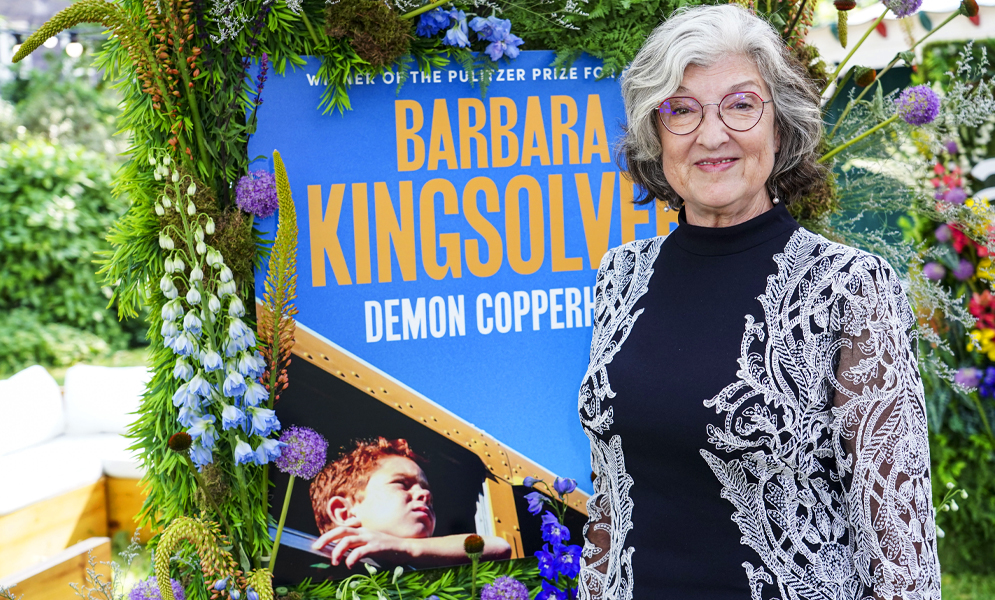
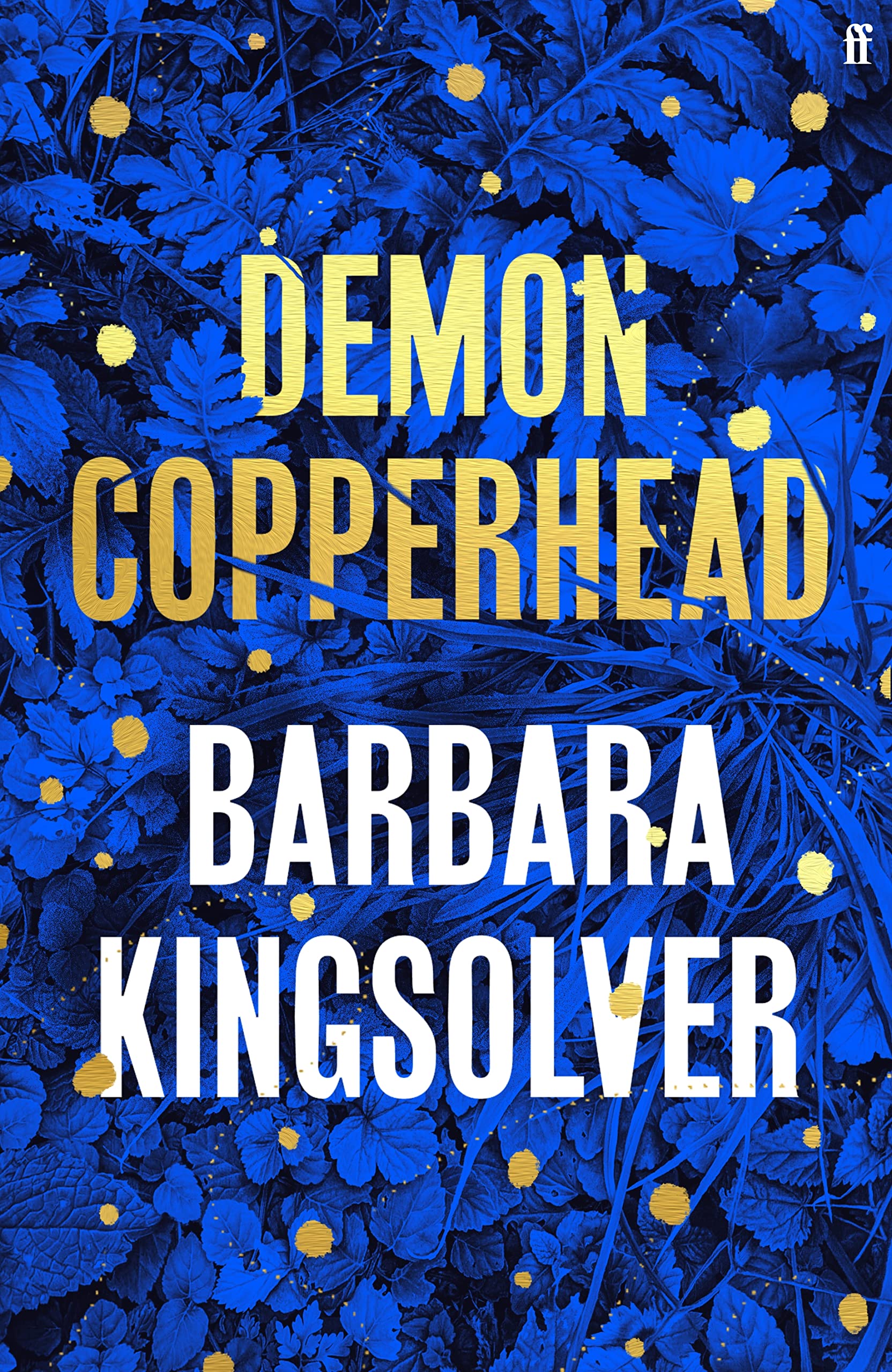
The 2023 Women’s Prize for Fiction is Barbara Kingsolver’s Demon Copperhead!

Barbara Kingsolver, Demon Copperhead

In her speech Barbara Kingsolver said:

“There is no best novel, there is just a best novel for each one of us, that is what is amazing and magical about literature…Literature is how we make our hearts grow bigger and that is how we change the world.”

Institutional Poverty and the Effect on Children

Demon Copperhead is a heartfelt, gritty, poignant novel set in the Appalachian mountains in Virginia, USA. A re-imagining of Charles Dickens’ David Copperfield for modern times, it tells the story of the relentless struggles and triumphs of a young boy born into poverty as he navigates foster care, labour exploitation, addiction, love and loss, while grappling with his invisibility in a culture that neglects rural communities.

I do love a good Barbara Kingsolver novel and have been a fan ever since reading the novel she is most well known for, The Poisonwood Bible. Since then, I have read and reviewed here, The Lacuna (2009) (her 6th novel and also winner of the Women’s Prize for Fiction in 2010), Prodigal Summer (2000) (5th novel) and Flight Behaviour (2012)(7th novel). Winning this year makes her the first double winner for the Women’s Prize for Fiction in its 28 year history.

Demon Copperhead Barbara Kingsolver

Demon Copperhead, from all I have read in reviews, was always going to be an award winning and popular novel, and many are calling it the novel Barbara Kingsolver was destined to write.

As Chair of judges, author and journalist Louise Minchin said:

“Barbara Kingsolver has written a towering, deeply powerful and significant book. In a year of outstanding fiction by women, we made a unanimous decision on Demon Copperhead as our winner. Brilliant and visceral, it is storytelling by an author at the top of her game. We were all deeply moved by Demon, his gentle optimism, resilience and determination despite everything being set against him.

An exposé of modern America, its opioid crisis and the detrimental treatment of deprived and maligned communities, Demon Copperhead tackles universal themes – from addiction and poverty, to family, love, and the power of friendship and art – it packs a triumphant emotional punch, and is a novel that will withstand the test of time.”

I am definitely going to read it, it was also co-recipient of the 2023 American Pulitzer Prize for Fiction. It might be time to dust off the Dickens as well.

Have you read Demon Copperhead, or do you think you might be tempted?

20 Books of Summer 2023

Cathy at 746 Books is hosting the annual 20 Books of Summer challenge, one I have never participated in, but I decided this year that I’m going to try and make space on the bookshelves and donate more books in September to a local vide grenier in Ansouis, Vaucluse, where there is always a large sale of English books.

Below are the 20 books I am will read from this summer, from now until the end of August. I’m predominantly a mood reader, however August is Women in Translation #WITmonth, so I have included a few titles for that. Here are the books on my list:

women in translation summer reading

Other People’s Books, Their Must-Reads

The pile on the left are books that have been lent or given to me by friends, these are books that when I see them on the shelf, I think, I must hurry up and read that, because I need to let my friend know what I thought of it. They are promising, because they were loved by the person who gave it to me! So come on Claire, hurry up and read them, there are potential gems hiding in here!

The title link is to the description in Goodreads, when I’ve finished, I’ll add a link at the end to my review.

  1. Nine Perfect Strangers by Liane Moriarty – I’m starting here today and it’s already given me a few laugh out loud moments. Nine people attend a remote health spa, somewhere north of Sydney, Australia, they’ve all responded to the offer to change their lives in 10 days, but who exactly is this intriguing person who is going to turn their lives around? On verra! – my review
  2. The Maid by Nita Prose – a friend bought this as an airport read and it was the the Goodreads Winner for Best Mystery & Thriller in 2022, it’s described as a locked-room mystery and a heartwarming journey of the spirit, exploring what it means to be the same as everyone else and yet entirely different. – my review
  3. The Tea Girl of Hummingbird Lane by Lisa See – hugely popular author of historical fiction, often connected to China, this novel is set in a remote mountain village tea plantation, exploring the rituals and traditions of the Akha people and the effect of a stranger in their midst. It promises strong and complex female characters and insights into little known aspects of Chinese culture. – my review
  4. All Are Welcome by Liz Parker – this romantic comedy novel was given to me by a friend and it was written by her cousin, got to support family ventures! A darkly funny novel about brides, lovers, friends and family and all the secrets and skeletons in the closet that come with them. Described by one reader as a hybrid ‘beach read’, character-driven, dysfunctional family story.
  5. Purged by Fire: Heresy of the Cathars by Diane Bonavist – a little known work of historical fiction about the struggle of the Cathars of the Languedoc region in Southern France (who rejected the teachings of the Catholic church) in the 13th century, and the papal directive to to root them out as they were deemed heretics, to confiscate property, and burn the unrepentant at the stake. Here is a story of three people trapped in the fatal complicities of that Inquisition.
  6. Dreams of Trespass by Fatema Mernisse – tales of a girlhood harem, this is a memoir of a young girl’s growing up in a French Morroccan harem in Fez, set against the backdrop of WWII.
  7. The Promise by Damon Galgut – this won the Booker Prize in 2021 and was lent to me by a friend, despite me saying I wasn’t going to read it, the premise sounds very much like the incredible South African novel Agaat by Marlene van Niekerk that I read in 2015, but I need to give this back, so…
  8. My Name is Resolute by Nancy E.Turner – this author wrote one of my favourite historical fiction trilogies about a pioneer woman who sought a living in the harsh, untamed lands of the Arizona Territory circa late 1800’s. They were based on the author’s great grandmother Sarah Prine; These is My WordsSarah’s QuiltA Star Garden.  This new book, begins in 1729, the heartfelt story of a woman struggling to find herself during the tumultuous years preceding the American Revolution.

Women in Translation #WITMonth

The pile on the right are all books I really want to read soon and they are a mix of works by women in translation and other books that I feel will be easy to pick up and get lost in, not overly challenging. I think I may be being rather ambitious as not only am I working throughout the summer, I have visitors coming and going throughout most of July and August. But there is a sense of freedom that summer brings and it is light so late, I’m going to create the list and then just see what happens.

  1. Fresh Dirt From the Grave by Giovanna Rivero (Bolivia) tr. Isabel Adey (Spanish) – gothic short stories from Latin America, this is part of my annual subscription to Charco Press. Six tales of a dark beauty that throb with disturbing themes: the legitimacy of revenge, incest as survival, indigenous witchcraft versus Japanese wisdom, the body as a corpse we inhabit. Rivero’s stories pierce the reader like a wound, but in the end also offer possibilities of love, justice and hope.
  2. Elena Knows by Claudia Piñeiro (Argentina) tr. Frances Riddle (Spanish) – a word of mouth sensation and International Booker Prize shortlist (2022) I’ve been wanting to read this for ages, so added it my 2023 bundle from Charco. The author has another book coming into English in July this year A Little Luck, so I may even get to that title this summer. – my review
  3. Boulder by Eva Baltasar (Spain) tr. Julia Sanches (Catalan) – shortlisted for the International Booker (2023) Eva Baltasar demonstrates her preeminence as a chronicler of queer voices navigating a hostile world― in prose as brittle and beautiful as an ancient saga. – my review
  4. Permafrost by Eva Baltasar (Spain) tr. Julia Sanches (Catalan) – having learned Boulder was #2 of a Triptych, I’ve added #1 to the list. Full of powerful, physical imagery, this prize-winning debut novel by acclaimed Catalan poet Eva Baltasar was a word-of-mouth hit in its own language. It is a breathtakingly forthright call for women’s freedom to embrace both pleasure and solitude, and speaks of the body, of sex, and of the self. There’s a third book Mamut not yet translated. – my review

My Summer Reading

best summer reads
  1. My Fourth Time, We Drowned by Sally Hayden – this non-fiction, journalistic masterpiece is chronicle of the plight of refugees that find themselves in Mediterranean water’s and the implicated political decisions that have made their lives that much worse. I came across this after reading Leila Aboulela’s River Spirit, historical fiction set in Sudan. Sally Hayden has written about the situation in Sudan today. Her book won the Orwell Prize for Political Writing 2022 and is described as a must read. #humanrights – my review
  2. The Coroner’s Daughter by Andrew Hughes – I should have read this in April, it was the One Dublin One Book choice for 2023. Last year we read the excellent Nora by Nuala O’Connor about the lives of Nora and James Joyce, this year it’s historical fiction set in 1816 Dublin, about a young lady sleuth operating at the dawn of forensic science.
  3. Promise at Dawn by Romain Gary – I have this in English and French and my neighbour keeps telling me to read it,I know this is going to be a gem, it is the story of the love for his mother that was his very life, their secret and private planet, their wonderland “born out of a mother’s murmur into a child’s ear, a promise whispered at dawn of future triumphs and greatness, of justice and love.”
  4. Homesick by Jennifer Croft – another title from Charco Press, not translated, but the author is a translator. This is a work of autobiographical fiction, longlisted for the Women’s Prize for Fiction.
  5. The Island of Missing Trees by Elif Shafak – I’ve read 4 of her novels The Forty Rules of Love, The Bastard of Istanbul, Three Daughters of Eve and Honour and one work of nonfiction The Happiness of Blond PeopleA Personal Meditation on the Dangers of Identity. I’m always interested in the work of Turkish writer Elif Shafak, who writes from the perspective, and comes from, the place where East meets West.
  6. Daughter of the King by Kerry Chaput – set in La Rochelle, France 1661 – historical fiction based on the true story of the French orphans who settled Canada, a story of one young woman’s fight for true freedom.
  7. The Amateur Marriage by Anne Tyler – far too long sitting on my shelf, I didn’t even realise I had this novel when I first read Tyler’s Ladder of Years. – my review
  8. End of Story by Louise Swanson – and here is the wonderful Louise Beech, whose novel How To Be Brave was such an unforgettable experience; this novel sees her using a new pen name for a different genre, a novel that is making a bit of a splash, it came about after a tweet made by a British politician (now the Prime Minister) suggested that people in the arts ought to retrain.

“This got me trying to imagine about a world without the arts. Without stories.”

Have you read any of these titles above, any recommendations, suggestions as to which to read first? Do you have summer (or winter) reading plans? Let me know in the comments below.


Cold Enough for Snow by Jessica Au

Cold Enough for Snow is a 96 page literary fiction novella set in Japan, that can be read in an afternoon.

Mother Daughter Relationships

literary fiction set in Japan Australian literatureIt is an intricate, observant story told by a daughter who has arranged to take her mother on holiday to Japan. She recounts their days and interactions and tries to anticipate what her mother might like, knowing that the intersection of their common interests is negligible.

Mother and daughter have been raised in different countries and cultures, additionally the mother was not raised in the same country as her parents, so both have grown up migrants, knowing little about what came before, except that it has influenced the way they would have been raised.

Do We Ever Really Know Our Mother?

There is a void, a vacuity, a kind of absence of understanding that is very present, in terms of the way the daughter tries to feel her way towards guessing what her mother might like, what to propose to her. The mother doesn’t have set ideas or desires regarding what they might do, she is like a stranger, a visitor to the holiday, not exhibiting the same kind of intentionality that the daughter possesses.

Earlier in the year, I had asked her to come with me on a trip to Japan. We did not live in the same city anymore, and had never been away together as adults, but I was beginning to feel it was important, for reasons I could not yet name. At first, she had been reluctant, but I had pushed, and eventually she had agreed, not in so many words, but by protesting slightly less, or hesitating over the phone when I asked her, and by those acts alone, I knew that she was finally signalling that she would come. I had chosen Japan because I had been there before, and although my mother had not, I thought she might be more at ease exploring another part of Asia. And perhaps I felt this would put us on equal footing in some way, to both be made strangers.

mt fuji Cold Enough for Snow Jessica Au

Photo by Tomu0e on Pexels.com

It was autumn and though pretty, there had been adverse weather warnings.

The daughter describes the minutiae of their every movement, of taking trains, changing platforms, the places they visit, the flora and fauna, occasionally flashing back to memories to when she travelled with her husband Laurie; wishing that the same excitement of discovery she’d had with him might be present with her mother.

She also recalls how difficult her younger sister was, growing up. Now a mother herself, she is dealing with difficult behaviours that have passed through to her own child, little understanding why she had been so troubled.

Ask Me No Questions, I Tell You No Lies

She tries to engage her mother in conversation, they talk; the daughter asks questions, the mother answers.

I thought about how vaguely familiar this scene was to me, especially with the smells of the restaurant around me, but strangely so, because it was not my childhood, but my mother’s childhood that I was thinking of, and from another country at that. And yet there was something about the subtropical feel, the smell of the steam and the tea and the rain…

It was strange at once to be so familiar and yet so separated. I wondered how I could feel so at home in a place that was not mine.

light soul

Photo by Pixabay on Pexels.com

The daughter has had a particular education that influences the way she observes things, she wants to share that with her mother, she tries, mostly her mother smiles when she shares these perspectives, but it is impossible to tell if she agrees.

Whenever I’d asked her what she’d like to visit in Japan, she’d often said she would be happy with anything. The only question she’d asked once was whether, in winter, it was cold enough for snow, which she had never seen.

Existential Beliefs and Nothingness

One day the daughter desires to visit a church, reportedly a beautiful building designed by a famous architect, in a suburb near Osaka. Though she knew her mother did not believe in that religion, visiting that place was supposed to be a profound experience, it provoked and exchange between the two.

I asked my mother what she believed about the soul and she thought for a moment. Then, looking not at me but at the hard, white light before us, she said that she believed that we were all essentially nothing, just series of sensations and desires, none of it lasting. When she was growing up, she said that she had never thought of herself in isolation, but rather as inextricably linked to others. Nowadays, she said, people were hungry to know everything, thinking that they could understand it all, as if enlightenment were just around the corner. But, she said, in fact there was no control, and understanding would not lessen any pain. The best we could do in this life was to pass through it, like smoke through the branches, suffering, until we either reached a state of nothingness, or else suffered elsewhere.

The novella presents these two women and the things they do, snippets of their one sided conversations, their attempt to bond, to find a connection. They are transparent, one thing they have in common is the inability to pretend, there is no falseness, they are a product of those environments they’ve grown up trying to fit into, familiar yet unfamiliar, known, yet unknown, compelled by life’s circumstance to remain an enigma to each other.

It was an interesting read, that palpable desire to connect, the deep chasm between them, born of something outside their control, yet the human need to try and persevere, to find a way through anyway.

Further Reading:

Interview Bomb magazine: Chasing the Echoes of Belonging: Jessica Au Interviewed by Madelaine Lucas

Review, the guardian: a graceful novella about how we pay attention

Jessica Au, Author

Jessica Au is a writer, editor and bookseller based in Melbourne, Australia.

Cold Enough for Snow won the inaugural Novel Prize in 2022, run by Giramondo, New Directions and Fitzcarraldo Editions, and is set to be published in eighteen countries. Au won both the 2023 Victorian Premier’s Prize for Literature and Victorian Premier’s Prize for Fiction for Cold Enough for Snow.

“Migration is probably the one through line of my family. My grandfather migrated from China to Malaysia, my mother migrated from Malaysia to Australia. So, that’s three generations of migration. When I was younger, I would take my mother’s language and refer to Malaysia as “home”. Where I was living, where I was born, was never “home”. Even after living in Australia for so many years, that idea of home being elsewhere is constant and present. I don’t have a sense of belonging anywhere.” Jessica Au, interview, Bomb Magazine