
 I have had this memoir on my bookshelf for a long time and recall first becoming aware of it when I wrote an article for our a newsletter about a genre in literature I wasn’t familiar with called Creative Nonfiction, sometimes referred to as Literary Nonfiction and here in France as essais or belles-lettres.
It had emerged as an evolving and respected genre, encouraged in the US by Lee Gutkind who founded the creative nonfiction MFA at the University of Pittsburgh in 1973, slower to develop in the UK, the first Masters programme in Creative Non-Fiction offered in 2005 at Imperial College London.
In some ways, creative nonfiction is like jazz—it’s a rich mix of flavors, ideas, and techniques, some of which are newly invented and others as old as writing itself. Creative nonfiction can be an essay, a journal article, a research paper, a memoir, or a poem; it can be personal or not, or it can be all of these. Lee Gutkind
It is distinguished from ‘nonfiction’ by its use of language to impart more than just information or facts, it presents observations, history, stories in ways that are compelling, sustaining the attention of the reader. It’s not by accident that a work becomes one of creative nonfiction, it is an art, achieved with practice.
The words “creative” and “nonfiction” describe the form. The word “creative” refers to the use of literary craft, the techniques fiction writers, playwrights, and poets employ to present nonfiction—factually accurate prose about real people and events—in a compelling, vivid, dramatic manner. The goal is to make nonfiction stories read like fiction so that your readers are as enthralled by fact as they are by fantasy. Lee Gutkind
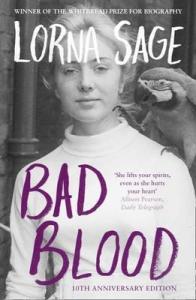 Lorna Sage’s memoir, published in 2001, is an excellent example of literary nonfiction, by the time she wrote it, she had been practicing her ‘creative literary art’ for some time as a literary critic, reviewer, and essay writer, publishing widely on women writers and their work. She wrote books on Angela Carter, Doris Lessing, twelve 20th century women writers, Edwardian writers Violet Trefusis & Alice Keppel and a collection of her journalistic pieces Good As Her Word was compiled posthumously.
Though she went into academe, was a lecturer, professor of English literature and Dean of the School of English and American Studies at the University of East Anglia, she resisted its embrace as a writer,
“I always wanted to write like a writer, not an academic,” she said, “to show there’s someone behind the words, someone from a specific place.”
Bad Blood centers around her childhood years in Wales. Her first memories are of living in the vicarage with her grandparents, Part 1 is the story of their marriage, creating the environment that she grew up in, one where her grandmother rarely left the house.
So it is meandering along the church yard path, tugging at her grandfather’s skirt flapping in the wind that forms the opening line and a clue to her influences; followed by further proof of the loveless union he was escaping.
“The church was at least safe. My grandmother never went near it – except feet first in her coffin, but that was years later, when she was buried in the same grave with him. Rotting together for eternity, one flesh at the last after a lifetime’s mutual loathing.”
She barely recalls the presence of her mother during those years, she was there, but the daughter’s recollection of her own mother was of,
“a shy, slender wraith kneeling on the stairs with a brush and dustpan, or washing things in the scullery. They’d made her into a domestic drudge after her marriage – my father was away in the army and she had no separate life.”
She sums up her grandmother’s sufferance in marriage with the observation:
“What made their marriage more than a run-of the-mill case of domestic estrangement was her refusal to accept her lot. She stayed furious all the days of her life – so sure of her ground, so successfully spoiled, that she was impervious to the social pressures and propaganda that made most women settle down to play the part of good wife.”
She gains even greater insight into their marriage and family life thanks to the confiscated diaries of her grandfather that have fallen into her father’s possession and help her reconstruct events of the time and life in the family household. She comes to the conclusion that the family was falling apart because nobody wanted to play the part of parent.
“There is no doubt that Grandma preserved Grandpa’s diaries for 1933 and 1934 as evidence against him. Indeed, the 1933 diary has a couple of scathing marginal comments in her hand – Here the fun begins (Friday, 25 August) and Love begins (fool) exactly a week later.”
Life becomes quieter after the death of her grandfather and they move to a new council house, taking recently evicted Grandma with them. Lorna develops an interest in the neighbouring farm and spends much of her free time helping out, watching nature in her various forms.
“I’d turned into a tomboy travesty of my mother’s little shepherdess, orphaned and anonymous, and utterly absorbed in the world outside. The repetition of farm days made them seem a backwater of time where the future was safely accounted for.”
Though her grandfather had died when she was nine, his presence was not forgotten, his bad influence often mentioned, though in Lorna ‘s memory he hadn’t let her down like he had the other women in his life, he continued on in her mind as a kind of flawed mentor who had ‘vanished into the dark with his mystique intact.’
“When, in my teens, I quarrelled with my mother, she would say in despair and disgust, “You’re just like your grandfather,” meaning that I was promiscuous, sex-obsessed, that the bad blood was coming out. My bookishness was part of that inheritance too, and though she and my father approved in theory of my love of reading, and my coming top in exams, we all knew that books had a sinister, Grandpa side to them. You could always tell which were his books because he had had the bright idea of inking out their titles and authors’ names in case visitors to his study asked to borrow a Dickens or a Marie Corelli.” Lorna Sage
 Though childhood takes up much of the book, her teenage years are intriguing, for here the family rises above convention and supports Lorna at a time of great need, in an era when many young women in her position would have been shamed and treated in an inhuman manner, giving rise to more problems and heartache. That she gets through this challenging period in her life, supported by her family and goes on to complete a university education virtually without hindrance, is astounding.
Indeed, marriage, and its changing nature over the years, became one of the book’s themes, and so did secrets and lies. He represents for me now the glamour of the past, and its sinister pull, like the force of gravity inside your life. He refuses to die. When Grandma was packing up to move out of the vicarage I called by on my way from school and she told me that she had met him on the stairs.
Lorna Sage
Further evidence of what can come about when families support each other through a crisis can be observed in the reflections of her daughter, shared on the tenth anniversary of Lorna Sage’s death, at a time when she could better acknowledge and celebrate her mother’s literary success and the choices she made, which sadly wasn’t the case when this memoir won a literary award.
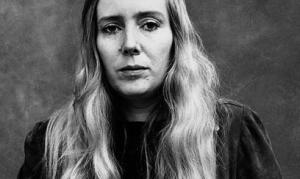
Lorna Sage Source : Wikipedia
I expected it to be more of a ‘misery memoir’ than it was, and hadn’t realised it would be quite as comical as it was, for although the family inflict wounds upon each other, she observes them with a wry wit, that doesn’t make the reader suffer as can be the case with some childhood memoirs.
While she makes family life transparent and shares certain parts in detail, there remains a sense of something preserved and held back, she tends to put others centre stage rather than focus too much of the narrative on herself, and never allows any of the family characters to be portrayed as the victim.
As another reader commented, it’s a pity that she wasn’t able to write a sequel, as her life after the events of this book, as a working woman and mother,
would have been equally interesting, though even in her professional life, she seemed to prefer to analyse the lives and writings of other women than turn the literary gaze onto her own experience.
Bad Blood won the Whitbread Book Award (now Costa Book Awards) for Biography just seven days before she died from emphysema, two days before her 58th birthday.
Have you read Bad Blood? Do you have a favourite book in the Creative Nonfiction genre?
Buy a Copy of Bad Blood via Book Depository
Further Reading
Past Imperfect – Lorna Sage writing about her grandfather, Guardian
Sharon Sage – talks about her brilliant ‘lioness’ of a mother, 10 years on – Guardian
On Creative NonFiction
Lee Gutkind – What is Creative Nonfiction?
Tim Bascom – Picturing the Personal Essay: A Visual Guide
Maria Popova – Brainpickings – Essays – ideas of a timeless nature – one woman’s search for meaning across literature, science, art, philosophy, and the various other tentacles of human thought
 The novella introduces Salimah, who found herself a job in the supermarket after her husband left her and her two sons as soon as they arrived in this foreign country. She attends an English class for learners of a second language where she meets a Japanese woman named Echnida who brings her small baby to class, an older Italian woman Olive, a group of young Swedish ‘nymphs’ and her teacher. She makes observations about her classmates and her own life, as she learns the language that is her entry into this foreign place.
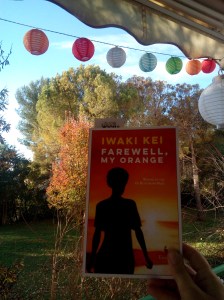 As time passes, new developments replace old situations, opportunities arise, Salimah’s son begins to be invited to play with a school friend, a pregnancy brings the three women together and it is as if they begin to create a community or family between them.
 I absolutely loved it and was reminded a little of my the experience of sitting in the French language class for immigrants, next to women from Russia, Uzbekistan, Cuba and Vietnam, women with whom it was only possible to converse in our limited French, supported by a teacher who spoke French (or Italian). So many stories, so many challenges each woman had to overcome to contend with life here, most of it unknown to any other, worn on their faces, mysteries the local population were unconcerned with.
 Iwaki Kei was born in Osaka. After graduating from college, she went to Australia to study English and ended up staying on, working as a Japanese tutor, an office clerk, and a translator. The country has now been her home for 20 years. Farewell, My Orange, her debut novel, won both the Dazai Osamu Prize (a Japanese literary award awarded annually to an outstanding, previously unpublished short story by an unrecognized author) and the
 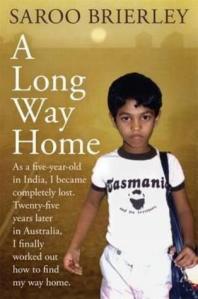 I saw the film when it was on at the cinema about a year ago and like everyone who has seen it, I thought it was extremely moving. If you don’t know the story, it’s about a 5-year-old boy who is out with his teenage brother, who has told him to wait for him at a quiet train station near their home, and feeling tired, he climbs into an empty carriage, falls asleep and when he awakes, it is moving, the carriage locked and he will be transported, far, far from his home, which he won’t see for another 25 years.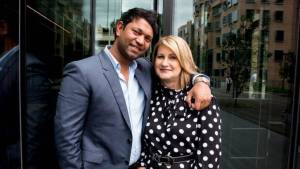
 When Saroo really becomes intent on tracking down his family, (another element that is much more vividly portrayed in the film) no one except his girlfriend knows how obsessed he has become, he has had periods of searching in the past, spurred on by meeting other students who grew up in India, who’d make guesses as to where he might come from based on his memories, but when, with the help of Google maps and tracing railway lines out of Calcutta, he began to spend hours every night doing his research, he kept it to himself, in ways and for reasons many adoptees will recognise.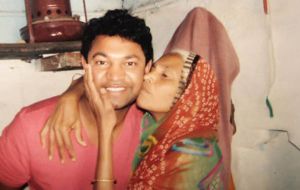
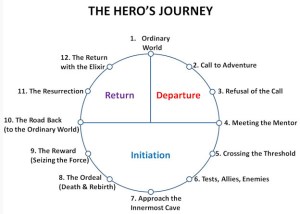 Journey of the Adopted Self, follows that traditional quest, and for each element in the journey, the responding to the call (the decision to search), the departure (actively seeking), meeting the mentor (finding help) crossing the threshold (making contact), the challenges + the ordeal (dealing with the aftermath), the reward (unravelling the mystery), the road back (the new ordinary life) and the elixir (the transformation and the life lesson) the authors discusses a range of issues that can arise and gives examples in brief snippets from the many case studies she has had access to as an adoption counsellor.
 According to the Austrian psychoanalyst and contemporary of Freud, Otto Rank in his book

 I am in awe. It is no easy read, for it is written in a kind of double, triple speak, depicting a life and set of circumstances that is constantly in check, a circumventing of self. It describes from the inside how one young woman navigates daily life in a community that has drawn so many convoluted, coded lines of behaviour, that lives by so many unspoken, rigidly enforced violent rules, that has morphed into something so far from authenticity, that only the very ‘different’, appear able to, or indeed risk, living life true unto themselves, except those who left the country forever, their tale not told here, those that got away.
 ‘Middle sister’ as she is referred to, thinks in a kind of coded language full of uttered phrases that substitute for a more succinct opinion, so that even the reader must enter into this “insinuating” talk to understand her thoughts, for nothing is stated plainly, just as nothing is observed or clarified as it really is. And we get good at it, at this revealing what is really being said, even beginning to see the humor in it, when none of it really is funny, there’s too much death, tragedy, sadness, ridiculousness. It’s not a life, it’s a trap.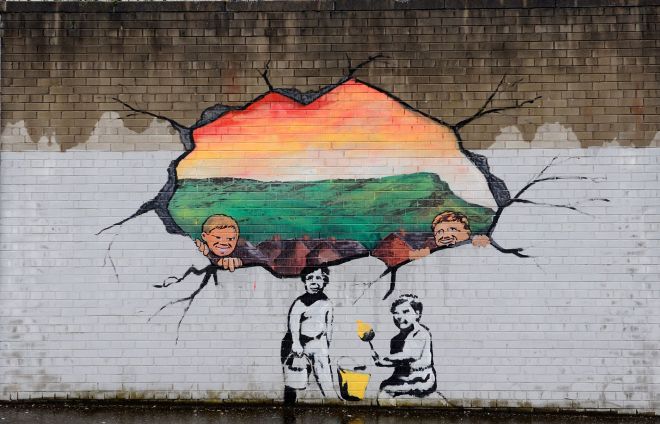
 Bitter Orange is less mysterious and though it is set in 1969, it has something of the feel of a timeless classic, with its setting in a dilapidated English mansion, with two characters employed by the new, absent owner to make a report on the inventory and architecture of the interior and garden, people interested in old things from the past, haunted by them in fact.
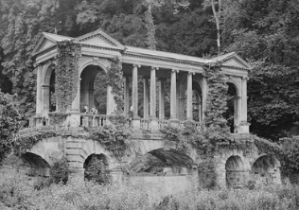 Once settled into her attic room, France spies her housemates, Cara the carefree young woman, who it soon becomes clear is tormented by something and Peter the older lover of antiquities, a man who more than admires, wishes to possess all that he finds alluring.
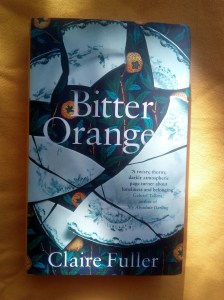 For me, it didn’t have the same captivating atmosphere, characterisation and thought-provoking aspects present in Swimming Lessons, which is my favourite of the three books and was a five-star read for me last year, however it excels in demonstrating the murky depths of people, who are often not what they seem on the surface, and even when unravelled and revealed may not be telling things as they really are or were. Yes, watch out for the unreliable narrator,.
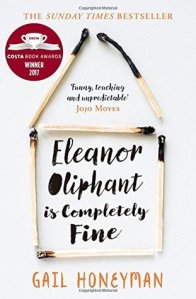 So used to her self imposed isolation and predictable life is she, that she seems shocked when a new employee Raymond from IT, whom she calls when her computer freezes one morning, initiates conversation with her outside the office, speaking to her as if she might be just like the others.
 I did find the character of Eleanor a little difficult to believe in, the long years of solitude followed by a relatively sudden transformation seem to occur too easily and quickly, however if I were to suspend judgement on the authenticity of the character and the speed of her life change, which wasn’t hard to do, then it becomes a kind of coming-of-age novel about a young woman overcoming a traumatic past and demonstrates (a little too conveniently) the healing that can come from genuine friendship and being part of a family and community and a functional workplace (if there is such a thing).
 Word by Word