
Ann Patchett’s novel, shortlisted for the Orange Prize for fiction has left me pondering. Wondering what it was I missed that caused others, such as Joanna Trollope to say:
Every so often – and that’s not, actually very often – I read something that makes me want to press fervently and evangelically onto everyone I meet. This has just happened with Ann Patchett’s novel State of Wonder…
And Emma Donoghue who said:
The best book I have read all year. It made me laugh and weep and left me in a state of wonder
 Marina Singh is a doctor working for a pharmaceutical company since switching from obstetrics to pharmacology near the end of her studies. Coincidentally, one of her female professors Dr Swenson also works for Vogel and is acting solo, outside her jurisdiction in the Amazon, observing a tribe whose unique development could have significant implications for the lives of women and humanity. This rebellious, unorthodox researcher and her unique way of working has been tolerated by the company, until a letter arrives informing the CEO Mr Fox of the death of a staff member he sent to report back. Marina is asked to follow-up and becomes drawn into the alternative universe of life in the Amazon jungle.
 It is an interesting concept and a thrilling journey, one of the most moving and real parts for me being an encounter with an anaconda that almost had fatal consequences. However, throughout the book, I couldn’t shake off a sense of reluctance, of characters holding back; was Mr Fox being honest or was he hiding something? Why doesn’t Marina question or insist on answers? It was hard to believe that the head of a large pharmaceutical pouring significant funding into a research project would tolerate the situation without acting in a more forthright manner.
Dr Swenson was definitely withholding, resisting, imbued with a sense of superiority that didn’t ring true or convince me. Ironically, as Marina begins to accept the way of life in the jungle I could very well see her becoming part of that environment which would have been interesting to pursue further, more so than the enigmatic Dr Swenson.
True, I was somewhat impatient to get to the Amazon itself and for that I blame an unquenchable thirst for adventurous travel and the fact that as far back as I can remember, the Amazon was the VERY first destination that my younger mind desired to visit. I remember it vividly even now, a feeling that grew after watching ‘The Emerald Forest’ (1985), a film that had a real effect on me, I fell in love with the wilderness of the Amazon and vowed that one day I would go there.
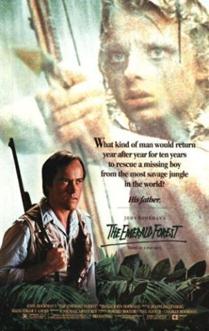 The film is based on the true story of a 7-year-old boy kidnapped by Indians, who disappear into the Amazon forest. The boy’s father, a Venezuelan engineer, spent every summer for the next 10 years searching the forests for his son and eventually found him.
It is quite likely then, that this memory may have had an effect on any impression this book could make, something that represents an unfulfilled dream for me and not one which involves pharmaceutical companies looking for a profit or scientists tampering with nature. So don’t let me stop you from finding out for yourself, it’s certainly one to discuss and as you can see from the quotes above, for some this book is a definite favourite.
 appear for the one season that is missing but I am open to suggestions, is there a title that comes to mind for Autumn, the Fall? I am sure one must exist.

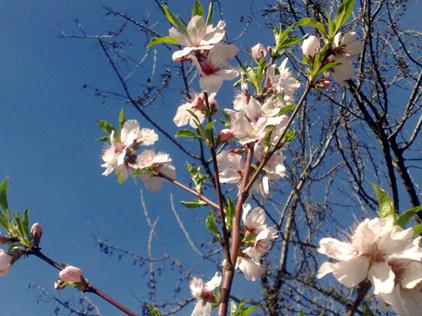
 Edith Wharton was worldly and wealthy, speaking four languages and entertaining future American heiresses in her Paris home, her latter years lived in France. Yet as the range of her works testify, from rural
 ‘Summer’ has recently been adapted to the stage by
 He wears a badge his father gave him that reads ‘I am Chinese’, what it really means is ‘I am NOT Japanese’ for it is 1942 in Seattle and anyone who looks Japanese is being sent away to a special ‘camp’.
 From the

 However Robert’s luck changes when he is arrested one night and discovers he has unknown enemies with unknown motives and the experience of prison will unleash the darkest aspect of his character. When he is finally released he goes to work with the Bombay mafia, delving into the world of black market drug, currency and false document dealings all the while awaiting that future moment where he can exact revenge against his enemy.
 charming and influential who lacks empathy, and has an intense need to be liked. I don’t think the character in this story is a psychopath, but many in his circle survive precisely because they are not beleaguered by the emotional constraints of sympathy or empathy whether they were born like that or have become that.
 The story concerns ‘the lawyer’, an educated and ambitious man regarded as one of the most successful Arab criminal attorneys in Jerusalem. One day he picks up a second-hand copy of Tolstoy’s novella ‘The Kreutzer Sonata’, recognising it as a volume his wife has mentioned in the past with enthusiasm, only to discover what he perceives as a love letter between its pages, in his wife’s handwriting. Discovering the name Yonatan on the inside cover, between bouts of violent and paranoid thoughts regarding his wife, he sets off to hunt the culprit down.
 They are Arab-Israeli’s, non-Jewish Israeli citizens whose cultural and linguistic heritage is Arab. A matter of geography and politics, those who live in the Occupied Territories (otherwise known as the West Bank and Gaza) are of the same ethnic origin but refer to themselves as Palestinian, they of the same family as Arab-Israeli’s, they just carry a different legal status, which affects their education and employment opportunities and much more.
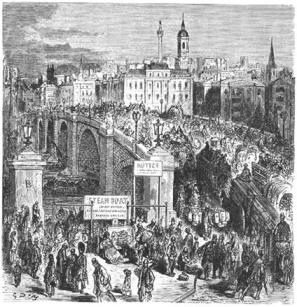 The character of Ann we meet in 1898, on a bridge overlooking the Thames at a low point in her life, seeking refuge at a Charity Hospital.
 Word by Word