
Post my visit to Belfast in Northern Ireland and the Titanic Museum, followed by reading Walter Lord’s A Night to Remember and Christopher Ward’s , The Band Played On I have continued with this reading theme with Charlotte Rogan’s novel The Lifeboat, which felt like reading the next chapter of a Titanic story, the one that hasn’t been written to my knowledge, the story of what might have occurred had the lifeboats and their inhabitants been left overfull to roam the high seas.
 Set in the summer of 1914, the story centres around Grace Winter, a 22 year widow; right from the beginning we understand she is one of three women being held in prison while on trial for a crime that is alleged to have occurred while they were afloat on a lifeboat after the sinking of a grand ocean liner they were travelling to New York on.
Thirty-nine people started out in the boat, but a lot less than that survived under somewhat suspicious circumstances. As the trial progresses, to aid her defence her lawyer asks her to record the days as she remembers them in a kind of journal, and so simultaneously we too read her re-enactment of what she perceives happened as if it were happening now.
At the same time it occurred to me – and it must have occurred to Mr Hardie as well – to wonder if Rebecca was the victim of some sort of natural selection and to think that if she had fallen overboard, maybe it was for the best.
Having suffered one family tragedy already and seeing their prospects dwindle after the death of their financially troubled father, Grace’s aspirations had been in the ascendant after marriage to the young, successful Henry, although all is not clear around this, it is a subject she neglects to delve into in great detail and neither subsequently do we hear much of either her own family or her in-laws. Only her ruthless determination to marry the already engaged Henry, rather than follow her sister’s example and seek a governess role or other employ. Marriage was to be her saviour and Grace exhibits ambition had used her resources stealthily to achieve it.
It is an interesting premise, the concept of floating at sea for days on end, death never far from seducing some, and destroying others in dramatic fashion. This story pits men against women, the strong against the weak and the cunning against the calculating. I did wonder about its authenticity when they decide very early on, in the first hours to abandon a child clinging to some debris, it is clear the child will perish and even if the boat is hopelessly overfull, it is hard to accept that women in particular could be so in shock as to allow such a young soul to be left.
Later, Hannah stamped her foot against the floor of the prison van and cried, “What is this, a witch trial? Is the only way to prove our innocence by drowning?”
Note: This was an Advance Reader Copy (ARC) provided by the publisher via NetGalley.
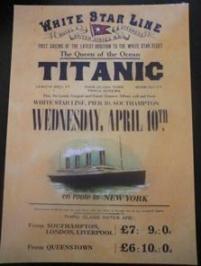 There are so many untold tales and now 100 years on from the Titanic tragedy, stories continue to be retold and others narrated for the first time, linked to the events that unfolded in the wake of the tragedy. Not only do we read accounts of those who were on the boat, but the event is used in fiction, a convenient device for eliminating a character such as the loss of the cousin and heir in Julian Fellowes Downton Abbey series, this event triggering the inheritance crisis that is at the centre of this drama. I read that if all the characters from fictional novels were indeed on the Titanic, it would more than triple the number of passengers she carried and sink it for sure.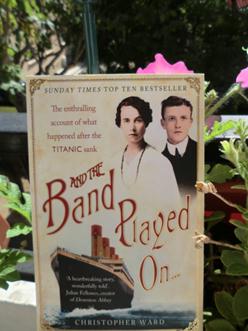
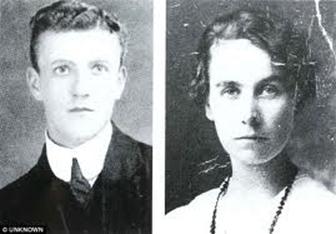
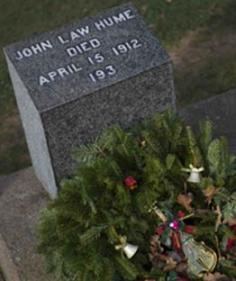 When it was no longer possible to stand, they strapped their instruments to their chests and jumped into the freezing cold waters together. None of the band members survived, however two of their bodies were recovered, Band Master Wallace Hartley (his violin case still strapped to him) and Jock Hume. Hours after the Titanic sank, White Star Line commissioned the Mackay-Bennett to recover the bodies of victims. Of the 209 bodies they brought back, 150 were laid to rest at three Halifax cemeteries. Jock Hume was buried in the Fairview cemetery, a site where visitors still pay their respects today.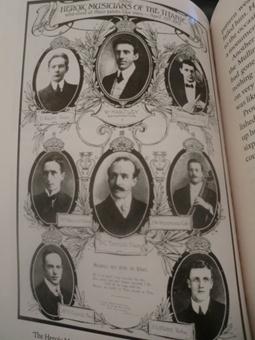
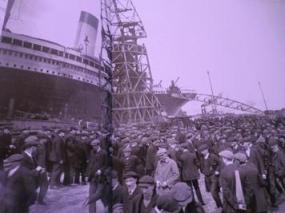 The significance of the Titanic continues to intrigue, or I should say has begun to intrigue me more since a visit to Belfast, Northern Ireland, the city in which it was built, a city which itself grew on the back of the growing shipyards and connected industries associated with it. Between 1851 and 1901 the city’s population increased from 87,000 to 350,000 and was the fastest growing city in the British Empire during that time.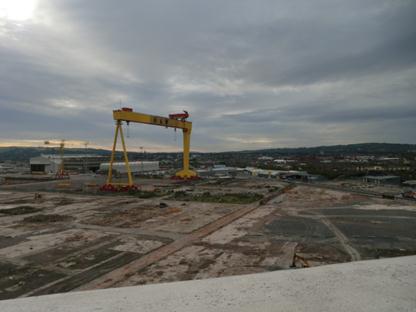
 Turning the last pages of Walter Lord’s ‘A Night to Remember’ I read in the end chapter Facts About the Titanic that she was launched at the Belfast shipyards of Harland and Wolff on 31 May 1911. The date rings a bell and I look in my diary and see that my daughter and I arrived in Belfast on 31 May 2012, exactly 101 years on from that auspicious date.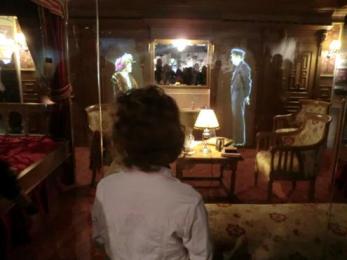


 Word by Word