Eugene Onegin Read Along – Chapter’s One & Two Alexander Pushkin

Eugene OneginWell, this is a first for me, a read along!

Alexander Pushkin’s Eugene Onegin has long been on my list of books to read, since it was gifted to me by husband many years ago. I don’t know why it seemed to intimidate me, since I loved long prose poems as a teenager, especially that other Alexander – Alexander Pope.

The book is a verse novel and I’m reading the Penguin Classic version translated by Charles Johnston with an introduction by the novelist and literary critic  John Bayley (husband of the late Iris Murdoch).

So I’m a little late finishing, but I have read the first two chapters and have a few basic impressions, though not much idea of the story, without reading outside the text.

So, I’ll follow Tanglewood’s lead (hosting this read-along) and try to answer her questions:

First impressions of Eugene?

A bit of a dandy? Son of a lavish spender who clearly didn’t instill much of a work ethic into his son. Then thanks to the legacy of a rich Uncle, he will spend more time in a dressing room, than any character I’ve ever read of.

Eugene turned countryman. He tasted

the total ownership of woods,

mills, lands and waters – he whose goods

till then had been dispersed and wasted –

and glad he was he’d thus arranged

for his old courses to be changed.

Not interested in history or politics or activism, he possesses a wealth of well polished stories to offer at the many social engagements he attends. Hates the Greek heros and prefers the theories of economics. Something of a chameleon, a charmer, dare I suggest, a manipulator, seducer? Prefers balls to ballet, the city to the countryside, yet tolerates boredom, cynicism suits him.

Chapter One introduces Eugene while chapter two introduces the characters he meets when he moves to the countryside, descriptions of Eugene are superficial, he lacks depth, something he may encounter soon perhaps.

What do you make of the narrator’s commentary?

I find the commentary more accessible than I thought, certainly it’s easier to interpret than Shakespeare and mildly humorous with its frequent drift into French words and an “I’ll write how I like” attitude, although it’s difficult to know when reading a translation, fortunately the French isn’t translated, so we have a better appreciation for the play with words intended.

Thoughts on the characters in Chapter 2?

Chapter Two begins to broaden the range of characters and they provide a welcome contrast to Onegin and the possibility of assisting him perhaps to see things through different eyes.  He is charmed by his friend, the poet Vladimir Lenksy and enjoys listening to his outpourings of emotion:

EugeneHe roamed the world, his lyre behind him;

Schiller and Goethe had refined him,

and theirs was the poetic flame

that fired his soul, to burn the same;

Olga, the subject of the poets verses since boyhood, the loved one and her elder sister Tatyana, the dreamer, the loner, living vicariously through her books.

I can see why it’s good to read and reread, even going back and reading earlier passages from yesterday seem to enlighten the story further. So forgive my ignorance as I trundle forward for the first time, slowly discovering what it is I am reading.

Click here to read the follow up review of Eugene Onegin Chapters 3 & 4

Seasonal Comfort Reads

Merry Christmas to you all, I hope you all have/had a wonderful, relaxing day spending it exactly as you wish.

tower-and-santa-336x280We had a unique Christmas Day, with a picnic lunch on the TGV (fast train) to Paris – delicious savoury canapés, no cooking required and no dishes to wash up afterward either.

I am looking forward to reading time, although I may not get much done, since there is so much to see and do here in Paris.

But first, some Christmas Book news!

Christmas DayThis season The Guardian ran a series on writers and readers’ favourite books to curl up with on biting winter nights.

As some of you might remember, as I mentioned and gave away a copy of this book last year, my seasonal comfort read is Paul Durcan’s book length poem Christmas Day.

Well, there might not have been any books under the tree this year, but having my review published by The Guardian on Christmas Day was the best gift of all!

Click here to read the review.

Joyeuses fêtes à tous!

joyeuses fete

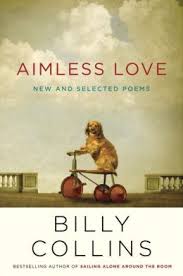
Aimless Love by Billy Collins

Aimless LoveI am a relative newcomer to the poetry of Billy Collins, but thanks to an admiring fan, I was lent a copy of his collection Sailing Alone Around the Room which was an extremely readable, entertaining and at times even hilarious read and so when I saw this new collection was coming out I requested it.

Who even knew that one could study for a PhD in Romantic Poetry? Does that make him of Doctor of Love I wonder?

His poems speak of ordinary things but steer clear of cliché, and Aimless Love as a title for this collection of collections as well as some new poems, seems perfectly apt for all manner of common things he appreciates and shares with us.

Aimless Love brings together selected poems from previous collections as well as some new poems

Here are a few extracts from moments of pure joy in reading Billy Collins Aimless Love:

The Country

I wondered about you

when you told me never to leave

a box of wooden, strike-

anywhere matches

lying around the house because

the mice

might get into them and start a fire.

But your face was absolutely

straight

when you twisted the lid down

on the round tin

where the matches, you said, are

always stowed.

Who could sleep that night?

Artwork by our Allia

Artwork by our Allia

Who could whisk away the thought

of the one unlikely mouse

padding along a cold water pipe

behind the floral wallpaper

gripping a single wooden match

between the needles of his teeth?

And who could not be tempted to read and understand more of this familiar relationship between the poet and his parents in:

No Time

In a rush this weekday morning,

I tap the horn as I speed past the

cemetery

where my parents lie buried

side by side under a smooth slab

of granite.

And this line from a poem called

Monday

Just think –

before the invention of the window,

the poets would have had to put on a jacket

and a winter hat to go outside

or remain indoors with only a

wall to stare at.

There are other fabulous poems like The Great American Poem, Horoscopes for the Dead, and Ode to a Desk Lamp.

But just as good as reading his poetry is listening to him read aloud, he has a melodic voice that lulls the listener into a kind of warm familial comfort, his words caress like a gentle tide of steaming bath water with the scent of Cedarwood. Well, perhaps if you close your eyes while listening, like I do.

Here he is reading just a few days ago, the title poem to this collection Aimless Love, so sit back, close your eyes, listen and be soothed:

Note: This book was an Advance Reader Copy, provided by the publisher via NetGalley.

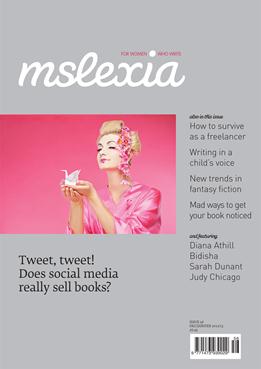
mslexia – for women who write

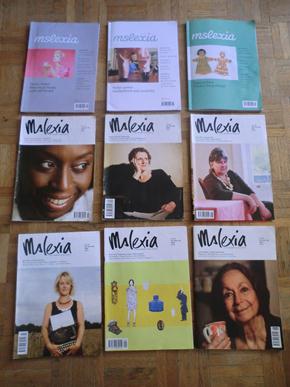
I’ve been subscribing to mslexia magazine for a few years now and since it is both a great stimulant to the writing process as well as an excellent source of reading recommendations and a directory of sorts, I thought I’d share a little about it.

Mostly I like it, because it doesn’t feel in any way elitist, this is a kind-hearted, generous resource, contributed to and read by ordinary women who like to write, including many who like me, don’t participate in this activity as a job, but manage to scribble away for a few hours each week – read this and you realise you are part of a large, like-minded community of women who believe in making the impossible possible.

It might be published in the United Kingdom, but it has a very international flavour and inclusive attitude, important when you live outside your country of birth and don’t write in the language of your country of residence and want to participate.

mslexia (ms = woman, lexia =words) is a quarterly publication with feature articles on some aspect of writing (and open to idea submissions), an interview with a published writer, featured short stories or poetry written to the issue theme, or winning entries from the regular competitions they run.

It was Issue 48 in Jan/Feb/Mar 2011 that introduced me to the writer Susan Hill, just as her short novel A Kind Man was being released and I’ve since read three more of her books.

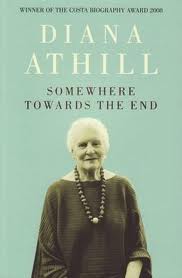
In the latest edition there is a wonderful interview with Diana Athill, what an inspiring woman she is, winning the Costa biography award at 91 with her book Somewhere Towards the End and still writing from her North London residential retirement home.  She says it how it is and cites Jean Rhys’ for teaching her this, she mines her own experiences for a story, and cautions against being cruel to others, “you can be ruthless about yourself, but not when writing about friends” – you can read an extract from the interview here.

athill“I have never understood how many writers moan and groan about how awful writing is. Absolute nonsense.” Diana Athill

Recently, they have been conducting mini-surveys of readers which are then incorporated into the lead articles and some of the smaller snippets of information found throughout the magazine. It is extremely readable, which I put down to the fact that there is a reasonable portion of bite-sized articles, such as letters, extracts from posts, emails, tweets, along with fun and short, contemporary submissions from writers under the headings of rants, raves, a week of tweets, monologue, pen portrait, how I keep going, four lines that rhyme, a poetry or book review. Something for everyone.

Each quarter there is a themed New Writing section, always an excellent writing prompt whether you are interested to submit or not, short narrative or story up to 2,200 words, prose or sometimes poetry, the successful entries appearing in a future edition. I have seen many women being published for the first time through these exercises.

There is an annual poetry and short story competition and in 2012 there was a children’s novel competition for unpublished women novelists.

In addition to all the wonderful information it lays at your fingertips, one of the things I love the most are the short bio’s of contributors, here is one from the 2009 poetry competition in which Pat Simmon’s touching poem ‘Jack discovers impermanence’ was a winner:

PAT SIMMONS, 64, was head of communications for ‘Send a Cow’, an African agricultural organisation, but has since retired. The conviction that whatever she writes will be rubbish stilts her creative progress, but an encouraging family keep her inspired and motivated. Finding writing by hand shackling, she works directly onto her laptop, a practice to which she wishes to dedicate more time. She was Blagdon’s 2005 Apple Wassail Queen – your guess is as good as ours – and on a trip to Rwanda was re-christened Munyanika: ‘As valuable as a cow.’

It is available online, but this is one publication that I like to have the physical magazine to read, there are so many gems and I return to back issues often. Oh and lets not forget the back page, always a delight to conclude with, ‘the bedside table‘, introduces an artist, author, intellectual or well-known personality who shares what’s currently on their nightstand, like gossip for book-lovers.

The next deadline of 18 March 2013 is for Issue 58: The Women’s Short Story Competition for stories up to 2,200 words on any topic. There are prizes for 1st, 2nd and 3rd and three other finalists will also be published in that issue of Mslexia. You don’t have to be   a subscriber to enter, just a woman.  Stories are accepted from any nationality and country.

Happy Writing!

Christmas Draw

CIMG3620Yesterday we put our Christmas tree up and it looks different to other years, the children deciding against the multi-coloured, let’s use everything look and sticking to mainly silver and red, with the exception of the gold bird, because after all, what is Christmas without the reminder of wildlife and animals – at least that is my nine-year-old son’s view. Even Noisette, the cat seems to agree as he has found a new place to sleep, sniff and climb.

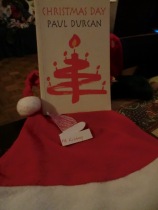
CIMG3615So while the hat was out, we put all your names in and drew out PB Rippey, from PB Writes, a copy of Paul Durcan’s Christmas Day is winging its way to your door and let’s hope it does indeed arrive in time for Christmas Day.

CIMG3618

Thank you everyone for participating, reading and commenting in the Christmas Bloghop and to Stephanie for organising it. I look forward to the same next year!

Joyeux Noël!

Great Christmas Expectations

Blog in France is a lady with llamas who left Ireland to live in France and has organised a Christmas BlogHop which I am delighted to participate in, including a give-away, just leave a comment to be in the draw to win Paul Durcan’s book and do visit the fabulous blogs participating in this festive foray linked at the end of this post.

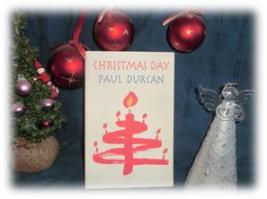
I’m sharing favourite Christmas reads and the first book that came to mind that has been my favourite since I heard the author read an extract at the Royal Festival Hall in London in 1997, is Paul Durcan’s Christmas Day.

Christmas Day is a 78 page prose poem that reminds us in a humorous way of those who won’t be sharing a traditional Christmas, whether by choice or because they find themselves far from family and friends, and of the traditions we partake in and even when we don’t, that seem to resonate within us anyway.

In cities across the world

I like sitting in churches doing nothing.

I like going to communion:

Standing in line and catching

Glimpses in night skies

Through x-rays of clouds

Of the thin white moon of the host.

The moment I took the decision

Not to go to Mass

I could feel life returning into my body,

My empty cistern filling up,

The Holy Spirit gurgling inside me.

It is a funny, subversive, somewhat melancholic conversation between two men – Paul and Frank who spend Christmas in Dublin trying to make it something, but not quite getting it right. It will have you laughing out loud, nodding your head in acknowledgement and realising the importance of reaching out to at least one person this Christmas.  Not only it is a terrific read, but I was so enamoured with his performance, I bought audio versions as gifts for family, his delightful Irish voice, much a part of the experience for me.

He is unafraid, masterful and exactly what this world needs more of: wild abandon, wild love and sheer mad genius. Alice Sebold

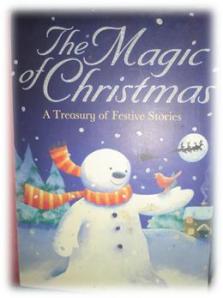
120912_2017_GreatChrist2.jpgMy children’s favourite Christmas story and one that I was asked to read to the class in English comes from The Magic of Christmas storybook. All the stories are great, but their favourite, and a word they just loved to hear repeated is Ridiculous.

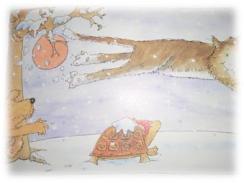
Ridiculous is a story about a young tortoise who doesn’t want to hibernate in winter, she decides to go outdoors after her parents have settled down to sleep and explore the snowy surrounds.

She meets a duck, a dog, a cat and a bird, all of whom exclaim and repeat the same thing:

“Whoever heard of a tortoise out in winter?”

Ridiculous!”

Shelley the tortoise disagrees, but discovers she can’t break the ice to get food like a duck, keep warm by running around like a dog, crawl into a nice warm house like a cat, or fly off home like a bird.
My own favourite children’s Christmas story, doesn’t require reading at all, at least it has no words.

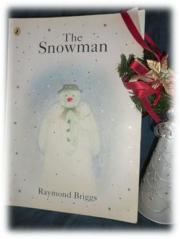
120912_2017_GreatChrist5.jpgRaymond Brigg’s delightful The Snowman, is an all-time classic picture book and celebrates the power of the imagination and the wonder of childhood, as a boy builds a snowman and then goes on a night-time adventure with him into the world to places he has never seen.

120912_2017_GreatChrist6.jpgAnd finally, to the book I will be curling up this Christmas. Have you already chosen your festive literary escape?

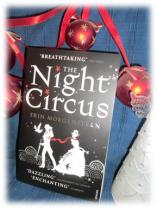
Last year, I remember losing myself in Abraham Verghese’s wonderful Cutting for Stone and I’m hoping that The Night Circus will do the same for me this year. If not, it might even be a reread of The Snow Child, which was my favourite read of 2012.

So leave a comment if you wish to be in the give-away for a copy of Paul Durcan’s Christmas Day and have fun visiting all the Christmas Bloghop participants below, many of whom are also offering give-aways.

Blog in France Bloghop

A Flamingo in Utrecht
Expat Christmas
Box53b
Word By Word
Vive Trianon
Fifty Shades of Greg
Books Are Cool
Perpignan Post
Jive Turkish
Very Bored in Catalunya
Life on La Lune
Scribbler in Seville
Blog in France Christmas
Les Fragnes Christmas
ReadEng. Didi’s Press
Steve Bichard .com
Edit My Book
Zombie Christmas
Christmas in Cordoba
The best Christmas blog ever
The Christmas Surprise.
Sci-fi Writer Jeno Marz
The best Christmas quilting blog ever
Painting in Tuscany
The Business of Life…
Funny tweets
we’ve got a new house but no stuff and it’s Christmas
Paris Cheapskate
What about your saucepans?
When I Wasn’t Home for Christmas or Celebrating
ShockWaves Launch Party
The French Village Diaries
Melanged Magic
Heads Above Water: Staying Afloat in France
Piccavey.com – An English Girl in Granada
Bordeaux Bumpkin
French immersion
Callaloo Soup
Grigory Ryzhakov
Piglet in Portugal
Beyond MÃnana
Chronicles of M Blog

A Rhyme for the Odes (Mu’allaqat)

No one guided me to myself. I am the guide.

Between desert and sea, I am my own guide to myself.

Born of language on the road to India between two small tribes,

adorned by the moonlight of ancient faiths and an impossible peace,

compelled to guard the periphery of a Persian neighbourhood

and the great obsession of the Byzantines,

so that the heaviness of time lightens over the Arab’s tent.

Who am I? This is a question that others ask, but has no answer.

I am my language, I am an ode, two odes, ten. This is my language.

I am my language. I am words’ writ: Be! Be my body!

And I become an embodiment of their timbre.

I am what I have spoken to the words: Be the place where

my body joins the eternity of the desert.

Be, so that I may become my words.

No land on earth bears me. Only my words bear me,

a bird born from me who builds a nest in my ruins

before me, and in the rubble of the enchanting world around me.

I stood on the wind, and my long night was without end.

This is my language, a necklace of stars around the necks

of my loved ones.

– extract from ‘A Rhyme for the Odes’

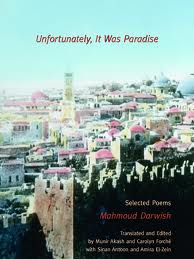
by Mahmoud Darwish, from the collection ‘Unfortunately, It Was Paradise’

(13 March 1941 – 9 August 2008)