
These Days is set over a period of a week in the life of one family with a young son and two daughters, both of whom are at significant turning points in their relationships, just as the Belfast Blitz is about to destroy much of their city.
The precariousness of life pushes both girls out of their everyday lives into confronting the very depths of who they are and what they want from life and whether or not they are prepared to conform or compromise.

The tension of living with blacked out windows, with their father being an on-call doctor, who must rush to the hospital to deal with the casualties and Emma, a First Aid volunteer also called into the throng of destruction, heightens the situations both girls are in, creating a unique sense of urgency, and yet…
Audrey’s boyfriend, an only son, is also a doctor and the thought of possibly losing her hastens his own decisions, which Audrey responds to in that same atmosphere of heightened tension. But when she returns to work at the tax office and begins to realise how that decision is likely to change her life, she begins to question how much she really wants it. IS what she feels enough?
…She thinks of the Yeats poem: this tumult in the clouds…in balance with this life, this death…and she thinks how strange, how strange it is, the sides on which we find ourselves, the things we, really, have no choice or say in, the ways we blindly go through a life in which the grooves are already set.
Emma spends less time thinking about her decisions and future life, she is more impulsive, reckless even. Just as she is coming to the realisation of how she wants to love and live, that vision of a future life disappears right in front of her. In a cruel twist of fate, she will experience something that her own mother has long lived with, intertwined feelings of love and grief, of love at its inception, turned in an instant to memory, rather than be allowed to flourish.
Their mother too conceals thoughts of a life not quite embarked on, one cut short that re-enters her imagination now and then, that has caused her to stop believing.
But the times we live through, she thinks, as they turn onto Sydenham Avenue, have bred in us all a grim, stoical sort of endurance. After the Great War, and the civil war, and the shattering Troubles of the twenties, those hundreds of people dead…After the unemployment and the riots of the thirties, the sectarian pogroms, the chaos, the roads blockaded, the burning, only half, a quarter of a mile away…You’re not surprised by anything anymore: you shake your head and press your lips and get on with whatever else there is to be doing, make the most of things, make of what you have – what you’re fortunate, and yes, grateful to have – the best you can.
Her latent grief, a feeling that arises then recedes, removes some of the shock of what is happening around them.
It hasn’t surprised her, over the years, she sometimes secretly thinks, that the city around her should periodically erupt into barricades and flames, doesn’t surprise her that it should be obliterated now from above, because that, sometimes, is how a cold small part of her feels – just take it, take all of it, I want none of it, none of this, because none of it – how can it? – none of it matters.
As these women go about these terrible, historical days, encountering both a physical and emotional toll, they will all come to realise what is most important to them, it will mark them and change them.
It will never go away, she wants to say then. None of it does – the real or the imagined. Once you have seen those images, whether with your eyes or or in your mind’s eye, they are etched there – seared into the body. They are there forever and you can’t pretend otherwise. When they rise up, you need to try not to fight them, try not to push them away. You must just focus on the smallest, most incidental thing you can. You must make yourself breathe, and feel the current of breath through your body.
Meticulously researched, the days of the Belfast Blitz and the consequences of families, are brought to life in the pages of this novel, the lost and homeless, the children evacuated, the trauma these days will instill in the genes of future generations, yet unborn. Those familiar with the streets and surrounds of Belfast will imagine it all the more evocatively.
“My grandma didn’t like to talk about the Belfast Blitz: ‘Ach, sure, what do you want to know about all that for?’ Towards the end of her life, wracked with vascular dementia, all questions became traps, and then she couldn’t talk at all. I still wonder, even after years of researching it, what her stories might have been.” Lucy Caldwell
The Belfast Blitz

Due to its capacity for shipbuilding and other manufacturing that supported the Allied war effort, Belfast was considered a strategic target by the German Luftwaffe. It was also the most undefended city in Europe.
That threat became a reality in April and May 1941, with four separate attacks, causing a high number of casualties and destruction of the city and residential areas.
On Easter Tuesday, 15 April 1941, 200 Luftwaffe bombers attacked military and manufacturing targets in the city. Some 900 people died as a result of the bombing and 1,500 were injured. 220,000 people fled from the city.
In total over 1,300 houses were demolished, some 5,000 badly damaged, nearly 30,000 slightly damaged while 20,000 required “first aid repairs”.
Lucy Caldwell, Author
Born in Belfast in 1981, Lucy Caldwell is the award-winning author of four novels, several stage plays and radio dramas, and two collections of short stories: Multitudes (2016) and Intimacies (2021).
These Days (2022) won the 2023 Walter Scott Prize for Historical Fiction.
 Factory Girls is a story that takes place over the summer of 1994, while three friends, living in an unnamed northern Irish town, await their exam results and confirmed university placements, and therefore the trajectory of their future lives.


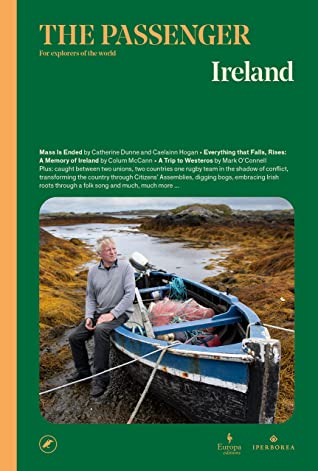 Huginn and Muninn are two ravens from Norse mythology. Sent out by Odin at dawn each day, they return at night to perch on the god’s shoulders, whispering to him whatever knowledge and wisdom they have gathered from every corner of the world. Like Huginn and Muninn The Passenger travels far and wide to bring back the best writing from the countries it visits.
 Population (the island of Ireland) : 6.9 million (the highest since 1851)
 In Handiwork, she was sculpting birds, but here she writes about the Irish cottage, its evolution and the rise of the Irish villas that were much despised for a period of time. As she spends months creating objects that represent small scale versions of these houses, she reflects on the way Ireland’s built environment has changed.
 Thin Places is something of an enigma, when I bought it, I thought it was in the nature writing genre, the inside cover calls it a mix of memoir, history and nature writing – such a simplistic description of the reading experience, which for me was something else.

 This is the novel I have been waiting for Jan Carson to write, for here is a writer who in her ordinary life as an arts facilitator has brought together people from opposite sides in their way of thinking, encouraging them to sit down and write little stories, enabling them to imagine from within the shoes of an(other) – teaching the practice of empathy.


 I just love the concept of these works of flash fiction, postcard size stories, that have a geographic connection to a street or location in Northern Ireland, that originated as a story written on the back of a postcard – an alternative restriction to the usual one when writing flash fiction, of keeping it to 100 -150 words – and that the postcard was both sent and retained, a gift and an accumulated collection.
 It turns out there are only so many free coffees a person can drink before realising a hot beverage cannot cure loneliness, grief or melancholy.
 Dara McAnulty is autistic, as are his mother and two siblings, a beautiful advantage, because the family seem to understand exactly how to mitigate the intensity and lived experience of this characteristic.

 It is the story of a disenchanted man, a man who reluctantly returned to Northern Ireland from London with his wife Moira, who was keen to return. Now he is the manager of a hotel, a job he doesn’t particularly like, having left his poetry aspirations far behind him, following in the footsteps of his father, a man he feels resentment towards.
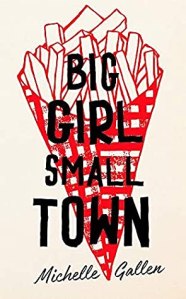 Big Girl, Small Town takes place during a week in the life of socially awkward but inwardly clear-eyed 27-year-old Majella who from the opening page we learn has a list of stuff in her head she isn’t keen on, a top ten that hasn’t changed in seven years. Things like gossip, physical contact, noise, bright lights, scented stuff, sweating, jokes and make-up.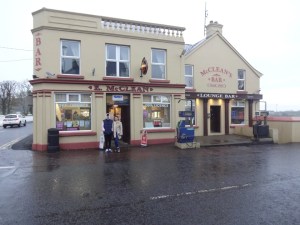


 I am in awe. It is no easy read, for it is written in a kind of double, triple speak, depicting a life and set of circumstances that is constantly in check, a circumventing of self. It describes from the inside how one young woman navigates daily life in a community that has drawn so many convoluted, coded lines of behaviour, that lives by so many unspoken, rigidly enforced violent rules, that has morphed into something so far from authenticity, that only the very ‘different’, appear able to, or indeed risk, living life true unto themselves, except those who left the country forever, their tale not told here, those that got away.
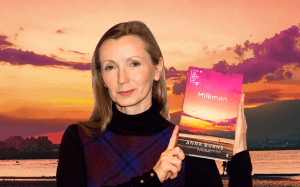 ‘Middle sister’ as she is referred to, thinks in a kind of coded language full of uttered phrases that substitute for a more succinct opinion, so that even the reader must enter into this “insinuating” talk to understand her thoughts, for nothing is stated plainly, just as nothing is observed or clarified as it really is. And we get good at it, at this revealing what is really being said, even beginning to see the humor in it, when none of it really is funny, there’s too much death, tragedy, sadness, ridiculousness. It’s not a life, it’s a trap.
 Word by Word