Episode 5: GOSH Where Peter Pan’s legacy resides, a kind of Neverland

At Great Ormond St Hospital we were shown to the Woodland Ward, the family and children friendly ward names, a first step in reducing my overburdened anxiety levels. Allia was in a beautiful communal room decorated for children, with soft lighting, colour, patterned bed sheets with giraffes and monkeys. The quiet whispers of the nurses a stark contrast to the beige walls, formica cabinets and metal machines with cables and hoses draped everywhere of the hospital we had just left.

Arriving at GOSH Great Ormond St Hospital

It was like we had left the factory and entered Neverland. In a way we had. GOSH has the benefit of many private donors and receives royalties from the estate of J.M. Barrie, who claimed Peter Pan had been a patient in Great Ormond Street Hospital and that:

It was he who put me up to the little thing I did for the hospital.

Allia was asleep in an open incubator so we could actually touch her. She was so peaceful sleeping there. There was no naso-gastric tube in her nose, only lines in her hands and feet, things that in this environment were as ordinary and common as sheets and blankets. She was okay and she was going to be okay. She looked more comfortable now than she had before and I was just happy to be there with her.

It was a shock for my husband. Having missed the birth itself, he was now confronted with something even more difficult, seeing his daughter for the first time in a hospital wired up to machines and about to undergo surgery. If he thought he had arrived in time to avoid the drama, he was mistaken, he had arrived in the middle of it and now he and I would have to endure four hours of awaiting the outcome of a major event that neither of us had any role in.

My Aunt left and Susan’s husband stayed with us. Susan (whose name I have changed for this story) and I used to joke about our funny connections and serendipitous events, one of them being that she shared the name of my mother and I shared the name of her daughter. We laughed the day we met when we discovered this connection, never for a minute anticipating the future role she would play in our lives, at the birth of our daughter.

We had about half an hour before Allia was taken downstairs to the operating theatre. The doctor spoke with us and drew a diagram of the digestive system, from the mouth, down the oesophagus, to the stomach and the small intestine to the ileum, the point just before the small intestine connects to the large intestine.

“It is here just before the ileum that there is a blockage” he explained. “We don’t know exactly what it is, whether there is an end to the intestine so that the two pieces must be re-joined or whether there are striations or a blockage, in which case, we may need to cut a section out. Do you want to come down to the Anaesthetists’ ward?” he asked.

“Yes” I replied.

“No” said my husband simultaneously.

The lift opened, Allia was wheeled inside, I followed with the doctor and we all descended.
Next Up: Late Night Surgery, the most difficult wait a new mother will ever endure

Read Previous Episodes this mother/daughter collaboration: A Silent Education: Our Quiet Challenge in Provence

Introduction

Episode 1: The Benefits of Insomnia

Episode 2: We are not Living in France!

Episode 3: The Benefits of Contra-Indicated Essential Oils

Episode 4: Where’s My Baby and Why Isn’t She With Me?

Episode 4: Where’s My Baby and Why Isn’t She With Me?

We laughed as the doctor left the room and I tried to remember how to breathe.

I even slept a little throughout that long night until around 5am when we reached the moment when the baby finally arrived. A beautiful tiny baby girl, an almost pained look of relief on her face, happy to have escaped I thought, or is it the other way around, I wonder, pained by that physical confrontation of birth into our harsh world? I only held her for a short while before she was taken away to be further checked, taken to a ward on another level.

We knew that there was a problem in the intestine, the hospital had picked it up at 22 weeks after the scan revealed fluid in the intestine making it balloon slightly. Due to this effect, they had been able to observe peristalsis, the smooth muscle contraction of the intestine wall, which moves food or liquid along the intestine. Ordinarily, we should not be able to see this, but if there is some kind of blockage, it is possible to observe.

It had caused us significant anxiety, particularly because the doctor could neither guarantee nor predict an outcome. There were two options he had said. Either the baby will require an operation immediately after birth, or you will take the little one home and at some time in the near future it will be necessary to return to the hospital, because it will be a problem for him or her to keep food down. In this case, the baby will vomit continuously because the bowel will have ceased to function.

We preferred that the problem be dealt with as soon as problem, but we were not given sufficient information to feel in any way empowered to make any kind of decision. So it often is with hospitals, perhaps believing that too much information can only increase anxiety, it seems as if they withhold it. I’m not so sure it’s a good strategy, being aware of one’s ignorance and feeling powerless are more painful symptoms of anxiety than the harsh dose of reality, complete information might bring, at least in my mind.

I mean, why send a baby home and wait for something terrible like that to happen? What were the risks of the operation? Every question always ended with “It depends. We can’t know exactly until we can see inside.” There was no reassurance, we just had to wait and so I had tried not to absorb too much of the anxiety already flooding through my veins.

Now that the moment had arrived, they seemed to be acting quickly, there was no suggestion of any “wait and see” now. The baby was gone, they’d cleared her breathing passages, shoved a tube up her nose, tied off her umbilical cord, weighed her and taken her out of the room. I know I did get to hold her, but I have no memory or feeling of the bliss of holding my baby after birth; the rush and feeling of panic and anxiety obliterated all that and I only remember the helplessness of not being able to follow and wanting to make sure that someone who I knew and could trust would keep an eye on my baby girl. I hadn’t held her long enough to even remember what she looked like!

The baby is in the post natal ward they told me. I sent Susan immediately to go and find her, I was too weak to get out of bed, but I was desperate for someone to go and see my daughter, to find her and tell me that everything was okay.

“She’s okay” said Susan. “She’s downstairs in an incubator and she’s quiet, you can go and see her once you are up and showered.” I dragged myself to the shower, washed then went down to the ward to see her for myself. There was a place to insert my hands but I couldn’t actually touch her. Barriers, barriers, I sent her all the love and maternal energy my heart could generate; I sent it to her in abundance, through my mind, my heart, my hands, from every cell in my entire being. And I decided to call her Allia.

The nurse came to tell me that Allia would be transferred in a few hours to Great Ormond Street Hospital. She advised me that she would be transported in a specially equipped ambulance designed for babies.

“It is not possible for you to travel with the baby” she continued. “It would be better for you to stay here for the night, you need to recover. Your baby will be okay.”

My baby would be okay she had said. I was not okay. I did not want to be there alone, I did not care about recovering, I wanted to be with her, she needed me, she was about to face something drastic and invasive and they were recommending she do that alone, without me even being in the same building.

I told Susan to go home and get some rest. Other people came to visit me and were shocked to find me there alone. I hated lying there watching the other women with their babies, feeling as if I had abandoned my own, powerless to have kept her. I remembered that my husband was due to arrive back in London that day. We had been unable to reach him.

Someone called from Great Ormond Street Hospital to ask me for parental consent to conduct surgery on our daughter.

“Ordinarily, we would get you to sign a consent form, but as you are not here, we need to get your permission over the telephone” the Doctor explained.

“When will the operation be?” I asked.

“At about eight thirty this evening” he answered. I looked at the clock; it was nearly 6pm already.

“Wait” I said, “I’m coming now.” I went back to the ward to find my husband and my Aunt waiting there for me.

“I need to get out of here” I said. “They’re going to operate on her in two hours and I’m not waiting here while that is about to happen.”

“I’ll take you in my car” said my Aunt. I grabbed my things and the three of us sped out of the Royal Free Hospital and raced towards Russell Square to Great Ormond Street Children’s Hospital.

Next Up in the mother/daughter collaborative story A Silent Education: Our Quiet Challenge in Provence

Episode 5 : GOSH – A Kind of Neverland

Previous Episodes: Introduction

Episode 1: The Benefits of Insomnia

Episode 2: We are not Living in France!

Episode 3: The Benefits of Contra-Indicated Essential Oils

Episode 3: The Benefits of Contra-Indicated Essential Oils

The baby was due a few days before Christmas, so losing my job gave me plenty of time to prepare for its arrival, at least that’s what I thought. A month before the due date I nonchalantly told my husband not to worry, he should just go ahead and visit his son in France for a few days while everything was quiet and in control at home.

A couple of days before his return, my friend Susan was due to come and help me clean windows and get things ready for the imminent arrival of our new family member. That morning I woke knowing something had changed; it looked different too as I observed traces of blood. I called the midwife and she advised me to come to the hospital immediately for a check-up and suggested I bring my not yet prepared hospital bag.

I went to the hospital that same day and apart from one brief night, I was not to return home for the next three weeks. Tests indicated the waters were leaking and I was informed an inducement would be performed as soon as a bed became available. There were eleven delivery suites at the Royal Free Hospital, all occupied; and so the long wait began.

That wait proved fruitful, long enough to skip over a few chapters of the book I was reading on Preparing for Childbirth and start reading about inducement. I didn’t like what I read at all, injected with drugs which make contractions more severe than they would otherwise be, did not sound in any way appealing. I looked for the chapter on breathing; I hadn’t read that chapter yet either. I had not finished the preparation classes, three weeks was plenty of time to get into the huffing and puffing part I’d thought.

My friend Susan arrived and read to me from the chapter about inducement, I listened to her calm, soothing voice with increasing horror and fear at the alarming words tumbling forth in that gentle voice and my thoughts drifted to my aromatherapy training and all those essential oils that are contra-indicated in pregnancy because they are emmenagogue, able to trigger contractions. Clary Sage, Jasmine, Rosemary. I had put some Lavender and Rosemary in my bag, one to stimulate, the other to relax. I decided that a natural intervention was required, I had to at least try, I had nothing to lose and a few hours left to do something.

Kimberley arrives to administer a calming, hopefully effective, abdominal massage

Susan went home to rest, promising to come back later in the evening. She had started the day out intending to be my window cleaning helper and she would end it as my birthing partner, something neither of us had envisaged and something I will forever be grateful to her for.

My dear friend Kimberley came to visit. Kimberley had been pregnant at the same time as me. We used to work in the same office, laugh together, drink big mugs of tea together and talk about our future. We were supposed to have our babies at the same time. Her beautiful, so loved already baby didn’t make it and now here she was coming to comfort and be with me.

I asked her if she would massage some of the Rosemary and Lavender mixed with almond carrier oil on my stomach. I told her my plan and she laughed that gorgeous, contagious laugh she has and said she hoped it would work. I felt some flutters, but not much else, it felt good to laugh and the aroma of the oils made me forget the blood-curdling screams that had been coming from the bedside next to me earlier.

About 10pm Susan returned and the nurse arrived to announce the availability of a delivery suite. We moved to the room and as they set up the monitors the fluttering started up again and the indicators on the monitor started to jump around. I looked at Susan and at the nurse. The nurse gave me nitrogen gas to inhale and I started to laugh uncontrollably, the room seemed to have become a little crazy, like we had entered a different zone. We had. The baby was ready to move.

The doctor returned and asked what was going on. He had expected to come in and administer drugs for an inducement. He took one look at the monitor and said “No drugs needed here. You are on your way” and left the room.

Next Up in our mother/daughter collaborative story: A Silent Education: Our Quiet Challenge in Provence

Episode 4 : Where’s My Baby and Why Isn’t She With Me!

Previous Episodes: Introduction

Episode 1: The Benefits of Insomnia

Episode 2: We are not Living in France!

Episode 2: We are not living in France!

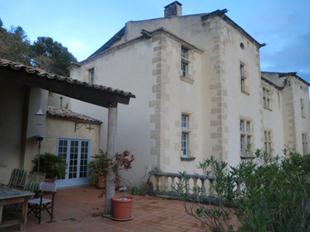
The leaves are starting to fall outside La Loubiere, the 16th century château where we are spending this last weekend of the autumn school holidays and with the kitchen door open early while everyone sleeps, I listen to the mesmerising sound of the wind in the trees and think about the change of the seasons. It does not seem so long ago that spring was here, when the bulbs that had lain dormant for the winter were poking their green stems through the surface.
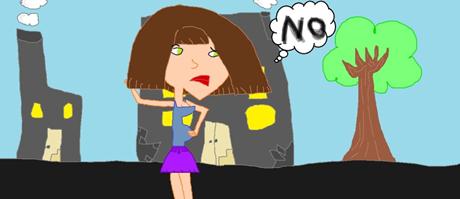
Now we wait for the period of stillness and hibernation, something we know very well, because in a sense we too have been in a kind of perennial hibernation, waiting for our daughter’s voice to emerge in the classroom and speak for the first time in school.

Now our spring has come and just like the association of supportive parents Ouvrir La Voix, she has finally opened her voice after more than five years of silence. She now speaks to almost all her classmates and we have one hurdle left, level 10 in the book that has become my bible – to speak to a teacher or adult in school.

It is hard to believe it has been five years. It is hard to believe that for the first three years we didn’t know what we were dealing with, that it even had a name. Perhaps if we had lived in America or Great Britain, we may have discovered those words earlier – or maybe this condition would not have even manifested.

Here in the south of France, selective mutism is unknown and with our daughter in a French school where interventions to assist children are commonplace and often successful, we were happy to follow the advice and recommendations of the school psychologist (every school has one), an orthophoniste (speech therapist), a psychiatrist and our doctor, all of whom were willing to help and in the case of our doctor, advised and reassured us that it was just a matter of time.

Three years on, having made zero progress, it was all to change late one evening after a telephone call with my Uncle, when he mentioned that he had been speaking with a friend in Los Angeles whose daughter had the same thing as ours.

“What thing?” I said.

“You know” he said, “the not speaking in school thing.”

“It has a name?” I almost shout. “Call her back now and ask her what it is.”

He did and through his friend then passed on those two words selective mutism, or mutism selectif in French, two words that not one of those health professionals had known of or discovered to suggest to us.  We weren’t looking for a label, we were searching for a solution and we’d been looking in the wrong place.  Our programme of intervention was about to take a different path, one used successfully by parents in the know, only we would not have the same support, as to take this route was effectively to reject the existing system.

But to tell this story properly, it is necessary to go back even further, to understand events that lead up to this moment and because despite trying to change the title of this episode and make it shorter, my creative daughter who has already finished the artwork, is telling me to write this second part now and include her picture. So here’s the bit about not living in France!

We are not living in France!

*

When I was six months pregnant we came to France for a 2 week holiday from London. We were toying with the idea of moving here, at least I was, for my husband it would be a return.

My body was changing and the world around was about to change significantly. One afternoon I returned to the hotel in Marseille to rest and as I passed the reception, I noticed all the employees looking at the television, watching what looked like the demolition of a couple of council buildings. I thought it strange that all the staff were watching TV in the middle of the afternoon, so when I got to the room I too turned on the television. I couldn’t understand the words spoken in rapid French, but I could read the subtext. It wasn’t a couple of council buildings at all; it was the twin towers of the World Trade Centre in New York.

During that holiday, we looked at a couple of apartments and houses, I sat through long-winded appointments with real estate agents, tried to understand menus and the rapid-fire French coming from that TV, all on a roller coaster of emotions and hormones, understanding little beyond Bonjour and Au Revoir, two basic expressions I thought I could pronounce, but listening carefully, I realised I’d been giving their syllables way too much emphasis, goodbye sounded more like ‘of waa’ than the expression I’d learnt to say.

I became disillusioned with the idea of living in France, I had long ago discarded that child-like submission of accepting things the way they are, being secondary to decision-making. Making decisions and understanding what leads to them is not something one gives up and neither was I interested in putting it on hold while coming to terms with a new language. I freaked out. No way was I coming to live here, a new language, a new city, a new baby, all things where I would be required to start again from the beginning. Absolutely no way I told myself.

Returning to London, the queues were horrendous, airport security was tight and there was no other subject being discussed other than the events that had occurred in New York. And they were beginning to have a trickle-down effect. I was concerned because I worked in the travel industry which was sure to be impacted and sure enough, within two weeks of our return, I was advised that my job was no longer required at a time when I knew I had no chance of finding another, not with a very obvious baby protruding from my mid-section.

Next up: Episode 3: The Benefits of Contra-Indicated Essential Oils!

Click below to read Previous Episodes of A Silent Education: Our Quiet Challenge in Provence

Introduction

Episode 1 The Benefits of Insomnia

Episode 1: The Benefits of Insomnia

Episode 1: The Benefits of Insomnia

Emily tells me she only sleeps for two hours at a time at night. She is conditioned to wake up. The words still fresh in my mind from the young pregnant doctor in Mike Leigh’s thought-provoking film Another Year, I listen to them again as they spill from my lips.

‘Insomnia is not an illness, it is a symptom.’

Emily lived at sea on a forty-foot sail boat for six years, so I’m not surprised it’s taking her body a long while to readjust, that and the unfortunate hostage experience which ended it all, her life spared but not her boat.

Seize an Insomniac Moment

Not only am I not an insomniac, I rarely dream or recall them, something Emily tells me she practises every night in the constant presence of her mother, a woman who hasn’t lived for more than eleven years now. I think about that and conclude that my days are so filled with dealing with the ever demanding present, that my mind must spare me from such night journeys into a fabricated past or alternative future. I know that when I do remember a dream, it is often worth writing down, such is its novelty.

Uncharacteristically, I couldn’t sleep this morning so I was doing what I do when I’m neither dreaming nor sleeping, having wake-dreams, which aren’t really dreams because I am consciously imagining them, creating dream-like semi-realistic scenarios.

In this morning’s dream scenario, I was writing this story in my head and thinking how sad it is that I don’t have the time I had when I first arrived in France, to spend endless hours writing, reading and learning from them both.  And then I thought Insomnia! Wouldn’t it be great if instead of lying here thinking about it, I raised this dormant body and took it off to write.

The story has reached a significant turning point so we are sharing it while it remains in the present and is not relegated to a distant nostalgic past, when I will no longer be thinking about it in the same way and unlikely to be dreaming either.

And now my daughter is collaborating, depicting my not sleeping state seconds before seizing that opportunity of a rare insomniac moment.

Next up:

Episode 2: We are not living in France!

 of A Silent Education: Our Quiet Challenge in Provence

Previous Episodes:  Intro

A Silent Education: Our Quiet Challenge in Provence

Struggling with my latest read, I think about all those people starting out on the NanoWriMo trail and all those old stories gathering dust on the shelf, my finished and unfinished novels, the new one I would love to start and the words of my friend Bernadette, who suggested to me yesterday that I write a story directly into this blog.

It’s an idea with merit and one that will help me overcome another little dilemma, that of a 10-year-old girl who wants her own blog, whose little fingers have occasionally and so she says ‘accidentally’ found their way in here.

So this will be our collaboration, I will write the episodes and she will create the illustrations, which seems appropriate as this story is going to be about her, about an aspect of our journey together that is worth sharing, because I know our experience is already helping others going through something similar.

So, next up Episode One : The Benefits of Insomnia written by me and illustrated by my daughter.

Here is the cover she designed today, there is a colour version, but she wants me to put it up in black and white.

And just to clarify, that’s her on the left and me on the right. (She has used her artistic ability liberty to remove her curls and make herself as tall as me).

Black Count – Glory, Revolution, Betrayal and the Real Count of Monte Cristo by Tom Reiss

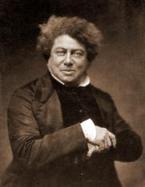
Mention the name Alexandre Dumas and many will associate it with the classic stories as well-known now through their film adaptations, The Count of Monte Cristo, The Three Musketeers, The Black Tulip and La Reine Margot (Marguerite de Valois) as they are through the novels.

In France the novelist referred to as Alexandre Père Dumas, had a son Alexandre, also a well-known playwright. Less is known about the novelist’s father General Alexandre ‘Alex’ Dumas, born in 1762, the son of Marie Cessette Dumas, a black slave from Saint-Domingue (modern-day Haiti) and a French nobleman Alexandre Antoine Davy, the Marquis de Pailleterie, who was from a family of provincial aristocrats with a more impressive coat of arms and title than fortune to their name.

Tom Reiss has researched the life of General Alex Dumas and takes us from the French sugar plantations of Saint-Domingue to the battlefields of the French revolution and to a dark dungeon on an island in the Mediterranean, in recapturing the spirit of this extraordinary man, living in an unforgettable era, that we are all the better off for being reminded of.

Antoine was the eldest of three brothers, required to go out in the world and seek their fortunes, which they initially pursue in the army before Antoine followed his brother Charles to Saint-Domingue. At the time the world’s largest sugar exporter, it generated vast wealth using slave labour, as depicted so vividly by Isabelle Allende in her excellent novel Beneath the Sea.

Charles married into money and established himself as a planter so Antoine joined him, though without the same work ethic or ambition, content to live off his brother, until an altercation caused him to flee with a couple of slaves and his slave mistress. The brothers never saw each other again and the family lost track of the eldest brother believing him to be dead. As the eldest, Antoine was heir to the title and the ancestral estate of Bielleville, however it was passed to a nephew in the belief of his demise, until his sudden and unexpected return to France.

Antoine had fled across the mountains to Jérémie, a coffee plantation area where he settled with a woman named Marie-Cessette and had four children with, including a son born on March 25, 1762 whom they named Thomas-Alexandre.

Bielleville, the family estate

He eventually returned to France, and learning of the death of his parents attempted to claim his title which had passed to the nephew, Comte Léon de Maulde, who employed a detective to investigate the returning heir’s mysterious island interlude and return.

Chauvinault then reported on Antoine’s having bought, in the late 1750’s, the beautiful black woman named Marie-Cessette, for whom he’d paid that “exorbitant price” – implying some unusual interest in her. Before Antoine’s return to France, Chauvinault reported, he had sold three of his children, as well as Marie-Cessette herself.

The detective also brought the interesting news that Antoine’s fourth child, a boy who was said to be his favourite, had not been sold along with the others. This boy was “a young mulatto who, it is said, was sold at Port-au-Prince,” Chauvinaluth wrote, “conditionally, with the right of redemption, to Captain Langlois, for 800 livres.”

On arrival in France Antoine sends for his son and thus begins a different life for the adolescent Alex Dumas Davy de la Pailleterie. His father pawned the family estate and moved them to the rich and fast growing Saint-Germain-en-Laye, on the western side of Paris. Dumas received a superior education, expensive clothes, training in fine manners, riding, baroque dancing and duelling among other equally refined activities. After a falling out with his father, he enlisted as a horseman in the service of the queen just as the French revolution was gaining ascendancy, which resulted in him being promoted through the ranks rapidly, rising to command entire divisions.

Up until the reign of Napoleon Bonaparte, nothing seemed to phase Dumas, he was respected by all, he was fair, he introduced many improvements in the armies beneath him and challenged any wrongdoings of others, whilst keeping his head – not so easy during the reign of terror.

General Alex Dumas

Alex Dumas was a consummate warrior but also a man of great conviction and moral courage. He was renowned for his strength, his swordsmanship, his bravery, and his knack for pulling victory out of the toughest situations. But he was known, too, for his profane back talk and his problems with authority.

Alexandre Pere Dumas, Novelist

He was the inspiration behind the hero of his son’s novel ‘The Count of Monte Cristo‘, the story of the young sailor Edmond Dantes who, on the verge of a promising career and life, is locked away without witness or trial in the dungeon of the island fortress Château d’If.

An island dungeon is where Alex Dumas, finds himself after the failed French invasion of Egypt, when he is almost shipwrecked on his return, the ship limping into the south of Italy, which in the meantime has become an enemy of France and sadly Dumas’ influence with Bonaparte has diminished and he is all but forgotten.

Les Fers brisés, Paris

The story is rich in detail and reads more like a novel than the historical account that it is. Tom Reiss has excelled in researching both the vast volume of documentation, which from his account, sounds as if the Generals sent letters at an equivalent rate to which people send email today as well as visiting all of the battle sites and physical locations the General and his family were based.

Reiss encounters his own difficulties in pursuing the research, all of which contribute to making this a most compelling and entertaining read, but above all, one can’t help but admire the man, who lived in an extraordinary period of history, who was born into slavery, witnessed its emancipation, then both saw and experienced it tragically being rescinded. He deserves his rightful place in the historical annals of France, as a role model, a hero and a man of the people.

Note: This book was an Advanced Reader Copy (ARC) kindly made available by the publisher via NetGalley.

When Women Were Birds: Fifty-Four Variations on Voice

Firstly I have to thank my blog buddy Cassie for recommending this glorious oeuvre to me, her blog review is written with such passion and awe, she even inspired the author Terry Tempest Williams herself, to leave a wonderful appreciative comment.

When she wrote this book, Terry Tempest Williams was fifty four years old, the age her mother was when she finally succumbed to a cancer that first perched threateningly within her breast in her late 30’s, then a young mother of four children.

Raised in a Mormon family and heritage it perhaps should not have been such a great surprise when Terry’s mother informed her that like previous generations of women, she had left her daughter a collection of carefully preserved, beautiful cloth bound journals. A tradition yes, but a legacy, this daughter of words knew nothing of until that revelatory moment.

In Mormon culture, women are expected to do things: keep a journal and bear children. Both gestures are a participatory bow to the past and the future. In telling a story, personal knowledge and continuity are maintained. My mother kept her journals and bore four children: a daughter and three sons. I am her daughter, in love with words.

One month after her mother’s passing, Terry Tempest Williams felt ready to receive their wisdom and sat quietly opening one after the other absorbing their blessed pure message. She opened the journals to discover that the pages were blank. Every. Single. One.

Word by word, the language of women so often begins with a whisper.

I am leaving you all my journals…

Terry Tempest Williams creates an opportunity and uses those pages to reflect on the legacy her mother has left her and fills the pages with fifty four vignettes, fifty four variations on voice. She comes to understand many things about the blank page and the infinite possibilities this offers, the things her mother’s gesture may have meant. She indulges her imagination and shares a flock of realisations:

My Mother’s Journals are an expanding and collapsing universe every time they are opened and closed.

My Mother’s Journals are a gesture and a vow.

My Mother’s Journals are a collection of white handkerchiefs.

My Mother’s Journals are an obsession.

Part way through writing these short chapters, Williams attended a family event, which unhinged something inside. Restless, she came home and wrote a list, a list of the things she had been writing about in these pages and struggled to find a connection. Her list looked like this:

Great Salt Lake                      Mother

Bear River Bird Refuge             Family

Flood                                  Cancer

Division of Wildlife Resources    Mormon Church

Circling both lists, it seemed as if nothing connected them. Until she wrote the letters TTW underneath; then the exercise became apparent. It is she who connects these subjects, it is within her that they reside and it is through her voice on the page that we share an intimate and creative journey, like observing the beauty, the wonder and constantly evolving shape of a murmuration. A privilege to witness.

This is a book to slow read, to re-read and to ponder. This book is in every one of us. Whether we create our list first or mid way through as TTW did.

A Murmuration – click here to see two women and the most amazing flock of birds ever. Spectacular.

Mrs Robinson’s Disgrace – The Private Diary of a Victorian Lady by Kate Summerscale

Kate Summerscale likes to take ordinary people who have been noted for doing some extraordinary thing, though not usually something to be admired – and shares their story in a way that reads like compelling fiction.

Her previous book The Suspicions of Mr Whicher or The Murder at Road Hill House reads like a detective novel and coincided historically with the introduction of the adapted role of a certain type of police officer – that of the detective.  This person was required to use specialist skills to investigate suspicious deaths, such was the case with Mr Jack Whicher of Scotland Yard, assigned to investigate the gruesome death of a young family member of a supposedly respectable household in a quiet Wiltshire village, putting all members of the family under suspicion and creating an unprecedented public sensation.

Now she has turned her pen and research skills towards the diary and letters of a Victorian lady, Mrs Isabella Robinson, an impulsive, intellectual woman, widowed young and remarried to an uninterested man who seemed to require nothing more of her than to keep house and children in order, a role she fulfilled, but was not content to be limited to and thus her attentions strayed towards the happily married Dr Edward Lane.
Throughout most of her diary entries he appears not to return her amorous feelings, but Mrs Robinson has the skills of Flaubert (who was prosecuted in the late 1850’s for corrupting public morals with Madame Bovary – a novel considered ‘too repulsive’ for publication in Britain) in expressing both her angst and sexual frustration and perhaps even her fantasies (were they?) with regard to certain men hovering in her vicinity – certainly, as with Flaubert’s prose, there were pages deemed unsuitable and unfit for the eyes of anyone outside the court and the media banned from laying eyes on it for fear of corrupting the public.

Her dramatic verse, which employed few filters would prove to be her undoing and became the sensation of a highly publicised court case, which also straddled a moment in history, when divorce laws were changed to make them easier to obtain, particularly as the law discriminated against women and allowed some terrible situations to endure as a result.

The law stipulated that to secure a divorce, a husband needed to establish just his wife’s infidelity, whereas a woman needed to prove that her husband was not only unfaithful but also guilty of desertion, cruelty or sexual misdeeds such as bigamy, incest, rape, sodomy or bestiality.

Ironic, in that no one questioned Mr Robinson concerning his mistress and two illegitimate children, clearer evidence of infidelity than anything penned by his errant wife.

Queen Victoria

Allowing these situations to be resolved through the Court created a predicament with the population concerning reportage in newspapers, an issue to which even Queen Victoria was said to have addressed.

On 19 December, Reynold’s Weekly, observed that the cases in the Divorce Court ‘seem to indicate that among the high, the moral, the respectable, and the Christian classes…adultery is in a highly flourishing, if not exceedingly rampant, condition.’ A week later Queen Victoria wrote to Lord Campbell, the chief designer of the Divorce Act, to ask if he could suppress some of the stories coming out of the court.

It seems the Queen had no power to stop the presses and received a reply indicating that they were unable to limit the newspaper stories.

Overall, an interesting read and historical context and no doubt opinion continues to be divided on whether Mrs Robinson was hard done by or plain foolish to have committed such desires, whether fantasy or fact to paper.  A woman fifty shades before her time perhaps.

Note: This was an Advance Reader Copy (ARC) provided by the publisher via NetGalley.

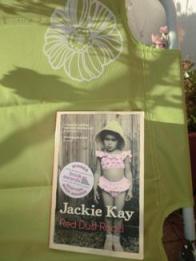
Red Dust Road by Jackie Kay

I discovered Red Dust Road after reading a feature about Jackie Kay in the Guardian’s A Life in Writing series coinciding with the release of her short story collection Reality Reality. Upon reading the interview I learned that she had also recently published a memoir focusing on the story of her adoption by a Scottish couple and her subsequent attempt to find her Scottish birth mother and Nigerian birth father. I ordered both books, keen to discover this writer’s work, particularly as she is also a renowned poet and I am drawn to writers who already have poetry resonating within their voice, and I couldn’t wait to jump into the memoir, more for personal reasons, since I have been on a similar journey myself.
While her brother Maxie said he couldn’t remember not knowing he was adopted, for Jackie, the realisation was one she remembered clearly after watching a cowboy and Indian film and feeling sad because the Indians had lost again and she wanted them to win. After observing that the Indians had her colouring which was not the same as her mother, she asked why. The revelation that followed came as a shock, she cried and worried that ‘not real’ meant her mother was somehow going to disappear or dissolve. But she had been gifted with a loving and sensitive mother, an honest, straightforward and intelligent woman, who clearly loved both her children unconditionally as Jackie Kay displays in her warm, appreciative depiction of the characters involved in this remarkable and exhilarating story.

My Friend’s Wedding in Lagos

‘Betrothed’, she told me ‘your father met your mother in the Highlands of Scotland and they fell in love. He was from Nigeria – look, here it is in the atlas – and she was from the Highlands – look, here’s where she was from, Nairn. They were madly in love and they made you, but he was betrothed and had to return to Nigeria to marry a woman he maybe had never met. They do that there, you know. Hard, Jackie, must have been hard’.

In no rush to piece together the puzzle, but knowing that she will, Jackie finds occasion with her work to be in certain places where she can do a little investigative work, she visits Nairn, where he birth mother grew up and Milton Keynes where she lives now; Aberdeen where her father was at university and Nigeria, that supposed foreign land of her ancestors that she had no connection to in her daily life, but has dreamed of and imagined and experiences a kind of coming home when she visits the ancestral village of her father.

Recounting her visit to the village and in particular meeting one of the family members, left pools of liquids in my newly prescribed reading glasses, tears of joy and recognition as acknowledgement is realised. I don’t want to say too much, because there is too much good in reading this for the first time and not knowing what will occur, but this is a wonderful story, narrated without sentimentality, putting the reader right in her shoes, almost experiencing it first-hand.

Hanging Out in Lagos, Nigeria

Like so many adoption stories and as depicted so well in Mike Leigh’s ‘Secrets and Lies’, there remains much mystery and secrecy around so many of the stories. For those who have buried that episode in their lives somewhere deep, there is a reluctance to risk the turbulence they perceive it may cause, and even when acknowledged by the parent adoptees are often kept from the rest of the family. This can be one of the greatest risks of pursuing genetic ties, the risk of rejection as an adult with full consciousness, unlike that of a baby; although much research suggests that a baby does indeed have awareness of the separation.

Many doctors and psychologists now understand that bonding doesn’t begin at birth, but is a continuum of physiological, psychological, and spiritual events which begin in utero and continue throughout the postnatal bonding period. When this natural evolution is interrupted by a postnatal separation from the biological mother, the resultant experience of abandonment and loss is indelibly imprinted upon the unconscious minds of these children, causing that which I call the “primal wound”. Nancy Verrier, The Primal Wound, Understanding the Adopted Child

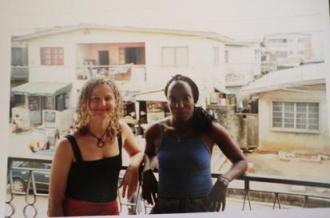
The balcony from where the children sang to me

I laughed when she talked about the experience of being called Oyibo (white person) in the village, causing quite a sensation with her paler skin. She mentions returning to Lagos which she describes as more cosmopolitan and where one is unlikely to hear that word.

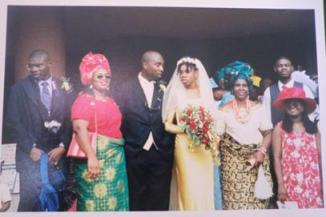
I have to say that I too know that word, from my visit to Lagos in 1999, when I visited for marriage of a very dear friend. In the quarter where I was staying, I was a bit of an anomaly and not only did the children come to stand outside the house in case they caught a glimpse of the Oyibo, they even had a song they sung, which my friend laughed at, remembering she too used to sing it as a child, something about ‘white man, eat more pepper (the very hot pepper soup for breakfast), make your face go redder’, I guess it’s true, we do have an unusual capacity to change the colour of our face when eating something very hot or becoming embarrassed!

There are so many extracts I could paste and talk about from Red Dust Road, the reaction of her own son, the discovery of names, the reading through old archives, visiting buildings from another past, the importance of the imagination and the importance of a true friend, but I would prefer that you read the book and enjoy your own journey and reactions to this wonderfully humane and important story that we are privileged to share.

*

Below, I share a few photos from my visit to Lagos, Nigeria in 1999, an unforgettable experience it was indeed.

Preparing for the Native Ceremony, bride wearing her family ensemble

View from a rear window

Bride with her brother, wearing an outfit from the husband’s family

The theatrical Native ceremony in full swing