
 A Memoir of Finding Home Across the World
Living in Sweden and remembering nothing of her native language Portugese that she spoke until she was adopted at the age of eight, Christina Rickardsson, now 32-years-old is about to embark on her first trip back to the country of her birth to reconnect with elements of that initial period in her life, vividly recalled.
Recurring nightmares of her childhood awaken something in her sub-conscious, creating an emotional/ spiritual crisis that she addresses by revisiting .
I watched my eyes fill with tears as I realized that the little girl who had run for her life had just kept on running. I needed to stop running and once and for all, for my own sake, process what had happened.
A dual narrative flips between the present as she returns to Sao Paulo with her friend Rivia, who will act as her translator and the past where she shares the vivid memories and equally strong emotions of her early childhood years.
She reviews the adoption papers that have been locked in a safe for the past 24 years.
I’ve never felt the need to find out who I am, where I come from, or why I was abandoned. I know who I am, where I come from; most of all I know that I wasn’t abandoned. Kidnapping might be too strong a word to use for how our adoption transpired, but sometimes that’s what it felt like.
Some of the things she reads disturb her because they don’t ring true, she retains strong and tender feelings of love towards her biological mother and recalls the trauma of their separation but has never understood why. Her story is written in a desire to restore her mother’s name and tell their truth as she remembers it, to fill in the gaps in her knowledge and find out if her mother is still alive.
She recalls details of living in a forest cave in the Brazilian wilderness with her mother, of surviving on the streets of Sao Paulo and her time in an orphanage before she and her almost 2-year-old brother are adopted by a Swedish couple and begin a new life there.

Map from traditional symbols of culture and the nature of Brazil
She recalls her friendships with other children when they live in the streets, special moments, terrifying incidents and the strong emotions they evoke are equally remembered, her instinct for self-preservation is strong and her reactions to things spill over into her new life in Sweden, where they are often deemed inappropriate.
On some level, I began to understand that people, especially grown-ups, weren’t interested in the truth but rather in a truth that suited them. They only wanted to know about things that made stuff easier for them. It didn’t matter that I was walling off part of myself, that I was turning into someone else.
The relationship she remembers with her mother from childhood is tender, the bond strong, she defends it, and holds tight to the memories. There is a respectful appreciation for her Swedish family and clearly a difference between her feelings and those of her brother, who recalls little of his life in Brazil before their adoption.
There’s an undercurrent of sadness in this accomplished memoir, of a woman who is neither one thing nor the other, who can never let got of who she is, but must continue to live as that whom she has become.
She repeats often a kind of mantra, that life for her is not about finding herself, but about creating herself. And yet the two go hand in hand, as her story so adeptly shows, though she was separated from her mother, her country and culture, she lived in it long enough for something of it to have sunk deep into her psyche, which is not the case for children adopted at birth, or as toddlers. Many search to find out what she already knew, before they can freely go on to ‘create’ themselves anew, or to realise that they can be who they are, because they can make peace with the mystery of their unknown heritage.
I felt so much rage growing up that it frightened me. It filled me and destroyed me. I felt it, but I didn’t know how to handle it, so I smiled and laughed even more and did well in school…I had walled off my true self.
 Eventually she finds a way to navigate the two selves by turning the focus outward, towards helping others, addressing the ache of having had to suppress her true self for so long.
She shares one of the more troubling stories of her childhood in a 15 minute TED Talk below and the inspiration behind the words in the title, Never Stop Walking.
Further Reading/Listening
Christina’s TEDTalk : The Lottery of Life
Article, 25 Oct 2018 Humaniam.org : Children, the main victims of violence and crime in Brazil
 A book that needs no introduction, a woman unanimously loved from where I sit and yet one who was exposed to the full spectrum of opinions about her, requiring an inordinate amount of resilience. Interestingly, there had not been universal admiration for her by some prior to reading the book, a reflection of how much influence the media has on our perceptions of people, both positive and negative.
 But what a sacrifice really, despite the perception of it being glamorous and of course privileged. What a relief to get some semblance of a life back, I hope so anyway. Their celebrity status will likely never change, but as she shares in the opening pages, she is at least able to do some things unobserved, to open a window, listen to birdsong and dogs barking, feel more like a human being again.
 He introduces us to the Luminous Healers, significant teachers and mentors he had during his time with the Native American shamans and puts historical references into a modern context. It is incredible that any of these beliefs and practices have survived after the destruction of the Indians by early settlers, which obliterated the spiritual traditions of most native groups. Native American shamans were reluctant to share their heritage with white people.
 A few years ago a lady who had recently moved here to Aix-en-Provence contacted me in relation to
  Excited about the opportunity to put her writing skills to the test, Karin took the first chapter of her book, moulded it as much as she could to meet the criteria, sent it to me to look over and to make recommendations on how to whittle it down further without losing any of the content and then sent it off! We came up with the title

 I first read Haitian author, Edwidge Danticat last summer, her novel Breath, Eyes, Memory (review linked below) about a young girl living with her Aunt in Haiti, while her mother lived in New York, a little like the life of the author herself, much of which is revealed in this non-fiction title, Brother, I’m Dying where we learn more about her life, though the primary focus is on her father Mira and in particular, her Uncle Joseph.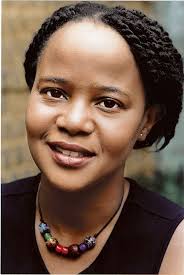



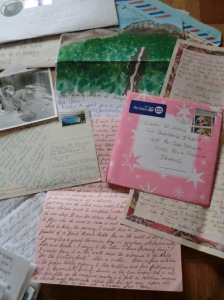 Nina Sankovitch has a more romantic view of letters and letter writing and the word joy in the title is a clue. She doesn’t speak of the suffering of not receiving letters, she speaks of the joys of connection.


 Word by Word