

I’m not really into reading goals and rarely participate in challenges that might oblige me to stick with a fixed plan.
A mood reader, I like being able to change my mind about what is going to be picked next. So often, the book I’m reading points the way forward to the next one, or a conversation leads me to recall another book I have on the shelf already.
That said, there are certain intentions I have, and I thought I would list them this year, to give a little direction or framework to the year. As always, things can change, they probably will and if so I will welcome that!
1. Read one book a week

While the number doesn’t really matter, it exists so that that at any one time I can see if I’m keeping with my intention or lagging behind. This reading challenge is on Goodreads, which is where I dump my first impressions as I read or makes notes while reading, or not.
Some may think that reading 50-60 books in a year is a lot; it is about the equivalent of reading 50 pages a day, which is around half an hour to an hour each day. The trick is to read a little every day. I mostly read at night, in the TV watching hour(s) and just before sleep.
2. Reading Ireland Month, March 2024

Last year I read 18 Irish books and I could easily do the same this year, the main focus being Reading Ireland Month in March over at Cathy’s 746Books.
In addition to books from this pile I own here, Cathy has just posted Irish Novels to look out for in 2024 and Irish Short Story Collections + Nonfiction to Look Out for in 2024.
There are few books here I am interested in, notably, from author’s I’ve read and enjoyed; Jan Carson’s Quickly, While They Still Have Horses (short stories) plus collections from Mary Costello and Lucy Caldwell; in fiction, Nuala O’Connor’s Seaborne, Siobhan Gleeson’s Hagstone, Caiolinn Hughe’s The Alternatives. There’s likely to be more temptations I’m sure!
3. Read More Latin American Fiction

Thanks to a subscription with Charco Press, I will be receiving nine books throughout 2024, as they are published.
2023 was a stellar year of reading books from this region, I enjoyed them all, in particular A Little Luck by Claudia Piñeiro (Argentina) tr. Frances Riddle, Two Sherpas by Sebastian Martinez Daniell (Argentina) tr. Jennifer Croft and The Delivery by Margarita Garcia Robayo (Colombia) tr. Megan McDowell.
The 2024 Fiction Bundle includes these titles, so many of which I am excited to read:
- Not a River by Selva Almada (Argentina) tr. Annie McDermott
- The Dark Side of Skin by Jeferson Tenório (Brazil) tr. Bruna Dantas Lobato
- Why Did You Come Back Every Summer (Argentina) by Belén López Peiró tr. Maureen Shaughnessy
- Tidal Waters (Colombia) by Velia Vidal tr. Annie McDermott
- The Cemetery of Untold Stories (Dominican Republic/NYC) by Julia Alvarez (Untranslated Series)
- Last Date in El Zapotal (Mexico) by Mateo García Elizondo tr. Robin Myers
- Time of the Flies (Argentina) by Claudia Piñeiro tr. Frances Riddle
- The Plains (Argentina) by Federico Falco tr. Jennifer Croft
- Your Cross in the Desert Sky (Colombia) by Carolina Sanín tr. Fionn Petch
4. Read More Annie Ernaux, In French

In 2023, I read Annie Ernaux’s Nobel Prize lecture, I Will Write to Avenge My Race (2022), Simple Passion (1991), and Shame (1997).
In 2024, I hope to read her masterpiece The Years (2008) in English and these three titles in French, L’occupation (2002), (The Possession), Une femme (1987), (A Woman’s Story) and “Je ne suis pas sortie de ma nuit” (1997), (I Remain in Darkness).
I live in France, but tend to read French titles in English, in order to encourage readers to pick them up, however all these titles are available in English anyway and reading in French is a great way to increase vocabulary and exercise the brain!
5. Observe the Awards
Each year, there are certain awards, I like to follow, though they rarely influence what I am going to read. If anything, I’m more likely to find something that might interest me on the longlists, but I do enjoy watching the process of these so very subjective gatherings and all the literary chatter they evoke.
The awards I’ll be looking our for in 2024 are, the New Zealand Book Awards, The Irish Book Awards, The Dublin Literary Prize, The International Booker, The Booker and The Warwick Prize for Women in Translation.
I also like to see who makes the Dylan Thomas Prize longlist, an award for young writers, aged 39 and under, as it is can be a predictor of authors to watch out for in the future. The author Okwiri Oduour (Kenya), who wrote Things They Lost, my One Super Outstanding Read of 2023, was longlisted for this prize and another favourite author Sara Baume (Ireland/UK) was shortlisted.
6. Read More Women in Translation

I love to read around the world. In 2023, I read books from 23 countries and a third of them were in translation. I particularly like to support women authors in translation, due to the challenge this group has in being picked up by publishers and seen.
There is a wealth of great literature to discover here and it is heartening to see classics by the likes of Alba de Céspedes (Italy) coming to print in English for the first time, since being published in the 1950’s.
In 2024, I hope to read more of her work, more by Natalia Ginzburg (Italy), plenty via Charco Press and certainly more that I have yet to decide on. Women in Translation month #WITMonth is in August, which isn’t a great reading month for me, as it’s peak season work wise, so I’ll be reading it all year round, but following closely in August for recommendations.
7. Écrire Marseille: 15 grands auteurs célèbrent la cité phocéenne
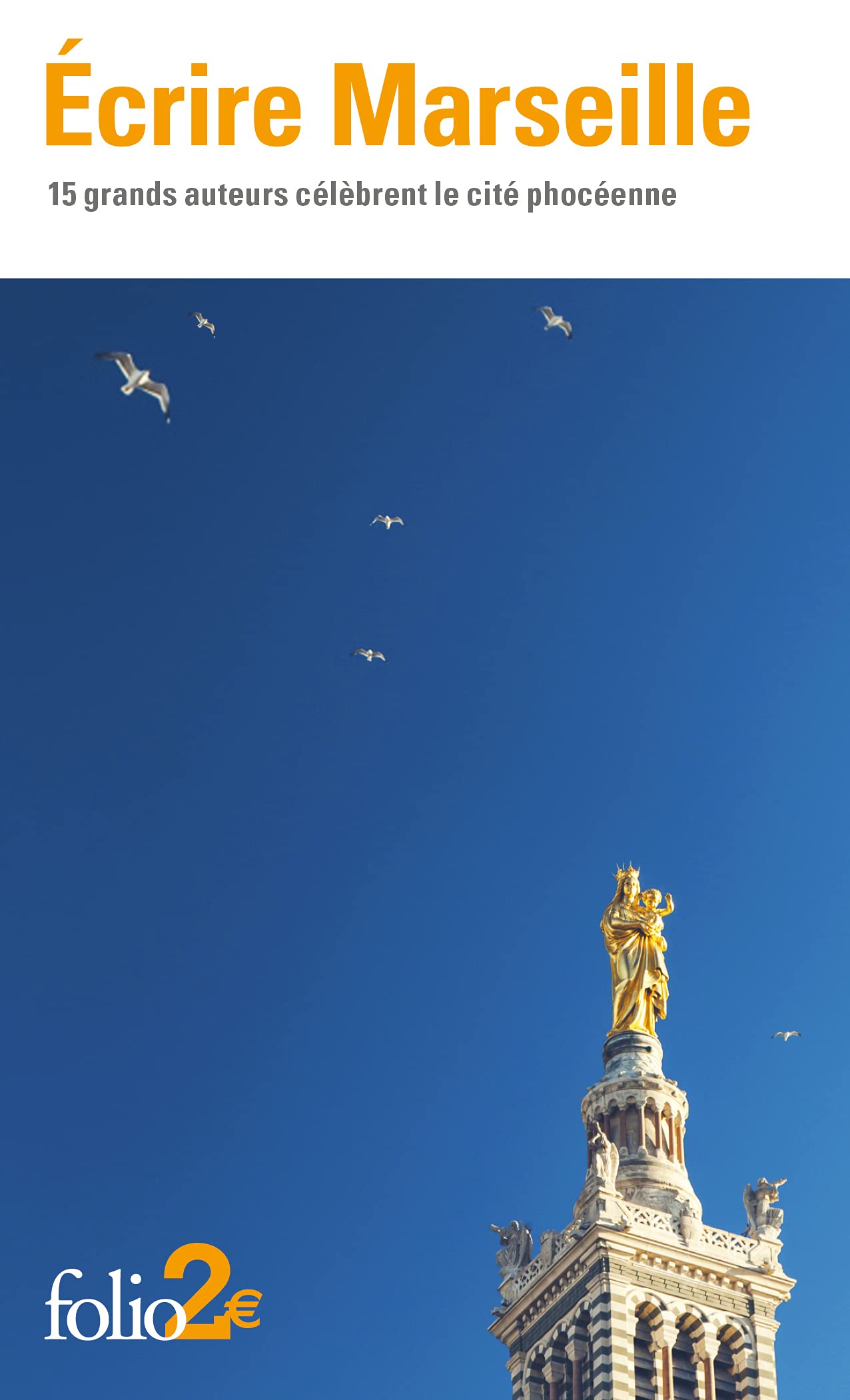
Marseille is a wonderful city, only 25 minutes from where I live. I came across this title in a local bookstore, a compilation of extracts from various French works that mention or celebrate the city of Marseille in some way.
Having had a glimpse inside, I won’t be exactly reviewing the titles or extracts, but I will allow each text to inspire me to write something, using them as a kind of springboard to discover whatever it is to be found by studying the text. That is likely to include a few visits to this complex, unique city herself.
The opening quote is from The Trilogy Fabio Mentale, of which I have read the first in the series, Jean-Claude Izzo’s Total Khéops (1995) (Total Chaos):
“Marseille n’est pas une ville pour les touristes. Il n’y a rien à voir. Sa beauté ne se photographie pas. Elle se partage. Ici, il faut prendre parti. Se passionner. Être pour, être contre. Être, violemment. Alors seulement ce qui est à voir se donne à voir.”
“Marseilles isn’t a city for tourists. There’s nothing to see. Its beauty can’t be photographed. It can only be shared. It’s a place where you have to take sides. Be passionate. Be for, be against. Be, violently. Only then what is to be seen, shows itself.”
The 15 authors included in the anthology are:
Arrivées à Marseille: Alexandre Dumas (1802-1870), Gustave Flaubert (1821-1880), Albert Cohen (1895-1981), Simone de Beauvoir (1908-1986)
Regards sur la ville: Paul Valéry (1871-1945), Marcel Pagnol (1895-1974), Albert Camus (1913-1916), René Frégni (né en 1947), Rebecca Lighieri (née en 1966), Alain Damasio (né en 1969)
Quelques quartiers de la cité phocéenne: Paul Cézanne (1839-1906), Albert Londres (1884-1932), Louis Brauquier (1900-1976), Jean-Claude Izzo (1945-2000), Maylis de Kerangal (née en 1967)
8. Read What I Like, When I Like

Have intentions, not obligations. No need to review or finish a book, just follow what lights me up.
Reading and playing around on this blog is total freedom and enjoyment, never a chore, just a fun place to hang out and create content that are like the conversations I am unable to have, because I would never wish to impose all this on anyone.
But thank you to those willing to read and comment, who follow along anyway, that is like the icing on the cake, a gift that is much valued and appreciated and which often contributes to what I might read next.
* * * * * * * * *
Do you have any reading intentions for 2024? Let me know in the comments below.
 I have wanted to read this novel for a while, ever since reading


 Word by Word