
 Tonight is the grand dinner in the Grand Hall of London’s Guildhall, where invited guests, judges and shortlisted nominees will be dining on porcini soufflé with a warm salad of wild mushrooms, black truffle shavings and cep velouté to start, then roast lamb with all the trimmings and a dessert of autumn textures and scents.
I do love how twitter lends a sense of occasion to an event I am far from, but can so vividly imagine thanks to our  ever faithful, if somewhat distracted guests.

Drapers Livery Hall
It takes me back to a time-out year while studying in London and working part-time as a silver service waitress, serving many of the worshipful companies of vintners, weavers, apothecaries, blacksmiths, basketmakers, bowyers, broderers, feltmakers, farriers (ancient trade and craft brotherhoods fraternities), referred to collectively as livery companies, of which more than 100 continue to survive and meet inside some of the most extraordinary inner environments in the City of London today.

The Loving Cup
The livery companies are said to have originated in England before 1066. Guilds or associations were very popular throughout Europe and here in France, they remain prolific, although without all the pomp and ceremony that I was witness to during that year in London.
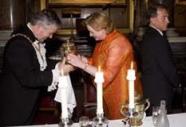
Ceremony of the Loving Cup
Rose petals in finger bowls and the loving cup ceremony, where two daggers are passed from man to man, while a third man (or woman) drinks in a protective ritual said to date back to Saxon times when King Edward was assassinated (stabbed in the back), place settings for multiple courses, at least 4 glasses for the water, wines and port and women smoking cigarettes in long-stemmed holders.
They had responsibility for standards, policy, educational qualifications, statutory and regulatory functions, and many of the guilds continue to play an important role in those areas today – however I was only witness to their meal time etiquette, which as a foreigner was a fascinating world to me, like living inside a medieval book for a night – surreal and the experience came with no explanation, only how to serve meat and vegetable using a fork and spoon in one hand, while holding a heavy plate with said food in the other. I developed very strong biceps 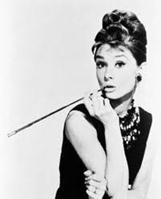 and a unique cultural insight.
Today many of the City’s (London’s inner financial district) street names – such as Milk Street, Bread Street, Ironmonger Lane, Poultry, Cloth Fair and Mason’s Avenue – mark the sites where it all began.
And tonight book lovers and writers gather in that great medieval-style guildhall to celebrate literature and make one writer’s night, one never to forget.
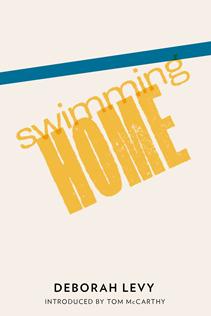
Now that I’ve spent the last hour on a bit of a nostalgia trip, let’s check twitter again to see what we will be reading, will it be Deborah Levy’s Swimming Home, the one on the list I have read, or Tan Twan Eng’s The Garden of Evening Mists which I haven’t read, though I did just read his first novel The Gift of Rain.
………and the winner of the Man Booker Prize for 2012 is……..
Bring Up the Bodies by Hilary Mantel!




 writers become future classics. Perhaps books are going to become more of an interactive experience?
 Haruki Murakami’s work was introduced to me by
  In this volume Toru Okado is looking for a job, and while living through this in-between stage, in between jobs – his wife doesn’t return home one day thus he enters into a strange period where each of his interactions take on questionable qualities as he tries to navigate his days and understand what is happening around him.
 Revelations came to me also, weird dreams of deep wells and immersing in blue pools of water and seeing things clearly.
 Aomame is a loner, growing up in a Jehovah’s Witness family she had no real friends and rejected her family’s way of life early on. The one true friend she did have later in life met a tragic end which changed Aomame’s life; she couldn’t save her friend but through her skills and work she ensured that many other women were saved from a similar fate.
 Quiet on the blog front while life enters an extremely busy period here with La Rentrée and a working visit to London; I have a few summer reads still to review, so hope to add those as I find time.

 When I came to S&S, I told everyone here I wanted to publish books that deepen the cultural conversation and take readers to places they couldn’t otherwise go. – Jonathan Karp, Simon & Schuster
 population (1-2 million) died. The regime was finally overthrown by the Vietnamese military in January 1979.
 Terrible as it is and damaged as they are, it is those who survive and who are still able to maintain some belief in the human spirit and humanity that bring one of the few gifts that such terror evokes. It is a price no person would ever wish to pay.
 Laddy Merridew comes to spend time with his Gran in an old Welsh mining town in Vanessa Gebbie’s ‘A Coward’s Tale’. Not happy with his lot, lost in the in-between, here where he doesn’t feel like he belongs so starts skipping school and there, the home he has come from that is breaking apart and will never be as it was and what’s worse, is requiring him to make decisions he feels incapable of making.
 Once I got into the tales and understood the framework, I enjoyed the book, but I admit it took three attempts before the stories managed to carry me away with their rhythmic, poetic prose. However they are splendid tales and told with a unique captivating voice that puts the reader right in that square with all the other listeners, empathizing with each of the characters that the adored Ianto Jenkins brings to life for them.
 Eva and her companions have travelled to the ancient Silk route city of Kashgar in the hope of converting lost souls, but seem to find only trouble, not helped by the questionable motivations of each of the individuals that make up the group. Tolerated but unwelcome, they find themselves ostracized and seen as bringing bad luck during a time of political and religious unrest.
 After reading an audio transcript of an interview between
 Word by Word