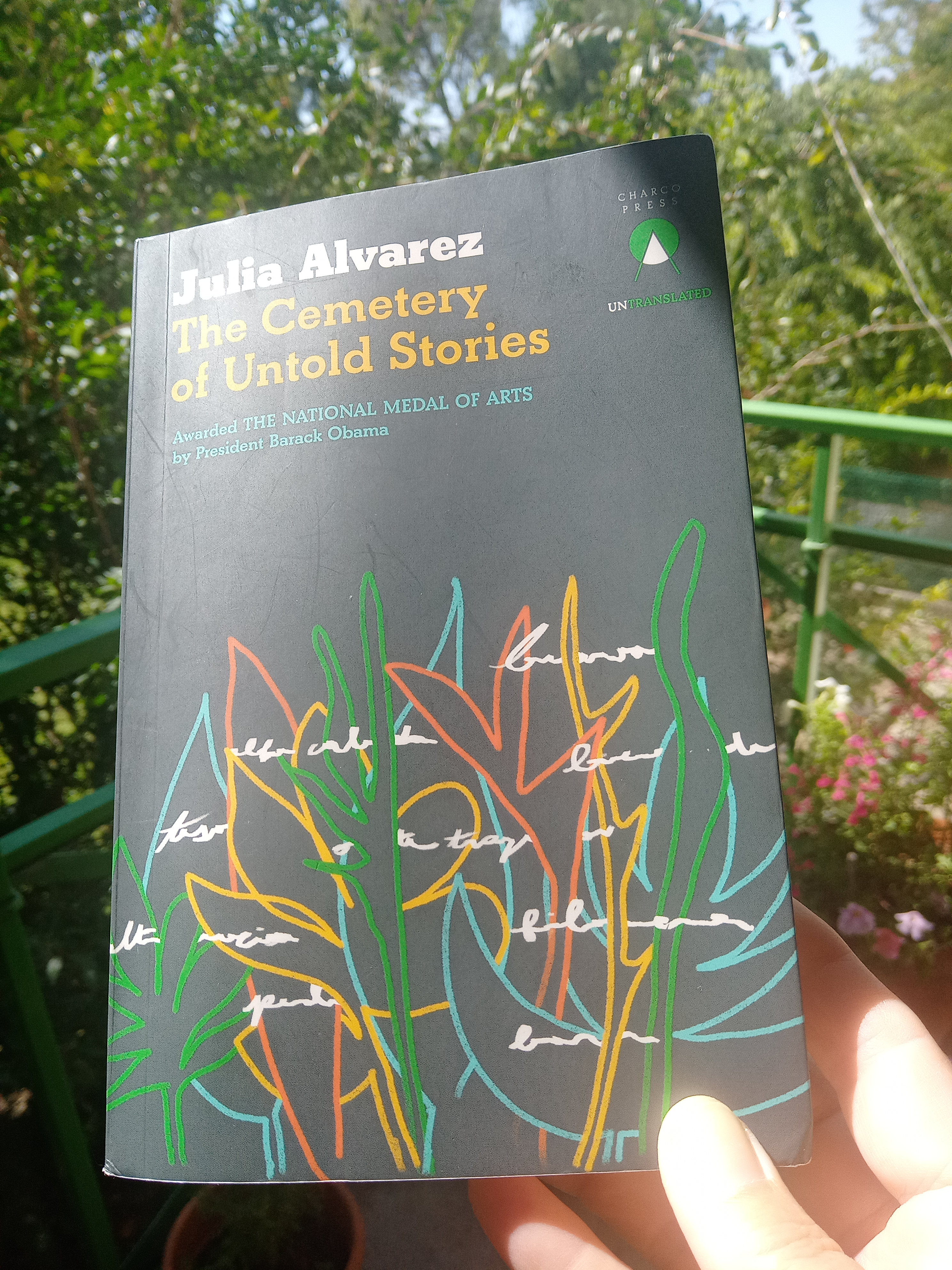
The Cemetery of Untold Stories by Julia Alvarez

The Cemetery of Untold Stories by Julia Alvarez is part of the Charco Bundle 2024 Untranslated series. Most of the Charco books are works of Latin American origin translated into English.

Julia Alvarez was born in New York City, the second of four daughters. Moving back to the Dominican Republic shortly after her birth, her family were forced to flee ten years later due to her father’s involvement in an underground movement to overthrow the oppressive dictatorship of Rafael Trujillo, who maintained control of the country for 31 years.

Reading The Cemetery of Untold Stories very quickly pulled me in and gave me the feeling I would often encounter when reading works by other woman writers from the Caribbean, like Maryse Condé’s Victoire: My Mother’s Mother, Simone Schwartz-Bart‘s The Bridge of Beyond, Cristina García’s Dreaming in Cuban.
There is something unique to their storytelling that expands beyond our known reality, that embraces the imagination, allowing it a glimpse of another dimension of perceiving that is good hearted, that exists to open minds, bring awareness and healing.

We know we are going there, because the opening chapter entitled Let’s go to Alfa Calenda is a version of that place.

Half the time Papi didn’t even know where he was. What was the harm in pretending? We’re going to Alfa Calenda, they told him as they packed up his belongings, put the house on the market, and boarded the Jet Blue flight to JFK. Just the mention of that fantasy place he’d invented with his mother seemed to soothe him. His personal Shrangri -la-la land, his daughters had dubbed it.

Alma is a writer at a turning point in her life/career. She and her three sisters live in the US and their lives have converged after the recent deaths of both parents in short succession. When their father dies, they discover that he owned many small properties in the Dominican Republic. Unable to find a fair way to apportion them, they decide to draw lots (a mediator’s suggestion), Alma draws the first lot and chooses a wasteland near a dump, on the outskirts of a barrio, then withdraws from the selection process. Closing in on her own latter years, she decides to return to her native land and bury her unfinished stories.

Should Alma follow in her parents’ footsteps, she’d be much better off in her native land. Even if it wasn’t first rate in terms of social services, that world had been her first world: her senses, her body’s rhythms, her psyche were all steeped in it. The weather, the smells, the sound of Spanish, gestures understood without explanation. Life was also cheaper there.

Alma is going to put her stories to rest, stories she has abandoned, failed to bring to life. This new development has given her a project, crazy as it sounds to her sisters. She needs a collaborator and remembers her friend Brava, she won’t judge her new ambition.

Like her art, Brava’s personality was larger than life, a fireball throwing off sparks. None of the anguished and torturous revisions and self-doubts that beseiged Alma.

They will build a cemetery for characters of Alma’s untold stories, a gallery to Brava’s art.

Alma is a curiosity to the residents of the barrio, all kinds of rumours circulate when the bulldozers arrive.

A sign goes up on the wall at the main gate. EL CEMENTERIO DE LOS CUENTOS NUNCA CONTADOS. A cemetery for untold stories. The only way to enter is to speak into a small black box at the front gate. Cuéntame, a woman’s soft voice requests. Tell me a story. Only then does the door open, or not.
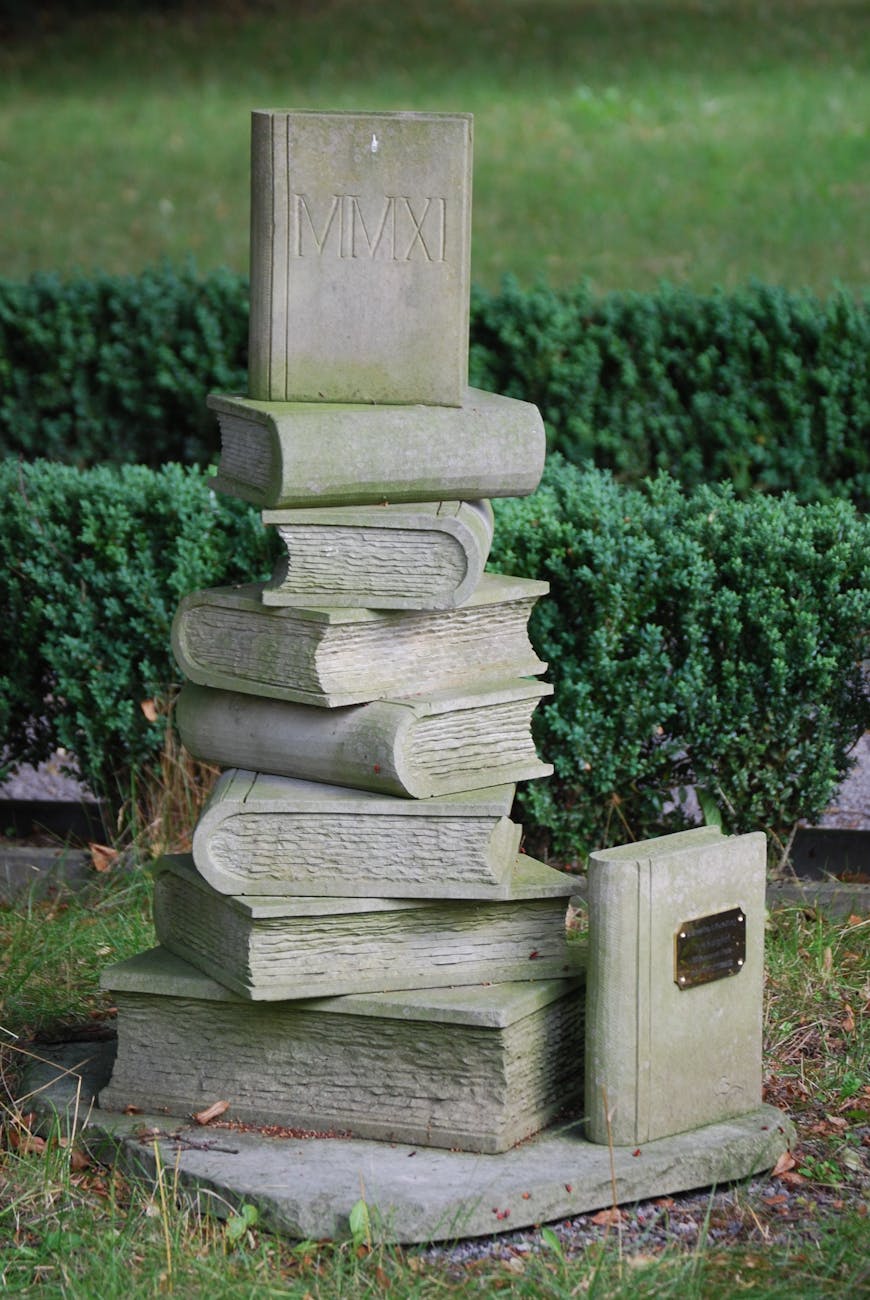
Photo M. van Duijnen Pexels.com

As she builds her cemetery and buries her boxes of manuscripts, different members of the community enter her life through their own stories and the neglected buried characters begin to reveal more about theirs, defying the author and rewriting their fates. Her helpers don’t always follow her instructions.

Alma pulls Brava aside. What’s going on?

El Baron is the boss of cemeteries, Brava explains. The deity who allows passage between the worlds. The first tomb always belongs to him.

The stories reveal themselves, as do the characters who enter the cemetery, looping in on themselves and making what might have been judged, better understood. It asks the question of whose stories get to be told by who, to whom and which stories are better buried.

It is also about listening, imagining, seeing differently, knowing when to speak up and when to stay quiet. It is a quiet celebration of stories, storytelling and the inspiration behind characters who might not always have had a voice.

Did these things really happen?

That isn’t the point, Pepito explains. These stories are about real passions in people’s hearts. They tell of all that is possible.

Julia Alvarez is a long accomplished author and while clearly this is a work of fiction, it often made me wonder about aspects of her own life, as it felt as if it dipped in and out of the familiar, (a successful Dominican Republican writer in the latter years of her career) while carrying a warning about a writer’s obsession to complete the unfinished.

I loved this novel and I am very happy to have encountered Alvarez for the first time, knowing there is a promising backlist to explore. It is always a pleasure to discover another of those unique voices with connections to that Caribbean storytelling culture that I so adore. Incredibly, though her 7th novel, it is her first to be published in the UK. It feels wrong to be starting at the end, but it also is a novel that begs to be reread, to be even more deeply understood.

Have you read any of Julia Alvarez’s works? If so, tell us your favourite in the comments below.

Further Reading

New York Times Review: A Novelist Comes Home to Bury Her Words, and Brings Them Back to Life, by Luis Alberto Urrea, April 2024

Interview: Following the screening of Julia Alvarez: A Life Reimagined, by Mikaela Lefrak, 6 Sept 2024

Documentary: American Masters (PBS) Julia Alvarez: A Life Reimagined (Premiere 17 Sept, 2024)

Author, Julia Alvarez
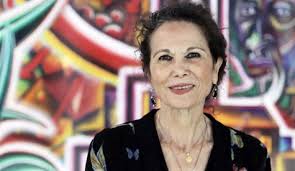
Julia Alvarez has written many bestselling novels including: How the García Girls Lost Their Accents (1991), In the Time of the Butterflies (1994) (considered her masterpiece), ¡Yo! (1997), In the Name of Salomé (2000), and Afterlife. She has also written collections of poems, three works of non-fiction, and numerous books for young readers. The Cemetery of Untold Stories is her most recent novel. She is currently assembling “Visitations,” a collection of poems, to be published in 2025.

The immigrant experience and bicultural identity is the subject of much of Alvarez’s fiction and poetry. Her awards and recognitions include the Pura Belpré and Américas Awards for her books for young readers, the Hispanic Heritage Award, and the F. Scott Fitzgerald Award. In 2013, she received the National Medal of Arts from President Obama.

Filmed in the U.S. and the Dominican Republic, Julia Alvarez: A Life Reimagined features extensive interviews with Alvarez, her family, and her literary contemporaries.

“Eventually, storied and unstoried join in mystery. Nothing holds anyone together except imagination.”
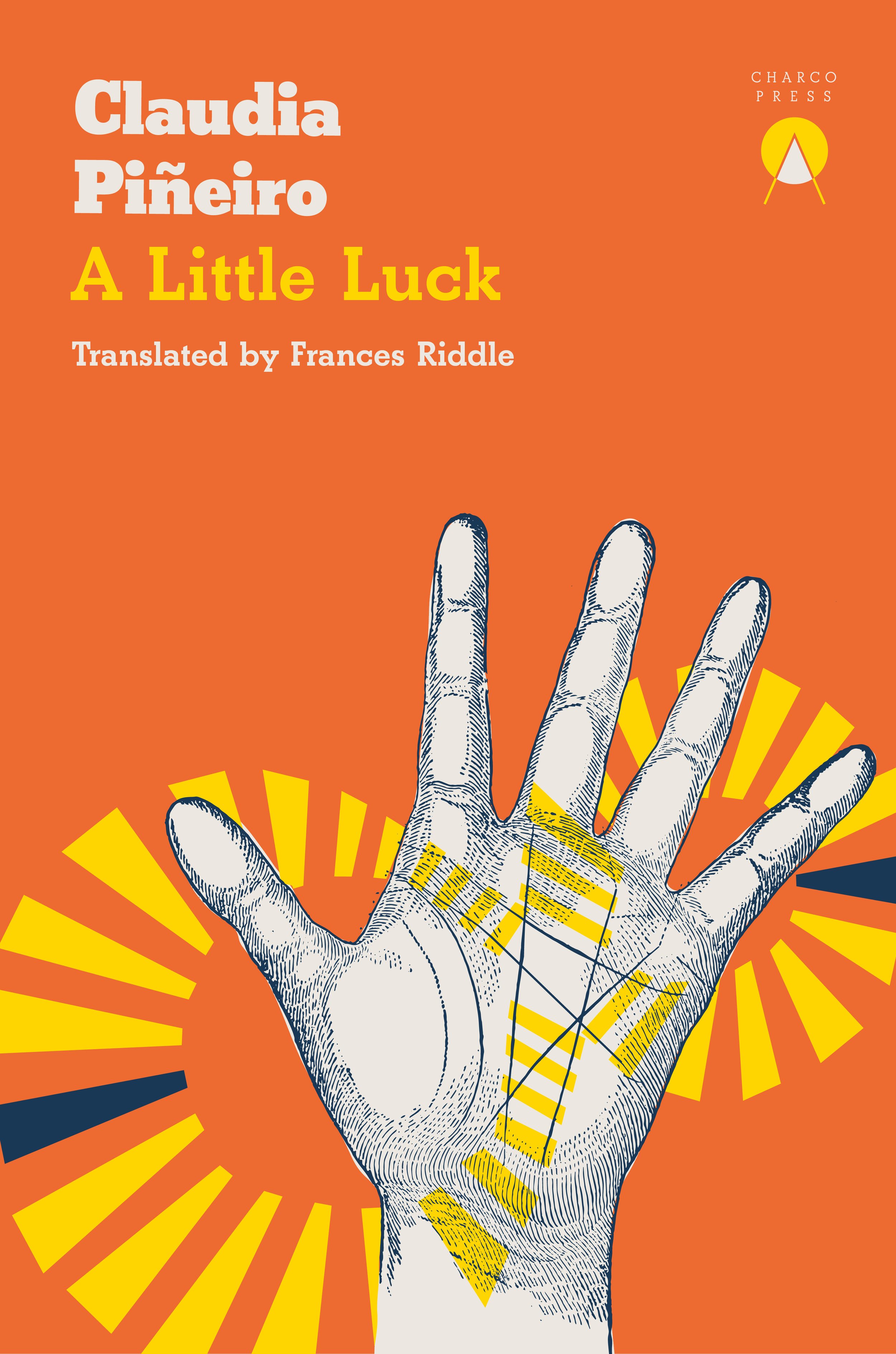
A Little Luck by Claudia Piñeiro tr. Frances Riddle

women in translation argentinian literature crime fiction literary fiction

Stunning.

This was a heart-racing, thrilling and moving read that begins mysteriously as a woman returns to her home country (Argentina) following some kind of event 20 years earlier that we don’t fully learn of until almost halfway into the novel. 

Though she lived most of her early life there, her physical appearance is so radically different, no one recognises her – yet.

We are made aware, though it takes a while to reveal, that she is anxious about the possibility of seeing someone connected to that past event, that sent her into self-imposed exile.

I should have said no, that I couldn’t go, that it would have been impossible for me to make the trip. Whatever excuse. But I didn’t say anything. Instead I made excuses to myself, over and over, as to why, even though I should’ve said no, I agreed in the end. The abyss calls to you. Sometimes you don’t even feel its pull. There are those who are drawn to it like a magnet. Who peer over the edge and feel a desire to jump. I’m one of those people. Capable of plunging headlong into the abyss to feel – finally – free. Even if it’s a useless freedom, a freedom that has no future. Free only for the brief instant that the fall lasts.

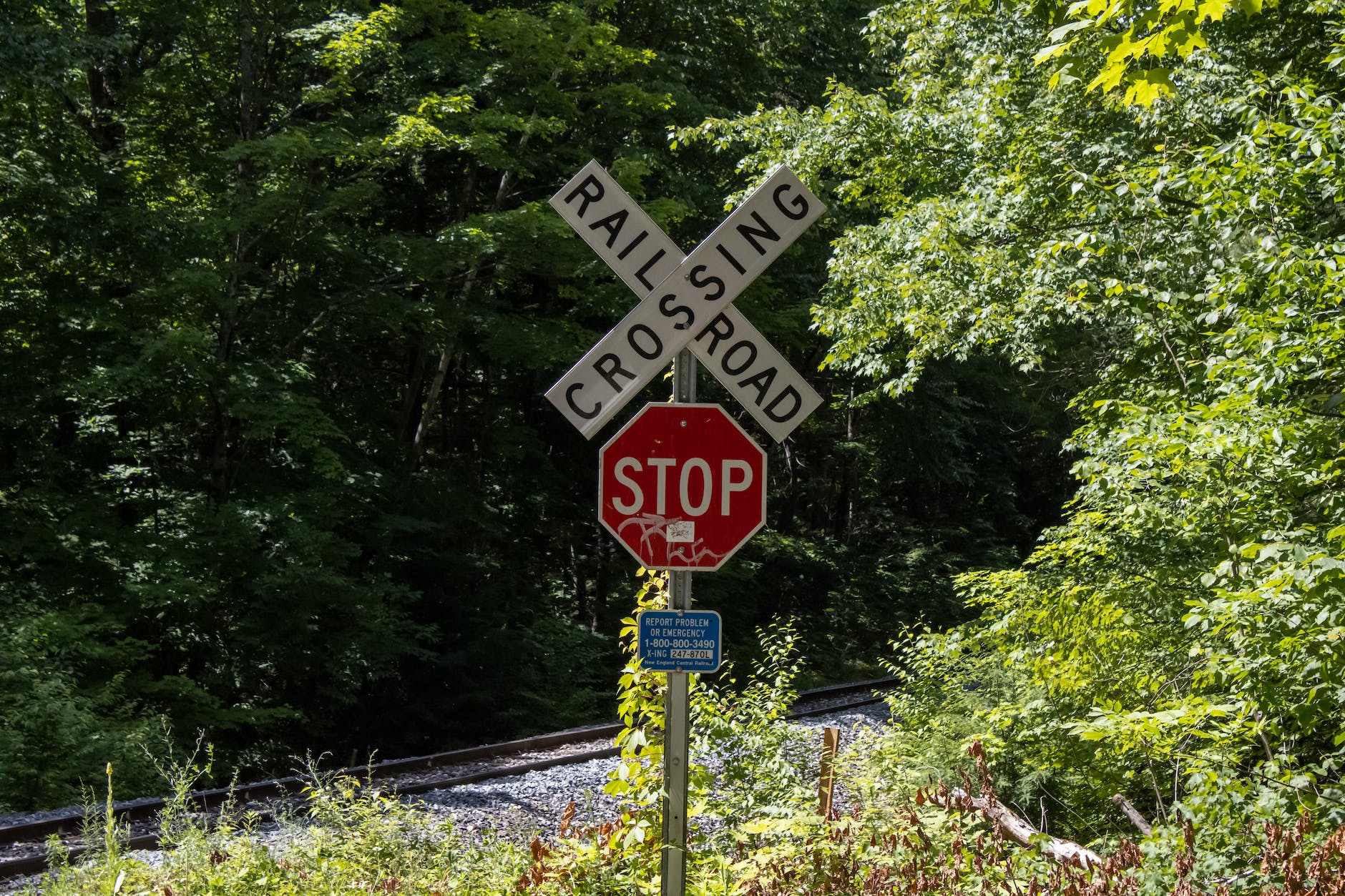
rail crossing train barrier A Little Luck
Photo Tim Dusenberry Pexels.com

As the mystery unravels, the tension mounts. Each new chapter begins with part of the backstory, then stops, this is used as a kind of repetition, as the narrator acquires the courage to reveal the full extent of the backstory.

The constant repeating of this text adds to the volume of its impact on the reader and the sense of suspense and intrigue.

The barrier arm was down. She stopped, behind two other cars. The alarm bell rang out through the afternoon silence. The red lights below the railway crossing sign blinked off and on. The lowered arm, the alarm bell, and the red lights all indicated that a train was coming.

As these events of the past some into clarity, in the present day this woman is booking into a motel, arranging to visit the school that she will consider for accreditation, we encounter the mndane reason for her visit and the extraordinary motivation behind it.

Photo by Y. Shuraev Pexels.com

Simultaneously we follow a small sub-plot drama featuring a bat. And a theme of entrapment. The story of the bat corresponds to our protagonists state of mind and how it evolves over the course of the novel. Once again she must make a life or death decision.

I’m still trapped. I must now decide whether to go out and face the task at hand or stay here and wait for the poison to kill me or the smoke to force me out.

Ultimately, it explores many themes, in a profound way, of motherhood, of domination, community judgement, condemnation and gas-lighting, of the effect of undermining a person’s self-worth, of twin aspects of abandonment, of why it might be deemed necessary and the effect it has on the one abandoned.

Do I deserve to explain why? What I mean is, do I have that right? The right to unburden myself and expect someone to listen?

Claudia Piñeiro’s Elena Knows (see my review here) I found curious; there is a similar feeling of mysteriousness as the author withholds telling all, drawing the reader in – however, in A Little Luck, she plummets the mind of the protagonist, letting us into her thoughts, showing us the events and enabling the reader to witness the reactions – allowing us to see the patterns, those all too familiar ways of subjugating a person, of the desire to blame, the withdrawal, the disappearance.

A Little Luck is also a story of healing, of kindness and finding the one person who puts the right thing in one’s way that will lead to release. In this story, a kind man finds the right stories that assist a woman to express and release suppressed emotions. And sends her on a trip.

I began to list the questions that I’d asked myself while reading Alice Munro’s story, questions posed in her words. ‘Is it true that the pain will become chronic? Is it true that it will be permanent but not constant, that I won’t die from the pain? Is it true that someday I won’t feel it every minute, even though I won’t spend many days without it?

Brilliantly conceived, after a few chapters, I absolutely could not put it down, I highlighted so many passages, and it had a surprising though satisfying, tear-jerking conclusion, definitely one of my top fiction reads of 2023. I read this in October, but found it hard to describe the intense reading experience, but I’m sharing my thoughts now, before my end of year review, where it will feature!

Highly Recommended, another fabulous title from Charco Press!

Claudia Piñeiro, Author

As an author and scriptwriter for television, Claudia Piñeiro has won numerous national and international prizes, among them the renowned German LiBeraturpreis for Elena Knows and the prestigious Sor Juana Inés de la Cruz Prize for Las grietas de Jara (A crack in the wall).

She is best known for her crime novels which are bestsellers in Argentina, Latin American and around the world. Many of her novels have been adapted for the big screen. According to the prestigious newspaper La Nación, Claudia Piñeiro is the third most translated Argentinean author, after Borges and Cortázar.

More recently, Piñeiro has become a very active figure in the fight for the legalisation of abortion in Argentina and for the legal recognition of writers as workers. Her fiction (as shown with Elena Knows) is stemmed in the detective novel but has recently turned increasingly political and ideologically committed, reflecting the active role she plays in the fight for the legalisation of abortion in Argentina and Latin America, and for the recognition of employment rights for writers..

The Delivery by Margarita Garcia Robayo tr. Megan McDowell

The Delivery was next up to read from my 2023 Charco Press bundle and was published on 24 October. This year’s books have been so great, I couldn’t wait to get to this one. I haven’t read her previous translated book Fish Soup, but I had heard good things about it too.

Charco Press and Latin American Fiction On a Roll

One of the earlier Charco novellas I read this year, The Remains (see my review) by Mexican author Margo Glantz (translated by Ellen Jones) just made the longlist of the Warwick Prize for Women in Translation 2023. In the same week Two Sherpas (see my review) by Sebastian Martinez Daniell translated by Jennifer Croft was longlisted for the 2024 ALA Carnegie Medals for Excellence in Fiction and Ana Paula Maia’s Of Cattle And Men, translated from the Portuguese by Zoë Perry made the 2023 Cercador Prize Finalists ( a bookseller-led prize for literature in translation).

Warning: Don’t Ignore Your Packages – The Review

A young, unapologetically self-absorbed woman lives alone, away from her family. Though loathe to form attachments, she is hyper observant of all that goes on around her; the neighbour into whose apartment she sees, the doorman sweeping below, the mother with her young son, the unreliable babysitter.

A large package arrives from her sister who told her via one of their infrequent video-calls, that she was leaving with her family on a cruise. The sisters have a complicated relationship, one she ponders.

When she notices my silence she goes quiet and sighs. I guess she, too, gets fed up with the weight of incomprehension. I guess that on top of seeming like a sister who is detached, dejected and discourteous, I also come off as an arrogant person. Kinship isn’t enough for her, either, of course it isn’t. In cases like ours, getting along isn’t a question of magic or chemistry or affinity, but of tenacity, toughness and torturous toiling.

The package, the size of a large crate stays in the hallway for two days until neighbours complain, knock on the door and push it into her seventh floor apartment. She continues to ignore it.

It’s noon; my sister must be aboard her cruise ship by now. I can just see her gazing excitedly at the array of interactive screens showing maps of the ship marked with little flags: ‘…over twenty stations of international food.’
I wonder: When my sister isn’t there, who takes care of my mother?

Farming Cows Personality Animals The Delivery On Writing
Photo by Flickr on Pexels.com

Working from home as a freelance copy writer, she meets her boss once a week. Currently working on a piece about a cow, while procrastinating over completing a grant for a writer’s residency in Holland. Here she questions whether her choice to be a writer is another act of avoidance.

And although writing is something I have done every day for years now, I again get the feeling that this thing I call ‘my job’ is nothing but another avoidance strategy. Compared to all other professions, writing is like the effort a tick makes to feed and survive among predators. I climb onto a branch, wait a long time until the herd passes, calculate the least risky distance to drop onto a fluffy mass and drink a minuscule ration of blood, which will allow me to maintain this limited but sufficient life.

Her attempts to avoid human contact threaten to overwhelm her, as increasingly she is drawn in to life around her and made to be present.

I felt I had the right to not be a trustworthy person. It was good to make that clear, even if it worked against my professional future; from now on you should be aware that assigning me a job includes the possibility that I’ll quit halfway through. That was more or less how I put it. It was the closest I would come in this business to an outburst of dignity.

The novel follows a week or so in her life and the people (and a cat) with whom she interacts, both willingly and unwillingly. Encounters that awaken memories, that cause her to explore her own responses and thoughts on them all, she avoids closeness but each situation contributes to the growing relationships between them all.

Her efforts to keep a distance stall, fail and slowly make her see her own role in running from herself, the inclination to self-sabotage.

Sometimes I feel like two people live inside me, and one of those people (the good one) keeps the other in check, but sometimes she gets tired and lowers her guard and then the other (evil) one stealthily emerges, with a mad desire to wound just for the sake of it.

It’s both introspective and funny, as her avoidance and inattention to things leads to consequences that surprise her and because we see everything from her perspective, we too have a somewhat clouded view of reality.

Her philosophical considerations and snippets of conversation give pause for thought. It’s entertaining in a surreal yet banal way, knowing that life’s reality is likely to burst the bubble she lives in eventually, yet it doesn’t stop her from continuing to ponder and escape from it.

How quickly the shell of a routine is shattered.
Any routine, however solid it may be, is obliterated by the unexpected.

Margarita García Robayo, Author

Margarita García Robayo was born in 1980 in Cartagena, Colombia, and now lives in Buenos Aires where she teaches creative writing and works as a journalist and scriptwriter.

She is the author of several novels, including Hasta que pase un huracán (Waiting for a Hurricane) and Educación Sexual (Sexual Education, both included in Fish Soup), Holiday Heart, and Lo que no aprendí (The Things I have Not Learnt). She is also the author of a book of autobiographical essays Primera Persona (First Person, forthcoming with Charco Press) and several collections of short stories, including Worse Things, which obtained the prestigious Casa de las Américas Prize in 2014 (also included in Fish Soup).

Her books have been published widely and praised in Latin America and Spain and have been translated into several languages, including Chinese, Hebrew, French, Danish and Turkish. The Delivery is her third book to appear in English after the very successful Fish Soup (selected by the TLS as one of the best fiction titles of 2018) and Holiday Heart (Winner of the English PEN Award).

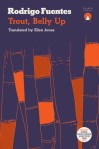
Trout, Belly Up by Rodrigo Fuentes (Guatemala) tr. Ellen Jones

As I mentioned in this recent post, this year I’m reading a selection of contemporary Latin American fiction, thanks to a subscription with Charco Press. The first novella for the year is a collection of interconnected short stories, (reminding me of the Japanese author Yoko Ogawa’s excellent collection Revenge) Trout, Belly Up by Rodrigo Fuentes from Guatemala.

A man named Don Henrik is the connection between the stories, and though he is not the centre of any story until the end, through each tale narrated we come to know the hardships he has encountered as he struggled to run his various business ventures, we learn about the equally difficult life path his brother followed, and how that contributed to his father’s financial difficulties. Though it is not focused on in particular, we also know he is a foreigner, we imagine how his may have contributed to the challenges he and his family have encountered.
Don Henrik seems like a man who wants to live an ordinary life, he has the fortitude to create something out of nothing, he is kind, but he lives in a society where men give in to temptation, and are lead astray by a desire, by greed, by revenge, addiction and so always there are situations to be dealt with. He is an entrepreneur, but still learning the ways of men and nature in his adopted country.

Trout are delicate creatures and can’t handle temperatures over thirteen degrees. That’s why Don Henrik  bought his land right at the top of the mountain, because he wanted icy, cold spring water. But despite being delicate,  they’re completely savage.  They eat meat, even their own.Little cannibals, my Ermina called them.

Photo by The Lazy Artist Gallery on Pexels.com

Set in the Guatemalan countryside and forest, it is a place that appears to offer rest and tranquility and yet is beset with an undercurrent of hostility and violence, infiltrated by merciless entrepreneurs, hitmen, father’s desperate to go straight, endangering their daughters and their dog, and the plain stupid, caught in a gullible web of thinking they can make easy money, only to meet premature death.

What begins as one of the most endearing stories, becomes the one that almost prevents me finishing the book, involving the relationship between a young calf and a dog, it’s when men come between them that things turn despicable, I couldn’t help but see the young cow as a metaphor for women, who are the usual targets for such brutality.

Some will relate to its Hemingway-esque style, for me it was a straight forward, easy read, though I began to feel like I was reading a book likely to be enjoyed more by men readers, as it launched quickly into a tale of infidelity, of a man with a loyal wife and daughters distracted by a young shop girl, willing to sacrifice everything for a few moments of pleasure; men arriving with guns intent on teaching a lesson to other men, taking out their violent intent on an innocent animal, the bond between two men, their lives and friendship endangered by their descent into drugs and recklessly pursuing an activity (involving a boat and diving) while under the influence.

Personally, I find I have less and less tolerance for stories that depict women in this way, even if it represents a reality, it becomes tiresome. As a reader, I find I’m looking for a paradigm shift in the way female characters are depicted, something I am sure is coming, as I know I’m not the only one who feels this way.

Don Henrik isn’t the cause of any of this, is it bad karma, neglect or naivety, he is often absent, trusting his partners and workers to get on with the job, it is here that cracks form, that others seize their malevolent opportunity. He is a good man, he donated a kidney to his wife, he is tired, he’s found another good woman and just wants peace, but he’s a land owner, there are those who covet what he has, his desire for tranquility in this world he inhabits, observed by so much dysfunction, is an impossible ask.

Ist edition cover, Francisco Tún artwork

In an interview Fuentes is asked about his writing of this book while living outside of Guatemala and revealed his observation and interest, having moved abroad in how people spoke and expressed themselves. He viewed an accent as something like a regions ideology, that we assumed ours to be neutral, but that it revealed much about how the speaker saw the world.

I look at Guatemala, and it’s a tiny country, but one with very talented narrators. And each region of the country tells stories in different ways. The way people tell stories in the mountains is very different from how people in the eastern part of the country tell them, or those living by the coast, or in the city, undoubtedly; I paid attention to that. I was always interested in the conversations taking place between the city and rural areas. Living abroad allowed me to pay attention to these conversations from a different vantage point, and a character like Henrik enabled me to move back and forth between those two worlds.

In his excellent, expansive review, Tom Blake provides a political perspective of Guatemalan and Latin American literature, suggesting that much of it has centred around themes of ‘displacement, disappearance, deracination’ suggesting that Fuentes offered a different view, the view of those who remain. He acknowledged that Fuentes held up a mirror to a masculine world, though went a little far in my opinion in suggesting that ‘the women hold immense, almost supernatural power’.

In doing so, he provides insights into why displacement might occur, why humans feel the need to move in their thousands to countries whose promises were exposed long ago as over-optimistic or fraudulent. But that is not his primary concern. These are stories about various types of hardship and conflict, where hardship is unending and conflict is self-perpetuating. His protagonists stick around to meet their difficulties head-on; they create tiny worlds around themselves where bizarre details become normal, where flirtatious cows walk on their hind legs and, frenzied fish turn to cannibalism. Thomas Blake

Rodrigo FuentesConsidered to be one of the most prominent names among the new generation of Guatemalan writers, Rodrigo Fuentes (1984) won the Carátula Central American Short Story Prize (2014) as well as the Juegos Florales of Quetzaltenango Short Story Prize (2008).

Trout, Belly Up was shortlisted for the 2018 Premio Hispanoamericano de Cuento Gabriel García Márquez, the most prestigious prize awarded to short-story writers in Latin America. It has been published in Guatemala, Bolivia, Chile and Colombia, as well as in France. Rodrigo currently lectures at the College of the Holy Cross in the United States, and lives between Providence and Guatemala. This is his first book to appear in English.

Ellen Jones is a researcher and translator based in London. She has a PhD from Queen Mary University of London and writes about multilingualism and translation in contemporary Latin American literature. Her reviews have appeared in publications including the Times Literary Supplement and The Los Angeles Review of Books, and her translations in publications including the Guardian and Latin American Literature Today. She has been Criticism Editor at Asymptote since 2014.

Further Reading

Jumping Between the Urban and the Rural: An Interview with Rodrigo Fuentes by José García Escobar

Review of Trout Belly Up by Thomas Blake

Reading Contemporary Latin American Fiction

‘cruzar el charco’

It seems appropriate to begin this post with a word, since this reading and writing adventure takes place word by word, across time and continents. Our word for today is charco which means puddle in Spanish and is also a colloquialism in some Latin American countries referring to the Atlantic Ocean.

And cruzar el charco means crossing the puddle, a way of referring to when someone is leaving the country, taking a trip somewhere far from home, across the ocean.

And this is what I have decided to do in 2019, to take a literary trip across the ocean to Latin America, and I’ll be doing that with the help of Charco Press, a small press based in Edinburgh, creating a bridge of cultural discovery for us to access the richness of that new world with a guide to contemporary literature authors that will likely be unfamiliar to us all.

We select authors whose work feeds the imagination, challenges perspective and sparks debate. Authors that are shining lights in the world of contemporary literature. Authors that have won awards and received critical acclaim. Bestselling authors. Yet authors you perhaps have never heard of. Because none of them have been published in English.

Until now.

Photo by Pixabay on Pexels.com

So this year I have taken a subscription with Charco Press, so I don’t choose the books, I will read whatever they publish in their catalogue in 2019.

This will mean it’s not necessarily going to be something I might ordinarily read, I’ll be reading across borders and outside my comfort zone. But what a journey. No vaccinations required, no need for language classes, although we may still learn a few words along the way.

I have already read the first book and my review will be coming shortly, however, below are summaries of the six books I’ll be reading from this part of the world this year, in case you’d like to join me. As I read them, I’ll link my reviews back to this summary post.

Do let me know if any of these titles interest you, or whether you’ve read any other books published by Charco Press that you have enjoyed.

Click on the title to visit the Charco bookstore.

Trout, Belly Up by Rodrigo Fuentes (Guatemala) (tr. Ellen Jones)

In this highly original collection of interconnected short stories, the Guatemalan countryside is ever-present, a place of timeless peace yet also riven by sudden violence. The stories provide glimpses into the life of Don Henrik, a good man struck time and again by misfortune, as he confronts the crude realities of farming life. Over the course of these episodes we meet merciless entrepreneurs, hitmen, drug dealers and fallen angels, all wanting their piece of the pie. Told with precision and a stark beauty, in a style that recalls Hemingway, Trout, Belly Up is a unique ensemble of beguiling, disturbing stories set in the heart of the rural landscape in a country where violence is never far from the surface.

Feebleminded by Ariana Harwicz (Argentina) (tr. Annie McDermott & Carolina Orloff)

In Feebleminded, Harwicz drags us to the border between fascination and discomfort as she explores aspects of desire, need and dependency through the dynamics between a mother and her daughter, searching through their respective lives to find meaning and define their own relationship.

Written in a wild stream of consciousness narration in the best tradition of Virginia Woolf and Nathalie Sarraute, and embedded in a trend of elusive violence so ingrained in contemporary Latin American fiction, Feebleminded follows the pair on a roller coaster of extreme emotions and examinations into the biographies of their own bodies where everything – from a childhood without answers to a desolate, loveless present – has been buried.

Told through brief but extremely powerful chapters, this short lyrical novel follows Die, My Love (my review here) as the second part in what Harwicz has termed an ‘involuntary trilogy’.  An incredibly insightful interrogation on the human condition, desire and the burden of deep-rooted family mandates.

The Wind That Lays Waste by Selva Almada (Argentina) (tr. Chris Andrews)

The Wind That Lays Waste begins in the great pause before a storm. Reverend Pearson is evangelizing across the Argentinian countryside with Leni, his teenage daughter, when their car breaks down. This act of God – or fate – leads them to the home of an aging mechanic called Gringo Brauer and his boy named Tapioca.

As a long day passes, curiosity and intrigue transform into an unexpected intimacy between four people: one man who believes deeply in God, morality, and his own righteousness, and another whose life experiences have only entrenched his moral relativism and mild apathy; a quietly earnest and idealistic mechanic’s assistant, and a restless, sceptical preacher’s daughter. As tensions between these characters ebb and flow, beliefs are questioned and allegiances are tested, until finally the growing storm breaks over the plains.

Selva Almada’s exquisitely crafted début, with its limpid and confident prose, is profound and poetic, a tactile experience of arid landscapes, heat, squat trees, broken cars, sweat-stained shirts, and ruined lives. The Wind That Lays Waste is a philosophical, beautiful, and powerfully distinctive novel that marks the arrival in English of an author whose talent and poise are undeniable.

Loop by Brenda Lozano (Mexico) (tr. Annie McDermott)

Loop is a love story narrated from the point of view of a woman who waits for her boyfriend Jonás to return from a trip to Spain. They met when she was recovering from an accident and he had just lost his mother. Soon after that, they were living together. She waits for him as a sort of contemporary Penelope who, instead of knitting only to then un-knit, she writes and erases her thoughts in a notebook: Proust, a dwarf, a swallow, a dreamy cat or David Bowie singing ‘Wild is the Wind’, make up some of the strands that are woven together in this tapestry of longing and waiting.

Written in a sometimes irreverent style, in short fragments that at points are more like haikus than conventional narrative prose, this is a truly original reflection on love, relationships, solitude and the aesthetics and purpose of writing.

An Orphan World by Giuseppe Caputo (Colombia) (tr. Sophie Hughes & Juana Adcock)

In a run-down neighbourhood, in an unnamed seaside city with barely any amenities, a father and son struggle to keep their heads above water. Rather than being discouraged by their difficulties and hardship, they are spurred to come up with increasingly outlandish plans for their survival. Even when a terrible, macabre event rocks the neighbourhood’s bar district and the locals start to flee, father and son decide to stay put. What matters is staying together. This is a bold poignant text that interplays a very tender father-son relationship while exposing homosexuality and homophobia with brutal honesty. With delicate lyricism and imagery, Caputo is extremely original and creative producing a tale that harmoniously balances violence, discrimination, love, sex and defiance, demonstrating that the he is a storyteller of great skill.

An Orphan World is about poverty, and the resourceful ways in which people manage to confront it. At the same time, it is a reflection about the body as a space of pleasure and violence. Perhaps above all else, An Orphan World is a brutally honest love letter between a father and son.

Adventures of China IronThe Adventures of China Iron by Gabriela Cabezón Cámara (Argentina) (tr. Iona Macintyre & Fiona Mackintosh)

(* China. Pronounced ‘cheena’: designation for female, from the Quechua. Iron: The English word for Fierro, reference to the gaucho Martín Fierro, from José Hernández’s epic poem.)

This is a riotous romp taking the reader from the turbulent frontier culture of the pampas deep into indigenous territories. It charts the adventures of Mrs China Iron, Martín Fierro’s abandoned wife, in her travels across the pampas in a covered wagon with her new-found friend, soon to become lover, a Scottish woman named Liz. While Liz provides China with a sentimental education and schools her in the nefarious ways of the British Empire, their eyes are opened to the wonders of Argentina’s richly diverse flora and fauna, cultures and languages, as well as to its national struggles. After a clash with Colonel Hernández (the author who ‘stole’ Martín Fierro’s poems) and a drunken orgy with gauchos, they eventually find refuge and a peaceful future in a utopian indigenous community, the river- dwelling Iñchiñ people.

Seen from an ox-drawn wagon, the narrative moves through the Argentinian landscape, charting the flora and fauna of the Pampas, Gaucho culture, Argentinian nation-building and British colonial projects.

In a unique reformulation of history and literary tradition, Gabriela Cabezón Cámara, with humour and sophistication, re-writes Martín Fierro from a feminist, LGBT, postcolonial point of view. She creates a hilarious novel that is nevertheless incisive in its criticism of the way societies come into being, and the way they venerate mythical heroes.

***********

Some promising, diverse explorations across this puddle, I do hope you might join me at one of these destinations!

Further Reading: Exposing the UK to Contemporary Latin American Literature