Ragnarök – The End of the Gods by A.S.Byatt

Seduced by the cover and the promise of something a little different from her norm (having read ‘Possession’ and ‘The Children’s Book’), I picked this up in its beautiful hardback form and for once allowed the impulse a rare indulgence.

Part of The Myths series, which includes Margaret Atwood’s, ‘Penelopiad’, the publisher Canongate invited select writers to retell a myth in their own way and this is A.S. Byatt’s contribution.

Ragnörak is a Norse myth, the story of how things came to be and how they and world are destroyed after a series of conflicts, revenge takings, mutations and natural disasters. Byatt’s version is neither a short story or novel, more of an insight into the myth, the perspective of a thin young girl in wartime, an immersion into the created world and its end, concluding with the author’s thoughts on myths.

Yggdrasil, the imagined world

Coming to it without knowledge of the mythological background, I found myself immediately immersed in life forms that grew and transformed, creatures that came into existence, hunted, survived, wrapped their tentacles around and invaded trees, forests, lakes, streams, oceans and the planet.

Strange but alive, it is a kind of living nightmare; the young girl (who I immediately came to think of as the author as a young girl) tries to understand and make sense of the world around her, while rereading her ‘Asgard and the Gods’ stories that invade her imagination and develop her awareness and understanding of belief or disbelief as it turns out.

She did not believe the stories in ‘Asgard and the Gods’. But they were coiled like smoke in her skull, humming like dark bees in a hive.

The pages are infiltrated with images of nature in abundance, colours, textures, millions of living things and creatures, moving, sliding, digging, squirming, biting and gulping, with an omnipresent sense of foreboding. The Gods celebrate as they always do with fighting and shouting, self-destruction an ever threatening accomplice. Jörmungandr, the angry, sensuous, snake with an insatiable appetite is particularly haunting and memorable.

In her ‘Thoughts on Myths’ at the end, Byatt notes the difference between fairy tales and myths, the former giving the reader the pleasure of recognizing repeated variations on similar narrative patterns, while myths often torment, puzzling and haunting the mind who reaches into them.

We are reminded of the world we live in and the corruption, contamination, pollution and ultimate destruction of the living organism we inhabit and can only wonder if we too are destined for such a fiery end. For me, it was more of a beginning, another entry point into the mysterious and meaningful realm of ancient mythology.

Further Reading:

Peter Conrad, The Observer

M John Harrison, The Guardian

Ursula K Le Guin, Literary Review

Cutting for Stone by Abraham Verghese

Emerging from Abraham Verghese’s Cutting for Stone reminds me what it was like returning home after three months travelling in Asia. Home is familiar, but everything else feels strangely altered by the recent experience.

Except it is not Asia I traverse, but reading my way through Addis Ababa in central Ethiopia to a hospital in the Bronx, via the eyes, ears, heart and hands of Marion Stone.

Marion and Shiva are identical twin boys left orphaned when their mother dies during childbirth and their father, unable to cope with the revelations of that day, abandons them for good.

Raised by Hema and Ghosh, doctors in the Mission Missing Hospital, kept running by Matron’s unrelenting pursuance of international donors, they become a close-knit family, often struggling but nearly always overcoming the day to day dramas of the hospital and the equally unpredictable events of a volatile political environment.

Marion and Shiva follow their role models into the medical world and we too enter the operating room with such verisimilitude, it’s almost like watching an episode or ER (the nearest I have come to knowing what trauma surgery might be like).

Ethiopia & the Horn of Africa

Five hundred plus pages of bliss, I don’t recall when I was last so content that a book continued after 400 pages, so happy was I to enter the author’s realistically created world, taking me to those exotic but familiar to him locations, putting me through numerous experiences I will likely never encounter.  

Verghese’s words on the page bring a life-like quality; there is a richness to his prose that is metaphorically beautiful and a perceptive tension that is heart racing mad. It’s a roller coaster ride from start to finish and by page 472 tears of joy were flowing.

Gripping, enticing, compassionately delivered, eye-opening, heart racing, it is an unforgettable journey and a thrill of a read.  I finished it on the first day of 2012 and I can’t imagine reading better than this for a while, it could well become one of my best reads of 2012.

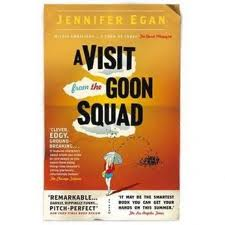
Time Passes, Reality Bites – A Visit from the Goon Squad

‘A Visit from the Goon Squad’ by Jennifer Egan (winner of the Pulitzer prize for fiction 2011) was recommended in a comment on my post ‘Why People don’t read short stories’ and I then had the good fortune to swap books with a book buddy and was delighted to discover that this was the treasure she was trading.

There has been much discussion already about the title; what exactly is a ‘goon’ and is this even a relevant question? I decided not to search for an answer and instead to come up with my instinctive response at the end, I prefer to hazard a wild guess although the cynic in me did wonder if it wasn’t just a gimmick.

A novel or a set of stories, each chapter is separate yet connected by the barest of threads to the previous, sufficient to surmise a pattern, although like many creations, the complete picture does not become clear until the work is finished. It reminds me of six degrees of separation, that we are all connected and that even when we are, there are gaps in history’s, we only ever know part of a person’s story.

It is a testament to Egan’s writing  and one of its strengths that her book reads like a novel because we are immediately drawn into and engaged within the world of her well cast characters, mentioned briefly in one chapter, discovered in depth in the next, it is not like starting a completely different story, more like starting an abstract jigsaw puzzle in opposite corners knowing that eventually the pieces should add up. We read and make the connections, searching for them, perhaps even creating them ourselves. I wonder, is that my imagination at work or the writer’s – or both working in unison?

We encounter this in Italo Calvino’s ‘If on a Winter Night a Traveller’ and also in Alice Hoffman’s ‘Blackbird House’, a slim thread enough to spur the reader on in the quest for enlightenment.

In Egan’s novel we meet Sacha who works for Bennie in the music industry, Bennie himself, his wife Stephanie, her ex-convict journalist brother Jules, Dolly who used to be Stephanie’s boss, Ted, Sacha’s Uncle and others whose lives have interacted at some point. We meet them at different periods in time, during particular episodes in their lives where even the young seem to have already lived numerous lives and carry a burdensome past that haunts their present. There is an underlying dissatisfaction with how things have turned out, the inevitability of time passing and taking with it something vital and essential.

Which reminds me, the goon squad; as Bosco says on page 134 ‘Time’s a goon, right?’ and so too I believe that a visit from the goon squad is just this, time passing and the oft harshness of reality.

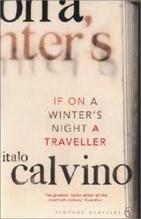
If on a winter’s night a traveller

If you have never read Italo Calvino this may be a misleading book to start with, it’s certainly not reminiscent of his short stories and I believe it is unlike his other novels, but it has a kind of cult status in that it is was an original and much talked about experimental work.

‘If on a winter’s night a traveller’ starts out as a conversation, Calvino entering and leaving the exchange within the pages of his novel in an unpredictable fashion. This is not a book to lie back and lazily escape into, it requires your attention and concentration to stay with where you are at and to understand what is going on and then just as you are spirited away by his seductive prose and enjoying the ride into the depths of one of his stories, you turn the page and Monsieur Calvino is back.

I enjoyed the diversions, although I was disappointed that he was unable to find a way to leave the sex of the reader neutral, having been almost convinced he might well be speaking to me, it becomes clear he is speaking to his male readers, political correctness not in full swing in the early 1980’s when this was published. But I readily forgive him, especially when assured by Lorna Sage, author of the memoir ‘In Bad Blood’ who wrote in the Observer:

‘devastating, wonderfully ingenious parody of all those dreary best-sellers you buy at the airport…It is a “world novel”: take it with you next time you plan to travel in an armchair’

Chapters are interspersed with stories, the titles of which are referenced in each preceding episode, the stories are the beginning of novels and you the protagonist are searching for the rest of the story while listening to Calvino expound on readers, reading, and writing. Best described in an extract from one of the stories themselves, where he writes:

I’m producing too many stories at once because what I want is for you to feel, around the story, a saturation of other stories that I could tell and maybe will tell or who knows may already have told on some other occasion…I see something like a forest that extends in all directions and is so thick that it doesn’t allow light to pass…so it is not impossible that the person who follows my story may feel himself a bit cheated, seeing that the stream is dispersed into so many trickles, and that of the essential events only the last echoes and reverberations arrive at him…’

Playful, impossible to label, is it a…, it is a question, a poem, a collection of stories, a novel and a conversation with Italo Calvino. The author imposes himself and his voice within the pages and we as the reader also become involved in the action as Calvino switches into the second person narrative. If I were an academic I would probably be littering this text with a lot of technical terms describing the literary tools Calvino plays with, literature students are likely to come across it, or at least they did in the past, as David Mitchell, author of ‘Cloud Atlas’ reminisces about here, when he rereads it for a second time.

It’s an oeuvre that defies categorisation, which plays with the reader and will entertain some while annoying others, myself I am content that it has now stopped taunting me from the bookshelf, my curiosity sated, it can now be talked about with some knowledge of its interior. That curiosity won’t rest long however, no doubt it will soon find another dusty volume to settle on, another book I haven’t read by that author I have often read about but have yet to enter their imagined world.

Slaves and Siblings, Sorcery and Sadness, Strength and Salvation – Isabelle Allende’s Island Beneath the Sea

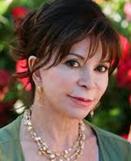
Isabel Allende.

I well remember being introduced to her debut novel ‘The House of the Spirits’ in my early twenties by a good friend and discovering this wonderful story teller. We became immersed in the lives of members of a Latin American family, following it during a time of political upheaval and personal transformation and though it was far from our own reality, it was pure joy to escape into.

Whenever I came across a new book I read it, including two of her wonderful young adult books ‘City of the Beasts’ and ‘The Kingdom of the Dragon’ and who could forget the heart-breaking but beautiful ‘Paula’. I haven’t read all her books, but I will continue to read those that cross my bookish path, just as ‘Island Beneath the Sea’ did recently, spotted on my book buddy’s shelf while feeding her son’s cat Oscar.

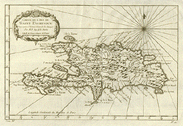
In this gripping novel, Allende takes us on a troubling but engaging journey to the sugar cane plantations of what was the French colony Sainte-Domingue, in one of its most historic and transformational eras during the late 1700’s and ends in New Orleans as Napolean trades terrains as if they are commodities with the Americans.

Toulouse Valmorain arrives in the colony from France where the dauphin King has just married Marie-Antoinette and few anticipate the changes to come with revolution in France or the effect that will have on this prosperous Caribbean island where slaves labour on crops that produce a third of the wealth of France and whose usefulness once they set foot on the island averages eighteen months; the fortunate dubbed the Maroons fleeing to the hills, the less fortunate en route to that place they believe all souls go, the island beneath the sea.

Knowing little of changing French laws that might change their status in the colony, many of the slaves find respite through voodoo and belief in men who escaped like the legend Macandal ‘The Black Messiah’. The Maroons will make history as they lead a slave revolt eventually resulting in the first black republic of Haiti.

Valmorain never expected to visit the family plantations but the premature death of his father and the necessity of supporting remaining family in France drive him to the colony where he must take over the family interests. Through him we meet high profile cocotte Violette Boisier, a free woman of mixed African heritage, the teenage slave Zarité, maid to Eugenia the troubled Spanish wife and her brother Sancho, Valmorain’s business partner. The story follows these characters as their fates intertwine and their lives are affected by society’s strictures and historical events.

The characters of Zarité and Violette jump off the page in a way that almost makes me wonder whether the author had her ‘favourite’ characters, we see them in situations and feel their struggles whereas I didn’t get quite the same feeling with the character of Eugenia, I found myself wondering how it really was for her as the drumbeats got inside her head and slowly drove her to madness. She wasn’t a strong character and although she suffered, we learn of it rather than experience it.

I realised towards the end that much of the novel is narrated, which also made me wonder how much longer it could have been if more of the narrative had been portrayed through the events themselves and dialogue, the characters are certainly engaging enough but at 457 pages, it is lengthy already. After being totally engaged with Josephine Bonaparte’s story beginning in another Caribbean plantation in Martinique, I could easily have been tempted by a sequel.

Allende narrates great stories and brings the reader to unforgettable settings during fascinating historic periods; she places interesting characters in this context, constructed with great clarity and insight and history comes alive as if it is the present and the reader is witness to it. For me ‘Island beneath the Sea’ was a real page turner and I was sad to finish it.

What Allende could never have anticipated while writing this book, was the major earthquake in 2010 that would disrupt this country, now known as Haiti, however it is a timely reminder of the previous chapters in the history of this trailblazing republic.

Eerie, Evocative, Engrossing – The Diving Pool

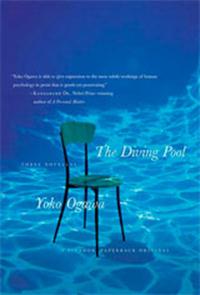
I picked up this slim volume of three enticing novellas during one of my scouts of the excellent Oxfam bookshops in London recently. I was intrigued by the cover and the discovery of an international author I had not read before whose credentials intrigue but I was sold by the quote on the cover by Nobel Prize-winning author Kenzaburō Ōe.

“Yoko Ogawa is able to give expression to the most subtle workings of human psychology in prose that is gentle yet penetrating.”

Yoko Ogawa for those like me who have not come across her before, has published more than twenty works of fiction and nonfiction, she has won every major Japanese literary award and her fiction has also appeared in The New Yorker, A Public Space
and Zoetrope.

From unknown to me until the last couple of months, I wander into my local bookshop this week and see Ogawa’s more recently published novella ‘The Housekeeper and the Professor’ sitting on a small table next to Murakami’s big fat ‘1Q84’ and Jonathan Franzen’s sizeable ‘Freedom’, names that need no introduction. So in anticipation of reading a second of her lovely slim books, I will tell you about the first.

‘The Diving Pool’ is both the title of this collection and the first of three novellas contained within; it introduces us to Aya, an introverted teenage girl with foster orphan siblings who feels distant from her family, yet finds a closeness being in the proximity of and observing her foster brother without his knowledge – she sits in the bleachers and studies his form, watching him with obsessive infatuation as he executes each flawless dive with his smooth, sculpted body. The depths of her infatuation rarely break the surface and spill over into engagement or physical contact though she desires it; she does not provoke, she wills it.

Ogawa depicts the girl’s keen observations and cruel impulse with the precision of a surgeon’s knife, slicing into the mind of a daughter with a disturbing transparency that entices the reader to continue to see just how far she will go.

It is a story that is worth rereading a second time from a writing perspective, not just the carefully crafted words, but what it is that the author does to create that effect of getting under your skin when reading it. I’ll definitely be adding her next book to my collection, her evocative style is addictive indeed.

The Paris Wife by Paula McLain

Dreams, Illusion, Reality

Reading The Paris Wife I rapturously turned the pages, captivated in a cathartic way in the character of Hadley Richardson, whose story and perceptions I became absorbed with, whose life and relationships I was invested in as a reader and also as someone who has lived in France for six years. Yet at the end I was left feeling somewhat deceived.

‘The Paris Wife’ explores a brief passage in the life of 28 year old Hadley Richardson, from shortly after the death of her mother, when she meets and after a brief courtship, marries the much younger Ernest Hemingway, until their separation and subsequent divorce.

Hemingway is a 21 year old war veteran and struggling journalist with his eyes set on Rome, until the writer Sherwood Anderson, convinces them the future lies in Paris.

The young couple embark on their journey, Hadley doing her best to support her husband and not burden him with her own insecurities. Neither glamorous nor ambitious, she is honest and good and able to provide Hemingway with an emotional foundation and stability that he has not been able to garner since his return from war, or perhaps earlier, when the arrival of a baby brother shattered the illusion of a special bond he believed he had with his mother. It is a pattern that will be repeated in his life, the attempt to recreate a safe, protective feeling akin to childhood with a woman, only for it to fall apart.

Cracks Begin to Appear

It is not long before cracks appear, Hemingway’s foreign assignment to Turkey bring back feelings of despair, displacement and the nightmares of war; walking in the rain, death, sickness and desperation in the air, his esteem low, he brings himself lower by acting on it. We learn this period was preceded by his breaking the ‘exclusive’ work contract with his employers without informing them – signs of a divide within himself – and Hadley’s discomfort with his dishonesty feeds the more paranoid of her instincts.

While in Paris, Hemingway spends his days writing, initially rejecting the cafés with their posing artists, though soon overcomes his distaste and discovers the joy of café life once they develop their own circle of friends.

Sunrise or Sunset?

Hemingway’s obsession with corrida (bullfighting) result in numerous visits to Spain accompanied by friends and these sojourns become the basis of his novel ‘The Sun Also Rises’ about a group of expatriates who travel from Paris to the Festival of Fermin in Pamplona.

One of the most striking and memorable moments supports a comment by Hemingway scholar Jamie Barlowe that Hadley Richardson “was a ‘true’ woman and not a ‘new’ woman of the early 19th century” and shows both how removed she was from their group and the reverence Hemingway held for her.

Hemingway dedicated ‘The Sun Also Rises’ to Hadley and although she was there in person and recognises much of what happens in the novel, she is the one person from their circle that does not exist between its pages. She is hurt by the exclusion, though spared the humiliation. She was at a loss in the company of Lady Duff, whom Hemingway models the female character on, a honey pot of a woman who, oblivious to the neurotic attentions of the men, was present with a much ignored fiancé and drooled over by Hemingway and Harold who end up in fisticuffs over misplaced jealousies. Hadley’s recognition and special moment come in the most romantic and gory of gestures, when the much admired matador Cayetano Ordóñez makes eye contact with her from the bullring and publicly gifts her the rare token of the bull’s ear, bloody and warm from the soon to be sacrificed animal.

The deception is that the story and the author’s interest continue only as long as she is married to Hemingway, a mere six years, effectively cancelling her out as a character so soon, no longer interesting without the crutch of an infamous husband. Did her life cease to hold interest or meaning beyond those years; are we really only interested in her because she was married to Ernest Hemingway? Sadly it appears so, deceived because it is true, we are to be concerned with her only for the duration of her marriage to Hemingway, despite having come to know her sufficiently to want to know more. She has become a victim of the modern cult of the celebrity, famous only for being linked with someone famous.

I think back to another wife of a famous man I reviewed recently ‘The Many Lives and Secret Sorrows of Josephine Bonaparte‘. Josephine starts out as a modest character named Rose Tacher whom we are introduced to many years and one marriage before she meets Napoléon Bonaparte; we are fortunate that interest in her isn’t restricted to her marriage to Bonaparte, we are already hooked into her character and have completed an entire novel before Bonaparte even enters the scene.

Despite the deception, I recommend ‘The Paris Wife as an alternative, behind the scenes look at the 1920’s lives of the group Gertrude Stein called ‘the lost generation’ and also at the inspiration and experiences that influenced much of Ernest Hemingway’s work penned during this era.

But perhaps most of all because McLain introduces us to a woman we can relate to and empathise with, someone we can imagine as a friend or confidante, who aspires to the same things that so many women yearn for, because she allows us to imagine and feel what it must have been like to harbour such simple and honest ambitions while navigating a fresh marriage in a new city and foreign country and culture.

Why People Don’t Read Short Stories

Publishers have difficulty persuading readers to buy short story collections.  Many readers love them, but more readers avoid them, preferring the novel.  Why is this?  Fiction writer Tessa Hadley suggests it is because in our culture, readers have grown used to the habit of the novel, we can pick up a novel and put it down time after time, when it opens we re-enter its world, escaping our own for a while.  There’s something discontinuous about our reading relationship with short stories.  At the end of each story we are thrown out of that world created by the chosen words of the author enhanced by our imagination, back into our surroundings without leaving a thread; we then enter another story and begin to build a new picture of characters, place and situations.

Reflecting on this now, I wonder if that is why I liked Alice Hoffman’s ‘Blackbird House’ so much, because of the subtle connection between the stories which kept me wanting to go back for more.  Or was it the writer’s style? I love this book, a unique set of short stories that traces the lives of various occupants of an old Massachusetts house over a span of 200 years, witnessing change in each family through their loved ones and the lives they live inside Blackbird House.

I like reading short stories, especially in between reading novels or other more lengthy works of non-fiction.  There are some short stories in particular that I adore, like the Italian writer Italo Calvino’s ‘The Enchanted Garden’ from his collection of short stories ‘Difficult Loves’.  Giovannino and Serenella discover an opening in a hedge leading them into a quiet garden of flower beds, eucalyptus trees and gravel paths, it’s like a mini version of Frances Hodgson Burnett’s ‘The Secret Garden, still a favourite today.  And then there’s A.S.Byatt’sStone Woman’ from her ‘Little Black Book of Stories’ the haunting tale of a woman witnessing her own gradual metamorphosis into stone; befriending an Icelandic stone carver she returns to East Iceland, the place that will become her final resting place.

Mini-gateaux, Bechard, Aix en Provence by Maki

For me, an avid reader, short stories are like the contents  of extravagant chocolate boxes or the pick n mix gâteaux at Béchard on the Cours Mirabeau here in Aix en Provence.  When I’m into reading short stories, I don’t just take one collection, I take three or four and then read a story or two from each collection, so I sample more than one writer at a time.

Why do I do this?  Well firstly, because for me short story collections are like ‘1001 Nights’, I don’t want the collections to end, so I slow down the process to savour the stories.  Secondly, I like to sample writers from different countries, so today I might read from Nigerian writer Ben Okri’s collection Stars of the New Curfew’ set in the teeming street of Lagos, or ‘Sandpiper’ Egyptian writer Adhaf Soueif’s collection about women finding themselves in countries other than their own, where language, culture and love create confusion.

The collection I have now remind me that I love to travel through books both to foreign destinations and through the minds of writers from different countries and cultures as well as returning to the familiar vernacular of my country of birth.

In addition to those mentioned I might dip into Elliot Perlman’s (Australian) ‘the reasons I won’t be coming’, Alice Munro’s (Canadian) ‘Friend of my Youth’; Janet Frame’s ‘The Lagoon’, Keri Hulme’s ‘Stonefishand ‘The Stories of Frank Sargeson’ (New Zealand writers), Indian writer Chitra Banerjee Divakaruni’s ‘Arranged Marriage’ and Jhumpa Lahiri’s ‘Unaccustomed Earth’ or Raymond Carver’s ‘What we talk about when we talk about love’ which reminds me I want to read the Japanese writer Haruki Murikami’s ‘What I talk about when I talk about running’. Then there are the slim classics Dubliners’ by James Joyce who needs no introduction and Grace Paley’s ‘The Little Disturbances of Man’.  And I’m happy to say, I’ve almost managed not to finish any of them – except Hoffmann’s ‘Blackbird House’ which reviewers describe as “not quite a novel and not quite a short story collection’ so I guess that one doesn’t count.  And I plan to read it again anyway.

In this time pressed world, one would think that short story collections are poised for a revival; after all, what better antidote for the tired, overworked individual who remembers nostalgically the enjoyment they used to get from a good book – short stories are perfect!

As writer Jonathan Falla said “Good stories are not literary fast food, made on the cheap; they are intense with a flavour that expands to fill the mind.”  The short story allows us in a short space of time to understand and consider momentous things, grand dilemmas.  Short stories pull us into their world and shake us up.

Do you read short stories?  What’s your favourite collection?

www.theshortstory.org.uk

http://www.americanshortfiction.org/

Secret Gardens and the Imagination

This week I find myself rereading an old-time classic out loud.  I am being reacquainted with Frances Hodgson Burnett’s ‘The Secret Garden’ as I read it aloud to my 9 year daughter while camping out for 10 days with her in the paediatric ward of the hospital.  My French is being elevated to yet another level as we undertake a rapid apprenticeship in living with Type 1 diabetes, which after a rushed call to the hospital, we discovered was the cause of her giant fatigue and unquenchable thirst.

Both of us seeking an escape, we embark on our journey towards the secret garden with 9 year old Mary Lennox, who finds herself removed from an exotic life in India and living with a rarely seen and allegedly cantankerous Uncle, in a grand old manor on the moors of England after both her parents succumb to cholera.

We are a couple of chapters into the book and my daughter is feeling a little deceived.  “There’s no secret garden” she says, “and what does it mean, gloomy”.  I have to admit that for a story chosen to perk up an ailing child, the first few chapters are somewhat gloomy indeed.

The Secret Garden in the daytime...

At this point my daughter decides to take the matter into her own hands and here you can see her first attempt at creating a secret garden of her own.  The joy and allure of a great book title, it inspires the imagination before we have even arrived at the promised treasure the book beholds.

Young Mary has been both pampered and neglected in her former colonial life so England is something of a shock, where staff speak to her as an equal and expect her to be somewhat independent.  But this newfound freedom will lead her to discover the enchanted garden and to make new friends, not just of the human variety.

Needless to say, this wonderful book is about transformation in many guises, the human spirit, the magic and healing power of gardens, the wonder of birds and animals and the joy that acts of kindness engender.  It worked wonders for us both.

The Secret Garden at night...

The Lacuna by Barbara Kingsolver

‘Lacuna.’

I love it when a book introduces a new word and uses it sufficiently that you know it’s not fleeting knowledge, something you know for a day and have difficulty recalling a week later.  When that new word is the title of the book, there’s a pretty good chance you will remember it.

Deep water soloA ‘lucuna’ is a space or a void, a deep underwater cave, something hidden, unknown; already we see its metaphorical potential and Barbara Kingsolver puts it to good use in this excellent novel which intertwines the fictional story of 12 year old Shepherd, through historical events of Mexico and the US in the 1930’s and 40’s, including time spent in the household of Diego Rivera and Frida Kahlo and their controversial houseguest Leon Trotsky.

A fan of the film ‘Frida’ beautifully depicted by , I’d met these characters on screen and found them good company in Kingsolver’s story of Shepherd whose socially aspiring Mexican mother ditches her emotionally cool civil servant husband to return to “Isla Pixol” an island off the coast of Mexico.

Shepherd’s skills learned in the kitchen of his island home lead him to mixing plaster for Diego Rivera’s murals “It’s like making dough for pan dulce” where he joins the household as cook and typist for Rivera, his artist wife, Frida Kahlo, and later for their guest, the exiled Communist leader Trotsky.

In this incendiary, revolutionary household, Shepherd listens and observes as egos roar and quake. Baking all day, he records the dramas of this entourage by night, along with his first novel, an epic of the Aztec empire.  In 1940, when Trotsky is assassinated, Shepherd leaves Mexico, spooked by newspaper articles denouncing his employers and friends.

The story unfolds through Shepherd’s diaries and letters as well as actual newspaper cuttings that reflect the selectively reported half-truths and lies used to justify hatred towards “them”: first the fascists, then the Reds.  And it seems anyone can become one of “them.”

Media madness and political upheaval follow,  then Violet arrives in Shepherd’s life to help record his stories.  She chances across a new gap – a long-vanished diary, Shepherd’s excuse for not finishing a memoir.

The Lacuna is multi layered, beautifully written and for me a joy to read.  Though some have struggled to get into it, I recommend you persevere and partake in this extraordinary journey through wonderfully depicted characters, and the conscious landscapes of Kingsolver’s world.