
This month our bookclub chose a slim novella by the French author Philippe Claudel to read, La petite fille de Monsieur Linh; an interesting and somewhat 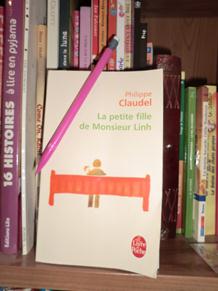 ambiguous title because it can be interpreted in two different ways, already a dilemma for the translator no doubt, because petite fille is the expression used for grand-daughter, but it can also be read as petite ‘little’ and fille ‘girl’.
Something I have often wondered – why is it that there is only one word fille that means both girl and daughter, whereas there are two words for the male equivalent fils meaning son and garçon meaning boy? The same thing happens with woman and wife, the French word is femme, whereas man is homme and husband is mari.
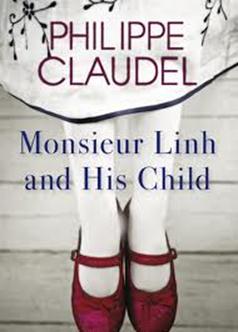 So did the English translation go with grand-daughter or little girl you might ask? Actually neither, the English title as shown is Monsieur Linh and His Child. I’m not sure why they stay with Monsieur rather than Mr, I was not under the impression that he spoke in French. It becomes clear how much of a task translating a novel must be, so many decisions to make or discard with the title alone, already certain ambiguities are lost while other insinuations are made.
Our English speaking bookclub has an international membership, so while we all read the book in French, the discussion is in English. For those of us reading French as a second language, the experience was quite different from reading a book in English.
We all went through a similar experience, starting out with a dictionary close at hand and looking words up, until we got fed up with that and decided to continue reading without stopping, some of us underlining words to come back to.
As you can see, I had my pencil ready and I also downloaded the English version to my kindle and started reading concurrent chapters, only to discover I really was just repeating myself and it wasn’t necessary to do that. But enough of the process, what a stunning novella!
Monsieur Linh has no choice but to flee his country of birth due to tragedy and destruction around him, war or some kind of tyrannical regime have made it impossible for him to stay, and so he takes a boat with his grand-daughter Sang diu, arriving as a refugee in a country across the water somewhere.
 The author does not say where he came from or where he arrives at, making this part of the reading experience, in fact we all had various impressions of where the story may have taken place, my own impression very much influenced by my recent reading of Vaddey Ratner’s novel In the Shadow of the Banyan and my own travels in that part of the world.
Monsieur Linh doesn’t leave the refugee dormitory at first, but when he does he befriends Monsieur Bark and so begins a regular coming together, a special friendship despite the incomprehension of each other’s language. In a sense we are as uninformed as Monsieur Linh, we follow him into the unknown, share his anxieties and fears for Sang diu and feel the deep and mutual appreciation of the gestures of new-found friendship.
Lorsque Monsieur Bark parle, Monsieur Linh l’écoute très attentivement et le regarde, comme s’il comprenait tout et ne voulait rien perdre du sens des mots. Ce que sent le vieil homme, c’est que le ton de la voix de Monsieur Bark indique la tristesse, une mélancolie profonde, une sorte de blessure que la voix souligne, qu’elle accompagne au-delà des mots et du langage, quelque chose qui la traverse comme la sève traverse l’arbre sans qu’on la voie.
When Monsieur Bark speaks, Monsieur Linh listens to him very attentively and looks at him, as if he understood everything and did not want to lose any of the meaning of the words. What the old man senses is that the tone of Monsieur Bark’s voice denotes sadness, a deep melancholy, a sort of wound the voice accentuates, which accompanies it beyond words and language, something that infuses it just as the sap infuses a tree without one seeing it.
When I bought this book, another reader cautioned me against reading any reviews because there is a twist at the end of the book, so I did as mentioned and kept the reading experience pure. There is so much more I could share about how we invest ourselves in characters as readers, wishing things to happen and just as in life, ignoring the niggling instinct.

Irène Némirovsky’s Ida & La comédie bourgeoise
It is a beautiful story and I urge you to read it in English or in French, it is a testimony to kindness, tolerance, suffering and the small but heartfelt joys that friendship brings. Not just a wonderful story, but it has inspired me to be brave and try another short book in French. So I have my pencil ready loving that the novella form is so popular and inexpensive in France, so here is my next foray, – no rush mind you.
So do you read in a second language or like to read foreign fiction?

 ever faithful, if somewhat distracted guests.


 and a unique cultural insight.
 Adam McOmber’s debut novel is set in Victorian London in an area I know well, at least in contemporary terms. Jane Silverlake and her friends Madeline Lee and Nathan Ashe live in Hampstead and regularly take walks on Hampstead Heath, the ‘Green Lungs of London’, my favourite London park. At 790 acres, it is the largest and being wooded, you can imagine it is almost a little wild in parts and certainly the closest relatively untouched inner city natural environment you will
  find.
find. However, most of that is in the future, because Jane and Maddy are living in 18 – – and concerned about the strange behaviour of their friend Nathan, since he returned from the Crimea War and took up with the strange, alluring Ariston Day and his secret society of young, wealthy male followers whom he refers to as ‘Fetches’.


 Set in the summer of 1914, the story centres around Grace Winter, a 22 year widow; right from the beginning we understand she is one of three women being held in prison while on trial for a crime that is alleged to have occurred while they were afloat on a lifeboat after the sinking of a grand ocean liner they were travelling to New York on.
 Quiet on the blog front while life enters an extremely busy period here with La Rentrée and a working visit to London; I have a few summer reads still to review, so hope to add those as I find time.


 This is a multi-layered story that reveals itself with each encounter, that hints at the traumatic events and psychological destruction of a nation, depicting the constant struggle for survival in a post-war era and the love it’s citizens have for their country despite the difficulties and horrors of the past. There is sacrifice in staying and pain in leaving; there is no real escape, both will suffer, albeit in different ways.


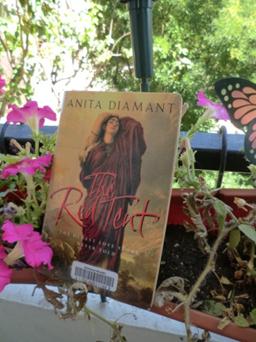

 Eva and her companions have travelled to the ancient Silk route city of Kashgar in the hope of converting lost souls, but seem to find only trouble, not helped by the questionable motivations of each of the individuals that make up the group. Tolerated but unwelcome, they find themselves ostracized and seen as bringing bad luck during a time of political and religious unrest.
 After reading an audio transcript of an interview between
 Word by Word