
I picked this book up because of its premise of a child having questions about her early life and origins, sensing she is being lied to by her parents.
A 30 Year Story from 80’s London to Córdoba
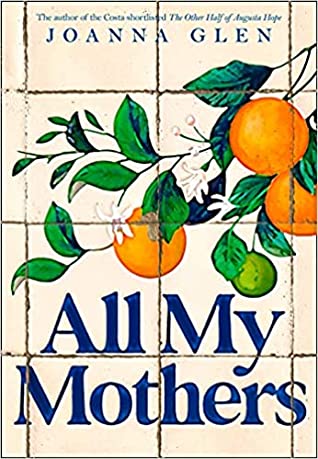
The book is 480 pages and most of the first half is narrated by Eva as a child or teenager. It begins as she is starting school and beginning to develop friendships. She befriends Bridget Blume and is besotted. Not just by her, but by her entire family, especially her mother who is so unlike Eva’s mother whom she calls Cherie (like her father does).
At school Eva is deeply affected by a book the teacher reads ‘The Rainbow Rained Us’, in which a rabbit throws a stone at the rainbow of Noah’s Ark breaking it apart into hundreds of multicoloured mothers who repopulate the earth with children.
The Many Colours of Mother Love
There Blue Mother stood in a mesmerising cornucopia of blues, at the edge of a turquoise sea, laughing, the wind in her hair, surrounded by her blue family.
‘Blue Mother is free and open and speaks from her heart.’
She sounded exactly like Bridget’s mother – utterly perfect.
From then on she refers to her mother as Pink Mother and Bridget’s mother as Blue Mother.
Pink Mother was sitting upright in a kind of fairy-tale bed, a bit like my mother and father’s, a four-poster, with a roof and curtainy droops around it.
No,no,no.
‘Pink Mother is delicate and feminine,’ said Miss Feast, explaining that delicate meant not strong.
When they are asked to share a baby photo, Eva becomes even more convinced than she already was, that her mother is not her mother, there is no photo of her as a baby, nothing before the age of three and a half.
The novel’s first half follows her through primary school, her developing friendship and first great loss, first the loss of a favourite teacher, then a death that will result in her friend’s family moving to another country and then abandonment by her father, who returns to Spain and rarely if ever makes contact.
Eva’s personality develops and is compromised by these losses and causes her to develop or accept superficial relationships, taking some time to realise what she lost by neglecting what has been meaningful to her.
Hispanic Studies, La Mezquita, A Headless Nun

In the second half of the novel she has started a university degree, changing locations due to the demands of her boyfriend Michael.
The pace really picks up in this half, perhaps because we have left the child narrator behind, so Eva becomes less introspective and more in charge of acting on the questions and thoughts she has and voicing some of the strong opinions she has.
When told they will spend a summer semester in Córdoba, Spain, the separation from all that is familiar and expected of her, marks the beginning of a transformation and a quest into looking for the answer to questions she has about her origins.

The second half is something of an adventure as she develops a new friend Carrie who is interested in helping her and the two begin to consider not returning to their previous lives, to stay in Córdoba.
As Eva enters her 20’s her relationships and perspective begin to evolve, although she remains somewhat detached, circumspect and emotionally distant. With the presence of those around her, she begins to understand the complexity of being a mother, of being mothered and that judgments can change, as can people, especially when they find those relationships that are mutually nurturing.
The final third of the jumps into a second person narrative perspective ‘you’ and becomes somewhat nostalgic and didn’t work quite so well as the preceding chapters. It’s like the beginnings of a letter to a little girl who is still a baby, perhaps the thing that she had missed from her own life, being provided for another.
Writing From Experience versus Imagination or Observation
It is an interesting and captivating read, however I couldn’t help but feel as I was reading that this was imagined, rather than felt, because I am interested in books, fiction or nonfiction that come from the experience of separation.
In an interview with Carolyn Ray of JourneyWoman Bookclub, Joanna Glen shared that one of her aims was to explore the question, What is Our Deepest Longing?
I suppose the motherhood theme came next thinking what is our deepest longing that we have right from the beginning and of course a baby’s deepest longing is to gaze into the mother’s eyes and receive the gaze of love back. So I was thinking, what would be the most powerful or perhaps the saddest lack, would be not to feel that connection. That would be a very visceral fundamental lack.
She shares more about her own experience in the interview, which was the opposite of what she explores in the novel regarding the mother child connection, but brings alive the adventure of living abroad, in the town of Córdoba as a young person.
Overall, an enjoyable summer read that is likely to spark an interest in Córdoba, if like me you have never been there and one that celebrates female friendship and connection across different age groups and cultural backgrounds.
Further Reading
TripFiction Review: All My Mothers by Joanna Glen, coming of age novel mainly set in Córdoba. Aug 2021
Author, Joanna Glen
Joanna Glen’s novels include All My Mothers and The Other Half of Augusta Hope, which was shortlisted for the Costa First Novel Award and the Authors’ Club Best First Novel Award.
She and her husband live in Brighton.
 This short, articulate novella is a conversation, in the form of a lengthy letter from a widow to her best friend, whom she hasn’t seen for some years, but who is arriving tomorrow. It is set in Senegal, was originally written and published in French in 1980 and in English in 1981, the year in which the author died tragically of a long illness.
 It is a lament, a paradox of feelings, a resentment of tradition, a wonder at those like her more liberated and courageous friend, who in protest at her own unfair treatment (a disapproving mother-in-law interferes – reminding me of Ayòbámi Adébáyò’s
  Mariama Bâ (April 17, 1929 – August 17, 1981) was a Senegalese author and feminist, who wrote in French. Born in Dakar to an educated and well-off family, her father was Minister of Health, her grandfather a translator in the occupying French regime. After the premature death of her mother, she was largely raised in the traditional manner by her maternal grandparents.
 The Door is an overwrought, neurotic narrative by “the lady writer”, (possibly Szabó’s alter-ego, as there are similarities) describing her 20 year relationship with Emerence, the older lady who interviews her prospective employer to see if she’ll consider accepting the cleaning job on offer.
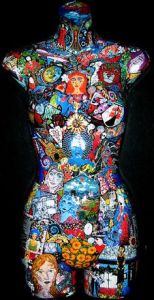 Later, only very much later, in one of the most surreal moments I have ever experienced, I wandered amidst the ruin of Emerence’s life, and discovered, there in her garden, standing on the lawn, the faceless dressmaker’s dummy designed for my mother’s exquisite figure. Just before they sprinkled it with petrol and set fire to it, I caught sight of Emerence’s ikonstasis. We were all there, pinned to the fabric over the dolls’ ribcage: the Grossman family, my husband, Viola, the Lieutenant Colonel, the nephew, the baker, the lawyer’s son, and herself, the young Emerence, with radiant golden hair, in her maid’s uniform and little crested cap, holding a baby in her arms.
 Magda Szabó was born in 1917 in Debrecen, Hungary, her father a member of the City Council, and her mother a teacher.
 Word by Word