
Although I live in France, speak the language and love to read, I confess I don’t read nearly enough in French and admit I am holding any intent in that direction in abeyance for a while, comfortable with the certain knowledge that I will indulge the desire eventually. The last novel I bought in French was a translation of ‘The Life of Pi’ by Yann Martel, a gift for my friend B, so she could read it in her ‘langue maternelle‘. It is serendipitous then, that she bought me ‘The Tiger’s Wife’ for Christmas, another novel with an unforgettable feline presence. We will share the experience of our respective tigers soon, the discussion sure to cross both languages.
 And so to Téa Obreht’s debut novel and Orange prize winning ‘The Tiger’s Wife’.
I do enjoy traversing cultures and storytelling whose origins are unfamiliar, requiring an open mind and suspension of judgement. Obreht brings us to a land that has been split in two, where crossing a border causes suspicion and having the wrong accent or name can be dangerous.
Natalia is a young doctor who travels with her friend Zora across a hostile border to bring medicine to an orphanage. On her way she learns that her dying Grandfather has followed her and passed away in a neighbouring village. His personal effects, including his copy of ‘The Jungle Book’ that he always keeps with him are missing; Natalia takes a detour during her visit to retrieve them, enabling her family to render their funereal rituals in peace.
A simple story, there is little depth to the living characters, we don’t spend much time with or get to know Natalia’s mother, grandmother or her travelling companion Zora. The contemporary story outline is a frame within which to retell stories and reflect on memories the grandfather shared with Natalia, presented as flashbacks.
However, this is where Obreht’s narrative really shines, when the deathless man appeared everything came into focus and I was hooked. The grandfather’s encounters and conversations with the deathless man are curious and engaging. We meet the equally legendary villagers of Galina where he grew up and in a fable-like manner, we learn how the background of these characters led to their subsequent behaviour and the role of the Tiger’s wife.
We encounter village rumour, superstition, stories and incidents where truth and the imagination make equal contribution to the version passed on or ‘dug up’ in the present day. The stories often feature a well-intended, admirable type such as Luka, the butcher’s son and Dariša the bear hunter, transformed by events which see their nature change, the humble youngster becoming a wife-beater, the caring turning brutal, the compassionate victimised.
 Framing stories within another story can be distracting, particularly when we have a preference for one over the other and when the narrative voice changes; it reminds me of the Rumi scholar and novelist Elif Shafak’s book ‘The Forty Rules of Love’ which I adored for the most part, the fable like story of the dervish Shams unfolds like an exotic journey; the contemporary story within which it was framed didn’t work so well, though I do recommend the book.
I hope more novelists succeed in crossing cultures and bringing into the light their stories, myths and family legends with creative inspiration.
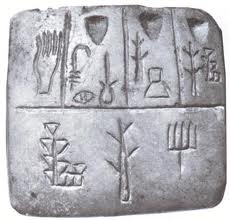 Lest we forget.
 Blogging awards make excellent writing prompts and get me writing about something other than books as well as encouraging good blogging etiquette; i.e. visiting other blogs, commenting and being supportive.
 ‘A Visit from the Goon Squad’ by Jennifer Egan (winner of the Pulitzer prize for fiction 2011) was recommended in a comment on my post
  A novel or a set of stories, each chapter is separate yet connected by the barest of threads to the previous, sufficient to surmise a pattern, although like many creations, the complete picture does not become clear until the work is finished. It reminds me of six degrees of separation, that we are all connected and that even when we are, there are gaps in history’s, we only ever know part of a person’s story.
 Which reminds me, the goon squad; as Bosco says on page 134 ‘Time’s a goon, right?’ and so too I believe that a visit from the goon squad is just this, time passing and the oft harshness of reality.
 If you have never read Italo Calvino this may be a misleading book to start with, it’s certainly not reminiscent of his short stories and I believe it is unlike his other novels, but it has a kind of cult status in that it
 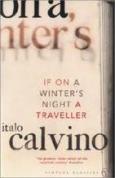 I enjoyed the diversions, although I was disappointed that he was unable to find a way to leave the sex of the reader neutral, having been almost convinced he might well be speaking to me, it becomes clear he is speaking to his male readers, political correctness not in full swing in the early 1980’s when this was published. But I readily forgive him, especially when assured by Lorna Sage, author of the memoir ‘In Bad Blood’ who wrote in the Observer:
 Playful, impossible to label, is it a…, it is a question, a poem, a collection of stories, a novel and a conversation with Italo Calvino. The author imposes himself and his voice within the pages and we as the reader also become involved in the action as Calvino switches into the second person narrative. If I were an academic I would probably be littering this text with a lot of technical terms describing the literary tools Calvino plays with, literature students are likely to come across it, or at least they did in the past, as David Mitchell, author of ‘Cloud Atlas’ reminisces about
 Reading books on writing is a little like panning for gold. Most of what we read washes away, some of it is interesting to consider but doesn’t necessarily gel and then occasionally we find a gem.
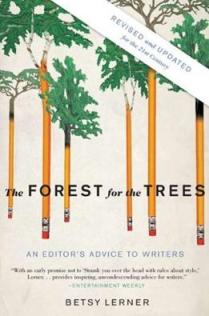 ‘The Forest for the Trees’ was recommended on writer
  If you are looking for a tongue in cheek attempt at writer’s psychological profiles, interesting and funny anecdotes and an inside look at one editor’s career path, then this will entertain. We can also learn much about the industry by keeping up with writer’s blogs and online communities, which without a doubt reflect the situation of writers today, whether persevering towards it or already succeeding to be published.
 I picked up this slim volume of three enticing novellas during one of my scouts of the excellent Oxfam bookshops in London recently. I was intrigued by the cover and the discovery of an international author I had not read before whose credentials intrigue but I was sold by the quote on the cover by Nobel Prize-winning author





 Word by Word