House of Splendid Isolation by Edna O’Brien

Back to the final days of Reading Ireland Month 2025, this week I slowly read Edna O’Brien’s political novel House of Splendid Isolation, the first of the Modern Ireland Trilogy, books written in the 1990’s that depict significant events in modern Ireland. The other two novels in that series are Down By the River and Wild Decembers.

Incarceration, Idealism and Ignorance, An Irish Story

Modern Ireland trilogy Edna O'Brien a political novel of the 1990's

House of Splendid Isolation is a story of one event and incidents involving a community, over a few days as a man involved in murderous events is on the loose and actively being hunted.

It is also a book of parts and voices, a child’s voice, the past, the present, a woman Josie who returns to Ireland after a period of youth in Brooklyn, her disappointing yet predictable marriage, an impossible affair and violent retribution, an accident, people who drop by, whose good deeds lead to violent consequences, friendships that hide betrayal, communities that breathe suspicion, harbour fear and occasionally a fugitive.

I hear stories. It could be myself telling them to myself or it could be these murmurs that come out of the earth. The earth so old and haunted, so hungry and replete. It talks. Things past and things yet to be. Battles, more battles, bloodshed, soft mornings, the saunter of beasts and their young. What I want is for all the battles to have been fought and done with. That’s what I pray for when I pray. At times the grass is like a person breathing, a gentle breath, it hushes things.

A Not So Quiet Last Act

Josie is now a lone widow in a big old house that she came to inhabitant through marriage, she did not wish to die in a Home, she has returned. A nurse visits occasionally and her grocery order is delivered. Memories still haunt her.

The nurse muses why, the older they get, the madder they are for talk; their past, their present, their futures, anything, everything, afraid of death too as if she was not afraid of it herself.

Edna O'Brien The Country Girls The House of Splendid Isolation

Into her last solitary days arrives this unwelcome visitor on the run, they play cat and mouse, wary of each other, challenging each other, co-existing nevertheless, never quite knowing if one can trust the other, providing each other something they need for a brief moment, while the world outside goes mad in their paranoia, the rumour-mill running rampant, suspicions gone mad.

The grass smells good to him and after three months cooped up in a house in a town, he’s tuned to the smell of grass and the fresh smell of cow-dung, to the soft and several lisps of night. He knows his country well, McGrevvy does, but only in dark. The dark is his friend. Daylight his enemy. Who set him up. Who can he trust, not trust.

The Grass Was Never Greener

While their words and worlds would never align, there is something in the brief respite one provides the other in this house of Splendid Isolation, before they each face the inevitable that awaits them; capture or death, peace no longer an option. Here the first confrontation.

‘There’s myself and my maker,’ she says quietly. So this is how it happens, this is how a life is suborned, one’s insides turned to whey, an opening door, a man, hooded, with not a lax muscle in his being, a loaded rifle and outside crows cawing with the same eventide fussiness and no one any the wiser that her time is up.

A novel of many layers and consequences revealed of humans wronged, who know not how to seek healing or harmless resolution, whose path leads to occasional respite en route to destruction.

It brilliantly depicts two faces of a staunchly divided territory, their failed attempts to escape their destiny, a brutal confrontation and a land that continues to absorb the repercussions.

Forward, back, slow, quick, slow

The writing moves from poetic, contemplative reflection to rapid, coarse dialogue to action oriented tension as the slow hours spent in captivity contrast with the build up externally as the police net closes in on the fugitives location. At times the prose is sparse, and other times it shifts as our protagonist loses her grip on reality and shifts into past memories or present situations that confuse her.

It’s not a straight forward read, as it navigates and holds all these time frames, but it propels forward at a good pace and leaves the reader with much to reflect on.

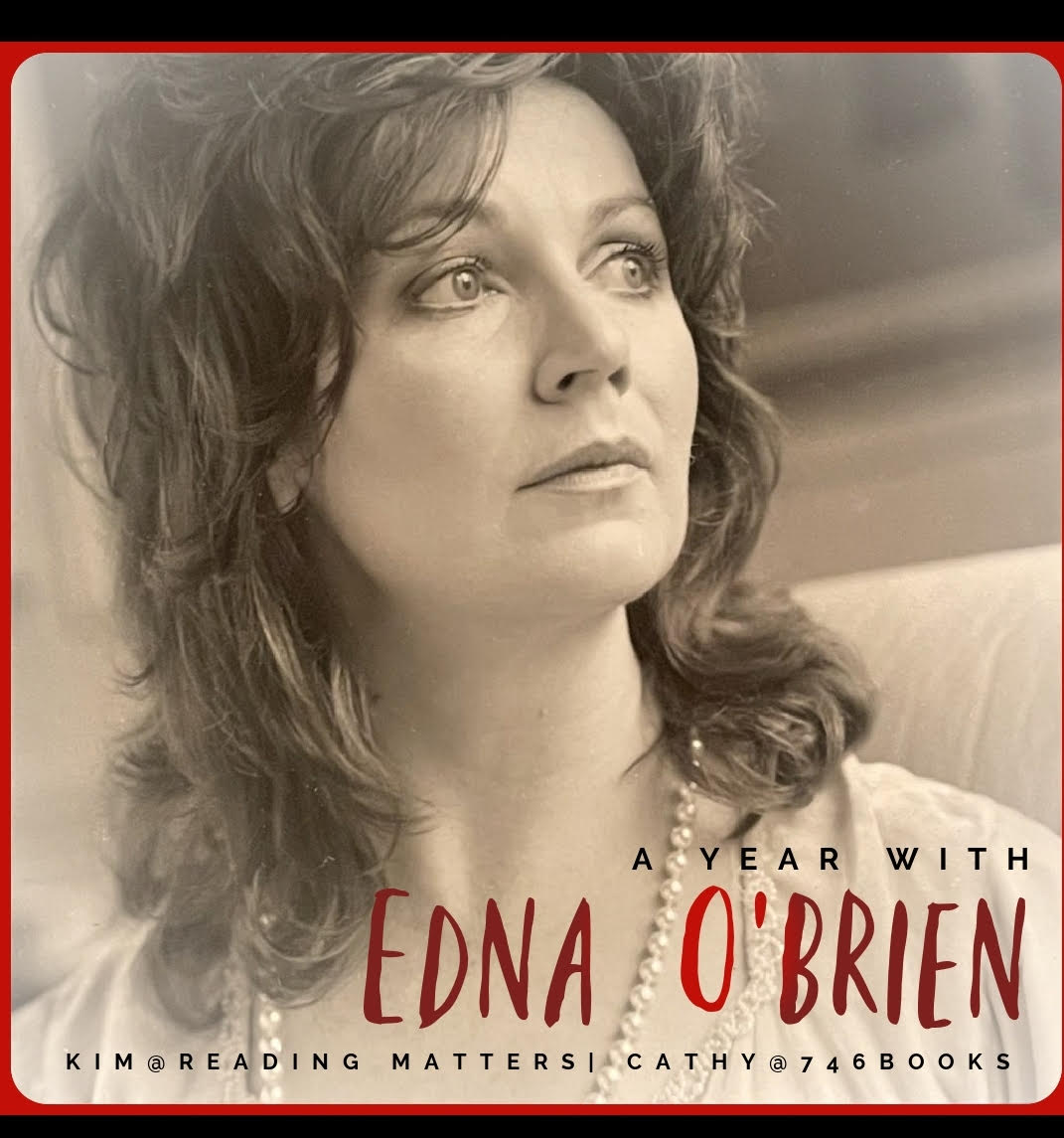
A Year With Edna O’Brien

I read this for Reading Ireland Month 2025 with Cathy at 746Books and also for Cathy and Kim’s A Year With Edna O’Brien which they are doing in 2025. Kim will be reading another of the Modern Ireland trilogy novels, Wild Decembers in August.

Further Reading

My review of Edna O’Brien’s renowned Country Girls Trilogy (initially banned in Ireland due to its bold faced portrayal of a young woman’s quest for independence and awakening sexuality) consists of three novels: The Country Girls (1960), The Lonely Girl (1962), and Girls in Their Married Bliss (1964). It was re-released in 1986 in a single volume including a revised ending to Girls in Their Married Bliss and the addition of an epilogue.

Author, Edna O’Brien

Edna O’Brien was born in December 1930 in Tuamgraney, County Clare. She died in 2024, having written over 20 works of fiction, known to provoke, dissect and dig into social, cultural and religious issues deep in the fabric of Irish society.

In addition to The Country Girls trilogy, her novels include A Pagan Place (1970), the story of a girl growing up in rural Ireland, winner of the Yorkshire Post Book of the Year Award; Zee & Co (1972); Johnny I Hardly Knew You (1977), a story of love, murder and revenge; Time and Tide (1992), winner of a Writers’ Guild Award, the story of a young wife who faces a crisis when she leaves her husband and is forced to fight for the custody of her sons.

She is the author of a trilogy of novels about modern Ireland: House of Splendid Isolation (1994), she writes about Irish nationalism and sectarian violence; Down by the River (1996), based on the true story of a young Irish rape victim forced to travel to England for a legal abortion; and Wild Decembers (1999), about a farmer, Joseph Brennan, and his sister, Breege, living in an isolated rural community. In the Forest (2002), is based on the true story of a disturbed, abused young man who murdered a young mother, her infant son and a Catholic priest in the west of Ireland in the early 1990s. The Light of Evening (2006) and Byron in Love (2009), Haunted (2010), The Little Red Chairs (2016), Girl (2020), Joyce’s Women (2022).

She wrote Mother Ireland (1976), a travelogue with photographs by Fergus Bourke, and a biography of James Joyce, published in 1999. She is the author of several plays. In 2021 she was awarded the French Ordre des Arts et Des Lettres.

“I wanted to write from as far back as I can recall. Words seemed and still seem an alchemy, and story the true conductor of life, of lives.”

Reading Ireland Month 2025

On Canaan’s Side by Sebastian Barry

Continuing Reading Ireland Month 25 I finish the last of the three novels about the Dunne Family.

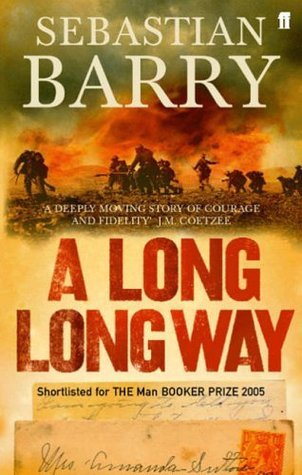
The final novel in the 4 book collection about the Dunne Family, first being the play about the Dad Thomas, the last superintendent of the Dublin Police, then his children Annie Dunne and Willie’s stories A Long Long Way and now Dolly, who we knew left Ireland for America as a young woman, but we never knew why.

Interestingly she too is based on a real ancestor, the Great Aunt of the author, whose true story only came out to him in recent years.

One Grievance Too Many

We meet her as Lily, a grieving octogenarian during the 2 weeks – each day a chapter – following the death of her grandson Bill, the boy she raised alone from 2 yrs of age, as she did her son.

I am so terrified by grief that there is solace in nothing. I carry in my skull a sort of molten sphere instead of a brain, and I am burning there, with horror, and misery.

So while in the present she is grieving and finding it difficult to find reason for still being alive, the novel is a form of her confession, an ode to herself, to all that has passed; so we are taken back to Dublin, to Wicklow, to what happened after the war, after the loss of Willie, to her meeting his young friend, the solider Tadg Bere and how their destinies become entwined.

A Fateful Meeting

‘The thing about Willie was,’ Tadg Bere was saying, ‘it wasn’t just you could be depending on him, you knew he was keeping a weather eye out for you, like you might a brother. So I was always thinking, that was a sorta compliment to his family, that they had reared him up in that frame of mind.’

Her father helps him find a job in the police force. Lily isn’t too sure about her feelings for him, their relationship has barely begun, when it reaches a significant turning point.

He was proud to be working, at something akin to soldiering, and something that would allow him to serve his country. He felt he was making a new beginning. He did not believe in any new Ireland, he devoutly loved the old one. The new force paid decently, but was otherwise poorly funded and put together in great haste. They barely had uniforms, and in the beginning wore bits and bobs of various forces, half army and half police, which is why they were dubbed the Black and Tans.

Ultimately the thing she desires, she can never truly embrace, as her life is lived always looking over her shoulder, always somewhat in fear.

Absence and Loss, Refuge in Cleveland

There are patterns in her life of men departing for war, her brother, her son, her grandson, and how it affected them all. And the departure of husbands, the losses she has borne, the perseverance, the continued service to others she has willingly offered, until the last revelation, the one that undoes her.

The title On Canaan’s Side is a reference to a bible story, to a song, about leaving a place of incertitude or danger to travel to a place of refuge. In the bible it is the “promised land”, in Irish history, it is to America they look as a place they ought to be safe and happy. It represents humbleness and receptivity, values that Lily has honoured, only to have encountered its curse, an inability to rise above her station.

Barry had this reference in mind too, after hearing it was mentioned by a newsreader in relation to the death of Martin Luther King, the tragedy of his killing, to be on Canaan’s side. There is a scene where King visits the house where Lily cooks, it seems out of place in the novel, but perhaps it is a nod to this reference.

Interestingly, Barry’s Canaan is Cleveland, Ohio, where Lily ends up; a place he developed an interest in due to the building of the Ohio Canal, a work of civil engineering designed to invigorate the northern territories up into Canada, already destroyed by the great flood in 1913.

The novel brilliantly portrays the struggle of making a new life, the lack of choices, the nostalgia of what has been left behind, the inability to prevent certain tragedies that arrive unbidden.

“I do believe writing for a writer is as natural as birdsong to a robin. I do believe you can ferry back a lost heart and soul in the small boat of a novel or a play. That plays and novels are a version of the afterlife, a more likely one maybe than that extravagant notion of heaven we were reared on. That true lives can nest in the actual syntax of language. Maybe this is daft, but it does the trick for me. I write because I can’t resist the sound of the engine of a book, the adventure of beginning, and the possible glimpses of new landscapes as one goes through. Not to mention the excitement of breaking a toe in the potholes.” Interview with Sebastian Barry, Words With Writers, 2011

Further Reading Listening

Talking About “On Canaan’s Side” with author Sebastian Barry, CBC Radio

Guardian review: On Canaan’s Side by Sebastian Barry – Sebastian Barry’s fifth novel is a lyrical evocation of trauma and exile, bearing a seemingly endless series of potent images

Author, Sebastian Barry

The 2018-21 Laureate for Irish Fiction, Barry had two consecutive novels shortlisted for the Booker PrizeA Long Long Way (2005) and the top ten bestseller The Secret Scripture (2008), before Old God’s Time was longlisted for the Booker Prize in 2023. He has also won the Kerry Group Irish Fiction Prize, the Irish Book Awards Novel of the Year and the James Tait Black Memorial Prize.

His novels have twice won the Costa Book of the Year award, the Independent Booksellers Award and the Walter Scott Prize. Barry was born in Dublin in 1955, and now lives in County Wicklow.  

Annie Dunne by Sebastian Barry

For Reading Ireland Month 25, I am reading Sebastian Barry’s three novels that are part of the Dunne Family series. Here, I introduce the four works and review the first novel Annie Dunne.

Three novels and a play

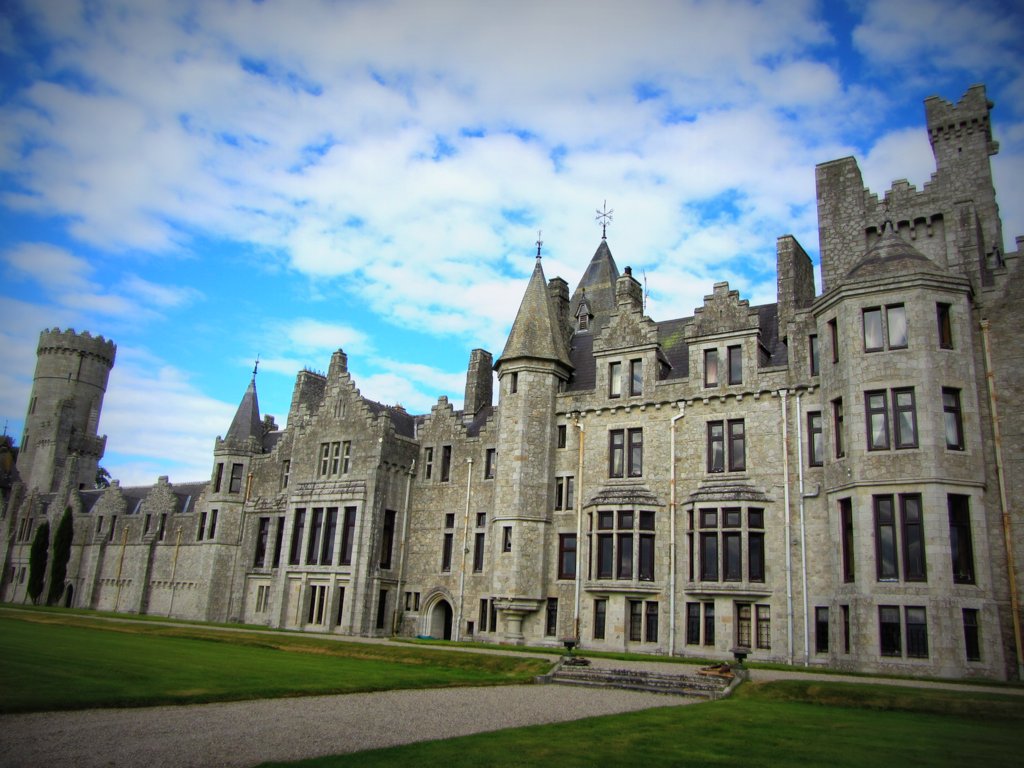
Humewood Castle Kiltegan County Wicklow Sebastian Barry The Dunne Family novels and play

Sebastian Barry wrote a series of four literary works about one strand of the fictional Dunne family (inspired in parts by his own ancestral lineage), who for seven generations were stewards of Humewood Estate, 470 acres of parkland and a castle in Kiltegan, County Wicklow.

Originally built in the 15th century, the property was sold by the last of that continuous line of family, Catherine Marie-Madeleine (Mimi) in 1992 and she would present most of the estate cottages to the sitting tenants. The castle is now owned by an American billionaire.

Barry says he did have some “inkling” that he might want to explore other family stories. “But I had absolutely no idea that 20 years later these people would still be with me. I’m in a book of quotations saying that, as our ancestors hide in our DNA, so do their stories. I don’t remember saying that, but over the years I’ve come to believe it. It’s as if these hidden people sometimes demand that their stories are told.” The Guardian

The Dunne Family Tetralogy

The play is about the first son Thomas, who did not become a steward, the next Annie Dunne (2002) is about one of his daughters Annie, then A Long Long Way (2005) is the story of his only son Willie Dunne, who joins the Dublin Fusiliers and goes to the Great War (WWI), and the final novel On Canaan’s Side (2011) is about Lily Bere (or Dolly as we know her), the youngest of the three sisters, who left Ireland for America.

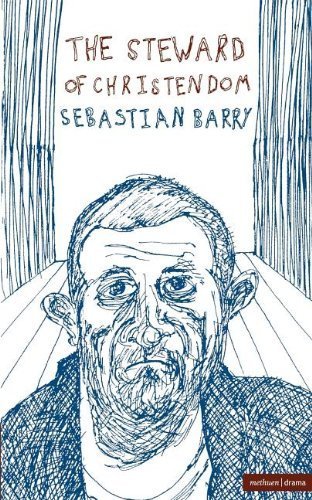
Dunne Family #1 The Steward of Christendom

The play The Steward of Christendom (1995) centres around Thomas Dunne, the high-ranking, ex-chief superintendent of the Dublin Metropolitan police, looking back on his career built during the latter years of Queen Victoria’s empire, from his home in Baltinglass in Dublin in 1932.

He was Catholic, and loyally in service to both the British King, and his country (Ireland), however those twin loyalties collided in the period leading up to the Irish War of Independence (1919-1921), when he found himself on the ‘wrong’ side of history to his countrymen, culminating in a sense of failure, including the recurring memory of the handover of Dublin Castle to Michael Collins.

I haven’t read the play, but I know that he becomes a broken man, committed to an asylum, unable to reconcile what had happened, as if it were the downfall and undoing of himself, his family and lineage.

Dunne Family #2 Annie Dunne

Following the play, he wrote the novel Annie Dunne (2002), about the unmarried middle daughter of the superintendent, which takes place over one summer in her early sixties, when she is staying at her cousin Sarah’s cottage and small acreage in Kelsha, “a distant place, over the mountains from everywhere”, having found herself homeless after the premature death of her sister Maud and the downfall of her family.

Seven Generations of Caretakers, Coppicers, Caterers and a Cop

Dunne Family tetralogy 5 children hold hands playing ring a ring a rosy, a whitewash irish cottage in the background

In the opening pages of Annie Dunne, we learn a little about that family history, the prestige of the line of stewards of Humewood Estate, the different direction her father took and his demise, having to put him in an asylum. The guilt over the end of her once regular visits, his lonely death.

Compared to her childhood in Dublin Castle and that long line of important roles that sheltered her, she too is now alone in these latter years, grateful to her cousin for taking her in. Their glory days behind them, she senses eyes on her without sympathy, in that way people regard someone perceived as having been superior, then find themselves without a safety net.

Those days are gone and blasted forever, like the old oak forests of Ireland felled by greedy merchants years ago.

A New Purpose, Another Marital Threat

When her sister Maud was dying, Annie tended her and the children. Now one of those boys is going to London with his wife, while his two children, four and six will stay under Annie’s care for the summer.

Words are spoken and I sense the great respect Sarah has for their father Trevor, my fine nephew, magnificent in his Bohemian green suit, his odd, English sounding name, his big read beard and his sleeked black hair like a Parisian intellectual, good-looking with deep brown angry eyes. He is handing her some notes of money, to help us bring the children through the summer. I am proud of her regard for him and proud of him, because in the old days of my sister’s madness I reared him.

Billy Kerr, a local man who does odd jobs, arrives unexpectedly early two mornings in a row to share a tea, Annie wonders why. And how her life became like this. The attention he gives Sarah unnerves her, “it is the air of the man”, and much of the novel delves into Annie’s inner world and outer efforts to secure her place.

At the mercy of influences outside her realm of control, she struggles to remain calm, and fears what she might be capable of. She must defend what she sees as her last refuge, her last stand.

Poor Annie Dunne, they must say, if they are kind. They will find other things to say, if they are not. Well, if we were something then, I am nothing now, as if to balance such magnificence with a handful of ashes.

A Strange Innocence, New Understanding

Annie is a complex character, she worries for the children, tries to care for them, observes behaviours that disturb her, jumps to conclusions, looks for support and doesn’t find it, fears herself and her reactions most of all. Her insecurities have made her paranoid, her need to blame risks falling on the innocent. Her desire to harm frightens her.

Her words are so simple, small, and low. Whispery. I feel myself the greater criminal by far than Billy Kerr. I should have kept my own opinions to myself, and let this story take its course, as I have always allowed every story that has come to me. She is open and raw to my wounds. That is why I have wounded her.

Taking place over that summer, the first half is rather mundane, the second half more dramatic as events occur that Annie is implicated in or threatened by, in which she takes some action, some thought out and calculated, other times over-reactive and hysterical. We wonder if she is becoming unravelled like her father, nothing is ever certain in a world that is constantly changing.

The summer comes to an end and none of them will be the same again; changed by their experience, further along in their understanding of themselves and others.

Even the halves of songs I know, our way of talking, our very work and ways of work, will be forgotten. Now I understand it has always been so, a fact which seemed to heal my father’s wound, and now my own.

I enjoyed the novel, but I admit I started it some time ago and set it aside, then went back to start again. It’s more of a winter read when you set more time to pushing through when a novel isn’t quite gripping you. The second time I started it felt very different and I had no trouble continuing on, but by then I also knew I was going to read all three and get the bigger picture.

There are issues in Annie Dunne that are not fully explored, and Annie represents that past characteristic of the Irish to knowingly suppress certain issues, lest it disturb their current situation, however over the course of the summer, she has transformed.

Further Reading

Article, The Guardian: ‘As our ancestors hide in our DNA, so do their stories’ by Nicholas Wroe, 2008

Article, The Atlantic: You Should Be Reading Sebastian Barry by Adam Begley

Read reviews of Annie Dunne by Kim at Reading Matters,

Author, Sebastian Barry

Sebastian Barry was born in Dublin in 1955. The 2018-2011 Laureate for Irish fiction, his novels have twice won the Costa Book of the Year award, the Independent Booksellers award and the Walter Scott Prize.

He had two consecutive novels shortlisted for the Booker Prize, A Long Long Way and The Secret Scripture and has also won the Kerry Group Irish Fiction Prize, the Irish Book Awards Novel of the Year and the James Tait Black Memorial Prize. He lives in County Wicklow.

Black Woods Blue Sky by Eowyn Ivey

A new novel by Eowyn Ivey is like no other anticipated novel for me. I still remember the effect of reading her debut The Snow Child, my One Outstanding Read of 2012 and now with Black Woods, Blue Sky, she has created that magic again.

It is extraordinary.

No Madeleine in Sight

The title is a reference to this quote from Marcel Proust:

Black Woods Blue sky by Eowyn Ivey book cover, the words a reference to Proust, the cover shows black tree trunks and a blue background, behind a tree a standing bear, his shadow is the shape of a man

Now are the woods all black
but still the sky is blue
May you always see a blue sky overhead
my young friend
and then
even when the time comes
which is coming now for me
when the woods are black
when night is falling
you will be able to console yourself
as I am doing
by looking up to the sky.

A Nature vs Nurture Conundrum

On the cover, we see the blue sky and the black woods and an image of a standing bear, whose shadow is a man.

It is the story of troubled Birdie, her six year old daughter Emaleen and a reclusive character Arthur, who Birdie is entranced by. In the opening scene Birdie awakens with a hangover, goes off into the woods with a fishing line, leaving her daughter alone sleeping, forgetting to take her rifle.

The large more fearsome grizzly bears were rarely seen, leaving only paw prints or piles of scat in the woods. But now and then, a bear would surprise you. They were too smart to be entirely predictable.

This entire scene is a foreshadowing of the novel, of the attempt of a young, single mother to do right, who doesn’t have sufficient awareness of certain red lines she should not cross, which have nothing to do with the depth of love she has for her child and the determination to do better than how she was mothered.

Though she doesn’t yet know him that well, and despite his odd way of being and other clues that might make her question going off to be with him, she and her daughter depart for the cabin in the mountains where Arthur dwells, not realising they will be living off the grid.

Arthur has some strange tendencies that Birdie tries to understand. Emaleen understands more than her mother and is both sympathetic to him and afraid of him.

The Alaskan Wilderness, Beauty and Bears

Photo by Francisco C. Castells on Pexels.com

The novel charts their relationship and brings the Akaskan landscape and botanical life alive, in all its beauty and bite.

The novel is told in three parts, each one introduced with a black and white pencil illustration of a native Alaskan plant, one that symbolically has something to say about what will pass.

It is also a study in the nature of the bear, of the similarity of some of their their instincts to humans.

A sow grizzly appeared to care for her cubs with the same tender exasperation as a human mother, and when threatened by a bear twice her size, she wouldn’t hesitate to put herself between the attacker and her offspring. She was the most formidable animal in all of the Alaska wilderness, a sow defending her cub.

In the Wilderness Pay Attention

While the initial period of their stay is encouraging, the signs of discontent are already present and like Icarus who flew too close to the sun, Birdie’s judgement is impaired.

It was impossible, what Birdie wanted. To go alone, to experience the world on her own terms. But also, to share it all with Emaleen.

Photo by Pixabay on Pexels.com

In an attempt to try and appease Birdie, he suggests she takes a day to herself, to be free as she desires. All is well until she is lured by shrubs of blueberries that lead her off course, or was it when she stepped into a ring of mushrooms igniting an age-old curse.

Don’t you dare go blundering into it. That’s what Grandma Jo would say. Witches and fairies danced in a circle here on moonlit nights, the mushrooms sprouting up where their feet touched. If you trespassed inside the circle, they would punish you. You might be forced to dance away the rest of your life in the ring, or, if you escaped, the curse would follow you back home and weave mischief and sorrow through your days.

The novel has a strong element of suspense at the same time as it explores the effect of decisions made by adults on children, on the things that might be overcome and others that are unlikely to. Every character carries something that contributes to our understanding of the story and the responses of the little girl Emaleen highlight much that demands our attention.

Autobiographical Elements

Eowyn Ivey describes Black Woods, Blue Sky as her most personal yet and the most important story she has ever told, with Emaleen being the closest to an autobiographical character she has written. It is a story the author had been trying to figure out how to write her entire life, as she wrote into ‘the darkest fears and most magical memories of childhood’, while demonstrating how people’s choices have a ripple effect through time.

“…the little girl’s fear and sense of magic, the feeling she loves about being so far out in the wilderness of Alaska, but also the thing she is afraid of, that is all directly from me”

It is a heart-stopping, captivating read, unpredictable and nerve-wracking in parts and yet we are able to bear witness, knowing we are safe in the hands of an empathetic, nature loving author, whose authenticity and understanding of human nature resonate throughout the text. Just brilliant.

If you enjoyed The Snow Child, you will love this too. If you haven’t read Eowyn Ivey yet, you’re in for a treat.

Outstanding. Best of 2025.

Author, Eowyn Ivey

Eowyn Ivey is the author of The Snow Child, an international bestseller published in thirty countries, a Richard and Judy Bookclub pick, a finalist for the Pulitzer Prize, and winner of a British Book Award.

Her second novel, To the Bright Edge of the World, was longlisted for the International Dublin Literary Award, shortlisted for the Edward Stanford Travel Writing Award, and was a Washington Post Notable Book.

A former bookseller and reporter, she was raised in and lives in Alaska.

Second-class Citizen by Buchi Emecheta

I read Buchi Emecheta’s Joys of Motherhood (1979) in 2019, it is such a great novel, one of my all time favorites, not yet reviewed here. I have been looking forward to reading more of her work since then, I picked up Second-class Citizen (1974) knowing it was likely to be equally good. She is known for her themes confronting girls and women, of motherhood, female independence and freedom through education.

A Girl Determined to Realise a Dream

Adah is a fabulous, determined character, a girl who when her father dies, her mother is inherited by his brother. Like many girl-orphans (fatherless), Adah was sent to live with her mother’s elder brother to work as a servant; any money her father left would be used for her brother Boy’s education.

Even if she was sent to school, it was very doubtful whether it would be wise to let her stay long. ‘A year or two would do, as long as she can write her name and count. Then she will learn how to sew.’ Adah had heard her mother say this many many times to her friends.

Determined to get an education herself, having already been punished for taking herself off to school without permission, the family decide to let her go, not for her own benefit, but because they recognise how it might benefit themselves. If Adah gets more schooling, the dowry that her future husband will have to pay them will be even bigger.

Adah wants more than just school, she wants a higher education, however she does not have the money to pay for the entry examination, let alone the other costs.

She was aware that nobody was interested in her since Pa died. Even if she had failed, she would have accepted it as one of the hurdles of life. But she did not fail. She not only passed the entrance examination, but she got a scholarship with full board.

My Struggles Become My Strength

The combination of hard work for the household and an education made Adah strongly responsible for herself and strategic in ensuring she stayed in education and succeeded enough to get a scholarship with full board. But to go even further with her studies, she needed a home, she would need to marry.

Her plan is to get to the UK but now she has a husband and in-laws and her good job not only supports them all, but makes many dependant on her and less inclined to be independent.

A New Motivation, I Do This Not Just for Myself

1960’s England is not what she expects, the challenges are even greater because now she has a woman’s body whose reproductive rights are not under her control and a partner who is no longer how he was in their home country, he seems invested in keeping her from shining.

He lifted his hand as if to slap her, but thought better of it. There would be plenty of time for that, if Adah was going to start telling him what to do. This scared Adah a little. He would not have dreamt of hitting her at home because his mother and father would not have allowed it. To them, Adah was like the goose that laid the golden eggs. It seemed that in England, Francis didn’t care whether she laid the golden egg or not. He was free at last from his parents, he was free to do what he liked, and not even hundreds of Adahs were going to curtail that new freedom. The ugly glare he gave Adah made that clear.

However, taking responsibility is what she knows best, she is determined to provide for her growing family and negotiate the mounting injustices she faces, in pursuit of achieving her dreams and caring for her children.

She was going to live, to survive, to exist through it all. Some day, help would come from somewhere.She had been groping for that help as if she were in the dark. Some day her fingers would touch something solid that would help her pull herself out. She was becoming aware of that Presence again – the Presence that had directed her through childhood. She went nearer to It in her prayers.

An inspirational story of the girl that never gives up, written by the woman who lived much of that experience, raising her own five children on her own in a foreign country and becoming a successful author.

Total inspiration and still relevant today. Highly recommended.

Further Reading

Review Guardian: Second-Class Citizen by Buchi Emecheta review – fresh and timeless by John Self, Oct 2021

Article: My mother, the pioneer: how Buchi Emecheta captured immigrant life in 1970s London by Sylvester Onwordi, 2021

Author, Buchi Emecheta

Buchi Emecheta OBE (1944 – 2017) was born in Lagos, Nigeria and moved to London with her student husband when she was eighteen. After her marriage broke up at the age of twenty-two, and while raising five children, she began writing and also obtained a degree in sociology from London University.

As well as writing numerous novels, she wrote plays for television and radio, and worked as a librarian, teacher, youth worker and sociologist, and community worker. She was one of Granta’s Best of Young British Novelists in 1983. Following her success as an author, Emecheta travelled widely as a visiting professor and lecturer.

She published over 20 books, including In the Ditch (1972), Second-Class Citizen (1974), The Bride Price (1976), The Slave Girl (1977) and The Joys of Motherhood (1979).

Her themes of child slavery, motherhood, female independence and freedom through education won her considerable critical acclaim. Emecheta once described her stories as “stories of the world…[where]… women face the universal problems of poverty and oppression, and the longer they stay, no matter where they have come from originally, the more the problems become identical.”

Lola in the Mirror by Trent Dalton

In 2024 I was recommended a book by a family member, who went to an event and heard the author tell the story of his childhood and this novel he wrote called Boy Swallows Universe. Barely a week after this conversation, a friend arrived in my hometown of Aix en Provence, from Australia, pressed this book into my hands and said “You have GOT to read this!”.

Yes, you guessed right, it was Boy Swallows Universe by Trent Dalton and I reviewed it here.

That book was published in 2018. I then saw there was another book about to be published called Lola in the Mirror, which some reviewers described as being even better than the debut novel. On reading about the inspiration for the novel, I decided to get a copy.

Love Stories and a Typewriter

Trent Dalton spent 17 years writing social affairs journalism across Australia. He had his own troubled childhood and upbringing, but he also witnessed and wrote about the situations of so many others, driven by the question; how was it that 120,000 people slept rough every night in one of the brightest, most fortunate countries in the world?

It is this question and the stories shared by the many people he has met over those years, that inspired him to create this latest story Lola in the Mirror.

Frank and Heartfelt

One of the people he was inspired by and wrote about, was Kathleen Kelly, the mother of a friend of his, who passed away on Christmas Day 2020. His book Love Stories is dedicated to her and prefaced with a letter written to her, typed on the sky blue Studio 44 Olivetti typewriter she bequeathed him.

In a letter to Kath, he writes of her memorial service:

Photo by Adriel Macedo Pexels.com

Greg spoke of you and your beloved Olivetti Studio 44 typewriter, the sky-blue one that you’d been tapping on since the early 1970’s, writing fiery letters about woman’s rights and human rights and doing life right to politicians and principals and popes. He spoke about the letter you wrote to the Catholic Leader in 1970, railing against Canon Law demanding the covering of women’s heads in church. You were furious and brilliant.

After the service, Greg tells Trent that his Mum cut out all the stories he wrote and made scrapbooks that documented her life and all that was important to her and that she wanted him to have her typewriter. Being the honour that it was, Dalton wanted to do something special with it, to write something filled with love and depth and truth and frankness and heart because that’s how Kath was.

I told Greg I wanted to walk through the streets of Brisbane’s CBD (central business district) for two months asking random strangers to tell me love stories. I told him I then wanted to sit two for weeks straight with the Olivetti on the corner of Adelaide and Albert streets, on the edge of King George Square, and ask random strangers to stop and tell me more love stories, and then I wanted to write about all those love stories on your beautiful Olivetti.

Those two months of listening to people tell their stories of love, loss and belonging were research for this story of Lola, frank, fearless and full of heart.

Lola in the Mirror

Lola in the Mirror is a riveting, page turning novel that gripped me from the opening pages and never let go. It is a whirlwind of risk and adventure, an exploration of friendship, loss, perseverance and the resilience of the human spirit to not give up on a dream. It is a challenging coming-of-age story of an innocent girl who desperately wants to know who she is and rise above her situation.

The novel opens with a black and white illustration entitled ‘Escaping the Tyrannosaurus Waltz‘, the dance of mothers and their monsters, or the dark shadow of domestic violence, something Dalton recalled about his own mother, who often had to choose between homelessness or ‘the monster’, a terrible choice faced by many women in Australia, for whom domestic and family violence is one of the leading causes of homelessness.

The artist is a 16-year-old girl, she and her mother are on the run, they have been for all her life. The girl does not know her own name, because it’s too dangerous, but her mother promises to reveal things to her soon, when she turns 18, because then she will be free to make her own choices.

Houseless not homeless

The girl does not describe herself as homeless, the two live in a van with four flat tyres parked in a scrapyard by the banks of the Brisbane River. There is a community of friends who live in similar circumstances, who look out for each other and this girl has a dream of a future life that will be different to how she lives now. For now that scrapyard home is her sanctuary, where she can dream up the best version of herself.

For a start, I ain’t homeless, I’m just houseless. Those two things are about as different as resting your head on a silk pillowcase and resting your head on a brick.

As this girl navigates her life in search of who she is, she comes across a mirror that she takes home, and after a period when the mirror cracks, something magical happens, half the mirror shows her legs and the other shows a dressed up woman in different world cities, who converses with her.

She wants to see her face, but she always has her back to her. She calls her Lola. Lola’s presence keeps her curious, keeps her coming back and looking in the mirror, gives her reason to keep dreaming. She is like a pulse on her mood, on her self-belief.

“Mirror, mirror, on the grass, what’s my future? What’s my past? … Mirror, mirror, please don’t lie. Tell me who you are. Tell me, who am I?”

The storytelling is incredible, the characters are fully formed, and the depiction of the city, the river, the bridges is visionary. You cannot read this book and not care about what happens to this girl or get hooked into wanting to know how she gets in and out of various situations. It is mystery, adventure, crime, psychological suspense and love story rolled into one. The best kind of holiday read ever.

When Life Connects With Art

Photo by Samantha Samantha Gilmore on Pexels.com

I took this book on holiday with me to Australia, figuring I would read it there and leave it behind. It is set in Brisbane which is where I flew into, although I was staying much further South. On the day I started reading, my son was due to fly back to France. I sat in the passenger seat of the car as we drove to the airport. This time, we took a different route and suddenly we were driving alongside the CBD and there were all these bridges and a glimpse of Victoria Park and the mighty river.

When I got back to my book later in the day, on page 45, I read descriptions of exactly the same places we had just driven past. It was surreal, to move from the imagined place to these live flashes of what I had just seen. It brought the story to life and for the rest of the novel, those images kept recurring. I have always been a fan of reading works set in the places I travel to, and I’m glad I read this one in situ as well.

The Artwork

Throughout the novel are a number of superb illustrations, which both tell parts of the story and also suggest a future life of the girl artist. Each drawing is followed by an imagined art critic review in a black box, as if it were being displayed at an exhibition at the Metropolitan Museum of Art, the commentary describing what the artist is representing in the illustration.

Of course, I became curious about the actual artwork and skipped to the back of the book to look up the story behind it. It’s a good one.

Trent Dalton, Author

Trent Dalton is a two-time Walkley Award-winning journalist and the international bestselling author of Boy Swallows Universe, All Our Shimmering Skies, and Lola in the Mirror. His books have sold over 1.3 million copies in Australia alone. He lives in Brisbane, Australia, with his wife and two daughters.

Lola in the Mirror is for anyone who ever felt like they were going to collapse under the weight of sorrow. The book is also for all those beautiful souls who help us carry that weight. It’s an art story. It’s a crime story. It’s a mystery novel. And it’s a life story. I hope people will read this, get to the end and realise why I wrote Love Stories and sat on a Brisbane street corner watching people and asking them about love, loss and belonging for three months.

Absolutely & Forever by Rose Tremain

A friend gave me this book to read recently and I brought it with me on holiday intending to read it on the plane, which didn’t happen. It is indeed an ideal holiday read, Rose Tremain being one of those reliable authors so adept at storytelling, at drawing you in to a character’s perspective, imagining their predicament.

When we first meet Marianne, it is the 1950’s, she is fifteen, the only child of regular middle class parents from a semi-rural district in southern England and in her prime for falling helplessly in love with the boy who is paying her attention, Simon Hurst. They are both coming to the end of their schooling years, he with great expectations, she with few.

When I was fifteen, I told my mother that I was in love with a boy called Simon Hurst and she said to me, ‘Nobody falls in love at your age, Marianne. What they get are “crushes” on people. You’ve just manufactured a little crush on Simon.’

When Simon fails to meet the expectations of him, his life plan changes and this will impact Marianne. Her parents dismiss her feelings and put it down to a schoolgirl crush, she describes it as being in the Love Asylum. Unable to let go of her ideas about a life with Simon, she flounders for a while, will eventually move on, but the pattern of unrequited love is never far away from her experience.

Photo by Miquel R. Calafell @ Pexels.com

At school studying Romeo and Juliet, she relates to the Juliet character and wishes for a character like Nurse in her life, one who understands what Romeo and Juliet are doing and how they feel, one kinder than her mother who could hold her and soothe her erratic emotions.

I imagined her listening attentively while I confessed to her that my head was so burdened by my obsession with Simon that I was afraid of becoming a total imbecile. And she would stroke my hair and reassure me that this was a perfectly normal state for young people to be in, that we were all inevitably headed for a stay in the Love Asylum, but that in time the spell would be overcome and normal life would resume.

It is an absorbing story of turning points in people’s lives, the different people they meet, how that can change their trajectory, including the presence of those absent and the illusions harboured of lives not lived, not meant to be lived. It is also a thought provoking depiction of the relationships between generations and the expectations of those coming-of-age in the 1960’s England.

Absolutely and Forever was shortlisted for the Walter Scott Prize for Historical Fiction 2024.

Her Side of the Story by Alba de Céspedes tr. Jill Foulston

Stunning.

I thought The Forbidden Notebook which I read in 2023 was excellent, but this novel is in a category of its own. This is probably the title in 2024 I was looking forward to the most and it exceeded my expectations.

Originally published in Italian in 1949 as Dalla parte de lei, this captivating new English translation by Jill Foulston was published by Pushkin Press in 2024.

Women’s Partisan Struggle in 1930’s -1940’s Italy

Alba de Céspedes (1911-1997) was a bestselling Italian-Cuban novelist, poet and screenwriter who worked as a journalist throughout the 1930’s while also taking an active part in the Italian partisan struggle and was twice jailed for her anti-fascist activities.

After the fall of fascism – Rome, considered the heart of fascism under Mussolini, was liberated in June 1944 and many felt the country had lost its basic values after 20 years of fascist government – Alba de Céspedes founded a literary journal called Mercurio, publishing many great names of Italian literature and politics, as well as Katherine Mansfield, Jean-Paul Satre, Ernest Hemingway.

Due to a lack of funding it would close in 1948, and in its final issue she published an essay by Natalia Ginzburg entitled ‘On Woman’, alongside a letter she was inspired to write in response to it. Certainly, she would have been working on the novel Her Side of The Story, at the time this essay (discussed below), was published.

Women Writing From the ‘Well’

Photo by ArtHouse Studio on Pexels.com

Ginzburg had written of an affliction unique to women – at a time when they were often confined to the home and not considered equal under the law – that she described as “a continuous falling down a deep dark well“, a terrible melancholy typical of feminine disposition that likely originated from the age-long tradition of subjection and subjugation.

In her open letter, de Céspedes confesses that she also writes from the ‘well’ Ginzburg theorises. Despite that, de Céspedes believed women’s freedom consisted of being able to go down those emotional and psychological wells, which were for her a strength, rather than a curse. ‘Every time we fall down a well’, de Céspedes wrote, ‘we descend to the deepest roots of our being human; when we come back to the surface, we carry such experiences with us that enable us to understand everything men never will — since they never fall into any well’.

In the same issue of Mercurio, de Céspedes published La donna magistrato’ (‘The Woman Magistrate’), an essay by Maria Bassino, one of the most important criminal defense lawyers at the time, addressing women’s rights to become magistrates. In her letter to Ginzburg, de Céspedes explained that those two essays were published together to denounce the injustice done to women when they were tried by magistrates who cannot understand women’s reasons to ‘kill, steal, and commit other humiliating actions’; referring to men who never experienced the depth of wells.

If we are not sure of the depth and character of the mid twentieth century well, then by the time we finish reading Her Side of The Story, we most certainly have a greater understanding of it.

The Review: Her Side of the Story

Photo via Pexels.com

An expansive coming of age tale of love and resistance, this feminist, social novel explores a young woman’s attempt to break free from society’s expectations and live life on her own terms. Amid great storytelling, it is a fearless condemnation of patriarchy and rejection of fascist ideals in a society on the cusp of witnessing social change for women.

Alessandra grows up in a bustling apartment block in 1930’s Rome with a shared courtyard, where everyone knows everyone, spending most of her time alone in the apartment in the care of Sista, while her father is at his office and her mother is out teaching piano lessons. She adores her quiet, delicate mother, who keeps to herself and treats her daughter like a friend, while despising a father she believes doesn’t deserve an elegant, cultured woman like her mother.

The women felt at ease in the courtyard, with the familiarity that unites people in a boarding school or a prison. That sort of confidence, however, sprang not so much from living under a common roof as from shared knowledge of the harsh lives they lived: though unaware of it, they felt bound by an affectionate tolerance born of difficulty, deprivation, and habit. Away from the male gaze, they were able to demonstrate who they really were, with no need to play out some tedious farce.

Alessandra looks back and recounts her childhood, adolescence and marriage, describing her experience of them all, her inner world view and how it was shaped by what she observed happening around her, everything she thought and how she responded to it all.

Though she spends much time alone, she rarely keeps her thoughts to herself, allowing the deepest parts of herself to be exposed, challenging what she does not agree with, determined to take charge of her life and live it according to her own desire, against convention.

A Rare and Faultless Admiration of Mother

The first section is focused on the mother-daughter relationship, on Alessandra’s blind faith in everything her mother is and does, including her obsession with the Pierce family, their friendship with Lydia and her daughter Fulvia upstairs and sessions with the medium Ottavia who visits the apartment block on Fridays. Invited to play at a private concert with the Pierce son Hervey joining on violin, the celebratory event witnessed by her husband, becomes a turning point.

The depictions of life in the apartments, the details of the women’s lives, the absent husbands, the affairs, the way daughter’s follow mother’s examples, the witnessing of each other’s lives, the door porter who sees and knows all, the desire for privacy and impossibility of it are all brilliantly depicted. Alessandra’s mother is a romantic with dignity, she is not interested in an affair, but is vulnerable to kind attention.

After a near expulsion from school for hitting a boy for his psychological cruelty towards another girl, she confesses what happened to her mother and worries about her father’s response.

“We can’t tell him everything. Men don’t understand these things Sandi. They don’t weigh every word or gesture; they look for concrete facts. And women are always in the wrong when they come up against concrete facts. It’s not their fault. We’re on two different planets; and each one rotates on its own axis – inevitably. There are a few brief encounters – seconds, perhaps – after which each person returns to shut him- or herself away in solitude.”

Alessandra spends a lot of time reflecting, examining the depths of her thoughts, actions and observations and how they may have come about. From her parents certainly, but she recognises something restless in herself, that seeks retribution.

I could reproach her for having subjected me to that climate of perpetual exaltation, which, above all, made me completely devoted to the myth of the Great Love and thus unintentionally led to the painful situation I find myself in today. I could reproach her, perhaps, if she hadn’t already paid for her ambitions. And now that I am forced to write about her and look into the most intimate and dramatic moments of our life together, it’s not really to accuse her of having made me what I am but to explain those of my actions which would otherwise be clear only to me.

Allesandra, sono io, I am Alessandra

Photo by Piotr Arnoldes on Pexels.com

It is Sandi’s story but it is also the story of many ordinary lives of girls and women, growing up in discordant families, with the weight of expectations, the allure and (false) promise of love, the desire to be educated, to participate in something greater than ‘the home‘, to be heard, respected and taken seriously.

“…Alba de Céspedes intended to act as the defender of women. Like Flaubert, she could say of her protagonist: Alessandra, sono io, I am Alessandra.

Rural Idealism Enforced by The Matriarch

In the second section, Alessandra is sent to live on a farm with her paternal grandmother Nonna, a grand matriarch of a traditional, religious family who surround her with examples of duties expected of her and demonstrate how they will act to facilitate them. She enjoys the natural environment and complies to a certain point, but insists on her right to further her studies, rejecting the suggestion of a well aligned matrimony.

Though this section was originally cut from the first English translation (1952) of the novel, it is restored here. The rural setting represents tradition and a connection to the land, the roots of family, hard work and lineage. Mussolini’s regime focused on rural regions to uphold goals of self-sufficiency, free Italy from “the slavery of foreign bread” and control the agricultural sector. Propaganda praised this lifestyle, much of it targeted at women and upheld by women. Nonna exemplifies and encourages the virtues of sacrifice for the greater good and giving up one’s selfish desires.

Bewildered, I observed these grave, taciturn people who had been strangers to me a few hours before, but who now embraced me within a mechanism so robust I sensed it could easily overwhelm a person.

War breaks out, she returns to Rome, to her studies, to employment, to living again with her father and meeting Francesco, the man she would truly love and believe she could have a different kind of life with. And it might be said that that is where her troubles really begin.

Love, Marriage, War – the struggle

There is so much that could be said about Alessandra’s wartime and matrimonial experience, that is better left for the reader to discover.

There is no stone left unturned in her dissection of the relationship she has with the older anti-fascist Professor, a charismatic man with a sense of justice who stands up for his beliefs, the only man she will ever truly love and her attempts to talk to him about the things that unsettle her, that she feels could be easily resolved, if only he took the time to listen. Once married, he is barely aware of or able to respond to her feelings, while she continues to try to make him understand, slowly unravelling in her persistent attempt.

The most misleading virtue of marriage is the ease with which one forgets, in the morning, everything that happened the night before. Encouraged by the clear colour of the sun’s first rays and the energy and rhythm of everyday gestures, I was always the first to turn back towards Francesco.

The novel tracks the attempt to rise above expectation and the subsequent decline into acceptance, focusing on the effect of this repression, the mental deterioration of generations of women for whom the burden of that ordinary life, of a woman’s limited lot, and the inaccessibility of how (here) she imagines it might have been, become too much to bear. She wants the reader to understand this very well, effectively making you live it alongside her.

Intense, compelling and set against that backdrop of wartime Rome and Italy coming out of a long repressed fascist era, I found it utterly riveting. Her Side of the Story is a powerful, intimate and insightful exploration of the female psyche, of the desire to be, and do, more than meet long outdated representations of women in families, society and relationships. Unputdownable, one of the best of 2024 for sure. Fans of Natalia Ginzburg and Elena Ferrante will likely enjoy this. Expect to feel unsettled.

There’s No Turning Back

Delighted to learn that her debut novel There’s No Turning Back translated by Ann Goldstein will be published in February 2025.

Highly Recommended.

Further Reading

Natalia Ginzburg’s essay ‘Discorso sulle donne‘On Women’ translated by Nicoletta Asciuto, The Fortnightly Review

Jacqui’s Review at JaquiWine’s Journal, April 2024

Chicago Review of Books: The Prescience of Alba De Céspedes’s “Her Side of The Story” by Margarita Diaz November 24, 2023

Author, Alba de Céspedes

Feminism Journal writing Womens Rights Italian Literature

Alba de Céspedes (1911-97) was a bestselling Italian-Cuban novelist, poet and screenwriter.

The granddaughter of the first President of Cuba, de Céspedes was raised in Rome. Married at 15 and a mother by 16, she began her writing career after her divorce at the age of 20. She worked as a journalist throughout the 1930s while also taking an active part in the Italian partisan struggle, and was twice jailed for her anti-fascist activities. After the fall of fascism, she founded the literary journal Mercurio and went on to become one of Italy’s most successful and most widely translated authors.

After the war, she accompanied her husband, a diplomat to the United States and the Soviet Union. She would later move to Paris, where she would publish her last two books in French and where she spent the rest of her life. She died in 1997.

The Forgotten Seamstress by Liz Trenow

The second holiday read work of historical fiction I read was another dual narrative The Forgotten Seamstress by Liz Trenow.

Different timelines and narratives reveal the story of Maria Romano, a young orphan. She and her friend Nora, both adept at sewing, are called in one day after a grand lady visits the East End of London orphanage and admires their work.

She goes on to tell us that the grand lady who came a few months ago is a duchess and the patron of the Needlework Society and was visiting to inspect the work that the convent was doing for the poor children of the city. She was so impressed by the work Nora and me showed her that she is sending her housekeeper to interview us about going into service.

The house they are moved to, they soon discover is a royal household. Maria catches the eye of the young Prince and being young and obedient, responds when he requires her service and is unsuspecting of the trouble ahead for her, when their fun creates a dilemma for her.

A Series of Taped Interviews, 1970

An academic doing a PhD interviews patients in Helena Hall, an institutional asylum where thousands of women dwelled, recording their stories. Some speak of voices or fantasies, at least as the medical establishment puts it. Like Maria who imagined she worked for royalty and knew a prince. They called her Queenie. No one believed her story. And yet…

The transcriptions of the cassettes allow Maria to tell her story and the reader to decide whether she is a reliable narrator or not.

London 2008

In the modern day, Caroline Meadows is left a quilt by her grandmother, who spent a short time at Helena Hall. Either she or someone she knew made the quilt.

The central panel was an elegantly embroidered lover’s knot surrounded by a panel of elongated hexagons, and a frame of appliqué figures so finely executed that the stitches were almost invisible. And yet, for all the delicate needlework, the design of the quilt seemed to be quite random, the fabrics so various and contrasted it could have been made by several people, over a long period of time.

At a crossroads in her life, her relationship has ended, a job recently lost and she is coping with a mother with onset dementia who is becoming a danger to herself. It is the perfect moment for her to throw herself into the mystery of the quilt and reveal the truth behind what happened to the young Maria.

Then there is a journalist Ben, who she’s unsure about when she contacts him, is his interest in her just about the story he is chasing, or might it be something else? When the quilt goes missing, he helps her, though she remains wary.

Royal Secrets, Institutionalising Women, Lives Stolen

This was an enjoyable read of twists and turns, revelations and class punishment, the incarceration of innocent women in order to maintain the reputations of others, and the terrible expendability of babies and illegitimate children, deprived of their identities, heritage and mothers.

The Winemaker’s Wife by Kristin Harmel

In the last two weeks of August, I was on holiday in St-Cyr-sur-Mer and during this time there was a lot of swapping of books. This is one of two works of historical fiction I read.

1940s couple walking arm in arm towards stairs flanked by pillars, green foliage surrounds

I started with this one out of interest because it was set in the Champagne region of France, which I had visited in October 2023.

It was interesting to imagine this story set during the lead up to World War II, perhaps not surprising to learn that the area was occupied for four long years and equally understanding that many of the vintners were able to keep their best vintages hidden in the array of underground tunnels behind false walls.

The Winemaker’s Wife is a dual narrative historical fiction novel, set in the champagne town of Rians, France, in 1940 and in 2018 New York City, Paris and Rians.

The plot concerns the unravelling of a family mystery, with secrets, lies, cover-ups, betrayals, and goings on in the network of tunnels beneath the chateau champagne house, Maison Chauveau.

1940 Champagne Region of Rians, France

Inès has just married Michel, the owner of the champagne house, when the Germans invade. She has tried to make herself useful, but doesn’t seem to have made much of an impression. Assisting them are Céline and Theo Laurent, the chef de cave.

Céline was quiet and serious, always tromping around with a frown on her face, while Inès did her best to look on the bright side.

When Inès has had enough, she visits her friend Edith and her husband Edouard at the Brasserie Moulin, but it’s not always safe there and in her naivete, she makes a fatal mistake that is going to affect all of them.

The two couples try to continue to run the winemaking business but the invaders have a taste for more than just champagne. Despite the danger surrounding them, they seem to be inviting trouble, when they make things even more riskier for themselves. And that doesn’t include resistance activities which are even more reason to not bring attention to themselves.

New York to Paris, A Grandmother in her Centennial Year

Meanwhile, in 2019 New York, elusive 99 year old French grandmother Edith turns up unannounced to take her niece Liv on a trip to Paris and Rians and is hiding the reason for going there.

As she gets closer to understanding why they are there, it seems all roads lead to Maison Chauveau and there might even be a love interest for the recently heart broken young woman.

I have to say I questioned the grandmother’s motives given her age. It seemed strange to me that she had waited until her 99th year before taking such a trip, as good as admitting she had intended to take her secrets to the grave. I did not trust her – and with good reason, it turns out.

Imagined History versus Real History

Though it was often difficult for me to believe in the characters and the narrative, having just read the true historical account of Marie Madeleine Fourcade in Madame Fourcade’s Secret War by Lynne Olson, I would recommend The Winemaker’s Wife as a light holiday read for those who enjoy historical fiction, champagne and visiting France.

Extra pics from a stroll down Avenue de Chapagne, where there are many champagne houses like the one above and a visit to the underground champagne storage tunnels of Möet & Chandon in Épernay, October 2023. They’re incredible and worth a visit, an underground labyrinth.

Read more about Champagne Hillsides, Houses, and Cellars here.