
Séduire * plaire à quelqu’un et obtenir amour ou faveurs en usant de son charme * conquérir l’admiration, l’estime, la confiance * captiver, charmer *attirer de façon irrésistible en parlant d’une chose
 Suggested by a local book club and interested in an outsider’s perception of life in France, I find myself in the company of Elaine Sciolino, Paris bureau chief of the New York Times between the pages of her alluring book.
Inspired by a lecture she gave at the NY public library in 2008 entitled ‘Séduction à la française’ the author explained how seduction was key to understanding France and the French, positing that one of the reasons for President Sarkozy’s low ratings in the popularity polls post-election was because he had not mastered these rules. He may not play by the rules, but he did find his counter balance when he married Carla Bruni, who Scioloni describes as:
a modern-day woman with the manners of an eighteenth-century courtesan, skilled in the art of movement and the rituals of conversation.
Intriguing indeed and what fun the author must have had flirting flitting around the micro empires of Parisian style, beauty, cuisine, politics and culture, meeting presidents, diplomats, artists, writers, chefs, businessmen, merchants, farmers, philosophers, journalists, fashion designers, perfumers and museum curators.
 The book describes a world and a manner of being I know little about, despite living within its midst these past six or so years; but Paris, like many large cities is not necessarily typical of the rest and after listening to others discuss this book, opinion is indeed varied, some suggesting ‘la seduction’ old fashioned, a prerogative of certain social classes, political circles or even pure fantasy. I tend to think there are sufficient anecdotes to say oui to all of those suggestions.
What is certain is that cultural perceptions are different even when values may be similar. While a certain look ‘le regard’ from a man is welcomed as a complement in France, it might receive a verbal legal threat in America. In France, there is greater tolerance and less testing the waters of behaviour that in the US might be construed as sexual harassment.

Statue of Benjamin Franklin, Paris, 16ème - Photo Lycée Condorcet
An interesting example of how long things have been so, was observed ( and well portrayed in the excellent HBO series ‘John Adams’) in the conduct and perceptions of Benjamin Franklin (first Ambassador to France) and John Adams (the second American president), Franklin understood it impolite to discuss business at dinner, immersing himself in the peculiarities of French culture while pursuing his goal; Adams however, saw Franklin’s indulgences and game playing as a complete waste of time, his disapproving manner causing the French to frown and exclude him completely. When Franklin died, France mourned him like a hero; people thought so highly of him, some believed he had been a president.
One of the paradoxes is the attitude towards privacy. Behaviours complicit in la seduction are accepted, but it is frowned upon to indulge in more than fanciful rumour; the media keep their distance from any story that verges on incriminating a person for something considered to be private or slanderous. This was highlighted recently when Sarkozy whispered an insult in the ear of President Obama about another Head of State and although the comment was overhead and reported widely by English and American media, it was not reported until a week later by the French press and even then it was kept very low profile. Not one French person I asked knew about the story. The sanctity of the right to privacy is paramount.
The chapters on gastronomy and concocting perfumes I particularly enjoyed, time spent with a connoisseur passionate about their work is pure joy and since mixing the essences of plants and flowers is one of my own passions, I was happily lost in these chapters imagining the sweet mix of aromas and the taste of Guy Savoy’s mother’s home cooking. See him work his magic here and experience his culinary art of seduction.
I recall reading ‘Sixty Million Frenchmen can’t be wrong’ by Jean-Benoit Nadeau and Julie Barlow, a Canadian attempt to understanding France and the French and their effort to explain the root of the differences. One of the analogies they made that has stayed with me was to suggest that visitors should expect a culture and a people as dissimilar to themselves as they might assume when visiting Japan or China. All are ancient civilisations and have many traits, laws, beliefs, habits, attitudes and ways of doing things that go back generations, centuries.
Our institutions originate in the decadence of ancient Rome. We are an old people. The mistresses of monarchs, from Louis XIV to Napolean III … are part of our history. – Patrick Devedjian, Paris
Rather than debate whether this is an accurate portrayal or not, I see it as another contribution to an attempted unveiling of what lies within an ancient culture and how that influences what we encounter in our modern day interactions and visitations in this intriguing country and among her patriotic people. It remains a slow opening mystery to me, so I just continue to listen, observe, interact, read and learn.
 And so to Téa Obreht’s debut novel and
  Framing stories within another story can be distracting, particularly when we have a preference for one over the other and when the narrative voice changes; it reminds me of the Rumi scholar and novelist Elif Shafak’s book





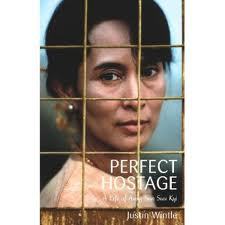 I picked up Justin Wintle’s book ‘Perfect Hostage’ Aung San Suu Kyi, Burma and the Generals, believing it a biography, mislead perhaps by the striking portrait which graces the cover and select testimonials describing it as so. In fact, I would call it a historic treatise of Burma and while of significant interest in itself, I did find it frustrating that it took close to 200 pages to encounter Aung San Suu Kyi within its covers. Though there is depth in the historical account, I found the reverse to be true in terms of the author’s evocation of Aung San Suu Kyi, in fact I found many of his comments patronising and uncomfortable:
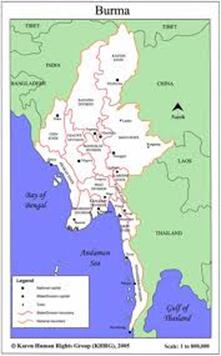 However, letting go of the expectation of an exquisite biography and seen as the historical treatise that it is, I find a thorough and detailed account of a remarkable country and ethnic melting pot of people who have long been subject to tyrannical rule. Sitting between India in the west and China in the east with borders that touch so many countries, Tibet, Laos, Thailand, Bangladesh, it is not surprising that it comprises so many ethnic groupings and hill tribes and has encountered so much conflict. It has a unique history of rising to great prominence and descending into chaos, as each successive victor sought to impose their will.
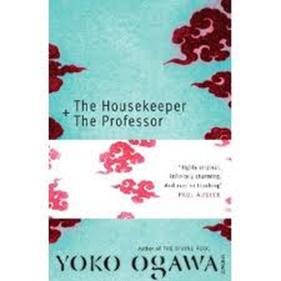 Having recently discovered and read Yoko Ogawa’s
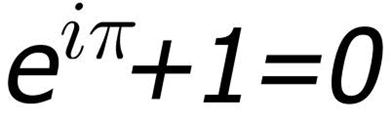 The housekeeper arrives each morning and introduces herself as if they have never met. Slowly, she and her ten year old son, whom the Professor refers to as Root – a reference to the square root sign and his hair, are drawn into the Professor’s reduced world where numbers reign supreme and the two visitors begin to understand the magic and meaning behind what they had always thought of as ordinary numbers.
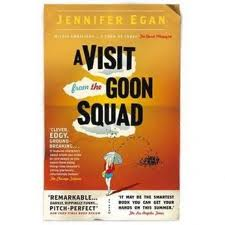 ‘A Visit from the Goon Squad’ by Jennifer Egan (winner of the Pulitzer prize for fiction 2011) was recommended in a comment on my post
  A novel or a set of stories, each chapter is separate yet connected by the barest of threads to the previous, sufficient to surmise a pattern, although like many creations, the complete picture does not become clear until the work is finished. It reminds me of six degrees of separation, that we are all connected and that even when we are, there are gaps in history’s, we only ever know part of a person’s story.
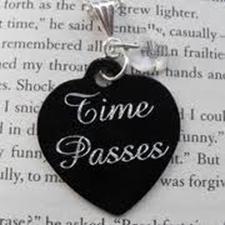 Which reminds me, the goon squad; as Bosco says on page 134 ‘Time’s a goon, right?’ and so too I believe that a visit from the goon squad is just this, time passing and the oft harshness of reality.
 If you have never read Italo Calvino this may be a misleading book to start with, it’s certainly not reminiscent of his short stories and I believe it is unlike his other novels, but it has a kind of cult status in that it
 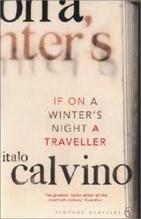 I enjoyed the diversions, although I was disappointed that he was unable to find a way to leave the sex of the reader neutral, having been almost convinced he might well be speaking to me, it becomes clear he is speaking to his male readers, political correctness not in full swing in the early 1980’s when this was published. But I readily forgive him, especially when assured by Lorna Sage, author of the memoir ‘In Bad Blood’ who wrote in the Observer:
 Playful, impossible to label, is it a…, it is a question, a poem, a collection of stories, a novel and a conversation with Italo Calvino. The author imposes himself and his voice within the pages and we as the reader also become involved in the action as Calvino switches into the second person narrative. If I were an academic I would probably be littering this text with a lot of technical terms describing the literary tools Calvino plays with, literature students are likely to come across it, or at least they did in the past, as David Mitchell, author of ‘Cloud Atlas’ reminisces about
 In the early 19th century, French psychiatrist Philippe Pinel coined the term ‘manie sans delusion’ referring to the one per cent of the population that appeared normal on the surface but lacked impulse controls and were prone to outbursts of violence. In 1891 it became known as ‘psychopathy‘.
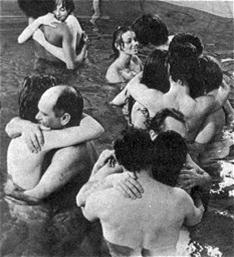 He presents a look into a field that has had its share of experimental and controversial programs, practices and institutions as well as its staunch adversaries such as the Scientologists, who continue their campaign to discredit the profession and individuals within it to this day.
 It’s an imprecise malady with no known cure and involvement best avoided if one encounters anyone with an overabundance of the suggested characteristics, and while we might think it shouldn’t take a neurologist or a psychiatrist to point that out, to be human is not always to be logical or to follow common sense, especially while under the spell of a charming, manipulative liar.
  Word by Word