The Gift of Rain by Tan Twan Eng

Appreciating the rain is something I have learned relatively recently and how appropriate that I have a vision of it today, accompanied by the growing rumble of distant thunder and the occasional flash of lightning.

Until I lived in the south of France I had never experienced a period of two months continuous sunshine without a drop of rain or threat of a grey cloud on the horizon and so I began to understand and live with the dry and dusty consequence, those vast blue skies compensating for the lack of green, for without moisture there is no grass, no lush green of the variety that grows, horizontal, vertical, almost everywhere in that land of the long white cloud of my past, Aotearoa; growth that without vigilance would suffocate all that man has tried to impose in its place.

Children here are a reminder of this different relationship to rain, they adore it and can relate to Tess, the protagonist of Karen Hesse’s wonderful children’s book Come on, rain!  Tess pleads to the sky as she, her friends, her mother and all the plant life around them swelter and suffer in the interminable heat, hoping for some respite.

I stare out over rooftops,

past chimneys into the way off distance.

And that’s when I see it coming,

clouds rolling in

grey clouds, bunched and bulging

A creeper of hope circles ’round my bones.

“Come on, rain!” I whisper.

The Gift of Rain however is the title of Tan Twan Eng’s debut novel.  His second novel The Garden of Evening Mists’ was short listed for the Man Booker Prize this year and after reading a review of that book, it was suggested I should start with his début novel The Gift of Rain, longlisted for the Booker in 2007.

An ancient soothsayer once told Philip Arminius Khoo-Hutton, the half-Chinese, youngest son of a British business man:

You were born with the gift of rain. Your life will be abundant with wealth and success. But life will test you greatly.

Remember – the rain also brings the flood.

She also tells him that his companion Endo-san, his Japanese sensei, a Japanese diplomat, mentor and master of Aikido, that they have a past together in a different time and that they have a greater journey to make after this life. These are words the young man has no wish to hear, nor believes, though they will stay with him and he will see them with greater clarity as an old man, the man we meet in the opening pages in fact, as the story is narrated from dual perspectives, one as an older man recounting his life and relationship with Endo-san to an elderly Japanese widow who once loved Endo-san and has travelled from a small village in Japan to seek him out before her own death, and the second perspective when is that young man.

As Philip shares his and Endo-san’s story, we meet him as a young man living in Penang, a Malayan country ruled by the British with strong Chinese, Indian and Siamese influences.

His story unfolds in the wake of the Japanese occupation of Malaysia in World War II when Philip finds that his knowledge of Japanese culture and his close friendship with his teacher can be of benefit to protect his family, though that is not how they or many others in this mixed community see his actions and involvement. He is not always convinced of his own argument and there will be much suffering in consequence.

The story navigates a complex web of connections that crosses cultures and countries, tests friendships, loyalties, duty, offers opportunity and witnesses’ betrayals. It will keep you thinking for some time after the last page is turned.

Duty is a concept created by emperors and generals to deceive us into performing their will. Be wary when duty speaks, for it often masks the voice of others.

Black Count – Glory, Revolution, Betrayal and the Real Count of Monte Cristo by Tom Reiss

Mention the name Alexandre Dumas and many will associate it with the classic stories as well-known now through their film adaptations, The Count of Monte Cristo, The Three Musketeers, The Black Tulip and La Reine Margot (Marguerite de Valois) as they are through the novels.

In France the novelist referred to as Alexandre Père Dumas, had a son Alexandre, also a well-known playwright. Less is known about the novelist’s father General Alexandre ‘Alex’ Dumas, born in 1762, the son of Marie Cessette Dumas, a black slave from Saint-Domingue (modern-day Haiti) and a French nobleman Alexandre Antoine Davy, the Marquis de Pailleterie, who was from a family of provincial aristocrats with a more impressive coat of arms and title than fortune to their name.

Tom Reiss has researched the life of General Alex Dumas and takes us from the French sugar plantations of Saint-Domingue to the battlefields of the French revolution and to a dark dungeon on an island in the Mediterranean, in recapturing the spirit of this extraordinary man, living in an unforgettable era, that we are all the better off for being reminded of.

Antoine was the eldest of three brothers, required to go out in the world and seek their fortunes, which they initially pursue in the army before Antoine followed his brother Charles to Saint-Domingue. At the time the world’s largest sugar exporter, it generated vast wealth using slave labour, as depicted so vividly by Isabelle Allende in her excellent novel Beneath the Sea.

Charles married into money and established himself as a planter so Antoine joined him, though without the same work ethic or ambition, content to live off his brother, until an altercation caused him to flee with a couple of slaves and his slave mistress. The brothers never saw each other again and the family lost track of the eldest brother believing him to be dead. As the eldest, Antoine was heir to the title and the ancestral estate of Bielleville, however it was passed to a nephew in the belief of his demise, until his sudden and unexpected return to France.

Antoine had fled across the mountains to Jérémie, a coffee plantation area where he settled with a woman named Marie-Cessette and had four children with, including a son born on March 25, 1762 whom they named Thomas-Alexandre.

Bielleville, the family estate

He eventually returned to France, and learning of the death of his parents attempted to claim his title which had passed to the nephew, Comte Léon de Maulde, who employed a detective to investigate the returning heir’s mysterious island interlude and return.

Chauvinault then reported on Antoine’s having bought, in the late 1750’s, the beautiful black woman named Marie-Cessette, for whom he’d paid that “exorbitant price” – implying some unusual interest in her. Before Antoine’s return to France, Chauvinault reported, he had sold three of his children, as well as Marie-Cessette herself.

The detective also brought the interesting news that Antoine’s fourth child, a boy who was said to be his favourite, had not been sold along with the others. This boy was “a young mulatto who, it is said, was sold at Port-au-Prince,” Chauvinaluth wrote, “conditionally, with the right of redemption, to Captain Langlois, for 800 livres.”

On arrival in France Antoine sends for his son and thus begins a different life for the adolescent Alex Dumas Davy de la Pailleterie. His father pawned the family estate and moved them to the rich and fast growing Saint-Germain-en-Laye, on the western side of Paris. Dumas received a superior education, expensive clothes, training in fine manners, riding, baroque dancing and duelling among other equally refined activities. After a falling out with his father, he enlisted as a horseman in the service of the queen just as the French revolution was gaining ascendancy, which resulted in him being promoted through the ranks rapidly, rising to command entire divisions.

Up until the reign of Napoleon Bonaparte, nothing seemed to phase Dumas, he was respected by all, he was fair, he introduced many improvements in the armies beneath him and challenged any wrongdoings of others, whilst keeping his head – not so easy during the reign of terror.

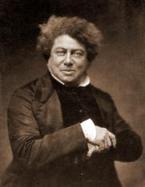
General Alex Dumas

Alex Dumas was a consummate warrior but also a man of great conviction and moral courage. He was renowned for his strength, his swordsmanship, his bravery, and his knack for pulling victory out of the toughest situations. But he was known, too, for his profane back talk and his problems with authority.

Alexandre Pere Dumas, Novelist

He was the inspiration behind the hero of his son’s novel ‘The Count of Monte Cristo‘, the story of the young sailor Edmond Dantes who, on the verge of a promising career and life, is locked away without witness or trial in the dungeon of the island fortress Château d’If.

An island dungeon is where Alex Dumas, finds himself after the failed French invasion of Egypt, when he is almost shipwrecked on his return, the ship limping into the south of Italy, which in the meantime has become an enemy of France and sadly Dumas’ influence with Bonaparte has diminished and he is all but forgotten.

Les Fers brisés, Paris

The story is rich in detail and reads more like a novel than the historical account that it is. Tom Reiss has excelled in researching both the vast volume of documentation, which from his account, sounds as if the Generals sent letters at an equivalent rate to which people send email today as well as visiting all of the battle sites and physical locations the General and his family were based.

Reiss encounters his own difficulties in pursuing the research, all of which contribute to making this a most compelling and entertaining read, but above all, one can’t help but admire the man, who lived in an extraordinary period of history, who was born into slavery, witnessed its emancipation, then both saw and experienced it tragically being rescinded. He deserves his rightful place in the historical annals of France, as a role model, a hero and a man of the people.

Note: This book was an Advanced Reader Copy (ARC) kindly made available by the publisher via NetGalley.

Man Booker Prize Winner 2012

Tonight is the grand dinner in the Grand Hall of London’s Guildhall, where invited guests, judges and shortlisted nominees will be dining on porcini soufflé with a warm salad of wild mushrooms, black truffle shavings and cep velouté to start, then roast lamb with all the trimmings and a dessert of autumn textures and scents.

I do love how twitter lends a sense of occasion to an event I am far from, but can so vividly imagine thanks to our ever faithful, if somewhat distracted guests.

Drapers Livery Hall

It takes me back to a time-out year while studying in London and working part-time as a silver service waitress, serving many of the worshipful companies of vintners, weavers, apothecaries, blacksmiths, basketmakers, bowyers, broderers, feltmakers, farriers (ancient trade and craft brotherhoods fraternities), referred to collectively as livery companies, of which more than 100 continue to survive and meet inside some of the most extraordinary inner environments in the City of London today.

The Loving Cup

The livery companies are said to have originated in England before 1066. Guilds or associations were very popular throughout Europe and here in France, they remain prolific, although without all the pomp and ceremony that I was witness to during that year in London.

Ceremony of the Loving Cup

Rose petals in finger bowls and the loving cup ceremony, where two daggers are passed from man to man, while a third man (or woman) drinks in a protective ritual said to date back to Saxon times when King Edward was assassinated (stabbed in the back), place settings for multiple courses, at least 4 glasses for the water, wines and port and women smoking cigarettes in long-stemmed holders.

They had responsibility for standards, policy, educational qualifications, statutory and regulatory functions, and many of the guilds continue to play an important role in those areas today – however I was only witness to their meal time etiquette, which as a foreigner was a fascinating world to me, like living inside a medieval book for a night – surreal and the experience came with no explanation, only how to serve meat and vegetable using a fork and spoon in one hand, while holding a heavy plate with said food in the other. I developed very strong biceps and a unique cultural insight.

Today many of the City’s (London’s inner financial district) street names – such as Milk Street, Bread Street, Ironmonger Lane, Poultry, Cloth Fair and Mason’s Avenue – mark the sites where it all began.

And tonight book lovers and writers gather in that great medieval-style guildhall to celebrate literature and make one writer’s night, one never to forget.

Now that I’ve spent the last hour on a bit of a nostalgia trip, let’s check twitter again to see what we will be reading, will it be Deborah Levy’s Swimming Home, the one on the list I have read, or Tan Twan Eng’s The Garden of Evening Mists which I haven’t read, though I did just read his first novel The Gift of Rain.

………and the winner of the Man Booker Prize for 2012 is……..

Bring Up the Bodies by Hilary Mantel!

The White Forest

Adam McOmber’s debut novel is set in Victorian London in an area I know well, at least in contemporary terms.  Jane Silverlake and her friends Madeline Lee and Nathan Ashe live in Hampstead and regularly take walks on Hampstead Heath, the ‘Green Lungs of London’, my favourite London park.  At 790 acres, it is the largest and being wooded, you can imagine it is almost a little wild in parts and certainly the closest relatively untouched inner city natural environment you will find.

Gentle rolling hills, natural swimming ponds, light forest with a few park benches scattered throughout, it reminds us of those who have appreciated its precious gift over the years.

However, most of that is in the future, because Jane and Maddy are living in 18 – – and concerned about the strange behaviour of their friend Nathan, since he returned from the Crimea War and took up with the strange, alluring Ariston Day and his secret society of young, wealthy male followers whom he refers to as ‘Fetches’.

Jane had become a loner after her mother died due to the wary reaction of others to her peculiar sensitivity, until Maddy sought her out and now with Nathan, she is content to have such close friends, even though suspicious of Nathan’s pressing interest in her strange abilities.

Jane has a talent for sensing the mood of objects around her and Nathan is interested in her skill when he discovers her ability to transfer this sensation through touch. Frustrated with his persistence and wish to experiment, she is shocked when she subsequently hears he has disappeared and that the cult he was involved with believe she had something to do with it.

My newfound ability allowed me to  see past those surfaces into another reality – a universe of animate space concealed within the inanimate.

When I looked into the faces of my friends, I became all the more determined to put right the wrongs I’d done.  But in order to do so, I still needed to understand my own nature.

Maddy and Jane decide to take matters into their own hands and try to find Nathan, leading them to a place from which they risk not being able to return.

This is one of those books, where we don’t understand all that is going on with the characters as the author presents them.  Are they really friends these three or is something else going on? Who can be trusted?  Adam McOmber does well to keep the reader guessing without giving things away, though perhaps keeps us on a string a little too long waiting for Jane to embrace her power and use it. She is somewhat the reluctant heroine, but once she finally assumes that role, it is more exciting and less frightening to follow her into the depths of this macabre adventure.

The Crystal Palace, London

Slightly eerie, steampunk literature that I can quite imagine being made into a compelling film, it has the potential to be more scary on-screen, but inhabits an enticing era and parts of Victorian London, including The Crystal Palace, originally built-in Hyde Park to house the Great Exhibition of 1851, Southwark now home to the Tate Modern, the hidden Temple area and of course the Heath.

This is Adam McOmber’s debut novel, he also has a collection of short stories out called This New and Poisonous Air, and I have a feeling we will be seeing more from him in the future.

Note: This was an Advanced Reader Copy (ARC) made available from the publisher via NetGalley.

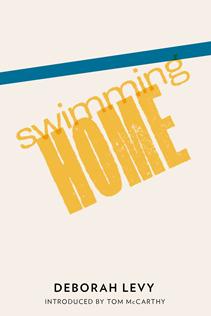
Swimming Home

Author, Deborah Levy

This is my first read from the Booker Prize shortlist, a book that fell into my hands during a recent visit to London. I have been aware of Deborah Levy’s work for some years, though outside the mainstream, so seeing it being nominated in the Booker list, it was one title I felt a definite connection to, there being only two degrees of separation between Deborah and I.

Hers is an interesting story in light of recent perceptions that much literary fiction is or has fallen out of favour now with pressure on publishers to go with titles that are likely to make significant if not mass profits. Her previous publishers neglected to take on this title because, as she said:

‘the fear among those who admired it was that Swimming Home was too literary to prosper in a tough economy … to be fair, there was quite a bit of agonising, but in the end Marketing and Sales won the argument.’

Titles published by ‘And Other Stories’

In my earlier post What is Really Harming Literature, I mention the commodification of literature, something the publisher of Levy’s latest book And Other Stories developed in response to. For a set fee, members subscribe to the publisher, kind of like a club and elect whether to receive two or all four of the titles they will publish during the year. You won’t know who the authors or the books are until published, except that they are international fiction, either in English or translated, and of the type the publisher believes is being ignored by mainstream corporations.

The selection of titles passes through an open consultative process which agents, interested members of the public, writers, friends, colleagues contribute to, so as a subscriber you are invited to contribute to the choice of future books to be published. The first copies are limited edition, so all subscribers receive not only a potentially excellent book, but something of a collector’s item as well.

Swimming Home for all that, I found a relatively easy, medium paced accessible read, with enough story to keep the reader intrigued, while delving into the various characters, two families staying in a French villa on holiday; Joe the home based poet, his war reporting and frequently absent wife Isabel, their teenage daughter Nina and their friends who own a struggling shop in Euston, Mitchell and Laura.

Their relative tranquillity is disturbed by the unexpected arrival of Kitty Finch, a young woman due to rent the villa a week later, whom they allow to stay, despite her collection of Joe’s poetry books on display in her room, her tendency for skinny dipping and resistance to taking a prescribed medicine.

It’s a story of repression and denial, all the characters appear to be hiding something, carrying unspoken baggage, whether a problem, resentment or obsession which Levy somehow with her brilliant but sparse use of language gifts the reader with an understanding that is more than the sum of words on the page.

I was struck on the very first page by an example of this and realised this was a book I would likely need to read twice, because there is much to discover in the way she is able to capture so much in one sentence.  Here is the opening line of the book and the second sentence from the third paragraph. We already have a strong sense of Kitty, who though perhaps the least repressed character, is the most dangerous.

When Kitty Finch took her hand off the steering wheel and told him she loved him, he no longer knew if she was threatening him or having a conversation…

She asked him to open his window so she could hear the insects calling to each other in the forest. He wound down the window and asked her, gently, to keep her eyes on the road.

Even the author herself only shares parts of conversations in dialogue, the rest narrated by a character adding an element of unreliability as we dip into multiple perspectives and have to rely on the thoughts of characters all of whom have some kind of hidden agenda.

During seven days we learn more about each of the characters as we watch them interact and ponder the significance of that body found floating in the pool at the beginning of the story and wonder how all this silent yet volcanic like tension is going to erupt.

*

Yesterday he had watched her free some bees trapped in the glass of a lantern as if it were she who was held captive. She was as receptive as it was possible to be, an explorer, an adventurer, a nightmare. Every moment with her was a kind of emergency, her words always too direct, too raw, too truthful.

There was nothing for it but to lie.

Who or what is really harming literature?

All the hoopla created by Booker judge and TLS Editor Peter Stothard’s untimely comments in The Independent suggesting that book bloggers are harming literature, reminded me that I have yet to post a review of Deborah Levy’s Swimming Home, which I finished a short while ago and shall rectify shortly. (now done)

While posting a rant isn’t one of the objectives of this blog, since I’ve been commenting on the issue elsewhere, I decided to do something a little different and turn our eyes away from the culpability of book bloggers for a moment – who if you’ve read anything I’ve written in the last 24 hours you will know I think do a marvellous job – and instead suggest some other groups or individuals who it might also be said are harming literature today.

Voila, the list:

  1. Governments – I’m referring more to the British government whose budget cuts in the culture sector have had a crushing effect on many cultural and literary organisations (and libraries!!) who relied on funding to keep their operations and artists/writers supported. Sadly, either the government doesn’t appreciate the cultural value and importance of the Arts or hopes it will turn itself into a more commercial business model, if it can’t earn a living, either the private sector will save it, or it will cease to exist.
  2. Literacy – there had been a significant increase in the percentage of non-readers, an alarming trend and certainly harmful to all literature however, a recent survey in the US has shown that for the first time in a quarter century, literary reading has increased among American adults.

    A decline in both reading and reading ability was clearly documented in the first generation of teenagers and young adults raised in a society full of videogames, cell phones, iPods, laptops, and other electronic devices.

  3. Technology – the quote above says it all; technology has affected the leisure and entertainment options of children and young people, who might otherwise have picked up a book. However, this cloud may have a silver lining if the same people then hear about books via social networks and get reading on their gadgets. The book industry is going to have to get pretty creative to capture the attention of young people. Bloggers are the first step in that direction, right?
  4. Parents – Yes. Parents. Are we encouraging our kids to read by reading to them, taking them to the library, buying books or engaging in animated storytelling? All kids love being read to or told made-up stories and while they are young, books also assist them to undercover their passions and interests! Not a new problem, but one that can be detrimental to our beloved literature.
  5. Artists and Book Sculptors – Well, really this is an excuse to show you the extraordinary, exquisite, mysterious sculptures created by an unknown sculptor in Edinburgh late last year, which also sets out to prove that sometimes great literature actually needs to be harmed in order to generate support, awareness and appreciation.
  6. Libraries – both a victim and a culprit, the poor old library is being phased out in many cities, but libraries have also been known to be engaged in selling off and destroying the old to make room for the shiny new things that want to steal the limelight!

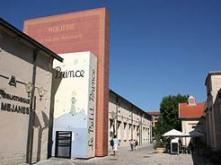
    Cité du livre Bibliothèque Méjanes Aix-en-Provence

  7. Social Networking – it may be having an adverse effect on some writers as they navigate the fine line between having a public profile to assist with promotion of their titles and the distraction of random communications and information that keeps them from writing. Not surprising that some enterprising company has come up with an app you pay for that restricts your internet access, we can now purchase discipline for the undisciplined!
  8. E-books – so you think e-books are good for literature? I’m not so sure, I think that e-books have turned literature into a much more accessible and easy to purchase commodity, with an associated risk that many people are consuming books and not actually reading them. So good for the writer’s pocket and for the estates of classics and at least the bookshelves aren’t suffering, but are we at risk of becoming collectors rather than readers.
  9. Telephones – I’ve mentioned technology already, but I have to register my concern at lugging my brick of a book, Murakami’s 1Q84 on holiday and a quick glance around the beach suggested I was one the very few doing that old fashioned thing, reading a book. Everyone else was doing the finger tapping dance on their teeny gadgets – alas, the mobile telephone has replaced the beach read, at least in St Tropez this summer!
  10. Steve Jobs & the Apple team – when computer hard drives required an entire office to house them and technology was beige, boring and you had to be a geek to operate it, literature was in no way threatened – now that it’s sleek, sexy and can facilitate a music, film, or other visual experience, a whole new level of entertainment has captured our imaginations, to the detriment of the more passive, noiseless book.
  11. The iGen – the baby boomers are becoming grandparents, the X generation are coping with being older parents and the new generation have been dubbed the iGen. They are going to create and imagine a whole new way of doing things. We don’t yet know what kind of literature they will want to read or create and they will decide which of our contemporary writers become future classics. Perhaps books are going to become more of an interactive experience?

The point being, there are a good many things out there and I am sure you can think up more of them, that could be said to be harming literature. But at least it stimulates a good debate and brings out those who are passionate about reading, writing, reviewing, critiquing.

Ok, back to writing that review then.

The weird and enigmatic world of 1Q84

Haruki Murakami’s work was introduced to me by my Uncle, he is a designer and as such, in my eyes at least, is often at the leading edge of new trends. He gave me Dance, Dance, Dance to read and off I went twirling and spinning into the world of this unique author who takes you in and out of reality with such ease, you soon fall into his writing’s magic – at least if you allow yourself to just go with it.

I was a little unsure after the first novel, it was so unlike anything I’d ever read, but I was curious to know how he continued and whether there was some common thread among his novels, so I went for his well-known classic The Wind-up Bird Chronicle next.

In this volume Toru Okado is looking for a job, and while living through this in-between stage, in between jobs – his wife doesn’t return home one day thus he enters into a strange period where each of his interactions take on questionable qualities as he tries to navigate his days and understand what is happening around him.

If it sounds somewhat surreal, it is – but then aren’t those periods in life when we are neither here or there, in between one thing and another?  He finds an empty well in a yard near his apartment and enters it, just to dwell. Revelations come to him from people, from being in the well and from situations he encounters, even reading about this world and its strangeness almost normalises it, we adapt to it as readers.

Revelations came to me also, weird dreams of deep wells and immersing in blue pools of water and seeing things clearly.
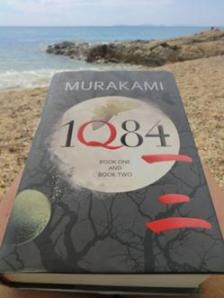
And so to 1Q84, my beach read this summer. 1Q84 is an alternative world (and there we have the reference to George Orwell’s 1984 another alternative world). Murakami by now I have discovered is a creator of these worlds that look and feel exactly as the world we know, they are inhabited by the same characters, their protagonists have the same life, but reality has been altered somewhat and they usually spend the story trying to discover what that is and why things have suddenly changed.

Having now read three of his works, I have found in each of them a kind of ascent or descent involved in entering this parallel universe; in Dance, Dance, Dance it was the lift/elevator, in The Wind-up Bird Chronicle it was a descent to the bottom of the well and now in 1Q84 Aomame climbs down an expressway stairwell to street level, which seems to have been the portal to 1Q84 (although Janáček’s sinfonietta playing in the taxi may have had something to do with it).

Aomame is a loner, growing up in a Jehovah’s Witness family she had no real friends and rejected her family’s way of life early on. The one true friend she did have later in life met a tragic end which changed Aomame’s life; she couldn’t save her friend but through her skills and work she ensured that many other women were saved from a similar fate.

In alternate chapters we meet Tengo, an aspiring writer who agrees to edit and improve a book that has been nominated for an award. Naively he agrees, though he also feels something is compelling him to become involved against his better judgement. The stories of Aomame and Tengo follow a similar trajectory, there are many parallels between the two, not just their previous lives, but in the way events seem to happen simultaneously.

By the conclusion of Book Two Aomame’s and Tengo’s worlds are coming together again (as they did when the two were 10 years old). Tengo realises he too is in 1Q84 and it all has some link to the book he has edited, a world of two moons, where The Little People exist and the purpose of their air chrysalis has not yet become clear.

After 623 pages, I must now read Book Three to learn what happens next and tie up the threads of the story which certainly feel as if they are working towards some kind of weird revelation.

For a surreal trip, one almost guaranteed to affect your dream-life, pick up a Murakami if you dare, he is strangely addictive.

Death off The Lifeboat

Post my visit to Belfast in Northern Ireland and the Titanic Museum, followed by reading Walter Lord’s A Night to Remember and Christopher Ward’s The Band Played On I have continued with this reading theme with Charlotte Rogan’s novel The Lifeboat, which felt like reading the next chapter of a Titanic story, the one that hasn’t been written to my knowledge, the story of what might have occurred had the lifeboats and their inhabitants been left overfull to roam the high seas.

 Set in the summer of 1914, the story centres around Grace Winter, a 22 year widow; right from the beginning we understand she is one of three women being held in prison while on trial for a crime that is alleged to have occurred while they were afloat on a lifeboat after the sinking of a grand ocean liner they were travelling to New York on.

Thirty-nine people started out in the boat, but a lot less than that survived under somewhat suspicious circumstances. As the trial progresses, to aid her defence her lawyer asks her to record the days as she remembers them in a kind of journal, and so simultaneously we too read her re-enactment of what she perceives happened as if it were happening now.

At the same time it occurred to me – and it must have occurred to Mr Hardie as well – to wonder if Rebecca was the victim of some sort of natural selection and to think that if she had fallen overboard, maybe it was for the best.

Having suffered one family tragedy already and seeing their prospects dwindle after the death of their financially troubled father, Grace’s aspirations had been in the ascendant after marriage to the young, successful Henry, although all is not clear around this, it is a subject she neglects to delve into in great detail and neither subsequently do we hear much of either her own family or her in-laws. Only her ruthless determination to marry the already engaged Henry, rather than follow her sister’s example and seek a governess role or other employ. Marriage was to be her saviour and Grace exhibits ambition had used her resources stealthily to achieve it.

It is an interesting premise, the concept of floating at sea for days on end, death never far from seducing some, and destroying others in dramatic fashion. This story pits men against women, the strong against the weak and the cunning against the calculating. I did wonder about its authenticity when they decide very early on, in the first hours to abandon a child clinging to some debris, it is clear the child will perish and even if the boat is hopelessly overfull, it is hard to accept that women in particular could be so in shock as to allow such a young soul to be left.

Later, Hannah stamped her foot against the floor of the prison van and cried, “What is this, a witch trial? Is the only way to prove our innocence by drowning?”


Note: This was an Advance Reader Copy (ARC) provided by the publisher via NetGalley.

When Women Were Birds: Fifty-Four Variations on Voice

Firstly I have to thank my blog buddy Cassie for recommending this glorious oeuvre to me, her blog review is written with such passion and awe, she even inspired the author Terry Tempest Williams herself, to leave a wonderful appreciative comment.

When she wrote this book, Terry Tempest Williams was fifty four years old, the age her mother was when she finally succumbed to a cancer that first perched threateningly within her breast in her late 30’s, then a young mother of four children.

Raised in a Mormon family and heritage it perhaps should not have been such a great surprise when Terry’s mother informed her that like previous generations of women, she had left her daughter a collection of carefully preserved, beautiful cloth bound journals. A tradition yes, but a legacy, this daughter of words knew nothing of until that revelatory moment.

In Mormon culture, women are expected to do things: keep a journal and bear children. Both gestures are a participatory bow to the past and the future. In telling a story, personal knowledge and continuity are maintained. My mother kept her journals and bore four children: a daughter and three sons. I am her daughter, in love with words.

One month after her mother’s passing, Terry Tempest Williams felt ready to receive their wisdom and sat quietly opening one after the other absorbing their blessed pure message. She opened the journals to discover that the pages were blank. Every. Single. One.

Word by word, the language of women so often begins with a whisper.

I am leaving you all my journals…

Terry Tempest Williams creates an opportunity and uses those pages to reflect on the legacy her mother has left her and fills the pages with fifty four vignettes, fifty four variations on voice. She comes to understand many things about the blank page and the infinite possibilities this offers, the things her mother’s gesture may have meant. She indulges her imagination and shares a flock of realisations:

My Mother’s Journals are an expanding and collapsing universe every time they are opened and closed.

My Mother’s Journals are a gesture and a vow.

My Mother’s Journals are a collection of white handkerchiefs.

My Mother’s Journals are an obsession.

Part way through writing these short chapters, Williams attended a family event, which unhinged something inside. Restless, she came home and wrote a list, a list of the things she had been writing about in these pages and struggled to find a connection. Her list looked like this:

Great Salt Lake                      Mother

Bear River Bird Refuge             Family

Flood                                  Cancer

Division of Wildlife Resources    Mormon Church

Circling both lists, it seemed as if nothing connected them. Until she wrote the letters TTW underneath; then the exercise became apparent. It is she who connects these subjects, it is within her that they reside and it is through her voice on the page that we share an intimate and creative journey, like observing the beauty, the wonder and constantly evolving shape of a murmuration. A privilege to witness.

This is a book to slow read, to re-read and to ponder. This book is in every one of us. Whether we create our list first or mid way through as TTW did.

A Murmuration – click here to see two women and the most amazing flock of birds ever. Spectacular.

Man Booker Prize 2012 Shortlist

Quiet on the blog front while life enters an extremely busy period here with La Rentrée and a working visit to London; I have a few summer reads still to review, so hope to add those as I find time.
Well the Bookies are favouring Hilary Mantel and Will Self, a couple of Scottish authors are bagging it for being “based on the conceit that upper-class Englishness is the cultural yardstick against which all literature must be measured”, but the reading public are generally enthusiastic and optimistic for a unique collection of literary fiction in the Man Booker Prize this year.

Speculation aside, the judges have concluded their re-reading and literary debate and announced this morning the following shortlist:

Tan Twan Eng, The Garden of Evening Mists (Myrmidon Books)

Deborah Levy, Swimming Home (And Other Stories)

Hilary Mantel, Bring up the Bodies (Fourth Estate)

Alison Moore, The Lighthouse (Salt)

Will Self, Umbrella (Bloomsbury)

Jeet Thayil, Narcopolis (Faber & Faber)

“After re-reading an extraordinary longlist of twelve, it was the pure power of prose that settled most debates. We loved the shock of language shown in so many different ways and were exhilarated by the vigour and vividly defined values in the six books that we chose – and in the visible confidence of the novel’s place in forming our words and ideas.” Peter Stothard, Chair of Judges

The 2012 shortlist includes two debut novels, three small independent publishers, two former shortlisted authors and one previous winner. Of the six writers, four are British, one Indian and one Malaysian.

I have not yet read any of the list, but I now have Deborah Levy’s Swimming Home in my possession and plan to read it on the flight home tomorrow.

Watch this space!