Episode 5: GOSH Where Peter Pan’s legacy resides, a kind of Neverland

At Great Ormond St Hospital we were shown to the Woodland Ward, the family and children friendly ward names, a first step in reducing my overburdened anxiety levels. Allia was in a beautiful communal room decorated for children, with soft lighting, colour, patterned bed sheets with giraffes and monkeys. The quiet whispers of the nurses a stark contrast to the beige walls, formica cabinets and metal machines with cables and hoses draped everywhere of the hospital we had just left.

Arriving at GOSH Great Ormond St Hospital

It was like we had left the factory and entered Neverland. In a way we had. GOSH has the benefit of many private donors and receives royalties from the estate of J.M. Barrie, who claimed Peter Pan had been a patient in Great Ormond Street Hospital and that:

It was he who put me up to the little thing I did for the hospital.

Allia was asleep in an open incubator so we could actually touch her. She was so peaceful sleeping there. There was no naso-gastric tube in her nose, only lines in her hands and feet, things that in this environment were as ordinary and common as sheets and blankets. She was okay and she was going to be okay. She looked more comfortable now than she had before and I was just happy to be there with her.

It was a shock for my husband. Having missed the birth itself, he was now confronted with something even more difficult, seeing his daughter for the first time in a hospital wired up to machines and about to undergo surgery. If he thought he had arrived in time to avoid the drama, he was mistaken, he had arrived in the middle of it and now he and I would have to endure four hours of awaiting the outcome of a major event that neither of us had any role in.

My Aunt left and Susan’s husband stayed with us. Susan (whose name I have changed for this story) and I used to joke about our funny connections and serendipitous events, one of them being that she shared the name of my mother and I shared the name of her daughter. We laughed the day we met when we discovered this connection, never for a minute anticipating the future role she would play in our lives, at the birth of our daughter.

We had about half an hour before Allia was taken downstairs to the operating theatre. The doctor spoke with us and drew a diagram of the digestive system, from the mouth, down the oesophagus, to the stomach and the small intestine to the ileum, the point just before the small intestine connects to the large intestine.

“It is here just before the ileum that there is a blockage” he explained. “We don’t know exactly what it is, whether there is an end to the intestine so that the two pieces must be re-joined or whether there are striations or a blockage, in which case, we may need to cut a section out. Do you want to come down to the Anaesthetists’ ward?” he asked.

“Yes” I replied.

“No” said my husband simultaneously.

The lift opened, Allia was wheeled inside, I followed with the doctor and we all descended.

Next Up: Late Night Surgery, the most difficult wait a new mother will ever endure

Read Previous Episodes this mother/daughter collaboration: A Silent Education: Our Quiet Challenge in Provence

Introduction

Episode 1: The Benefits of Insomnia

Episode 2: We are not Living in France!

Episode 3: The Benefits of Contra-Indicated Essential Oils

Episode 4: Where’s My Baby and Why Isn’t She With Me?

Episode 4: Where’s My Baby and Why Isn’t She With Me?

We laughed as the doctor left the room and I tried to remember how to breathe.

I even slept a little throughout that long night until around 5am when we reached the moment when the baby finally arrived. A beautiful tiny baby girl, an almost pained look of relief on her face, happy to have escaped I thought, or is it the other way around, I wonder, pained by that physical confrontation of birth into our harsh world? I only held her for a short while before she was taken away to be further checked, taken to a ward on another level.

We knew that there was a problem in the intestine, the hospital had picked it up at 22 weeks after the scan revealed fluid in the intestine making it balloon slightly. Due to this effect, they had been able to observe peristalsis, the smooth muscle contraction of the intestine wall, which moves food or liquid along the intestine. Ordinarily, we should not be able to see this, but if there is some kind of blockage, it is possible to observe.

It had caused us significant anxiety, particularly because the doctor could neither guarantee nor predict an outcome. There were two options he had said. Either the baby will require an operation immediately after birth, or you will take the little one home and at some time in the near future it will be necessary to return to the hospital, because it will be a problem for him or her to keep food down. In this case, the baby will vomit continuously because the bowel will have ceased to function.

We preferred that the problem be dealt with as soon as problem, but we were not given sufficient information to feel in any way empowered to make any kind of decision. So it often is with hospitals, perhaps believing that too much information can only increase anxiety, it seems as if they withhold it. I’m not so sure it’s a good strategy, being aware of one’s ignorance and feeling powerless are more painful symptoms of anxiety than the harsh dose of reality, complete information might bring, at least in my mind.

I mean, why send a baby home and wait for something terrible like that to happen? What were the risks of the operation? Every question always ended with “It depends. We can’t know exactly until we can see inside.” There was no reassurance, we just had to wait and so I had tried not to absorb too much of the anxiety already flooding through my veins.

Now that the moment had arrived, they seemed to be acting quickly, there was no suggestion of any “wait and see” now. The baby was gone, they’d cleared her breathing passages, shoved a tube up her nose, tied off her umbilical cord, weighed her and taken her out of the room. I know I did get to hold her, but I have no memory or feeling of the bliss of holding my baby after birth; the rush and feeling of panic and anxiety obliterated all that and I only remember the helplessness of not being able to follow and wanting to make sure that someone who I knew and could trust would keep an eye on my baby girl. I hadn’t held her long enough to even remember what she looked like!

The baby is in the post natal ward they told me. I sent Susan immediately to go and find her, I was too weak to get out of bed, but I was desperate for someone to go and see my daughter, to find her and tell me that everything was okay.

“She’s okay” said Susan. “She’s downstairs in an incubator and she’s quiet, you can go and see her once you are up and showered.” I dragged myself to the shower, washed then went down to the ward to see her for myself. There was a place to insert my hands but I couldn’t actually touch her. Barriers, barriers, I sent her all the love and maternal energy my heart could generate; I sent it to her in abundance, through my mind, my heart, my hands, from every cell in my entire being. And I decided to call her Allia.

The nurse came to tell me that Allia would be transferred in a few hours to Great Ormond Street Hospital. She advised me that she would be transported in a specially equipped ambulance designed for babies.

“It is not possible for you to travel with the baby” she continued. “It would be better for you to stay here for the night, you need to recover. Your baby will be okay.”

My baby would be okay she had said. I was not okay. I did not want to be there alone, I did not care about recovering, I wanted to be with her, she needed me, she was about to face something drastic and invasive and they were recommending she do that alone, without me even being in the same building.

I told Susan to go home and get some rest. Other people came to visit me and were shocked to find me there alone. I hated lying there watching the other women with their babies, feeling as if I had abandoned my own, powerless to have kept her. I remembered that my husband was due to arrive back in London that day. We had been unable to reach him.

Someone called from Great Ormond Street Hospital to ask me for parental consent to conduct surgery on our daughter.

“Ordinarily, we would get you to sign a consent form, but as you are not here, we need to get your permission over the telephone” the Doctor explained.

“When will the operation be?” I asked.

“At about eight thirty this evening” he answered. I looked at the clock; it was nearly 6pm already.

“Wait” I said, “I’m coming now.” I went back to the ward to find my husband and my Aunt waiting there for me.

“I need to get out of here” I said. “They’re going to operate on her in two hours and I’m not waiting here while that is about to happen.”

“I’ll take you in my car” said my Aunt. I grabbed my things and the three of us sped out of the Royal Free Hospital and raced towards Russell Square to Great Ormond Street Children’s Hospital.

Next Up in the mother/daughter collaborative story A Silent Education: Our Quiet Challenge in Provence

Episode 5 : GOSH – A Kind of Neverland

Previous Episodes: Introduction

Episode 1: The Benefits of Insomnia

Episode 2: We are not Living in France!

Episode 3: The Benefits of Contra-Indicated Essential Oils

1Q84 The Finale

Foyles bookshop, Southbank Centre, Royal Festival Hall, London

It’s been a busy month and my reading has suffered for it, not to mention having to take a break 400 pages into a historical novel about the French revolution, but a visit to London and another wonderful bookshop, Foyles on the Southbank helped, tempting me with Book 3 of Murakami’s trilogy and promising to be even more of a page-turner than the first two books.

If you haven’t read it already, I suggest you begin with Book 1 &2, which I read in the summer and review here.

In essence Book 1 and 2 follow the lives of the two main protagonist’s Aomame and Tengo, who were in the same class at primary school, twenty years before the episode the book narrates occurs.

In these first two books, we follow the two characters into the alternative world of 1Q84, where everything appears normal, until they notice the presence of the two moons. Tengo has ghost-written what he assumes is a fantasy novel, however the presence of the two moons suggests otherwise. Aomame is a sports instructor with a penchant for carrying out untraceable acts of revenge.

By Book 3, we are just waiting for these two to meet as they seem to be on a collision course for doing so and Murakami seems to delight in teasing the reader, as this reunion almost happens on more than one occasion. He adds tension and pace by introducing Ushikawa, a private investigator searching for leads after the murder of the leader of a cult, an act that has yet to become public. He has sniffed out a connection between the two, before they have realised it, Tengo and Aomame are relying on and following an instinct, Ushikawa deals only in facts and is closing in on them both.

In times like these Ushikawa didn’t like to have a set objective. He let his thoughts run free, as if he were releasing dogs on a broad plain. He would tell them to go wherever they wanted and do whatever they liked, and then he would just let them go. He sank down into bath water up to his neck, closed his eyes, and, half listening to the music, let his mind wander.

Yet again, I am in awe of the grand imagination of Haruki Murakami in conceiving this extraordinary plot and notice once again the mirroring effect in the separate lives of two characters who have not yet met up and yet who encounter equivalent or parallel situations. I am sure I am only skimming the surface of what lies beneath this narrative, but it was a joy to find Book 3 as enticing as and perhaps even more exciting than the book preceding it.

Episode 3: The Benefits of Contra-Indicated Essential Oils

The baby was due a few days before Christmas, so losing my job gave me plenty of time to prepare for its arrival, at least that’s what I thought. A month before the due date I nonchalantly told my husband not to worry, he should just go ahead and visit his son in France for a few days while everything was quiet and in control at home.

A couple of days before his return, my friend Susan was due to come and help me clean windows and get things ready for the imminent arrival of our new family member. That morning I woke knowing something had changed; it looked different too as I observed traces of blood. I called the midwife and she advised me to come to the hospital immediately for a check-up and suggested I bring my not yet prepared hospital bag.

I went to the hospital that same day and apart from one brief night, I was not to return home for the next three weeks. Tests indicated the waters were leaking and I was informed an inducement would be performed as soon as a bed became available. There were eleven delivery suites at the Royal Free Hospital, all occupied; and so the long wait began.

That wait proved fruitful, long enough to skip over a few chapters of the book I was reading on Preparing for Childbirth and start reading about inducement. I didn’t like what I read at all, injected with drugs which make contractions more severe than they would otherwise be, did not sound in any way appealing. I looked for the chapter on breathing; I hadn’t read that chapter yet either. I had not finished the preparation classes, three weeks was plenty of time to get into the huffing and puffing part I’d thought.

My friend Susan arrived and read to me from the chapter about inducement, I listened to her calm, soothing voice with increasing horror and fear at the alarming words tumbling forth in that gentle voice and my thoughts drifted to my aromatherapy training and all those essential oils that are contra-indicated in pregnancy because they are emmenagogue, able to trigger contractions. Clary Sage, Jasmine, Rosemary. I had put some Lavender and Rosemary in my bag, one to stimulate, the other to relax. I decided that a natural intervention was required, I had to at least try, I had nothing to lose and a few hours left to do something.

Kimberley arrives to administer a calming, hopefully effective, abdominal massage

Susan went home to rest, promising to come back later in the evening. She had started the day out intending to be my window cleaning helper and she would end it as my birthing partner, something neither of us had envisaged and something I will forever be grateful to her for.

My dear friend Kimberley came to visit. Kimberley had been pregnant at the same time as me. We used to work in the same office, laugh together, drink big mugs of tea together and talk about our future. We were supposed to have our babies at the same time. Her beautiful, so loved already baby didn’t make it and now here she was coming to comfort and be with me.

I asked her if she would massage some of the Rosemary and Lavender mixed with almond carrier oil on my stomach. I told her my plan and she laughed that gorgeous, contagious laugh she has and said she hoped it would work. I felt some flutters, but not much else, it felt good to laugh and the aroma of the oils made me forget the blood-curdling screams that had been coming from the bedside next to me earlier.

About 10pm Susan returned and the nurse arrived to announce the availability of a delivery suite. We moved to the room and as they set up the monitors the fluttering started up again and the indicators on the monitor started to jump around. I looked at Susan and at the nurse. The nurse gave me nitrogen gas to inhale and I started to laugh uncontrollably, the room seemed to have become a little crazy, like we had entered a different zone. We had. The baby was ready to move.

The doctor returned and asked what was going on. He had expected to come in and administer drugs for an inducement. He took one look at the monitor and said “No drugs needed here. You are on your way” and left the room.

Next Up in our mother/daughter collaborative story: A Silent Education: Our Quiet Challenge in Provence

Episode 4 : Where’s My Baby and Why Isn’t She With Me!

Previous Episodes: Introduction

Episode 1: The Benefits of Insomnia

Episode 2: We are not Living in France!

Episode 2: We are not living in France!

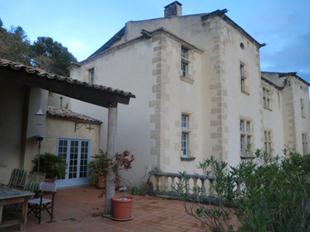
The leaves are starting to fall outside La Loubiere, the 16th century château where we are spending this last weekend of the autumn school holidays and with the kitchen door open early while everyone sleeps, I listen to the mesmerising sound of the wind in the trees and think about the change of the seasons. It does not seem so long ago that spring was here, when the bulbs that had lain dormant for the winter were poking their green stems through the surface.
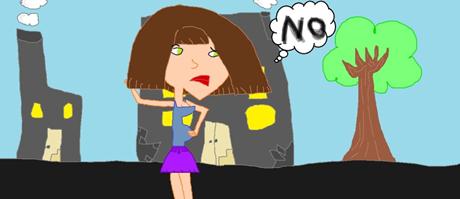
Now we wait for the period of stillness and hibernation, something we know very well, because in a sense we too have been in a kind of perennial hibernation, waiting for our daughter’s voice to emerge in the classroom and speak for the first time in school.

Now our spring has come and just like the association of supportive parents Ouvrir La Voix, she has finally opened her voice after more than five years of silence. She now speaks to almost all her classmates and we have one hurdle left, level 10 in the book that has become my bible – to speak to a teacher or adult in school.

It is hard to believe it has been five years. It is hard to believe that for the first three years we didn’t know what we were dealing with, that it even had a name. Perhaps if we had lived in America or Great Britain, we may have discovered those words earlier – or maybe this condition would not have even manifested.

Here in the south of France, selective mutism is unknown and with our daughter in a French school where interventions to assist children are commonplace and often successful, we were happy to follow the advice and recommendations of the school psychologist (every school has one), an orthophoniste (speech therapist), a psychiatrist and our doctor, all of whom were willing to help and in the case of our doctor, advised and reassured us that it was just a matter of time.

Three years on, having made zero progress, it was all to change late one evening after a telephone call with my Uncle, when he mentioned that he had been speaking with a friend in Los Angeles whose daughter had the same thing as ours.

“What thing?” I said.

“You know” he said, “the not speaking in school thing.”

“It has a name?” I almost shout. “Call her back now and ask her what it is.”

He did and through his friend then passed on those two words selective mutism, or mutism selectif in French, two words that not one of those health professionals had known of or discovered to suggest to us.  We weren’t looking for a label, we were searching for a solution and we’d been looking in the wrong place.  Our programme of intervention was about to take a different path, one used successfully by parents in the know, only we would not have the same support, as to take this route was effectively to reject the existing system.

But to tell this story properly, it is necessary to go back even further, to understand events that lead up to this moment and because despite trying to change the title of this episode and make it shorter, my creative daughter who has already finished the artwork, is telling me to write this second part now and include her picture. So here’s the bit about not living in France!

We are not living in France!

*

When I was six months pregnant we came to France for a 2 week holiday from London. We were toying with the idea of moving here, at least I was, for my husband it would be a return.

My body was changing and the world around was about to change significantly. One afternoon I returned to the hotel in Marseille to rest and as I passed the reception, I noticed all the employees looking at the television, watching what looked like the demolition of a couple of council buildings. I thought it strange that all the staff were watching TV in the middle of the afternoon, so when I got to the room I too turned on the television. I couldn’t understand the words spoken in rapid French, but I could read the subtext. It wasn’t a couple of council buildings at all; it was the twin towers of the World Trade Centre in New York.

During that holiday, we looked at a couple of apartments and houses, I sat through long-winded appointments with real estate agents, tried to understand menus and the rapid-fire French coming from that TV, all on a roller coaster of emotions and hormones, understanding little beyond Bonjour and Au Revoir, two basic expressions I thought I could pronounce, but listening carefully, I realised I’d been giving their syllables way too much emphasis, goodbye sounded more like ‘of waa’ than the expression I’d learnt to say.

I became disillusioned with the idea of living in France, I had long ago discarded that child-like submission of accepting things the way they are, being secondary to decision-making. Making decisions and understanding what leads to them is not something one gives up and neither was I interested in putting it on hold while coming to terms with a new language. I freaked out. No way was I coming to live here, a new language, a new city, a new baby, all things where I would be required to start again from the beginning. Absolutely no way I told myself.

Returning to London, the queues were horrendous, airport security was tight and there was no other subject being discussed other than the events that had occurred in New York. And they were beginning to have a trickle-down effect. I was concerned because I worked in the travel industry which was sure to be impacted and sure enough, within two weeks of our return, I was advised that my job was no longer required at a time when I knew I had no chance of finding another, not with a very obvious baby protruding from my mid-section.

Next up: Episode 3: The Benefits of Contra-Indicated Essential Oils!

Click below to read Previous Episodes of A Silent Education: Our Quiet Challenge in Provence

Introduction

Episode 1 The Benefits of Insomnia

Episode 1: The Benefits of Insomnia

Episode 1: The Benefits of Insomnia

Emily tells me she only sleeps for two hours at a time at night. She is conditioned to wake up. The words still fresh in my mind from the young pregnant doctor in Mike Leigh’s thought-provoking film Another Year, I listen to them again as they spill from my lips.

‘Insomnia is not an illness, it is a symptom.’

Emily lived at sea on a forty-foot sail boat for six years, so I’m not surprised it’s taking her body a long while to readjust, that and the unfortunate hostage experience which ended it all, her life spared but not her boat.

Seize an Insomniac Moment

Not only am I not an insomniac, I rarely dream or recall them, something Emily tells me she practises every night in the constant presence of her mother, a woman who hasn’t lived for more than eleven years now. I think about that and conclude that my days are so filled with dealing with the ever demanding present, that my mind must spare me from such night journeys into a fabricated past or alternative future. I know that when I do remember a dream, it is often worth writing down, such is its novelty.

Uncharacteristically, I couldn’t sleep this morning so I was doing what I do when I’m neither dreaming nor sleeping, having wake-dreams, which aren’t really dreams because I am consciously imagining them, creating dream-like semi-realistic scenarios.

In this morning’s dream scenario, I was writing this story in my head and thinking how sad it is that I don’t have the time I had when I first arrived in France, to spend endless hours writing, reading and learning from them both.  And then I thought Insomnia! Wouldn’t it be great if instead of lying here thinking about it, I raised this dormant body and took it off to write.

The story has reached a significant turning point so we are sharing it while it remains in the present and is not relegated to a distant nostalgic past, when I will no longer be thinking about it in the same way and unlikely to be dreaming either.

And now my daughter is collaborating, depicting my not sleeping state seconds before seizing that opportunity of a rare insomniac moment.

Next up:

Episode 2: We are not living in France!

 of A Silent Education: Our Quiet Challenge in Provence

Previous Episodes:  Intro

A Silent Education: Our Quiet Challenge in Provence

Struggling with my latest read, I think about all those people starting out on the NanoWriMo trail and all those old stories gathering dust on the shelf, my finished and unfinished novels, the new one I would love to start and the words of my friend Bernadette, who suggested to me yesterday that I write a story directly into this blog.

It’s an idea with merit and one that will help me overcome another little dilemma, that of a 10-year-old girl who wants her own blog, whose little fingers have occasionally and so she says ‘accidentally’ found their way in here.

So this will be our collaboration, I will write the episodes and she will create the illustrations, which seems appropriate as this story is going to be about her, about an aspect of our journey together that is worth sharing, because I know our experience is already helping others going through something similar.

So, next up Episode One : The Benefits of Insomnia written by me and illustrated by my daughter.

Here is the cover she designed today, there is a colour version, but she wants me to put it up in black and white.

And just to clarify, that’s her on the left and me on the right. (She has used her artistic ability liberty to remove her curls and make herself as tall as me).

and the winner is …

Well the odds of winning this give-away are pretty good, clearly  many, many people had already read Daphne du Maurier’s Rebecca.

*

So here are the five potential winners, cosy in the prize draw hat.

5 lucky readers keen to read Rebecca

*

and the winner is…..

*

Rebecca stays in France!

I happen to know Deidre is participating in NaNoWriMo this month and doing very well, with more than 16,000 words written already.  She wrote an excellent post summarising all the research and tips before embarking on this ‘Write a 50,000 word novel in November’ challenge, which you can read here.

She has a great blog which I love reading, especially as she lives here in France as well, so Rebecca will be travelling North and hopefully won’t distract Deidre from her writing endeavour!

Sorry to the other contestants, it was a close call!

Classic Gothic Tale to Give-away

It is thanks to Jo at The Book Jotter that I have now read Rebecca, after she offered copies to readers on World Book Night, one of the conditions being to pass the book on, so what better reason to offer the book as a give-away  If you would like to enter the draw, just make a comment and leave an email address so I can contact you after the draw on Wednesday November 7. You can also assist in selecting the books that will be offered free in the US and the UK for World Book Night 2013 by clicking on the link and nominating your favourite book(s).


View from the Musée d’Oceanographie, Monaco

As a quiet companion to a wealthy dowager in Monte Carlo, it was hard to imagine how this young woman, who remains unnamed throughout the novel, was going to elevate her station in life by any other means than some chance encounter – and indeed Mrs Van Hopper’s convenient two-week malady provides exactly the opportunity that would likely otherwise never have occurred.

There was nothing for it but to sit in my usual place beside Mrs Van Hopper while she,  like a large,complacent spider, spun her  wide net of tedium about the stranger’s person.

And with the change of location from the calm, sun-filled vistas of Monaco and Italy, we arrive at Manderley, the grand estate of many rooms, corridors, wings, ritual, tradition and an established staff, all haunted by memories, both real and imagined of the previous Mrs de Winter, Rebecca.
Last night I dreamt I went to Manderley again.

In Rebecca, Daphne du Maurier has created an extraordinary character who though never physically present, seems to affect everyone from the dog to the most loyal and disturbing housekeeper, Mrs Danvers to the slightly demented grandmother.

The new bride quickly comes to realise how different she is to her predecessor and perhaps being so young is therefore prone to exaggerated imaginings which add to her feeling of insecurity. All of which does make one wish someone would sit her down for a moment and explain exactly what is what, her sister-in-law comes close, but never quite stays long enough to enlighten her young sister-in-law – although that vivid imagination and neurotic behaviour do add to the suspense and excruciating discomfort of someone who feels most out of place in her new world.

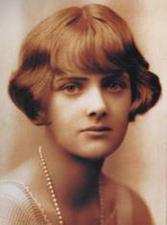
Daphne du Maurier

Du Maurier herself was living in Alexandria at the time she wrote Rebecca and was said to have felt uncomfortable with her life and obligations as the wife of a commanding officer, entertaining other wives while surviving the fierce heat of an Egyptian summer.

Both woman in the novel reflect aspects of du Maurier’s own complex character and the duality of her natural inward inclination versus the more extrovert role she was required to play. No doubt these experiences she was living through on a daily basis continued to feed her imagination and enrich the two female characters who really did seem to have little in common, the author giving away few clues as to why Maxim could have married two such opposite types of women.

Intrigue, tradition, a grand estate, a young naïve protagonist with an over active imagination, all contribute to a fascinating and compelling read – a classic that continues to enthrall readers as much today as it did in 1938 when it was first published, not to mention a Hitchcock film!

Don’t forget to leave a comment and your email address if you would like to enter the draw to receive this copy.

Do you have a Daphne du Maurier favourite?

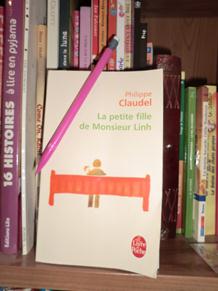
La petite fille de Monsieur Linh by Philippe Claudel tr. Euan Cameron

This month our bookclub chose a slim novella by the French author Philippe Claudel to read, La petite fille de Monsieur Linh; an interesting and somewhat ambiguous title because it can be interpreted in two different ways, already a dilemma for the translator no doubt, because petite fille is the expression used for grand-daughter, but it can also be read as petite ‘little’ and fille ‘girl’.
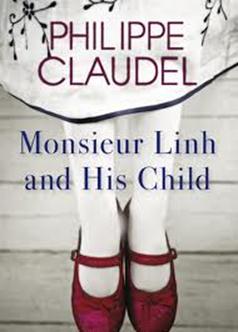
Something I have often wondered – why is it that there is only one word fille that means both girl and daughter, whereas there are two words for the male equivalent fils meaning son and garçon meaning boy?  The same thing happens with woman and wife, the French word is femme, whereas man is homme and husband is mari.

So did the English translation go with grand-daughter or little girl you might ask? Actually neither, the English title as shown is Monsieur Linh and His Child.  I’m not sure why they stay with Monsieur rather than Mr, I was not under the impression that he spoke in French.  It becomes clear how much of a task translating a novel must be, so many decisions to make or discard with the title alone, already certain ambiguities are lost while other insinuations are made.

Our English speaking bookclub has an international membership, so while we all read the book in French, the discussion is in English. For those of us reading French as a second language, the experience was quite different from reading a book in English.

We all went through a similar experience, starting out with a dictionary close at hand and looking words up, until we got fed up with that and decided to continue reading without stopping, some of us underlining words to come back to.

As you can see, I had my pencil ready and I also downloaded the English version to my kindle and started reading concurrent chapters, only to discover I really was just repeating myself and it wasn’t necessary to do that. But enough of the process, what a stunning novella!

Monsieur Linh has no choice but to flee his country of birth due to tragedy and destruction around him, war or some kind of tyrannical regime have made it impossible for him to stay, and so he takes a boat with his grand-daughter Sang diu, arriving as a refugee in a country across the water somewhere.

In the Shadow of the BanyanThe author does not say where he came from or where he arrives at, making this part of the reading experience, in fact we all had various impressions of where the story may have taken place, my own impression very much influenced by my recent reading of Vaddey Ratner’s novel In the Shadow of the Banyan and my own travels in that part of the world.

Monsieur Linh doesn’t leave the refugee dormitory at first, but when he does he befriends Monsieur Bark and so begins a regular coming together, a special friendship despite the incomprehension of each other’s language. In a sense we are as uninformed as Monsieur Linh, we follow him into the unknown, share his anxieties and fears for Sang diu and feel the deep and mutual appreciation of the gestures of new-found friendship.

Lorsque Monsieur Bark parle, Monsieur Linh l’écoute très  attentivement et le regarde, comme s’il comprenait tout et ne voulait rien perdre du sens des mots. Ce que sent le vieil homme, c’est que le ton de la voix de Monsieur Bark indique la tristesse, une mélancolie profonde, une sorte de blessure que la voix souligne, qu’elle accompagne au-delà des mots et du langage, quelque chose qui la traverse comme la sève traverse l’arbre sans qu’on la voie.

When  Monsieur Bark speaks, Monsieur Linh listens to him very attentively and looks at him, as if he understood everything and did not want to lose any of the meaning of the words.  What the old man senses is that the tone of Monsieur Bark’s voice denotes sadness, a deep melancholy, a sort of wound the voice accentuates, which accompanies it beyond words and language, something that infuses it just as the sap infuses a tree without one seeing it.

When I bought this book, another reader cautioned me against reading any reviews because there is a twist at the end of the book, so I did as mentioned and kept the reading experience pure. There is so much more I could share about how we invest ourselves in characters as readers, wishing things to happen and just as in life, ignoring the niggling instinct.

Irène Némirovsky’s Ida & La comédie bourgeoise

It is a beautiful story and I urge you to read it in English or in French, it is a testimony to kindness, tolerance, suffering and the small but heartfelt joys that friendship brings. Not just a wonderful story, but it has inspired me to be brave and try another short book in French. So I have my pencil ready loving that the novella form is so popular and inexpensive in France, so here is my next foray, – no rush mind you.

So do you read in a second language or like to read foreign fiction?