The Industry of Souls by Martin Booth

010413_1256_TheIndustry1.jpgI’ve given away numerous copies of Martin Booth’s The Industry of Souls over the years and repurchased it for my bookshelf, just in case I wished to reread it.

But the truth is, I am not a rereader. I never go back, not even for this book which I’ve always named as my all-time favourite book. Until now. Could I continue to say this is my favourite book, when so many reading years have passed and it becomes nothing more than a nostalgic memory of being uplifted by something I can no longer quite define?

So on the first day of the New Year I decided to reread it to see. 010413_1256_TheIndustry2.jpgAnd felt all the discomfort of why that activity is not for me, glances at the bookshelf seeing all those titles I’ve neglected and not yet read, feeling the fear of this highly praised book no longer living up to my own expectations, the scepticism of being transported a second time when I knew what would pass, the memory of that paragraph about the soporific wasp, trapped in a spider’s web, snipped free by its wise eight-legged captor, a paragraph that I cut and paste and send to appreciative friends, long before the convenience of a blog, wondering if I would now view it with less than the perfection status I had granted it when first encountered.
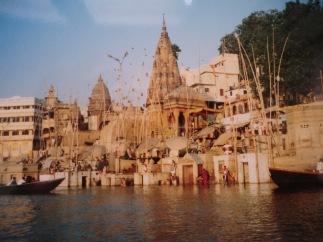
CIMG3662It is true, there is nothing like gazing at a splendid view, arriving in a new city, country, or place, reading a book or meeting someone for the very first time and experiencing that element of the unknown. It’s the sense of adventure, the openness to being shocked, moved, delighted, surprised, uplifted, disappointed or merely comfortable with a familiar voice telling a new story. It reminds me of a quote (now those snippets I do reread) from one of my travel journals during a three month back-packing sojourn around India, Nepal, Vietnam and Thailand, daily living in the face of the unknown.

“In the face of the unknown, man is adventurous. It is a quality of the unknown to give us a sense of hope and happiness. Man feels robust, exhilarated. Even the apprehension that it arouses is very fulfilling. The new seers saw that man is at his best in the face of the unknown.”

An extract from The Fire From Within by Carlos Castaneda

Reading is unique in that it allows us to rest in the safety of our environment, yet allows us to visit such extraordinary places and/or observe the heights, the depths and the edge of humanity. Primo Levi does it in If This is a Man: The Truce, Vaddey Ratner In the Shadow of the Banyan and Jackie Kay in Red Dust Road to name just a few.

The Industry of Souls takes place on the 80th birthday of Alexander Bayliss, a British citizen arrested for spying in the Soviet Union in the early 1950’s, who after 20 years in a Soviet labour camp, the gulag, settles in the small Russian village of Myshkino, with no inclination to return to his roots.

It was all a part of the process of rehabilitation, of making us come to appreciate that Mother Communism, that buxom, grinning, snag-toothed wench dressed in a pair of dark blue overalls, with a scarf around her head and biceps like Popeye the Sailorman, would provide for us. She was our succour and our saviour as well as our slave-mistress and superintendent.

On this day as he makes his round of the village and his friends, he remembers both his time in the village over the years and significant events of that period in the gulag, including with his friend Kirill, to whose village he returned in fulfilment of a promise. And at the end of today he will receive another visitor, a connection from that past, he long ago left behind.

For now, there is much to offer in the reading present, but having reread this favourite, I have no regrets and I hope to have encouraged a few of you to seek it out, it is well worth sinking into its depths.

It is the industry of the soul, to love and to hate;

To seek after the beautiful and to recognise the ugly,

To honour friends and wreak vengeance upon enemies;

Yet, above all, it is the work of the soul to prove

It can be steadfast in these matters…
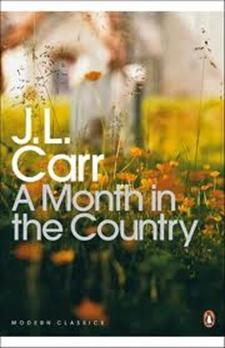
A Month in the Country by J.L.Carr

I read this book on a loose recommendation from MJ Wright, who mentioned it on reading my review of M.L. Stedmans’ The Light Between Oceans.  The character Tom Sherbourne in that book was a returning veteran from World War I, he was a man who didn’t have much to return to and chose the lone, isolated lighthouse as his place to work in his attempt to recover from the horrors of war.
I gained more a sense of his disturbance and difficulties in dealing with the ghosts of that past, the guilt that plagued him at being alive when so many of his compatriots had not made it, than I did from our Tom here in the country, the author choosing to infer rather than describe the thoughts and memories of his experience, protecting the reader somewhat from that horror.

Tom Birkin is home from the war and spends a memorable month in 1920 restoring a medieval wall painting in a small village church, where he is not entirely welcome, the commission being a pre-requisite to the Church receiving a substantial financial bequest from an elderly woman who has passed. Tom having discovered his wife has taken up with another man, travels north and spends his days on the ladder meticulously uncovering the work of a man he thinks about so often that by the end comes to know intimately, divining what happened to him.

I didn’t look like a Churchman. Indeed I looked like an Unsuitable Person likely to indulge in Unnatural Activities who, against his advice, had been unnecessarily hired to uncover a wall-painting he didn’t want to see, and the sooner I got it done and buzzed off back to sin-stricken London the better.

He befriends another man, known as Moon, who has been commissioned to dig outside the church boundary for a lost fourteenth century grave, one man working on high, the other down below. Outsiders both, they become as close as men can be who have no other friends and the unspoken experience of war between them. I wondered about the significance of digging up a grave, having read in The Light Between Oceans of the disturbing memories this invoked for Tom Sherbourne, when he had to dig one on the island, however it seemed not to have the same effect on these two men or if it did, we were not exposed to those thoughts.

Semi-Autobiographical Novella

A semi-autobiographical, slow burning novella, its pace like a refreshing walk in the English countryside, keeping two men occupied in that aftermath of war before returning to that same but changed place that will become the rest of their lives. It would be comforting to think that a month in the country could work magic for a returning war veteran, however I think it more likely to have been a brief but necessary respite.

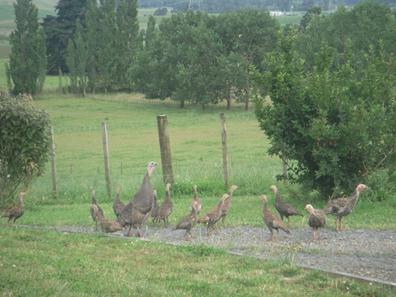
It being the festive season, I couldn’t miss an opportunity with a title like A Month in the Country, to share this delightful photo sent by my family in New Zealand a few days before Christmas, having explained to a few friends here that we are not really into eating turkey and as you can see, they feel quite safe to wander up the driveway of my father’s home and show off their brood.
Happy New Year to you all and thank you for reading Word by Word and sharing your thoughts.

I hope to continue to find time to read a book a week in 2013, and have upped my challenge to 60 books!

All the best to you for 2013!

Top Reads 2012

A near impossible task. I read so many fabulous books this year and hate to choose, however there was one outstanding read for me, that pushed all my buttons in terms of use of language, enticing me into the story, reading in wonderment at the writer’s ability to exceed my greatest reading desires.

Outstanding Read of the Year

123112_1428_TopReads2011.jpgThat book was Eowyn Ivey’s The Snow Child and coincidentally, just today our Scottish friend over at TheOnlyWayIsReading wrote a magnificent review, especially poignant for male readers. Inspired by a Russian fairytale of an older childless couple who cut family ties and move to the Alaska wilderness, it is a journey of navigating the internal elements and external forces in life, where love, hope and the imagination are equally necessary for survival as the more practical resources.

Top Fiction

010212_1323_CuttingforS1.jpgThe year started on a high note and I’ll never forget New Year’s Day 2012 gripped by the powerful and realistic storytelling of Abraham Verghese, in his epic Cutting for Stone, absolutely brilliant.

123112_1428_TopReads2013.jpgEden’s Garden is a wonderfully inspired novel set in Cornwall and Wales, following the lives of two women a decade apart, Carys returns to her hometown in Wales to take care of her mother and becomes drawn towards the garden and statues of Plas Eden and a man from her past, while Ann in Victorian London, is at a turning point in her life, destitute, far from her aristocratic past.

123112_1428_TopReads2014.jpgProdigal Summer was a fantastic and hot summer read, I can’t believe this book sat on my shelf for years and circumnavigated the globe with me before I finally turned its pages.

In the Shadow of the Banyan, is a fictionalised account of a period in the life of Vaddey Ratner, difficult childhood years in Cambodia under a tyrannical regime, losing members of her family, she recalls them in this heart-breaking but uplifting story which pays tribute to those who never made it and shows tremendous compassion in doing so.

Rebecca was my classic treat of the year, thanks to Joanne at The Book Jotter who sent me a copy as part of World Book Night, this has to be the most compelling, page turning classic I have read and I look forward to following it up with watching the Hitchcock film sometime soon.

Top Non-Fiction

Red Dust Road crossed my path after reading a captivating interview about the poet Jackie Kay in The Guardian, inspiring me to read this memoir about the discovery of her birth parents, who could not have been more different from the liberal, Scottish open-hearted parents she was raised by. A fabulous story, so eloquently shared and a joy to learn that it has made the World Book Night list for the UK in 2013.

The Black CountThe Black Count was a surprise read, as I prefer historical accounts fictionalised, they tend to be more compelling and the learning aspect easier to remember than non-fiction accounts, however Tom Reiss keeps the reader interested and has written an excellent account of the revolutionary hero, General Alex Dumas – the son of a San Domingan(Haitian) slave and French nobleman. Sold into slavery himself by his father, he eventually makes it to France and rises to become a General in the French revolution, a contemporary of Bonaparte (though no friend of his), his story inspiring his son to write countless novels, including The Count of Monte Cristo.

123112_1428_TopReads2019.jpgWhen Women Were Birds – Fifty Four Variations on Voice was my introduction to the work of Terry Tempest Williams, recommended by Cassie (whose review was so great, it prompted a response by the author), and gifted to me by my best book buddy and very dear friend CKC. The author is 54, the age her mother was when she passed away and left her daughter her journals. In this book, Tempest writes 54 short vignettes, trying to understand the enigma of that maternal gesture.

123112_1428_TopReads20110.jpgIf This Is A Man: A Truce – it seems appropriate to finish with this book, recommended by our Scottish friend who has just finished The Snow Child, he wrote a moving review, that left me with no other choice than to get hold of this book and read this all important humane work by Primo Levi, writing of that inhumane experience, a concentration camp and leaving us with much to think about.

There were so many memorable others, La Petite Fille de Monsieur Linh, my first read of an adult book in French; Murakami’s trilogy 1Q84, the Titanic anniversary books, my late discovery of the joys of John Steinbeck and Ray Bradbury, the tribute to Edith Wharton’s 150th anniversary with Ethan Frome and Summer, a couple more from firm favourites Susan Hill and Irène Némirovsky.

And for you? What books stood out for you in

2012?

Travelling Life’s Long Road – The Bridge Club by Patricia Sands

Reading Patricia Sand’s The Bridge Club feels a little like taking a long road trip with a friend, she drives as we listen to her narrate this story of eight female characters, a condensed version of their lives, her voice like the gentle thrum of the engine, lulling us at times into a companionable silence, we listen and observe the passing landscape of years, immersing into these lives as if they were our own.

After forty years of friendship a group of friends are to spend a weekend at a mountain cottage, a location they have been to many times before, only this weekend will see them face a challenge unlike any other they have had to live through to date. Acknowledging the importance that this group of friends has been in each of their lives, affectionately referred to as BC, the Bridge Club, they each share their SOS, ‘support of sisters’ moment before facing the ultimate test of friendship that awaits them.

They could each identify at least one time or experience, some lasting longer than others, when family or other support was not the answer and the BC had come to the rescue.

In this way each of the characters are introduced and we learn of a significant event in their lives that required this band of sisters to come together and thrash out a problem in a way that left no other option than to resolve the dilemma shared. It gets inside the minds of how a group of women think and they aren’t always necessary in agreement, but by the end they will have agreed on a course of action that has the support of them all and often some kind of intervention as well.
We live through marriage, divorce, adoption, coming out, the premature death of a spouse and it will culminate in that weekend away, where it becomes apparent what the past forty years of friendship has been preparing them for, for nothing less than a rock solid lifelong friendship could endure what they must go through.

A moment of intense quiet followed this exchange, a moment when their connection was almost palpable, with no doubt or hesitation. Their strength flowed from one to the other and bound them together as never before.

By the end of this read, we have had a glimpse into the lives of eight ordinary women, who like every one of us have lived through some extraordinary moments and we can only marvel at how fortunate they were not just to have found each other, but to have kept this bond of friendship together over the years and to have each benefited from the powerful gift that it offered, that magic synergy where the combined intention and actions of a dedicated group surpasses the sum of each its parts.

The Night Circus

120912_2017_GreatChrist6.jpgI bought this back in November and put it aside to be my post-Christmas read, a time when I am happy to indulge in a little magic realism, which this promised to be and most certainly was.

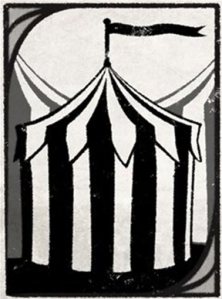
Since finishing it, I have come to see it more and more as a metaphor of the reading experience itself, Le Cirque des Rêves is a circus like no other, it opens at night and closes at dawn, full of enchantment and extra-sensory pleasures, where everything exists in black and white and whose followers, les rêveurs (dreamers) wear a splash of red to identify themselves.

Now, sitting in this cave of lightly perfumed silk, what had seemed constant and unquestionable feels as delicate as the steam floating over her tea. As fragile as an illusion.

night circusEach tent offers an extraordinary experience and like a good story, invites its readers inside to share the temporary illusion. It struck me the way the circus moves from city to city, from country to country with its fans following to be a little like the blogosphere itself, this place where we easily circumnavigate the globe, visiting blogs and reading/experiencing their content, like les rêveurs ourselves.

We lead strange lives, chasing our dreams around from place to place.

The Night Circus follows the lives of two young people, Celia and Marco. Marco is an orphan plucked from obscurity in 1874 by a somewhat slow aging illusionist to be trained as his protégé, a pawn in a seemingly never-ending game he continues to wage against Prospero the Enchanter, who chooses to nurture (in his own cruel way) a daughter he discovers he has when she arrives on his doorstep in 1873, with a suicide note pinned to her coat written by her mother. The two youngsters follow the different schools of thought of their masters, destined to meet and compete in a game where only one can be victorious and where the rules are deliberately obscure.

Along the way a catalogue of characters are drawn into this web of entanglement, along with the reader, never quite knowing exactly what drives and controls the outcomes, but mesmerised nonetheless within the fascination and charm of the circus and its characters.

BettleheimThis book prompted me to pull out an old copy of Bruno Bettelheim’s book The Uses of Enchantment – The Importance and Meaning of Fairy Tales; a child psychologist, he was a fan of the value of  fairy tales for young people, believing they provided a safe environment to liberate their emotions.

… how wandering in enchanted worlds, children develop their own sense of justice, fidelity, love and courage… not as lessons imposed, but as discovery, as experience, as an organic part of the experience of living.

Books like Erin Morgenstern’s  The Night Circus, invite us to return to that world as adults, discerning a slightly different but no less valuable meaning, as we have grown older and a little more cynical, able now to find deeper meaning in the analogies offered.

It is a tribute to the imagination, to a darkness that is not despairing and the light that always finds a way to reignite the flame.

The Light Between Oceans by M.L.Stedman

I begin reading with envy as M.L.Stedman’s playful yet adept metaphors slip off sentences, like droplets off the oars of a dinghy, each one plunging back into the ocean to collect another stream from which to compose those few extra words that create more than just mere description, revealing an image and inviting us deeper into the world she paints with words, an island hundreds of miles from civilisation, where only the two oceans, a grand light, the twinkling stars and the tall, elegant, imposing bearer of that light keep a young, newly married couple company.
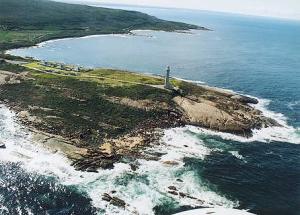
There are times when the ocean is not the ocean – not blue, not even water, but some violent explosion of energy and danger: ferocity on a scale only the gods can summon. It hurls itself at the island, sending spray right over the top of the lighthouse, biting pieces off the cliff. And the sound is a roaring of a beast whose anger knows no limits. Those are the nights the light is needed most.

Post World War I

It is the early years after the first world war and many families have been affected by the loss of their sons, Tom survived the war but carries the guilt of a survivor who has seen too much and wishes they could have done more.  Isabel’s family is no stranger to the grief of losing not one but two sons, within days of each other, never quite giving up the illusion of hope that maybe it was all an error and one of them will return.

The Isolation of Lighthouse Living

Tom accepts a job on Janus Rock, a lighthouse many miles out to sea, with visits to the mainland years apart, the island, the sea and that reassuring steadfast light his sole companions. Until Isobel joins him in wedlock and on the island will encounter her own form of grief, yearning for the child that never quite makes it into life.

After the last stillborn child, a dingy washes ashore with the body of a young man and a baby wrapped in a bundle, miraculously still alive. Convincing her husband to delay the inevitable moment, the two fall into a conspiracy of their own making, one that lifts Isabel’s spirit while crushing Tom’s peace of mind.

When he wakes sometimes from dark dreams of broken candles, and compasses without bearings, he pushes the unease down, lets the daylight contradict it. And isolation lulls him with the music of the lie.

Photo by Augusta Margaret River Tourist Association

Inspired by Cape Leeuwin Photo by Augusta Margaret River Tourist Association

At times uncomfortable reading, Stedman keeps you guessing and wanting to turn the pages, as the behaviours of the female characters are as unpredictable as the currents of the ocean herself. Tom, like the lighthouse itself is resolute, yet vulnerable to the consequences of his steadfast loyalty.

The choice of a third person narrative perspective has the effect of keeping the reader at a certain emotional distance and prevented me from being drawn into empathising with the characters, never being truly brought deep into their minds to see things from their perspective, thus we remain at a safe distance ourselves, just like those ships out at sea.

I did wonder why the author hadn’t taken that leap and told the story from the perspective of one of the central characters, but at the same time, sense the hesitation to go there. In all, a magnificent debut and thought-provoking novel, with many fabulous evocations of the turmoil of the sea and humanity.

Christmas Draw

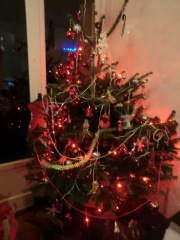
CIMG3620Yesterday we put our Christmas tree up and it looks different to other years, the children deciding against the multi-coloured, let’s use everything look and sticking to mainly silver and red, with the exception of the gold bird, because after all, what is Christmas without the reminder of wildlife and animals – at least that is my nine-year-old son’s view. Even Noisette, the cat seems to agree as he has found a new place to sleep, sniff and climb.

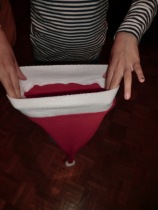
CIMG3615So while the hat was out, we put all your names in and drew out PB Rippey, from PB Writes, a copy of Paul Durcan’s Christmas Day is winging its way to your door and let’s hope it does indeed arrive in time for Christmas Day.

CIMG3618

Thank you everyone for participating, reading and commenting in the Christmas Bloghop and to Stephanie for organising it. I look forward to the same next year!

Joyeux Noël!

Great Christmas Expectations

Blog in France is a lady with llamas who left Ireland to live in France and has organised a Christmas BlogHop which I am delighted to participate in, including a give-away, just leave a comment to be in the draw to win Paul Durcan’s book and do visit the fabulous blogs participating in this festive foray linked at the end of this post.

I’m sharing favourite Christmas reads and the first book that came to mind that has been my favourite since I heard the author read an extract at the Royal Festival Hall in London in 1997, is Paul Durcan’s Christmas Day.

Christmas Day is a 78 page prose poem that reminds us in a humorous way of those who won’t be sharing a traditional Christmas, whether by choice or because they find themselves far from family and friends, and of the traditions we partake in and even when we don’t, that seem to resonate within us anyway.

In cities across the world

I like sitting in churches doing nothing.

I like going to communion:

Standing in line and catching

Glimpses in night skies

Through x-rays of clouds

Of the thin white moon of the host.

The moment I took the decision

Not to go to Mass

I could feel life returning into my body,

My empty cistern filling up,

The Holy Spirit gurgling inside me.

It is a funny, subversive, somewhat melancholic conversation between two men – Paul and Frank who spend Christmas in Dublin trying to make it something, but not quite getting it right. It will have you laughing out loud, nodding your head in acknowledgement and realising the importance of reaching out to at least one person this Christmas.  Not only it is a terrific read, but I was so enamoured with his performance, I bought audio versions as gifts for family, his delightful Irish voice, much a part of the experience for me.

He is unafraid, masterful and exactly what this world needs more of: wild abandon, wild love and sheer mad genius. Alice Sebold

120912_2017_GreatChrist2.jpgMy children’s favourite Christmas story and one that I was asked to read to the class in English comes from The Magic of Christmas storybook. All the stories are great, but their favourite, and a word they just loved to hear repeated is Ridiculous.

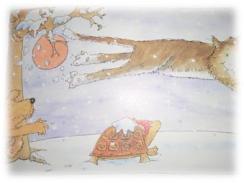
Ridiculous is a story about a young tortoise who doesn’t want to hibernate in winter, she decides to go outdoors after her parents have settled down to sleep and explore the snowy surrounds.

She meets a duck, a dog, a cat and a bird, all of whom exclaim and repeat the same thing:

“Whoever heard of a tortoise out in winter?”

Ridiculous!”

Shelley the tortoise disagrees, but discovers she can’t break the ice to get food like a duck, keep warm by running around like a dog, crawl into a nice warm house like a cat, or fly off home like a bird.
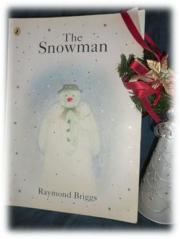
My own favourite children’s Christmas story, doesn’t require reading at all, at least it has no words.

120912_2017_GreatChrist5.jpgRaymond Brigg’s delightful The Snowman, is an all-time classic picture book and celebrates the power of the imagination and the wonder of childhood, as a boy builds a snowman and then goes on a night-time adventure with him into the world to places he has never seen.

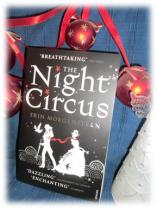
120912_2017_GreatChrist6.jpgAnd finally, to the book I will be curling up this Christmas. Have you already chosen your festive literary escape?

Last year, I remember losing myself in Abraham Verghese’s wonderful Cutting for Stone and I’m hoping that The Night Circus will do the same for me this year. If not, it might even be a reread of The Snow Child, which was my favourite read of 2012.

So leave a comment if you wish to be in the give-away for a copy of Paul Durcan’s Christmas Day and have fun visiting all the Christmas Bloghop participants below, many of whom are also offering give-aways.

Blog in France Bloghop

A Flamingo in Utrecht
Expat Christmas
Box53b
Word By Word
Vive Trianon
Fifty Shades of Greg
Books Are Cool
Perpignan Post
Jive Turkish
Very Bored in Catalunya
Life on La Lune
Scribbler in Seville
Blog in France Christmas
Les Fragnes Christmas
ReadEng. Didi’s Press
Steve Bichard .com
Edit My Book
Zombie Christmas
Christmas in Cordoba
The best Christmas blog ever
The Christmas Surprise.
Sci-fi Writer Jeno Marz
The best Christmas quilting blog ever
Painting in Tuscany
The Business of Life…
Funny tweets
we’ve got a new house but no stuff and it’s Christmas
Paris Cheapskate
What about your saucepans?
When I Wasn’t Home for Christmas or Celebrating
ShockWaves Launch Party
The French Village Diaries
Melanged Magic
Heads Above Water: Staying Afloat in France
Piccavey.com – An English Girl in Granada
Bordeaux Bumpkin
French immersion
Callaloo Soup
Grigory Ryzhakov
Piglet in Portugal
Beyond MÃnana
Chronicles of M Blog

Episode 6: Late Night Surgery, the Most Difficult Wait a New Mother will Endure

Exiting the lift, we entered the Anaethetist’s medical room and I watched as they prepared what they needed, looking confident and as if they had done this many times before, which of course they had, it was only Allia and I for whom all this was alarming and new. As they attached three new lines to Allia I noticed that each one had a small square sticky label with a different animal on it. Everything in there was so miniature, the sight of those tiny little animal figures like a kind of bait, luring one into a false sense of security momentarily. But then I saw the tiny mask and the realisation of what that mask signified gave me serious heart palpitations. My little girl had made it into this world, through all these months of waiting and had survived birth and was breathing effortlessly and now this gas mask was going to knock her out.

“Okay, I think I shoud go now” I said stumbling out of the door and into the lift and back up to the relative serenity of the nurturing Woodland Ward. I had stayed as long as I could, but I wouldn’t witness her lose consciousness, that I just couldn’t bear. We then waited in what seemed like and probably was the longest day of my life. Allia had been born on that very same day at 5.16am and we would wait there until after 11pm for the doctor to report back to us.

He returned alone. It was then I understood that Allia would not be coming back to this serene ward.

“She’s okay” the doctor said. He spoke softly and quietly. “She has been taken up to the intensive care ward and you will be able to see her tomorrow. We will try and organise a room for you here then” he said looking at me, “but for now she is being taken care of and the best thing would be for you to go home and get some rest.”

It was both a relief to know she was okay and an anti-climax because we couldn’t see her. I tried not to allow the nagging fear or was it paranoia that he was hiding something or protecting us from something engulf me. A mother in a state of distress has such fine-tuned nerves she picks up on everything. The wild animal instinct in me was sensitive to every word and gesture, trying to read behind every intention in this strange unfamiliar territory.

Everything comes as a surprise when we are so focused only on what is happening right now. With the benefit of hindsight, I see that all these small shocks and surprises are the things that create anxiety in the lead up to knowledge about out what is going to happen next. But the maternal instinct is a wonderful shock absorber and close to the survival instinct I am sure.

Which is just as well, because no one can warn you that will only hold your baby for a short while after birth, that she will be taken away and put in a different ward from you, that she will go to another hospital without you, that they will ask for your consent to perform surgery over the telephone and then tell you it’s better for you to stay where you are and rest, that you will escape the hospital to follow your child, not even knowing the address of where she is, that you will wait four hours for an operation to be performed and you won’t see your baby afterwards and that you will find yourself walking out into the dark streets of London just before midnight on the same day that you first gave birth, looking for a taxi that won’t appear in the freezing cold of a late November winter, that the taxi you eventually find will throw you around its back seat violently as it turns corners, accelerating into each street, that you will be too tired and stunned to even protest as the physical pain of what you have endured finally overpowers the drug-like effect of whatever bodily hormones have up until now been providing you with some measure of pain relief.

As we left the hospital to search for that taxi, the nurse insisted that I sit in a wheelchair.

“It’s been a long day and your body also needs to recover” she said.

Next Up: in A Silent Education: Our Quiet Challenge in Provence

Episode 7: The Verdict, The Recovery and Home Just in Time for Christmas

Previous Episodes

Introduction

Episode 1: The Benefits of Insomnia

Episode 2: We are not Living in France!

Episode 3: The Benefits of Contra-Indicated Essential Oils

Episode 4: Where’s My Baby and Why Isn’t She With Me?

Episode 5: GOSH: Where Peter Pan’s legacy resides, a kind of Neverland